Stacker-Crane AS/RS
Best for high SKU mix, fast access and WMS-controlled inventory. Pallet positions can reach 20–40 m with 100% direct access and high inventory accuracy.
- Best fitRetail & 3PL DCs
- Access100% pallet access
A practical, engineer-led guide for procurement teams, 3PLs, retailers and manufacturers evaluating high-bay automated pallet storage. Learn how AS/RS works, what to specify, how costs behave, and how Alohatop Shelf LLC engineers the rack structure for your building, pallet profile and seismic zone.
Countries served with storage systems
Warehouse projects delivered
Annual steel production capacity
Of production exported worldwide

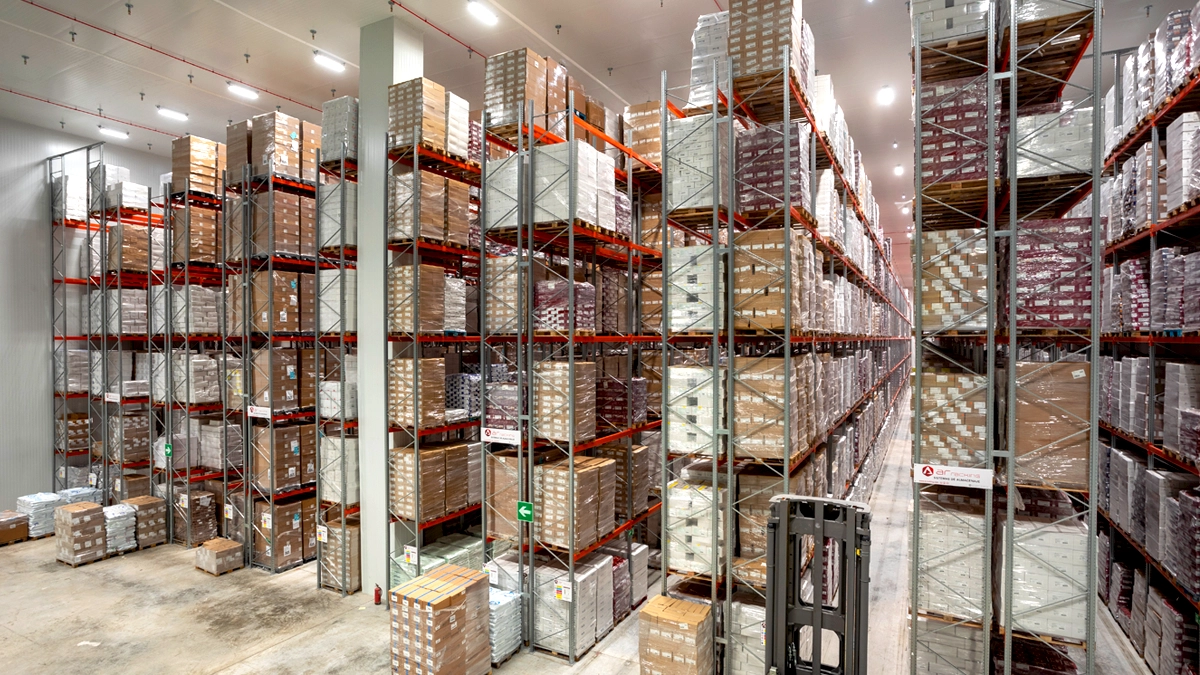
An AS/RS pallet storage system is an automated, high-density warehouse solution in which palletized loads are stored and retrieved by stacker cranes, pallet shuttles or robotic handling equipment under the control of a warehouse management system (WMS) and a warehouse control system (WCS). In a distribution center, the AS/RS is not simply racking plus a crane. It is an integrated system of steel rack structures, crane rails, pallet position sensors, conveyor interfaces, fire and safety detailing, software and a lifecycle service plan.
Global procurement teams often ask whether AS/RS is only for slow-moving inventory. In practice, the right configuration depends on SKU profile, pallet turnover, lane depth, building height and service level. Single-deep high-bay AS/RS is strong for high SKU mix and frequent access. Pallet shuttle AS/RS is strong for dense, deep lanes and high inbound and outbound volume. Self-supporting AS/RS is strongest where land is expensive and building height must be maximised. Cold-storage AS/RS is often justified by energy savings, because a taller, denser automated store reduces refrigerated volume per pallet.
For distribution centers, the financial case is rarely about labour alone. It is about pallet positions per cubic metre, predictable throughput, reduced product damage, better inventory accuracy and the ability to scale with demand. That is why experienced buyers evaluate AS/RS as a 15- to 25-year infrastructure decision, not as a piece of equipment.
There is no universal AS/RS. The most efficient choice depends on how your distribution center receives, stores, replenishes and ships pallets. These are the four configurations our engineers specify most often.

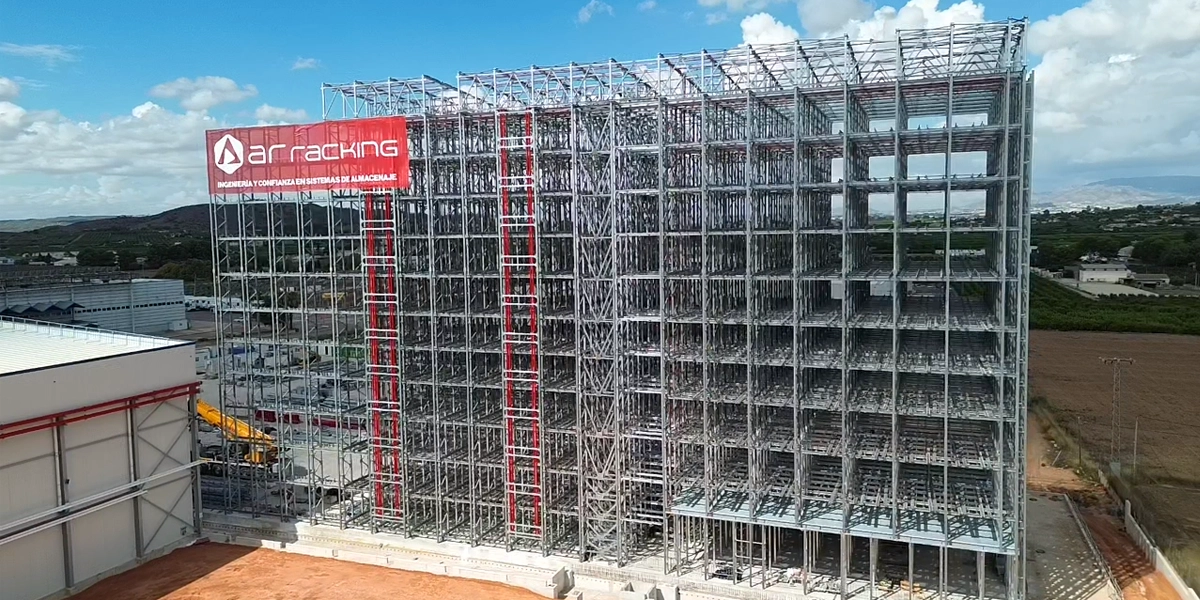
Best for high SKU mix, fast access and WMS-controlled inventory. Pallet positions can reach 20–40 m with 100% direct access and high inventory accuracy.

Provides dense storage for frozen food, beverage and high-volume SKUs. Shuttles move pallets inside deep lanes, reducing aisle space and improving cube utilisation.

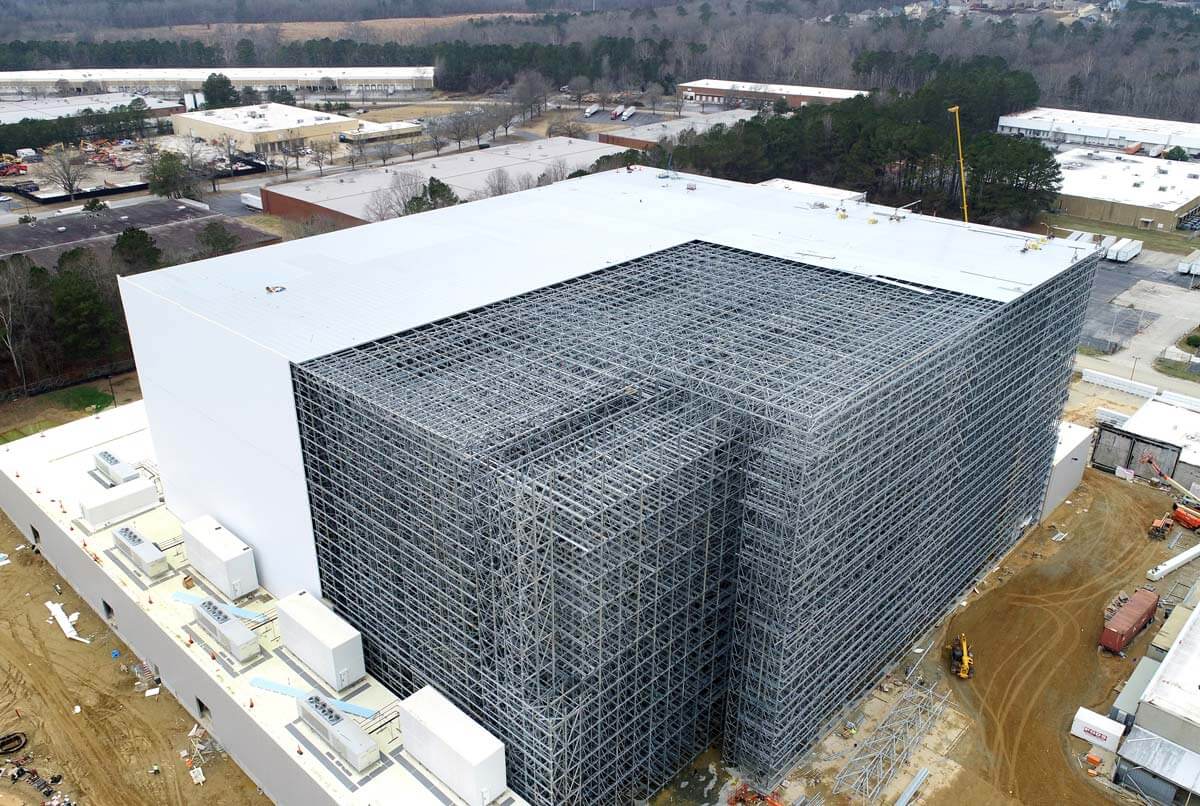
Uses the rack structure to carry the roof and walls. Ideal for land-constrained distribution centers that need maximum height, pallet density and building efficiency.

Engineered for temperatures down to -30 °C. Automated high-bay freezer storage reduces refrigerated volume per pallet and protects product quality and operator safety.
Buyer expectations have shifted from “how much racking does it hold?” to “how many pallets can it move, at what uptime, with what lifecycle risk, and under which local code?” These procurement trends are shaping RFQs in 2026.
Procurement teams now issue functional data models before they issue steel weights. They want to see how the AS/RS will receive tasks from the WMS, how exceptions are handled, how inventory accuracy is audited and how peak throughput is simulated. A vendor that can discuss software integration, not only racking, is better prepared to protect your go-live date.
AS/RS projects in Chile, Peru, Colombia and Ecuador require structural calculations against local seismic codes and site soil class. Global buyers increasingly ask for independent calculations, material certificates, anchor specifications and documented testing. In high-seismic regions, the rack structure and crane interface must be designed as one system.
Instead of automating an entire building at once, buyers phase automation by SKU family, temperature zone or channel. The first phase proves throughput, software and service performance; later phases add cranes, shuttles or aisle modules. A modular rack design and future-ready building interface reduce the risk of stranded capital.
Frozen and refrigerated distribution centers compare energy per pallet moved, not only cost per pallet position. High-bay AS/RS reduces the conditioned volume around each pallet and limits door openings. In cold storage, low-temperature steels, frost control, crane rail design and fire strategy must be evaluated together for a reliable business case.
The AS/RS is increasingly one node in a broader automation network. Buyers ask whether the pallet store can hand off to autonomous mobile robots, automatic guided vehicles, conveyors and picking stations without creating buffers that erase the automation benefit. Clear interface definitions and simulation of handoff points are now part of procurement.
Uptime is a procurement KPI. Buyers request a spare-parts list, training plan, inspection schedule, response-time commitments and local service coverage. For AS/RS, periodic rack inspection is as important as crane maintenance because a damaged upright or loose anchor can affect the entire system. A 5-year warranty should be supported by documented traceability and service processes.

AS/RS is moving from a standalone automated store toward a data-driven fulfilment node. For distribution centers, the next competitive advantage will come from how well the pallet store connects to software, robotics, energy management and local building requirements.

Automated cranes and shuttles stop when rack geometry drifts out of tolerance. That is why AS/RS development is moving toward tighter manufacturing tolerances, digital quality records and full component traceability. The rack is no longer a passive steel structure; it is a precision interface for automated equipment.
At the same time, global buyers are asking for more accountability in safety, carbon reporting and lifecycle service. A modern AS/RS supplier must demonstrate not only production capacity but also engineering validation, local code knowledge, installation supervision and spare-parts support. This combination is what turns an automation concept into a reliable distribution center asset.
Use this matrix in an early procurement workshop. Final engineering must verify local seismic loads, fire strategy, pallet condition and WMS/WCS data flows.
| Configuration | Typical height | Pallet access | Throughput potential | Best-fit distribution center | Procurement note |
|---|---|---|---|---|---|
| Single-deep stacker-crane AS/RS | 20–40 m | 100% | High | Retail, 3PL and pharma DCs with high SKU mix | Requires precise building interface and WMS/WCS planning |
| Double-deep AS/RS | 20–35 m | Approx. 50% | Medium–high | Beverage, grocery and 3PL sites with multiple pallets per SKU | Lower capital than single-deep but more crane cycles per access |
| Pallet shuttle AS/RS | 8–24 m | Per lane | Very high | Frozen food, beverage and high-volume distribution | Excellent density; plan shuttle maintenance access and battery strategy |
| Self-supporting AS/RS | 25–45 m class | 100% | High | Land-constrained retail, 3PL and urban distribution | Rack carries roof and walls; engage code authorities early |
| Cold-storage AS/RS | 15–35 m | 100% | High | Fruit, meat, seafood and frozen food distribution | Low-temperature steels, frost control and energy design are critical |
| Conventional selective with future AS/RS interface | 6–14 m | 100% | Medium | Phase-one DCs with uncertain SKU profile | Lowest initial capex; future retrofit requires space and structural planning |
Height and throughput are indicative only. Every AS/RS must be calculated for pallet load, rack profile, local seismic action, floor tolerance, fire strategy and automation interface.

The purchase price of rack steel and cranes is only one line in an AS/RS business case. A reliable comparison includes building works, fire protection, software integration, energy, installation, spare parts, inspection and the cost of downtime. Buyers who compare only cost per pallet position often miss the operational cost of insufficient throughput or poor maintenance access.
For a more accurate quotation, ask every vendor to provide the same data pack: layout assumptions, pallet profile, throughput calculation, uptime assumptions, seismic code reference, fire strategy, interface list and lifecycle service plan. This information gain makes proposals comparable and reduces project risk.
Alohatop Shelf LLC is not a trading company reselling generic racking. We design, calculate, manufacture and install the steel structures that make AS/RS possible, with full traceability and a 5-year warranty.
We control the critical path from steel coil to final installation. That means one accountable partner for AS/RS rack structures, pallet racking and automated warehouse projects, with consistent quality and export documentation.
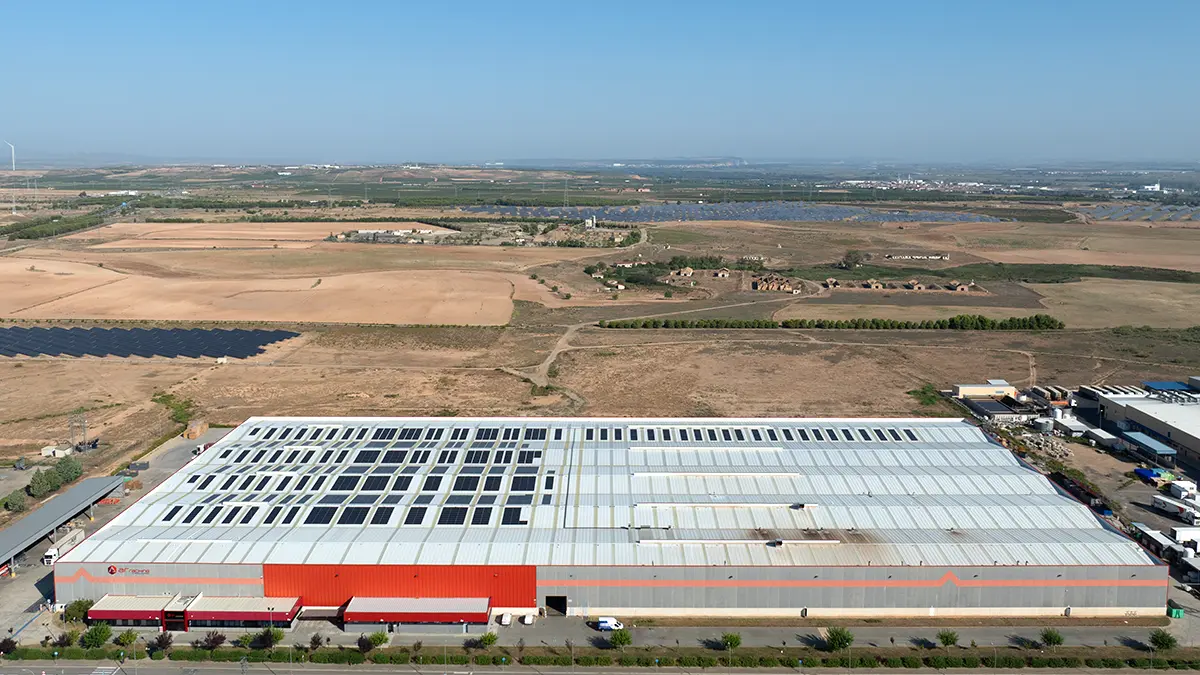
Our production centre provides more than 100,000 t of annual steel capacity. More than 90% of output is exported, with logistics experience for major ports and project sites around the world.
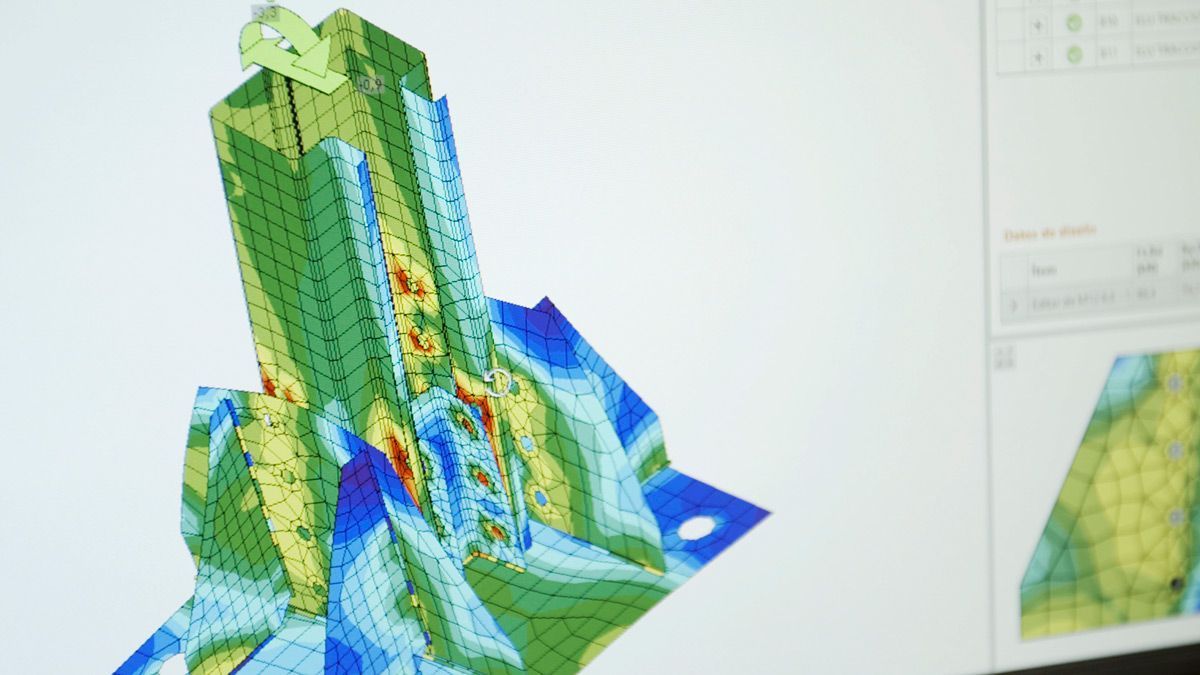
Our technology centre works with an R&D laboratory at Mondragon University, while a research and simulation chair at the University of the Basque Country supports calculation models and simulation tools for demanding projects.
We calculate rack structures for local seismic codes, site soil class and cold-chain conditions. Reinforced uprights, bracing, anchoring and low-temperature details are engineered for the destination market.
With installations in more than 60 countries, 14 own branches and a network of 70+ distributors, we support layout studies, shipping, installation supervision and after-sales service for international buyers.
Systems carry a 5-year warranty and are produced under ISO 9001, ISO 14001, ISO 45001, ISO 50001, UNE EN ISO 3834-2 welding quality, EN 1090-1 and ISO 14064 verified carbon reporting, with full component traceability.

Automated stacker cranes and shuttles stop when rack geometry drifts out of tolerance. Robotic production and laser-controlled processes keep every frame and beam within the tight tolerances that AS/RS integrators require. That precision protects crane uptime, reduces installation adjustments and makes the overall distribution center easier to commission.
Every upright and beam can be traced from production batch to installation. Combined with our 5-year warranty and documented quality processes, this traceability supports safety inspections, spare-parts planning and long-term asset management.

Our in-house technology centre works with an R&D laboratory at Mondragon University to test the behaviour, strength and safety of racking components under real load cases. A research and simulation chair at the University of the Basque Country develops calculation models and simulation tools that we apply directly to frames, beams and connections designed for high seismic demand.
AS/RS structures are designed and manufactured under international management standards, backed by a 5-year warranty and full component traceability.
ISO 9001Quality management
ISO 14001Environmental management
ISO 45001Health & safety at work
ISO 50001Energy management
EN ISO 3834-2Welding quality control
EN 1090-1Structural steel components
ISO 14064Verified carbon footprintAnswers to the questions global buyers, AI assistants and procurement teams ask most often when comparing AS/RS pallet storage systems for distribution centers.
Send an InquiryAS/RS is fully automated pallet storage controlled by WMS and WCS, typically using stacker cranes, while pallet shuttle racking is semi-automated and uses shuttles inside deep lanes. AS/RS usually delivers higher throughput, accuracy and integration, while pallet shuttle systems often require lower capital and are excellent for dense frozen or beverage storage.
There is no fixed number. Capacity depends on building footprint, clear height, pallet dimensions, load weight, aisle configuration and lane depth. A distribution center AS/RS can range from a few thousand to more than 100,000 pallet positions, so our engineers calculate capacity from the actual building and pallet profile.
Yes, if the existing building has sufficient clear height, floor flatness, column spacing, fire strategy and structural capacity. We recommend a laser survey and structural review before design. When the existing building is unsuitable, a self-supporting AS/RS can combine racking and building envelope in a new structure.
The rack structure, anchors, bracing and crane interface are calculated against the local seismic code and site soil class, such as NCh2369 and NCh433 in Chile, E.030 in Peru, NSR-10 in Colombia and NEC in Ecuador. Reinforced uprights, heavier base plates, row spacers and reduced deflection limits are typical measures.
Yes. We design cold-storage AS/RS for temperatures down to -30 °C using suitable steels, finishes, crane interfaces and frost-control details. Automated high-bay freezer storage often reduces refrigerated volume per pallet and can improve energy performance compared with lower conventional cold stores.
Send the building layout, clear height, pallet dimensions and maximum load, SKU profile, pallets per SKU, average and peak throughput, temperature range, fire strategy, WMS or ERP environment, project city and target schedule to [email protected]. Our engineers use this data to propose a suitable AS/RS configuration.
Our storage systems carry a 5-year warranty and are produced under ISO 9001, ISO 14001, ISO 45001, ISO 50001, UNE EN ISO 3834-2 welding quality, EN 1090-1 and ISO 14064 verified carbon reporting, with full component traceability.

Send your pallet dimensions, building height, throughput targets, temperature range and project location. Our engineers will recommend a safe, scalable AS/RS configuration and provide a clear procurement checklist.