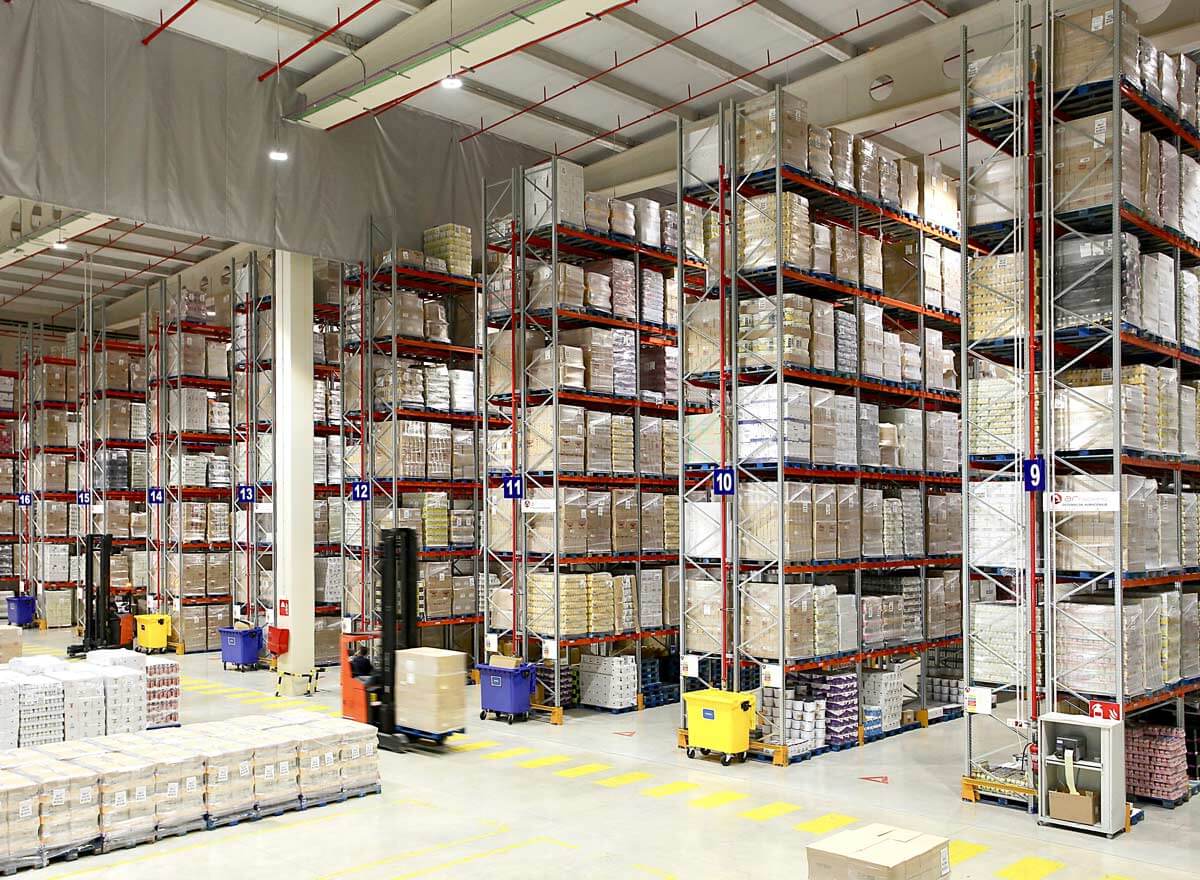
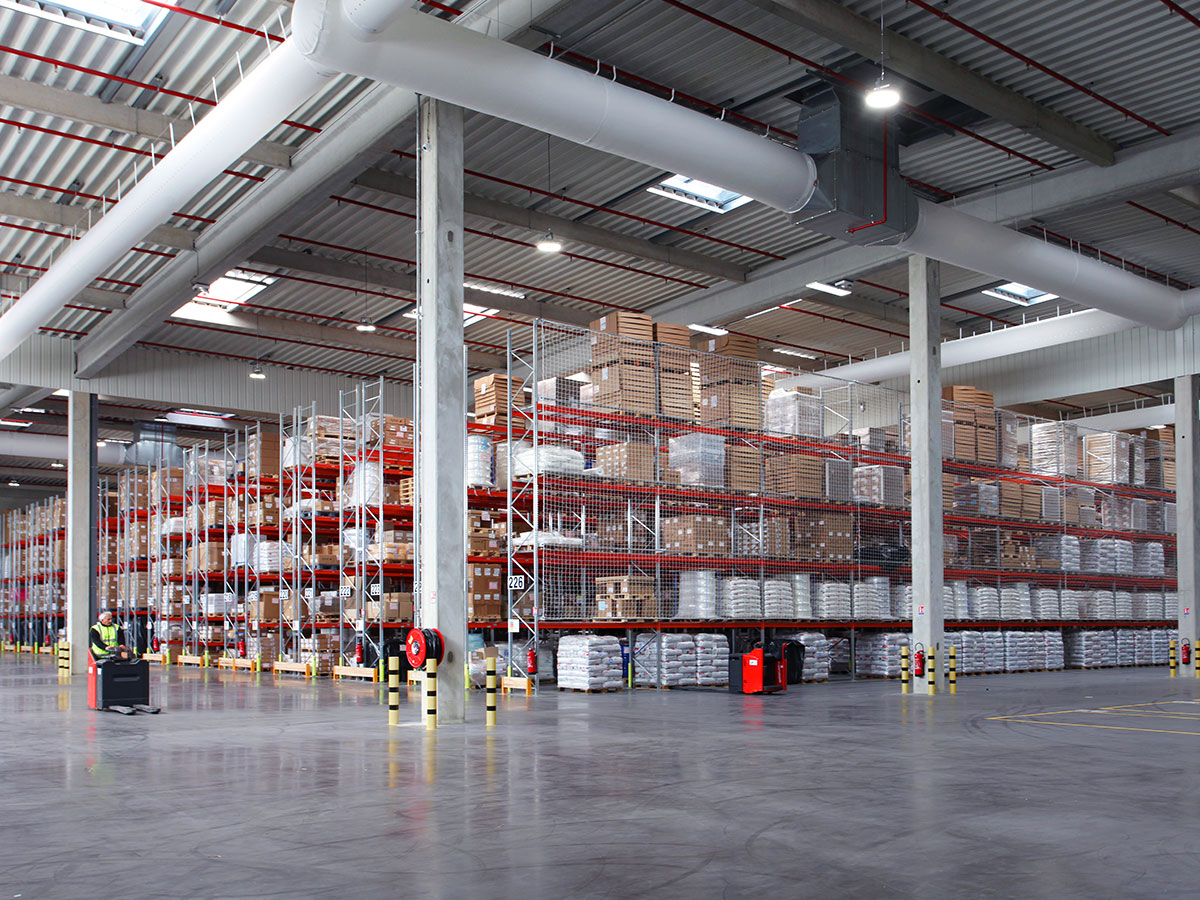
High-bay industrial pallet racking system in a distribution warehouse

Pallet Racking Systems

Engineered for distribution centers, 3PL warehouses, cold stores and manufacturing operations across South America.

Heavy-duty selective pallet racking with orange beams in a warehouse
Pallet Racking Engineering

Industrial pallet racking selected by load, selectivity, density and site conditions

Alohatop Shelf LLC designs, manufactures and supplies industrial pallet racking for distribution centers, third-party logistics operators, food and beverage producers, cold-chain facilities and manufacturers. The objective is not simply to add pallet positions. It is to create a storage system that remains safe, accessible and efficient under the real operating profile of the warehouse.

Each proposal starts with your pallet data, building layout and throughput. Our engineers then define the system, frame depth, beam length, load signage and safety accessories around the actual operating case rather than a generic catalogue configuration.

  • Direct access or dense storage: selective, VNA, double-deep, drive-in, mobile, FIFO, push-back and pallet shuttle systems.
  • Site-specific verification: seismic, floor, wind and cold-store requirements reviewed against project data.
  • Export-ready documentation: layout drawings, load schedules, packing lists and installation guidance for overseas buyers.
60+Countries served by the manufacturing and engineering network
42,000+Warehouse storage projects delivered
100,000 tAnnual steel production capacity
90%+Of production prepared for export markets
System Range

Pallet racking systems for every warehouse profile

Use the comparison below to shortlist a system, then confirm it with a project-specific structural calculation, operation study and safety review.

Selective Pallet Racking

Conventional beam-and-frame racking with 100% direct access to every pallet. The practical default for mixed SKUs, retail distribution, food and beverage and spare-parts storage.

Best for
High SKU mix and fast access
Stock rotation
Any

Very Narrow Aisle Racking

VNA racking reduces aisle width while keeping direct access to every pallet. It is used in tall buildings, expensive land markets and cold stores where cubic capacity matters.

Best for
Tall warehouses and cold rooms
Stock rotation
Any

Double-Deep Racking

Two pallets stored in depth per access face. A middle ground between selective access and compact storage for references with at least two pallets per SKU.

Best for
2+ pallets per SKU
Stock rotation
LIFO per lane

Drive-In and Drive-Through

High-density block storage where pallets are accumulated in lanes. Drive-in is typically LIFO; drive-through allows FIFO operation when access is available at both ends.

Best for
Homogeneous SKUs and cold storage
Stock rotation
LIFO or FIFO

Mobile Pallet Racking

Racking mounted on mobile bases that open one working aisle at a time. A strong option for cold rooms and high-value floor space where every cooled cubic metre counts.

Best for
Cold stores and high-density warehouses
Stock rotation
Any

Pallet Flow FIFO Racking

Gravity roller lanes move pallets from the loading face to the picking face. First-in, first-out control supports perishables, dated stock and fast-moving inventory.

Best for
Perishables and high rotation
Stock rotation
FIFO

Push-Back LIFO Racking

Pallet carts or rollers allow pallets to be pushed back from a single access face. The last pallet in is the first out, making it suitable for manufacturing buffers and medium-volume SKUs.

Best for
Manufacturing and medium-volume SKUs
Stock rotation
LIFO

Pallet Shuttle Racking

Semi-automated motorized shuttles move pallets inside deep lanes. The system improves throughput and density for high-volume distribution, including freezer operation down to −30 °C when specified.

Best for
High-throughput distribution centers
Stock rotation
FIFO or LIFO
Buyer's Guide

Which pallet racking system fits your warehouse?

Density and selectivity pull in opposite directions. The final choice depends on SKU profile, pallets per reference, throughput, building height and seismic zone.

Pallet racking selection guide
SystemBest useDensityDirect accessStock rotation
Selective pallet rackingHigh SKU mix, food and beverage, retail distribution100% of palletsAny
VNA rackingTall buildings, expensive land, cold stores100% of palletsAny
Double-deep rackingReferences with two or more pallets per SKUFront pallet onlyLIFO per lane
Drive-in rackingHomogeneous products and frozen goodsLimitedLIFO or FIFO
Mobile pallet rackingCold storage and high value per cubic metreAll pallets via one open aisleAny
Pallet flow FIFOPerishables and fast-moving inventoryPer laneFIFO
Push-back LIFOManufacturing buffers and mid-volume SKUsPer laneLIFO
Pallet shuttleHigh-throughput distribution centers and deep cold lanesPer laneFIFO or LIFO

Density is relative to selective racking in the same footprint. In seismic zones, very tall or very dense configurations require specific structural verification and safety detailing.

Engineering, Manufacturing and Verification

Engineering evidence behind every racking proposal

Pallet racking is a structural product. The difference between a low-cost layout and a reliable installation is the calculation, testing and production control behind it.

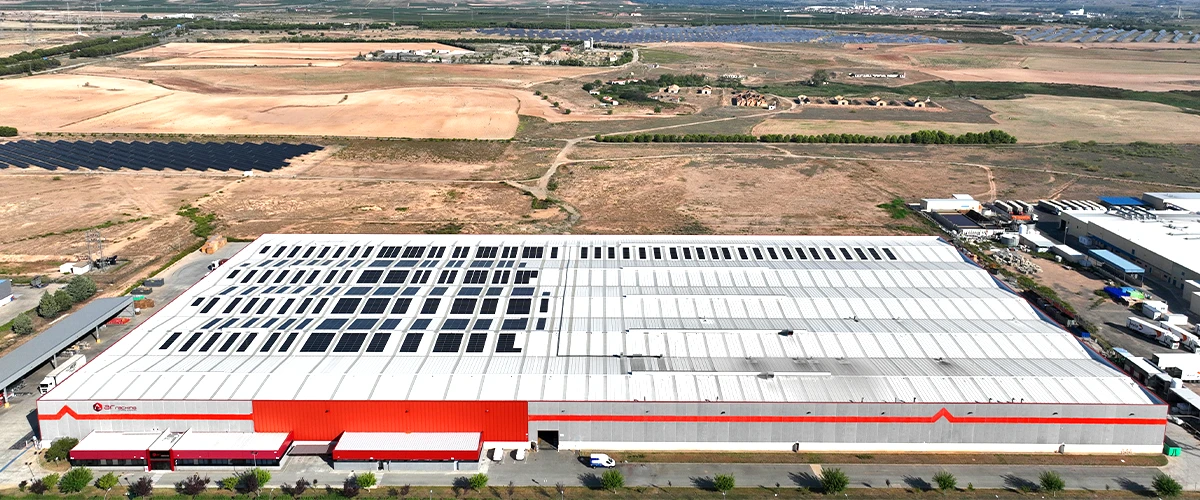
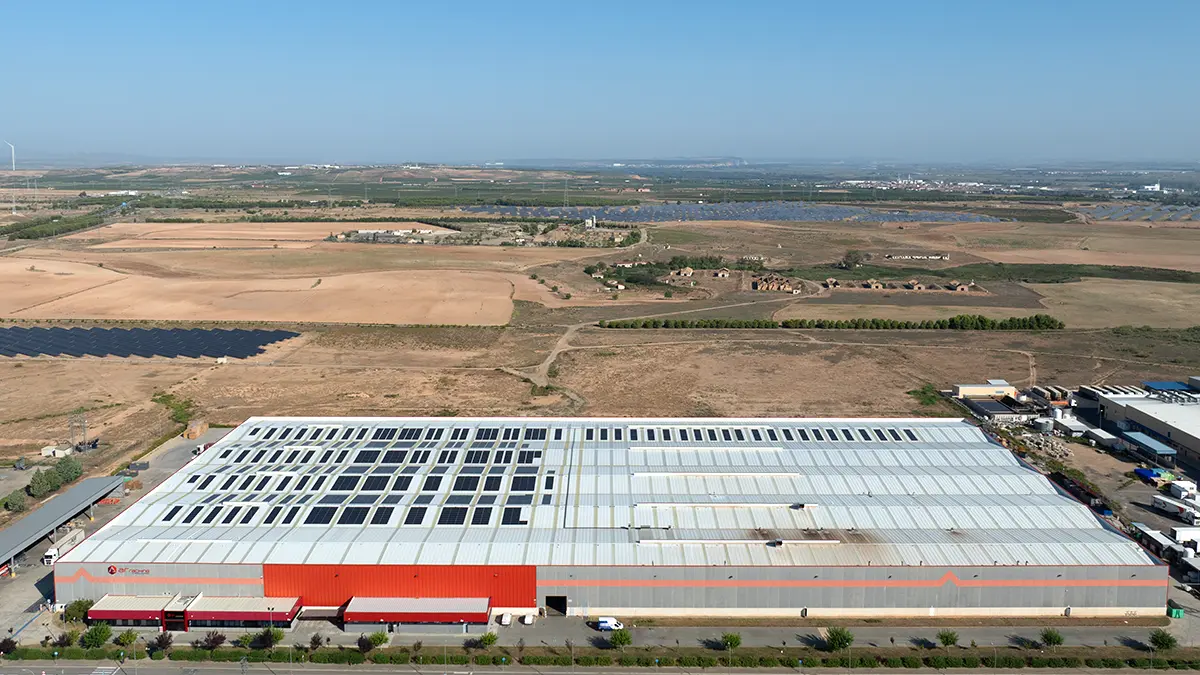
Automated industrial steel racking production plant with roll-forming lines

Production control from steel coil to load sign

Alohatop Shelf LLC operates a highly automated production model for industrial racking components. Laser-controlled roll forming, robotic welding, pre-galvanized or painted finishes and traceable batch marking help maintain dimensional consistency across export orders.

  • Traceability: uprights and beams are marked for batch, section and material identification.
  • Documentation: component lists, load schedules and installation drawings support customs, site teams and long-term maintenance.
  • Cold-store readiness: steel grades and finishes are selected for chilled and freezer environments.
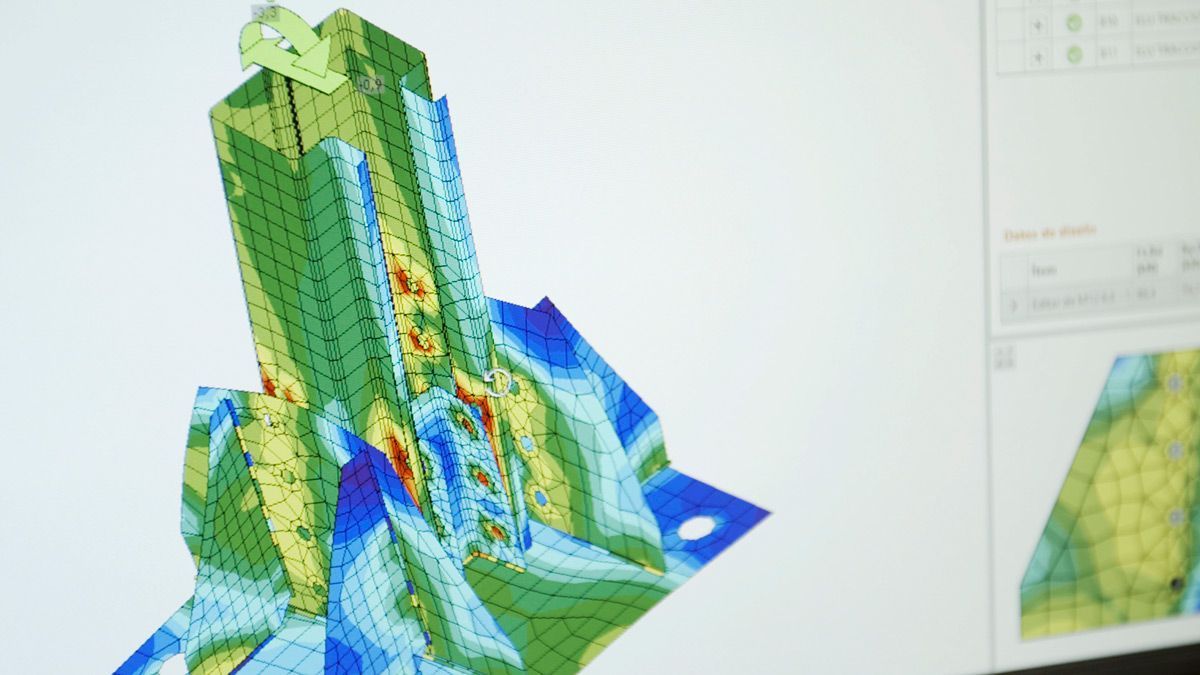
Structural testing and engineering analysis of racking components

Laboratory validation, not paper-only design

Our technical team validates racking profiles, connections and frame behavior through simulation and physical testing. This work is particularly important for tall frames, high load-to-height ratios and seismic projects where ductility and connection performance matter.

  • Finite-element studies: frames, beams, base plates and bracing checked against project load cases.
  • Static and cyclic testing: prototype components evaluated before release to production.
  • Local code alignment: European design methods are adapted to the seismic and permitting requirements of the destination country.
Robotic welding and automated production lines for racking components

Automated production for robotic and manual warehouses

Stacker cranes, shuttles and AMRs stop when rack geometry drifts out of tolerance. Automated production and laser-controlled inspection help keep uprights, beams and frame plumb within the tight limits required by AS/RS integrators and tall VNA installations.

For manual warehouses, the same production discipline shortens site assembly time, reduces fit-up problems and supports safer beam installation.

Regional Expertise

Seismic and cold-chain design for South American sites

South America is not one design case. Andean seismic zones, tropical humidity, high-altitude logistics, port-based cold chains and fast-growing e-commerce each change how a racking installation should be engineered.

Chile: NCh2369 and NCh433

Racking for fruit-export cold stores, mining supply warehouses and port distribution centers is checked for local seismic action, soil class and anchor design. Expect heavier bracing, row spacers and verified base connections.

Peru: E.030

Agro-export growth in blueberries, avocados and grapes, plus new port capacity at Callao and Chancay, is driving demand for cold storage, VNA and high-density pallet racking designed to Peruvian seismic requirements.

Colombia and Ecuador: NSR-10 and NEC

Distribution hubs in Bogotá, Medellín, Guayaquil and the Caribbean coast, together with flower and food cold chains, require seismic-resistant selective, double-deep and picking systems with clear load control.

Brazil: high humidity and PBR pallets

Latin America's largest e-commerce and consumer-goods market uses common 1200 × 1000 mm and PBR pallet formats. High humidity, multi-client 3PL operations and tall new warehouses influence finish selection and maintenance planning.

Argentina: INPRES-CIRSOC 103

Food, beverage and automotive supply chains require robust layouts and export documentation. Western regions such as Mendoza and San Juan need seismic design considered in the structural and anchoring package.

Cold-chain and freezer warehouses

Mobile, drive-in, VNA and pallet shuttle systems are selected for fruit, meat, seafood and frozen-food operators. Steel grades, finishes, tolerances and safety clearances are specified for temperatures down to −30 °C.

Buyer Specification Data

What our engineers need to define a safe pallet racking system

Early data improves the accuracy of layout, capacity and budget. If some values are not yet confirmed, use conservative assumptions and request a technical review.

Pallet and load

Pallet footprint and type: 1200 × 1000 mm, 1200 × 800 mm, 1100 × 1100 mm, 1219 × 1016 mm or PBR. Maximum load per pallet, load stability and overhang must be stated.

Building envelope

Clear height to roof or sprinkler, floor level tolerances, slab capacity, fire protection, column grid and aisle constraints are required for realistic capacity calculations.

Operation profile

Number of SKUs, pallets per SKU, daily inbound and outbound movements, forklift type, shift pattern and future growth determine the right density-selectivity balance.

Environment

Ambient, chilled, freezer or high-humidity operation; wash-down requirements; corrosivity; and temperature range down to −30 °C influence steel grade and finish.

Standards and safety

Design checks typically reference EN 15512, EN 15620, EN 15629, EN 15635 and FEM 10.2.08 where applicable, together with local seismic and permitting requirements.

Documentation for procurement

Layouts, load signs, component schedules, anchor plans and packing lists can be prepared for tender review, customs clearance and site coordination.

Final capacities are not generic catalogue values. They are confirmed by project-specific structural calculation, load cases and the selected pallet configuration.

Industries

Pallet racking solutions by industry

Each sector has its own pallet types, temperatures, rotation rules and safety requirements. We design around them.

Food & Beverage

FIFO flow racking and high-density storage for beverages, dairy and packaged food.

Cold Storage

Mobile, drive-in and shuttle systems for fruit, meat and seafood exporters down to −30 °C.

Logistics & 3PL

Flexible selective and double-deep layouts for multi-client operations.

E-commerce

Multi-tier picking, carton flow and AMR-ready structures for order fulfilment.

Automotive

Line-side supply, tire racking and heavy-component storage.

Pharma & Cosmetics

Traceable, clean and controlled storage for regulated products.

Agriculture

Bulk bins, fertilizer and seed storage for agribusiness operations.

Manufacturing

Raw material, WIP buffers and finished-goods racking with push-back and cantilever.

FAQ

Pallet racking questions answered for overseas buyers

These are the questions our engineering team receives most often from warehouse, logistics and procurement managers evaluating a South American project.

What information is needed to design a pallet racking system?

Provide the building layout and clear height, pallet dimensions and type, maximum load per pallet, number of SKUs and pallets per SKU, daily inbound and outbound movements, forklift or automation type, temperature range and project city. These inputs allow the engineering team to check access, density, beam deflection, frame capacity and safety clearances.

How is pallet racking designed for seismic zones in Chile, Peru, Colombia and Ecuador?

Racking in Andean and Pacific-coast countries is calculated against the local seismic code and site soil class, such as NCh2369 and NCh433 in Chile, E.030 in Peru, NSR-10 in Colombia and NEC in Ecuador. Typical measures include reinforced uprights and bracing, heavier base plates and anchors, row spacers, reviewed connection details and reduced beam deflection limits.

Which pallet racking system is best for high-density cold storage?

The best choice depends on SKU profile, pallet volume, access needs and temperature. Mobile racking reduces cooled aisles and keeps direct access; drive-in and pallet shuttle systems maximize cubic utilization; VNA racking suits tall cold stores that need direct access; pallet flow FIFO is used for fast-moving perishables. Steel grade, finish and tolerances must be specified for chilled or freezer conditions.

Can Alohatop Shelf LLC supply racking for 1200 x 1000 mm and 1200 x 800 mm pallets?

Yes. Racking is configured for common South American and export pallet formats, including 1200 x 1000 mm, 1200 x 800 mm, 1100 x 1100 mm, 1219 x 1016 mm and the Brazilian PBR format. Beam lengths, frame depths and accessories are dimensioned for the actual pallet, load and handling equipment rather than a generic pallet size.

How are load capacities and beam deflection verified?

Capacities are confirmed by project-specific structural calculation using the selected upright, beam, bracing and connection configuration. Beam deflection, frame compression, anchor loads and seismic actions are checked against the relevant design basis. Load signs and component schedules are then prepared so the installed system matches the approved engineering assumptions.

What standards and quality documentation are available?

Design and manufacturing can reference EN 15512, EN 15620, EN 15629, EN 15635 and FEM 10.2.08 where applicable, together with local seismic and permitting requirements. Quality documentation may include material traceability, component marking, load schedules, layout drawings, anchor plans and packing lists. Certifications include ISO 9001, ISO 14001, ISO 45001, ISO 50001, EN ISO 3834-2, EN 1090-1 and ISO 14064 where applicable to the project scope.

Can pallet racking be combined with picking, automation or future expansion?

Yes, in many layouts. Selective and VNA structures can include picking levels; drive-in and shuttle systems may be combined with conventional racking in separate zones; and rack structures can be designed for future AGV, AMR or AS/RS integration if that requirement is defined at the concept stage. Any expansion or change of use must be recalculated and validated before installation.

What is the typical project process from inquiry to installation?

The process normally starts with a data review and layout study, followed by system selection, structural calculation, quotation and technical clarification. After approval, production, packing and shipping are coordinated with the site program. Installation is supervised according to approved drawings, plumb tolerances and load signage, with final documentation handed over for operation and maintenance.

Warehouse racking engineering team reviewing a pallet storage project
Start Your Project

Planning a new warehouse or expansion?

Share your clear height, pallet size, load per pallet, SKU profile, daily throughput and project city. Alohatop Shelf LLC will review the data and recommend a safe, space-efficient racking concept for your site.

Inquire Now