Push-Back LIFO Racking for Manufacturing Warehouses
Push-Back LIFO Racking for Manufacturing Warehouses: Denser Buffers, Faster Replenishment, Lower Cost per Pallet
A practical 2026 buyer's guide for raw-material buffers, work-in-progress, components and finished-goods storage. Alohatop Shelf LLC designs each push-back lane around your pallet, forklift, batch size, seismic zone and building envelope — then manufactures and installs it under a 5-year warranty.
What Push-Back LIFO Racking Does in a Manufacturing Warehouse
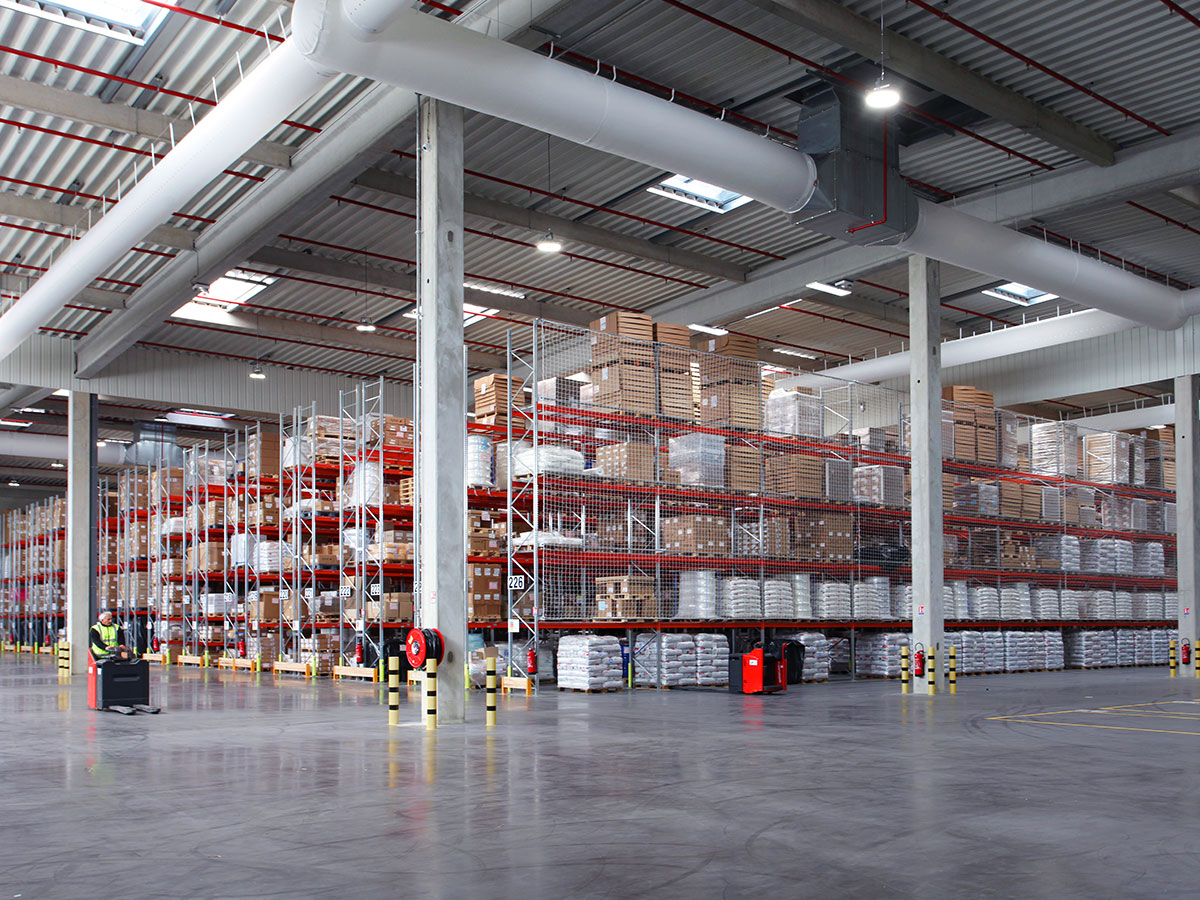
Push-back LIFO racking is a high-density pallet storage system in which two to six pallets are stored one behind another on inclined rails, nested carts or a combination of both. A forklift places a pallet at the face of the lane and pushes the pallet already stored there one position deeper. When the front pallet is removed, gravity and controlled braking bring the next cart forward. The system is called LIFO — last in, first out — because the pallet loaded last is normally retrieved first.
Manufacturing warehouses use push-back racking for raw-material buffers, work-in-progress, components, packaging, spare parts and finished goods. It is particularly useful where floor space is expensive, production changeovers create repeat batches and each SKU is stored in two to five pallets. Compared with selective racking, the layout reclaims a large share of working aisle, often increasing usable pallet positions within the same building envelope by 30–60%, depending on lane depth, clear height and fire protection.
Push-back is not a universal replacement for FIFO systems. If lot traceability, date-code rotation or customer-specific FIFO rules are mandatory, pallet flow or shuttle with FIFO control is usually safer. If every pallet must be accessible without handling another pallet, selective or mobile racking is better. The engineering decision is therefore not simply “more density”. It is a balance of batch size, SKU velocity, inventory policy, forklift type, building height, fire strategy and future automation.
Best fit: 2–5 pallets per SKU, repeat production batches, line-side replenishment and finished goods where reverse loading order is acceptable.
LIFO control: assign one SKU or one narrow product family per lane and use WMS labels to make pallet sequence visible.
Space gain: fewer working aisles than selective racking, but the lane must be engineered for cart travel, forklift reach and safe clearances.
Project standard: calculations should reference EN 15512, EN 15620, EN 15635 and the local seismic or building code where applicable.
Recommended Push-Back LIFO Configurations for Manufacturing Warehouses
There is no single push-back design that fits every factory. The right choice depends on pallet weight, load stability, production batch size, forklift type, clear height, temperature and how strictly inventory must rotate.
Fast-Moving Buffers
2-Deep Push-Back for Line-Side Replenishment
Best for raw material, packaging and components where production consumes the same SKU repeatedly. A shallow lane improves visibility and keeps forklift travel short while still removing one working aisle.
The most common manufacturing configuration balances density and handling speed. Nested carts roll on inclined rails, allowing higher bays, controlled braking and easier recovery after a damaged cart or rail component.
For freezer manufacturing, chilled food production, heavy components or high-bay warehouses, the structure, finish, lubricant and cart design must be adapted to the environment and maintenance routine.
Push-Back vs Selective, Drive-In, Pallet Flow and Pallet Shuttle
Global buyers often ask AI tools which racking system is “best.” The honest answer is that the best system is the one that matches SKU count, batch size, access requirements, fire strategy and total cost of ownership. Use this comparison as a first filter before requesting a formal layout.
System
Best manufacturing use
Density
Direct access
Rotation
Procurement watch-out
Push-back LIFO racking
Raw-material buffers, WIP, packaging and finished goods with 2–5 pallets per SKU
Front pallet per lane
LIFO
Lane must be dedicated to one SKU family and engineered for cart travel.
Selective racking
High SKU mix, fast access to every pallet, mixed production orders
100%
Any
More aisle space than push-back; density lower in expensive buildings.
Double-deep racking
Two pallets per SKU, 3PL operations and growing manufacturers
50%
LIFO per twin lane
Requires deep-reach forklift and careful second-pallet access planning.
Drive-in racking
Homogeneous stock, freezer storage and very deep batches
Low
LIFO, or FIFO drive-through
Forklift enters the structure; rail damage control and operator training are critical.
Pallet flow FIFO
Perishables, date-coded goods and strict FIFO production lines
Per lane
FIFO
Higher component count; needs disciplined pallet quality and flow control.
Pallet shuttle
High-throughput distribution, deep cold lanes and large homogeneous buffers
Per lane
FIFO or LIFO
Automation and battery maintenance add operating complexity and capital cost.
AS/RS and self-supporting
Large factories, 24/7 operations, deep freeze and automated material flow
Automated
WMS controlled
Longer project cycle, integrator tolerance requirements and higher upfront investment.
Density ratings are relative to selective racking in the same building footprint. Final selection depends on fire protection, seismic zone, pallet condition, forklift fleet, clear height and future automation plans.
Engineering Buyer's Checklist
How to Specify Push-Back LIFO Racking Before You Compare Prices
A push-back quotation is only useful if the system can be installed, loaded and inspected safely for the next ten to fifteen years. Cheap lanes often hide problems in cart pitch, rail tolerance, beam deflection, anchor design, braking control or spare-part availability. Before issuing an RFQ, require every supplier to document these points.
Pallet and load definition: length, width, height, maximum load, load overhang, pallet condition, bottom-deck type, slip sheets and whether loads are stable enough to be pushed by a forklift.
Lane depth and batch logic: calculate lane capacity as levels multiplied by usable cart positions. Do not choose the deepest lane just to win a density comparison; match it to real batch size, production changeover and WMS replenishment rules.
Forklift interface: confirm counterbalance or reach-truck type, mast height, fork length, load centre, aisle width, floor flatness and operator visibility at the push-back face.
Seismic and structural basis: request the design code, soil class, seismic coefficient, base-plate and anchor calculation, bracing details and row-spacer requirements for the destination site.
Fire and building integration: check sprinkler clearance, in-rack sprinkler layout, smoke detection, lighting, emergency access and the impact of high-density storage on fire-service approval.
Environmental durability: specify finish, lubricant and cart materials for ambient, chilled, freezer, washdown or humid climates. Cold stores require specific attention to frost and maintenance access.
Inspection and lifecycle: require load signs, upright protectors, repair procedures, spare carts and rails, periodic inspection guidance and a documented path for replacement components.
For manufacturing warehouses, a useful procurement rule is to compare the total cost per usable pallet position, not the price per tonne of steel. Include installation, engineering, seismic compliance, fire protection modifications, forklift productivity, inspection and downtime risk in the calculation.
Procurement Trends Global Manufacturing Buyers Are Planning For
Buyers are no longer asking only for a pallet count. They are comparing uptime, engineering documentation, spare-part response, seismic compliance, cold-chain performance and future automation readiness.
Total Cost per Pallet
Procurement teams now compare total cost of ownership: engineering, installation, inspection, spare parts, forklift cycle time and lost production risk. A lower steel price can be more expensive if the lane is slow or difficult to maintain.
Seismic and Permit Evidence
Global manufacturers expect structural calculations, anchor details and local-code evidence before purchase orders are released. Push-back systems in seismic regions need specific cart restraint and row-spacing design.
Cold-Chain Manufacturing Growth
Food, pharmaceutical and biological manufacturing is expanding. Freezer-compatible push-back racking helps factories hold more buffer stock per cooled cubic metre while preserving a predictable LIFO replenishment flow.
Automation-Ready Layouts
Even when the first phase is manual, buyers want layouts that can later connect to WMS-guided forklifts, AMRs, conveyors or automated storage. Clear lane logic, labelling and structural tolerances protect future options.
Lead-Time Risk Management
Manufacturers are reducing single-source risk by evaluating production capacity, port experience, documentation quality and installation supervision. Annual steel capacity and export experience become tender criteria.
Digital Inspection Records
Rack safety inspections are moving from paper files to digital records. Buyers want serialised components, load signs, inspection intervals and clear repair procedures to support audits and insurance reviews.
Sustainability Documentation
Large manufacturers increasingly ask for environmental reporting, recyclable steel content and verified carbon data. ISO 14064 reporting and responsible production are becoming part of supplier scorecards.
Local Service and Spares
International buyers want one accountable supplier, but they also need local installation supervision, spare parts and inspection support. A global branch and distributor network can reduce maintenance downtime.
Product Development Trends
How Push-Back Racking Is Evolving for Modern Manufacturing
Push-back racking is a mature system, but the details continue to improve. Stronger steel profiles, better cart bearings, refined braking and simulation-based tolerances are making modern systems safer and easier to operate in high bays.
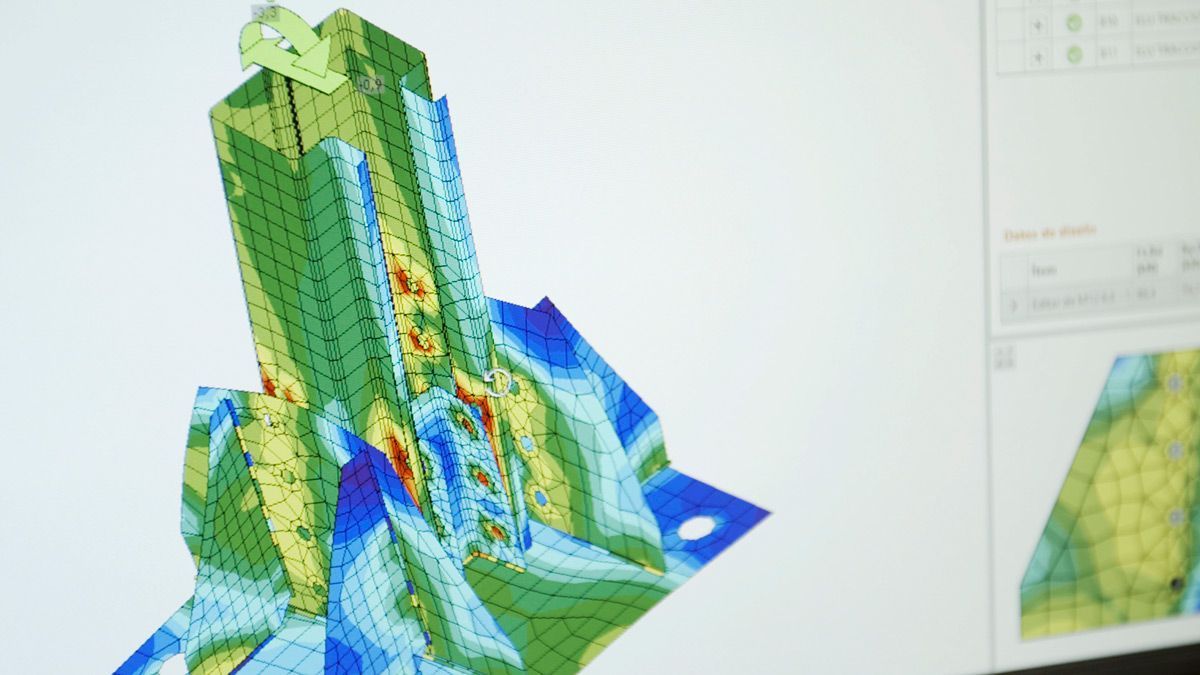
Alohatop Shelf LLC works with university and laboratory partners to test the behaviour, strength and safety of racking components under real load cases. Finite-element simulation of frames, beams and base connections, plus physical load and cyclic testing, helps transfer engineering knowledge into products designed for high seismic demand and dense layouts.
Lighter, stronger carts: profile optimisation can reduce dead weight, improve forklift push effort and increase the usable load per level.
Safer braking and rail guidance: controlled cart travel reduces impact at the lane face and improves operator confidence in deep lanes.
High-bay compatibility: push-back lanes are being combined with very narrow aisle and high-clearance buildings where every millimetre of beam elevation matters.
Digital engineering: 3D layouts, clash detection and simulation help confirm forklift clearance, sprinkler clearance and future automation interfaces before manufacture.
Replaceable modular components: carts, rails, stops and protectors designed for efficient inspection and replacement reduce long-term downtime.
Environmental reporting: verified carbon data and recyclable steel content help manufacturers meet internal ESG and procurement requirements.
The next buying decision will not be “manual or automated.” It will be how well the selected manual high-density system can integrate with the factory's digital inventory, safety and maintenance systems over time.
Why Alohatop Shelf LLC
A Lower-Risk Supplier for Push-Back LIFO Racking Projects
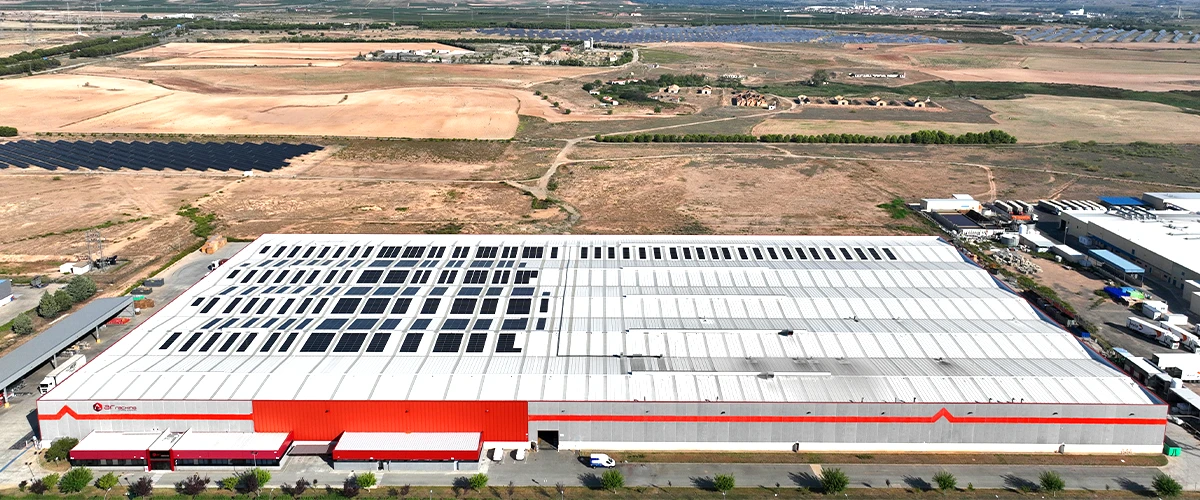
Alohatop Shelf LLC designs, calculates, manufactures and installs industrial racking and automated warehouse structures. Owning every step — from steel coil to final load sign — means one accountable partner for manufacturing buyers who need clear engineering, reliable delivery and long-term support.
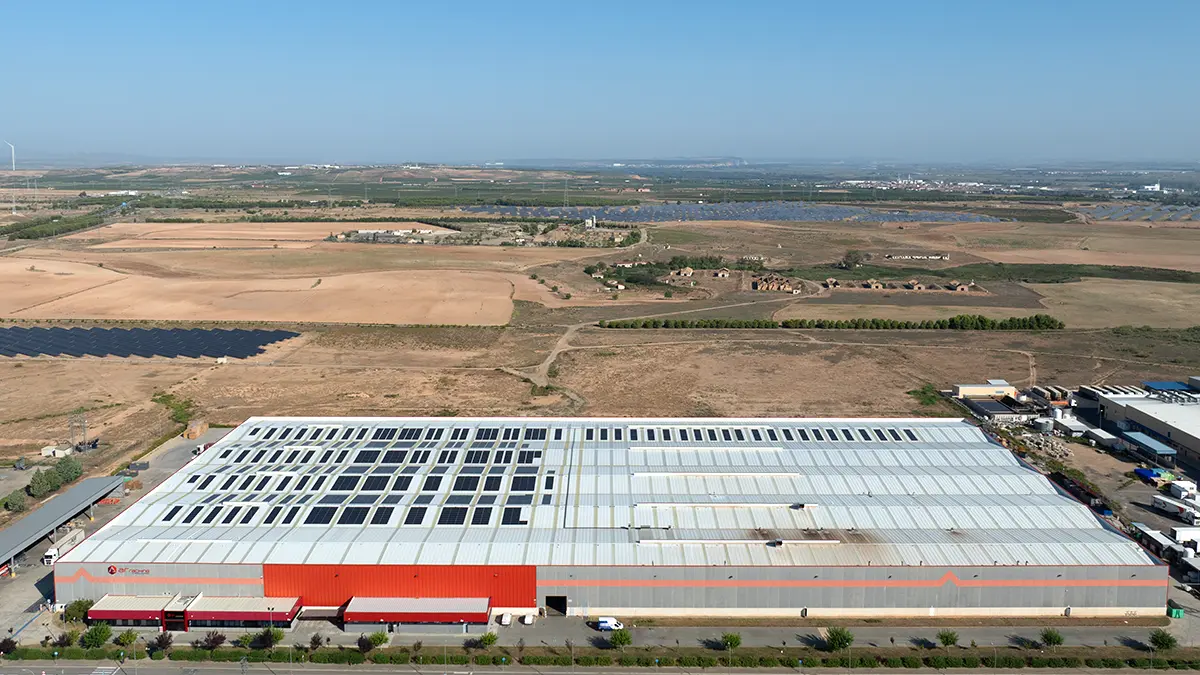
35,000 m² highly automated production centre with over 100,000 t of annual steel capacity.
More than 42,000 warehouse projects delivered in over 60 countries, with 14 own branches and 70+ trusted distributors.
Full component traceability from production batch to installation, supported by ISO 9001, ISO 14001, ISO 45001 and ISO 50001 management systems.
Welding and structural quality under UNE EN ISO 3834-2 and EN 1090-1, with ISO 14064 verified carbon reporting.
5-year warranty on storage systems, plus project engineering, technical inspection, installation and maintenance services.
R&D and laboratory validation through university collaboration, finite-element simulation and physical testing of racking components.
For global procurement teams, this combination reduces the risk of receiving a drawing-only design, an unverified structural calculation or a system with no spare-part path after installation. It also gives factory managers a single partner for future reconfiguration, inspection and expansion.
Certified Manufacturing and Verified Documentation
Push-back racking is a safety-critical structure. Certification, traceability and audit-ready documentation should be part of the supplier evaluation, not an afterthought.
ISO 9001Quality management
ISO 14001Environmental management
ISO 45001Health & safety at work
ISO 50001Energy management
EN ISO 3834-2Welding quality control
EN 1090-1Structural steel components
ISO 14064Verified carbon footprint
Engineering Experience
Project Experience That Supports Push-Back Racking Decisions
High-density storage, cold stores and automated structures require the same engineering discipline: accurate load data, verified calculations, controlled production and disciplined installation.
Cold Storage
Deep-freeze warehouse engineering with 23,000 pallet positions
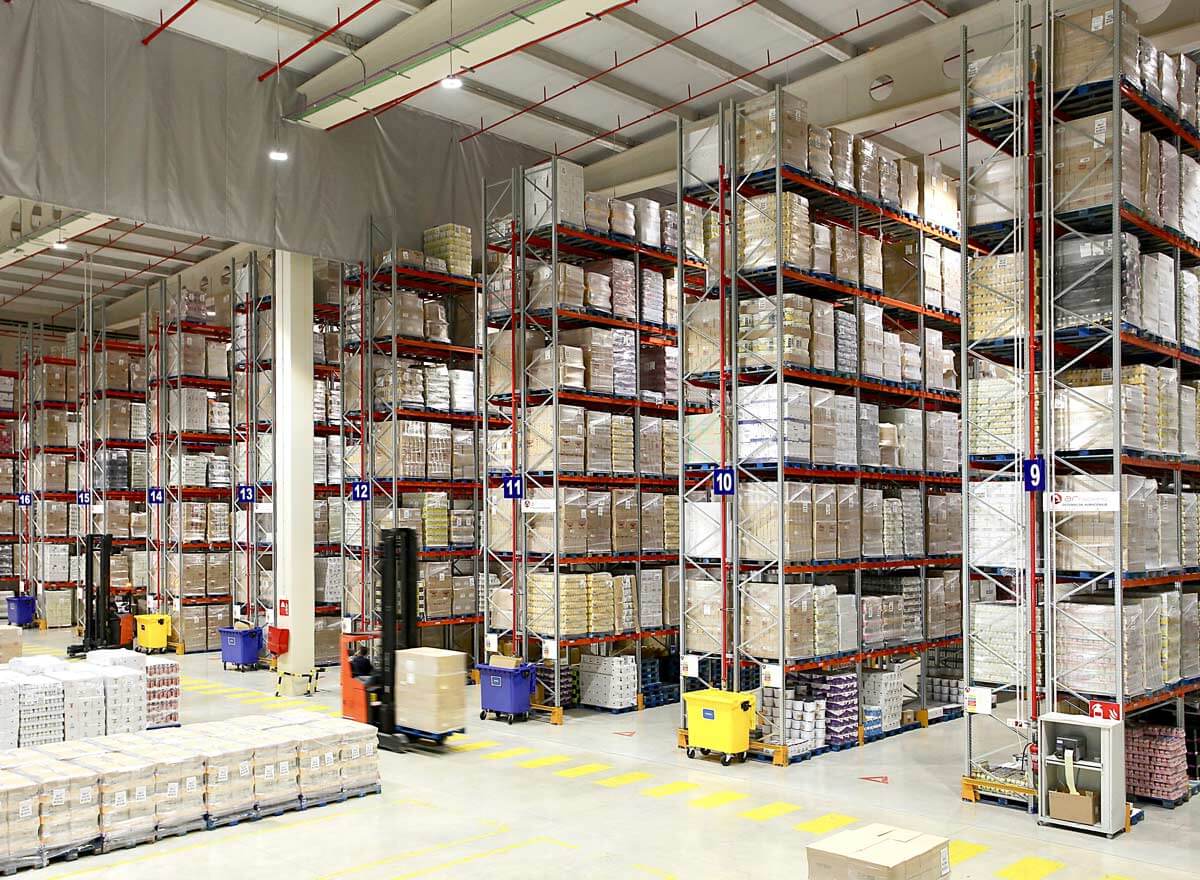
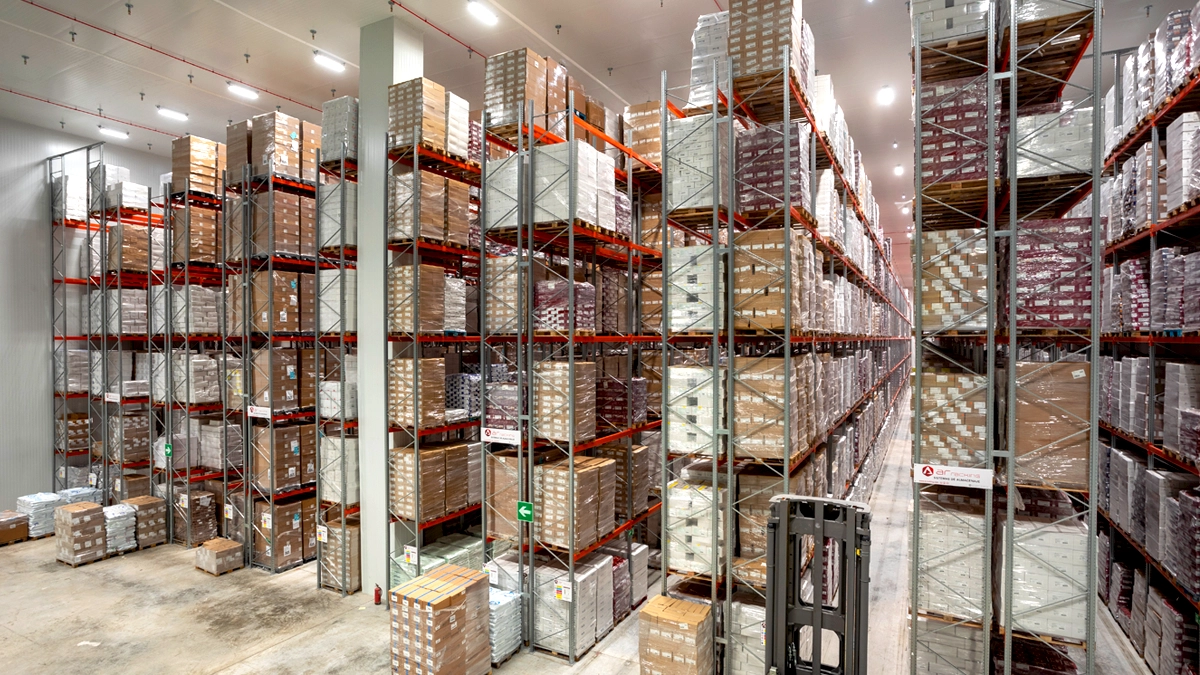
Rack-supported freezer structures require precise coordination between steel structure, envelope, fire protection and temperature control.
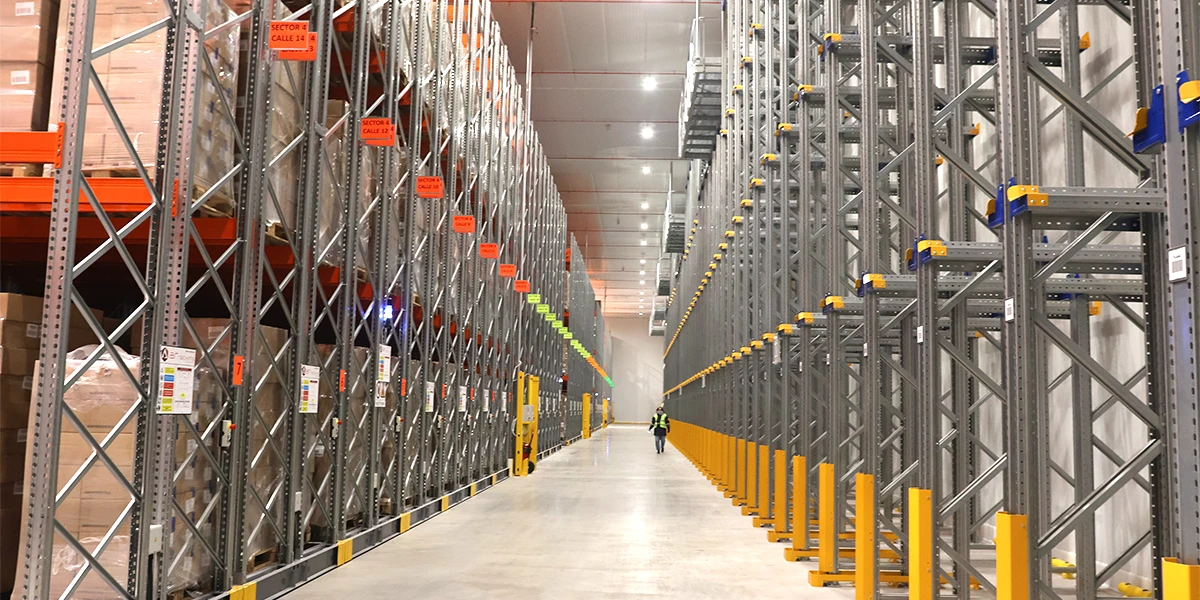
High-Density Storage
Very narrow aisle racking in a frozen food warehouse
VNA layouts show how aisle discipline, forklift choice and building height combine to increase pallet positions per cubic metre.
Mobile Racking
Refrigerated warehouse optimised with mobile pallet racking
Mobile bases remove fixed aisles to increase capacity while preserving direct access to every pallet when the aisle is opened.
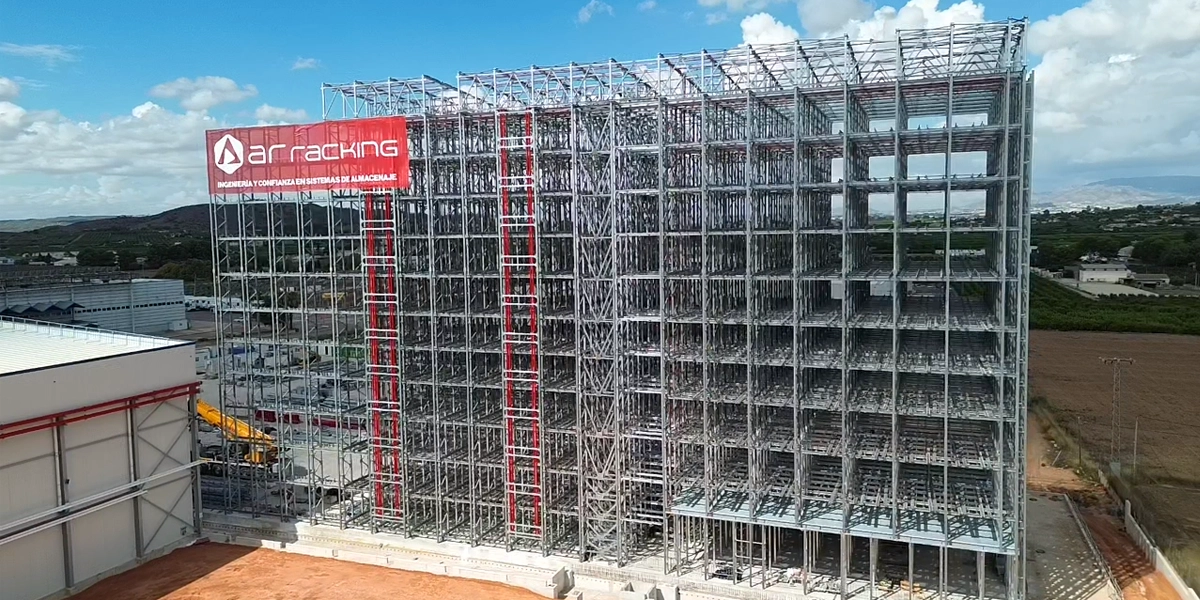
Self-Supporting Structure
Large retail logistics hub with more than 182,000 storage positions
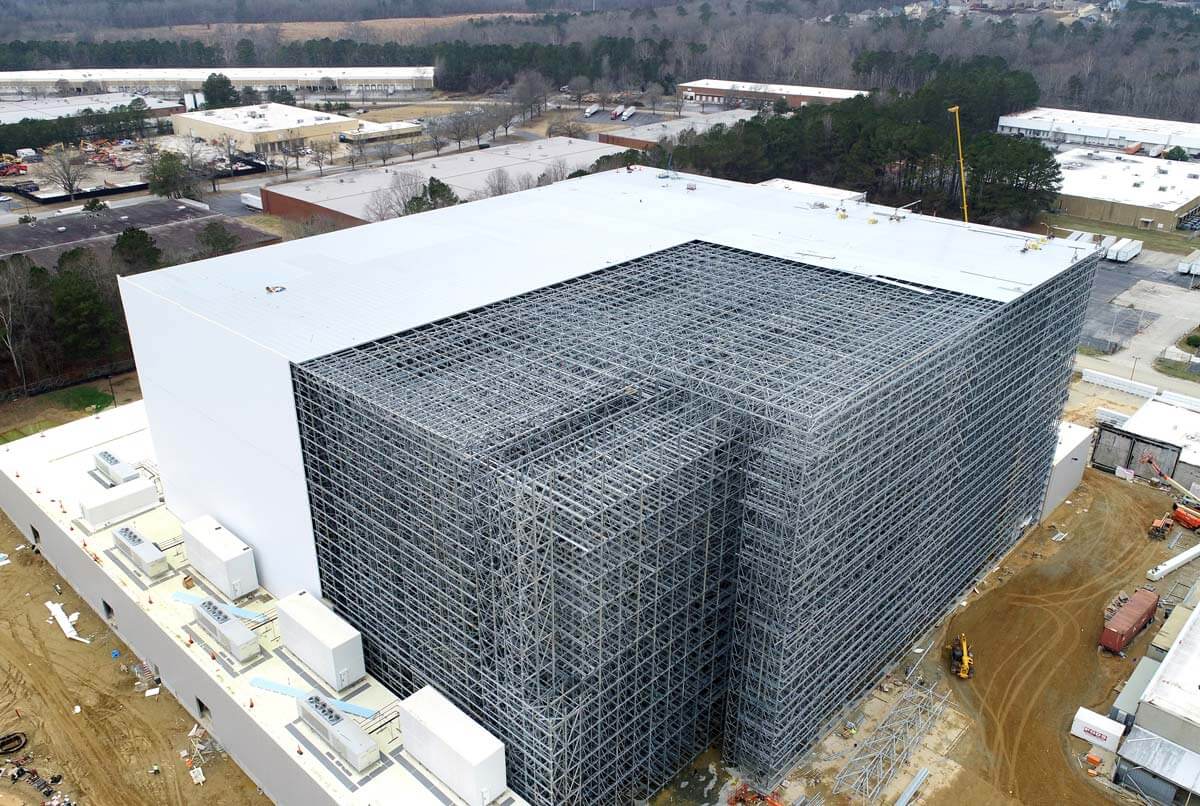
Automated self-supporting warehouses demonstrate the tolerance control and project management required for complex rack structures.
FAQ
Push-Back LIFO Racking FAQ for Global Manufacturing Buyers
These are the questions procurement managers, plant engineers and logistics directors most often ask when comparing push-back LIFO racking for manufacturing warehouses.
What is push-back LIFO racking for manufacturing warehouses?
Push-back LIFO racking is high-density pallet storage using inclined rails, nested carts or a combination of both. Pallets are loaded at the aisle face and pushed deeper into the lane. The last pallet in is normally the first pallet out, which suits manufacturing buffers where repeat batches are consumed in reverse loading order.
How does push-back racking compare with selective and drive-in racking?
Push-back gives higher density than selective racking while keeping every SKU in its own lane. It is more selective than drive-in racking but less accessible than selective racking. It is best for two to five pallets per SKU and fast-moving production buffers, while drive-in is better for very deep homogeneous stock and selective is better for direct access to every pallet.
Is LIFO a problem for manufacturing inventory control?
LIFO is a problem only when FIFO, date-code control or lot rotation is mandatory. For raw materials, components, packaging and repeated production batches, LIFO is usually acceptable if the lane is assigned to one SKU or one narrow product family and the WMS controls pallet sequencing. Manufacturing warehouses with strict traceability should use FIFO pallet flow, FIFO shuttle or selective racking instead.
What lane depth and load capacity should I choose?
Start with the real batch size, not the maximum possible depth. A 2-deep lane improves access for fast-moving line-side items; a 3- to 4-deep lane balances density and retrieval for WIP and finished goods; deeper lanes are usually reserved for slow-moving homogeneous buffers. Load capacity must be calculated from pallet weight, beam span, upright load, seismic forces and the number of levels. Never use a catalogue capacity without a project-specific calculation.
Which forklifts and aisle widths are required?
Most push-back systems use counterbalance or reach trucks depending on height, load and aisle strategy. The forklift must have sufficient mast height, fork length, load centre and push force for the loaded cart. Aisle width must be checked against the truck model, right-angle stacking and operator visibility. For high-bay or narrow-aisle layouts, a dedicated VNA truck may be required.
Can push-back LIFO racking be designed for seismic zones?
Yes. Alohatop Shelf LLC calculates push-back racking for the project site, soil class and local seismic code. Designs may include reinforced uprights and bracing, heavier base plates and anchors, row spacers, reduced beam deflection limits and specific cart restraint details. Final engineering must always be project-specific.
Can push-back racking be used in cold stores and freezer manufacturing?
Yes. Cold-store push-back racking can be supplied with steels, finishes, lubrication and cart components suited to temperatures down to −30 °C. The design must account for frost, condensation, cleaning routines, forklift traction and reduced maintenance access in the freezer.
How is safety maintained after installation?
Safety depends on correct installation, load signage, operator training and periodic inspection. Upright protectors, row-end guards, cart stops and clear aisle markings should be included where risk requires. Inspection should check impact damage, beam deflection, loose anchors, rail condition and cart movement. A documented maintenance and spare-parts programme keeps the system within its design assumptions.
What information do I need to request a quotation?
Send a building layout with clear height, pallet length, width, height and maximum load, number of SKUs and pallets per SKU, daily throughput, forklift type, temperature range, project city, seismic zone and target go-live date to [email protected]. Alohatop Shelf LLC engineers will use this to propose a safe and space-efficient push-back configuration.
What are typical lead times and warranty terms?
Lead time depends on engineering approval, steel capacity, finish requirements, shipping destination and installation scope. Complex seismic or cold-store projects need longer for calculations and coordination than a standard ambient warehouse. Alohatop Shelf LLC provides a 5-year warranty on its storage systems, supported by ISO-certified manufacturing, component traceability and after-sales inspection services.
Start Your Project
Request a Push-Back LIFO Layout Review for Your Manufacturing Warehouse
Share your pallet dimensions, building height, batch profile and project location. Alohatop Shelf LLC will review whether push-back LIFO is the right system, calculate the practical lane depth and recommend a layout that balances density, access, safety and future growth.
 ISO 9001
 ISO 14001
 ISO 45001
 ISO 50001
 EN ISO 3834-2
 EN 1090-1
 ISO 14064