0%

Choosing among the Best Pallet Racking Manufacturers in China for Global Buyers starts with a practical question: will the system fit your loads, forklifts, and daily workflows? A rack may look robust in a catalog, yet small details matter: beam connectors, upright protection, pallet dimensions, and clearances around sprinkler heads. Details matter.

MHI and Deloitte’s 2024 Annual Industry Report describes continued investment in supply-chain technology. Its findings provide useful context, but they are not pallet-racking market data. Buyers should assess each manufacturer against measurable criteria: engineering documentation, load-rating clarity, material specifications, quality-control records, and after-sales support. Ask for drawings that match your actual layout, not a generic warehouse image. Request sample inspection records, too.

This overview is intended as a starting point, not a substitute for engineering review. A rack’s safe capacity depends on its configuration, installation, and operating conditions. One limitation deserves notice: no source material was supplied here to verify a direct quotation from a named pallet-racking expert. Adding one without a reliable citation would create false authority. The manufacturers below should therefore be compared through verifiable evidence, clear technical answers, and references from projects similar to yours.
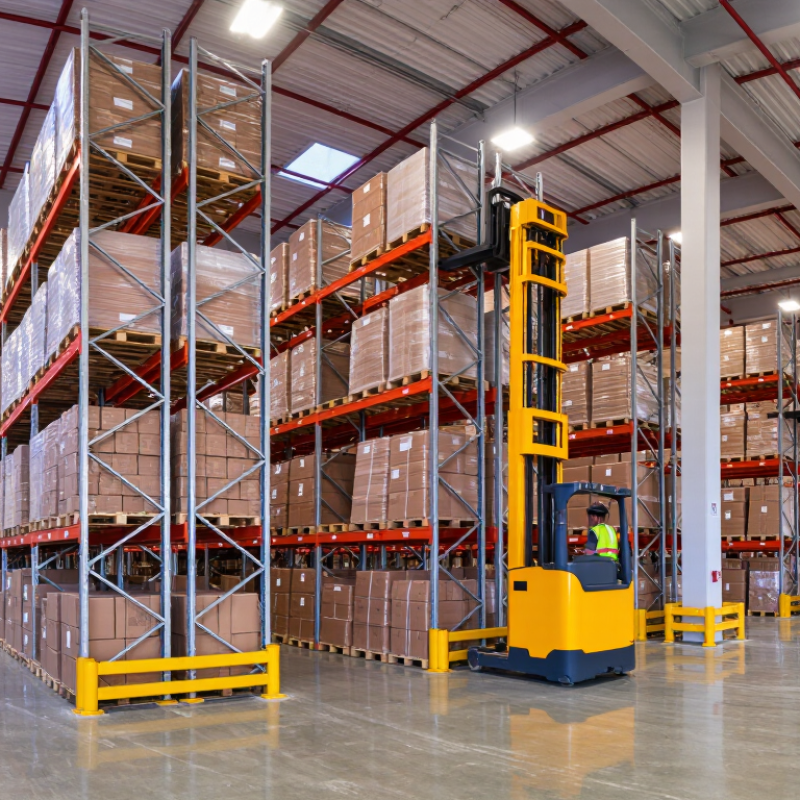
Best Pallet Racking Manufacturers in China for Global Buyers

Understanding Pallet Racking Systems and Their Main Types

Pallet racking is a storage structure that supports palletized goods and gives forklifts access to inventory. The right system depends on load size, stock turnover, aisle space, and handling equipment. Selective racking offers direct access to each pallet, making it practical for varied stock. Drive-in racking stores more pallets in less floor space, but forklifts enter the storage lanes. Double-deep layouts increase capacity, though they require suitable reach equipment. Push-back and pallet-flow systems can speed handling of repeated or date-sensitive stock. Each design has trade-offs.

Tips: Share pallet dimensions, maximum load weight, and forklift details with a supplier. Ask for drawings that show beam levels, clearances, and required aisle widths. Measure twice.

For global buyers, clear specifications matter more than a polished catalogue. Confirm whether the quoted capacity applies to each beam pair or the full bay. Local floor conditions and installation quality also affect safe performance. A neat layout on paper can still create awkward turns at a busy dock. Walk through the proposed flow with warehouse staff before ordering. Their daily experience may reveal a detail the plan missed.

Understanding Pallet Racking Systems and Their Main Types

Illustrative direct-access share by storage method

The chart shows the share of pallet positions directly reachable without moving another pallet in simplified lane examples: one-deep selective, two-deep double-deep, and four-deep lanes for drive-in, push-back, and pallet flow. Actual access and storage density depend on the system layout and operating method. Selective racking offers direct access to every position; the other systems trade some direct access for denser storage.

How to Evaluate Chinese Pallet Racking Manufacturers

Evaluate a manufacturer’s engineering before comparing unit prices. Request rack layouts, load calculations, beam and upright specifications, and written assumptions about floor conditions. Ask how the design accounts for pallet dimensions, forklift clearance, seismic conditions, and future changes. Start with the drawing. A polished catalogue proves little.

Check whether test reports match the proposed steel grades, profiles, and connections. Review welding and coating controls, inspection records, and component traceability. Standards such as ANSI MH16.1 or EN 15512 can guide technical discussions; ask which standard applies to the project and how compliance was verified. Ask for evidence. An independent factory audit and a pre-shipment inspection can reveal inconsistent welds, damaged finishes, or mislabeled parts. Paperwork can look complete and still leave gaps.

Assess communication and delivery capability, too. Request a production schedule, packaging details, spare-part policy, and references for comparable export projects. MHI’s 2024 Annual Industry Report found that 55% of surveyed supply-chain professionals planned to increase technology investment over the next two years. That trend makes adaptable layouts valuable, but it does not replace safe engineering. Have a qualified local engineer review drawings against actual site conditions. A small omission can matter: even the right rack design may fail to fit a real aisle or floor.

Key Manufacturers Serving Global Buyers

Key manufacturers serving global buyers are not defined by production volume alone. They should be able to translate warehouse requirements into clear rack layouts, load calculations, and component specifications. Ask how they verify upright frames, beam connectors, welds, and protective finishes. Details matter. A supplier that understands pallet dimensions, forklift turning space, and local floor conditions can help prevent costly layout changes after delivery.

Before comparing quotations, provide pallet weights, storage heights, aisle widths, and expected handling equipment. Request drawings and load tables that match those details, not just a standard catalogue page. Ask how parts are identified and packed, and whether installation guidance is available in a language your team can use. For cross-border orders, confirm lead times, replacement-part availability, packaging protection, and inspection records. Ask for evidence. A neat document set is useful, but it cannot replace checking sample components or production controls. One detail buyers sometimes miss is floor anchoring; even sound rack design depends on suitable site conditions. The process can feel slow, and no checklist removes every uncertainty. That is a reason to clarify assumptions early, not to skip them.

Best Pallet Racking Manufacturers in China for Global Buyers - Key Manufacturers Serving Global Buyers

A practical comparison framework for assessing pallet-racking manufacturers. Product suitability and load capacity depend on the project design, site conditions, and applicable local requirements.

Product or Capability Typical Use Potential Advantage Buyer Verification Points
Selective pallet racking Warehouses needing direct access to individual pallet positions Straightforward access and flexible SKU handling Pallet dimensions, beam levels, aisle width, and design loads
Drive-in or drive-through racking High-density storage for a smaller range of products, often managed in batches Uses fewer aisles than conventional selective layouts Forklift compatibility, operating sequence, pallet quality, and impact protection
Pallet-flow racking High-throughput storage where pallets move on inclined roller tracks Can support first-in, first-out (FIFO) stock rotation Pallet specifications, track layout, braking, and maintenance access
Push-back racking Multiple pallets stored deep in a lane, commonly managed last-in, first-out (LIFO) Provides denser storage while keeping forklift access at the aisle Lane depth, pallet consistency, load sequence, and equipment clearances
Structural and seismic design support Projects with defined site loads, seismic requirements, or local engineering rules Helps align the rack design with the building and operating environment Design calculations, applicable codes, drawings, and review by qualified local professionals
Materials and corrosion protection Indoor or outdoor installations with project-specific environmental conditions Coating selection can be matched to the operating environment Steel grade documentation, coating specification, and preparation process
Quality control and traceability All projects, particularly multi-site or export orders Documented inspections help buyers check product consistency Inspection records, material certificates, dimensional checks, and packing lists
Export packaging and logistics coordination International shipments of rack components and accessories Clear packing and shipment planning can simplify receiving and installation Packing method, container plan, shipping terms, labels, and installation documentation
Installation and after-sales support Projects requiring on-site assembly, training, or ongoing support Defined support arrangements can help coordinate commissioning and maintenance Installation scope, manuals, spare-parts availability, warranty terms, and response process

Note: Rack capacity is not a universal product rating. Request project-specific calculations and confirm that the final design, installation, inspection, and operation meet the requirements applicable at the installation site.

Comparing Product Quality, Customization, and Service

For global buyers, comparing Chinese pallet racking manufacturers starts with verifiable quality, not catalog photos. Ask for steel specifications, weld inspection records, coating details, and load-test documentation. Check whether beam connectors fit securely and upright frames remain consistent across production batches. Small details matter. The Rack Manufacturers Institute’s ANSI MH16.1 specification offers a useful reference for rack design and testing criteria. A certificate alone is not enough; I would also request recent inspection records and sample measurements.

Customization should begin with real warehouse constraints. Share pallet dimensions, load weights, forklift clearances, floor conditions, and planned storage changes. Then compare drawings, not just quotations. MHI and Deloitte’s 2024 Annual Industry Report found that 55% of surveyed supply-chain leaders planned to increase technology investment. That trend makes compatibility with conveyors, scanners, or future automation worth discussing early. Ask for evidence. A highly customized layout may look efficient on paper but still create awkward access on site.

Service quality shows up after the order. Compare drawing approval, production updates, packing protection, spare-part availability, and response times for technical questions. Request a clear installation guide and written procedures for handling damaged components. I have seen buyers focus heavily on unit price and overlook replacement lead times; that can become an expensive weak point. Still, supplier promises are difficult to compare unless response expectations are written down. Check the details before paying.

Planning International Sourcing, Shipping, and Installation

Choosing a pallet racking supplier for an overseas project involves more than comparing prices. Ask for dimensioned drawings, beam and upright specifications, and load ratings for each configuration. Check that the quoted system matches your pallet sizes, forklift clearances, and expected loads. Details matter. A small change in pallet overhang can affect aisle planning and rack capacity.

Shipping plans should be reviewed before production is complete. Confirm the packing list, crate dimensions, gross weight, and container-loading method with your freight forwarder. Crates take space. Request clear labels for each frame, beam, brace, and fastener bundle; this can reduce sorting time after delivery. Also confirm who handles import paperwork, unloading, and any port or storage charges. A low equipment price may not reflect the full delivered cost.

Installation needs coordination at the destination. Share the final layout with the site team, and check floor condition, slab capacity, ceiling height, and local anchoring requirements before work begins. Have a qualified local professional review structural and site-specific requirements. Provide assembly drawings and a parts list early, not after the shipment arrives. Even with careful planning, minor mismatches can appear. Keep a record of measurements and open questions, and resolve them before installation starts.

FAQS

What should I check when comparing pallet racking suppliers?

Request drawings, load tables, component specifications, and inspection records. Details matter. Check sample parts when possible.

What information should I provide before requesting a quotation?

Share pallet weights and dimensions, storage heights, aisle widths, and handling equipment. Include pallet overhang details.

Which rack components deserve close attention?

Ask how upright frames, beam connectors, welds, and finishes are checked. Small defects can be easy to miss.

What should I confirm before an overseas shipment begins?

Review crate dimensions, gross weight, packing lists, and container-loading plans. Crates take space.

How can clear packing labels help after delivery?

Label each frame, beam, brace, and fastener bundle. This can make sorting faster, though labels are not always perfect.

What site conditions should be checked before installation?

Confirm floor condition, slab capacity, ceiling height, and anchoring requirements. Have a qualified local professional review site-specific needs.

How can I estimate the full delivered cost?

Confirm who handles import paperwork, unloading, and port or storage charges. A low equipment price may leave costs out.

What should I do if measurements or parts do not match?

Keep measurement records and a list of open questions. Resolve mismatches before installation starts. Still, things slip.

Conclusion

Choosing the right Pallet Racking system begins with understanding how different designs support storage needs, inventory access, and warehouse workflows. Selective, drive-in, and other common configurations each offer distinct advantages, so buyers should compare capacity, safety features, materials, and compatibility with their equipment. When evaluating Chinese manufacturers, consider production capabilities, quality-control practices, customization options, communication, and experience serving international customers.

A successful sourcing plan also looks beyond the product itself. Compare specifications and service commitments carefully, clarify design and installation requirements, and account for packaging, shipping schedules, and coordination at the destination. By assessing product quality, customization, and after-sales support alongside logistics, global buyers can make informed decisions and choose a racking solution suited to their facility and long-term storage goals.

Olivia

Olivia

Olivia is a professional marketing specialist with a strong understanding of the company’s products, their practical applications, and the needs they are designed to address. She regularly contributes expert articles to the company website, sharing clear, useful information that helps readers make......