CE Certified Industrial Shelving Units and Pallet Racking Products
These eight product families cover the most common procurement briefs: high-load pallet storage, adjustable selective racking, FIFO gravity flow and heavy-duty boltless shelving. Product URLs are preserved for direct technical review; where a product URL is unavailable, the inquiry button connects buyers to current datasheets, load tables and CE documentation.
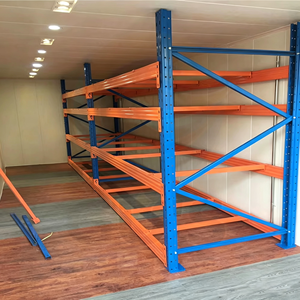
Heavy Duty Industrial Pallet Storage Racking 1000kg/2000kg/3000kg Capacity Per Layer Adjustable Steel Warehouse Rack
1000 kg, 2000 kg or 3000 kg per layer; adjustable beam pitch; suitable for mixed pallet heights and export projects.
View product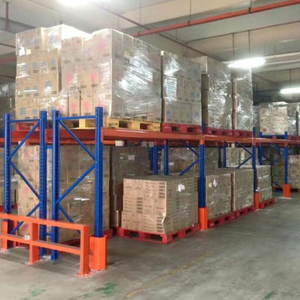
1300KG New Design Racks Industrial Warehouse Racking System Shelf Shelves Rack Shelving Storage 1400KG
1300 kg racking system with 1400 kg option; designed for new industrial warehouse shelving and distribution projects.
View product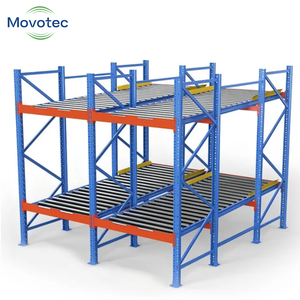
Warehouse Storage Racks Shelving Systems Pallet Rack Gravity Roller Flow Racking Movotec MTG100 1 Year Warranty
Gravity roller FIFO flow racking for fast-moving inventory; Movotec MTG100 platform with 1-year warranty.
View product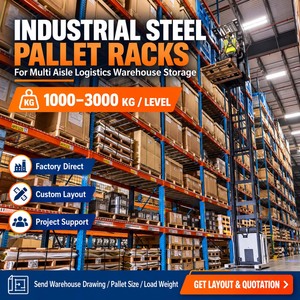
Selective Pallet Racking System with Adjustable Beam Levels for Different Pallet Heights
Adjustable beam levels support different pallet heights while preserving 100% selective access to every pallet.
View product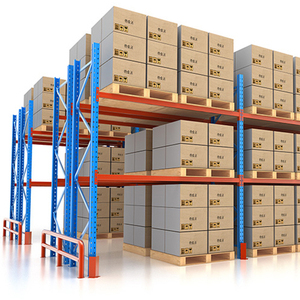
Selective Heavy Duty Warehouse Storage Rack Shelving System Pallet Racking
Heavy-duty selective racking for 3PL, retail and distribution centers that require fast access and high load capacity.
View product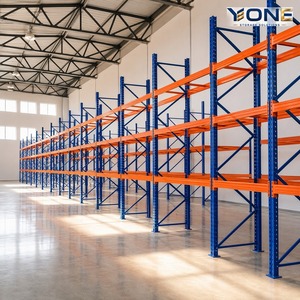
Steel Storage Rack Heavy Duty Pallet Racking Q235B Steel Selective Racking for Racks Industriales Warehouse Storage
Q235B steel selective racking with export-grade finish; suitable for industrial storage and racks industriales projects.
View product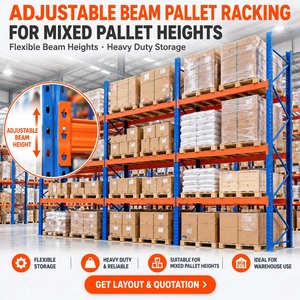
Adjustable Beam Pallet Racking System for Mixed Pallet Heights
Beam-level adjustment for mixed pallet heights; ideal for retrofits, multi-SKU storage and phased warehouse expansion.
View product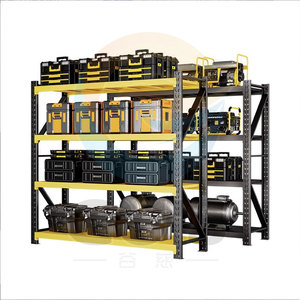
Heavy-Duty Boltless Shelving Racking System for Industrial & Home Use 5 Layer Steel Warehouse Storage Rack Shelf Original Black
Boltless 5-layer steel shelving for industrial and home storage; original black finish and fast modular assembly.
View productA credible CE certified industrial shelving units supplier should be auditable at factory level, not only at sales-office level. Production scale, steel traceability and export experience reduce schedule risk once a racking project moves from drawing approval to container loading.
What CE Certification Really Means for Industrial Shelving Procurement
CE certification is not a decorative sticker. For industrial shelving it is a traceable chain of design assumptions, execution class, welding control, raw-material certificates, load signage and installation guidance. Buyers gain more value when they compare the documentation pack before comparing price.
Ask for an audit-ready CE file
Request the EN 1090-1 declaration, EN 15512 and EN 15620 design references, load plates, anchor specification, welding quality evidence to EN ISO 3834-2 and a maintenance manual. A genuine supplier can align these documents with the destination market and the actual project load case.
Overlay local seismic and site codes
CE compliance does not replace Chilean NCh2369, Peruvian E.030, Colombian NSR-10 or Ecuadorian NEC requirements. For Andean and Pacific-coast projects, the structural model should include site soil class, anchoring, row spacers and reduced beam deflection limits where seismic demand is high.
Compare installed cost, not steel price
Low-cost racking can hide weaker base plates, unverified steel grades, missing load signage or site-assembly risk. Compare delivered, installed and inspected cost, then model inspection frequency, downtime exposure and warranty support. The lowest quote is rarely the lowest lifetime cost.
Information-gain checklist for RFQs: demand a document matrix covering steel mill certificates, weld traceability, load plates, anchor calculation, seismic report, packing list, installation manual and inspection schedule before awarding a purchase order.
Why Alohatop Shelf Is a Low-Risk CE Shelving Supplier
Alohatop Shelf LLC designs, calculates, manufactures and installs metal racking for warehouses, cold stores, 3PLs and automated facilities. Owning the process from steel coil to installation means one accountable partner for international buyers.
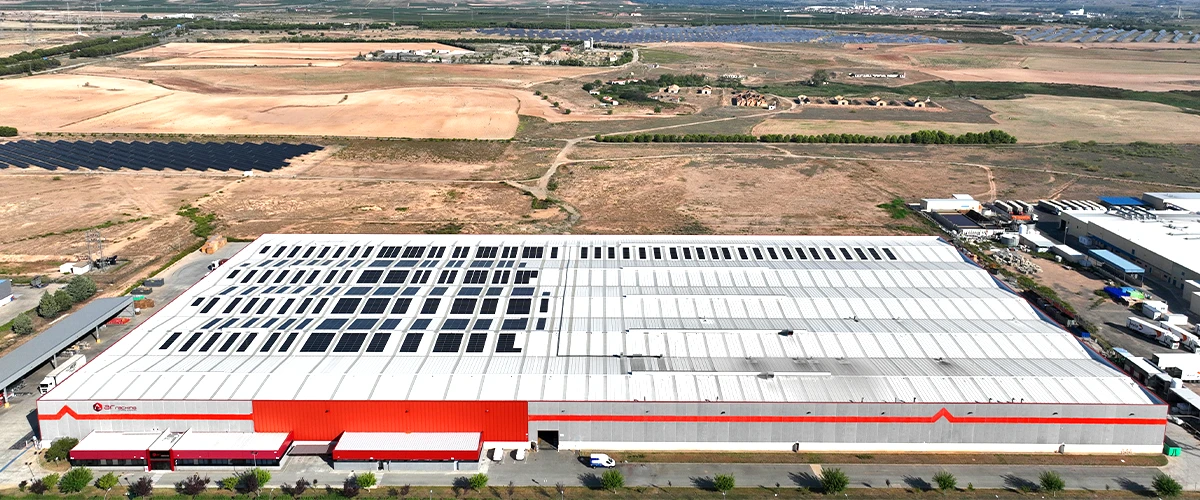
Manufacturer, Not Reseller
A 35,000 m² highly automated production centre with more than 100,000 t of annual capacity supports large-volume orders and repeat programmes. More than 90% of output is exported, giving the project team practical experience with export packing, port logistics and component traceability.
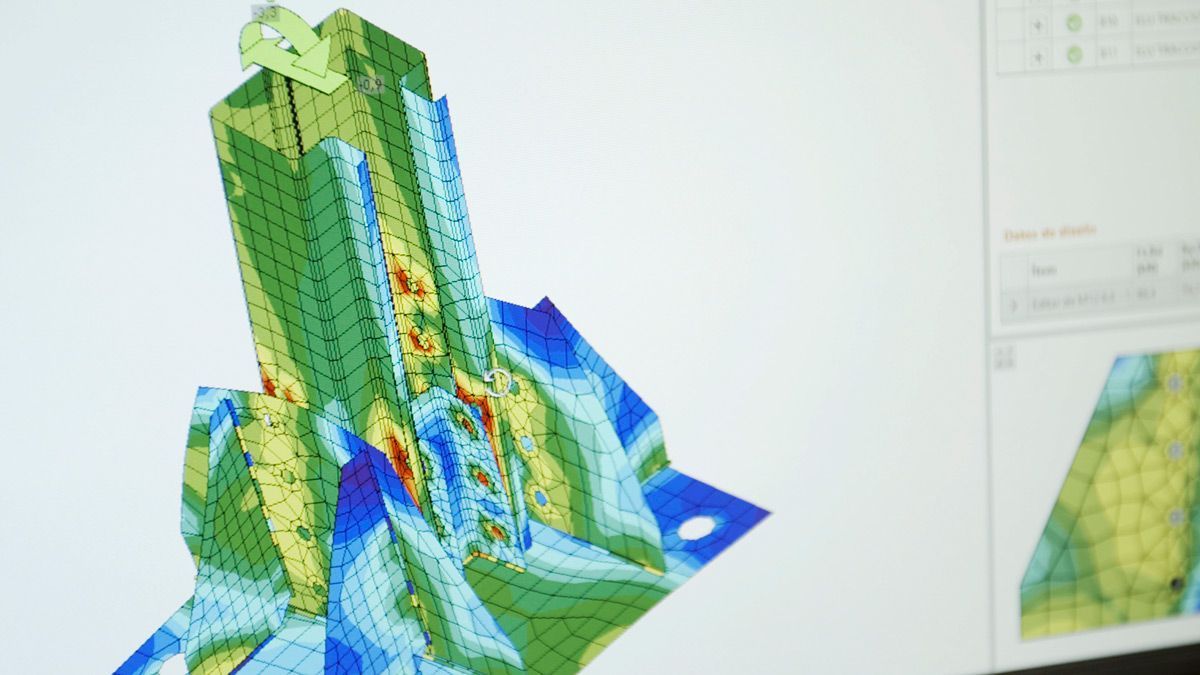
R&D and Laboratory Validation
The technology centre works with a research laboratory at Mondragon University to test component behaviour, strength and safety under real load cases. A research and simulation chair at the University of the Basque Country develops calculation and simulation models for frames, beams and connections.
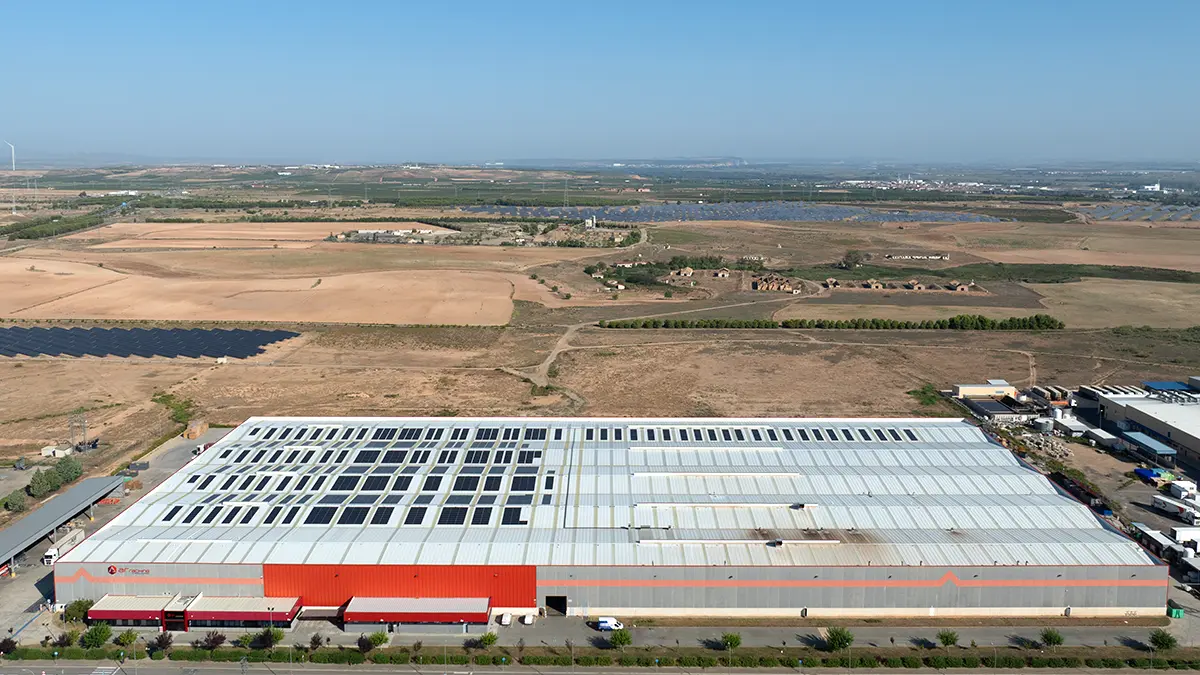
Automated Production Precision
AS/RS stacker cranes and shuttles stop when rack geometry drifts out of tolerance. Robotic production and laser-controlled processes keep frames and beams within tight tolerances for automated and manual warehouses, with full traceability and a 5-year warranty on storage systems.
Certifications That Support Audit-Ready Procurement
Certification is most useful when it is connected to production records, welding control, environmental reporting and after-sales support. The following standards and commitments help procurement teams reduce supplier risk.
 ISO 9001Quality management
 ISO 14001Environmental management
 ISO 45001Health & safety at work
 ISO 50001Energy management
 EN ISO 3834-2Welding quality control
 EN 1090-1Structural steel components
 ISO 14064Verified carbon footprint
Match CE Shelving to Throughput, SKU Profile and Building Height
Buyers often start with a product name, but the better starting point is the operating profile. These recommendations help narrow the configuration before an engineer calculates the final layout.
Selective & Adjustable Beam Racking
Best for high SKU mix, 3PL operations, food and retail distribution. Direct access to every pallet improves daily picking flexibility, while adjustable beams reduce redesign risk when pallet heights change.
VNA & Mobile Racking
Best for expensive land, tall buildings and cold stores where every cooled cubic metre matters. Higher density per square metre requires disciplined aisle management, truck guidance and precise installation tolerances.
Pallet Flow, Shuttle & Push-Back
Best for fast-moving or homogeneous inventory. FIFO gravity flow supports perishables and date-sensitive stock; pallet shuttle and push-back configurations raise density and throughput in deep lanes.
Boltless & Picking Shelving
Best for medium loads, spare parts, e-commerce and carton picking. Modular shelf levels and boltless assembly support fast installation, phased fit-outs and multi-tier picking layouts.
Procurement Trends Reshaping CE Shelving Purchases, 2026–2030
Industrial shelving procurement is shifting from catalogue purchasing to evidence-based project sourcing. The suppliers likely to win are those that can connect CE documentation, local seismic requirements, cold-chain performance and automation compatibility in one technical pack.
Audit-first sourcing and digital product passports
Procurement teams increasingly request batch traceability, steel certificates and digital document packs before shortlisting suppliers. The racking supplier becomes part of the buyer’s compliance record.
Dual compliance: CE plus local seismic codes
CE marking and local seismic verification are no longer alternative checklists. Chile, Peru, Colombia and Ecuador demand project-specific structural adaptation, anchoring and documentation.
Energy per pallet position in cold chain
Freezer and cold-store operators now evaluate density per cooled cubic metre, not only steel cost. Mobile, VNA, drive-in and shuttle systems are specified to reduce energy use per stored pallet.
Automation-ready rack geometry
AMR, AGV and AS/RS integration begins with tolerance control. Rack frames, beams and floor interfaces must be designed for automation from the start rather than retrofitted later.
What the Next Generation of Industrial Shelving Must Deliver
The product itself is changing. Buyers now expect racking that is stronger, faster to install, easier to inspect and compatible with automation, while still meeting cost and delivery targets.
High-strength steel and optimized profiles
Higher-strength steel and refined section profiles allow greater load capacity without unnecessary weight. The benefit is lower freight intensity, faster installation and better structural efficiency.
Sensor-ready safety and impact monitoring
Warehouse teams want faster damage detection. Sensors, QR-based inspection workflows and digital maintenance records will support better rack safety management and reduce unplanned downtime.
Modular, boltless and retrofit-friendly systems
Boltless shelving and modular racking help warehouses reconfigure without heavy downtime. Retrofitting existing bays with new beams and accessories is often more capital-efficient than a full rebuild.
Lower-carbon steel and durable finishes
Carbon reporting and durable coating choices are becoming part of supplier evaluation. Verified carbon data, powder-coating quality and repairable components support ESG goals without compromising rack performance.
CE-Certified Supplier vs. Unverified Shelving Supplier
The comparison below is designed for procurement scorecards. Use it in RFQs to identify suppliers that can provide evidence, not only prices.
| Procurement criterion | CE-certified supplier | Unverified supplier | Buyer risk |
|---|---|---|---|
| CE/EN documentation | EN 1090-1, load plates, anchor data, welding quality and maintenance manual | Certificate image only; no project-specific documentation | Audit delay and unclear compliance |
| Structural calculation | Project-specific load case with local seismic overlay | Generic catalogue load table | Possible overloading or code mismatch |
| Traceability | Batch-level steel, weld and component traceability | Unknown steel source or mixed batches | Difficult incident investigation |
| Cold-store performance | Steel and finish validated for low-temperature operation | No low-temperature evidence | Premature coating or material issues |
| Automation compatibility | Tight tolerances for AS/RS, shuttle and AMR integration | Manual-warehouse tolerances only | Costly retrofit or automation stoppages |
| Lifetime support | 5-year warranty, inspection guidance, spare components | Ad-hoc after-sales response | Higher long-term cost of ownership |
Frequently Asked Questions from CE Shelving Buyers
These answers reflect the questions engineers and procurement teams ask most often when evaluating industrial shelving units and pallet racking suppliers.
Are your industrial shelving units CE certified, and what documents are supplied?
Storage systems can be supplied with CE-related documentation aligned to the project, including EN 1090-1 structural steel execution information, EN 15512 and EN 15620 design references, load plates, anchor specification, welding quality evidence to EN ISO 3834-2 and a maintenance manual. The exact document pack depends on the product, destination country and project scope, so it should be confirmed in the quotation.
Can you design racking for seismic zones and cold-store temperatures?
Yes. For seismic zones, the design is checked against the local code and site soil class, such as NCh2369 and NCh433 in Chile, E.030 in Peru, NSR-10 in Colombia or NEC in Ecuador. Typical measures include reinforced uprights and bracing, heavier base plates and anchors, row spacers and tighter beam deflection limits. Cold-store systems can use steels and finishes suited to temperatures down to −30 °C.
Which pallet sizes and loads can be supported?
Common formats include the 1200 × 1000 mm pallet widely used in Latin America, the Brazilian PBR 1000 × 1200 mm pallet, the 1200 × 800 mm Euro pallet, and ISO sizes such as 1100 × 1100 mm and 1219 × 1016 mm. Beam lengths, frame depths and load capacities are dimensioned for the actual pallet, load weight and handling equipment rather than assumed from a generic catalogue.
What information do you need to quote an industrial shelving project?
Send a building layout with clear height, pallet dimensions and maximum load weight, number of SKUs and pallets per SKU, daily throughput, forklift or automation type, temperature range and project city. If available, include column positions, floor condition, local seismic requirements and any existing racking to be reused or matched.
How do you control quality and delivery for export projects?
Quality control starts with steel traceability, production records and welding control, then continues through packing, component marking and installation guidance. Alohatop Shelf systems carry a 5-year warranty and full component traceability. For export projects, installation can be supported by supervisors and trained distributors, depending on the destination and contract scope.
Do you supply only products, or also engineering and installation?
Projects can be supported from layout study and structural calculation through manufacturing, export packing, installation supervision, technical inspection and maintenance. This allows buyers to work with one accountable partner from the first CAD drawing to long-term rack safety, instead of coordinating separate design, steel and installation suppliers.
Request a CE-Compliant Industrial Shelving Proposal
Share your building layout, pallet dimensions, maximum load, SKU count, throughput, forklift or automation type, temperature range and project city. Our storage engineers will use this information to recommend a safer, more space-efficient racking solution and the supporting CE documentation package.
Prefer direct email? Send project data to [email protected].
Inquire Now