Industrial Storage Shelving and Racking Products for Global Buyers
The strongest procurement decisions start with a clear view of the storage system, the load profile and the export documentation. These eight product families cover manual shelving, selective pallet racking, cantilever long-goods storage and automated warehouse structures.
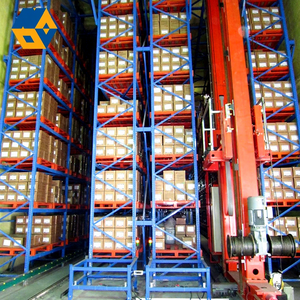
NOVA AS/RS Stacker Crane Pallet Warehouse Rack System
High-bay automated storage and retrieval structure for pallet warehouses, designed for stacker-crane tolerances, precise beam geometry and integration with warehouse control software.
View product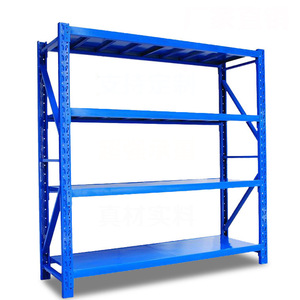
LIANGZO 5-Layer Chrome-Plated Steel Storage Shelf
Corrosion-protected shelving for warehouse, retail backroom, workshop and household storage. A practical choice for distributors sourcing adjustable display and stockroom shelving.
View product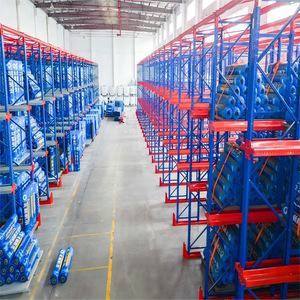
Reliable Heavy-Duty Steel Roll Pallet Storage Rack
Drive-in style pallet racking for bulk roll goods, paper, textiles, film and palletized cargo where dense storage and controlled access are priority requirements.
View product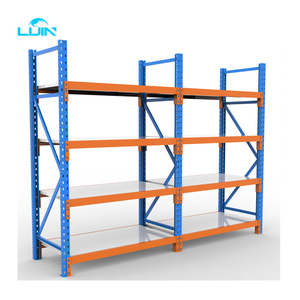
Boltless Adjustable Industrial Heavy-Duty Pallet Racking
Fast-install selective pallet racking with adjustable beam levels for distribution centres, factories and multi-SKU warehouses that need direct access to every pallet.
View product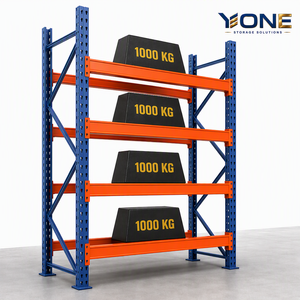
Durable Steel Pallet Racking with Safety Accessories
Heavy-duty warehouse racking supplied with upright protectors, row spacers, beam locks and safety signage for projects that require a complete, inspection-ready installation.
View product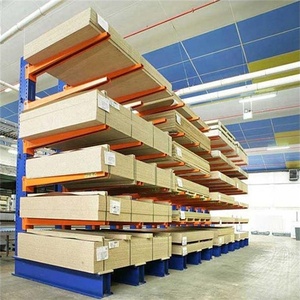
Heavy-Duty Industrial Cantilever Arm Racking System
Purpose-built storage for pipes, profiles, timber, panels and other long or awkward loads. Cantilever arms allow fast forklift access and flexible bay widths.
View product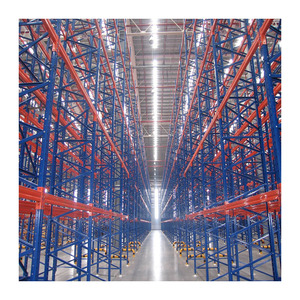
Mracking Heavy-Duty Industrial Palletized Racking
High-capacity palletized racking for heavy loads, manufacturing buffers and distribution warehouses. Loading data and beam deflection are checked against the real pallet pattern.
View product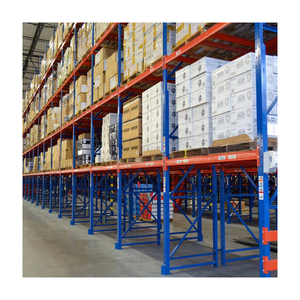
Wholesale Heavy-Duty Steel Pallet Racks for Warehouse Storage
Cost-competitive selective pallet racking for distributors, importers and warehouse contractors seeking factory pricing, export packing and repeatable component quality.
View productWhy CE Certification Is a Procurement Issue, Not a Decorative Logo
Industrial storage shelving is often purchased as a long-life structural asset, yet some buyers compare it like a commodity. That is a risk. A CE-certified factory and exporter should be able to explain which product scope, standard, load assumption and manufacturing control system sit behind the documentation.
A CE mark or declaration is not a generic badge that can be copied across every beam height, frame depth or load class. For racking and shelving, conformity is configuration-sensitive. The supplier should provide the applicable declaration or conformity pack, the harmonised standard or technical route used, factory production control records, steel grade traceability and welding quality evidence where required. Buyers should also verify that the declaration covers the exact product family being purchased, not only a related product from the same factory.
This is where an experienced exporter adds value. Our team supports project documentation, component traceability, load signage, installation drawings and inspection records. The goal is not simply to ship steel; it is to reduce the compliance and safety uncertainty that appears months later when a warehouse is audited, expanded or re-racked.
Engineering Depth, Manufacturing Control and Export Discipline
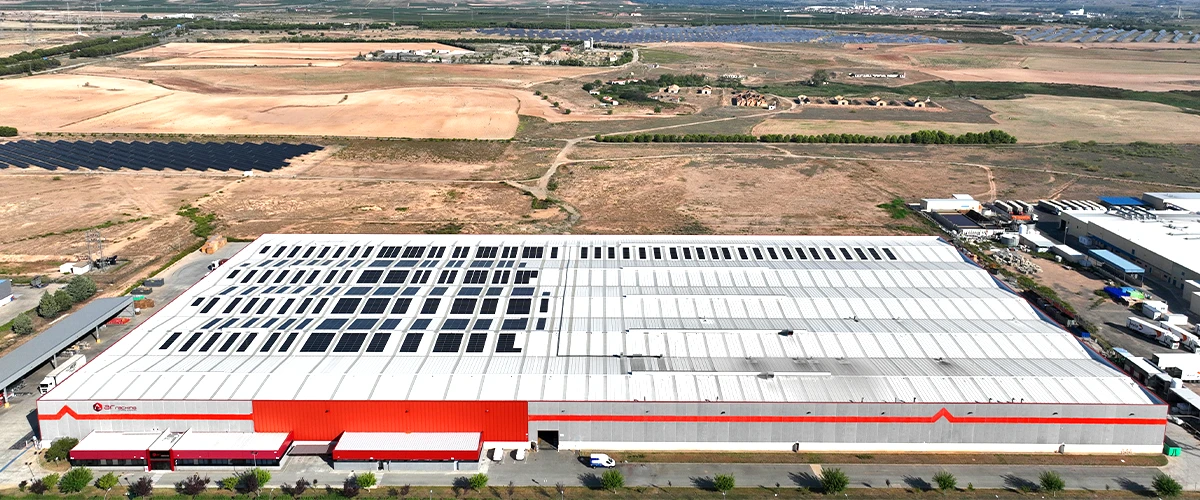
A genuine CE-certified industrial storage shelving factory should control more than assembly. It should control raw material input, roll forming, welding, surface treatment, packing and technical documentation. Alohatop Shelf operates a highly automated production centre of approximately 35,000 m² with annual steel capacity above 100,000 t, and more than 90% of output is exported.
Our engineering team designs, calculates and supports installation for selective pallet racking, VNA, double-deep, drive-in, mobile, pallet flow, push-back, pallet shuttle and AS/RS structures. We also work with an R&D laboratory at Mondragon University and a research and simulation chair at the University of the Basque Country, applying laboratory testing and finite-element modelling to frames, beams and base connections.
For buyers, the practical benefit is repeatable geometry, faster site installation and fewer integration surprises. Automated stacker cranes and shuttles can stop when rack tolerances drift; manual warehouses also suffer when components do not fit. Millimetre discipline is not a marketing phrase — it protects project schedules and long-term safety.
Factory Direct, Not a Trader
Production control from steel coil to packing reduces hidden mark-ups and improves accountability.
Certified Quality Systems
ISO 9001, ISO 14001, ISO 45001, ISO 50001, EN ISO 3834-2, EN 1090-1 and ISO 14064 support.
Seismic and Cold-Store Experience
Projects engineered for seismic zones, freezer warehouses and high-density cold-chain operations.
Export Packing and Logistics
Port experience, component marking and packing plans that match container or project shipment needs.
Traceability and Documentation
Component traceability, approved drawings, load signs and inspection support for audits.
Installation and Distributor Network
Own supervisors, 70+ distributors and regional support for complex international projects.
Product Recommendation Guide for 2026–2030 Warehouse Projects
No single racking system is best for every buyer. Use the recommendation logic below to match the storage system to SKU profile, throughput, building height, temperature and automation plan.
For High-SKU Distribution
Choose selective pallet racking and boltless adjustable shelving when buyers need direct access to most pallets or cartons. This is the most flexible base for food and beverage, retail distribution, spare parts and 3PL operations where inventory changes frequently.
Recommended selective racking →For Dense or Cold Storage
Move toward drive-in, mobile or pallet shuttle racking when every cubic metre of refrigerated space carries cost. The best choice depends on whether the warehouse needs FIFO, LIFO, direct access or high-throughput deep lanes, and whether racking must operate at −30 °C.
Recommended hard-duty storage →For Automation and AS/RS
Select an AS/RS-ready structure when labour availability, order accuracy and 24/7 throughput dominate the business case. The rack is no longer just storage; it becomes part of the handling system, so drawing tolerances, interface points and installation sequencing must be controlled.
Recommended AS/RS system →| System | Best-fit buying profile | Procurement note |
|---|---|---|
| Selective pallet racking | High SKU mix, retail, food and beverage, 3PL | Specify pallet size, load per level, beam length and safety accessories. |
| Boltless shelving | Cartons, spare parts, retail backroom, light warehouse | Check shelf load, finish, adjustability and export packing. |
| Drive-in / roll goods racking | Bulk rolls, homogeneous pallets, freezer storage | Confirm LIFO or FIFO requirement, forklift type and rail guidance. |
| Cantilever racking | Pipes, profiles, timber, panels, long goods | Arm load, arm spacing, base length and outdoor finish matter. |
| AS/RS structures | Large distribution centres, 24/7 operations, high labour cost | Provide crane interface data, building tolerances and WMS requirements. |
What Buyers Will Expect From Storage Shelving Exporters
Procurement teams are moving away from lowest-price buying toward total cost, compliance evidence and integration risk. The next buying cycle will reward exporters that can support engineering decisions, not only quotations.
Total Cost of Ownership
Buyers will compare installation speed, damage resistance, spare-part availability, inspection support and expansion potential — not only price per bay.
Verified ESG and Carbon Data
Carbon reporting, steel sourcing, coating processes and recyclability will become part of supplier qualification for large distributors and public projects.
Safety and Seismic Evidence
Warehouse audits will demand load signs, anchor details, inspection records and seismic verification for the actual site, not a generic brochure claim.
Digital-Ready Specifications
CAD blocks, load data, BIM-ready drawings, part numbers and WMS/AS/RS interface data will shorten approvals and reduce installation conflicts.
How CE-Certified Storage Shelving Factories Are Evolving
Racking technology is shifting toward stronger profiles, cleaner installation, cold-chain capability and automation compatibility. These changes affect what buyers should specify in the RFQ.
Higher-Strength, Leaner Profiles
Optimised cold-formed steel sections help reduce steel weight per pallet position while maintaining load capacity and stiffness.
Cold-Store and Freezer Systems
Steel grades, coatings, mobile bases and shuttle systems are being refined for high humidity, frost and temperatures down to −30 °C.
Automation-Ready Interfaces
Rack structures are designed around stacker cranes, AMRs, shuttles, sensors and WMS-controlled operations, with tighter tolerance planning.
Circular Steel and Reconfigurability
Bolted, modular designs make expansion, relocation, refurbishment and end-of-life steel recovery easier for long-term asset owners.
How to Qualify a CE-Certified Shelving Factory and Exporter
Before comparing prices, confirm that every supplier is quoting against the same technical basis. A professional RFQ reduces rework and protects the project schedule.
- Provide building layout, clear height, column grid, floor condition and intended aisle widths.
- State pallet dimensions, load weight per pallet, load per beam level and the number of pallets per SKU.
- Define temperature range, humidity, washdown practice, fire strategy and seismic zone.
- Confirm whether the operation needs FIFO, LIFO, direct access, high throughput or full automation.
- Request CE documentation scope, steel grade, welding standard, finish, warranty and traceability method.
- Ask for installation drawings, packing plan, spare-parts list and inspection recommendations.
Frequently Asked Questions From Global Storage Shelving Buyers
These are the questions procurement teams, distributors and warehouse engineers ask most often when evaluating a CE-certified industrial storage shelving factory and exporter.
What does CE certification mean for industrial storage shelving?
CE conformity is product- and configuration-specific. For storage shelving and racking, buyers should verify the applicable declaration, standard or technical route, load assumptions and factory production control records. A responsible supplier will explain exactly what is covered and will not present a generic certificate as valid for every rack size, load class or seismic condition.
How can I verify that a factory is genuinely CE-certified and not simply a trading company?
Ask for the factory production control documents, the exact scope of the CE declaration, steel traceability, welding quality evidence, component marking and audit records. A video call of the production line, packing area and raw-material storage is also useful. Compare the declared factory address with the commercial invoice and shipping documents before placing a large order.
Which pallet sizes and load capacities can your racking systems support?
We design for common pallet formats including 1200 × 1000 mm, 1200 × 800 mm, 1100 × 1100 mm and other ISO or project-specific sizes. Beam lengths, frame depths and load ratings are calculated against the actual pallet, maximum load per level, load pattern and deflection limit. Do not specify frame height or beam length from a catalogue without checking the real load case.
Can industrial storage shelving be engineered for seismic zones?
Yes. For seismic markets, racking must be checked against the local code, soil class and building condition. Typical measures include reinforced uprights and bracing, heavier base plates and anchors, row spacers and tighter beam deflection limits. Buyers in Chile, Peru, Colombia, Ecuador and other seismic regions should request country-specific verification rather than a generic export design.
Can your storage systems operate in cold storage or freezer warehouses?
Yes. We supply mobile racking, drive-in, VNA, pallet shuttle and self-supporting freezer structures using steel grades and finishes suited to cold-store conditions, including temperatures down to −30 °C. The design should consider frost, humidity, floor flatness, forklift type and emergency access.
Do you provide installation support and safety accessories for export projects?
Yes. Projects can include approved installation drawings, component marking, load signs, upright protectors, beam locks, row spacers and inspection guidance. Our team can coordinate with local installers or provide supervisory support depending on the destination, project size and contractual scope.
What is the typical lead time for a factory-direct racking order?
Lead time depends on engineering approval, order volume, finish, automation interface and shipping route. Selective racking and shelving are usually faster than complex AS/RS, cold-store or self-supporting structures. For accurate planning, send the layout, load data and required delivery date so the factory can confirm drawing time, production slot and export packing schedule.
What information should I send to receive a useful quotation?
Send a building layout with clear height, pallet dimensions and maximum load, number of SKUs and pallets per SKU, daily throughput, forklift or automation type, temperature range and project city. Also state the required finish, safety accessories, destination port, target delivery date and whether CE documentation or seismic design is required.
Request a CE Documentation Pack and Engineered Storage Layout
Share your building dimensions, pallet data, load weight, temperature range and throughput. Our team will recommend the most suitable industrial storage shelving or racking system, outline the documentation scope and prepare a factory-direct quotation for your market.
Supporting information: factory audit notes, 5-year warranty terms, ISO certifications, EN 1090-1 and EN ISO 3834-2 production controls, plus availability of design review for seismic and cold-store projects.