Warehouse and storage projects delivered worldwide
Countries served through branches and trained distributors
Annual steel production capacity in an automated plant
Warranty with full component traceability and lifecycle support
What Buyers Really Need From CE Certified Pallet Rack Suppliers
Buyers searching for CE Certified Warehouse Pallet Racks Manufacturers & Suppliers usually face two decisions: verify that the racking supplier can support structural safety with the right documentation, and select a storage system that lowers cost per pallet position without reducing access, throughput or safety.
A credible racking manufacturer should not answer a technical RFQ with a generic “CE certificate” alone. Pallet racking is an engineered steel structure. Its safety depends on the actual pallet load, beam span, upright frame, seismic zone, floor condition, anchor design, forklift impact protection and installation quality. The most useful supplier is therefore the one that can combine design verification, manufacturing traceability, installation control and lifetime inspection in one accountable project package.
This page is written for warehouse owners, 3PL operators, procurement managers, logistics engineers and project consultants who compare manufacturers and suppliers. The product portfolio below is not a random catalogue: each system is positioned by load profile, selectivity, storage density and automation readiness. For European and global projects, request project-specific calculations and a clear declaration of which standards apply before placing a purchase order.
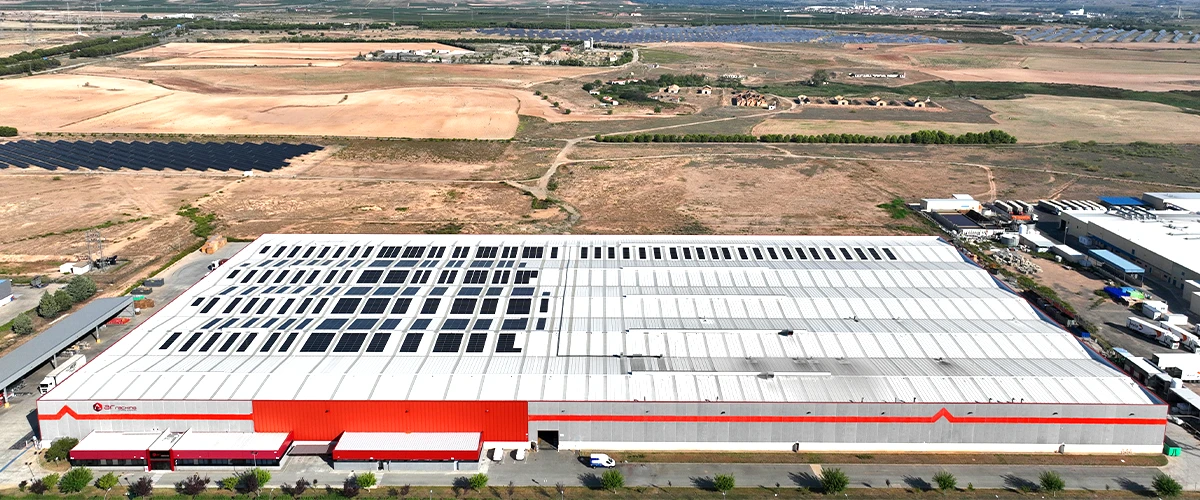
8 Warehouse Pallet Rack Systems for Different Load and Throughput Profiles
Use this shortlist to match a pallet racking concept with your real operating profile. Final beam length, frame depth, load capacity, finish and anchoring must be confirmed by engineering calculation.
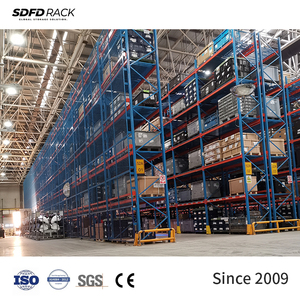
Adjustable High Quality Heavy Duty Selective Pallet Racking 3000KG Load Industrial Warehouse Heavy Duty Storage Pallet Racks
Best for: mixed-SKU distribution centres that need direct access to every pallet and frequent beam-level adjustment.
View product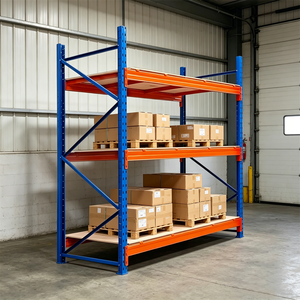
Powder Coated Heavy Duty Rack Industrial Warehouse Storage Pallet Racking Adjustable Industrial Shelves
Best for: manufacturing warehouses and distribution facilities that value corrosion resistance, clean finish and flexible shelf levels.
View product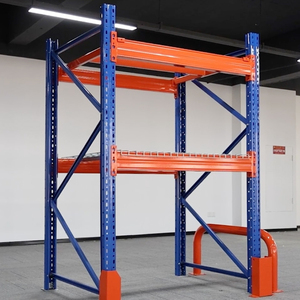
Warehouse Storage Rack 4000kg High Capacity Multi-Level Pallet Racking for Auto Parts Logistics Park Industrial Standard
Best for: auto-parts logistics parks, heavy industrial components and multi-level layouts where beam load and frame stability are critical.
View product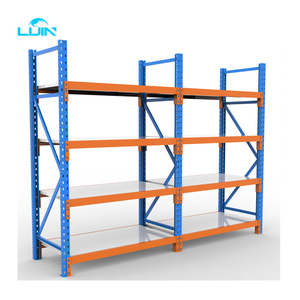
Boltless Adjustable Industrial Heavy Duty Pallet Racking System Warehouse Steel Metal Storage Racks Shelving Units
Best for: projects that need faster assembly, simple reconfiguration and low-maintenance steel shelving units.
View product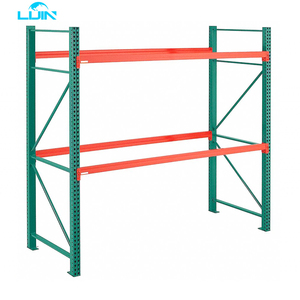
Long Span Adjustable Heavy Weight Warehouse Storage Pallet Shelves System Tear Drop Rack for Industrial
Best for: long-span layouts, frequent reconfiguration and buyers who prefer the familiar tear-drop connection system.
View product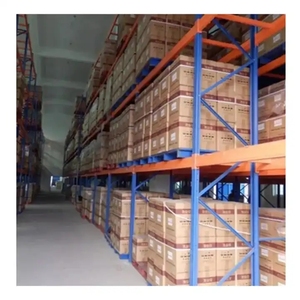
Industrial Shelving Medium Shelf Duty Steel Rack Storage Equipment Certificated Warehouse Metal Racks
Best for: cartons, spare parts, light pallets and manual picking areas that do not require full heavy-duty selective racking.
View product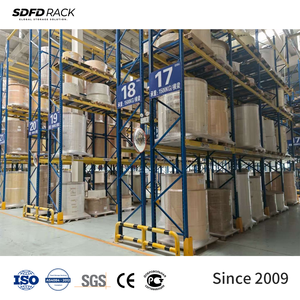
Heavy Duty Conventional Pallet Racking High Load Steel Industrial Storage Shelf Custom Multi-Layer Warehouse Pallet Rack System
Best for: high-bay or customized multi-layer storage where the layout must be designed around building height, pallet flow and future expansion.
View product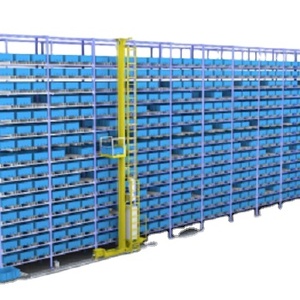
Miniload Rack Asrs Miniload Automated Storage System
Best for: small parts, high-throughput fulfilment and automated warehouses where rack tolerances and integration precision are essential.
View productWhy Alohatop Shelf Is a Practical Alternative to Trading Companies
The strongest pallet rack supplier is not simply the one with the lowest quotation. It is the one that controls engineering, steel production, quality records, export logistics, installation supervision and after-sales support.
35,000 m² Automated Production
Robotic and laser-controlled manufacturing supports consistent frame and beam geometry, which is especially important for AS/RS and large export orders.
Engineering and R&D Depth
R&D collaboration with Mondragon University and a simulation chair at the University of the Basque Country support structural testing and calculation models.
Full Traceability
Each upright and beam can be traced from production batch to project delivery, helping buyers maintain quality records and future replacement planning.
Certified Quality System
ISO 9001, ISO 14001, ISO 45001, ISO 50001, EN ISO 3834-2 welding quality, EN 1090-1 and ISO 14064 reporting support project due diligence.
Export Project Experience
More than 90% of output is exported, with experience shipping to major ports and coordinating distributors across 60+ countries.
Lifecycle Services
Layout engineering, structural calculation, technical inspection, installation supervision and maintenance programmes protect the investment after handover.
Cold-Store and Seismic Design
Racking can be engineered for freezer environments, high humidity and seismic zones, including reinforced bracing, anchors and row spacers where required.
5-Year System Warranty
A five-year warranty and documented component system give procurement teams a clearer basis for total cost of ownership and risk assessment.
- Manufacturer, not a reseller: one accountable partner from steel coil to final load sign.
- Project-specific documentation: request design assumptions, loading diagrams, finish specification, anchor requirements and installation tolerances.
- Scalable supply model: support for single-aisle upgrades, multi-phase distribution centres and automated warehouse structures.
Pallet Racking Procurement Trends Shaping 2026–2030
Buying behaviour is moving from component price comparison to lifecycle risk management. These trends should be reflected in your RFQ and supplier scorecard.
Documentation Becomes Part of the RFQ
Procurement teams increasingly ask for EN 15512 calculations, EN 1090-1 declarations where applicable, welding quality evidence, load signs and installation tolerances before approving a supplier.
Automation-Ready Racking
Even manually operated warehouses are being prepared for AMR, shuttle or AS/RS upgrades. Suppliers that understand tolerance, flatness and interface requirements have an advantage.
Cold-Chain and Energy Efficiency
High-density and mobile racking reduce cooled cubic volume per pallet. Freezer projects require steel, finish and installation details suited to temperatures down to −30 °C.
Regional Distribution Hubs
Nearshoring and e-commerce growth continue to create regional DCs. Buyers want modular layouts that can be expanded without replacing the original rack structure.
Sustainability Data in Supplier Selection
Verified carbon reporting, recycled steel content, coating durability and longer service life are becoming measurable procurement criteria alongside price.
Total Cost of Ownership
Rack inspection, repair, reconfiguration, spare parts and uptime are now evaluated with the initial capital cost. A 5-year warranty and local support can reduce operational risk.
How Warehouse Pallet Racks Are Evolving
The next generation of racking is being shaped by higher strength-to-weight ratios, tighter manufacturing tolerances, hybrid storage strategies and digital documentation.
High-Strength Steel and Precision Profiles
Optimized profiles and automated production help increase load capacity while improving installation consistency. Buyers should compare tested section properties, not only steel thickness.
Hybrid Selective and High-Density Layouts
Warehouses increasingly combine selective racking for fast movers with double-deep, drive-in, shuttle or flow racking for stable SKUs and slow movers.
Sensor-Ready and Digital-Twin Planning
BIM and digital-twin planning improve collision checks, fire strategy and maintenance planning. Racking can be designed for future inspection routes and sensor placement.
Fire, Seismic and Cold-Room Integration
Racking design is increasingly coordinated with sprinkler layout, smoke ventilation, freezer envelopes, floor flatness and local seismic codes.
Selective Racking vs High-Density Storage: The Procurement Trade-Off
High density is not automatically the best solution. The right system balances pallet positions, accessibility, throughput, capital cost and future flexibility.
Indicative storage density by system
Use selective racking when SKU variety is high and every pallet must be accessible. It remains the benchmark for flexibility and is often the first choice for food and beverage, retail and 3PL environments.
Use high-density systems when the same SKU occupies multiple pallets, when cooled volume must be minimized, or when automated storage and retrieval can justify the integration cost. Drive-in, shuttle and AS/RS systems can save floor space, but they change how product is received, replenished and picked.
Do not compare systems by price per pallet position alone. Include land cost, building height, cooling cost, forklift productivity, safety, spare parts, inspection and future expansion potential.
| Procurement Question | What to Request From a Supplier | Why It Matters |
|---|---|---|
| Which CE and design standards apply? | EN 15512 calculation basis, EN 1090-1 declaration where applicable, EN 15635 inspection guidance, welding quality evidence. | Prevents a generic “CE certificate” from replacing project-specific structural verification. |
| What is the real load? | Pallet dimensions, maximum gross weight, beam span, load pattern, dynamic and static requirements. | Rack capacity cannot be judged from upright thickness alone. |
| What is the seismic category? | Project location, local code, soil class, anchor design, bracing and row spacers. | Seismic zones may require different frames, anchors and deflection limits. |
| What is the temperature range? | Ambient, chilled or freezer operation, humidity, coating specification and steel grade. | Cold-store racking must remain safe and serviceable at low temperature. |
| Who installs and inspects? | Installation method statement, supervisor qualifications, plumb tolerance, load signs and handover documents. | Engineering quality can be lost through poor installation or anchor tightening. |
| What is the lifecycle support? | Warranty, spare parts, inspection interval, repair procedure and replacement component lead time. | Racking safety must be maintained throughout the warehouse operating life. |
Frequently Asked Questions About CE Certified Pallet Racks
These are the questions our project engineers most often receive from warehouse, logistics and procurement teams during supplier selection.
Does CE certification guarantee that a pallet rack is safe for my project?
No. A CE-related declaration or certificate supports compliance, but the racking must still be designed for the actual pallet load, beam span, floor condition, seismic zone and installation. Buyers should request project-specific structural calculations, load signs and installation controls, not only a certificate file.
Which standards should a CE-compliant pallet racking supplier mention?
Depending on the project and market, relevant references may include EN 15512 for the structural design of adjustable pallet racking, EN 15635 for the use and maintenance of storage equipment, EN 1090-1 for structural steel components where applicable, and EN ISO 3834-2 for welding quality. The supplier should clearly state the scope of each document.
Can you supply pallet racks for 1200 × 1000 mm, Euro and ISO pallets?
Yes. Common formats include 1200 × 1000 mm pallets used in Latin America, Brazilian PBR 1000 × 1200 mm, 1200 × 800 mm Euro pallets and ISO sizes such as 1100 × 1100 mm and 1219 × 1016 mm. Beam lengths and frame depths are dimensioned for the actual pallet and load, not a generic catalogue size.
What information is needed to receive a pallet racking proposal?
Send the building layout and clear height, pallet dimensions, maximum load weight, number of SKUs and pallets per SKU, daily throughput, forklift or automation type, temperature range, project city and any local seismic or fire requirements. This allows the engineering team to compare selective, high-density and automated options.
Can the racking be used in cold storage and freezer warehouses?
Yes. Mobile racking, drive-in, VNA, pallet shuttle and self-supporting freezer structures can be supplied with steels, finishes and design details suited to temperatures down to −30 °C. Cold-chain projects for fruit, seafood, meat and frozen food exporters should specify temperature and humidity in the RFQ.
Do you support seismic design for Chile, Peru, Colombia and Ecuador?
Projects in seismic regions can be engineered to local requirements and site conditions, with reinforced bracing, base plates, anchors, row spacers and reduced deflection limits where needed. Local codes and soil class must be confirmed by the project engineer before manufacturing.
What is the typical MOQ and lead time?
MOQ and lead time depend on the system, finish, project size and whether the order includes automated interfaces. A single-aisle selective racking upgrade may follow a shorter schedule than a multi-level or miniload AS/RS structure. Provide your project schedule early so production slots and shipping can be planned.
What warranty and after-sales service are available?
Storage systems can be covered by a 5-year warranty with component traceability. Service scope can include engineering review, technical rack inspection, installation supervision, maintenance and replacement parts. Procurement teams should confirm the warranty scope, inspection interval and spare-parts lead time in the contract.
Build a Safer, More Competitive Warehouse Pallet Rack System
Share your building layout, pallet sizes, load data, throughput target and project location. Our storage engineers will compare CE-documentation needs, selective racking, high-density options and automation readiness so you can make a procurement decision with confidence.