CE Certified Warehouse Racking Solutions Factories & Factory
A procurement-grade technical guide for buyers comparing CE-marked racking factories, seismic-safe pallet racking, cold storage structures, automated warehouse interfaces, and long-term lifecycle cost.
Countries with installed storage systems
Warehouse projects delivered
Annual steel production capacity
Of production exported worldwide
Eight CE-Ready Warehouse Racking Systems for 2026–2030 Projects
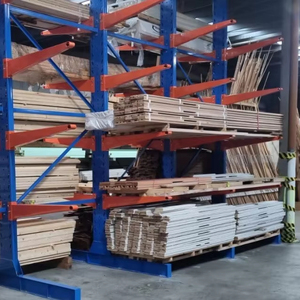
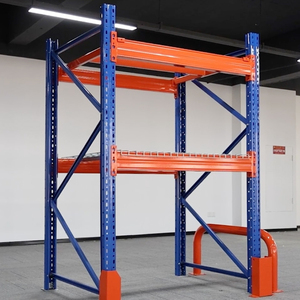
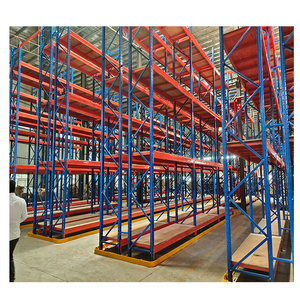
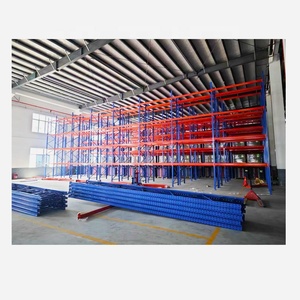
These product families reflect the practical specification choices our engineers review most often: long-material cantilever storage, high-capacity pallet racking, selective pallet systems, double-deep density, structural pallet racking, gravity flow, and adjustable boltless storage.
Why CE-Marked Warehouse Racking Is a Procurement Decision, Not a Commodity Purchase
When a buyer searches for CE certified warehouse racking solutions factories & factory, the real question is not whether a supplier can quote a beam-and-upright price. The real question is whether the racking factory can prove that the structure has been designed, manufactured, welded, tested, documented, and installed under a controlled system. For warehouse owners, 3PL operators, cold-chain developers, and industrial contractors, the difference between a low-cost racking package and a verifiable CE-marked structure often appears years later — during insurance review, seismic approval, fire-safety inspection, or the first automated crane integration.
For structural steel components, CE marking is closely linked to EN 1090-1, which requires factory production control, declared performance, material traceability, and welding quality discipline. A credible racking factory should be able to connect four evidence streams: the structural calculation package, the steel material certificates, the welding and coating records, and the installation tolerance report. That is the information gain a buyer should demand before comparing unit prices. It is also how a true racking manufacturer differs from a trading company that simply resells catalogue frames.
Our engineering approach is built for that evidence-based procurement model. Every upright, beam, brace, base plate, and safety accessory can be traced from production batch to project delivery. Systems are produced under ISO 9001, ISO 14001, ISO 45001, ISO 50001, EN ISO 3834-2 welding quality, EN 1090-1 structural steel control, and ISO 14064 verified carbon reporting where applicable. The result is not simply a rack — it is a documented load-bearing structure with a 5-year warranty and a defined safety lifecycle.
Product Recommendation Matrix: Match the Racking System to the Load, Not the Catalogue
Use this matrix as an early-stage specification aid. Final selection must still be calculated against the actual pallet, building, seismic zone, turnover profile, and handling equipment.
| Recommended Product Family | Best Application | Procurement Focus |
|---|---|---|
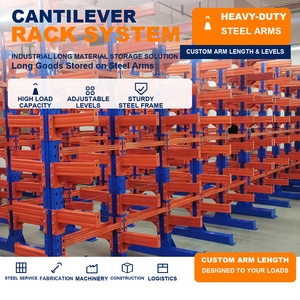
| Double-sided heavy pipe cantilever racking | Pipes, tubes, profiles, timber, and long goods where unobstructed front access is essential. | Check arm load capacity, column spacing, arm pitch, and surface protection for outdoor or semi-outdoor storage. |
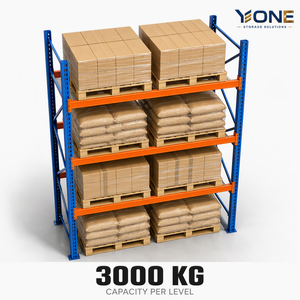
| 4000kg multi-level pallet racking | Auto-parts logistics parks, industrial buffers, and high-capacity pallet storage with mixed SKU profiles. | Verify beam load tables, upright axial capacity, forklift clearance, and floor-load assumptions. |
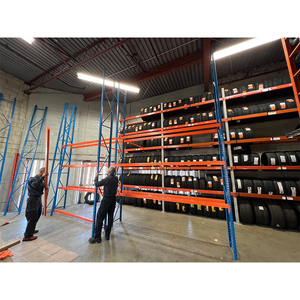
| Heavy-duty selective pallet racking | General distribution centres, food and beverage warehouses, retail DCs, and 3PL operations requiring direct access. | Confirm selectivity, beam deflection limits, frame protection, and seismic anchoring details. |
| Double-deep pallet storage racking | 3PL and manufacturing warehouses with multiple pallets per SKU and acceptable LIFO access per lane. | Model the real number of pallets per SKU; do not trade selectivity for density without throughput data. |
| Industrial structural pallet rack system | Heavy loads, robust industrial environments, and projects requiring a more structural steel approach. | Review connection design, impact protection, paint system, and documented load signage. |
| Heavy-duty cantilever rack for long materials | Steel service centres, building materials, pipe warehouses, and long-material yards. | Check single- or double-sided configuration, crane or forklift handling, and arm adjustability. |
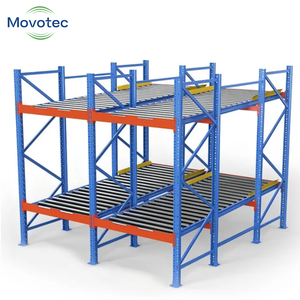
| Movotec MTG100 gravity flow pallet racking | Fast-moving inventory, perishables, FIFO-controlled stock, and distribution centres with repeatable pallet quality. | Validate roller pitch, brake design, lane length, pallet condition, and flow-control accessories. |
| 2000kg boltless adjustable steel pallet rack | Flexible warehouses, spare parts storage, light manufacturing, and projects where adjustable levels are important. | Compare actual beam capacity, locking pins, surface finish, and reconfiguration ease. |
Product Procurement Trends Shaping Racking Factory Orders in 2026–2030
The buying criteria for warehouse racking are moving from “price per pallet position” toward verified safety, speed of deployment, automation readiness, and lifecycle service.
Seismic and safety-first procurement
Chile, Peru, Colombia, Ecuador, and western Argentina require racking checked against local seismic codes and soil conditions. Buyers increasingly ask for calculation packages, anchor design, row spacers, and reduced deflection limits before purchase order release.
Cold-chain density and energy cost
Fruit, seafood, meat, dairy, and frozen-food exporters compare pallet positions per cooled cubic metre. Mobile racking, drive-in, VNA, pallet shuttle, and self-supporting freezer structures are evaluated for energy intensity, not merely steel cost.
Automation-ready rack geometry
AS/RS stacker cranes, pallet shuttles, AGVs, and AMRs demand tighter tolerances than manual forklift warehouses. Buyers now request factory inspection records for frame straightness, beam pin engagement, and installation plumbness.
Nearshoring and shorter lead times
Supply-chain regionalisation is increasing demand for warehouses near ports, industrial parks, and consumption centres. Project teams want racking factories that can coordinate production, container loading, and site installation without information loss.
Verified sustainability data
Procurement teams increasingly request ISO 14064 carbon reporting, coating VOC data, recyclable steel content, and energy-management evidence. Sustainability is becoming part of the technical bid, not a marketing appendix.
Lifecycle inspection and retrofit
Warehouse operators are buying racking as a managed asset. Periodic inspection, impact-damage repair, beam reconfiguration, and retrofit upgrades are increasingly specified alongside new racking projects.
Engineering Development Trends Inside a Modern Racking Factory
Factory capability is now a direct input to warehouse performance. The strongest racking suppliers treat production control, testing, and calculation as one system.
Digital traceability
Batch-level traceability links steel certificates, production records, welding checks, coating inspections, and delivered components to each project.
Robotic welding and laser control
Automated welding cells and controlled profiles improve consistency for large export orders and support the tight tolerances required by automated warehouses.
High-strength steel profiles
Optimised profiles can reduce steel weight while maintaining stiffness, but only when verified by structural calculation and physical load testing rather than catalogue assumptions.
Modular, reconfigurable layouts
Warehouses change faster than buildings. Adjustable beams, boltless shelving, modular cantilever arms, and reconfigurable rack layouts protect future flexibility.
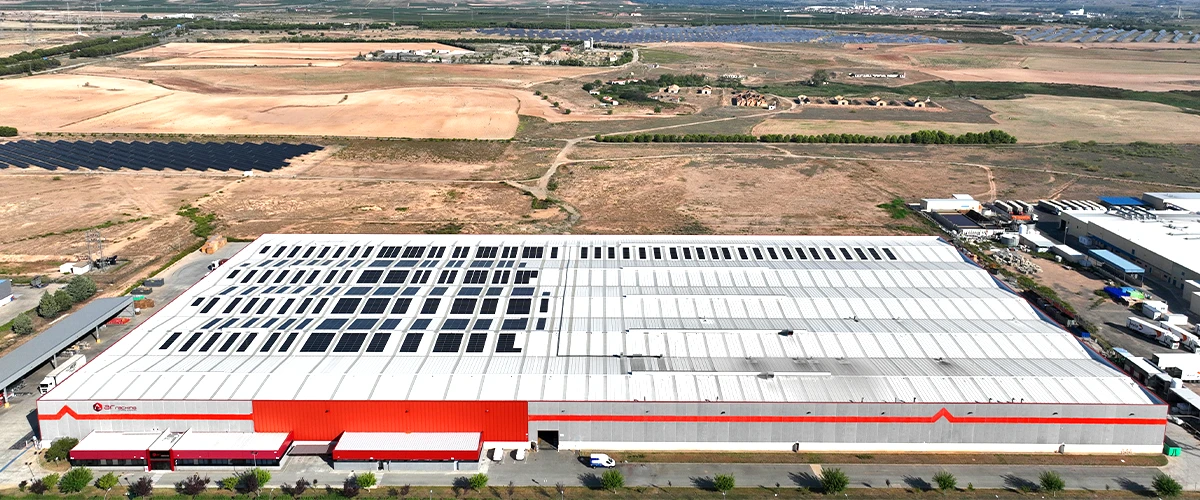
Industrial racking production centre: steel coil, roll-forming, welding, coating, and traceability under one roof.
Inside the Factory: Enterprise Advantages That Separate a Manufacturer From a Trader
A CE-marked warehouse racking project depends on manufacturing discipline. Our 35,000 m² highly automated production centre supports annual steel capacity of more than 100,000 tonnes, with full traceability from production batch to installation. More than 90% of output is exported, giving our project teams practical experience with port logistics, container optimisation, export documentation, and site coordination across 60+ countries.
For buyers, that means fewer hidden handoffs. Engineering, calculation, production, quality control, packing, and installation guidance are managed by one accountable organisation. Our network of 14 own branches and more than 70 trusted distributors supports regional project coordination, while our R&D work with Mondragon University and the University of the Basque Country feeds validated calculation models and simulation tools into real frame, beam, and connection design.
Certifications and Quality Evidence Buyers Can Verify
Ask every racking factory for the scope, validity, and issuing body of each certificate. A useful technical bid should allow your engineer to connect the certificate to the product and production process.
 ISO 9001Quality management
 ISO 14001Environmental management
 ISO 45001Health and safety
 ISO 50001Energy management
 EN ISO 3834-2Welding quality control
 EN 1090-1Structural steel control
 ISO 14064Verified carbon reporting
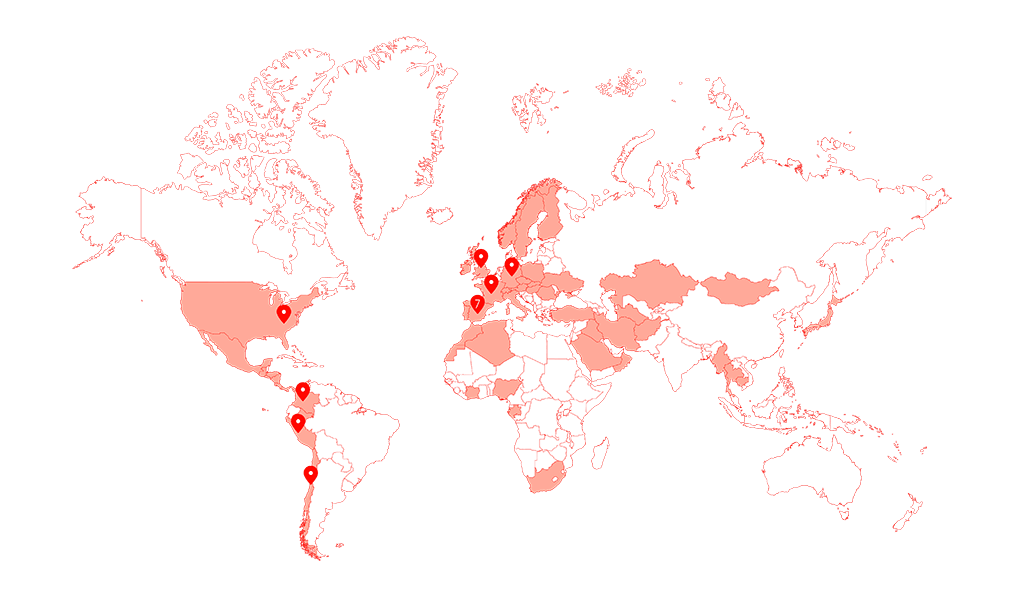
Export experience across 60+ countries, 14 branches, and 70+ distributors.
Regional Engineering for South America and Global Export Projects
Racking designed for Europe cannot simply be copied into the Andes or a tropical port environment. Seismic action, soil class, humidity, pallet standard, cold-chain duty, and available forklift equipment all change the structural answer. Our project team reviews the destination country before finalising frame depth, bracing, anchors, row spacers, beam deflection limits, and safety accessories.
In Chile, racking is checked against NCh2369 and NCh433 considerations. In Peru, E.030 seismic design matters for agro-export cold stores and high-density port warehouses. Brazil commonly uses the PBR 1000×1200 mm pallet, and ABNT NBR 15524 guidance informs specification. Colombia projects are reviewed against NSR-10, while Argentina may require INPRES-CIRSOC 103 considerations in seismic regions. Ecuador, Uruguay, and Paraguay each bring their own logistics context, from shrimp and banana cold chains to free-zone distribution centres and growing industrial parks.
- Seismic calculation and anchoring review for the destination region.
- Pallet format optimisation for 1200×1000, 1200×800, 1100×1100, 1219×1016, and project-specific pallets.
- Cold-store materials and finishes for temperatures down to −30 °C.
- Export packing, container loading plans, and installation supervision.
- Spare parts, load signs, inspection guidance, and 5-year warranty support.
Project Delivery Path From Layout Study to Long-Term Rack Safety
A controlled delivery process reduces rework, protects the installation schedule, and gives the buyer a clear quality record at handover.
Data review
Building layout, clear height, pallet dimensions, loads, SKU profile, throughput, temperature, and handling equipment are reviewed together.
Engineering proposal
Layout options, structural calculation, seismic checks, system comparison, and preliminary bill of materials are prepared.
Factory production
Steel profiles, frames, beams, and accessories are produced with traceability, welding control, coating inspection, and export packing.
Installation and lifecycle
Approved drawings, plumb tolerances, anchor checks, load signage, inspection guidance, and spare-parts support protect long-term safety.
Frequently Asked Questions About CE Certified Warehouse Racking Solutions Factories & Factory
These are the questions procurement teams, warehouse managers, and consulting engineers ask most often when comparing racking factories.
What does CE marking mean for warehouse racking?
For structural steel components, CE marking is typically connected to EN 1090-1 and factory production control. It supports declared performance, material traceability, welding control, and documented conformity. Buyers should ask for the certificate scope, declaration of performance, and the calculation package that applies to the actual project.
Can the racking be designed for seismic zones?
Yes. Racking for Chile, Peru, Colombia, Ecuador, and other seismic regions should be calculated against the applicable local code and site soil class. Typical measures include reinforced uprights and bracing, heavier base plates and anchors, row spacers, reduced beam deflection limits, and project-specific connection checks.
Which pallet sizes can the factory support?
Common formats include 1200×1000 mm, 1200×800 mm Euro pallets, Brazilian PBR 1000×1200 mm, 1100×1100 mm, 1219×1016 mm, and project-specific pallets. Beam length and frame depth must be dimensioned for the actual pallet, load, overhang, and handling equipment.
Is racking available for cold storage and freezer warehouses?
Yes. Mobile racking, drive-in, VNA, pallet shuttle, selective, and self-supporting freezer structures can be supplied with steels and finishes suited to low temperatures, including deep-freeze environments down to −30 °C for fruit, seafood, meat, and frozen-food operations.
What certifications and warranty support the racking?
Our systems are produced under ISO 9001, ISO 14001, ISO 45001, ISO 50001, EN ISO 3834-2 welding quality, EN 1090-1 structural steel control, and ISO 14064 verified carbon reporting where applicable. Storage systems carry a 5-year warranty with full component traceability.
What information is needed to prepare an accurate quote?
Send a building layout with clear height, pallet dimensions, maximum load per pallet, number of SKUs and pallets per SKU, daily throughput, forklift or automation type, temperature range, and project city. Our engineers use this data to propose the most efficient CE-ready racking system and a reliable bill of materials.
Planning a CE-Marked Racking Project or Factory Audit?
Share your layout, pallet data, seismic region, and throughput targets. Our storage engineers will help you compare selective, double-deep, cantilever, gravity flow, boltless, and structural racking options with documented safety and lifecycle cost in mind.
Get a Quote