Engineering-led wholesale sourcing guide
China Best Industrial Pallet Racking Systems Wholesaler & Wholesalers
An evidence-led buying guide for importers, distributors, 3PLs, cold-chain operators and warehouse developers who need engineered pallet racking—not commodity steel. Compare eight warehouse racking products, future procurement trends, product development directions, FAQ answers and verified manufacturing credentials from Alohatop Shelf.
Send an Inquiry8 Industrial Pallet Racking Systems for Immediate Sourcing Review
These eight systems cover the main wholesale buying intents: heavy-duty selective racking, modular distribution-center racking, cantilever storage for long goods, high-capacity beam racking and boltless shelving. Product URLs are retained exactly for direct review.
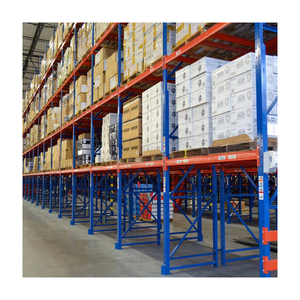
Wholesale Price Heavy Duty Storage Racks Warehouse Stacking Racks Selective Steel Pallet Rack Heavy-Duty Racking for Sale
A high-value entry point for distributors sourcing heavy-duty selective racking. Best fit when SKU variety is high and direct access to every pallet matters.
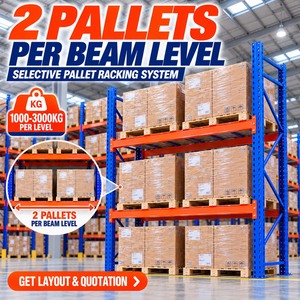
Selective Pallet Racking System with Two Pallet Positions Per Beam Level
Two-position beam levels improve selectivity and pallet-face discipline in mixed-SKU warehouses. Confirm beam lengths for your actual pallet footprint.
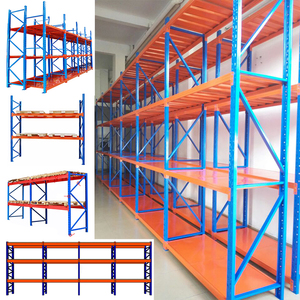
Heavy Duty Warehouse Rack Industrial Cold-Rolled Steel Rack Storage Shelf Rack 1600KG 1700KG 1800KG 1900KG Pounds Tons
A practical option for buyers comparing load ratings in pounds and tonnes. Verify capacity per pair of beams, per level and per bay before ordering.
Industrial Heavy Duty Customizable Foldable Corrosion Resistant 8-Layer Powder Coated Carbon Steel Warehouse Rack Cantilever
Useful for long goods, coils, profiles and pipe where front access is critical. The multi-layer cantilever format suits yards, MRO stores and fabrication support.
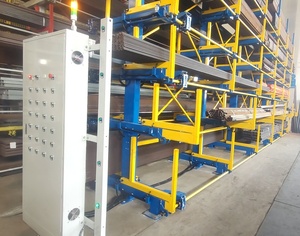
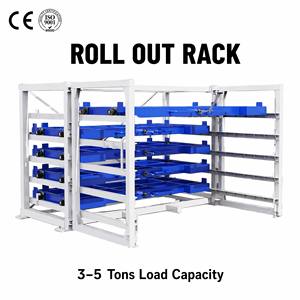
Crank Out Cantilever Roll Out Cantilever Rack--Innovative Cantilever Rack System for Efficient Storage
Roll-out cantilever design reduces aisle demand and improves access to long or heavy items. Good for timber, steel bars, tubes and panels.
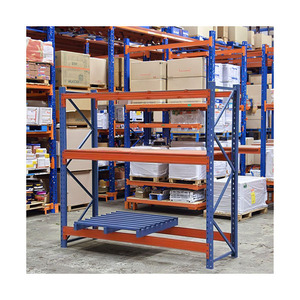
Selective Pallet Racking System Stable Modular Steel Distribution Center Warehouse Storage Rack 2000kg Heavy Duty
A modular selective system for distribution centers that need stable expansion, straightforward inspection and flexible reconfiguration.
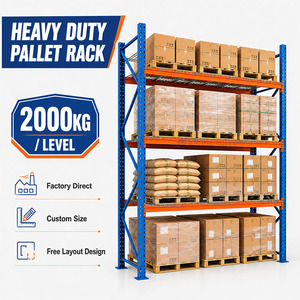
Heavy Duty Steel Beam Pallet Racking System with High Load Capacity for Industrial Warehouse Storage
High-capacity beam racking for dense unit loads. Beam section, connector type and anchor design must be matched to local seismic requirements.
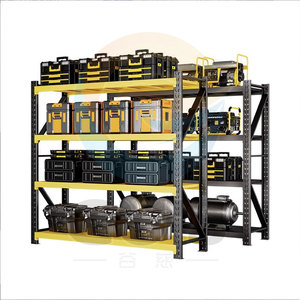
Heavy-Duty Boltless Shelving Racking System for Industrial & Home Use 5 Layer Steel Warehouse Storage Rack Shelf Original Black
A rapid-deployment shelving system for spare parts, MRO, e-commerce stock and small-batch storage where conventional pallet racking is unnecessary.
Countries with installed storage systems
Warehouse projects delivered
Annual steel production capacity
Of production exported worldwide
What “China Best Industrial Pallet Racking Systems Wholesaler & Wholesalers” Should Really Mean
Wholesale buyers often compare price per upright, per beam or per bay. That metric is incomplete. Pallet racking is a structural product whose total cost includes engineering accuracy, load safety, installation quality, inspection access and lifecycle risk.
Design Is the Product
A racking quotation without a design basis is only a component list. Demand pallet load, beam deflection limits, frame depth, upright capacity, base-plate details and anchor specification for the actual site.
- Pallet size and overhang
- Load per level and per bay
- Seismic zone and soil class
Steel and Finish Control
Wholesale volume should not dilute material quality. Ask for steel grade, coating system, cold-store suitability and component traceability from coil batch to packing list.
- Powder coat or galvanized finish
- Cold storage down to −30 °C
- Component batch identification
Engineering Evidence
The best wholesale partner provides calculation logic, component drawings, load signage, installation manuals and inspection checklists—documents a serious importer can audit.
- 5-year warranty support
- ISO quality and safety systems
- Traceability and test records
The table below converts vague supplier claims into verifiable procurement questions. Use it when comparing a China best industrial pallet racking systems wholesaler & wholesalers against local fabricators or regional distributors.
| Evaluation Layer | What to Verify | Why It Matters | Evidence to Request |
|---|---|---|---|
| Structural design | Load calculation, beam deflection, upright capacity, seismic class and anchoring | Prevents unsafe substitutions and protects people, stock and uptime | Design report, layout drawing, load chart and anchor schedule |
| Steel and coating | Yield strength, section thickness, welding quality, powder coat or galvanizing | Controls durability, corrosion risk and long-term structural performance | Mill certificate, coating specification, welding procedure and batch records |
| Tolerance control | Straightness, hole pitch, beam connector fit and frame squareness | Critical for automated warehouses, stacker cranes and fast installation | QA inspection plan, jig calibration and pre-shipment dimension report |
| Traceability | Upright, beam, bracing and accessory identification through production | Simplifies customs, spare-parts supply, inspection and future expansion | Packing list, component markings, batch photos and warranty register |
| Project support | Layout study, export packing, installation guidance, load signage and inspection | Reduces interface risk between buyer, freight forwarder and installation crew | Installation manual, site checklist, load signs and after-sales contact |
| Certifications | ISO 9001, ISO 14001, ISO 45001, ISO 50001, EN 1090-1, ISO 3834-2, ISO 14064 | Supports E-E-A-T review and verifies management-system maturity | Current certificates, scope statements and audit references |
Matching Pallet Racking to Warehouse Physics and Buying Intent
There is no universally best system. The right selection depends on SKU velocity, pallet count per SKU, building height, forklift type, temperature, seismic zone and the cost of floor space.
Selective Pallet Racking
Choose selective racking when buyers need direct access to every pallet and a high SKU mix. It remains the default for food and beverage, retail distribution, 3PL multi-client warehouses and spare-parts operations.
- Best for high selectivity
- Easy inspection and reconfiguration
- Works with standard forklifts
VNA and Mobile Racking
Very narrow aisle and mobile racking are commercial choices as much as engineering choices. They make sense when floor area is expensive, building height is available and the cost of cooled cubic metres is high.
- Higher pallet density per m²
- Cold-store efficiency
- Special forklift or mobile-base planning
Double-Deep and Pallet Shuttle
Double-deep and pallet shuttle systems increase density when SKUs are disciplined. They are strongest where each SKU occupies multiple pallets and throughput can be planned by lane.
- LIFO or FIFO by configuration
- Deep-lane storage for fast-moving inventory
- Good for cold-chain and distribution centers
Drive-In and Push-Back
Drive-in racking suits homogeneous goods and frozen products where lane discipline is high. Push-back racking is useful for manufacturing buffers and mid-volume SKUs that benefit from LIFO replenishment.
- High-density storage
- LIFO by design in most layouts
- Requires strict pallet quality control
Cantilever and Roll-Out Cantilever
Cantilever racking is the practical answer for long goods, timber, pipes, profiles and coils. Roll-out cantilever designs reduce aisle demand and improve access when floor space is constrained.
- Front access for long loads
- Customizable arms and layers
- Yard, MRO and fabrication applications
Boltless Shelving and Picking
Boltless shelving is often the forgotten margin maker in a wholesale order. It serves spare parts, MRO, e-commerce picking and small-batch storage with faster installation and lower structural demand.
- Fast deployment
- Flexible layer heights
- Good for low-to-medium loads
What Wholesale Buyers Will Audit by 2030
Procurement is shifting from component price to system risk. Export buyers increasingly request engineering evidence, automation-compatible tolerances, digital traceability and carbon documentation before approving a racking supplier.
Code-Based Engineering Evidence
Seismic and wind-region buyers will expect calculations aligned to local codes such as NCh2369 and NCh433 in Chile, E.030 in Peru, NSR-10 in Colombia and NEC in Ecuador, plus clear load signage for operations.
Cold-Chain Energy Economics
For fruit, meat, seafood and frozen-food exporters, racking decisions affect cooled volume, aisle width, airflow and picking time. Buyers will compare system density against energy and throughput metrics, not only steel weight.
Automation-Compatible Tolerances
AS/RS, miniload, pallet shuttle and AMR projects require rack geometry that stays within tight tolerances. Wholesale approval will increasingly depend on jig control, pre-shipment measurement and integrator interface data.
Digital Traceability
Component markings, batch records and QR-linked documentation will reduce disputes, simplify spare-parts ordering and support inspections. A racking importer should know exactly which upright or beam was shipped and when.
Carbon and ESG Documentation
Large buyers will request environmental management evidence, packaging optimization and verified carbon reporting. ISO 14064-style carbon accounting and ISO 14001 systems become procurement filters, not marketing extras.
Turnkey Risk Transfer
Buyers increasingly prefer one accountable partner for engineering, manufacturing, export packing, installation guidance and inspection. This reduces the hidden cost of coordinating drawings, freight and site crews across vendors.
How Industrial Pallet Racking Systems Are Evolving
Wholesale markets are moving toward safer, lighter, faster-to-install and more data-rich racking systems. The strongest suppliers will combine steel engineering with automation interfaces and lifecycle services.
High-Strength, Lower-Mass Profiles
Profile optimization aims to maintain or improve load capacity while reducing steel weight and freight cost. Buyers should ask for calculations, not assume that heavier sections are automatically stronger.
Hybrid Bolted and Boltless Connections
Faster installation and safer reconfiguration are driving connector improvements. The trade-off is that speed must not compromise frame stiffness, connector engagement or inspection clarity.
Seismic Connection Innovation
Base plates, anchors, bracing and row spacers are becoming more application-specific. In Chile, Peru, Colombia and Ecuador, seismic design must be part of the quotation from the beginning.
Rack-Supported Buildings
Self-supporting and clad-rack warehouses combine storage with the building envelope. They suit high-volume, high-bay and cold-storage projects where every cubic metre must work harder.
Sensor-Ready Inspection
Rack inspections are becoming more structured and data-driven. Component identification, damage coding and maintenance records help warehouses act before impact damage becomes a safety incident.
Modular Automation Interfaces
AMR, AGV, shuttle and AS/RS integration requires racking that is designed for interfaces, not retrofitted later. Modular design allows phased automation without replacing the entire storage structure.
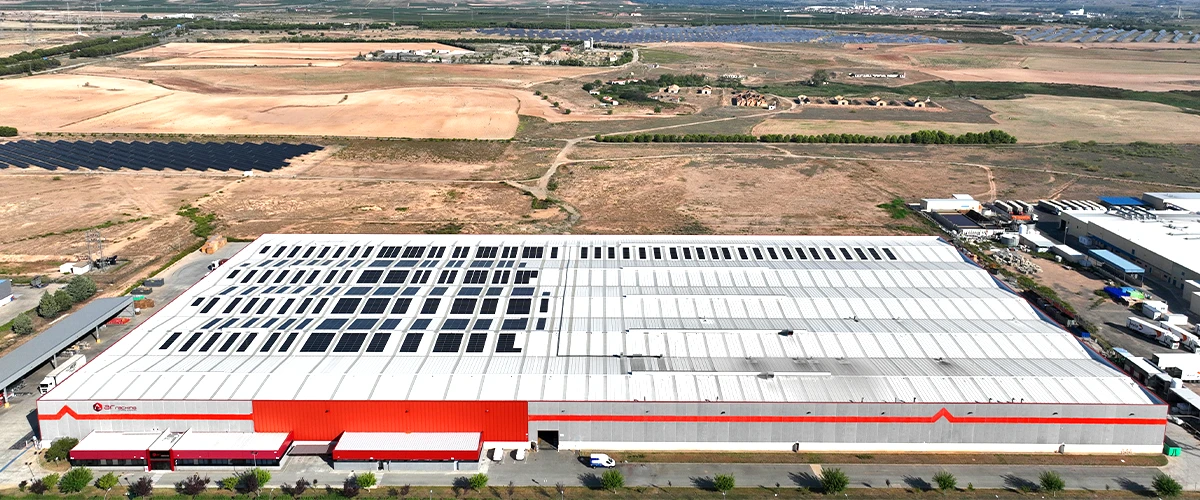
Engineering Control from Steel Coil to Load Sign
Alohatop Shelf is a designer, manufacturer and installer of industrial pallet racking, picking shelving, cold-storage racking and automated warehouse structures. For wholesale buyers, the advantage is not simply product range. It is control over the sequence that determines project risk: structural calculation, steel processing, welding quality, coating, packing, installation guidance and lifecycle inspection.
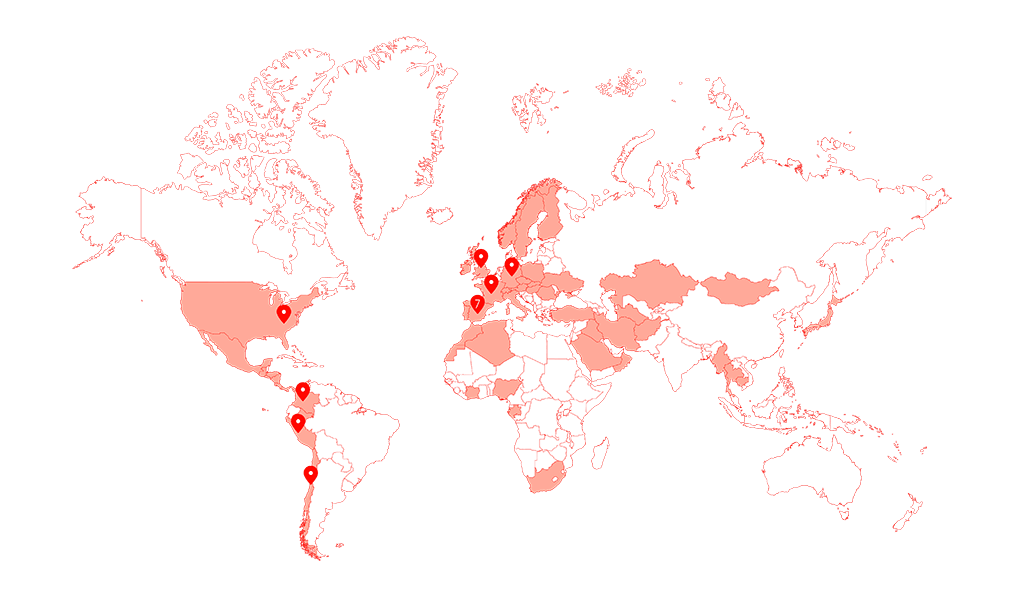
The company operates a 35,000 m² highly automated production centre with annual capacity above 100,000 t. More than 90% of production is exported, and systems have been installed in 60+ countries across 42,000+ warehouse projects. A network of 14 own branches and 70+ trusted distributors supports export logistics and local project coordination.
- Manufacturer, not reseller: full traceability of uprights and beams from production batch to installation.
- R&D and testing: collaboration with Mondragon University and a research chair at the University of the Basque Country supports finite-element simulation and physical load testing.
- Export experience: shipping know-how for major ports such as Santos, Callao, San Antonio, Cartagena and Buenos Aires.
- Seismic and cold-chain design: racking engineered for Andean seismic codes and temperatures down to −30 °C.
Automated Production Precision
Robotic production and laser-controlled processes keep frames and beams within the tolerances required by AS/RS integrators and manual warehouse installers. Consistent geometry reduces site delays and improves load safety.
5-Year Warranty and Traceability
Storage systems are supplied with a 5-year warranty and full component traceability. That matters for importers building a repeat wholesale business where spare parts, inspections and expansion must be predictable.
Lifecycle Services
Project engineering, technical inspection, installation, maintenance and turnkey project support help buyers move from a one-off racking order to a managed storage asset with documented safety checks.
Wholesale Scalability
High-volume production supports distributors, importers and project contractors who need repeatable specifications, export packing and staged deliveries across multiple warehouse sites.
Safety-First Documentation
Load signs, installation manuals, component lists and inspection records help the end user operate the racking safely after delivery. Documentation is part of the product, not an afterthought.
Single Point of Accountability
Owning design, manufacturing and installation support reduces finger-pointing between fabricator, freight forwarder and installer. That accountability is valuable in complex export projects.
Laboratory Validation, Certifications and Real-World Traceability
Racking safety cannot be proven by a catalog photograph. Engineering should be validated in the laboratory and in the factory. Alohatop Shelf’s technology centre works with an R&D laboratory at Mondragon University to test the behaviour, strength and safety of racking components under real load cases. A research and simulation chair at the University of the Basque Country develops calculation models and simulation tools used to improve frames, beams and connections for demanding applications, including high-seismic zones.
Production is supported by ISO management systems and welding quality controls. Systems are produced under ISO 9001, ISO 14001, ISO 45001, ISO 50001, UNE EN ISO 3834-2, EN 1090-1 and ISO 14064 verified carbon reporting, with full component traceability. For a wholesale buyer, these are practical due-diligence markers when evaluating a long-term supplier.
Finite-element simulation, physical load testing, cyclic testing and code-based design review form a stronger evidence chain than a simple weight claim.

 ISO 9001Quality management
 ISO 45001Health and safety
 EN 1090-1Structural steel components
 ISO 14064Verified carbon reporting
Designing for Seismic Zones, Humidity and Cold-Chain Export Realities
South America is not a single racking market. The Andes seismic belt, tropical humidity, agro-export cold chains and fast-growing e-commerce each change the design brief. The same logic applies to global wholesale buyers comparing export-oriented racking suppliers.
Chile
Racking for fruit-export cold stores and mining spare-parts warehouses is checked against NCh2369 and NCh433, with reinforced bracing, anchoring and seismic detailing.
Peru
Agro-export growth around blueberries, avocados and grapes, plus port capacity at Callao and Chancay, drives demand for cold storage, VNA and high-density racking under E.030.
Brazil
Brazil’s PBR 1000 × 1200 mm pallet, high humidity and 3PL multi-client operations shape designs for São Paulo and other major distribution markets under ABNT NBR 15524 considerations.
Colombia
Distribution hubs in Bogotá, Medellín and the Caribbean coast, plus flower and food cold chains, require seismic-resistant selective, double-deep and picking systems under NSR-10.
Argentina
Food, beverage and automotive supply chains need durable racking, with seismic design considered for western regions such as Mendoza and San Juan under INPRES-CIRSOC 103 principles.
Ecuador · Uruguay · Paraguay
Shrimp and banana cold chains in Ecuador, free-zone distribution in Uruguay and growing industrial parks in Paraguay each require tailored storage layouts and export-ready documentation.
Industrial Pallet Racking Wholesale Questions Answered
Answers procurement teams, importers and distributors ask most often when comparing racking wholesalers, evaluating engineering quality and preparing an export order.
What information should I send to receive an accurate pallet racking wholesale quote?
Send a building layout with clear height, pallet dimensions and maximum load weight, number of SKUs and pallets per SKU, daily throughput, forklift or automation type, temperature range and project city. Include any local seismic or fire requirements. This allows the engineering team to propose a safe and space-efficient storage system instead of quoting components without context.
How can I verify that a wholesaler’s racking is engineered, not simply copied?
Ask for design calculations, frame and beam load charts, beam deflection limits, anchor specifications and drawings. Confirm whether the supplier can reference local seismic codes and whether the racking has traceability from steel batch to component marking. A serious supplier will provide documentation and explain assumptions clearly.
Which pallet sizes and load capacities can be supported?
Common formats include the 1200 × 1000 mm pallet widely used in Latin America, the Brazilian PBR 1000 × 1200 mm, the 1200 × 800 mm Euro pallet and ISO sizes such as 1100 × 1100 mm and 1219 × 1016 mm. Beam lengths, frame depths and load ratings should be dimensioned for the actual pallet, load and handling equipment.
Can the racking operate in cold storage and freezer warehouses?
Yes. Cold-chain projects can use selective, VNA, drive-in, mobile, pallet shuttle and self-supporting freezer warehouses with steels and finishes suited to temperatures down to −30 °C. This is especially relevant for fruit, seafood, meat and frozen-food exporters.
How are seismic requirements handled in Chile, Peru, Colombia and Ecuador?
Racking in Andean and Pacific-coast countries should be calculated against the local seismic code and site soil class, for example NCh2369 and NCh433 in Chile, E.030 in Peru, NSR-10 in Colombia and NEC in Ecuador. Typical measures include reinforced uprights and bracing, heavier base plates and anchors, row spacers and reduced beam deflection limits.
What certifications and warranty should I expect from a racking wholesaler?
Look for ISO 9001, ISO 14001, ISO 45001, ISO 50001, UNE EN ISO 3834-2, EN 1090-1 and ISO 14064 where applicable. Alohatop Shelf storage systems carry a 5-year warranty and full component traceability, supported by documented production and quality control.
What procurement trends will matter most in the next five years?
Expect more emphasis on code-based seismic evidence, cold-chain energy economics, automation-compatible tolerances, digital traceability, carbon documentation and turnkey project accountability. Buyers will compare lifecycle risk, not only price per loaded pallet position.
How do I compare a China best industrial pallet racking systems wholesaler & wholesalers against local suppliers?
Compare engineering capability, manufacturing control, traceability, export packing, installation support, warranty and response speed. A low component price can be offset by weak drawings, delayed spare parts or site rework. The strongest wholesale partner is the one that can document how the system will perform in your building, climate and operating profile.

Request an Engineered Wholesale Proposal
Share your building layout, clear height, pallet dimensions, maximum load, SKU profile, throughput, temperature range and project location. Our racking engineers can recommend the safest, most space-efficient system for your next warehouse or expansion.