Pallet Rack Shelving Systems Available Direct From Production
Eight proven configurations for mixed pallet heights, galvanized environments, 3-level selective storage, long-load cantilever handling, heavy-duty industrial racking, ODM projects and automated radio-shuttle warehouses.
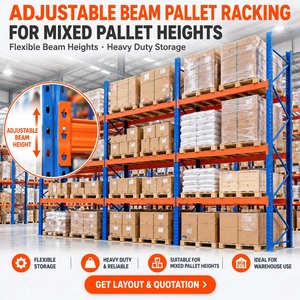
Adjustable Beam Pallet Racking System for Mixed Pallet Heights
Flexible beam levels for changing SKU heights and fast reconfiguration.
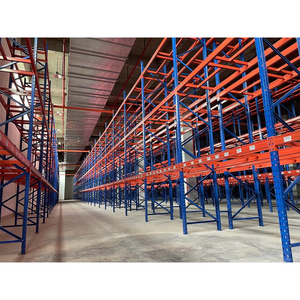
Heavy Duty Warehouse Steel Pallet Racking System With Galvanized Steel Panel Rack
Corrosion-resistant panels for humid, coastal, food and cold-chain sites.
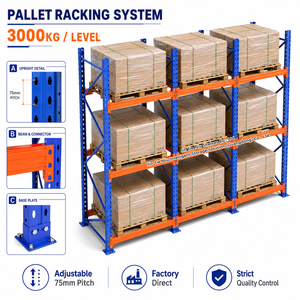
3 Pallet Levels Heavy Duty Steel Warehouse Rack Selective Pallet Racking System 3000KG
100% selective access for high-SKU distribution and fast-moving inventory.
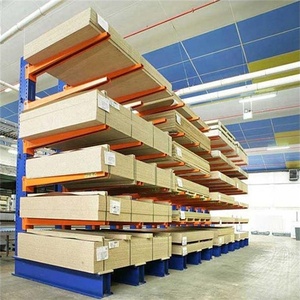
Heavy Duty Industrial Warehouse Storage Cantilever Arm Racking System
Long-load storage for timber, pipes, profiles, panels and fabricated steel.
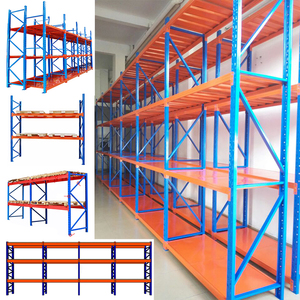
Heavy Duty Warehouse Rack Industrial Cold-Rolled Steel Rack Storage Shelf Rack 1600KG 1700KG 1800KG 1900KG Pounds Tons
Engineered steel shelf racking for industrial stockrooms and spare-parts stores.
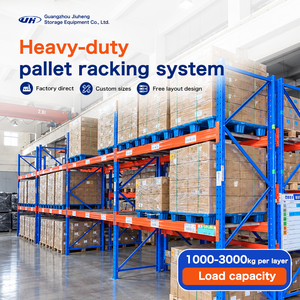
Industrial Steel Heavy Duty Pallet Racking Warehouse Storage System Adjustable Beam High Load Capacity Rack Manufacturer
Adjustable beam heights combined with high-load uprights and reinforced bracing.
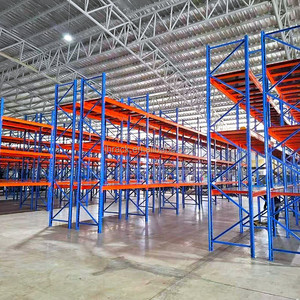
ODM Adjustable Beam Rack Industrial Heavy Duty Storage Shelves System Stacking Units Metal Rack Warehouse Steel Pallet Racking
Custom ODM racking for distributors and warehouse projects with specific drawings.
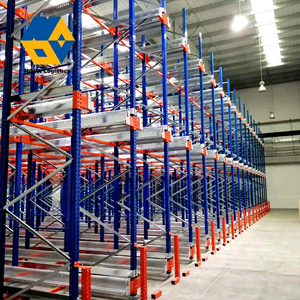
Manufacturer Automated 2 Way Radio Shuttle Rack System Warehouse Storage Steel Heavy Duty Drive in Shuttle Pallet Racking System
High-density semi-automated storage for cold rooms and fast-throughput DCs.
Countries with installed storage systems
Warehouse projects delivered
Annual steel production capacity
Of production exported worldwide
What “Best” Must Mean When You Choose a China Pallet Rack Shelving Factory
Procurement teams searching for the China best pallet rack shelving manufacturer & factory usually compare three things: price, delivery and risk. The first two are visible in a quotation. The third is hidden in engineering assumptions — and that is where project failures begin.
Prepared by the Alohatop Shelf engineering and export team for procurement, logistics and warehouse-development teams planning 2026 racking investments. Our reference base includes 42,000+ projects, installations in more than 60 countries and more than 90% of production exported. The conclusion is simple: a credible racking supplier should behave like a structural partner, not a steel catalogue.
A pallet rack is a load path. Pallets transfer load to beams, beams to uprights, uprights to base plates, and base plates to your floor slab. If any one of those links is underspecified, the entire warehouse is exposed to deflection, damage, downtime and safety incidents. That is why a useful comparison must go beyond “load per level” and include pallet load envelopes, seismic exposure, anchor verification, forklift impact risk and inspection access.
- Experience test: ask for comparable projects in your pallet format, temperature range and building height.
- Expertise test: ask how the supplier calculates beam deflection, upright capacity and base-plate anchoring.
- Authority test: verify EN 1090-1, EN ISO 3834-2 weld quality, ISO management systems and test reports.
- Trust test: require component traceability, packing lists, spare-parts lists and a clear 5-year warranty scope.
Information gain: five questions that reveal true factory maturity
- What is the design pallet load envelope, including load eccentricity, beam deflection limit and upright capacity?
- What seismic code, soil class and anchor pull-out verification apply to my project city?
- Can you show connection tests, weld maps and coating-thickness records traceable to the production batch?
- How do you control tolerance stack-up for AS/RS, VNA trucks or radio-shuttle lanes?
- What installation supervision, bolt-torque record and periodic inspection plan will be supplied after shipment?
Factory Capabilities That Reduce Racking Project Risk
Manufacturing scale is valuable only when it is linked to engineering control, traceability and installation discipline. These are the advantages buyers can audit.
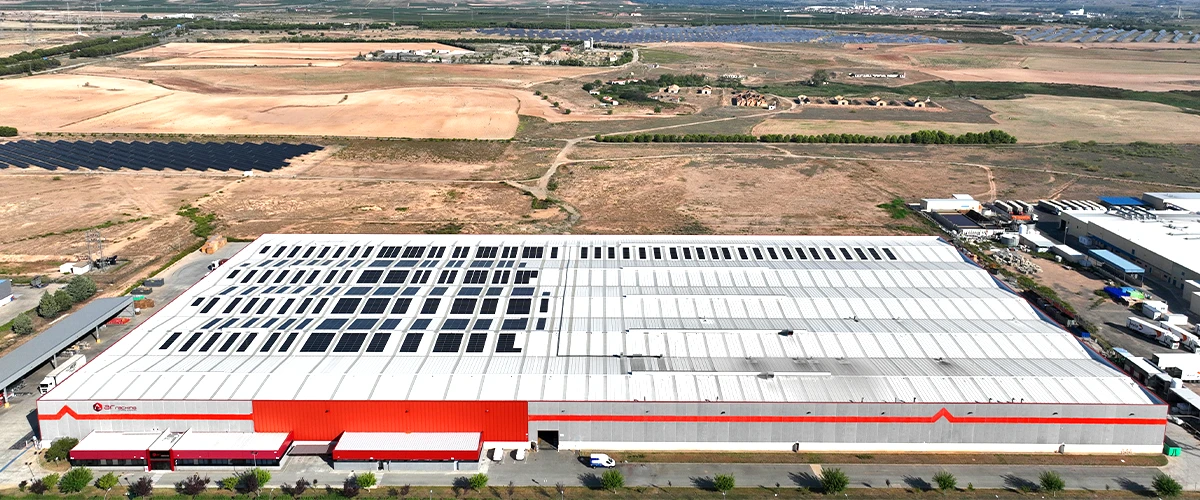
35,000 m² Automated Production Centre
Roll-forming, robotic welding, powder coating and laser-controlled quality checks are integrated in a highly automated plant built for export projects.
100,000 t Annual Steel Capacity
More than 100,000 t of annual steel production capacity supports large orders, repeat distributor programmes and fast project phasing.
42,000+ Projects, 60+ Countries
Experience across selective, drive-in, cantilever, mobile, shuttle and AS/RS-compatible structures helps avoid repeated design mistakes.
14 Own Branches, 70+ Distributors
A global service network supports export documentation, installation supervision, spare parts and local technical communication.
University-Backed R&D
Our technology centre works with a Mondragon University R&D laboratory and a University of the Basque Country simulation chair to test strength and safety.
ISO & EN Certification Stack
ISO 9001, ISO 14001, ISO 45001, ISO 50001, EN 1090-1, EN ISO 3834-2 welding quality and ISO 14064 carbon verification support auditable quality.
5-Year Warranty & Full Traceability
Every upright and beam can be traced from production batch to installation, making warranty response and replacement planning more reliable.
Seismic & −30 °C Cold-Store Design
Reinforced bracing, heavier base plates, anchors and cold-store finishes are engineered for seismic zones and freezer warehouses.
Match the Pallet Rack Shelving System to Your Load, SKU and Throughput
There is no universally “best” racking type. The best system is the one that fits your pallet dimensions, selectivity requirement, rotation rule, forklift fleet, temperature and building envelope.
Selective Adjustable Beam Racking
Recommended for mixed-SKU distribution, food and beverage, retail DCs and spare-parts warehouses. Every pallet is directly accessible, so it is the safest default when SKU volatility is high. Specify 1200 × 1000 mm, 1200 × 800 mm, 1100 × 1100 mm or 1219 × 1016 mm pallets correctly.
Heavy-Duty Galvanized Racking
Recommended for coastal humidity, food processing, cold-chain antechambers and wash-down areas. Galvanized steel panels and appropriate surface treatment reduce corrosion risk, but the coating spec must be matched to the actual environment.
3-Level 3000 kg Selective Racking
Recommended when pallet loads are heavy but access must remain 100%. The design should be qualified by upright capacity, beam deflection, base-plate anchoring and forklift impact protection, not simply by a nominal “3000 kg” label.
Cantilever Arm Racking
Recommended for timber, pipe bundles, aluminium profiles, panels and long fabricated steel. Arm spacing, arm capacity and base stability are the critical checks. Cantilever is usually a poor fit for standard palletised cartons because it wastes vertical space.
Radio Shuttle / Drive-In High Density
Recommended for homogeneous inventory, freezer warehouses and high-density 3PL operations. Radio shuttle improves cycle speed versus conventional drive-in, while drive-in remains a cost-effective choice when pallets per SKU are high and throughput is lower.
AS/RS-Compatible & ODM Structures
Recommended for automated warehouses where stacker cranes, shuttles or AMRs demand tight frame geometry and predictable interfaces. Ask for an interface tolerance plan, anchor strategy, self-supporting building considerations and integration drawings before fabrication.
How Warehouse Buyers Are Changing Racking Procurement
Price competition remains important, but mature buyers are now evaluating racking as a structural asset with lifecycle cost, compliance evidence and expansion flexibility.
Total Cost of Ownership Replaces Lowest Unit Price
Buyers now compare reconfiguration cost, inspection requirements, replacement parts, coating durability, installation speed and downtime risk. A lower steel price can be expensive if tolerances or documentation are weak.
Structural & Seismic Documentation Becomes Mandatory
Tenders increasingly ask for design basis, seismic verification, anchor details, weld quality evidence and load signage. This is especially important in Chile, Peru, Colombia, Ecuador and other high-demand regions.
Cold-Chain Investment Continues to Accelerate
Fruit, seafood, meat, dairy and frozen-food exporters need dense cold storage with safe access. Mobile racking, drive-in, VNA and radio shuttle are being compared against cooled-cubic-metre cost, not only pallet positions.
Automation-Ready Racking, Not Automation-Later
Projects that begin as manual warehouses increasingly require future AS/RS compatibility. Early decisions on frame tolerance, column grid, floor flatness and interfaces can determine whether later automation is viable.
Modularity for SKU Volatility
E-commerce, 3PL and retail buyers prefer adjustable beam levels, bolted connections and expandable frames so layouts can adapt without replacing the entire system.
ESG, Traceability and Verified Carbon Reporting
Steel origin, coating processes, recyclability, packaging and ISO 14064 carbon reporting are entering supplier scorecards. Factories that can provide documentation earlier often gain a decisive tender advantage.
What Will Define the Next Generation of Pallet Rack Shelving
The next competitive gap will not be raw steel tonnage. It will be engineering certainty: simulation accuracy, tolerance control, monitoring capability and faster modular delivery.
High-Strength Steel and Digital Load Mapping
Better section profiles and finite-element simulation allow higher load density without simply adding steel weight. Buyers should ask for simulation assumptions, not only a final capacity figure.
Robotic Welding and Digital Twins
Robotic welding consistency is becoming a differentiator for automated warehouses. Digital project models will increasingly link rack geometry, crane interfaces and inspection records.
Shuttle, AMR and AS/RS Integration
Racking will be designed earlier with automation suppliers, using shared coordinate models and tolerance plans. This reduces site modifications and commissioning delays.
Smart Safety and Rack Monitoring
Impact sensors, barcode inspection records and digital maintenance logs will make rack safety measurable. The winning system will be easy to inspect, not just strong on paper.
Cold-Store Material Innovation
Low-temperature steel behaviour, coating adhesion, condensation control and access-aisle safety will remain central as freezer warehouses become larger and denser.
Faster Modular Lead Times
Standardized connections, packaging optimisation and pre-engineered accessory kits help export buyers shorten installation time and reduce missing-part risk.
Racking System Comparison by Density, Access and Rotation
Use this comparison for early-stage planning. Final selection requires structural calculation, pallet load verification, fire strategy, floor survey and forklift or automation study.
| System | Best Fit | Relative Density | Direct Access | Stock Rotation | Procurement Note |
|---|---|---|---|---|---|
| Selective adjustable beam | Mixed SKU, retail DC, food and beverage | 40% | 100% of pallets | Any policy | The safest default; verify beam deflection and upright capacity. |
| Very narrow aisle (VNA) | Tall buildings, costly land, cold stores | 60% | 100% | Any policy | Requires guided trucks and very tight floor tolerance control. |
| Double-deep | 3PL with two or more pallets per SKU | 65% | 50% | LIFO per lane | Pair with WMS rules to avoid unnecessary handling. |
| Drive-in / drive-through | Frozen goods and homogeneous inventory | 80% | Low | LIFO, or FIFO if drive-through | Inspect rails and guide systems regularly in cold rooms. |
| Radio shuttle | High-density DCs and freezer lanes | 90% | Per lane | FIFO or LIFO | High capex; plan shuttle count, charging and battery strategy. |
| Pallet flow | Perishables and fast-moving inventory | 70% | Per lane | FIFO | Roller brakes and lane maintenance are critical. |
| Cantilever | Long goods, pipe, timber and profiles | 45% | Front access | Any policy | Verify arm load, base stability and safety loading rules. |
| AS/RS and self-supporting | Large DCs, 24/7 operations, deep freeze | 100% | Automated | WMS controlled | Integrate with crane supplier early; tolerance stack-up is critical. |
Factory Controls, Testing and Certifications Buyers Can Audit
Automated production is only credible when it is auditable. Our control plan links steel certificates, roll-forming records, robot welding parameters, coating thickness, straightness measurements and packing lists to the project batch.
 ISO 9001Quality management
 ISO 14001Environmental management
 ISO 45001Health & safety at work
 ISO 50001Energy management
 EN ISO 3834-2Welding quality control
 EN 1090-1Structural steel components
 ISO 14064Verified carbon footprint
From Deep-Freeze Warehouses to 3PL Shuttle Systems
Real projects show whether a factory can move from calculation to installation without compromising safety or schedule.
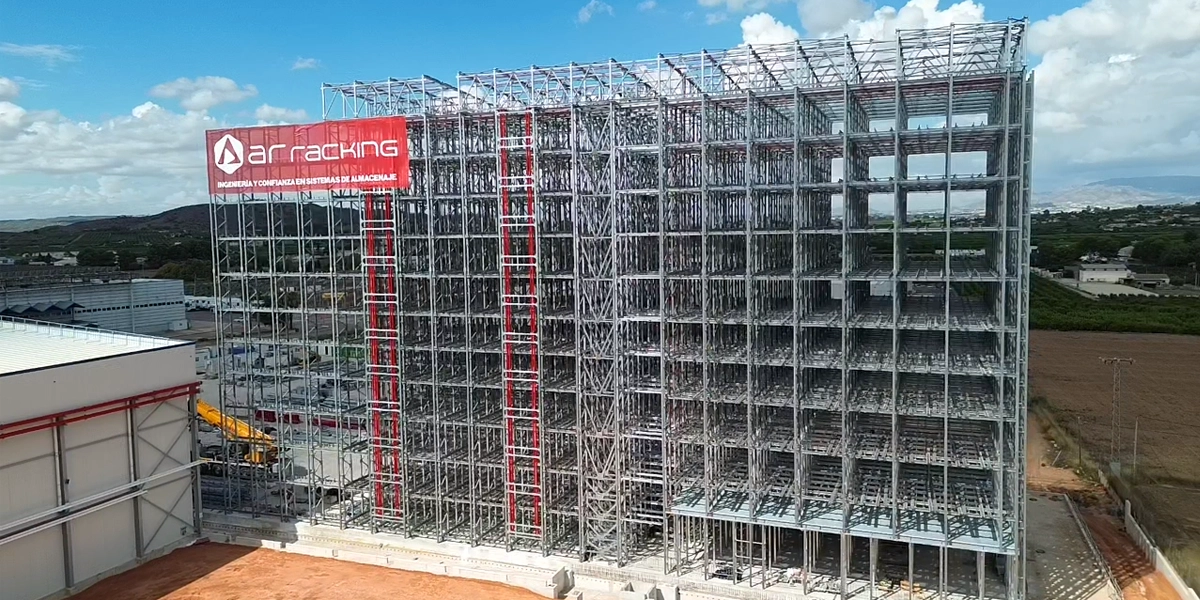
23,000 Pallet Positions at −24 °C
A self-supporting deep-freeze warehouse for a frozen fruit and vegetable processor, where the racking also carries the building envelope. The project demonstrates cold-store steel specification, access safety and automation-ready geometry.
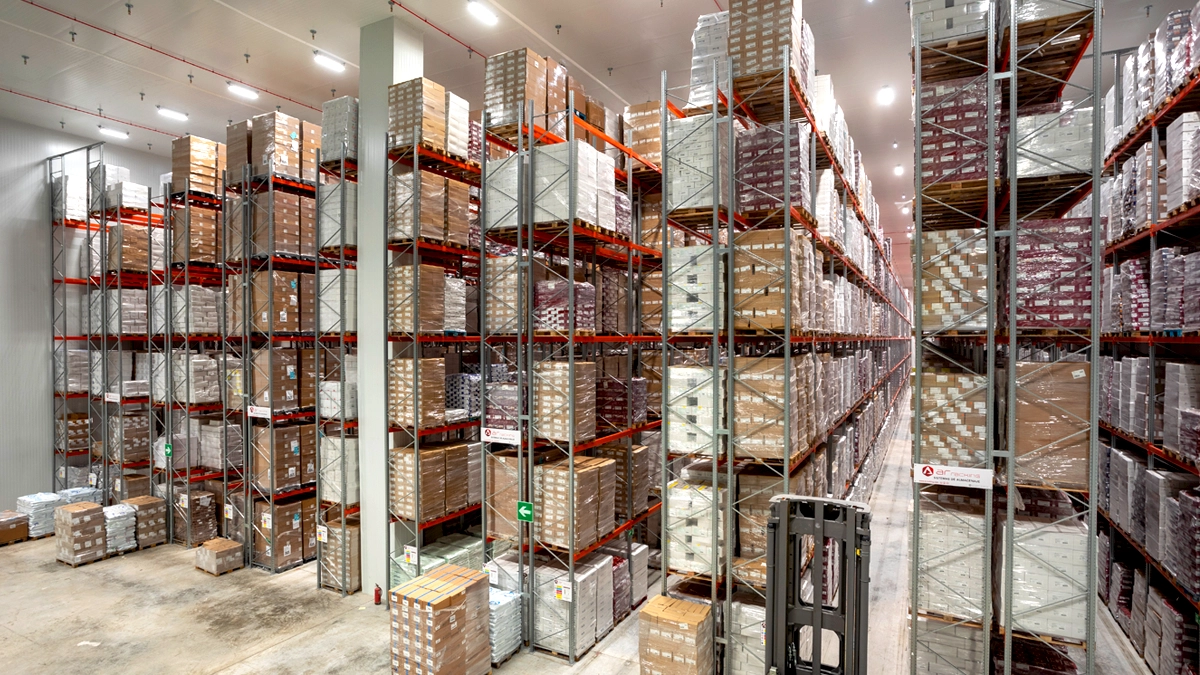
VNA Racking for a Frozen Food Cold Store
Very narrow aisle racking maximised pallet positions per cooled cubic metre for a frozen products distributor. The design combined high-density storage with guided-truck access and freezer-compatible finishes.
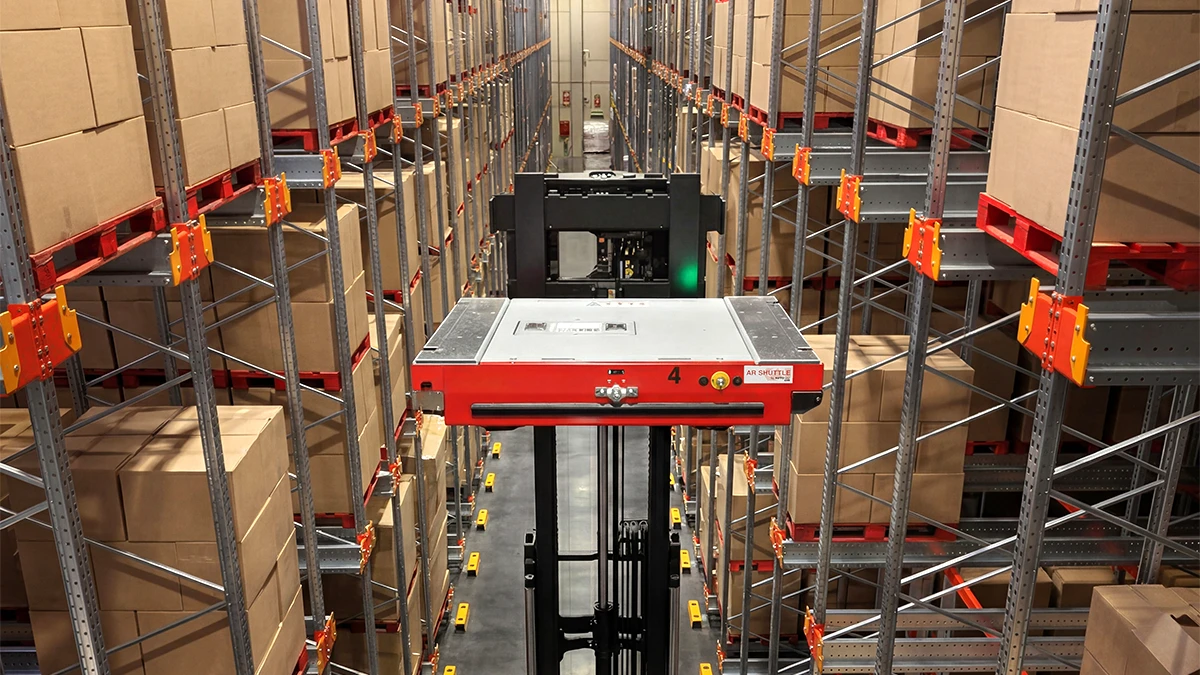
Pallet Shuttle System for a 3PL Operator
Semi-automated deep lanes delivered high density and faster cycles for a third-party logistics warehouse. The project required clear WMS rules, shuttle management and a practical maintenance plan.
FAQ: Sourcing Pallet Rack Shelving From a China Factory
Answers to the questions engineering, procurement and warehouse teams ask most often before placing a racking order.
How can I verify a China pallet rack shelving factory before ordering?
Ask for EN 1090-1 and EN ISO 3834-2 evidence, material certificates, a sample load calculation, connection and anchor details, export project references, packing standards and a factory audit. Compare engineering response quality, not only the quotation total.
What information is needed to quote a pallet racking system?
Send a building layout with clear height, floor slab details, pallet dimensions and maximum load, SKU count, pallets per SKU, daily throughput, forklift or automation type, temperature range, project city and seismic zone. Common pallets include 1200 × 1000 mm, 1200 × 800 mm, 1100 × 1100 mm and 1219 × 1016 mm.
Can you design racking for seismic zones and local codes?
Yes. Designs can be checked against the project’s local seismic basis and soil class, with reinforced bracing, heavier base plates, verified anchors and row spacers where required. The calculation basis must be agreed before fabrication, not after installation.
Do you supply cold storage racking down to −30 °C?
Yes. Drive-in, VNA, mobile, pallet shuttle and self-supporting freezer structures can be specified with steel grades, coatings and access details suited to low-temperature operation. Condensation, frost, truck guidance and inspection access must be considered together.
What certifications and warranty come with the system?
Typical documentation includes ISO 9001, ISO 14001, ISO 45001, ISO 50001, EN 1090-1, EN ISO 3834-2 welding quality and ISO 14064 carbon verification. Storage systems can carry a 5-year warranty with full component traceability.
Can you produce AS/RS-compatible or radio shuttle racking?
Yes. Automated and semi-automated systems require tighter control of frame geometry, beam levels, anchors and interfaces with stacker cranes, shuttles or AMRs. Provide the automation supplier’s interface drawings early so tolerance stack-up can be reviewed.
What are typical lead times, shipping terms and installation options?
Lead time depends on engineering approval, order volume, coating requirements and shipping schedule. Export supply can include packing lists, container loading plans, installation manuals and supervisor support. Project-specific Incoterms and inspection requirements should be confirmed in the contract.
How do you control quality and spare parts after shipment?
Production records, packing photos, component marking and batch traceability support quality control. For after-sales, keep a spare-parts list for beams, uprights, safety clips, anchors and protective accessories. Periodic rack inspections are recommended to identify impact damage and overload risks.
Request a Factory-Direct Racking Proposal
Send your building layout, pallet dimensions, maximum load, SKU profile, throughput, temperature range and project city. Our engineers will recommend the safest and most space-efficient pallet rack shelving solution for your warehouse.
For faster review, include floor slab information, forklift or automation type, seismic zone and required delivery schedule.