Eight Industrial Storage Rack Products for Fast RFQ Evaluation
These eight products cover light-duty shelving, boltless warehouse racking, selective pallet racking, heavy-duty stacking systems and cantilever storage. Every product link below is preserved for direct technical review.
LIANGZO 5-Layer Steel Corrosion Protection Chrome Plated Storage Shelf for Warehouse Household Use Light/Medium Duty Display
Chrome-plated, corrosion-protected shelving for clean displays, spare parts, retail storage and light-to-medium warehouse use where appearance and easy cleaning matter.
View product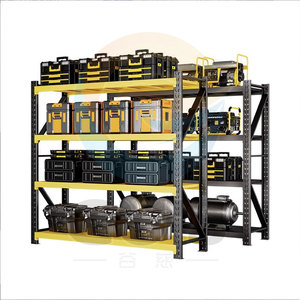
Heavy-Duty Boltless Shelving Racking System for Industrial & Home Use 5 Layer Steel Warehouse Storage Rack Shelf Original Black
A boltless five-layer steel rack system for fast assembly, flexible level adjustment and practical storage of cartons, tools, components and medium-duty warehouse stock.
View product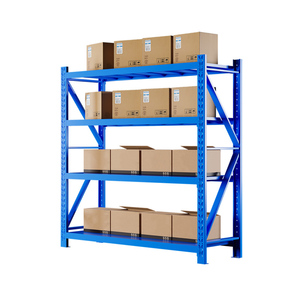
Industrial Warehouse Storage 5-Layer Pallet Racking System with Tire Rack Slotted Angle Rack Stacking Racks & Shelves
Designed for mixed storage layouts that combine pallet positions, tire racking and slotted angle storage in one practical industrial warehouse system.
View product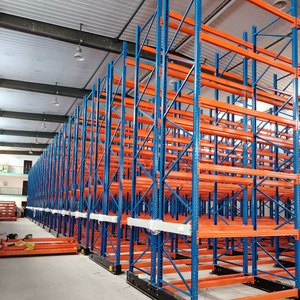
Durable Steel Storage Rack Steel Pallet Racking Heavy Duty Selective Pallet Racking System for Logistics Solutions
Selective pallet racking for logistics operations that require direct access to every pallet, high SKU flexibility and dependable beam-and-upright performance.
View product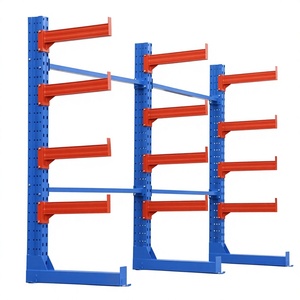
Industrial Heavy Duty Steel Cantilever warehouse Shelf Rack Equipment for High-Capacity Warehouse Pallet Storage
Cantilever racking for long, bulky and awkward loads such as profiles, pipes, timber, panels and racked materials where front access is critical.
View product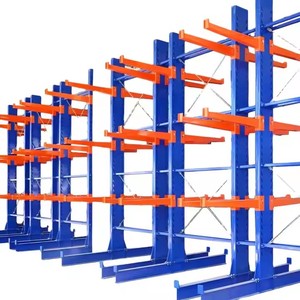
Industrial Heavy Duty OEM ODM Storage Racks Wall Mounting Tube Racking Galvanized Cantilever Rack for Warehouse
Galvanized cantilever racking for humid, coastal or export environments where improved corrosion protection and OEM/ODM configuration are important.
View product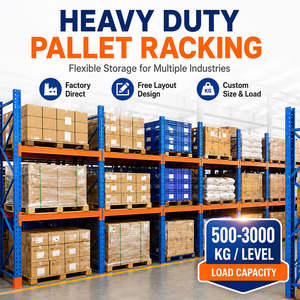
Heavy Duty Steel Warehouse Pallet Rack Storage Racking System for Industrial Warehouse Applications
A scalable heavy-duty pallet rack solution for industrial warehouses, distribution centers and manufacturing stores that need robust pallet throughput.
View product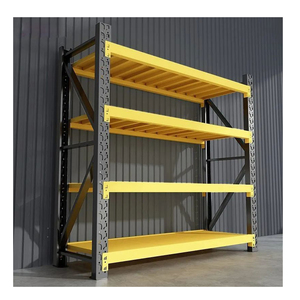
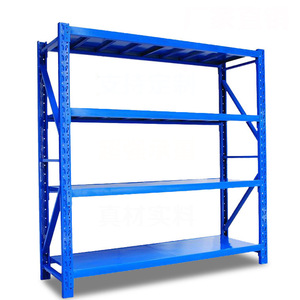
Light Duty 4-Tier Steel Metal Storage Rack Shelves Corrosion Protected Home and Garage Racking for Warehouse Use
A practical four-tier steel shelving product for garages, workshops, retail backrooms and light warehouse storage with corrosion protection.
View productCountries with installed storage systems
Warehouse projects delivered
Annual steel production capacity
Of production exported worldwide
Why “Factory & Supplier” Searches Need an Engineering-Led Answer
The phrase China top industrial racks for storage factory & supplier is a high-intent procurement query. It is usually used by warehouse owners, 3PL operators, project contractors, distributors and manufacturing buyers who want a verifiable factory rather than a trading page with recycled specifications.
A serious racking purchase is not a commodity order. Two quotations can show the same number of uprights and beams, yet differ in steel grade, section thickness, weld quality, powder coating or galvanized finish, seismic bracing, base plate design, anchor specification, pallet load assumptions, container loading plan and installation tolerance. The information gain that matters is not a longer product description; it is clear engineering evidence that the racking will perform in your building, with your pallet sizes, in your seismic zone and under your daily forklift cycle.
This guide is written for buyers comparing industrial storage rack factories in China. It explains how to shortlist the right product, what procurement trends are changing in 2026–2030, how rack products are developing, what a factory-level quotation should contain and which questions to ask before placing a deposit. It also summarizes the manufacturing, testing, certification, export and installation capabilities behind Alohatop Shelf storage systems.
- Check the engineering basis first: pallet size, load per level, clear height, aisle width, forklift type, temperature and local seismic code.
- Verify factory control: design, roll-forming, welding, finishing, packing and traceability should not be outsourced without documented control.
- Compare total landed cost: include engineering, anchors, shipping volume, installation, inspection, spare parts and warranty response.
- Request compliance evidence: drawings, calculation notes, welding quality records, finish tests, certificate scope and component traceability.
What a True China Industrial Rack Factory Must Control
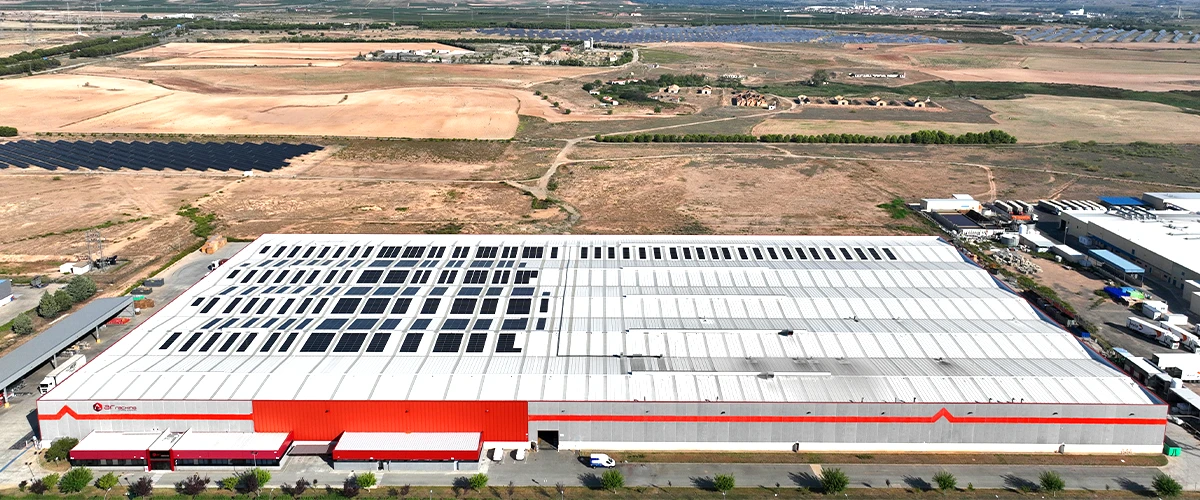
Alohatop Shelf LLC is a designer, manufacturer and installer of industrial pallet racking, picking shelving and automated warehouse structures. The advantage is full project control — from steel coil and structural calculation to export packing, installation guidance and long-term rack inspection.
Manufacturer, Not a Reseller
Industrial racking performance is created long before the container is loaded. It is created in the engineering assumptions, the steel specification, the roll-forming tolerance, the welding process and the final inspection. A factory that controls these steps can answer technical questions quickly and keep deviations visible.
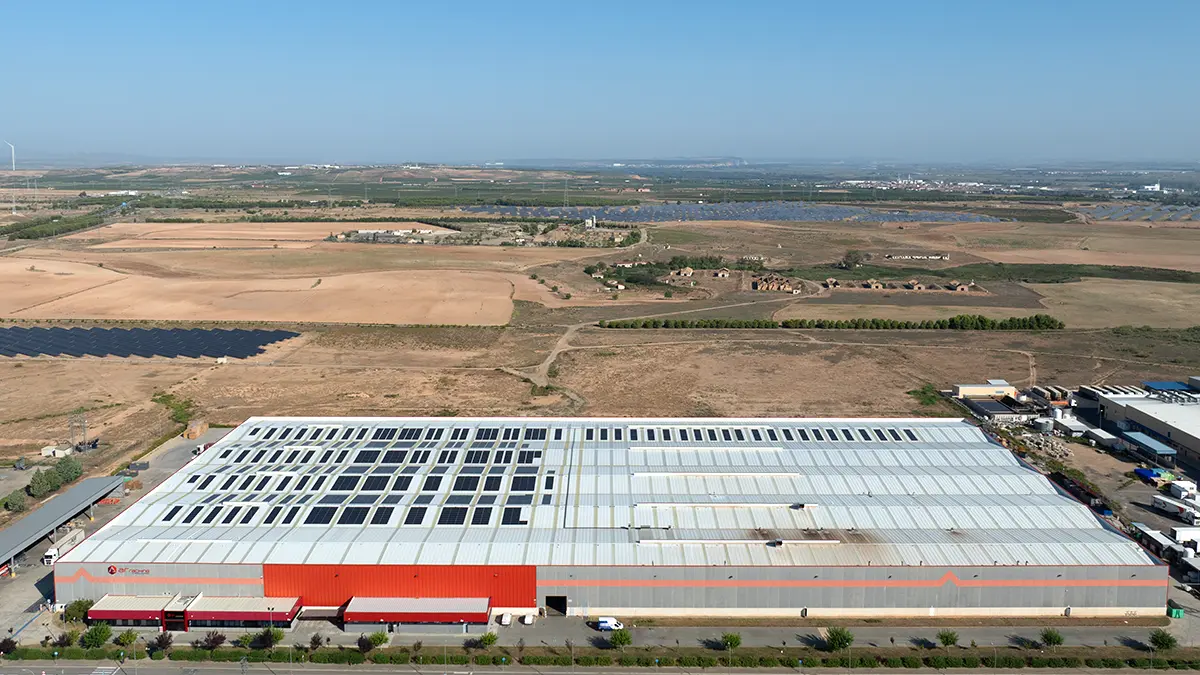
Our production base covers 35,000 m² of highly automated manufacturing with more than 100,000 t of annual steel capacity. More than 90% of output is exported, giving the project team practical experience with port logistics, export packaging, container fill, documentation and installation coordination for markets across South America, Europe, the Middle East and Asia.
- Structural design, calculation and layout optimization under one project team.
- Automated roll-forming, robotic welding and laser-controlled production for repeatable tolerances.
- 5-year warranty and full component traceability from production batch to installation.
- 14 own branches and 70+ trusted distributors supporting international projects.
Factory-Level Engineering Control
Rack layouts are calculated for the actual pallet, load, building height, forklift or automation interface and destination seismic requirement instead of using a generic catalogue arrangement.
Laboratory-Validated Design
Our technology centre works with an R&D laboratory at Mondragon University and a research chair at the University of the Basque Country to test components, simulate load cases and refine structural models.
Automated Production Tolerance
Robotic production and laser-controlled processes keep frames and beams within the tight tolerances required by AS/RS stacker cranes, shuttles, AMRs and very narrow aisle equipment.
Seismic & Cold-Store Adaptation
Projects can be engineered for Chilean, Peruvian, Colombian or Ecuadorian seismic requirements and for freezer warehouses down to −30 °C with suitable steel, finish and anchoring details.
Certified Quality System
Systems are produced under ISO 9001, ISO 14001, ISO 45001, ISO 50001, UNE EN ISO 3834-2 welding quality, EN 1090-1 and ISO 14064 verified carbon reporting, with component traceability.
Installation & Lifecycle Support
Project engineering, installation supervision, technical rack inspection, maintenance and component replacement help protect people, stock and uptime after the racking is loaded.

Match the Storage Product to the Buying Intent
Product recommendation should begin with the operating problem, not the product photo. Use this matrix to shortlist the right rack type before requesting detailed drawings and a factory quotation.
| Storage System | Best-Fit Application | Density | Pallet or Load Access | Rotation Logic | Engineering Focus |
|---|---|---|---|---|---|
| Selective pallet racking | Mixed SKUs, distribution centers, food and beverage, 3PL warehouses | 100% of pallets | Any | Beam deflection, upright capacity, aisle width, seismic bracing | |
| Boltless shelving and light-medium racking | Spare parts, e-commerce picking, retail backrooms, workshops and garage storage | 100% of shelves | Manual | Level adjustability, shelf load, corrosion protection and safe assembly | |
| Cantilever racking | Long goods, pipes, tubes, timber, panels, profiles and bulky materials | Front access | Any | Arm capacity, base stability, load overhang and outdoor or galvanized finish | |
| Very narrow aisle racking | High land cost, cold stores, tall warehouses and high pallet count | 100% of pallets | Any | Guide rail tolerance, floor flatness, stacker crane interface | |
| Double-deep racking | 3PL and manufacturers with two or more pallets per SKU | 50% of pallets | LIFO per lane | Reach truck reach, pallet condition, lane depth and beam loading | |
| Drive-in or pallet shuttle | Homogeneous products, fast-moving inventory and deep cold-storage lanes | Per lane | FIFO or LIFO | Lane rails, shuttle interface, ventilation, fire safety and rescue planning | |
| AS/RS compatible rack structure | Automated warehouses, 24/7 DCs, deep-freeze operations and self-supporting buildings | Automated | WMS controlled | Structural tolerance, crane interface, building envelope and integrated safety |
Density is indicative and relative to selective racking in the same footprint. Final selection must be confirmed by project-specific structural calculation and local code review.
2026–2030 Procurement Trends for Industrial Storage Racks
Buyers are changing how they evaluate China industrial rack suppliers. The strongest suppliers will win with engineering evidence, export reliability, lifecycle support and documented compliance — not a single headline price.
Total Cost of Ownership
Procurement teams increasingly compare landed cost, installation cost, inspection cost, spare parts and downtime risk. A lower FOB price can lose value if the rack needs rework, extra anchors or site modification.
Seismic Documentation
For Latin American buyers, seismic design is no longer a secondary question. Requests for NCh2369, NCh433, E.030, NSR-10 or NEC-based verification are becoming standard in serious RFQs.
Automation-Ready Structures
Racks are being purchased with future AMR, AGV, shuttle or stacker-crane integration in mind. Production tolerance and data quality now influence the supplier shortlist before automation is installed.
Cold-Chain Expansion
Fruit, meat, seafood, dairy and frozen-food exporters need freezer-capable racking. Finish selection, steel toughness, condensation control and safe inspection access become central procurement criteria.
Digital Traceability
Buyers want batch-marked components, drawing references, load signs and inspection records. QR-linked component data and clear document packages reduce risk during installation and future audits.
Verified Carbon & Green Steel
Large distributors and manufacturers increasingly ask for verified carbon reporting, recyclable steel content and energy-management evidence. ISO 14064 reporting and ISO 50001 production discipline support this.
Hybrid Storage Layouts
One warehouse may combine selective racking, cantilever, picking shelving and shuttle lanes. The supplier must optimize the whole flow instead of selling one rack type for every bay.
Export-Optimized Packing
Container fill, anti-rust protection, steel strapping, batch marking, loading photos and site-ready packing lists are now evaluated as part of supplier capability, especially for long sea routes.
What the Next Generation of Industrial Racks Includes
Engineering improvements are shifting racking from a passive steel structure to a measurable, installable and automation-compatible warehouse asset. These developments are relevant to both new projects and retrofits.
Optimized High-Strength Sections
New upright and beam profiles are designed to deliver target capacity with less wasted steel, while maintaining stiffness, connection performance and safe deflection limits.
Corrosion Protection Systems
Chrome plating, galvanizing, powder coating and pre-treatment are being specified by environment: clean displays, humid ports, coastal warehouses, freezer rooms and outdoor cantilever storage.
Boltless and Modular Assembly
Boltless beams, slotted connections and modular frames shorten installation time, allow level changes and reduce site labor, while preserving the calculated capacity when correctly assembled.
Seismic Components as Standard Options
Reinforced uprights, heavier base plates, row spacers, bracing patterns and approved anchors are increasingly offered as engineered options rather than afterthoughts for seismic zones.
Passive Safety Intelligence
QR labels, clear load signs, impact indicators, batch marking and inspection checkpoints help operators identify damage early without adding fragile electronics inside the rack structure.
Automation and Fire-Safety Integration
Rack layouts increasingly account for sprinkler paths, in-rack sprinkler coordination, stacker-crane clearances, shuttle interfaces and maintenance access from the first design review.
From RFQ to Container Loading: A Practical Buying Process
A clean procurement workflow reduces rework, delays, shipping surprises and installation risk. The best quotation is the one that can be checked, installed and inspected without assumptions.
Send the RFQ Data Pack
Share building layout, clear height, pallet dimensions, maximum load per level, SKU count, daily throughput, forklift or automation type, temperature range, site city and target finish.
Review the Layout and Calculation
Confirm aisle widths, beam lengths, upright capacities, seismic bracing, anchor strategy and equipment interface before comparing the commercial offer.
Approve Production and Inspection
Lock drawings, finish, packaging and batch marking. Request inspection records, loading photos, material traceability and a clear packing list before shipment.
Install, Load and Maintain
Use approved drawings, trained installers, correct anchors, load signs and a planned inspection routine. Rack safety continues after handover through damage checks and maintenance.
Industrial Rack Procurement FAQ for Factory Buyers
These are the questions warehouse owners, distributors, contractors and procurement managers ask most often when evaluating China industrial rack factories and suppliers.
How can I verify that a China industrial rack supplier is a real factory?
Ask for evidence that connects design, production, finishing, packing and inspection. Useful documents include factory audit reports, production-floor video, business license details, certificate scope, export records, component traceability samples and project drawings. A real manufacturer can explain steel grades, profiles, welding controls and packing methods in technical detail. Alohatop Shelf manufactures in a 35,000 m² automated production centre with more than 100,000 t annual capacity and full component traceability.
What information is needed for an accurate racking quotation?
Send the building layout with clear height, pallet length, width and height, maximum load per pallet or shelf, number of levels, SKU count, pallets per SKU, daily inbound and outbound volume, forklift or automated equipment type, operating temperature, seismic zone or site city, required finish and target shipment terms. Without these inputs, a supplier can only offer a rough price, not an engineered solution.
Which standards should industrial racking comply with?
Depending on the destination, buyers commonly reference EN 15512 for steel static racking design, FEM 10.2.02, EN 15635 for application and maintenance, and RMI/ANSI MH16.1 in North America. Local building and seismic codes also apply. A serious quotation should clearly state the design basis, load assumptions and calculation responsibility instead of only listing a load capacity in the product title.
Can racking be designed for seismic zones in Chile, Peru, Colombia and Ecuador?
Yes. Export projects can be engineered against local seismic requirements such as NCh2369 and NCh433 in Chile, E.030 in Peru, NSR-10 in Colombia and NEC in Ecuador. Typical seismic measures include reinforced uprights and bracing, heavier base plates and anchors, row spacers, reduced beam deflection limits and site-specific foundation checks. The final design must be confirmed by a qualified engineer for the actual site.
Can industrial racking operate in cold storage and freezer warehouses?
Yes, provided steel specification, finish, anchors, equipment clearances and safety details are adapted to the temperature. Alohatop Shelf supplies mobile racking, drive-in, VNA, pallet shuttle and self-supporting freezer warehouses using steels and finishes suited to temperatures down to −30 °C, a key requirement for fruit, seafood, meat and frozen-food exporters.
What is the difference between selective pallet racking and cantilever racking?
Selective pallet racking uses beams between upright frames and is ideal for palletized goods that need direct access. Cantilever racking uses arms projecting from a central column and is better for long or bulky loads such as pipes, profiles, timber and panels. The right choice depends on load shape, handling equipment and how often each item must be accessed.
How should racking be protected during ocean shipping?
Export packing should include a container loading plan, steel strapping, anti-rust protection where needed, batch and drawing references, waterproofing, clear packing lists and loading photos. For projects, components should be marked by bay or installation zone so the site team can receive and install without mixing batches. Good packing reduces damage claims and installation delays.
What support should a factory provide after delivery?
Support should include approved installation drawings, load signs, anchor details, installation supervision options, spare parts, technical inspection guidance and a clear warranty process. Alohatop Shelf provides project engineering, installation supervision, technical rack inspection and maintenance support, backed by a 5-year warranty on storage systems.
How long does production take for an industrial racking order?
Production time depends on drawing approval, steel availability, finish type, order volume, inspection requirements and shipping schedule. The reliable approach is to request a written production schedule after the layout and specification are frozen. For export projects, packing and container booking should be planned together with production, not after the rack is complete.
How should buyers compare total landed cost?
Compare the engineered scope, steel specification, finish, anchors, installation drawings, spare parts, packaging, container fill, freight terms, inspection, local duties and warranty response. A quotation with fewer beams may look cheaper but deliver less usable capacity. A factory-level comparison should normalize load capacity, bay geometry, seismic assumptions and the full document package before the final decision.
Planning an Industrial Rack Project or Warehouse Expansion?
Share your building layout, pallet dimensions, load requirements and destination. Our storage engineers can recommend a safer, more space-efficient racking system and prepare a technical quotation for your project.