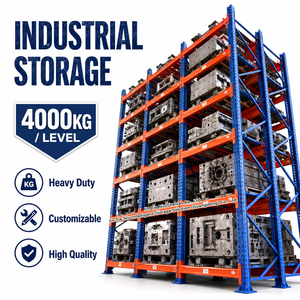
4000KG Heavy Duty Warehouse Rack Pallet Storage System Adjustable Beam Racking
Heavy-duty adjustable beam racking for high-load pallet storage, distribution centres and export warehouses.
Adjustable beamsHigh load
A 2026 procurement and engineering guide to heavy-duty selective, VNA, drive-in, pallet shuttle, cantilever and adjustable racking systems — with verified product routes, load data, certification checkpoints and future buying trends.
For buyers searching for a China top pallet shelving racks manufacturer and supplier, the first filter is not price per beam or upright. It is whether the system can be engineered for the real pallet, load, building height, seismic class, temperature and throughput of the project. The eight systems below cover the most common export requirements, from adjustable selective racking to cantilever pipe storage and structural pallet rack systems.
Heavy-duty adjustable beam racking for high-load pallet storage, distribution centres and export warehouses.
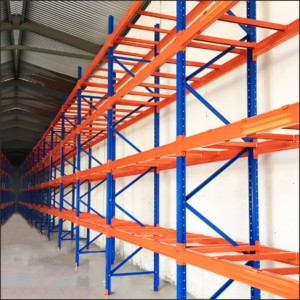
Versatile steel shelving and racking for warehouse storage, retail backrooms, workshops and spare-parts areas.
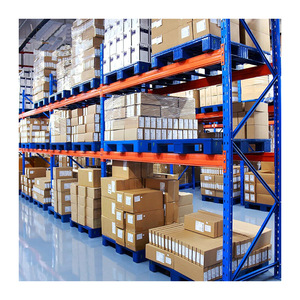
Industrial pallet racking with multiple load classes for manufacturers, 3PLs and high-bay warehouse projects.
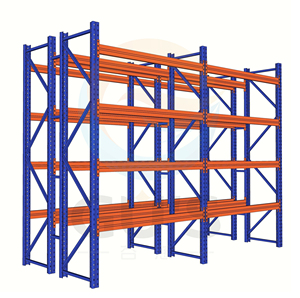
Complete pallet racking and stacking system for warehouses that need flexible layout and fast installation.
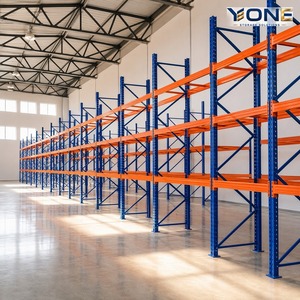
Q235B steel selective racking with direct access to every pallet, ideal for high-SKU distribution operations.
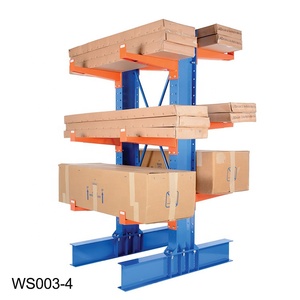
Custom cantilever racking for pipes, timber, profiles and long loads where standard pallet racks do not fit.
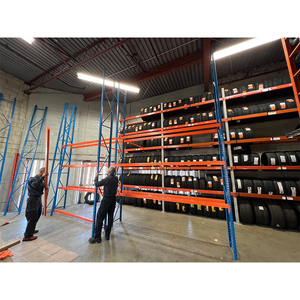
Structural pallet rack system for demanding industrial loads, dense storage and heavy-duty stacking applications.
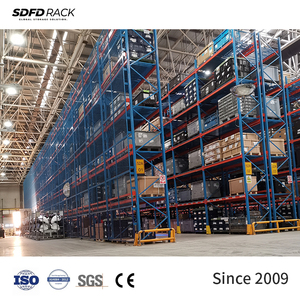
Adjustable 3,000 kg selective pallet racking for warehouses that need direct access, high SKU mix and future reconfiguration.
Countries with installed storage systems
Warehouse projects delivered
Annual steel production capacity
Of production exported worldwide
Warehouse racking is not a commodity purchase when the project involves high loads, cold-chain temperatures, seismic zones, automated equipment or multi-year expansion plans.
The commercial case for better racking is easy to state: storage density, safety and future flexibility determine the cost per usable pallet position, not the invoice value of steel alone. A low-cost quote that forces wider aisles, limits beam adjustment or fails to match the local seismic code can cost far more over the life of the warehouse than a properly engineered system.
This guide is written for warehouse owners, third-party logistics operators, project contractors and importers comparing China top pallet shelving racks manufacturers and suppliers. The aim is to provide information gain beyond a catalogue: how to match rack types to operating profiles, what to verify in a supplier’s factory and certification file, and which procurement trends are likely to reshape buying decisions between 2026 and 2030.
Alohatop Shelf’s experience across 60+ countries and 42,000+ warehouse projects shows that the strongest projects start with clean load data, early engineering review and a supplier that can connect manufacturing tolerances with installation practice. That is the difference between a rack purchase and a storage asset.
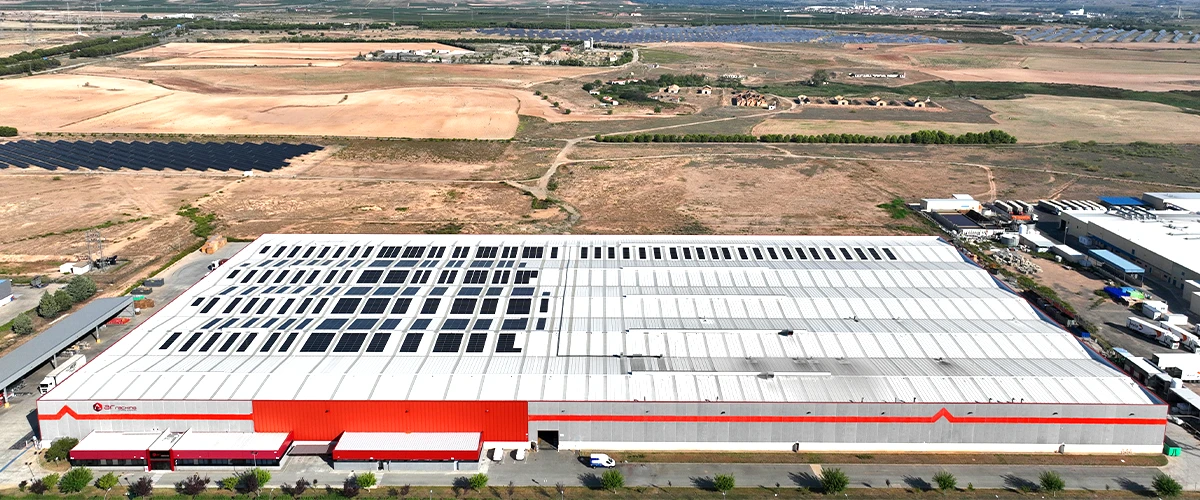
When shortlisting China pallet racking manufacturers, compare engineering capability, production control, certification and installation support together — not as separate line items.
A manufacturer that designs, calculates, produces and installs avoids split responsibility between steel supplier, engineering office and installer. Alohatop Shelf controls every stage from steel coil to final load sign.
Laboratory testing and finite-element simulation matter in seismic zones and high-bay projects. Our technology centre works with university R&D laboratories to test frames, beams and connections under real load cases.
Robotic welding and laser-controlled processes keep frame and beam geometry within AS/RS tolerances. A 35,000 m² highly automated production centre supports consistent quality and export lead times.
ISO 9001, ISO 14001, ISO 45001, ISO 50001, EN 1090-1, EN ISO 3834-2 welding quality and ISO 14064 carbon reporting provide a verifiable quality and ESG file for tender submissions.
Use this first-pass matrix to narrow the racking type before the layout study. Final selection still depends on SKU profile, throughput, clear height, pallet condition, fire strategy and local seismic demand.
| System | Best for | Density | Pallet access | Stock rotation |
|---|---|---|---|---|
| Adjustable selective racking | High SKU mix, distribution centres, food and beverage, retail | Baseline | 100% direct access | Any |
| Q235B selective racking | Export warehouses needing robust steel and flexible beam levels | Baseline | 100% direct access | Any |
| Very narrow aisle (VNA) | Tall buildings, cold stores, expensive land, high pallet count | High | 100% with VNA truck | Any |
| Double-deep racking | 3PL operations with multiple pallets per SKU | Medium-high | 50% direct access | LIFO per lane |
| Drive-in racking | Homogeneous goods, freezer stores, seasonal inventory | High | Low | LIFO or FIFO by design |
| Pallet shuttle racking | High-throughput DCs, deep lanes, cold-chain warehouses | Very high | Per lane | FIFO or LIFO |
| Structural pallet rack | Heavy industrial loads, dense stacking and demanding cycles | High | Configuration-led | Application-led |
| Cantilever pipe rack | Pipes, profiles, timber and long materials outside pallet formats | Specialist | Direct to bay | Any |
Recommendation logic: for a 3PL with high SKU volatility, adjustable selective racking is usually the safest first step; for freezer warehouses, VNA, mobile, drive-in or pallet shuttle should be compared on cooled cubic metres; for long products, a custom cantilever rack is often more efficient than adapting a pallet rack.
In practical procurement, the best configuration frequently combines systems. A distribution centre may use selective racking for fast movers, double-deep for slower SKUs and cantilever racking for maintenance materials. The aim is not to buy the densest system in isolation; it is to align storage density with picking frequency, truck type, safety rules and future expansion. That is why a manufacturer with engineering depth can often create more value than a supplier that only quotes standard bays.
Procurement teams are moving from unit-price comparison to total cost of ownership, verified compliance and automation readiness.
Buyers increasingly compare cost per pallet position, installation speed, reconfiguration potential, maintenance access and downtime risk, rather than lowest steel price.
Seismic calculations, anchor data, welding certification, load signs and traceability are requested earlier in the procurement process, especially for tendered projects.
Fruit, meat, seafood and frozen-food supply chains are investing in VNA, mobile, drive-in and shuttle racking that performs down to −30 °C.
AS/RS, AMR, AGV and pallet shuttle compatibility is now a design requirement, not a future upgrade. Rack tolerances must match integrator specifications.
Racking development is being driven by higher loads, taller buildings, faster automation, colder environments and stronger safety accountability.
Q235B and higher-grade steel, optimised profiles and controlled welding allow higher loads per bay without unnecessary weight or wasted footprint.
Reinforced bracing, heavier base plates, row spacers and reduced deflection limits are increasingly calculated against local code and site conditions.
Steels, coatings and component design are adapted for freezer warehouses, condensation control and temperatures down to −30 °C.
Racking is increasingly designed with CAD/BIM data, clear load signage and inspection points that support WMS, CMMS and maintenance workflows.
Ask for these inputs before accepting a quotation. The same checklist helps compare suppliers on engineering quality rather than brochure claims.
Pallet length, width, height, maximum weight, load uniformity, overhang and pallet condition. Include the number of pallets per SKU and damaged-pallet policy.
Clear height, floor slab strength, soil/seismic class, fire compartment strategy, column grid, ramp access and temperature range from ambient to deep freeze.
Daily throughput, shift pattern, forklift type, aisle width, picking method, stock rotation rule and expected SKU growth over the next five years.
Structural calculations, load signs, anchor specification, welding certification, component traceability, warranty terms and installation supervision plan.
A complete RFQ should also state the destination country and project city. Racking in Chile, Peru, Colombia and Ecuador must be checked against local seismic codes, while cold-store projects require finishing and steel selections compatible with permanent frost and condensation. When these details are supplied at the start, a manufacturer can recommend the right beam length, frame depth, upright capacity and accessory package without costly redesign later.
Alohatop Shelf combines design, manufacturing, logistics and installation experience for industrial racking projects in more than 60 countries.
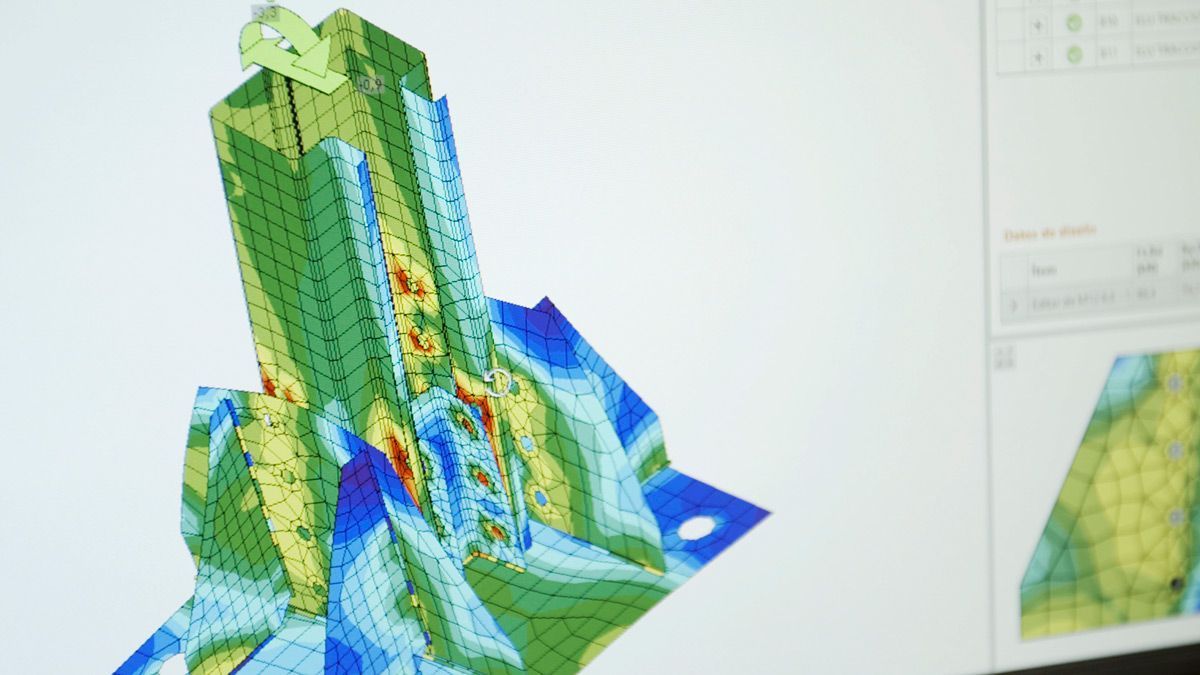
Racking safety depends on connection behaviour, frame stability, anchor performance and beam deflection under repeated load. Our technology centre works with an R&D laboratory at Mondragon University to test the strength and safety of components, while a research and simulation chair at the University of the Basque Country develops calculation models and simulation tools.
With more than 100,000 t of annual steel production capacity, a highly automated production centre and over 90% of output exported, Alohatop Shelf is structured for international logistics. Our teams support port shipments, export documentation and installation through own supervisors and a network of trained distributors.
The company operates through 14 own branches and 70+ trusted distributors, giving buyers access to local project support while retaining factory-level engineering control. Systems are produced under ISO 9001, ISO 14001, ISO 45001, ISO 50001, EN 1090-1, EN ISO 3834-2 and ISO 14064 verification.
Send an Inquiry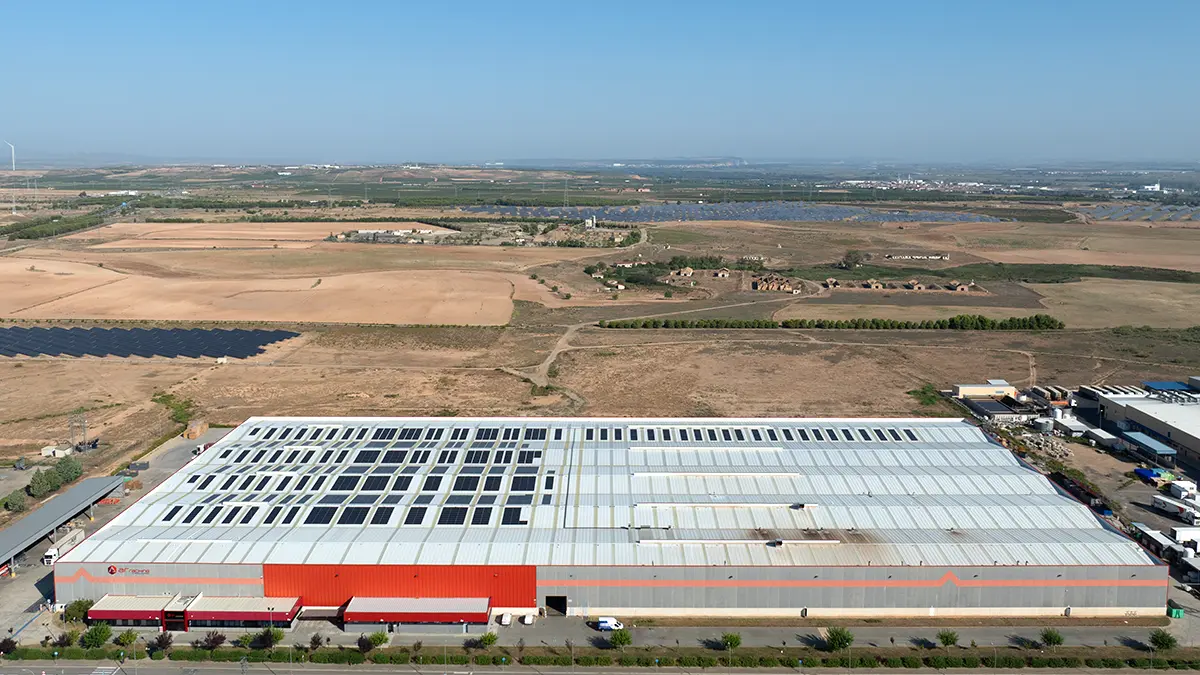
Different sectors need different compromises between density, selectivity and speed. These application patterns are common in export projects.
Flexible selective and double-deep layouts support multi-client operations, seasonal volumes and fast reconfiguration without losing direct access.
VNA, mobile, drive-in and pallet shuttle systems increase pallet positions per cooled cubic metre for frozen food, fruit, meat and seafood.
FIFO pallet flow, selective racking and hygienic layout planning support beverages, dairy, packaged food and high-turnover distribution.
Raw material, work-in-progress buffers, finished goods and cantilever storage for long products combine into one engineered layout.
Answers procurement and warehouse teams commonly request when comparing China pallet racking manufacturers and suppliers.
Send a building layout with clear height, pallet dimensions and maximum load weight, number of SKUs and pallets per SKU, daily throughput, forklift or automation type, temperature range and project city. This allows the manufacturer to dimension beams, frames, aisle widths and accessories correctly.
Compare engineering calculations, steel grade and profile design, welding certification, load signs, anchor specification, installation supervision, warranty and traceability. Ask for project references in similar temperatures, seismic zones or automation environments.
Adjustable selective racking is usually the best starting point because every pallet is directly accessible. If land or cooled volume is expensive, compare VNA or pallet shuttle. For slower SKUs with multiple pallets per item, double-deep may improve density.
Yes. Steel selection, coatings, component design and installation methods must be adapted for cold stores. Drive-in, VNA, mobile, pallet shuttle and self-supporting freezer warehouses are common solutions for cold-chain operators.
Look for management and product-related certification such as ISO 9001, ISO 14001, ISO 45001, ISO 50001, EN 1090-1, EN ISO 3834-2 welding quality and relevant structural calculations. A 5-year warranty and full component traceability provide additional assurance.
Yes. Racking should be calculated against the destination country code, soil class and building conditions. For automation, frames and beams must meet tighter tolerances for stacker cranes, shuttles, AGVs or AMRs, and the layout should reserve space for future equipment interfaces.
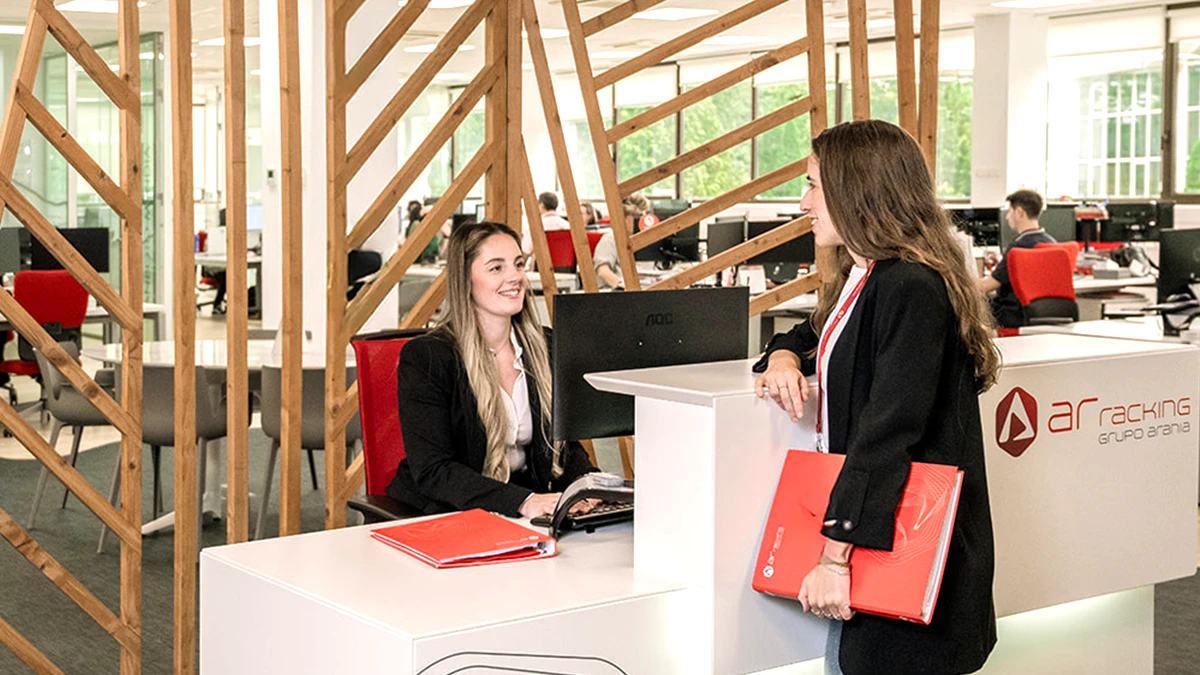
Share your layout, pallet data and load requirements. Alohatop Shelf’s storage engineers can recommend the safest, most space-efficient pallet shelving rack system for your site — from selective racking and cantilever storage to cold-store and automation-ready structures.
Include clear height, pallet size, maximum load, SKU count, throughput, forklift type, temperature range and project location for a faster response.