China Top Warehouse Racking Factory & Suppliers
An engineering-led procurement guide to pallet racking, cold storage shelving, factory mold storage and automation-ready warehouse steel structures.
Eight warehouse racking products to benchmark before you issue an RFQ
These systems cover the buying intents most common among distributors, 3PLs, manufacturers and cold-chain operators: heavy-duty selective storage, high-efficiency conveying, multi-layer pallet racking, mold storage, parts bins, chrome-plated shelving and carton or plastic-box picking. Every product link below preserves the original destination.
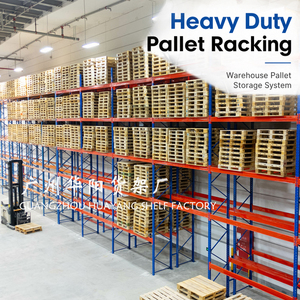
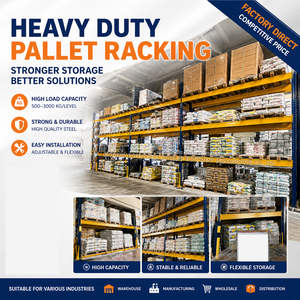
3000KG Per Level Heavy Duty Pallet Rack Industrial Warehouse Storage Steel Shelving Adjustable Pallet Racking System
A strong first benchmark for high-SKU warehouses that require direct access to every pallet, adjustable beam levels and a verified 3,000 kg load ceiling per level.
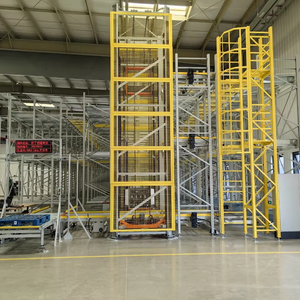
Advanced Intelligent Library Selective Pallet Rack with Efficient Conveying System High Efficiency Stacking Racks & Shelves
Suitable for projects moving toward semi-automated handling, high-efficiency conveying and tighter integration between storage geometry and material flow.
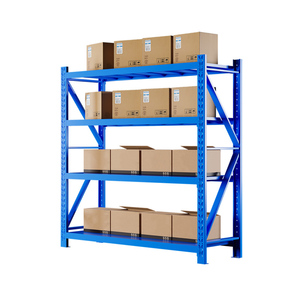
Industrial Warehouse Storage 5-Layer Pallet Racking System with Tire Rack Slotted Angle Rack Stacking Racks & Shelves
Recommended where vertical space, tire storage, slotted angle shelving and mixed pallet profiles must be combined in one practical warehouse layout.
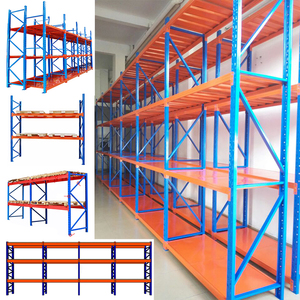
Heavy Duty Warehouse Rack Industrial Cold-Rolled Steel Rack Storage Shelf Rack 1600KG 1700KG 1800KG 1900KG Pounds Tons
A flexible specification for buyers comparing load ratings, cold-rolled steel quality and general warehouse storage capacity across multiple SKU families.
Factory Factory Mold Metal Warehouse Storage Rackingstorage System Shelf for Factory
Designed around the reality of mold, die and tooling storage: heavy concentrated loads, crane or forklift access, and the need to protect expensive production assets.
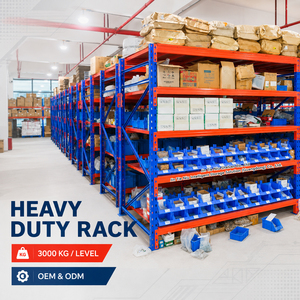
3000KG Per 5 Levels Warehouse Rack System with Steel Shelves for Parts Boxes and Bins Chinese Metal Shelves Storage Racks
A practical option for automotive spare parts, maintenance stores, small components and mixed bin storage where each level needs a clear load discipline.
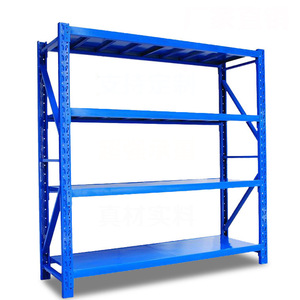
LIANGZO 5-Layer Steel Corrosion Protection Chrome Plated Storage Shelf for Warehouse Household Use Light/Medium Duty Display
For light to medium-duty display, storage rooms, retail backrooms and clean environments where corrosion protection and visual finish matter.
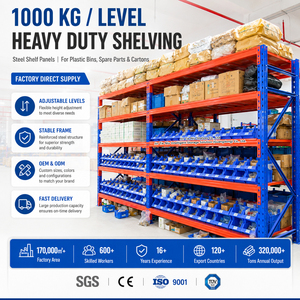
5 Beam Layers Heavy 1000KG Load Steel Shelf Rack for Plastic Boxes Cartons and Small Parts Racking
A useful bridge between pallet racking and manual picking, especially for plastic boxes, cartons and small parts where order selectivity is important.
Why the next racking purchase is an engineering-risk decision, not a steel-price comparison
Buyers searching for China top warehouse racking factory & suppliers are usually not looking for a catalogue of uprights and beams. They are trying to reduce risk. A racking system touches building safety, forklift productivity, inventory accuracy, cold-chain energy cost and long-term expansion. The cheapest quotation can become expensive when beam deflection is under-calculated, anchor details are vague, packaging is poor, or the supplier cannot provide load signs, weld records and installation guidance.
The more mature procurement approach is to compare factories on engineering capability and evidence quality. A serious racking manufacturer should demonstrate structural calculations, raw-material traceability, automated production, weld quality control, testing and a clear warranty process. For export projects, the supplier must also control container loading, component labelling, installation manuals and spare-parts availability. These factors have a larger effect on total cost of ownership than a small difference in price per upright.
This is where information gain matters. A useful supplier page should help the buyer ask better questions: What is the design code for the destination country? Is the site seismic? What is the actual pallet overhang? Does the proposal consider beam deflection limits? Are the anchors suitable for the concrete strength? Can the rack accept a future stacker crane, AMR or pallet shuttle? The answers separate a top warehouse racking factory from a trading company that only forwards quotations.
Five questions that reveal engineering depth in the first supplier meeting
- Can the factory provide project-specific load calculations, not only generic capacity tables?
- Does the proposal reference the local seismic code, soil class and concrete strength for anchors?
- Can the supplier show full traceability from steel batch to finished upright and beam?
- Will the layout tolerate future automation, including tighter tolerances for AS/RS or AGV interfaces?
- Is there a documented inspection, installation and five-year warranty process after shipment?
Six procurement trends shaping racking sourcing from 2026 to 2030
The buying conversation is moving from “How much per pallet position?” to “How much risk, downtime and future modification cost does this system remove?”
Seismic and regulatory due diligence
Buyers in Chile, Peru, Colombia, Ecuador and other seismic markets are demanding code-based design rather than a “heavy-duty” label. Rack proposals now need bracing, anchor and base-plate logic that can survive local review.
Procurement implication: require seismic calculations and site-specific anchor assumptions.Automation-ready tolerances
Even manual warehouses are being prepared for AMRs, conveyors, pick-to-light and future AS/RS. Rack tolerance, plumbness and beam level consistency become strategic requirements during the first build.
Procurement implication: buy today’s rack with tomorrow’s interface in mind.Cold-chain densification
Fruit, seafood, meat and frozen-food exporters are under pressure to use every cooled cubic metre efficiently. Mobile racking, VNA, drive-in and pallet shuttle systems are moving from optional upgrades to core design choices.
Procurement implication: compare capacity per cooled m³, not just capacity per warehouse.Total cost of ownership
Importers are building TCO models that include installation time, inspection frequency, spare-parts cost, damage exposure, freight efficiency and future relocation. A slightly higher factory price can win when lifecycle cost is lower.
Procurement implication: evaluate freight, installation and inspection together.Traceability and certification evidence
Procurement teams increasingly ask for weld-quality control, ISO management certificates, coating specifications and component traceability. These documents reduce disputes and support safety audits.
Procurement implication: make certification and traceability mandatory RFQ attachments.Commercial resilience and lead time
Port congestion, steel-price movement and installation labour shortages push buyers toward factories with predictable production planning, export packaging discipline and trained installation supervision.
Procurement implication: ask for a line-item delivery and installation plan.How warehouse racking products are evolving
Racking is becoming a data-rich engineered product: stronger steel profiles, tighter manufacturing tolerances, smarter safety verification and closer integration with automation.
Higher-strength steel and optimised profiles
Factories are using stronger steel grades, refined roll-forming and optimised upright sections to reduce material weight while maintaining load capacity. The result is better container utilisation and lower freight cost per pallet position.
Robotic welding and laser quality control
Automated welding cells, laser measurement and digital inspection help keep frames square and beams consistent. This matters for manual warehouses, but it becomes critical when racking must interface with stacker cranes, shuttles or AMRs.
Smart safety and impact awareness
Impact protection, better load signage, QR-based inspection records and sensor integration are becoming part of the racking conversation. Buyers want a system that can be inspected and maintained over years, not only installed quickly.
Structure-plus-automation convergence
Self-supporting warehouses, AS/RS rack structures and miniload systems blur the line between “racking” and “building”. Factory tolerances, fire engineering and building-envelope coordination become part of the racking scope.
Sustainable coatings and carbon transparency
Powder coating, zinc-rich finishes and verified carbon reporting are gaining attention. Export buyers increasingly need material declarations and environmental data to satisfy corporate ESG and customer requirements.
Modular, relocatable and future-proof design
Warehouse leases change, SKU profiles shift and automation arrives in phases. Modular beam levels, bolted frames, standard accessories and expandable layouts reduce the cost of future reconfiguration.
Which racking system should go on your shortlist?
Use this early-stage comparison to align storage density, access and rotation with the real operating profile. The final design still depends on load, building height, forklift type and seismic zone.
| System | Best-fit scenario | Density | Direct access | Stock rotation |
|---|---|---|---|---|
| Selective pallet racking | High SKU mix, retail distribution, food and beverage, spare parts | 100% of pallets | Any | |
| Very narrow aisle racking | Cold stores, high land cost, tall warehouses and VNA forklifts | 100% of pallets | Any | |
| Double-deep racking | 3PL warehouses with multiple pallets per SKU and moderate selectivity | About 50% | LIFO per lane | |
| Drive-in racking | Homogeneous goods, frozen products, seasonal inventory peaks | Low | LIFO; FIFO if drive-through | |
| Pallet shuttle racking | High-throughput distribution centres and deep cold-storage lanes | Per lane | FIFO or LIFO | |
| Picking shelving and carton racking | E-commerce fulfilment, spare parts, plastic boxes and cartons | Per pick face | Manual control | |
| AS/RS and self-supporting structures | Large DCs, 24/7 operations, deep-freeze warehouses and phased automation | System-controlled | WMS-controlled |
Density is relative to selective racking in the same footprint. In seismic zones, very tall or deeply nested configurations require specific structural verification, row spacers and anchor design.
Inside an export-grade racking factory: what separates a manufacturer from a reseller
A top warehouse racking factory should be verifiable before the first container ships. Production scale, testing, certifications, export experience and installation support are not marketing decoration; they are risk controls.
Countries with installed storage systems and export project experience
Warehouse projects delivered across distribution, cold chain and manufacturing
Annual steel production capacity supporting large and repeat orders
Highly automated production centre for frames, beams and accessories
Of production exported, with packaging and loading experience for global ports
Own branches supporting regional project coordination and service
Trusted distributors and installation partners in key markets
Warranty on storage systems, backed by component traceability
Manufacturer, not reseller
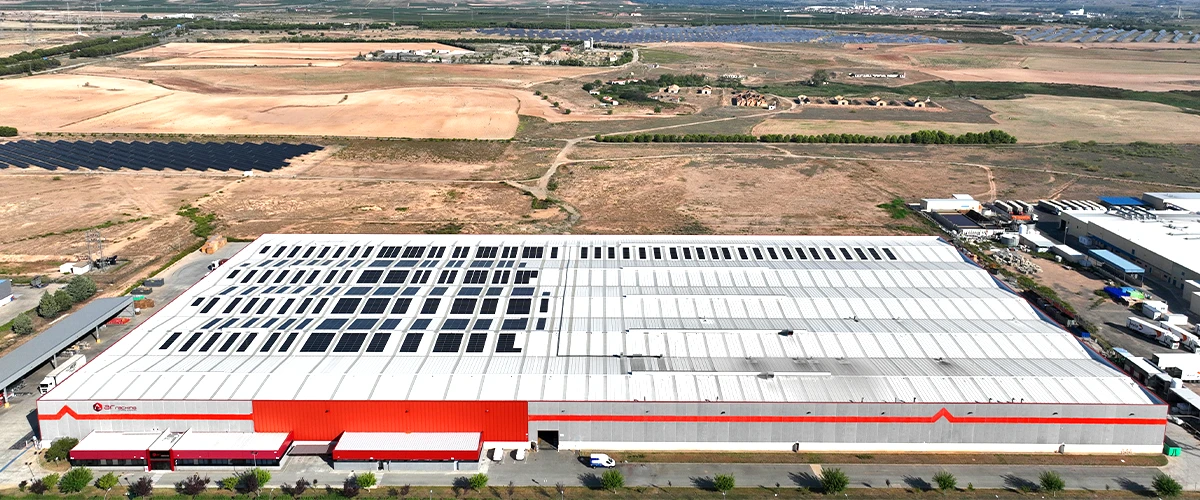
Alohatop Shelf designs, calculates, manufactures and installs metal racking for warehouses and loads across multiple industries. Owning every step from steel coil to final load sign creates one accountable partner for buyers comparing China top warehouse racking factory & suppliers. The company operates a 35,000 m² highly automated production centre with more than 100,000 t of annual capacity, and exports more than 90% of output.
- Full project control: engineering, production, quality, packaging and installation supervision remain inside one system.
- Export packaging discipline: component labelling and container loading plans reduce site confusion and damage.
- Full traceability: every upright and beam can be traced from production batch to installation.

Engineering validated in laboratory conditions
The technology centre works with an R&D laboratory at Mondragon University to test the behaviour, strength and safety of racking components under realistic load cases. A research and simulation chair at the University of the Basque Country develops calculation models and simulation tools that are transferred into frame, beam and connection design, especially for high seismic demand.
- Finite-element simulation of frames, beams and base connections
- Physical load and cyclic testing of new profiles and connections
- Design review against European and local South American codes
- Millimetre-level production control for AS/RS and shuttle integration
Quality system and export controls buyers should verify
Ask for the certificate scope, the project quality plan, weld inspection records and the component traceability method. A factory with a mature system can answer these questions quickly and consistently.
Common questions when buying warehouse racking from China
These are the questions serious buyers should ask before comparing quotations from China top warehouse racking factory & suppliers.
How can I tell a China warehouse racking factory from a trading company?
Look for verifiable production evidence: roll-forming lines, robotic welding, powder-coating or galvanising control, in-house engineering, raw-material traceability and project references. Ask for a live video audit of the production line, weld-quality records, load calculations and packing standards. A trading company may provide documents, but a factory can show the process behind those documents. Also check whether the supplier controls installation manuals, load signage and spare-parts specifications.
Which standards and certifications should a racking supplier provide?
At minimum, ask for ISO 9001 quality management and ISO 45001 occupational health and safety. For steel structures, EN 1090-1 and ISO 3834-2 welding quality are useful verification points. For cold-chain, seismic or automated projects, require project-specific structural calculations and design review against the destination code. Confirm the warranty terms, component traceability method and inspection process after installation.
How is pallet racking engineered for seismic zones?
Seismic racking design depends on the local code, site soil class, building interaction, rack height, load and anchoring condition. Typical measures include reinforced uprights and bracing, heavier base plates and anchors, row spacers, reduced beam deflection limits and careful verification of beam-to-column connections. For Chile, Peru, Colombia and Ecuador, the supplier should demonstrate familiarity with local seismic requirements rather than applying a generic “heavy-duty” design.
Can one factory support cold storage, mold storage and AS/RS projects?
Yes, but the factory must prove different capabilities. Cold storage requires suitable steel, coating and tolerance control for temperatures down to −30 °C. Mold storage requires heavy concentrated-load design and factory handling access. AS/RS requires tight geometric tolerances, interface coordination with the integrator and a quality plan that controls plumbness, beam level and frame dimensions. Buyers should verify reference projects for each application instead of assuming one catalogue covers all three.
What information should I include in an RFQ for accurate pricing?
Send a building layout with clear height and column grid, pallet dimensions and maximum load including overhang, number of SKUs and pallets per SKU, daily throughput, forklift or automation type, temperature range, destination city and installation scope. Add anchor condition, target delivery date and whether future expansion or automation is planned. This data allows the factory to propose a safe, comparable layout instead of quoting generic frames and beams.
How should buyers compare price per pallet position?
Compare the total delivered and installed cost: steel weight and section design, finish, accessories, anchors, row spacers, load signage, packaging, freight, installation supervision, inspection and warranty administration. A quotation with fewer accessories or thinner sections may appear cheaper per position but can increase installation time, damage risk or future modification cost. The best comparison includes capacity per m³, throughput and lifecycle cost.
What about shipping, installation and warranty?
Confirm container loading plans, component labelling and packing protection before shipment. For installation, clarify whether the factory provides supervisors, trained local distributors or a full installation team. Warranty should define what is covered, how claims are documented and how replacement parts are supplied. A five-year warranty is valuable only when backed by traceability, spare-parts availability and a clear inspection process.
Which procurement trends will matter most through 2030?
Automation-ready tolerances, seismic and regulatory compliance, cold-chain density, verified traceability, ESG documentation and lifecycle cost will dominate. Buyers will increasingly prefer factories that can support phased automation, provide digital layout data and prove quality with records. The winning supplier will not be the one with the lowest initial price per upright, but the one that reduces project risk from engineering through installation and long-term inspection.

Turn your warehouse constraints into a factory-grade racking direction
Send your building layout, pallet dimensions, load per level, clear height, throughput, temperature range and target city. The engineering team can use this information to recommend a safe, space-efficient storage system and prepare a more accurate quotation for your project.