China Wholesale Industrial Rack Storage Factory & Exporters
Heavy-duty pallet racking, cantilever, shuttle, mezzanine and AS/RS-ready structures — engineered for export, seismic zones, cold chain and high-throughput warehouses.
8 Industrial Rack Storage Systems for Wholesale Buyers
The fastest way to evaluate a China wholesale industrial rack storage factory is to compare real product architecture, not catalogue renders. These eight systems cover selective pallet racking, heavy-duty adjustable racking, anti-rust export racking, cantilever, shuttle, drop-over deck and mezzanine storage. Each product link preserves the original specification page so procurement teams can move from concept to RFQ without losing technical context.
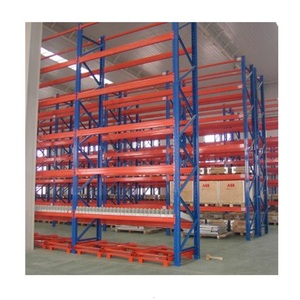
Industrial Heavy Duty Rack Factory Price Steel Pallet Racking Storage Systems From Warehouse Pallet Rack Manufacturer
Factory-price selective racking for export warehouses, engineered for heavy pallet loads and fast container loading.
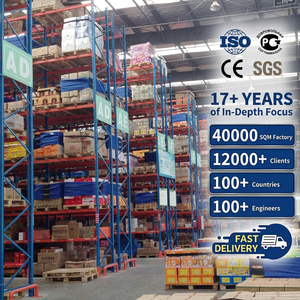
SDFD Heavy Duty Pallet Racking System Steel Durable Adjustable Box Beam Multi-layer Selective Pallet Rack for Warehouse Storage
Adjustable box-beam architecture for multi-layer selective storage, ideal for 3PL, food and retail distribution.
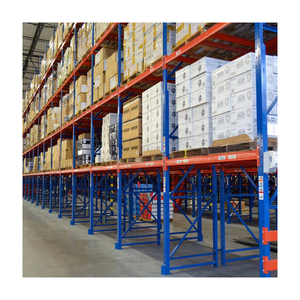
Wholesale Price Heavy Duty Storage Racks Warehouse Stacking Racks Selective Steel Pallet Rack Heavy-Duty Racking for Sale
Cost-controlled heavy-duty racking for wholesale programmes, warehouse stacking and export container optimisation.
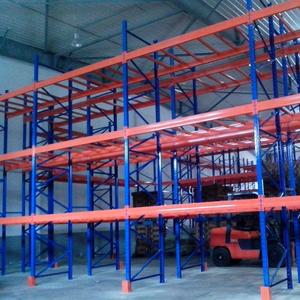
High Load Beam Pallet Racking Anti Rust Powder Coating Detachable Warehouse Rack Australian Distribution Center Goods Stacking
Detachable, powder-coated racking for humid ports, coastal warehouses and Australian distribution centre specifications.
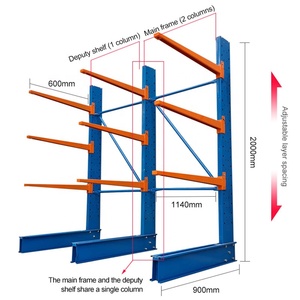
Topeasy Customized Powder Coated Indoor Storage Heavy Duty Rack Cantilever Shelving Cantilever Racking
Custom cantilever racking for timber, pipes, profiles and long goods where selective pallet racking cannot support the load.
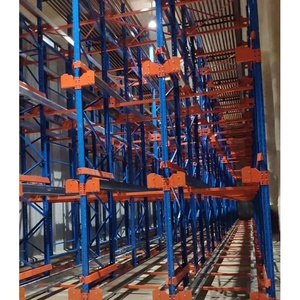
Customized Steel Pallet Rack Stacking Racks & Shelves Warehouse Storage Rack Heavy Duty Shuttle Racking for Industrial
Semi-automated shuttle racking for deep lanes, high-density cold stores and high-throughput distribution centres.
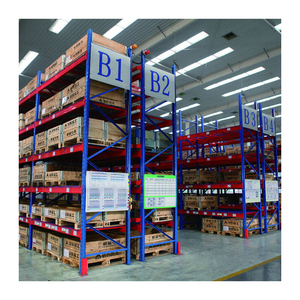
Industrial Pallet Racking System Spliced Steel Drop-Over Deck Panel Warehouse Storage Rack 2000kg Heavy Duty
Spliced steel drop-over deck panels for fragile goods, small cartons and 2000 kg heavy-duty shelf applications.
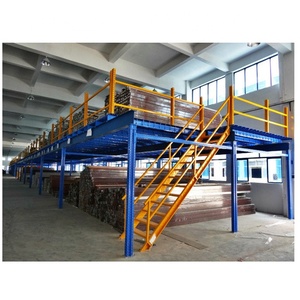
Mezzanine Shelf Storage Heavy Duty Rack System Metal Racks Warehouse Mezzanine Platform
Multi-tier mezzanine storage that turns vertical airspace into picking, buffer or spare-parts capacity.
Countries with installed storage systems
Warehouse projects delivered
Annual steel production capacity
Of production exported worldwide
Highly automated production centre
Warranty on storage systems
Own branches supporting export projects
Trusted distributors and installation partners
Why China Wholesale Industrial Rack Storage Factory & Exporters Are Changing Global Procurement
Buyers no longer treat China as a simple low-cost alternative. In rack storage, the category is structural, safety-critical and logistics-heavy. A credible factory-exporter must provide calculations, steel traceability, welding control, coating systems, container loading plans and post-install inspection. That is why procurement teams now score suppliers on engineering evidence and total cost of ownership, not price per beam.
From trading company to engineering partner
The winning China wholesale industrial rack storage factory behaves like an engineering partner. It documents load cases, calculates for local seismic codes, controls coating and welding, and plans export packing before the purchase order is signed. For importers, this reduces the hidden costs that appear after arrival: rework at site, missing components, coating damage, container re-packing and installation delays.
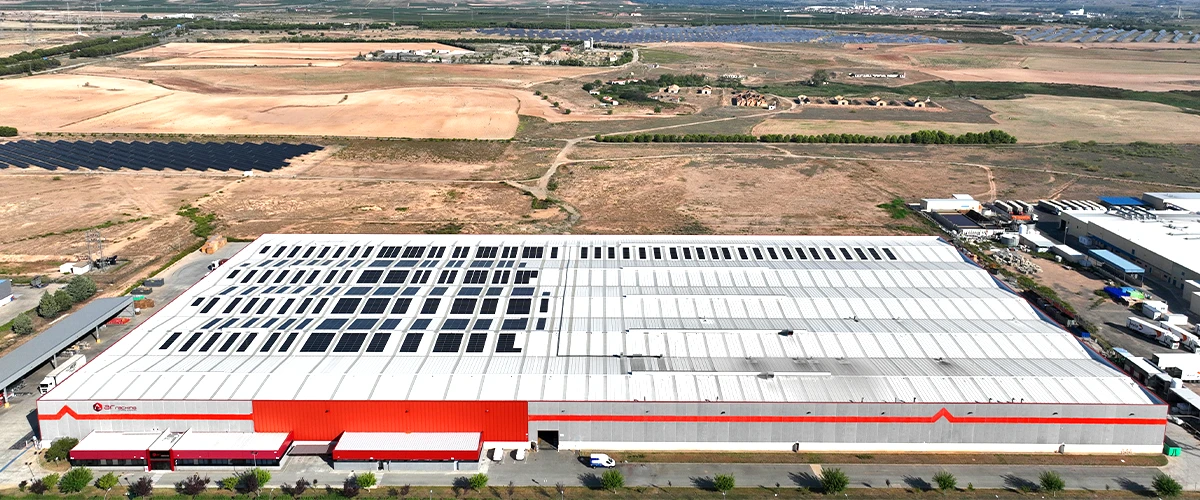
Alohatop Shelf operates a 35,000 m² highly automated production centre with more than 100,000 t of annual capacity. More than 90% of output is exported, with logistics experience across major ports and distribution centres. The company has delivered 42,000+ warehouse projects in 60+ countries, supported by 14 own branches and 70+ distributors. Every upright and beam can be traced from production batch to installation sign-off, and systems carry a 5-year warranty.
- Engineering evidence: structural calculations, seismic verification and load signage supplied before shipment.
- Factory audit readiness: ISO 9001, ISO 14001, ISO 45001, ISO 50001, EN ISO 3834-2 welding quality, EN 1090-1 and ISO 14064 carbon reporting.
- Export discipline: container loading plans, steel-strapping protection, moisture control and component marking for faster site assembly.
Procurement insight: price per tonne is not the purchase price
A racking quotation should be compared on landed cost + installation risk + future reconfiguration cost. A lower beam price can disappear quickly if uprights arrive with thin powder coating, if anchors are not matched to the concrete slab, or if the supplier cannot provide seismic calculations for the destination city. Serious exporters include these items in the technical offer — not as post-order extras.
Illustrative procurement weighting model used by export engineering teams when comparing rack storage suppliers for safety-critical warehouse projects.
Product Recommendations: Matching Rack Architecture to Load, Throughput and Building Envelope
Selective pallet racking remains the default for high SKU mix because every pallet is directly accessible. For high-density cold stores, shuttle and drive-in systems reduce aisle loss. For long goods, cantilever is the only sensible format. The table below connects common buying scenarios to the eight product families shown above.
| System / product family | Best for | Density | Direct access | Procurement note |
|---|---|---|---|---|
| Heavy-duty selective pallet racking | High SKU mix, food and beverage, retail distribution | 100% of pallets | Specify load per level, beam deflection limit and anchor type. | |
| Adjustable box-beam racking | 3PL, multi-layer storage, changing pallet profiles | 100% of pallets | Confirm height adjustability and beam locking mechanism. | |
| Anti-rust powder-coated racking | Coastal ports, humid warehouses, Australian distribution centres | 100% of pallets | Require coating thickness, salt-spray test and packing protection. | |
| Cantilever racking | Timber, pipes, profiles, long goods, building materials | High for long goods | Arm load, arm spacing and base length are project-specific. | |
| Shuttle racking | High-density cold stores, fast-moving DCs, deep lanes | Per lane | Check shuttle count, charging strategy and WMS integration. | |
| Drop-over deck pallet racking | Fragile cartons, small parts, 2000 kg shelf loads | 100% of shelves | Confirm deck panel thickness, splicing detail and finish. | |
| Mezzanine storage platform | Multi-tier picking, spare parts, buffer stock, e-commerce | Manual or carton access | Verify floor loading, stair/guardrail scope and fire strategy. | |
| AS/RS-ready and self-supporting structures | Large DCs, deep freeze, 24/7 automation | Automated | Require millimetre tolerances, crane interface and BIM coordination. |
Density is relative to selective racking in the same footprint. Final selection must be verified against local seismic code, soil class, sprinkler clearance, forklift type, pallet quality and WMS rules.
Future Procurement Trends Buyers Should Build Into 2026–2030 RFQs
The next buying cycle will be shaped by nearshoring, automation, cold-chain expansion and carbon reporting. Procurement teams that write these requirements into the first RFQ avoid expensive redesign later.
Seismic and soil-specific verification
More buyers now require calculations against local seismic codes and site soil class before order confirmation. In Andean and Pacific markets, reinforced uprights, heavier base plates, row spacers and reduced beam deflection are becoming standard RFQ items.
Automation-ready tolerances
AS/RS, AMR and pallet shuttle interfaces have moved from premium projects into mainstream planning. Rack geometry, upright verticality and beam level tolerances must be specified early, because automated equipment will not accept site improvisation.
Total cost of ownership
Landed cost, installation labour, reconfiguration potential, spare-parts availability and inspection frequency are now compared alongside unit price. A factory that supplies a complete bill of materials and marked components reduces installation hours and site disputes.
Cold-chain specifications to −30 °C
Fruit, seafood, meat and frozen-food exporters require steels and finishes suited to freezer environments. Moisture, ice build-up and low-temperature steel behaviour must be addressed in the technical offer, not left to the installer.
Supplier consolidation and audits
Importers are reducing the number of racking suppliers and asking for factory audit evidence, welding quality records and component traceability. A single accountable manufacturer is easier to audit than a chain of traders and subcontractors.
Carbon reporting and sustainable coating
Verified carbon reporting, recycled steel content and low-VOC powder coating are becoming tender questions. Exporters that can document environmental performance and packaging waste reduction gain an advantage with multinational buyers.
Product Development Trends: What the Next Generation of Industrial Rack Storage Will Include
Rack storage is moving from welded steel frames to measured, data-enabled structural systems. The changes matter to procurement because they affect lead time, installation speed, safety verification and future automation options.
High-strength steel and laser-welded beams
Higher-strength profiles allow longer beam spans and more stable frames while reducing steel weight. Laser-welded beams and precision roll-forming improve fatigue behaviour under repeated forklift cycles.
Robotic welding and in-line inspection
Automated production cells keep weld placement, frame squareness and beam profiles within tight tolerances. This is essential for AS/RS, where stacker cranes require rack geometry that stays within millimetre-level limits.
Anti-rust systems for humid ports
Coastal humidity and long sea voyages demand more than basic paint. Zinc-rich primers, thicker powder coating, protected weld areas and moisture-controlled export packing are becoming standard for tropical and coastal destinations.
Modular mezzanine and shuttle integration
Mezzanines are becoming modular platforms that combine picking, buffer storage and automated lifts. Shuttle systems are integrated beneath or beside mezzanines to increase density without losing access to fast-moving SKUs.
QR traceability and digital twin readiness
Component-level QR codes connect each upright and beam to production records, load limits and inspection history. This supports digital twin models and makes future reconfiguration faster and safer.
Self-supporting clad-rack structures
For large distribution centres and deep-freeze warehouses, the racking itself can support the building envelope. This reduces structural steel and footprint while requiring advanced engineering coordination and precise installation.
R&D validation before export
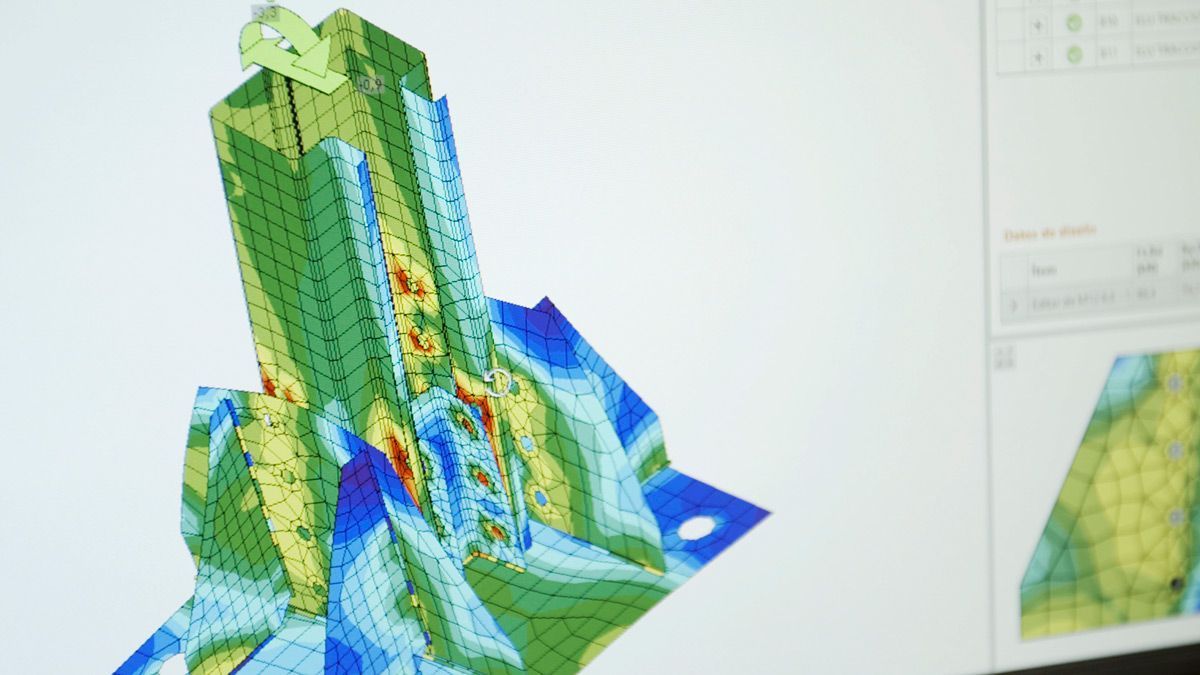
Our technology centre works with an R&D laboratory at Mondragon University to test the behaviour, strength and safety of racking components under real load cases. A research and simulation chair at the University of the Basque Country develops calculation models and simulation tools for frames, beams and connections.
- Finite-element simulation of frames, beams and base connections
- Physical load and cyclic testing of new profiles
- Design reviewed against European and local South American codes
Automated production for AS/RS tolerances
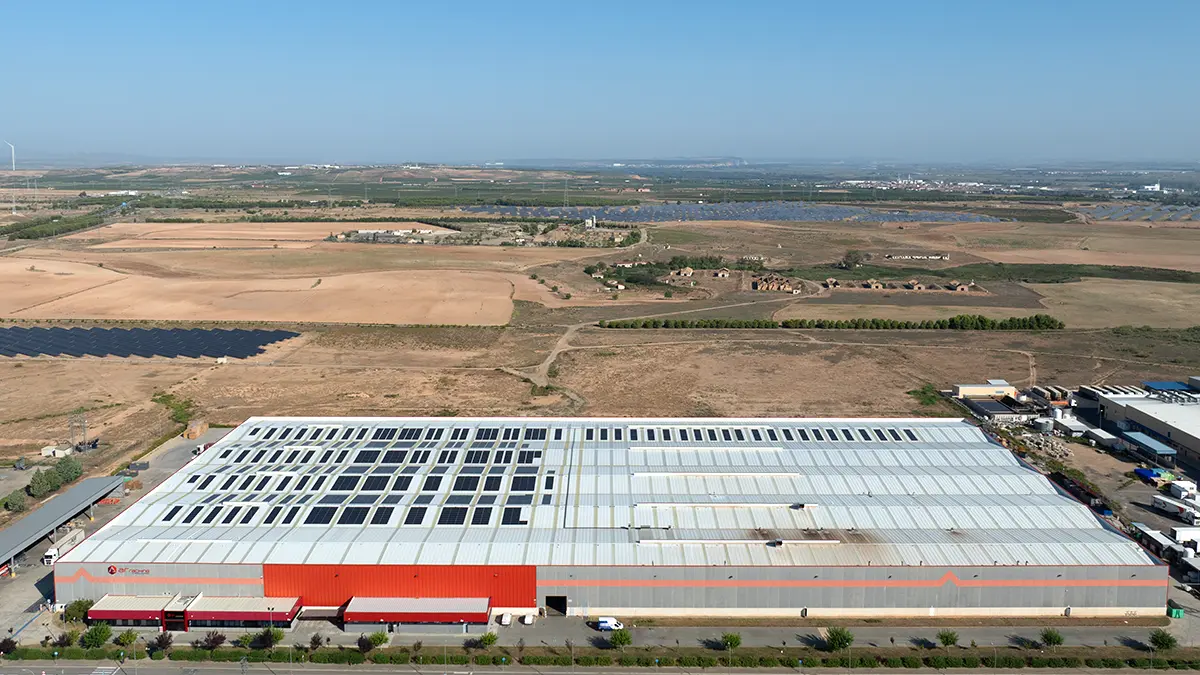
Automated stacker cranes and shuttles stop when rack geometry drifts out of tolerance. Robotic production and laser-controlled processes keep every frame and beam within the tight tolerances that AS/RS integrators require — and give manual warehouses faster, safer installation.
That combination of engineering validation and production control is the real information gain for buyers comparing China wholesale industrial rack storage factory suppliers that look similar on a catalogue page.
A Factory-Exporter Built for Engineered, Auditable Storage Projects
Alohatop Shelf designs, calculates, manufactures and installs metal racking for all types of warehouses and loads. Owning every step — from steel coil to final load sign — means one accountable partner for international buyers, 3PLs, cold-chain operators and manufacturers.
Full manufacturing control
From steel coil to final load sign, production is controlled in-house. This supports consistent quality across large-volume orders and gives export buyers predictable lead times.
Seismic and cold-chain engineering
Projects are calculated for destination codes, soil class, temperature and operational profile. Typical measures include reinforced uprights, heavier anchors, row spacers and reduced beam deflection limits.
Automated production precision
Robotic welding and laser-controlled processes keep frames and beams within the tight tolerances required by AS/RS integrators and automated warehouse equipment.
Export logistics and packing
More than 90% of output is exported. Container loading plans, component marking, steel strapping and moisture protection are prepared before shipment to reduce site delays.
Lifecycle services
Project engineering, technical inspection, installation and maintenance are delivered by one team. This supports safer rack use long after the initial installation.
Certified quality and traceability
Systems are produced under ISO 9001, ISO 14001, ISO 45001, ISO 50001, UNE EN ISO 3834-2, EN 1090-1 and ISO 14064 verified carbon reporting, with a 5-year warranty.
Export coverage with local support
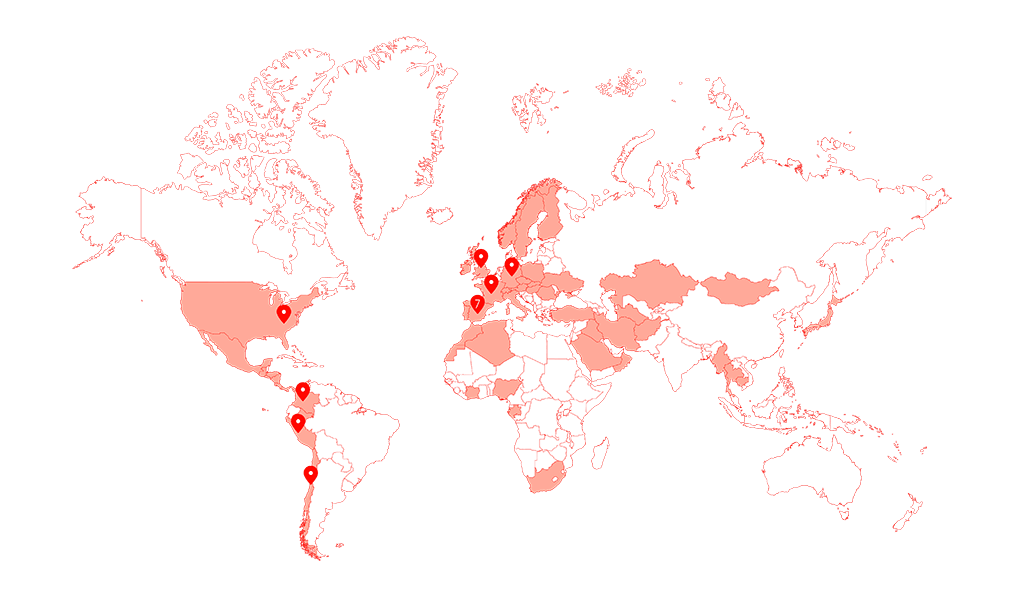
With installations in 60+ countries, 14 own branches and 70+ distributors, the company supports projects across Brazil, Chile, Peru, Colombia, Argentina, Ecuador, Uruguay and Paraguay — alongside other export markets. Local support matters for site measurement, installation supervision and spare-parts availability.
- Destination-specific calculations and documentation
- Installation supervisors and trained distributor networks
- Component traceability and after-sales inspection
China Wholesale Industrial Rack Storage Factory & Exporters: Buyer Questions
These are the questions export engineering teams answer most often from warehouse, logistics and procurement managers comparing factory-direct rack storage suppliers.
Email: [email protected]
Send an InquiryWhat is the MOQ for wholesale industrial rack storage?
MOQ depends on the system and whether the order is a stock programme or a project-specific engineering package. Selective pallet racking and mezzanine projects can be shipped as mixed container loads, while shuttle and AS/RS structures require a larger project scope. For a reliable quote, share pallet size, load per level, warehouse height and target container quantity.
How do you calculate load capacity and seismic safety?
Capacity is calculated from the actual pallet load, beam span, upright section, bracing configuration, floor slab and anchor details. In seismic zones, the design is checked against the destination code and site soil class — for example NCh2369 and NCh433 in Chile, E.030 in Peru, NSR-10 in Colombia, NEC in Ecuador and INPRES-CIRSOC 103 in Argentina. Typical measures include reinforced uprights, heavier base plates, row spacers and reduced beam deflection limits.
Can you customize pallet sizes such as 1200×1000, 1200×800, ISO and PBR?
Yes. All common formats are supported: the 1200 × 1000 mm pallet widely used in Latin America, the Brazilian PBR 1000 × 1200 mm, the 1200 × 800 mm Euro pallet, and ISO sizes such as 1100 × 1100 mm and 1219 × 1016 mm. Beam lengths, frame depths and deck details are dimensioned for the actual pallet and load, not a generic catalogue size.
What is the lead time and how do you pack for export?
Lead time depends on system complexity, steel availability, coating requirements and project approval. Export packing typically includes component marking, steel strapping, edge protection, moisture control and a container loading plan. For large projects, shipments can be phased to match site progress and installation sequence.
Which certifications and warranty back the storage systems?
Systems carry a 5-year warranty and are produced under ISO 9001, ISO 14001, ISO 45001, ISO 50001, UNE EN ISO 3834-2 welding quality, EN 1090-1 and ISO 14064 verified carbon reporting, with full component traceability. Certificates and test records can be provided for tender and audit packages.
Can the racking operate in cold storage and freezer warehouses?
Yes. Mobile racking, drive-in, VNA, pallet shuttle and self-supporting freezer warehouses can use steels and finishes suited to temperatures down to −30 °C. This is a key requirement for fruit, seafood, meat and frozen-food exporters. The technical offer should confirm coating performance, steel grade, anchor strategy and condensation control.
Do you provide installation and technical inspection overseas?
Installation can be coordinated through our own supervisors and trained distributor networks. Technical inspection services identify impact damage, overloads and anchoring issues before they become incidents. For remote projects, a documented installation sequence and component marking system help local teams assemble the system correctly.
How should buyers compare landed cost and total cost of ownership?
Compare the technical scope, not only the unit price. Include steel weight, coating system, anchors, decking, load signage, engineering calculations, packaging, freight, installation supervision, spare parts and future reconfiguration. A supplier that provides a complete bill of materials and accurate container loading can reduce hidden installation hours and site delays.
What information is needed to start a warehouse racking project?
Send a building layout with clear height, pallet dimensions and maximum load weight, number of SKUs and pallets per SKU, daily throughput, forklift or automation type, temperature range and project city. If available, include floor slab details, fire strategy, local seismic code and target shipping port. Our engineers use this to propose the most efficient storage system.
How do you protect against rust during sea freight and storage?
Rust protection begins with surface preparation and coating specification. For humid or coastal destinations, the offer can include zinc-rich primer, thicker powder coating, protected weld areas, desiccant, VCI film and moisture-controlled packing. Uprights and beams are strapped and marked to reduce handling damage during unloading and site storage.
Send Your Pallet, Load and Building Data for an Engineered Quote
Share your layout, clear height, pallet dimensions, maximum load, SKU count, daily throughput, temperature range and project city. Our export engineers will return a rack selection, preliminary layout, container loading plan and compliance checklist.