China Wholesale Industrial Racking Exporters & Wholesalers
A buyer-focused guide to sourcing pallet racking, AS/RS structures, gravity flow racking, cantilever racks and heavy-duty warehouse storage systems from export-oriented industrial racking manufacturers and wholesale suppliers.
- 5-Year Warranty
- ISO 9001 · 14001 · 45001
- Seismic-Rated Design
Countries with installed storage systems
Warehouse projects delivered
Annual steel production capacity
Of production exported worldwide
Wholesale Racking Is a Safety System, Not a Commodity Cart
Buyers searching for China wholesale industrial racking exporters and wholesalers usually begin with a familiar list: price per upright, price per beam, load capacity, delivery time and container loading efficiency. Those numbers matter, but they are not the whole purchase. An industrial racking system is a structural product used above people, forklifts and inventory. A wholesale price that ignores seismic demand, pallet tolerance, beam deflection, anchor performance or local building approval can become a much higher lifecycle cost after installation.
That is why serious procurement teams now evaluate racking suppliers through a wider lens: engineering capability, manufacturing traceability, certification, installation supervision, spare-parts support and the ability to document a design for the destination market. In this guide, Alohatop Shelf combines its export manufacturing experience with the technical questions buyers should ask before placing a wholesale order for pallet racking, AS/RS rack structures, medium-duty shelving, cantilever racking or outdoor galvanized storage systems.
The most reliable wholesale relationship is not the one with the lowest initial quotation. It is the one that gives your project team clear load calculations, approved drawings, material specifications, packing lists and installation guidance. That is the difference between buying steel and buying a warehouse system that remains safe, serviceable and efficient for years.
Information Gain for Wholesale Buyers
Use these four checks to separate a true industrial racking manufacturer from a catalogue reseller.
- Engineering evidence: load calculations, pallet layout, seismic verification and beam deflection limits.
- Production evidence: roll-forming, robotic welding, powder coating, galvanizing and batch traceability.
- Export evidence: container loading plans, port experience, packing standards and multilingual documentation.
- Lifecycle evidence: installation supervision, spare parts, periodic inspection and a written warranty.
8 Industrial Racking Products for Wholesale and Project Procurement
These recommended products cover automated pallet storage, gravity flow picking, heavy-duty pallet racking, cantilever storage, outdoor corrosion resistance, stackable heavy-duty racking, medium-duty shelving and adjustable high-capacity pallet storage.
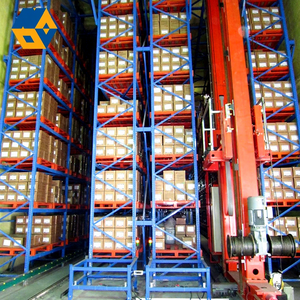
NOVA Automated Storage and Retrieval System ASRS Stacker Crane Pallet Warehouse Animation Rack System
For high-bay pallet warehouses where stacker crane tolerances, structural accuracy and future automation matter. A strong fit for distributors planning a new automated warehouse or a phased upgrade from conventional racking.
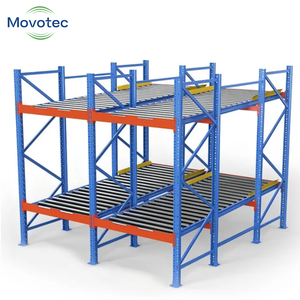
Warehouse Storage Racks Shelving Systems Pallet Rack Gravity Roller Flow Racking Movotec MTG100 1 Year Warranty
Gravity roller flow racking supports fast-moving SKUs, FIFO inventory control and dense pallet picking. Recommended for food, beverage, cold-chain and distribution warehouses where stock rotation discipline creates measurable value.
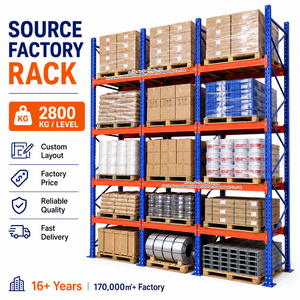
2800KG 5 Levels High Bay Industrial Pallet Racking Heavy Duty Warehouse Rack System
A five-level high-bay pallet racking configuration for demanding loads and vertical storage. Ideal for wholesale buyers who need a proven heavy-duty structure for distribution centres, manufacturing buffers and spare-parts warehouses.
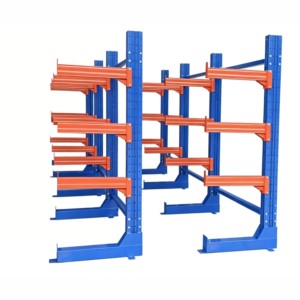
Stock Cold-Rolled Steel Cantilever Shelf Warehouse Storage Double-Sided Bracket Arm Cantilever Rack
Double-sided cantilever racking is designed for long, bulky or irregular goods such as pipes, profiles, timber and metal stock. A practical recommendation for building-material wholesalers and industrial stockyards.
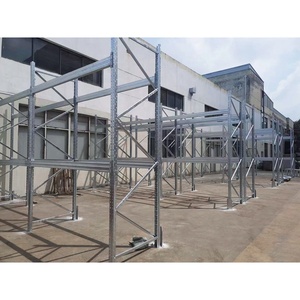
Warehouse Storage Strong Corrosion Resistance Capability Hot Dip Galvanize Pallet Rack Outdoor Storage Rack
Hot-dip galvanized pallet racking is recommended for ports, coastal yards, humid climates and outdoor storage where paint systems may deteriorate. This is a strong procurement option for export projects with long logistics exposure.
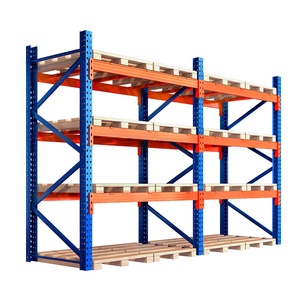
Industrial Heavy Duty Storage Shelves system Stacking Units Metal Rack Warehouse Steel Pallet Racking
A versatile heavy-duty steel storage solution for industrial warehouses, project cargo and metal goods. It suits wholesale buyers who need a durable, adaptable structure with strong component availability for future reconfiguration.
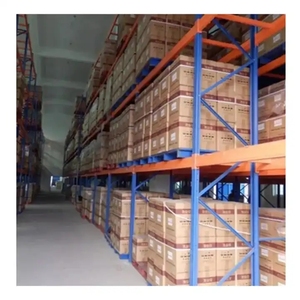
Industrial Shelving Medium Shelf Duty Steel Rack Storage Equipment Certificated Warehouse Metal Racks
Medium-duty shelving is a practical wholesale product for spare parts, cartons, e-commerce picking and workshop storage. It supports manual access and can be combined with pallet racking to create an efficient hybrid warehouse layout.
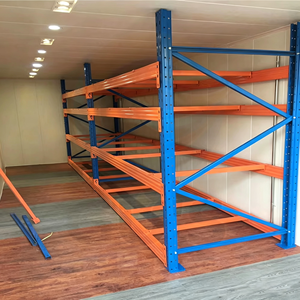
Heavy Duty Industrial Pallet Storage Racking 1000kg/2000kg/3000kg Capacity Per Layer Adjustable Steel Warehouse Rack
An adjustable heavy-duty pallet racking option for buyers who need flexible capacity across multiple projects. The ability to change beam levels makes it suitable for wholesale stock, 3PL operations and growing distribution businesses.
Compare Industrial Racking Systems Before You Issue a Wholesale RFQ
A practical comparison for wholesale buyers, importers, warehouse contractors and project developers. Density is shown relative to conventional selective pallet racking in the same building footprint.
| System | Best fit | Storage density | Direct access | Typical rotation |
|---|---|---|---|---|
| Selective pallet racking | Mixed SKUs, distributors, food and beverage, 3PL warehouses | 100% of pallets | Any | |
| Very narrow aisle racking | High-bay warehouses, cold stores and expensive floor space | 100% of pallets | Any | |
| Double-deep racking | Multi-pallet SKUs and 3PL operations with predictable stock profiles | 50% of pallets | LIFO by lane | |
| Gravity flow racking | Perishables, fast-moving inventory and strict FIFO control | By lane | FIFO | |
| Drive-in racking | Homogeneous products, frozen goods and high-density reserve storage | Lower selectivity | LIFO or FIFO by layout | |
| AS/RS and self-supporting structures | Large distribution centres, 24/7 operations and automated cold storage | Automated access | WMS controlled |
How Wholesale Industrial Racking Procurement Is Changing
The buying conversation has shifted from simple catalogue pricing to landed cost, compliance evidence, automation readiness and lifecycle safety.
1. Landed Cost and Lifecycle Value Replace Lowest Price
Procurement teams are building comparisons around total landed cost: steel specification, finish, packing, container utilisation, installation time, spare parts and inspection requirements. A quotation that looks cheaper at the factory gate may cost more once unpacking, rework or delayed commissioning is included.
2. Seismic and Safety Verification Moves Earlier
In South America and other active seismic regions, racking is being checked against local codes before purchase orders are issued. Buyers increasingly request design calculations, anchor details, row spacers, reinforced bracing and documented load signage as part of the wholesale package.
3. Cold-Chain Capacity Drives High-Density Purchasing
Fruit, seafood, meat, dairy, pharmaceutical and frozen-food supply chains need dense storage per cooled cubic metre. That trend supports mobile racking, drive-in racking, very narrow aisle racking and pallet shuttle systems, especially where refrigeration cost is a major operational expense.
4. Automation-Ready Racking Becomes a Standard Brief
Even buyers starting with manual operations now ask whether a racking layout can support future AS/RS, AMR or pallet shuttle integration. Straightness tolerances, beam levels, fire strategy, floor flatness and WMS interfaces are becoming part of the early wholesale specification.
5. Certified Steel and Traceable Quality Are Now Buying Criteria
International buyers want more than a coating colour. They ask for weld quality, steel grade, component traceability, factory management certifications and a warranty that can be enforced. ISO 9001, ISO 14001, ISO 45001, EN 1090-1 and welding quality documentation are increasingly requested during supplier qualification.
6. Buffer Inventory and Port-Near Warehousing Increase Demand
Volatile shipping schedules and regional supply-chain adjustments encourage importers to hold more buffer stock. That creates demand for flexible selective racking, outdoor galvanized storage, medium-duty picking shelving and hybrid layouts that can respond quickly to changing inventory profiles.
Industrial Racking Product Trends Shaping the Next Buying Cycle
Manufacturers are developing products around density, automation compatibility, corrosion resistance, installation speed and documented safety.
Modular AS/RS Rack Structures
Automated warehouses are moving toward modular structures that simplify transport, installation and future expansion. Accuracy remains critical because stacker cranes and shuttles cannot compensate for racking geometry errors.
High-Density Pallet Storage
Pallet shuttle, drive-in, push-back and gravity flow systems continue to develop as land and energy costs rise. The product trend is not simply “more pallets”; it is more pallets with the right selectivity and retrieval speed.
Cold-Store and Freezer-Ready Finishes
Racking for temperatures down to −30 °C requires material and finish choices that perform in cold, humid and condensation-prone environments. Cold-chain buyers increasingly request freezer-ready specifications from the start.
Documented Sustainability and Circular Value
ISO 14064 verified carbon reporting, recyclable steel, powder-coating efficiency and responsible production are becoming part of supplier evaluation. Racking is increasingly valued for its long service life, reconfigurability and end-of-life steel recovery.
What a Credible Wholesale Racking Supply Chain Looks Like
Wholesale buyers need product depth, but they also need evidence that engineering, manufacturing, testing and delivery are under control.
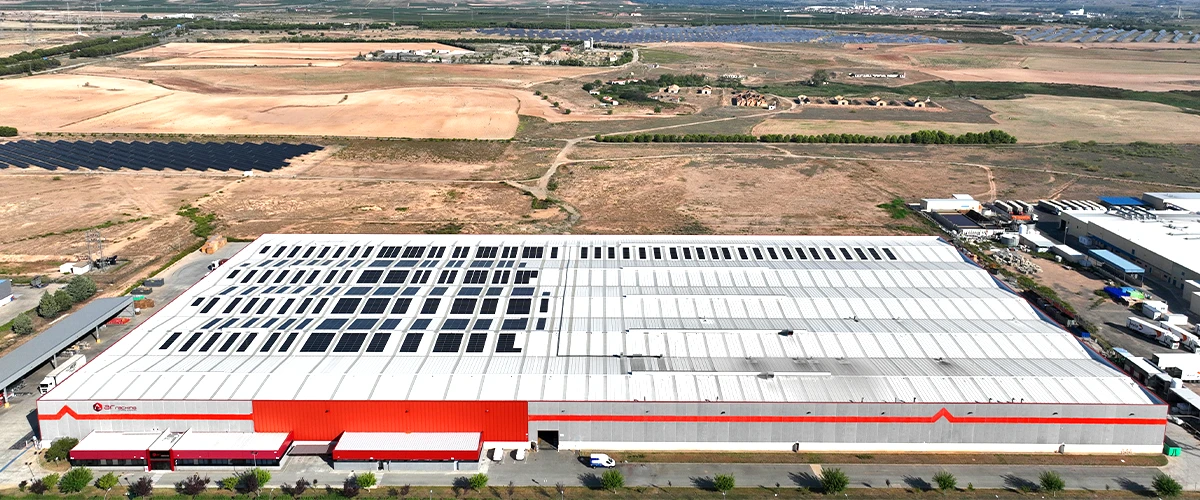
35,000 m² Highly Automated Production Centre
Alohatop Shelf controls the main manufacturing steps, from steel processing to roll-forming, welding, finishing and packing. That level of control supports consistent quality across large wholesale orders and repeat project deliveries.

R&D and Laboratory Validation
Our engineering work is supported by an R&D laboratory relationship with Mondragon University and a research and simulation chair at the University of the Basque Country. Finite-element modelling, load testing and connection behaviour studies help improve structural confidence.
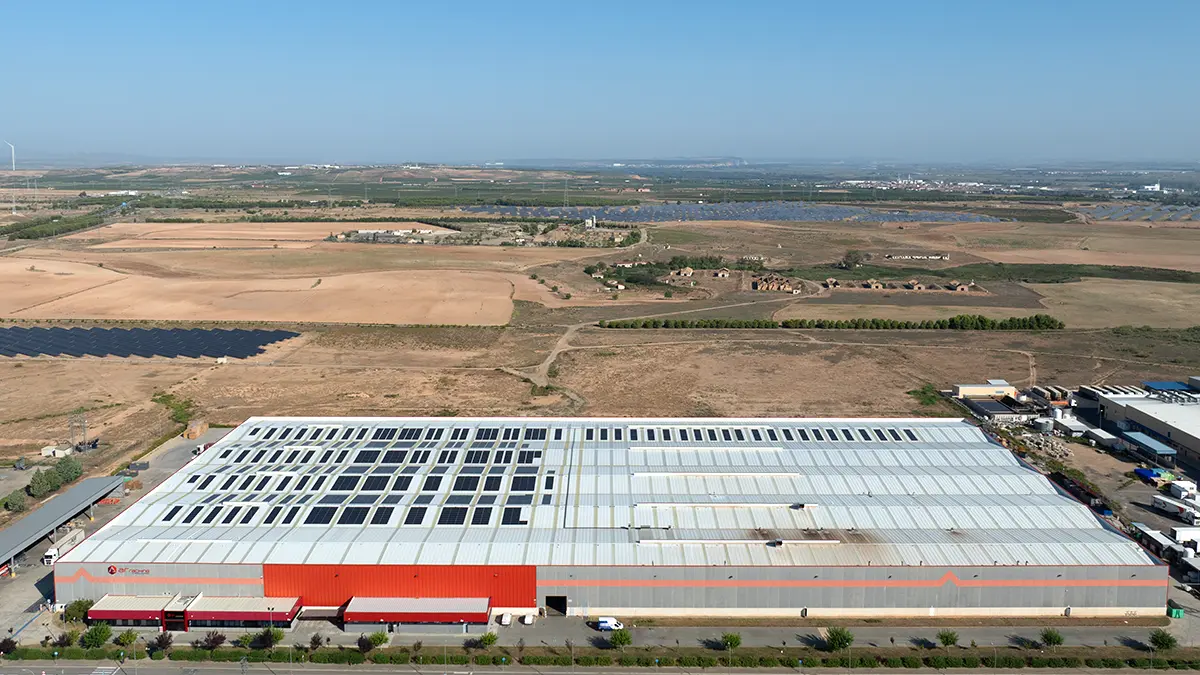
Millimetre Precision for Automated and Manual Warehouses
Robotic production and laser-controlled processes support the tight tolerances demanded by AS/RS integrators, while also improving installation speed and safety in conventional warehouses. Every upright and beam can be traced to its production batch.
Why Alohatop Shelf Supports Serious Wholesale Racking Projects
For buyers comparing China wholesale industrial racking exporters and wholesalers, supplier depth matters. The following capabilities are the practical advantages that support export projects and long-term distributor relationships.
Manufacturer, Not a Catalogue Reseller
Design, calculation, manufacturing and installation support are connected under one project structure, reducing communication gaps between the buyer, engineer and factory.
100,000 t Annual Steel Capacity
Large production capacity supports wholesalers, project contractors and distributors that need consistent supply for multi-phase warehouse builds.
More Than 90% of Production Exported
Export experience shapes packing, documentation, port handling and product design for international buyers dealing with long transit times.
60+ Countries and 42,000+ Projects
A broad installed base across logistics, food, cold chain, manufacturing and distribution provides practical knowledge for different warehouse profiles.
14 Own Branches and 70+ Distributors
A distributed service network helps support project coordination, spare parts, installation supervision and local market responsiveness.
Seismic and Cold-Store Design Experience
Projects for South American and other export markets require attention to seismic codes, humidity, cold-chain temperatures and local approval documentation.
Certified Quality and 5-Year Warranty
ISO management systems, welding quality and structural steel certifications give procurement teams verifiable quality signals beyond a simple product photo.
Layout, Installation, Inspection and Maintenance
Lifecycle services include project engineering, technical rack inspection, installation, maintenance and turnkey support to protect long-term rack safety.
Certifications That Reduce Wholesale Procurement Risk
For international buyers, certificates are not decoration. They help verify management systems, welding control, structural steel competence and environmental accountability.
 ISO 9001Quality management
 ISO 14001Environmental management
 ISO 45001Health and safety
 ISO 50001Energy management
 EN ISO 3834-2Welding quality
 EN 1090-1Structural steel components
 ISO 14064Verified carbon reporting
Where Wholesale Industrial Racking Is Most Often Specified
Different industries need different pallet types, temperature ranges, inventory rules and safety details. The best wholesale order is configured around the operating reality, not just the catalogue category.
Food & Beverage
Selective, flow and shuttle racking for palletised food, dairy, beverages and packaged goods.
Cold Storage
Mobile, drive-in, VNA and self-supporting freezer structures for temperatures down to −30 °C.
Logistics & 3PL
Flexible selective and double-deep layouts for multi-client inventory and changing SKU profiles.
E-commerce
Multi-tier picking, carton flow, medium-duty shelves and AMR-ready structures for fulfilment.
Manufacturing
Raw material, work-in-progress, finished-goods and cantilever storage for production warehouses.
Agriculture & Export
Cold-chain racking, high-density fruit storage and outdoor galvanized systems for export hubs.
Industrial Racking Wholesale Frequently Asked Questions
Answers to the questions most often raised by importers, distributors, warehouse contractors and procurement teams evaluating industrial racking wholesale suppliers.
What makes a China wholesale industrial racking exporter reliable?
A reliable exporter should provide engineering drawings, load calculations, steel and finish specifications, certification evidence, packing plans and installation guidance. Do not qualify a supplier only on price per kilogram. Ask who is responsible for structural verification, what warranty is provided and how spare parts will be supplied after commissioning.
Can I buy pallet racking wholesale for multiple projects or distributorship?
Yes. Wholesale racking programmes are typically structured around repeated upright, beam, bracing, footplate and accessory orders. For distributor or project buyers, the most efficient approach is to share a forecast, pallet profile, standard finish requirement and documentation standard so that repeated orders can be produced consistently.
How do I calculate the right load capacity for industrial racking?
Start with the maximum pallet weight, pallet dimensions, number of pallets per beam level, beam span and the required safety factor. The load capacity must be calculated for the actual configuration, not chosen from a generic catalogue line. Uneven loads, dynamic forklift impacts and seismic demand also affect the final design.
Can racking be designed for seismic zones in South America?
Yes. For Chile, Peru, Colombia, Ecuador and other seismic markets, design should consider local codes and site conditions, such as NCh2369 and NCh433 in Chile, E.030 in Peru, NSR-10 in Colombia and NEC in Ecuador. Reinforced uprights, heavier base plates, row spacers, bracing details and reduced deflection limits may be required.
Which pallet sizes can your racking systems support?
Common formats include 1200 × 1000 mm pallets, 1200 × 800 mm Euro pallets, Brazilian PBR pallets, 1100 × 1100 mm ISO pallets and 1219 × 1016 mm pallets. Beam lengths and frame depths should be dimensioned around the actual pallet, load overhang and forklift handling method.
Do you supply cold storage, freezer and outdoor galvanized racking?
Yes. Cold storage projects can use mobile, drive-in, VNA, pallet shuttle or self-supporting structures suited to low temperatures. Outdoor or coastal projects can use hot-dip galvanized pallet racking for stronger corrosion resistance. The correct finish depends on humidity, salt exposure, temperature and maintenance expectations.
What certifications and warranty should wholesale buyers request?
Ask for ISO 9001, ISO 14001, ISO 45001, welding quality documentation such as ISO 3834-2, structural steel certification such as EN 1090-1 and, where relevant, ISO 14064 carbon reporting. Alohatop Shelf systems carry a 5-year warranty and full component traceability.
What information should I send to receive a wholesale racking quotation?
Send your building layout, clear height, pallet dimensions, maximum load weight, number of SKUs, pallets per SKU, daily throughput, forklift or automation type, temperature range, destination city and target delivery schedule. You can also email [email protected]. Our engineers can then recommend a suitable storage system and prepare a project-specific quotation.

Planning a New Warehouse or Racking Expansion?
Share your layout, pallet data and destination market. Our engineering team can help you compare racking systems, define the right load capacity and prepare a practical wholesale supply plan for your project.
For global buyers comparing China wholesale industrial racking exporters and wholesalers, request engineering evidence, certification documentation and a clear lifecycle support plan before confirming a purchase order.