8 Wholesale Push Racks and Heavy-Duty Storage Systems
Use these product families as a starting point for RFQ comparison. Serious buyers should match load, pallet type, clear height, rotation rule, seismic zone and shipping plan before choosing the lowest unit price.
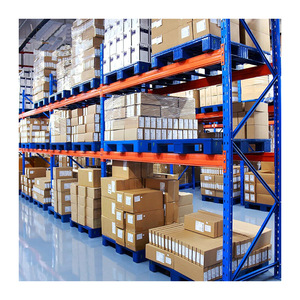
Mracking Heavy Duty Metal Pallet Storage Racking 1000kg/2000kg/3000kg Per Layer Industrial Pallet Shelving Rack
For importers who need versatile selective storage with high load thresholds and clear engineering documentation.
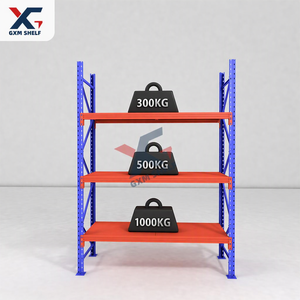
Heavy Duty Rack System Warehouse Storage Stacking Warehouse Shelf Racking Warehouse Racks Heavy Duty
A modular option for distributors that need flexible warehouse shelving and stacking capacity across mixed sites.
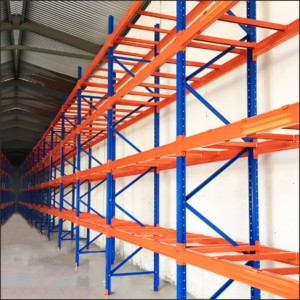
Heavy Duty Store Shop Display Shelving Tiers Garage Racking Shelves Steel Warehouse Shelf Metal Storage Rack Shelves Storage
Suitable for importers serving retail, workshop, garage and light industrial storage channels with visible product display.
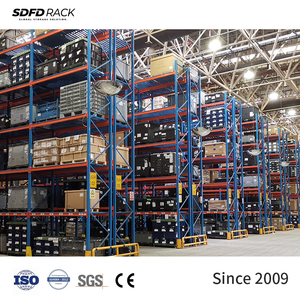
Heavy Duty Pallet Rack System Multi-layer Customized Metal High Load Industrial Warehouse Storage Steel Selective Pallet Racking
Customised beam lengths, frame depths and levels for buyers who need project-specific layouts rather than catalogue units.
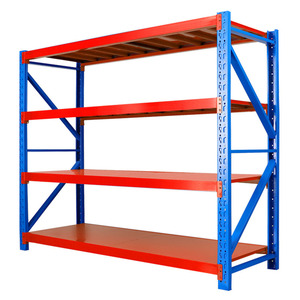
Medium/Heavy Duty Storage Equipment Warehouse Industrial Powder Coating Cargo Steel Iron Tool Supermarket Stacking Storage Racks
Powder-coated storage equipment for supermarket, tool, cargo and industrial warehouse applications.
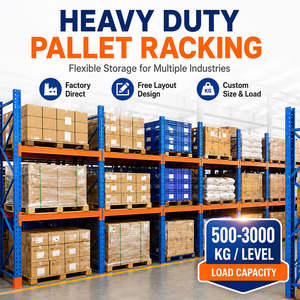
Heavy Duty Steel Warehouse Pallet Rack Storage Racking System for Industrial Warehouse Applications
A core export product for 3PLs, manufacturers and distribution centres that require stable pallet access and expansion capacity.
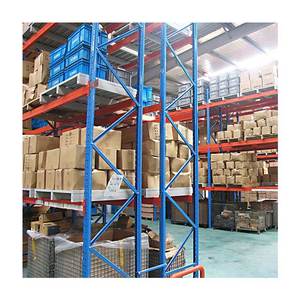
Industrial Heavy Duty Rack Manufacturing Pallet Rack Logistics Equipment Factory Warehouse Storage Racks Heavy Duty Racking
Factory-focused racking for logistics equipment, production buffers and high-load warehouse storage projects.
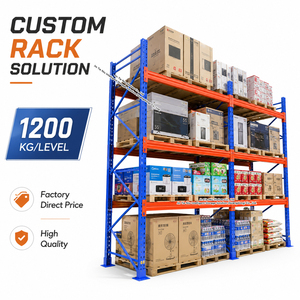
1200KG Steel Heavy Duty Rack Warehouse Pallet Storage Shelving System
For buyers who need a defined load rating, straightforward pallet access and predictable container loading plans.
Countries with installed storage systems
Warehouse projects delivered
Annual steel production capacity
Of production exported worldwide
What Buyers Really Mean by “China Wholesale Push Racks Suppliers & Exporters”
Semantic search for this phrase is rarely a request for one catalogue item. It usually combines several buying intents: find a verified exporter, compare push-back racking against selective racking, confirm load capacity, understand Chinese steel and coating quality, check certifications, estimate container loading, and reduce total cost of ownership after freight, installation and maintenance.
In warehouse terminology, push racks most often refers to push-back pallet racking, a high-density LIFO system where pallets sit on nested carts and are pushed back along a inclined rail. Buyers also use the phrase for general heavy-duty industrial storage racks. This guide covers both interpretations so procurement teams can evaluate the real system rather than a keyword.
The strongest suppliers are not the ones quoting the lowest price per kilogram. They are the ones that can explain load calculations, tolerance control, welding quality, packaging, anchoring and post-shipment support in language that survives a factory audit and an installation review.
Why an Export-Oriented Racking Manufacturer Outperforms a Price-Only Wholesale Supplier
Alohatop Shelf operates as a designer, manufacturer and installer of industrial racking and automated warehouse structures, not as a catalogue reseller. For buyers comparing China wholesale push racks suppliers and exporters, that distinction matters: engineering responsibility, steel traceability, production tolerance and installation guidance come from one accountable team.
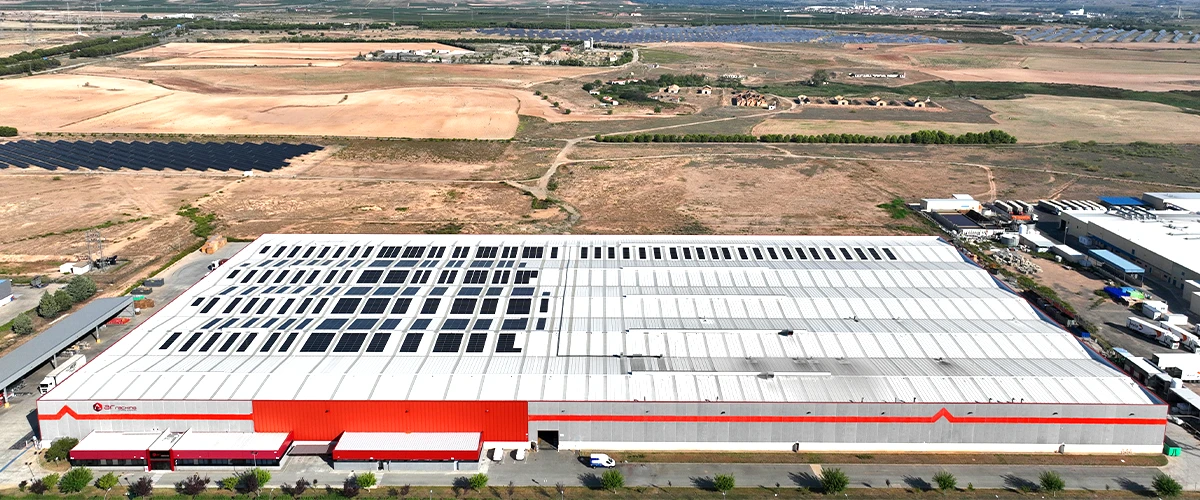
Our 35,000 m² highly automated production centre has more than 100,000 t of annual steel capacity, with more than 90% of output exported and projects delivered in over 60 countries. The company has completed more than 42,000 warehouse projects, supported by 14 own branches and 70+ trusted distributors. Every upright and beam can be traced from production batch to installation, and systems carry a 5-year warranty.
- Project engineering, structural calculation and load signage support.
- R&D validation with Mondragon University and the University of the Basque Country.
- ISO 9001, ISO 14001, ISO 45001, ISO 50001, EN ISO 3834-2, EN 1090-1 and ISO 14064 controls.
Engineering from layout to load sign
Our team reviews pallet dimensions, clear height, forklift type, SKU profile and local code requirements before quoting a rack structure.
Automated production tolerance
Robotic production and laser-controlled processes keep frames and beams within the geometry expected by manual warehouses and AS/RS integrators.
Laboratory-backed product confidence
Finite-element simulation, physical load testing and cyclic testing support new profiles and high-seismic-demand connections.
Seismic, cold chain and automation ready
We calculate reinforced uprights, bracing, base plates, anchors and row spacers for seismic zones, freezer environments and automated storage.
Export packaging and documentation
Bundled frames, protected beams, container optimisation, packing lists and loading plans reduce damage risk and improve site receiving.
5-year warranty and traceability
Component traceability from steel batch to shipment supports maintenance planning, spare-part supply and long-term risk control.
How Procurement Teams Will Buy Push Racks and Warehouse Storage in the Next Cycle
Price comparison is shifting toward evidence comparison. The buying committee now asks for engineering assumptions, quality records, container economics and lifecycle risk in one package.
Auditable suppliers, not catalogues
Buyers will require factory audit evidence, material certificates, welding controls, load calculations and a named engineering contact before approving a sample order.
Total cost of ownership
Freight volatility makes cube efficiency, damage resistance and modular expansion more important than a low ex-works price that creates hidden installation costs.
Compliance-led sourcing
ESG reporting, carbon footprint declarations and certified welding quality are becoming procurement filters for importers serving regulated end users.
Automation-ready geometry
Racking quotations increasingly need BIM files, tolerance statements and interface data for stacker cranes, shuttles, AMRs and warehouse management systems.
Where Push Rack and Heavy-Duty Storage Design Is Moving
Material science, safety expectations and the growth of cold-chain logistics are reshaping how racking is specified, shipped and commissioned.
Higher-strength, lighter structures
Optimised profiles and high-strength steel reduce steel weight per pallet position while maintaining stiffness and beam deflection control.
Safer push-back cart mechanics
Better cart tracking, braking, lane guards and operational signage reduce the risk of pallet misplacement in high-density LIFO systems.
Seismic transparency
Importers increasingly ask for calculation assumptions, anchor schedules and code references for Chile, Peru, Colombia, Ecuador and other seismic markets.
Cold storage optimisation
Mobile, drive-in, VNA, shuttle and self-supporting freezer systems are being optimised for temperatures down to −30 °C and dense pallet storage.
Push Racks vs Other Pallet Racking Systems
Density bars are illustrative comparisons against conventional selective racking in the same footprint. Final layout must be verified against load, aisle width, fire strategy and local seismic requirements.
| System | Best for | Relative density | Direct access | Stock rotation |
|---|---|---|---|---|
| Selective pallet racking | Mixed SKUs, retail distribution, fast access | 100% of pallets | Any | |
| Push-back racking | Mid-volume SKUs, LIFO high-density storage | Last pallet in each lane | LIFO | |
| Double-deep racking | 3PL accounts with two or more pallets per SKU | 50% of pallets | LIFO per lane | |
| Drive-in racking | Homogeneous products and frozen goods | Low | LIFO or FIFO if drive-through | |
| Pallet shuttle | High-throughput DCs and deep cold lanes | Per lane | FIFO or LIFO | |
| Mobile pallet racking | Cold storage and high value per cubic metre | One moving aisle, all pallets | Any | |
| AS/RS and self-supporting | Large DCs, 24/7 operation, deep freeze | Automated | WMS controlled |
For a robust quotation, buyers should provide pallet length × width × height, maximum load per pallet, pallets per SKU, daily inbound and outbound volume, clear height, forklift type, temperature range and project city.
China Wholesale Push Racks Procurement Checklist
A short RFQ is a weak RFQ. The more operational context you provide, the more comparable the quotations become.
Pallet and load profile
Confirm pallet format, load weight per layer, overhang limits, fragile goods and load signage requirements before engineering starts.
Building geometry
Share clear height, column grid, floor slab condition, fire paths, sprinkler clearance and forklift turning space so the layout is buildable.
SKU and rotation rule
Push-back racking is LIFO. If FIFO, traceability or fast SKU access is mandatory, compare flow racking, shuttle or selective racking.
Throughput and equipment
State forklift type, lifting height, aisle width, daily pallet movements and whether future AS/RS or AMR integration is planned.
Seismic and temperature
For Chile, Peru, Colombia, Ecuador and other seismic zones, ask for code references. For cold stores, specify temperature and finish requirements.
Commercial and after-sales
Request packing list, container loading plan, warranty terms, spare parts, installation supervision, inspection records and lead-time commitments.
Common Questions About China Wholesale Push Racks Suppliers & Exporters
These are the questions that separate a serious export supplier from a trading intermediary.
What are push racks, and are they suitable for high-density pallet storage?
Push racks usually refer to push-back pallet racking. Pallets are placed on nested carts that move back along rails, creating LIFO high-density storage within a lane. They are suitable for medium-volume SKUs and operations that can accept last-pallet access. For strict FIFO, perishables or very fast-moving inventory, compare pallet flow, shuttle or selective racking.
How can I verify that a China wholesale push racks supplier is a real exporter, not just a broker?
Ask for factory audit evidence, production equipment photos, material traceability, welding quality certification, export packing records, past project references, installation supervision capability and a named engineering contact. A broker may forward quotations, but a manufacturer can explain tolerances, load assumptions and container loading in technical terms.
What load capacity should I specify for heavy-duty push back racking?
Do not start with a generic tonnage. Provide maximum pallet weight, load eccentricity, beam span, number of levels, dynamic forklift impact and seismic demand. A 1000 kg, 2000 kg or 3000 kg per layer requirement must be verified against the actual beam and frame design, not just a catalogue label.
Which standards and documents should an exporter provide?
Depending on destination, request ISO 9001 quality management, ISO 45001 safety controls, EN ISO 3834-2 welding quality, EN 1090-1 structural steel evidence, load calculations, anchor schedules and inspection records. South American projects may also require local seismic code references such as NCh2369 in Chile, E.030 in Peru, NSR-10 in Colombia or NEC in Ecuador.
How is quality controlled before shipment?
Look for dimensional inspection, weld appearance checks, coating thickness verification, component count, bundle labelling and container loading photos. Full component traceability from steel batch to installation is a strong signal because it supports spare-part supply and future inspection.
What MOQ, lead time and shipping method should I expect?
MOQ depends on whether the order is a standard pallet rack kit or a project-engineered warehouse system. Lead time is affected by drawing approval, coating colour, steel availability and container scheduling. For large projects, ask for a production plan with drawing freeze, inspection points and loading window. LCL may suit samples, but full containers usually reduce damage risk for long steel components.
Can push racks be designed for seismic zones and cold storage?
Yes, but the design changes. Seismic zones may require reinforced uprights, heavier bracing, larger base plates, additional anchors and row spacers. Freezer warehouses require steel and finishes suited to low temperature, plus installation details that account for condensation and thermal movement. These are engineering decisions, not cosmetic options.
What information is needed for an accurate quotation?
Send building layout and clear height, pallet dimensions, load per pallet, pallets per SKU, SKU count, daily throughput, forklift or automation type, temperature range, seismic zone or project city, destination port and required delivery date. This allows the supplier to propose the most efficient system and provide a comparable commercial offer.
How should installation and warranty be handled for an export project?
Confirm whether installation is supervised by the manufacturer, a trained distributor or a local contractor. Ask for approved drawings, plumb tolerance checks, anchor installation records and final load signage. A 5-year warranty is meaningful only when component traceability, spare-part availability and inspection responsibilities are clearly documented.
Turn a Price Comparison Into a Buildable Racking Project
Share your pallet data, building layout and destination port. Our export engineering team will help you compare push-back racking, selective racking, cold-storage systems and automated warehouse structures with the evidence needed for a confident procurement decision.