8 Export-Ready Racking Pallet Systems for Wholesale Projects
These eight heavy-duty pallet racking systems cover the most requested warehouse configurations: selective pallet racking, adjustable beam systems, Q235B steel racks, high-capacity levels, cold-storage-ready structures and customized industrial storage. Each product page can be reviewed against your pallet size, load, aisle strategy and building height before a formal quotation.
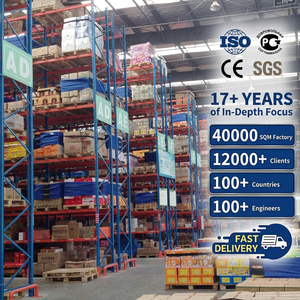
SDFD Heavy Duty Pallet Racking System Steel Durable Adjustable Box Beam Multi-layer Selective Pallet Rack for Warehouse Storage
Multi-layer selective racking with adjustable box beams for high-SKU warehouses, retail distribution and export projects.
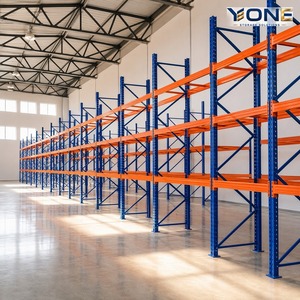
Steel Storage Rack Heavy Duty Pallet Racking Q235B Steel Selective Racking for Racks Industriales Warehouse Storage
Q235B steel selective pallet racking engineered for durable industrial storage and distributor-friendly export packing.
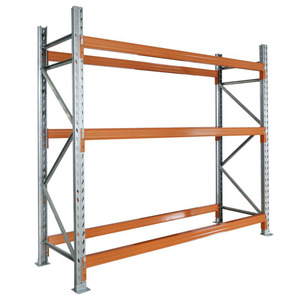
NOVA Full Automatic Warehouse Q235 Steel Boltless Store Heavy Duty Stacking Rack Industrial Storage Pallet Racking System
Heavy-duty industrial pallet racking with boltless storage design for scalable warehouse layouts and automated-ready planning.
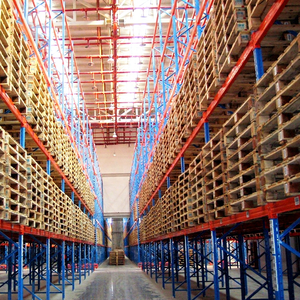
Manufacturer Heavy Duty Warehouse Shelving/storage Pallet Rack /selective Heavy Duty Racking System
Manufacturer-direct selective racking for warehouse shelving and pallet storage, sized to your load and aisle requirements.
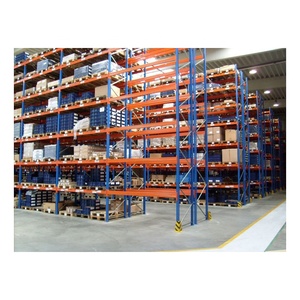
Customized Heavy Duty Pallet Racking System Industrial Warehouse Storage Rack Adjustable Steel Selective Pallet Rack
Customized adjustable steel pallet racking for industrial warehouses with non-standard layouts, pallet profiles or load demands.
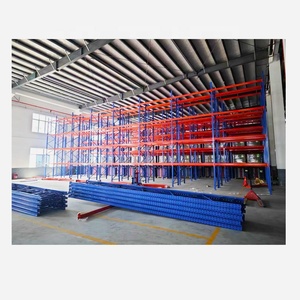
Heavy Duty Warehouse Storage Rack Pallet Racking System Customized Design for Industrial Warehouse
Project-based racking design for industrial warehouses, with beam lengths, frame depths and accessories matched to your operations.
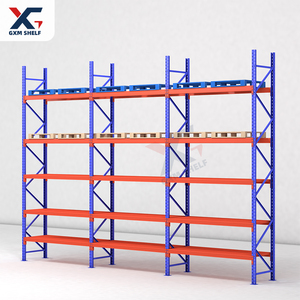
Heavy Duty Pallet Racking Warehouse Pallet System Pallet Storage Rack Heavy Duty Rack Shelf Heavy Duty Racking System
Heavy-duty rack shelf and pallet storage system for warehouse expansion, 3PL operations and mixed-SKU distribution.
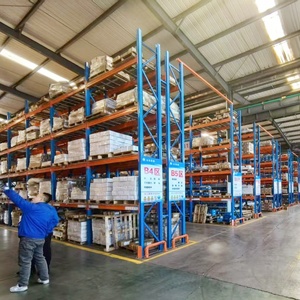
Industrial Warehouse Storage Rack Adjustable Custom 800-3000kg/Level Load Capacity Heavy Duty Selective Pallet Racking System
Adjustable selective racking with quoted load capacities from 800 kg to 3000 kg per level; higher loads available through engineering review.
Countries with installed storage systems
Warehouse projects delivered worldwide
Annual steel production capacity
Of production exported to global buyers
China Pallet Racking Manufacturer & Exporter: Procurement Outlook for 2026–2030
Pallet racking is no longer a simple price-per-kilogram purchase. For importers, warehouse developers, 3PL operators and EPC teams, the racking pallet system determines storage density, forklift productivity, fire strategy, safety documentation and the future ability to automate.
Global warehouse economics have changed the evaluation process. Land and cold-chain capacity are expensive, labour availability is uneven, and tenants increasingly expect buildings to support faster inventory turns. A selective racking layout that was acceptable five years ago may now waste cubic space or block a future AS/RS upgrade. As a result, wholesale buyers are asking manufacturers for structural calculations, load plates, seismic verification, weld traceability and export packing details before they compare commercial terms. The supplier that can provide this information early often wins the project, even when its unit price is not the lowest.
China has become a mature source for engineered racking systems because the supply chain combines steel access, automated roll-forming, robotic welding, powder coating and container-loading experience. However, the category is broad. Some suppliers sell catalogue frames; others design, manufacture, test and support installation. For high-value projects, the difference is visible in the quality of the calculation report, the consistency of the steel sections, the tolerance control before shipment and the documentation provided for customs, safety files and warranty claims.
This white paper is written for procurement teams that need information gain, not marketing claims. It explains how to compare racking systems, which data should be submitted with an RFQ, how future procurement trends will affect supplier selection, and how a manufacturer with in-house engineering can reduce project risk from layout study to final load signage.
Four tender questions that separate engineered suppliers from catalogue sellers
Can you submit project-specific structural calculations and load plates?
Engineered racking should be calculated for the actual pallet load, beam span, frame height, floor condition and local code — not selected from a generic table.
How do you verify steel grade, weld quality and surface treatment?
Q235B steel, welding procedure control, profile consistency and coating quality directly affect durability, installation speed and long-term safety.
Which seismic code and soil class govern the design?
Chile, Peru, Colombia, Ecuador and other markets require code-specific assumptions. The design basis should be stated before purchase order approval.
Can you provide component traceability, packing lists and installation method statements?
Traceability supports warranty administration and safety inspections. Export packing and installation documentation reduce site delays and missing-part risk.
Manufacturing Depth and Engineering Authority That Reduce Procurement Risk
Alohatop Shelf designs, manufactures and supports industrial racking and automated warehouse structures from one accountable organization. The advantage for wholesale buyers is not simply factory pricing; it is the ability to align engineering, production, testing, packing and installation support around a single project specification.
Own manufacturing, not reselling
A 35,000 m² highly automated production centre and more than 100,000 t annual capacity support large export orders. Automated roll-forming and controlled welding reduce dimensional drift, helping every frame and beam fit the approved layout.
R&D and laboratory validation
Our technology centre works with a research and development laboratory at Mondragon University and a research chair at the University of the Basque Country. Finite-element simulation, physical load testing and cyclic testing help validate new profiles and connections before export release.
Seismic and local-code engineering
Racking for seismic zones is calculated against the destination code and site conditions, including NCh2369 and NCh433 in Chile, E.030 in Peru, NSR-10 in Colombia, NEC in Ecuador, ABNT NBR 15524 in Brazil and INPRES-CIRSOC 103 in Argentina. Reinforced uprights, bracing, base plates, anchors, row spacers and reduced beam deflection limits are applied where required.
Certified quality and 5-year warranty
Systems are produced under ISO 9001, ISO 14001, ISO 45001, ISO 50001, UNE EN ISO 3834-2 welding quality, EN 1090-1 and ISO 14064 verified carbon reporting. Full component traceability supports quality control, after-sales service and a 5-year warranty.
Cold storage and automation readiness
We supply selective, VNA, mobile, drive-in, pallet shuttle, push-back, pallet flow and self-supporting freezer structures using steels and finishes suited to temperatures down to −30 °C. Automated warehouse structures are designed to the tighter tolerances required by stacker cranes, shuttles and AMR-ready operations.
Export logistics and project support
With projects in more than 60 countries, 14 branches and a network of 70+ trained distributors, we support export packing, port coordination and installation planning. Our teams are familiar with major destinations such as Santos, Callao, San Antonio, Cartagena and Buenos Aires.
How to Choose the Right Racking Pallet System for Your Load, Throughput and Building
Selective racking remains the default choice for high-SKU operations, but it is not always the most profitable use of cubic space. Use the practical matrix below to compare storage density, direct access, stock rotation and operating trade-offs before requesting a layout.
Selective Pallet Racking
The most flexible system for mixed inventory and frequent picking. Beam deflection, upright impact protection and aisle width should be engineered around your forklift fleet.
Very Narrow Aisle (VNA)
VNA racking can raise pallet positions per cubic metre where clear height is available. It works best when dedicated VNA trucks, trained operators and disciplined aisle protection are included in the business case.
Double-Deep Racking
Double-deep racking increases density without the cost of a full deep-lane shuttle system. It is suitable for medium-to-high pallet volumes where duplicate SKUs can be stored two deep.
Drive-In / Drive-Through
Drive-in racking is useful when the same product occupies a lane and throughput pressure is moderate. Drive-through configuration improves stock rotation but requires deeper planning of fork-truck movement.
Pallet Shuttle Racking
A semi-automated shuttle system delivers high-density storage and faster cycle times than manual deep-lane racking. It is particularly relevant for cold stores where every cubic metre of cooled space carries a cost.
AS/RS and Self-Supporting Warehouses
AS/RS rack structures and self-supporting warehouses require the rack frame to meet very tight tolerances and often carry the building envelope. They should be specified with integrator input at the earliest design stage.
Procurement data to prepare before requesting a quotation
Building layout and clear height
Provide column grid, available height, slab condition, fire strategy and any planned mezzanine or future expansion.
Pallet dimensions and load
Include pallet size, maximum total load, load per level and whether loads are stable, shrink-wrapped or uneven.
SKU profile
Share number of SKUs, pallets per SKU and seasonality. This determines whether selective, double-deep or shuttle storage is more appropriate.
Throughput and equipment
Confirm pallet movements per hour, shift pattern, forklift type, VNA requirement, AGV/AMR plans and aisle strategy.
Temperature and safety requirements
State ambient or freezer operation, temperature range, humidity, floor class, seismic zone and local permitting requirements.
Destination and installation scope
Provide project city, discharge port, import responsibilities, installation support needs and required documentation for customs and safety files.
Future Procurement Trends Buyers Should Build Into 2026–2030 RFQs
The next procurement cycle will reward buyers who evaluate racking as long-life infrastructure rather than a one-off steel purchase. These four trends are already visible in warehouse tenders across food, cold chain, e-commerce, manufacturing and third-party logistics.
Total cost of ownership replaces lowest unit price
Buyers are comparing installation time, inspection requirements, expansion flexibility, spare-part availability and downtime risk. A slightly higher initial quote can be cheaper over a 10-year warehouse cycle.
Documentation becomes a tender gate
Load calculations, seismic assumptions, weld quality records, component traceability and warranty terms are moving from optional attachments to mandatory pre-qualification items.
Automation-ready structures
Even manual warehouses are being specified with tolerances, floor flatness and interfaces that allow future AS/RS, shuttle or AMR integration. Retrofitting automation into incompatible racking is costly.
Supply resilience and export discipline
International buyers are diversifying suppliers while demanding stable production slots, export packaging, port coordination and spare-parts planning. Factories with direct export experience reduce customs and site surprises.
Racking Pallet System Product Trends for the Next Procurement Cycle
Product development is moving toward higher density, stronger integration with automation and better lifecycle documentation. The following trends are especially relevant for buyers planning new distribution centres, cold stores or factory warehouses.
High-bay and self-supporting warehouses
Racking is increasingly designed as the building structure itself. Self-supporting warehouses and clad-rack freezers maximise usable height and reduce dependence on conventional steel buildings.
Pallet shuttle and dense automation
Semi-automated pallet shuttle systems are becoming more common in cold chain and high-throughput distribution because they combine dense storage with reduced forklift travel and predictable cycles.
Stronger, lighter and lower-carbon profiles
Optimised steel sections and improved manufacturing processes help reduce material use without compromising load capacity. Verified carbon reporting and recyclable steel content are becoming part of responsible procurement.
Digital traceability and safety integration
Component traceability, load signage, impact protection, inspection records and spare-part identification are being built into projects from day one. This supports safer operations and faster maintenance.
Pallet Racking Procurement FAQ for Wholesale Buyers
These answers reflect the questions our engineers most often receive from importers, warehouse managers and project developers evaluating a China wholesale racking pallet system manufacturer and exporter.
Are you a manufacturer or a trading company?
We are an industrial racking manufacturer and exporter, not a catalogue reseller. Our production centre covers roll-forming, welding, surface treatment and export packing, with a 35,000 m² highly automated facility and more than 100,000 t annual capacity. This gives buyers direct engineering control, consistent quality and full component traceability.
Can you design pallet racking for seismic zones?
Yes. Racking is calculated against the destination country’s seismic code and site conditions. Typical references include NCh2369 and NCh433 in Chile, E.030 in Peru, NSR-10 in Colombia, NEC in Ecuador, ABNT NBR 15524 in Brazil and INPRES-CIRSOC 103 in Argentina. Reinforced uprights, bracing, heavier base plates and anchors, row spacers and reduced beam deflection limits may be applied.
Which pallet sizes and loads can your systems support?
We support common export and regional pallet formats, including 1200 × 1000 mm, Brazilian PBR 1000 × 1200 mm, Euro 1200 × 800 mm and ISO sizes such as 1100 × 1100 mm and 1219 × 1016 mm. Standard projects often specify 800 kg to 3000 kg per level, while heavier loads are engineered after reviewing pallet stability, beam span and frame height.
Do you supply cold storage and automated warehouse racking?
Yes. We provide selective, VNA, mobile, drive-in, pallet shuttle, push-back, pallet flow and self-supporting freezer structures using steels and finishes suited to temperatures down to −30 °C. We also supply AS/RS rack structures, miniload-ready systems and automated warehouse frames designed to integrator tolerances.
What certifications and warranty back your racking systems?
Production is managed under ISO 9001, ISO 14001, ISO 45001, ISO 50001, UNE EN ISO 3834-2 welding quality, EN 1090-1 and ISO 14064 verified carbon reporting. Storage systems carry a 5-year warranty, supported by component traceability and documented quality controls.
What information should I send for a fast quotation?
Send the building layout and clear height, pallet dimensions and maximum load, number of SKUs and pallets per SKU, daily throughput, forklift or automation type, temperature range, seismic location and project city. Our engineers use this information to recommend the most efficient racking pallet system and prepare a comparable quotation.
Request the Latest Racking Pallet System Catalog
Use the catalog to compare selective pallet racking, high-density systems, cold-storage options and automated warehouse structures. Share your pallet data and building layout to receive an engineering-led recommendation instead of a generic price list.
Get Catalog