China Wholesale Warehouse Racking Mezzanine Factory & Exporters
An engineering-led buying guide to mezzanine racking, pallet racking and export-ready warehouse storage systems for global distributors, 3PLs and project buyers.
8 Warehouse Racking & Mezzanine Systems Recommended for Wholesale Buyers
This shortlist covers the practical configurations project buyers compare most often: selective pallet racking, VNA, cantilever, structural pallet rack, double-sided cantilever, double-deep, heavy-duty selective and adjustable industrial racking. These systems can be supplied as stand-alone storage or engineered into a rack-supported mezzanine project.
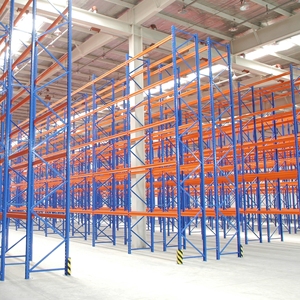
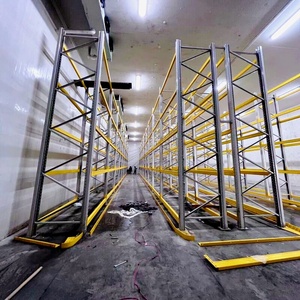
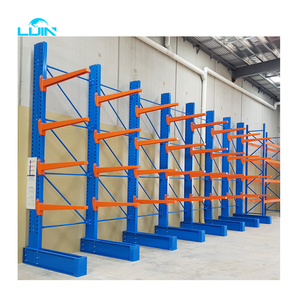
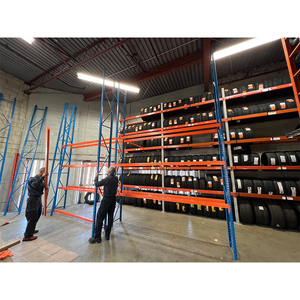
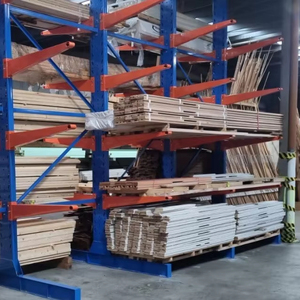
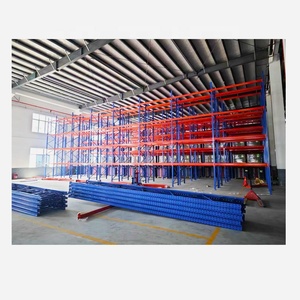
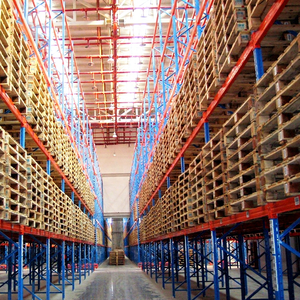
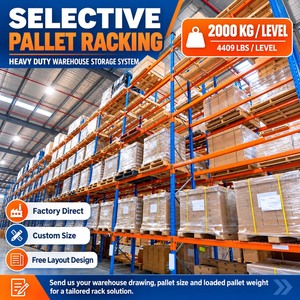
Not sure which system fits your building, pallet profile or seismic zone? Send your layout and load data to our storage engineers for a factory-direct recommendation.
Highly automated production centre
Annual steel production capacity
Of production exported worldwide
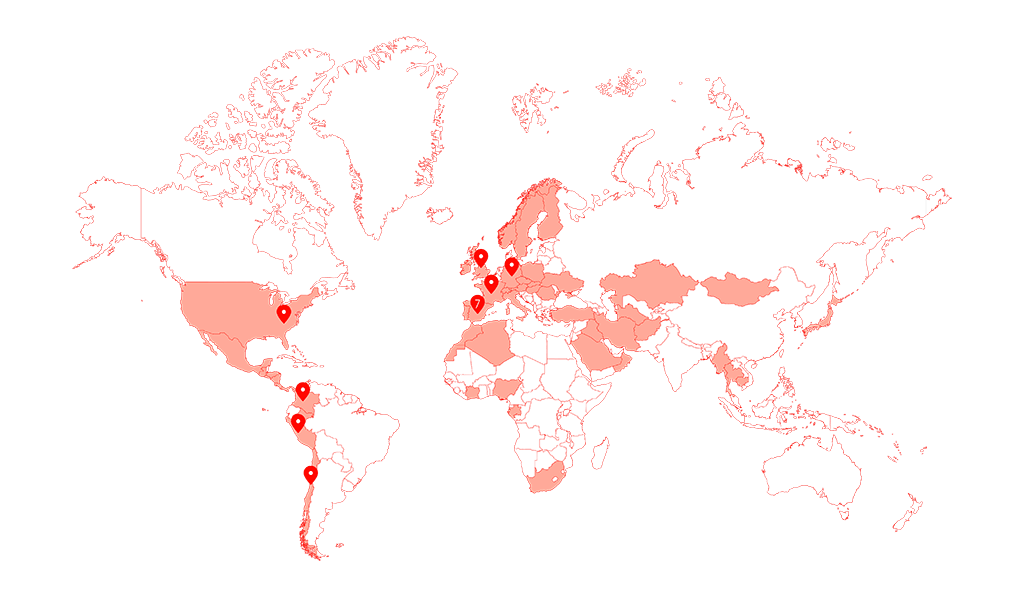
Countries with installed storage systems
What “China Wholesale Warehouse Racking Mezzanine Factory & Exporters” Really Signals
The phrase China wholesale warehouse racking mezzanine factory & exporters combines a product category with a sourcing model. The buyer is checking whether the supplier owns a factory, whether the price is genuinely wholesale rather than reseller-led, whether the steel structure can be exported, and whether the project can be installed safely outside China. This is a high-intent query with technical, commercial and risk dimensions.
A racking mezzanine is a structural storage platform. It may use independent columns, rack-supported columns, or a hybrid frame that combines pallet racking with a walkable floor. Every design must reconcile the building’s clear height, floor slab capacity, fire strategy, sprinkler layout, pallet dimensions, beam deflection, forklift impact protection and seismic demand. The cheapest quotation is rarely the lowest-cost project if it ignores these variables.
The strongest information gain for this query is not a longer list of features. It is evidence: who calculates the structure, which codes are checked, how steel is tested, how components are traced, how the system is packed for export, and how installation is supervised. That evidence separates a warehouse racking mezzanine factory from a trading company.
- Can you calculate? Structural drawings, load combinations, seismic checks and connection design.
- Can you document? Welding quality, material traceability, inspection reports and warranty terms.
- Can you export? Container loading, port experience, packing protection and destination documentation.
- Can you support installation? Approved drawings, plumb tolerances, load signage and after-sales inspection.
Factory Advantages That Matter in a Cross-Border Mezzanine Project
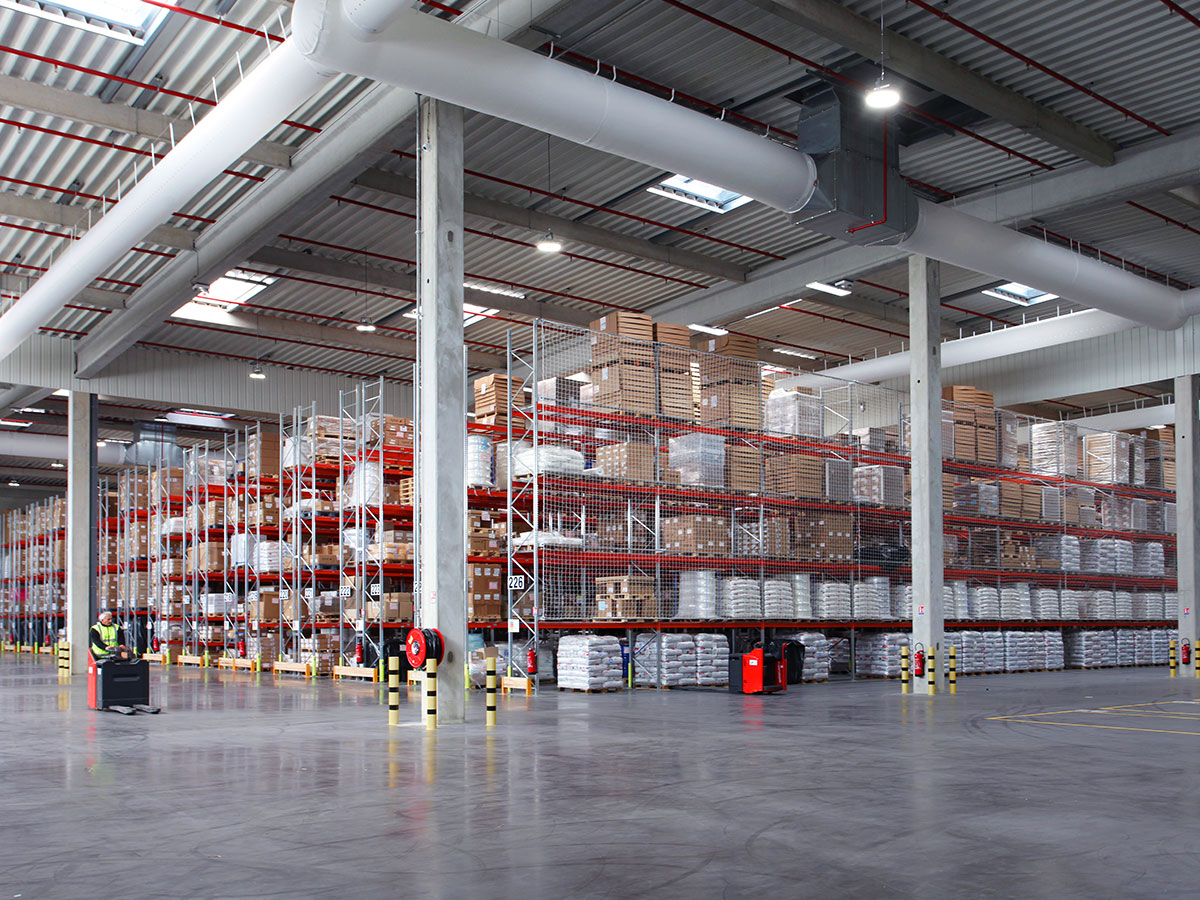
Alohatop Shelf LLC designs, calculates, manufactures and installs industrial racking and automated warehouse structures. Owning every step from steel coil to final load sign gives export buyers one accountable partner instead of a chain of resellers.
35,000 m² Automated Production
A highly automated production centre with more than 100,000 t of annual capacity supports large-volume mezzanine, pallet racking and custom steel structure orders.
90% Export Orientation
More than 90% of output is exported. Our network includes 60+ countries, 14 own branches and 70+ trained distributors, with logistics experience to Santos, Callao, San Antonio, Cartagena and Buenos Aires.
Full Traceability + Warranty
Every upright and beam can be traced from production batch to installation. Storage systems carry a 5-year warranty and are supported by documented inspection and maintenance programmes.
R&D and Code Verification
Our technology centre works with a Mondragon University R&D laboratory and a research chair at the University of the Basque Country on simulation, load testing and seismic design models.
Procurement Trends Reshaping China Wholesale Racking Sourcing (2025–2030)
The next buying cycle will be less about the unit price of a single upright and more about verified project capability, lifecycle risk and documentation quality.
Evidence-First Sourcing
Importers increasingly ask for structural calculations, welding certificates, load test summaries and inspection plans before approving a supplier. A factory that can answer with documents shortens the approval cycle.
Seismic and Local Code Alignment
Projects in Chile, Peru, Colombia and Ecuador are checked against local seismic requirements such as NCh2369, NCh433, E.030, NSR-10 and NEC. Reinforced bracing, heavier base plates, anchors and row spacers are project-specific decisions.
Cold-Chain Expansion
Fruit, seafood, meat and frozen-food exporters need racking for temperatures down to −30 °C. Mobile, drive-in, VNA and pallet shuttle systems are increasingly specified to reduce cooled cubic metres per pallet.
Automation-Ready Geometry
AS/RS stacker cranes, shuttles and AMRs require tighter tolerances than manual warehouses. Buyers now ask whether the rack frame is engineered for future automation, not only today’s forklift operation.
ESG and Carbon Reporting
Procurement teams are adding environmental criteria to steel structures. ISO 14064 verified carbon reporting, recyclable steel, reduced packaging waste and energy management are becoming part of supplier evaluation.
Lifecycle Service and Spare Parts
A mezzanine or pallet racking system must remain safe after years of forklift traffic. Technical inspection, component replacement, reconfiguration and spare-part availability are now evaluated alongside initial price.
Product Development Trends: From Steel Frames to Engineered Storage Infrastructure
Mezzanine and racking systems are evolving from commodity steel frames into integrated storage infrastructure. The bars below illustrate the relative procurement priority we see in multi-market project briefs; final weighting always depends on building, load and code requirements.
Hybrid Rack-Supported Mezzanines
Combining pallet racking with a structural mezzanine floor increases usable area without expanding the building footprint. The key development is integrated engineering between rack frames, floor beams, decking and fire protection.
High-Strength, Boltless Profiles
Boltless adjustable systems reduce installation time and allow beam levels to be changed as pallet profiles evolve. Higher-strength steel sections can improve load capacity while controlling shipping weight.
Fire-Engineered Storage Design
Sprinkler clearance, smoke venting, fire compartmentation and material compatibility are now part of early racking layout. Mezzanine projects need fire strategy review before steel ordering, not after installation.
High-Density Configurations
Double-deep, VNA, drive-in and pallet shuttle systems help importers reduce aisle space and land cost. The trade-off is access, stock rotation and equipment discipline, so selection must follow SKU data.
Multi-Tier Picking and Walkways
E-commerce and spare-parts operations increasingly combine pallet storage below with multi-tier picking above. Raised walkways, carton flow and pick faces must be designed together with the racking grid.
Digital Traceability and Sensor-Ready Design
Component traceability, QR marking, digital drawings and sensor-ready safety accessories support inspection and maintenance. This is especially valuable for 3PLs and multi-site distributors managing mixed rack fleets.
Engineering Validated in Laboratory, Not Just on Paper
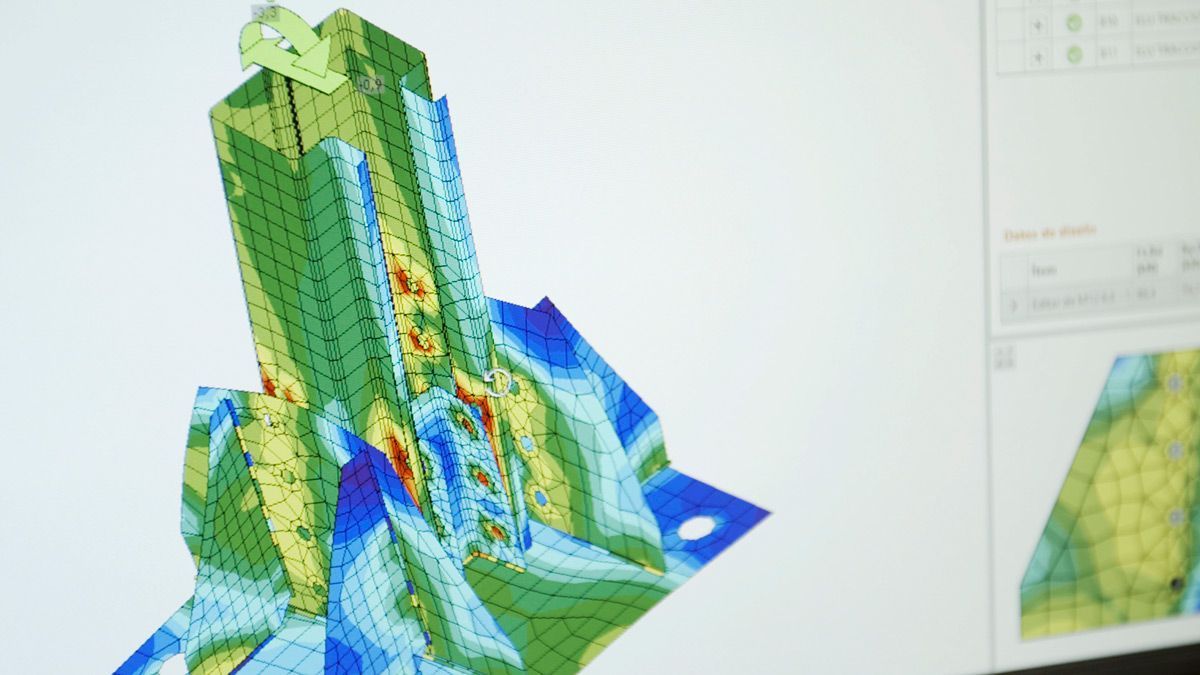
A mezzanine is only as reliable as its weakest connection. Our engineers use finite-element simulation for frames, beams and base connections, physical load and cyclic testing for new profiles, and design reviews against European and local South American codes. R&D collaborations with Mondragon University and the University of the Basque Country support calculation models and simulation tools.
- Finite-element simulation of frames, beams and base connections
- Physical load and cyclic testing of new steel profiles
- Design review against European standards and local seismic codes
- Robotic welding and laser-controlled production for AS/RS tolerances
Related engineering articles in our knowledge base explain WMS and ERP integration, RPA in logistics and poka-yoke error-proofing. These topics matter because a mezzanine layout is not isolated from warehouse software, operating discipline and material flow.
From Steel Coil to Port: Export Execution for Global Buyers
Exporting racking is not like shipping a finished machine. The package includes uprights, beams, bracing, base plates, anchors, safety accessories, mezzanine decking and installation documents. Correct packing protects the finish, simplifies customs classification and reduces site labour during installation.
With more than 90% of production exported, we plan container loading and documentation around the destination port. For South American projects, this includes understanding port routes such as Santos, Callao, San Antonio, Cartagena and Buenos Aires, as well as site access constraints that affect how steel is sequenced and delivered.
How to Specify a Warehouse Racking Mezzanine Before You Request a Quote
A reliable quotation starts with four data sets. Without them, suppliers are guessing, and the lowest price can hide expensive redesign later.
Building and Fire Data
Send building layout, clear height, column grid, floor slab capacity, sprinkler layout, fire strategy and mezzanine footprint. Note any pits, ramps or route restrictions for installation equipment.
Load and SKU Profile
Confirm pallet sizes, maximum load per pallet, pallets per SKU, SKU count, daily throughput and forklift type. For mezzanines, include floor load, shelving layout and picking equipment.
Seismic and Code Evidence
Identify the project city and required code. For Chile, Peru, Colombia and Ecuador, seismic design is not optional. Ask for calculation assumptions, base plate details and anchoring criteria.
Shipping and Installation Plan
Define destination port, site access, unloading capacity, installation sequence and supervision scope. A complete export package should include packing lists, approved drawings and component marking.
Certifications, Warranty and Traceability
Our systems are produced under ISO 9001, ISO 14001, ISO 45001, ISO 50001, UNE EN ISO 3834-2 welding quality, EN 1090-1 structural steel and ISO 14064 verified carbon reporting. Systems carry a 5-year warranty with full component traceability.
 ISO 9001Quality management
 ISO 14001Environmental management
 ISO 45001Health and safety
 EN 1090-1Structural steel components
China Wholesale Warehouse Racking Mezzanine Factory & Exporters: Buyers’ Questions
These are the questions our engineers and export team answer most often during early project qualification.
QWhat is the difference between a racking mezzanine and a structural mezzanine?
A racking mezzanine is normally supported by pallet racking frames or a hybrid rack structure, while a structural mezzanine uses independent steel columns and beams. The right choice depends on load, building height, fire strategy, future flexibility and whether the racking below must remain selectively accessible.
QCan a China wholesale factory deliver a complete mezzanine project to my site?
Yes, for qualified projects. The factory can provide layout engineering, structural calculation, manufacturing, export packing, loading plans and installation drawings. Installation may be supervised by factory supervisors or coordinated with trained local distributors depending on the destination and project scope.
QHow do you handle seismic design for Chile, Peru, Colombia and Ecuador?
Seismic design is calculated against the destination code and site conditions. Examples include NCh2369 and NCh433 in Chile, E.030 in Peru, NSR-10 in Colombia and NEC in Ecuador. Typical measures include reinforced bracing, heavier base plates, anchors, row spacers and reduced beam deflection limits.
QWhich pallet sizes and loads can your systems support?
All common export formats are supported, including 1200 × 1000 mm Latin American pallets, Brazilian PBR 1000 × 1200 mm, 1200 × 800 mm Euro pallets and ISO sizes such as 1100 × 1100 mm and 1219 × 1016 mm. Beam length, frame depth and capacity are dimensioned for the actual pallet and load.
QCan the racking operate in cold storage and freezer warehouses?
Yes. Mobile racking, drive-in, VNA, pallet shuttle and self-supporting freezer structures can be supplied with steels and finishes suited to temperatures down to −30 °C. This is relevant for fruit, seafood, meat and frozen-food exporters in South America.
QWhat information should I send for a fast quotation?
Send the building layout, clear height, pallet dimensions, maximum load per pallet, SKU count, pallets per SKU, daily throughput, forklift or automation type, temperature range and project city. Our engineers use this data to recommend the most efficient storage system and prepare a project-specific quotation.
Request a Factory-Direct Mezzanine and Racking Review
Share your building layout, pallet profile and destination port. Our storage engineers will review the load case, seismic requirements, mezzanine configuration and export scope, then recommend the safest and most space-efficient system for your project.
Useful inputs: building drawing, clear height, pallet size and weight, SKU profile, throughput, forklift type, temperature range and project city.