Custom OEM Cantilever Warehouse Racking Factories & Exporters
Engineered cantilever racking for steel pipe, profiles, timber, panels and long materials — specified from load data, manufactured under ISO systems and prepared for export with documentation, packing and project support.
Countries served by Alohatop Shelf storage systems
Annual steel production capacity behind OEM programmes
Warehouse projects delivered across industrial sectors
Warranty supported by traceability and inspection documentation
Custom OEM Cantilever Racking Is a Specification Purchase, Not a Commodity Order
Buyers searching for custom OEM cantilever warehouse racking factories and exporters are usually solving a high-consequence storage problem: long, heavy or awkward loads that cannot be handled efficiently by conventional pallet racking.
What serious buyers verify before shortlisting a factory
Cantilever racking removes front uprights so operators can load steel bars, pipes, aluminium profiles, timber, plasterboard and similar long materials from the aisle. That design freedom changes the structural requirement. The arm, upright, base and bracing must be calculated as a system, not selected from a picture. In an OEM project, “custom” should mean arm length, arm pitch, load centre, upright spacing, finish, branding and packing are all defined from your load case.
A 1,000 kg arm rating is not transferable between load centres. A quotation that lists capacity without stating where the load sits on the arm is incomplete for procurement. For export buyers, “factory” and “exporter” also need separate verification: production capability, welding quality, coating control, component traceability, container loading plan and after-sales support all affect total risk.
This guide is written for warehouse managers, importers, steel service centres, timber distributors, EPC contractors and OEM buyers who need a defensible comparison. The fastest way to shorten the engineering cycle is to send drawings with load centre, arm length, handling equipment, storage environment, destination port and any local structural or seismic requirement.
- Use the correct unit of capacity: kg per arm at a defined load centre, never a vague “heavy-duty” claim.
- Confirm the handling method: forklift, side loader, overhead crane, telescopic handler or automated retrieval.
- Specify the environment: indoor warehouse, coastal yard, cold store, freezer or covered export yard.
- Ask for export evidence: packing method, loading sequence, weld inspection, coating record and spare-parts list.
OEM buyer intent signals
Typical early-stage questions behind commercial searches.
8 Cantilever Racking Products Recommended for OEM & Export Projects
These systems cover single-sided and double-sided storage, adjustable arms, pipe and profile handling, cold-rolled steel structures, roll-out access and high-capacity industrial layouts. Product links and images are retained from the original range.
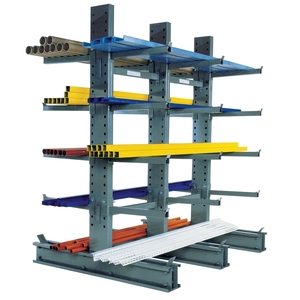
CE / ISO Certified Customized Cantilever Rack Heavy Duty for Industrial Racking From Nanjing Victory
A specification-led option for buyers who need certification, custom dimensions and heavy-duty long-load storage for industrial projects.
View product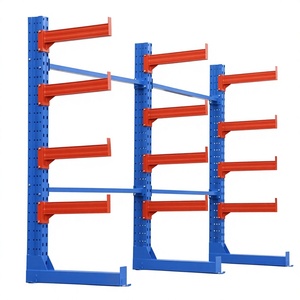
Industrial Heavy Duty Steel Cantilever warehouse Shelf Rack Equipment for High-Capacity Warehouse Pallet Storage
Designed for warehouses that need robust steel construction and efficient access to high-capacity long-material storage positions.
View product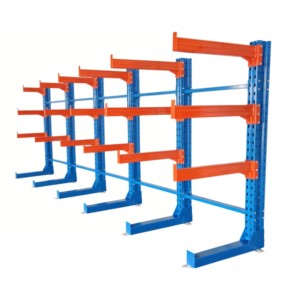
CE Certified Heavy Duty Steel Cantilever Rack Adjustable Foldable Arm Racking/Shelves Anti-Rust Corrosion Protection for
Adjustable and foldable arm configuration with anti-rust protection for flexible long-load handling and export-ready environments.
View product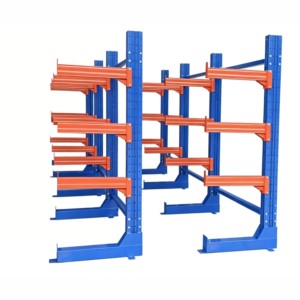
Stock Cold-Rolled Steel Cantilever Shelf Warehouse Storage Double-Sided Bracket Arm Cantilever Rack
Double-sided bracket-arm racking for shared aisle access and higher storage density where long materials are handled from both sides.
View product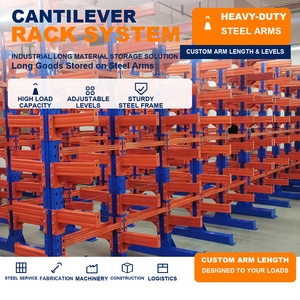
Cantilever Rack Heavy Duty Multi Level Storage Racking System Adjustable Arm Shelving Unit for Long Material Warehouse Use
Multi-level adjustable-arm storage for steel service centres, fabrication workshops and long-material warehouses.
View product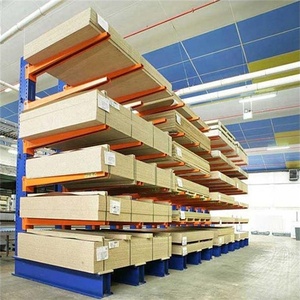
Heavy Duty Industrial Warehouse Storage Cantilever Arm Racking System
A general-purpose heavy-duty cantilever arm system for industrial warehouses, distribution yards and fabrication plants.
View product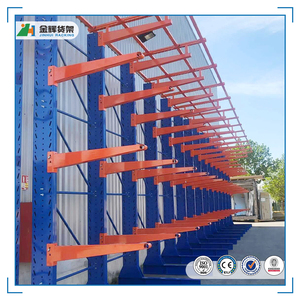
Heavy Duty Industrial Metal Cold Rolled Steel Aluminum Profile Storage Cantilever Pipe Rack Heavy Duty Cantilever Racking
Built for pipe, tube, aluminium profile and metal-service operations that require safe cantilever storage of long stock.
View product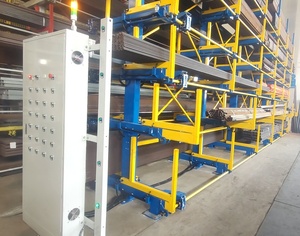
Crank Out Cantilever Roll Out Cantilever Rack--Innovative Cantilever Rack System for Efficient Storage
An innovative crank-out cantilever system for operations seeking improved retrieval ergonomics and efficient long-load access.
View productWhy Alohatop Shelf Reduces Procurement Risk for Cantilever Projects
Owning engineering, production, traceability and export coordination is more valuable than a low unit price when long loads, safety and delivery dates are critical.
Factory Control
A 35,000 m² highly automated production centre with annual capacity above 100,000 t supports consistent OEM output and export-scale scheduling.
Certified Quality
ISO 9001, ISO 14001, ISO 45001, ISO 50001, EN ISO 3834-2, EN 1090-1 and ISO 14064 systems support quality, welding, structural and carbon reporting requirements.
R&D Validation
Cooperation with Mondragon University and the University of the Basque Country supports physical testing, simulation and calculation models for demanding structures.
Export Experience
More than 90% of production is exported, supported by 14 branches, 70+ distributors and experience with major ports and project logistics.
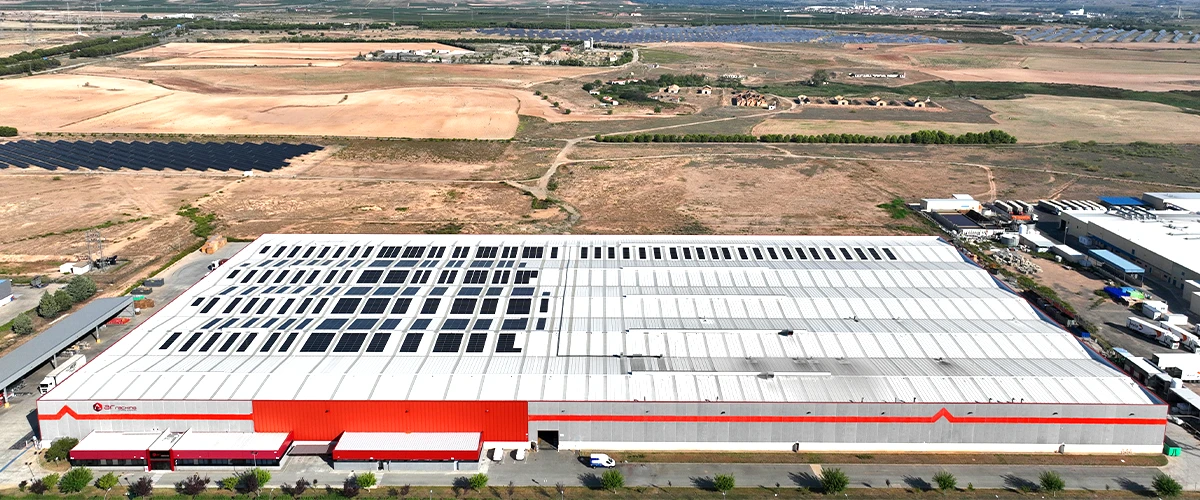
Full Traceability From Steel Batch to Container Loading
For an OEM cantilever racking programme, component traceability matters because arms, uprights and bases must match the approved calculation and drawings. Our production control supports batch-level visibility, inspection records and consistency across repeat orders.
- Engineering and production under one roof: fewer handover gaps between design intent and fabrication.
- Stable export quality: documented processes for repeat OEM orders, spare parts and future expansion.
- Project lifecycle support: layout studies, technical inspection, installation supervision and maintenance guidance.
- Five-year warranty backing: supported by traceability and certified management systems.
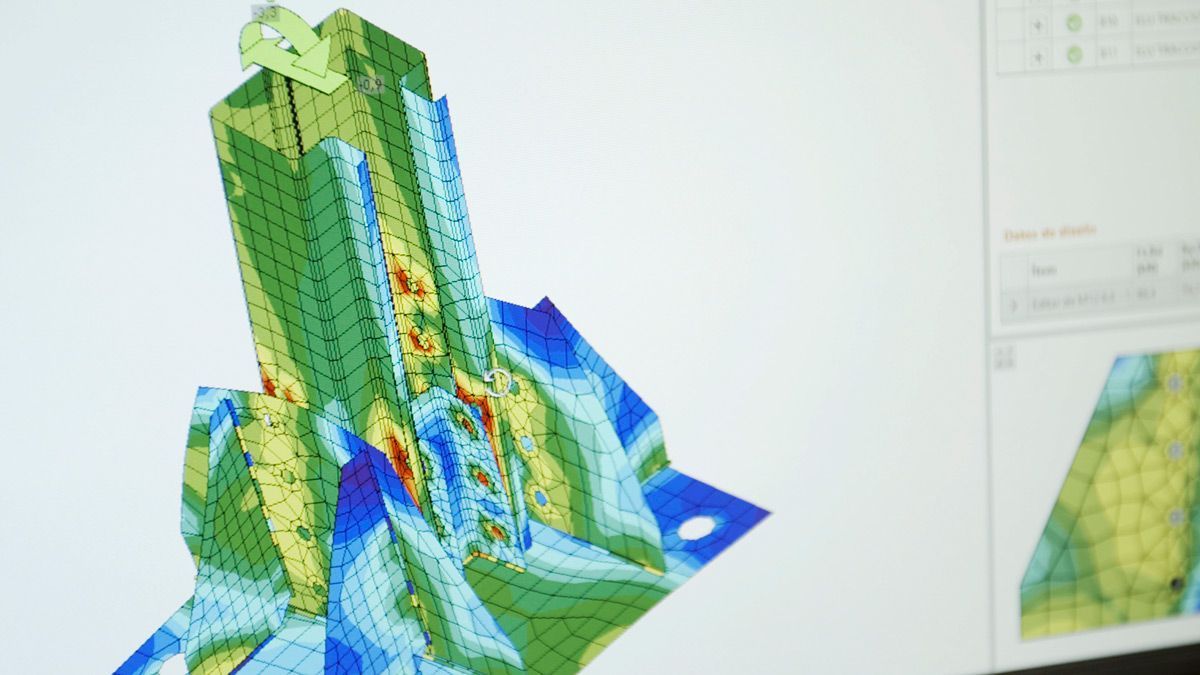
Calculated for the Load Case, Not Copied From a Catalogue
Cantilever arms are exposed to bending and deflection, especially when the load centre moves outward. We use structural calculation and simulation to review arm profiles, welds, base plates and bracing before production. For higher-risk sites, the design can be reviewed against local requirements and coordinated with anchoring, row spacing and handling equipment.
This is the difference between an export quotation and an export-ready storage system: the buyer receives a clear relationship between arm length, stated capacity, load centre, upright configuration, finish and installation conditions.
From Load Case to Export Packing: What to Specify in an OEM Enquiry
A cantilever racking factory can only quote accurately when the load, handling method, environment and documentation requirements are visible. Use this matrix to compare suppliers on specification quality rather than headline price.
| Parameter | Buyer question | Specification to confirm | Procurement impact |
|---|---|---|---|
| Arm capacity | Is capacity stated per arm or per pair? | kg per arm at a defined load centre, uniform load, safety factor | Prevents unsafe comparisons and redesign after order |
| Arm length | Will long profiles deflect or interfere with retrieval? | Arm length, load centre, steel grade, deflection limit, profile section | Improves loading ergonomics and operator confidence |
| Upright frame | Single-sided or double-sided? What height? | Frame depth, upright spacing, bracing pattern, base plate, anchor detail | Affects aisle width, stability and future expansion |
| Finish | Indoor, coastal, cold store or outdoor yard? | Powder coating, galvanizing, coating thickness, corrosion class, touch-up kit | Controls lifecycle cost and maintenance frequency |
| Arm adjustment | Can levels change when the SKU mix changes? | Adjustment pitch, pin or bolt system, foldable/roll-out option, accessories | Protects flexibility for future product ranges |
| Site conditions | Is the site in a seismic, windy or uneven-floor zone? | Local code, anchoring, floor tolerance, row spacers, bracing | Reduces permit, safety and installation risk |
| Export packing | How will the rack survive ocean freight and port handling? | Bundle marks, edge protection, moisture control, loading plan, spare parts | Reduces damage claims and site delays |
| Documentation | What is needed for customs, QA and approval? | Packing list, mill certificates, weld records, inspection report, warranty | Keeps import clearance and handover smoother |
| Automation readiness | Will the warehouse add cranes, AGVs or AS/RS later? | Tolerances, clear height, interface drawings, future aisle strategy | Avoids costly retrofit and rework |
Cantilever Racking Procurement Trends OEM Buyers Are Acting On Now
Purchasing teams are moving from “price per section” comparisons toward validated performance, documentation and whole-life risk.
Verified load data
Buyers increasingly require capacity statements at a stated load centre, with drawings and assumptions. This makes supplier comparison more technical and more defensible.
Factory-direct evidence
Video audits, production photographs, welding records and traceability are becoming normal before an overseas order is released.
Lifecycle corrosion planning
Coastal, humid and cold-chain sites are specifying coating systems and touch-up procedures instead of accepting a generic painted finish.
Expansion-ready layouts
OEM buyers want long-material racking that can accept new arm levels, additional bays, crane access or automated handling without rebuilding the whole store.
Where Cantilever Warehouse Racking Is Heading
Long-load storage is becoming more engineered, more modular and more connected to the wider material-flow strategy of the warehouse.
Higher strength-to-weight profiles
Optimised steel sections and connection details aim to deliver capacity with less dead weight, improving freight efficiency and installation handling.
Modular and telescopic access
Roll-out, crank-out and adjustable-arm concepts improve operator access and allow a single system to handle changing long-material ranges.
Application-specific finishes
Cold-store, coastal, outdoor and high-humidity environments are driving more precise coating choices and documented maintenance schedules.
Digital traceability
Component marking, batch records and data-ready documentation make inspection, spare-parts planning and future expansion more reliable.
10-Point OEM Buyer Checklist Before You Request a Cantilever Racking Quote
Use these points to create a cleaner RFQ. Better input produces faster engineering feedback, fewer revisions and a more comparable quotation.
Cantilever Warehouse Racking FAQ for Factory, OEM and Export Buyers
Direct answers to the questions our engineering and export teams receive most often from importers, warehouse managers and project buyers.
Can you manufacture custom OEM cantilever racking to our drawings or load data?
Yes. Custom OEM projects can be developed from your layout, load list, drawings or samples. We need the material type, maximum length, weight per item, load centre, required arm levels, handling method and destination requirements. The engineering team can then propose arm length, frame configuration, finish and packing. For repeat programmes, branding, labels, packaging marks and spare-parts kits can be coordinated.
What is the difference between load capacity per arm and load capacity per level?
An arm is the projecting beam that supports the load. A level may include two arms facing each other or multiple arms along a bay. Capacity must always be linked to the load centre — the distance from the upright face to the centre of gravity of the load. Buying by “level capacity” alone can be misleading if the arm length and load position are not stated. Ask for a drawing that shows the rated capacity, arm length, load centre and assumed uniform load.
Which finishes are suitable for humid, coastal or cold-store environments?
The finish should follow the environment. Powder coating is common for indoor warehouses. Coastal, humid or outdoor storage may require a more protective coating system, galvanizing or a specified dry-film thickness with touch-up procedures. Cold stores need attention to steel toughness, coating compatibility and condensation control. The RFQ should state the temperature range, humidity, exposure to salt or chemicals and whether washdown cleaning is used.
What information is needed for a fast quotation and layout recommendation?
Send the building layout or available dimensions, clear height, floor condition, material list, maximum item length, weight per item, load centre, quantity of storage positions, handling equipment, required access frequency, environment and destination city or port. If you have local structural or seismic requirements, include them. Photos of the current storage area and a sketch of the future flow are also useful. This allows the supplier to respond with a system recommendation rather than a generic price list.
Can you provide export documentation and container loading plans?
Export projects can be supported with packing lists, loading plans, component marks, inspection records, mill certificates and warranty documentation as agreed in the order. For cantilever racking, long arms and uprights need careful bundling to protect coating and avoid deformation during ocean freight. A loading plan should show bundle weights, lifting points, moisture protection and the sequence for site unloading.
How is cantilever racking designed for seismic or high-wind regions?
Seismic and wind requirements affect anchoring, base plates, bracing, frame spacing and row stability. The correct approach is to identify the project location and applicable local code at the enquiry stage. The racking design should then be reviewed against the building structure, floor slab and installation conditions. For high-risk regions, do not accept a standard catalogue drawing without a project-specific structural review.
What warranty and certification package supports the racking?
Storage systems can be backed by a five-year warranty and produced under management systems including ISO 9001, ISO 14001, ISO 45001, ISO 50001, EN ISO 3834-2 welding quality, EN 1090-1 and ISO 14064 carbon reporting. The exact documentation package should be confirmed in the quotation, especially for imports that require QA records, welding documentation or third-party inspection.
Do you support installation, inspection and maintenance after export?
Yes. Support can include installation drawings, supervisor coordination, technical inspection guidance, component replacement and maintenance planning. For remote projects, the most reliable model is a combination of factory documentation, pre-assembly checks, trained local installers and remote or on-site supervision where required. This is especially important for large cantilever systems where arm alignment, plumb and anchoring directly affect safe operation.
Need a Cantilever Racking Factory That Can Engineer, Document and Export?
Share your long-material dimensions, load centre, handling method and destination. The engineering team can recommend a safer, more space-efficient cantilever configuration and prepare an export-ready quotation.
Get Catalog