8 Industrial Shelving Product Families for OEM and Private-Label Buyers
From boltless adjustable shelving to heavy-duty pallet racking, mezzanine structures and custom high-load systems, each product family can be configured for your destination market, pallet profile and container plan.
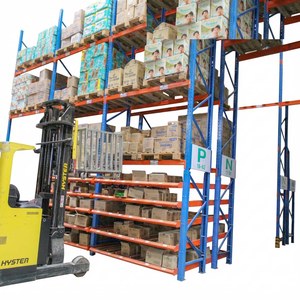
Warehouse Shelving Boltless Adjustable Heavy-Duty Industrial Garage Shelving System 3-Layer Cold Rolled Steel Epoxy Powder Rack
Cold-rolled steel with epoxy powder finish for fast-moving garage, workshop and warehouse storage programs.
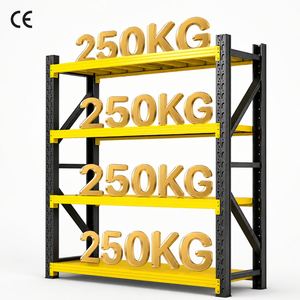
Boltless Adjustable Industrial Garage Heavy Duty 4-Layer Powder Coated Racking System Warehouse Metal Rack Storage Racks Shelf
Four-level powder-coated rack with adjustable beams for wholesale and 3PL storage programs.
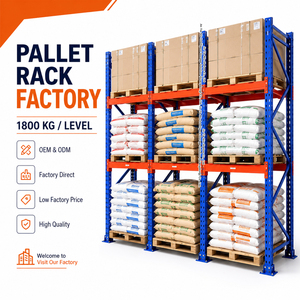
1800KG Heavy Duty Beam Pallet Rack Steel Warehouse Industrial Shelving 3-level Heavy Duty Rack
High-capacity beam pallet racking for distribution centres and heavy-load warehouse layouts.
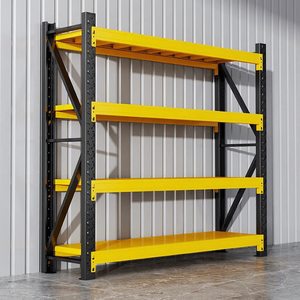
Adjustable Medium Duty Steel Shelf Rack with Four Boltless Tiers for Garage/Warehouse Storage Supporting 200/500 kg
Flexible 200/500 kg options for spare parts, retail backrooms and carton storage.
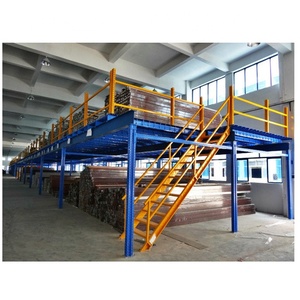
Mezzanine Shelf Storage Heavy Duty Rack System Metal Racks Warehouse Mezzanine Platform
Uses vertical cube for multi-level storage, picking and order consolidation.
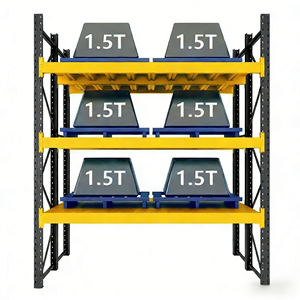
Hot Selling Customizable Heavy Duty Shelves Shelves High Quality Metal Racks Warehouse Racks Storage Shelves
Dimensional flexibility for OEM buyers, private-label ranges and mixed-container orders.
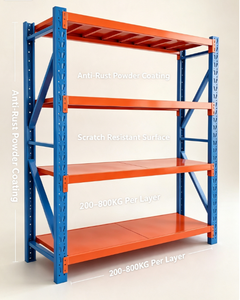
High Load Capacity Adjustable Multi Tier Steel Shelves Boltless Warehouse Storage Rack for Commercial Use
High-load multi-tier shelving with adjustable level spacing for commercial warehouses.
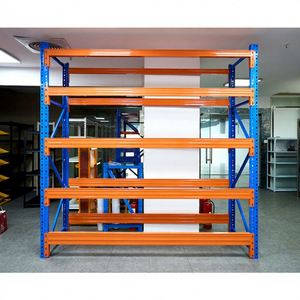
Custom Heavy Duty Shelving 1000Kg High Load 3/4/5/6 Tier Warehouse Storage Pallet Racks Metal Stacking Shelf Rack for Warehouse
1000 kg high-load pallet racking with 3/4/5/6-tier configurations for dense storage.
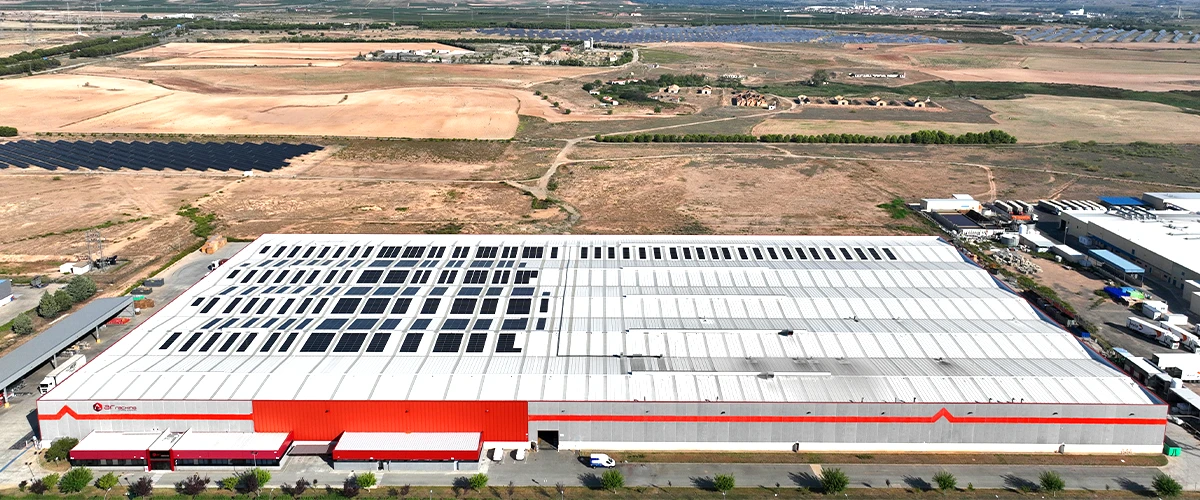
A Custom OEM Industrial Shelving Manufacturer With Full Production Control
Industrial shelving is a structural product, not generic furniture. In an OEM or wholesale program, small variations compound quickly: a beam profile that shifts between batches, a powder finish that fails after humid port storage, or a baseplate that does not match the anchorage assumptions in a seismic calculation. The safest way to protect a private-label program is to work with a manufacturer that controls steel forming, welding, coating, testing and documentation.
Alohatop Shelf LLC designs, calculates, manufactures and installs metal racking and shelving for warehouses, distribution centres and automated storage projects. Its 35,000 m² highly automated production centre has annual capacity above 100,000 t, with more than 90% of output exported to more than 60 countries. The project record includes 42,000+ warehouse projects, 14 own branches and a network of 70+ trained distributors.
- Factory-controlled production instead of outsourced trading
- Full traceability from steel batch to installed component
- 5-year warranty and structured documentation package
- Engineering support for seismic, cold-store and automation-ready layouts
Laboratory-Tested Structures for Demanding Export Markets
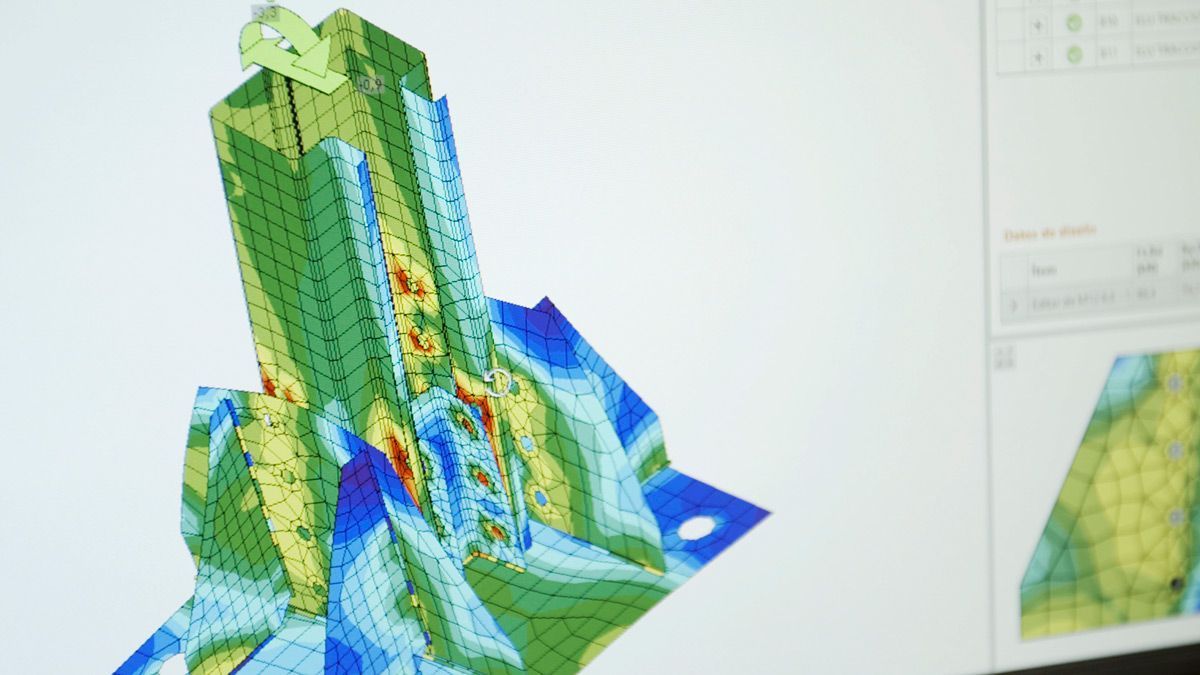
Racking performance cannot be verified from a catalogue image. Our technology centre works with an R&D laboratory at Mondragon University to test the behaviour, strength and safety of racking components under real load cases. A research and simulation chair at the University of the Basque Country supports calculation models and finite-element simulation for frames, beams and connections.
This engineering loop matters for buyers in Chile, Peru, Colombia, Ecuador and other seismic regions. Reinforced uprights, heavier base plates, row spacers and verified anchor assumptions are not added after the quotation; they are part of the design review before production begins. The same discipline supports automated warehouses, where stacker cranes and shuttles require tighter geometric tolerances than manual installations.
- Finite-element simulation of frames, beams and base connections
- Physical load and cyclic testing of new shelving profiles
- Design reviewed against European and local South American codes
Countries served with installed storage systems
Warehouse projects delivered worldwide
Annual steel production capacity
Share of production exported worldwide
Match the Shelving System to the Operational Job
No single racking system is optimal for every warehouse. Use this recommendation logic as an early specification guide, then confirm the design with structural calculation, pallet data and a building layout study.
Selective Pallet Racking
Best when every pallet must be accessible and SKUs change frequently. Suitable for food, beverage, retail distribution and multi-client 3PL warehouses where forklift throughput matters more than maximum density.
Boltless Adjustable Shelving
Best for carton picking, spare parts, workshops and small-format wholesale ranges. Boltless connections reduce installation time, while adjustable level spacing adapts to changing SKU heights.
Heavy-Duty Pallet Rack
Best for stable pallet profiles, high loads and repeatable bay dimensions. Beam levels and upright frames are calculated for actual pallet weight, forklift impact and local structural demand.
Mezzanine Racking
Best when building height is available but floor area is expensive. A structural mezzanine creates a second picking or storage level without expanding the building footprint.
VNA & Cold-Store Racking
Best for cold storage, high-bay warehouses and operations where every cubic metre of cooled space must work harder. Narrow aisles increase pallet positions per square metre.
Pallet Shuttle & AS/RS-Ready Structures
Best for high-throughput distribution centres and automated warehouses. The structure must meet tighter geometric tolerances for shuttles, stacker cranes, AMRs and future expansion.
Future Procurement Trends: What Wholesale Buyers Will Demand Next
Procurement teams are moving away from simple unit-price comparisons toward lifecycle risk. For industrial shelving, that shift changes the questions asked in RFQs and supplier qualification.
Total Cost of Ownership Becomes the Scoring Model
Buyers will compare installation speed, inspection frequency, spare-part availability and downtime risk—not just cost per bay. A lower-priced rack with inconsistent tolerances can cost more across a multi-phase warehouse rollout.
Compliance Evidence Becomes a Gate
Seismic calculations, welding quality records, load charts and traceability will be requested earlier. Suppliers without EN 1090-1, ISO 3834-2 or equivalent documentation will be excluded from regulated projects.
Cold-Chain and Energy-Aware Storage
Fruit, seafood, meat and pharmaceutical cold chains need racking that performs at low temperatures. Dense storage and mobile systems that reduce cooled volume will be evaluated together with refrigeration load.
Automation-Ready Specifications
Even manual warehouses will ask for future AS/RS compatibility. Buyers will prefer uprights, beams and tolerances that can accept shuttles, AMRs or stacker cranes in a later phase.
Digital Documentation and QR Traceability
Specifiers will expect digital load signs, QR-coded component traceability and inspection records. This improves maintenance planning and reduces audit risk during safety inspections.
Regional Inventory for Wholesale Buyers
Distributors will favour manufacturers who can support container planning, stock replenishment and spare-component availability across ports such as Santos, Callao, San Antonio, Cartagena and Buenos Aires.
Product Development Trends in Industrial Shelving
The next generation of industrial shelving is being shaped by structural efficiency, installation speed, circular materials and digital traceability—while still meeting basic load and safety requirements.
High-Strength Profiles and Optimised Beams
Thinner, higher-strength steel grades and optimised roll-formed profiles can deliver the same load capacity with less material. The design gain is a lighter structure, lower freight cost and faster installation without sacrificing safety.
Advanced Powder Coating and Corrosion Control
Humidity in coastal and tropical markets exposes every scratch. Multi-stage pre-treatment and epoxy powder systems are becoming a specification requirement, especially for export programs and cold stores.
Tool-Free Boltless Connections
Boltless shelving is moving from simple garage storage into professional wholesale ranges. The development focus is repeatable engagement, safety locks and compatibility with adjustable level spacing.
Sensor-Ready and Inspection-Friendly Details
QR labels, visible load signs and modular connection points make periodic inspections faster. Future racking will carry more digital information without adding operational complexity.
Seismic and Cold-Store Engineering
Demand in Chile, Peru, Colombia and Ecuador is pushing reinforced bracing, heavier anchors and verified calculation assumptions. At the same time, low-temperature steels and finishes are being specified for −30 °C environments.
Circular Steel and Lower-Carbon Documentation
ISO 14064 verified carbon reporting and traceable steel sourcing will become part of supplier evaluation. Buyers will ask for material efficiency, recyclability and packaging reduction in the same RFQ as load capacity.
How Alohatop Shelf Reduces Specification Risk
For OEM and wholesale buyers, the value of a manufacturer is not only the product itself—it is the evidence package that supports installation, inspection, expansion and cross-border compliance.
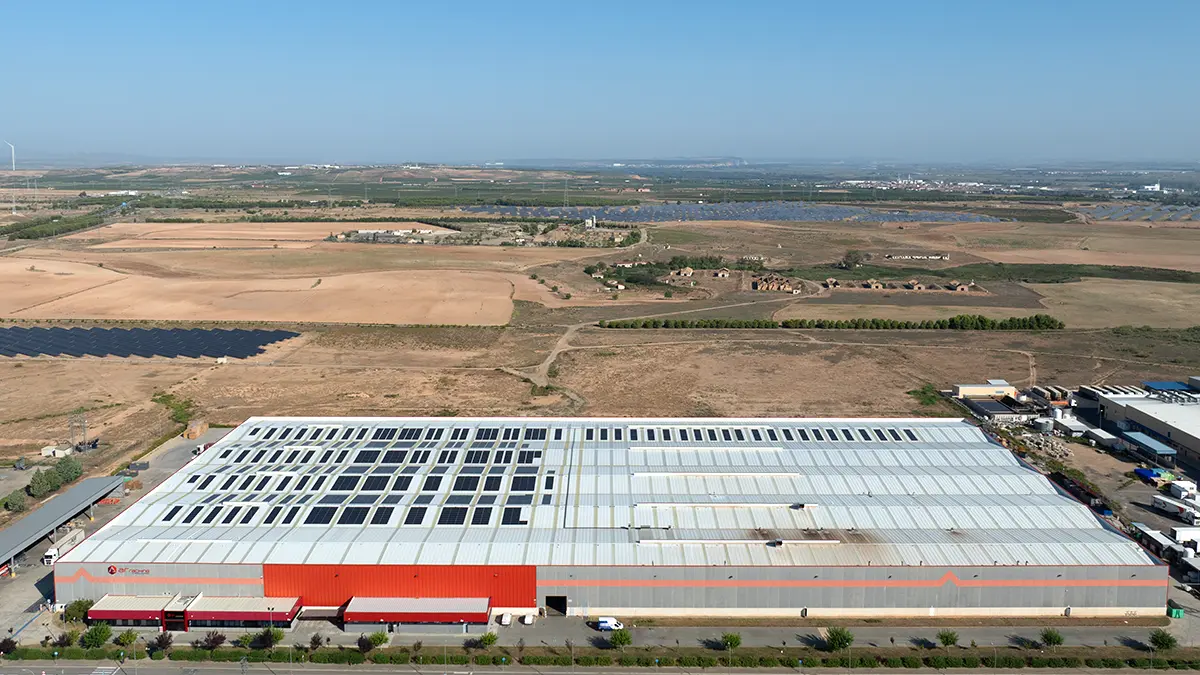
Millimetre Precision for Manual and Automated Warehouses
Automated stacker cranes and shuttles stop when rack geometry drifts out of tolerance. Robotic production, laser-controlled processes and structured quality checks keep frames and beams within the tolerances that AS/RS integrators require. The same discipline also makes manual warehouses faster and safer to install.
Every upright and beam can be traced from production batch to installation. For the buyer, this means fewer site-fit problems, clearer maintenance planning and a documentation package that supports safety audits and future expansion. Projects can be reviewed against local seismic and loading codes, including the requirements of South American markets.
- 5-year warranty on storage systems
- ISO 9001, ISO 14001, ISO 45001 and ISO 50001 production standards
- UNE EN ISO 3834-2 welding quality and EN 1090-1 structural steel certification
- ISO 14064 verified carbon reporting and full component traceability
Operational Fit Snapshot for Wholesale and OEM Projects
Use this comparison to shortlist a storage architecture before the final engineering study. The final selection should always be confirmed against pallet load, building height, throughput and local code requirements.
| System | Best-Fit Load | Relative Density | Direct Access | Typical Use |
|---|---|---|---|---|
| Selective pallet racking | Mixed-SKU pallet loads | Medium | 100% of pallets | Distribution, food, beverage, 3PL |
| Boltless adjustable shelving | Cartons, parts, 200–500 kg per level | Low to medium | 100% of shelves | Garage, retail backroom, spare parts |
| Heavy-duty pallet rack | High pallet loads and repeatable bays | High | 100% of pallets | Manufacturing, wholesale DC, export storage |
| Mezzanine racking | Mixed manual and carton storage | High | Level-based | E-commerce, multi-level picking |
| VNA and cold-store racking | High-bay pallet storage | Very high | 100% with VNA truck | Cold chain, high land cost, tall buildings |
| Pallet shuttle and AS/RS-ready | Deep lanes and automated storage | Maximum | WMS-controlled | High-throughput DC, automated warehouse |
Industrial Shelving Procurement Questions, Answered
These are the questions our engineering and export teams receive most often from warehouse, logistics and procurement managers evaluating an OEM or wholesale program.
What is the minimum order quantity for custom OEM industrial shelving?
MOQ depends on the product family and customization level. Boltless shelving programs can often start with mixed-container trial orders, while custom heavy-duty racking is quoted by project after drawing and load review. For wholesale and OEM buyers, recurring container shipments and private-label packaging can be planned after the first approved specification.
Do you support private-label, custom dimensions and custom colours?
Yes. We support custom dimensions, load ratings, colours, labels and packaging. Our engineers can review your drawing, pallet profile, building height and local code requirement before quotation so the product is designed for the actual application instead of a standard catalogue size.
How do you approach seismic and load safety for export projects?
Racking can be calculated against local seismic codes and site conditions, such as NCh2369 and NCh433 in Chile, E.030 in Peru, NSR-10 in Colombia and NEC in Ecuador. Typical measures include reinforced uprights and bracing, heavier base plates and anchors, row spacers and reduced beam deflection limits. Final installation must follow the approved drawings and local requirements.
What is the typical lead time and shipping process?
Lead time depends on product, volume and finish. Standard shelving programs usually move faster, while custom racking requires drawing approval, production scheduling and container planning. Shipping is coordinated to major ports in South America and other regions, with packing plans designed to protect powder-coated components during ocean transport.
Do you provide installation support and technical inspection?
Yes. We provide installation manuals, supervisors and trained distributor support. For larger projects, our teams coordinate with local partners and provide inspection checklists covering impact damage, overloads, anchoring and configuration changes. This lifecycle approach helps protect people, stock and uptime.
Which certifications and warranty back your storage systems?
Systems carry a 5-year warranty and are produced under ISO 9001, ISO 14001, ISO 45001, ISO 50001, UNE EN ISO 3834-2 welding quality, EN 1090-1 and ISO 14064 verified carbon reporting, with full component traceability.
Can your shelving operate in cold storage and freezer warehouses?
Yes. We supply mobile racking, drive-in, VNA, pallet shuttle and self-supporting freezer warehouse structures using steels and finishes suited to temperatures down to −30 °C. This is relevant for fruit, seafood, meat and frozen food exporters in South America and other cold-chain markets.
What information is needed to start a custom shelving project?
Send a building layout with clear height, pallet dimensions and maximum load weight, number of SKUs and pallets per SKU, daily throughput, forklift or automation type, temperature range and project city. Our engineers use this information to propose the most efficient storage system and identify any missing data before quotation.
Build a Repeatable OEM Shelving Program With a Certified Manufacturer
Send your product specification, target container volume, private-label requirements and destination market. Our engineering and export team will review the application, identify the right shelving architecture and prepare a quotation with drawings, load data and a packing plan.
- Preliminary layout and system recommendation
- Structural calculation and load data review
- Container loading and packaging plan
- Certification document list and 5-year warranty
Request an engineering review
Share pallet size, load per level, building height, SKU profile and destination port. We will respond with the next technical questions and a practical product route.
Contact UsFor OEM and wholesale projects, please include target quantities, custom dimensions, colour requirements and whether a private label is needed.