Recommended Custom OEM Warehouse Storage Racks for Wholesale and Project Procurement
The eight systems below represent the core export platforms our engineers configure for bulk buyers, distributors and private-label projects. Every product URL is preserved so procurement teams can move from market research to a technical specification without losing the original source.
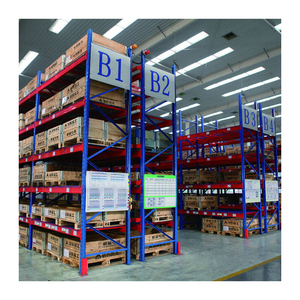
Industrial Pallet Racking System Spliced Steel Drop-Over Deck Panel Warehouse Storage Rack 2000kg Heavy Duty
A heavy-duty selective platform for high-turnover pallet storage where fast installation, a robust walking surface and export-ready steel detailing matter.
- Load reference2000 kg
- Deck typeDrop-over steel
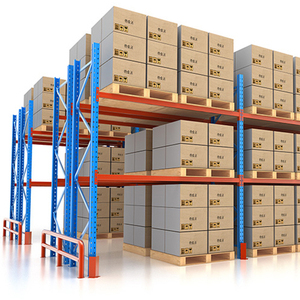
Selective Heavy Duty Warehouse Storage Rack Shelving System Pallet Racking
The workhorse configuration for multi-SKU warehouses that need direct access to every pallet and straightforward integration with forklift operations.
- Access100% pallet access
- Best for3PL & distribution
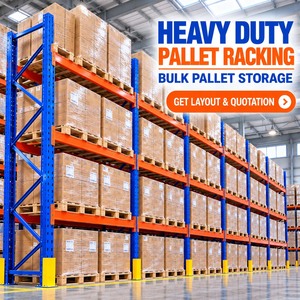
Heavy Duty Pallet Rack Supplier for Bulk Warehouse Storage
Designed for distributors and project buyers who need repeatable heavy-duty structures, consistent documentation and wholesale-friendly packaging.
- Buyer typeWholesale & export
- CustomisationProfile, colour, label
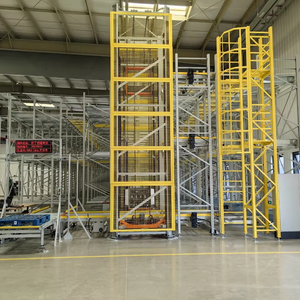
Advanced Intelligent Library Selective Pallet Rack with Efficient Conveying System High Efficiency Stacking Racks & Shelves
A high-efficiency selective rack platform for projects that combine dense stacking with conveying-supported retrieval and future automation readiness.
- ApplicationHigh-efficiency storage
- IntegrationConveying-ready
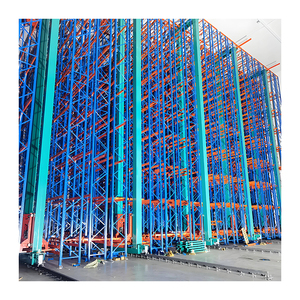
High-Density Pallet Shuttle Racking System Automatic Steel Storage Frame 3000kg Load Capacity Heavy Duty Warehouse
High-density semi-automated pallet storage for deep lanes, fast throughput and warehouses where floor space efficiency is a board-level metric.
- Load reference3000 kg
- OperationSemi-automated
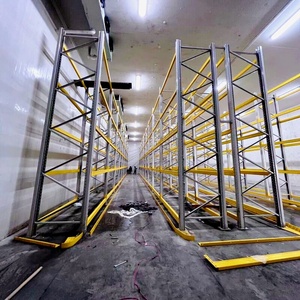
Low Price Racking Heavy Duty VNA Rack Adjustable Metal Boltless Shelf and Racks Warehouse Warehouse Storage Racks Metal Shelf
A very-narrow-aisle and boltless configuration for cost-sensitive projects where usable height, adjustable levels and fast installation are essential.
- SystemVNA / boltless
- Best forTall warehouse layouts
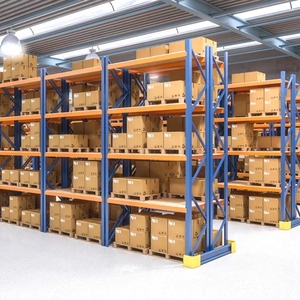
Racks Steel Storage Shelf Industrial Factory Stacking Rack Shelving Heavy Duty Warehouse Pallet Racking System
A rugged steel storage shelf and pallet racking platform for factories, production buffers and industrial warehouses with mixed pallet flows.
- EnvironmentFactory & production
- StructureHeavy-duty steel
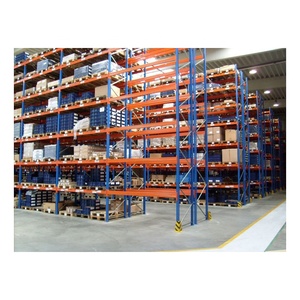
Customized Heavy Duty Pallet Racking System Industrial Warehouse Storage Rack Adjustable Steel Selective Pallet Rack
A fully customisable selective pallet rack for OEM programmes: engineered dimensions, branded components, export packing and project-specific documentation.
- CustomisationDimensions & colours
- DocumentationExport-ready
Search Intent Mining: What Buyers Really Need From a Custom OEM Racking Exporter
When procurement teams search for a Custom OEM Warehouse Storage Racks Exporter & Wholesalers, they are rarely looking for a single catalogue item. The query sits at the intersection of three intents. The first is informational: the buyer needs to understand which rack architecture fits the building, pallet profile, throughput and seismic zone. The second is commercial investigation: the buyer is comparing suppliers on engineering depth, certification, export experience, installation support and total cost of ownership. The third is transactional: the buyer wants a compliant quotation, drawing set, packing plan and delivery schedule. A supplier that answers only the visible product question usually loses to one that answers all three.
That is why the most competitive OEM racking programmes are built around information gain, not keyword repetition. The buyer should receive calculation logic, material specifications, load assumptions, local code references, installation tolerances, component traceability, warranty terms and a clear escalation path. In practice, five hidden questions decide whether a quotation becomes a purchase order: can you engineer for my seismic code, can you customise the frame and beam system, can you document compliance and quality, can you ship and support installation, and can you protect the total cost of the warehouse over ten to fifteen years?
This guide answers those questions from the perspective of an industrial racking manufacturer that designs, calculates, manufactures and installs storage systems for distribution centres, cold chains, 3PLs and factories. It is written for distributors, wholesalers, project buyers and private-label buyers who need more than a price per kilogram of steel.
What a Strong Custom OEM Warehouse Storage Racks Exporter & Wholesaler Must Provide
A racking supplier should be judged by the systems behind the steel: engineering, customisation, compliance, export logistics and lifecycle support.
Export-Grade OEM Customisation
Beam profiles, upright heights, decking, anchors, colours, labelling, packaging and private-label documentation configured for wholesale programmes.
Seismic & Local Code Engineering
Design reviews against Chile NCh2369/NCh433, Peru E.030, Colombia NSR-10, Ecuador NEC and Brazil ABNT NBR 15524 where applicable.
Cold-Chain & Automation Readiness
Steels and finishes for freezer environments down to −30 °C, plus geometry control for AS/RS, shuttle, VNA and AMR-compatible layouts.
Documentation & Lifecycle Support
5-year warranty, component traceability, installation supervision, technical inspection and maintenance programmes that protect uptime.
Matching Rack Architecture to Throughput, Load and Storage Density
Product recommendation should follow operational reality. This matrix is the same early-stage logic our project engineers use before a detailed layout study.
| System | Best Fit | Density | Access | Purchase Signal |
|---|---|---|---|---|
| Selective pallet racking | High SKU mix, food and beverage, retail distribution | Baseline | 100% of pallets | Buyer needs flexibility before automation |
| VNA racking | Expensive land, tall buildings, cold stores | High | 100% of pallets | Buyer needs more pallet positions per cubic metre |
| Double-deep | 3PLs with multiple pallets per SKU | Medium-high | 50% direct | Buyer can accept LIFO by lane |
| Drive-in racking | Homogeneous products and frozen goods | High | Low direct access | Buyer prioritises density over selectivity |
| Pallet shuttle | High-throughput DCs and deep cold lanes | Very high | Per lane | Buyer needs semi-automated deep storage |
| AS/RS and self-supporting | Large DCs, 24/7 operations, deep freeze | Maximum | Automated | Buyer is planning a long-term automated warehouse |
Future Procurement Trends: What Wholesalers and Project Buyers Will Demand by 2030
The market is moving from “buy racks by unit price” to “buy a validated storage asset”. These are the procurement shifts that will affect OEM racking suppliers and wholesale programmes.
Seismic compliance becomes a purchase gate
Buyers in Chile, Peru, Colombia and Ecuador increasingly ask for code-specific calculations before shortlisting a supplier. Seismic evidence moves from a technical annex to a commercial requirement.
Cold-chain expansion drives deep-freeze specifications
Fruit, seafood, meat and frozen-food exporters need racking that performs at −30 °C. Low-temperature steel, finish selection and installation sequence become part of the tender.
Automation-ready racking replaces manual-only design
Even first-phase manual warehouses now ask for straightness, tolerance and interface data that allow future shuttle, AMR or AS/RS deployment without replacing the entire structure.
Total cost of ownership outranks bare steel price
Procurement teams compare installation hours, spare-part availability, inspection intervals, downtime risk and warranty response—not just the invoice value of beams and uprights.
ESG and carbon documentation enter supplier scorecards
ISO 14064 verified carbon reporting, recycled steel content, finish durability and packaging reduction are becoming formal questions in large corporate tenders.
Modular OEM kits reduce installation risk
Wholesalers want labelled, sequenced and container-optimised kits with installation manuals, anchor schedules and spare-part packs so local teams can install faster with fewer errors.
Product Development Trends: What the Next Generation of OEM Racking Must Deliver
The winning racking product is no longer only a steel structure. It is a documented, installable and upgradeable storage platform with measurable performance data.
High-strength profiles and optimised steel weight
Buyers want more load capacity per kilogram of steel, lower freight cost per container and fewer components without reducing safety margins.
Drop-over deck and boltless hybrid systems
Faster installation, lower labour risk and a safer working surface are driving demand for steel deck panels, boltless shelving and hybrid configurations.
Automation tolerances and sensor-ready frames
Shuttle, AS/RS and AMR projects require tighter frame straightness, beam location control and interface documentation than conventional manual racking.
Corrosion, humidity and cold-chain finishes
Coastal humidity, freezer cycling and washdown environments demand finish systems that protect welds, connections and long-term inspection outcomes.
Why Alohatop Shelf Is a Trusted OEM Exporter for Warehouse Storage Racks
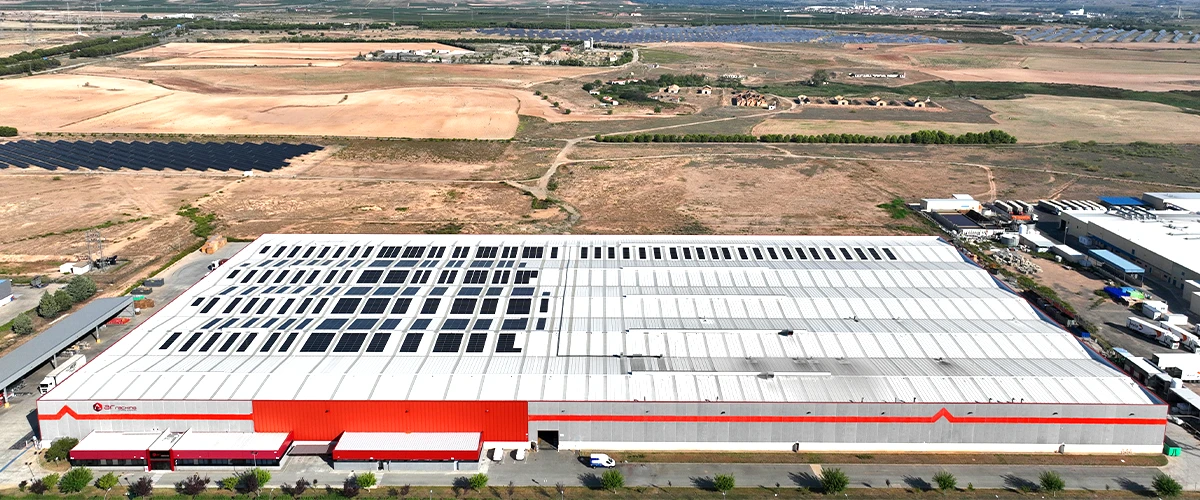
Alohatop Shelf LLC designs, calculates, manufactures and installs metal racking for warehouses, distribution centres and automated storage projects. Owning the engineering and production chain gives wholesale buyers one accountable partner from steel coil to final load sign.
- 35,000 m² highly automated production centre with more than 100,000 tonnes of annual capacity.
- More than 90% of output exported, with logistics experience for ports such as Santos, Callao, San Antonio, Cartagena and Buenos Aires.
- 60+ countries served, 42,000+ warehouse projects delivered and a 5-year warranty on storage systems.
- Full component traceability from production batch to installation, supported by ISO 9001, ISO 14001, ISO 45001, ISO 50001, EN ISO 3834-2, EN 1090-1 and ISO 14064 verified carbon reporting.
R&D and Testing That Support Safer OEM Specifications
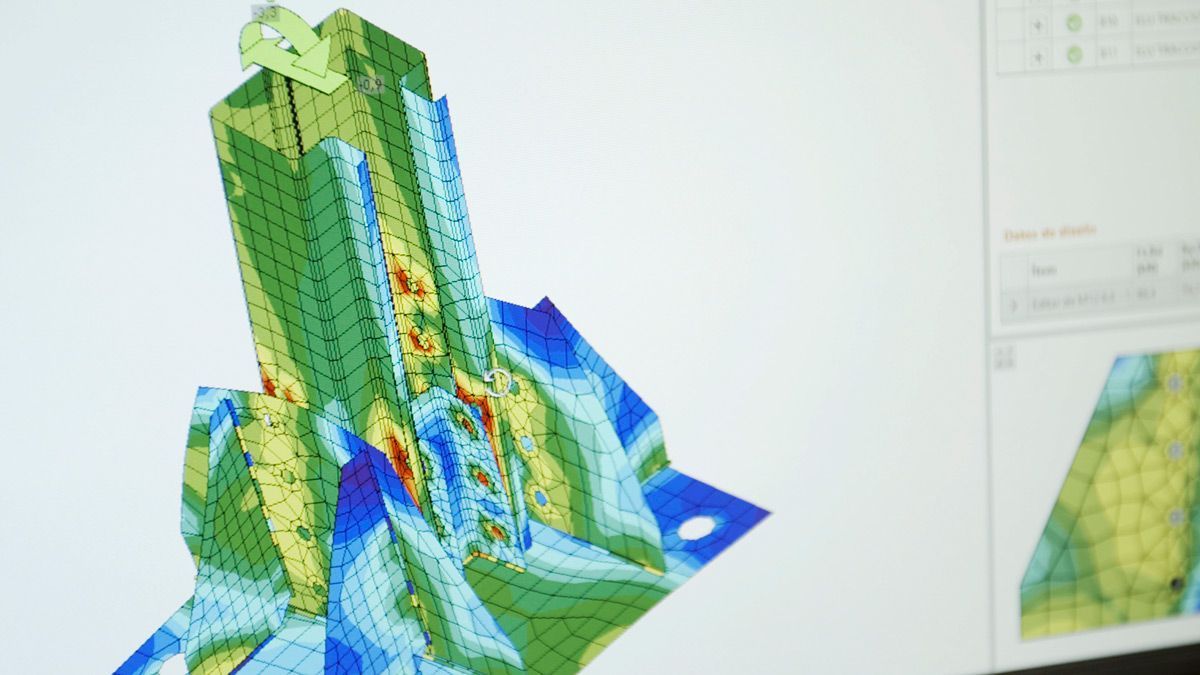
Our technology centre works with an R&D laboratory at Mondragon University to test the behaviour, strength and safety of racking components under real load cases. A research and simulation chair at the University of the Basque Country develops calculation models and simulation tools that feed directly into frames, beams and connections designed for high seismic demand.
- Finite-element simulation of frames, beams, base plates and connections.
- Physical load and cyclic testing of new profiles before market release.
- Design reviews against European standards and local South American code requirements.
- Robotic production and laser-controlled processes that keep AS/RS and shuttle projects within tight tolerances.
Certified Quality, Safety and Sustainability for Wholesale Racking Programmes
For distributors and project buyers, certification is not decoration. It is evidence that the factory can repeat quality across production batches and export orders.
 ISO 9001Quality management
 ISO 14001Environmental management
 ISO 45001Health & safety at work
 EN 1090-1Structural steel components
Additional programme documentation includes ISO 50001 energy management, UNE EN ISO 3834-2 welding quality, ISO 14064 verified carbon reporting, component traceability records, anchor schedules, load signage and a 5-year warranty statement for qualified projects.
How to Vet a Custom OEM Warehouse Storage Racks Exporter & Wholesaler
Use this four-step checklist to separate a genuine OEM engineering partner from a trading intermediary that simply forwards a catalogue.
1. Define load, environment and growth plan
Pallet dimensions, maximum load, SKU count, throughput, clear height, temperature range, seismic zone and future automation plans should be written into the brief before pricing.
2. Ask for engineering evidence
Request calculation assumptions, beam and upright specifications, connection details, anchor design, local code references and deflection limits—not only a product photo.
3. Audit factory and quality documents
Verify production capacity, welding control, material traceability, coating inspection, packing method and the process used to approve deviations before shipment.
4. Normalise commercial terms
Compare quotations using the same load case, finish, decking, anchors, installation scope, warranty, spare-parts package, freight terms and documentation deliverables.
Procurement Brief Template: What to Send for a Faster OEM Quote
To receive a technically valid proposal, include the building layout with clear height, pallet dimensions and maximum load weight, number of SKUs and pallets per SKU, daily throughput, forklift or automation type, temperature range, destination city and any local seismic or fire code requirements. Buyers who provide this information receive a more accurate layout, steel schedule and shipping plan on the first response.
Custom OEM Warehouse Storage Racks: Frequently Asked Procurement Questions
Answers our engineers most often give to warehouse, logistics and procurement managers evaluating an export or wholesale racking programme.
What does “custom OEM” mean for warehouse storage racks?
Custom OEM means the racking is engineered and manufactured to the buyer’s specification rather than selected from a fixed catalogue. Dimensions, beam profiles, uprights, decking, colours, labelling, packaging and documentation can be aligned with the distributor’s brand and the end user’s warehouse layout.
Can you manufacture under our brand and export packaging?
Yes. OEM programmes can include private-label nameplates, manuals, carton marking, container loading plans, spare-part kits and serialised component lists. The aim is to give wholesalers and project buyers a turnkey package that local installation teams can receive, identify and install efficiently.
Which standards are used for seismic racking design?
Racking is calculated against the destination country’s requirements and site conditions. Common references include NCh2369 and NCh433 in Chile, E.030 in Peru, NSR-10 in Colombia, NEC in Ecuador, INPRES-CIRSOC 103 in Argentina and ABNT NBR 15524 in Brazil. Typical measures include reinforced bracing, heavier base plates, anchors, row spacers and reduced beam deflection limits.
Which pallet sizes and loads can your systems support?
All common export and regional formats are supported, including the 1200 × 1000 mm pallet used widely in Latin America, the Brazilian PBR 1000 × 1200 mm, the 1200 × 800 mm Euro pallet and ISO sizes such as 1100 × 1100 mm and 1219 × 1016 mm. Beam length, frame depth and load capacity are dimensioned for the actual pallet and operating load.
Can the racking operate in cold storage and freezer warehouses?
Yes. Mobile racking, drive-in, VNA, pallet shuttle and self-supporting freezer warehouses can be supplied with steels and finishes suited to temperatures down to −30 °C. This is critical for fruit, seafood, meat and frozen-food exporters that need reliable performance through freezer cycling and long inspection cycles.
What warranty and certifications support the storage systems?
Systems carry a 5-year warranty and are produced under ISO 9001, ISO 14001, ISO 45001, ISO 50001, UNE EN ISO 3834-2 welding quality, EN 1090-1 and ISO 14064 verified carbon reporting. Full component traceability allows the buyer and installer to link delivered parts back to production records.
How do you protect shipment quality and spare-part availability?
Export packing is planned around the shipping method, handling risk and installation sequence. Components can be labelled by zone or bay, bundled with installation drawings and accompanied by recommended spare-part quantities. For wholesale programmes, repeatable part numbering helps distributors maintain local stock without over-ordering slow-moving components.
How should buyers compare OEM racking quotations?
Normalise every quote against the same load case, seismic requirement, finish, deck type, anchor design, installation scope, warranty, spare-parts package, freight terms and documentation. A lower steel price can become more expensive if installation hours, rework, missing parts or inspection findings increase after delivery.
Can you support installation and technical inspection locally?
Projects can be supported through our own supervisors and a network of trained distributors and installation teams. Service scope may include layout engineering, installation supervision, technical rack inspection, maintenance and reconfiguration planning for future warehouse expansion.
What information is needed to start a racking project?
Send a building layout with clear height, pallet dimensions and maximum load, number of SKUs and pallets per SKU, daily throughput, forklift or automation type, temperature range and project city. For seismic zones, include the site location and soil class if available. Our engineers use this information to propose the most efficient storage system and prepare an export-ready quotation.
Ready to Build a Better Custom OEM Warehouse Storage Racks Supply Programme?
Share your layout, pallet data, load requirements, destination market and target delivery schedule. Our engineers will help you select the right rack architecture, prepare a compliant specification and build a wholesale or project supply plan around your commercial model.
Send an Inquiry