8 OEM/ODM Pallet Racking Products for Wholesale Projects
Wholesale buyers rarely purchase a single rack. They buy a repeatable engineering standard. These eight product families cover the configurations most often requested in OEM/ODM pallet racking RFQs: selective heavy-duty racking, detachable Australian-style beam racking, safety-enhanced racking, push-back LIFO systems, boltless shelving and specialist roll-goods storage. Every product can be customized by dimension, load, finish, accessory set, packaging and brand documentation.
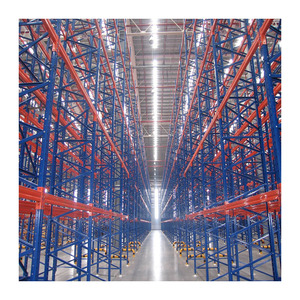
Mracking Heavy Duty Industrial Palletized Racking
A selective racking platform for pallet loads from 1,000 kg to 4,000 kg per level. Suited to high-SKU distribution centres, food and beverage warehouses and wholesale storage projects that require direct access to every pallet.
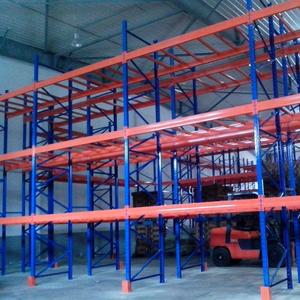
Australian High-Load Anti-Rust Detachable Pallet Racking
A detachable beam racking system with anti-rust powder coating for humid coastal warehouses and distribution centres. High load capacity, fast assembly and easy reconfiguration support wholesale and project-based orders.
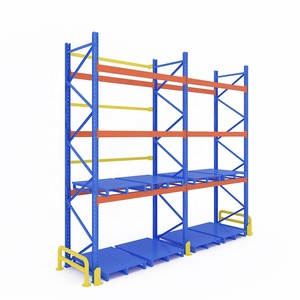
Warehouse Storage Industrial Pallet Rack with Back Stopper
Industrial pallet racking with back stoppers to prevent pallet push-through, improve aisle safety and protect structural uprights. A practical OEM choice for 3PL, retail DC and multi-client warehouse projects.
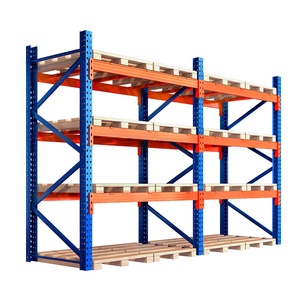
Industrial Heavy-Duty Steel Pallet Storage Racking
A heavy-duty steel pallet storage rack for stacked units and multi-level warehouse storage. Designed for wholesale buyers who need scalable capacity, simple installation and long service life in demanding industrial environments.
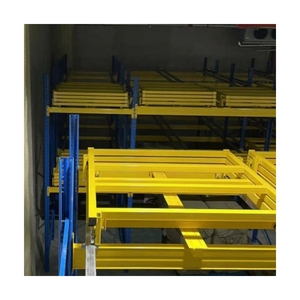
Heavy-Duty Push-Back Pallet Racking System
A push-back LIFO racking system for manufacturing buffers, seasonal inventory and medium-density pallet storage. Rails and carts improve cube utilisation without sacrificing lane-level selectivity.
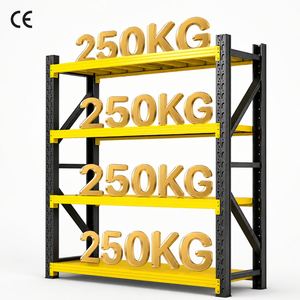
Boltless Adjustable 4-Layer Industrial Metal Storage Rack
Boltless adjustable four-layer shelving for industrial garages, spare parts and mixed carton storage. A cost-effective ODM/OEM product for distributors serving small and mid-sized warehouses that need fast deployment.
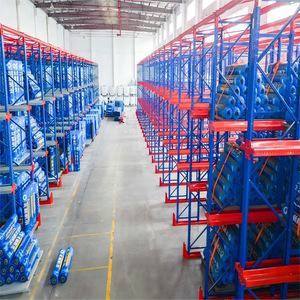
Reliable Heavy-Duty Roll Pallet & Bulk Goods Storage Rack
A roll pallet and bulk goods storage system for paper, textiles, cable, tyre and other non-standard loads. Engineered for safe loading, clear access and heavy-duty warehouse use across multiple industries.
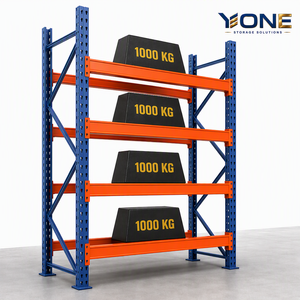
Heavy-Duty Pallet Racking with Safety Accessories
Heavy-duty pallet racking supplied with safety accessories such as column guards, back stoppers, load signs and guide rails. Ideal for projects where safety compliance and long-term uptime are procurement priorities.
Automated production centre with controlled roll-forming, welding and coating lines.
Annual steel capacity that supports wholesale pricing and repeat project supply.
Warehouse projects delivered across distribution, cold chain, manufacturing and 3PL.
Of production exported, with export packing and documentation experience.
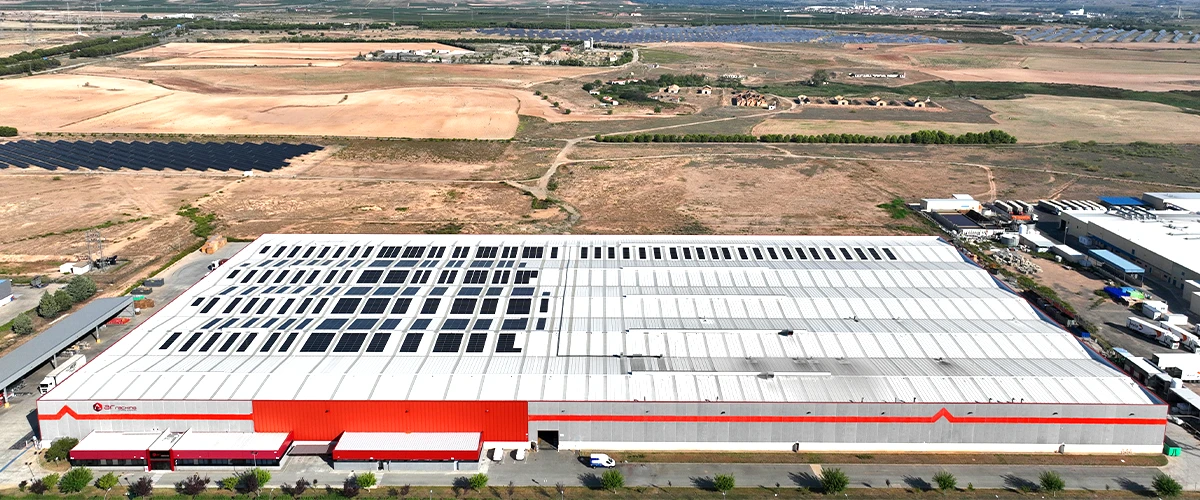
Factory Advantages That Reduce Your Procurement Risk
Alohatop Shelf LLC is a designer, manufacturer and project partner, not a broker. We operate a 35,000 m² highly automated production centre with more than 100,000 tonnes of annual steel capacity. That scale gives wholesale buyers three practical advantages: stable unit pricing, controlled lead times and a single point of accountability from structural calculation to container loading.
More than 90% of our output is exported. Our teams regularly prepare projects for Brazil, Chile, Peru, Colombia, Argentina, Ecuador, Uruguay and Paraguay, and our systems are installed in more than 60 countries. We work with 14 own branches and more than 70 trusted distributors, so local support is available without losing factory control.
- Engineering control: layout optimisation, structural calculation, seismic verification and integration with forklifts, AGVs or AS/RS.
- Full traceability: every upright and beam can be traced from production batch to installation, supported by a 5-year warranty.
- Export discipline: protection packing, labelled components and documentation prepared for sea freight and multi-stage site delivery.
Laboratory Validation, Not Just Catalogue Claims
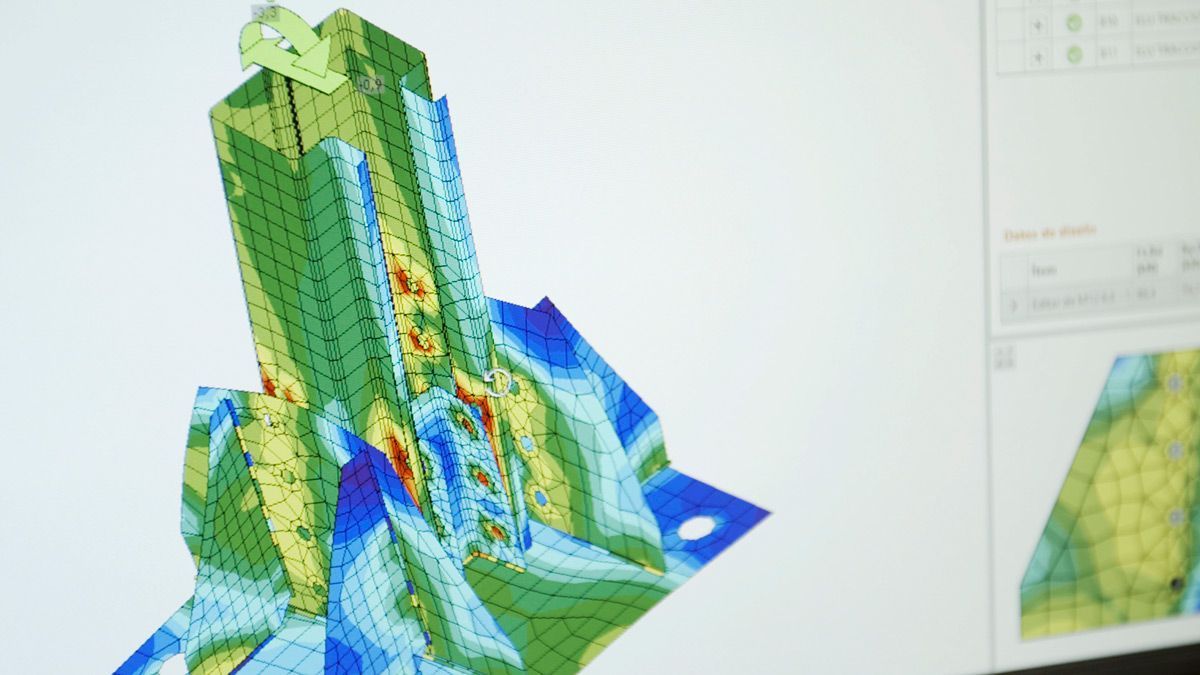
Our in-house technology centre works with the R&D laboratory at Mondragon University to test the behaviour, strength and safety of racking components under real load cases. A research and simulation chair at the University of the Basque Country develops calculation models and simulation tools. That knowledge transfers directly into frames, beams and connections designed for high seismic demand and automated warehouse interfaces.
This matters to procurement teams because racking is a structural product. Finite-element simulation, physical load testing and cyclic testing help verify that a design will perform under the loads, temperatures and seismic conditions expected on site. We review designs against European standards and local South American codes rather than applying a single generic template.
- Finite-element simulation of frames, beams and base connections.
- Physical load and cyclic testing of new profiles and accessories.
- Design review against European and local market requirements.
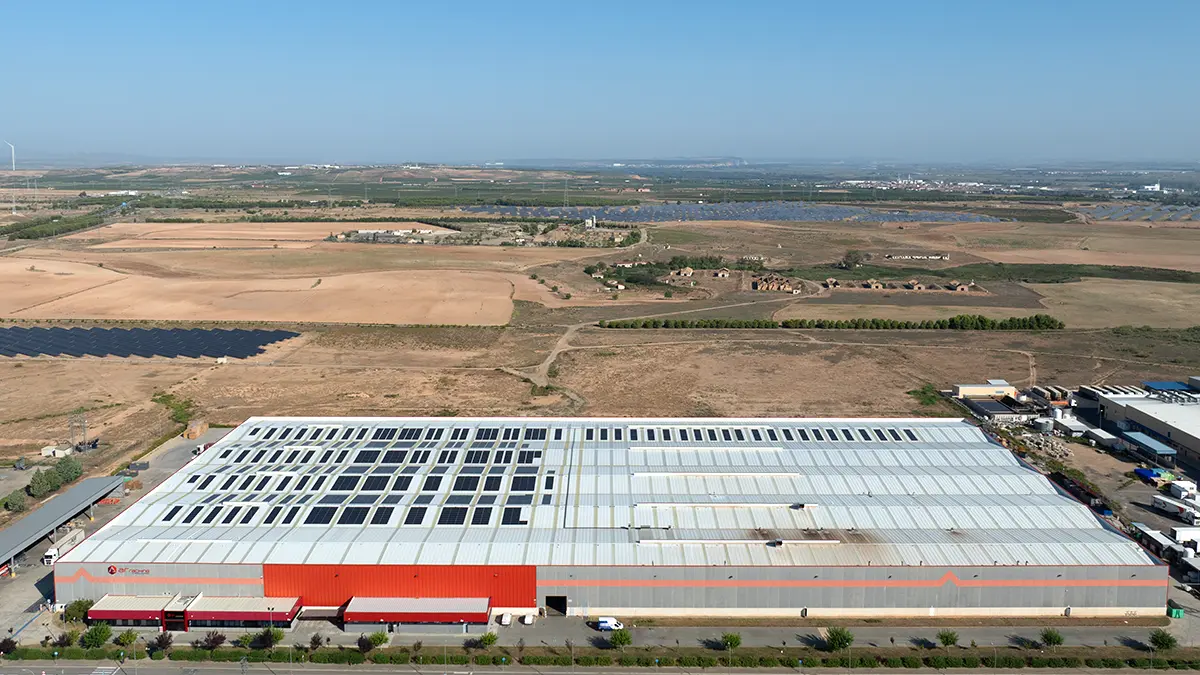
Millimetre Precision for Manual and Automated Warehouses
Automated stacker cranes and shuttles stop when rack geometry drifts out of tolerance. Robotic production and laser-controlled processes keep every frame and beam within the tight tolerances that AS/RS integrators require. The same precision reduces rework and shortens installation time in conventional warehouses.
For OEM/ODM buyers, consistency across repeat orders is as valuable as the first prototype. Repeatable hole patterns, controlled welding and verified powder coating mean the second container fits the first installation without site modification. That is the difference between a low-cost supplier and a reliable racking manufacturing partner.
- Consistent quality across large-volume and repeat wholesale orders.
- Competitive, reliable lead times for export projects.
- 5-year warranty on storage systems, backed by component traceability.
Certified Quality, Safety and Sustainability
E-E-A-T is earned through verifiable systems. Our production is backed by international management standards, welding quality controls, structural steel certification and verified carbon reporting — with full component traceability and a 5-year warranty.
 ISO 9001
Quality management
 ISO 14001
Environmental management
 ISO 45001
Health & safety at work
 ISO 50001
Energy management
 EN ISO 3834-2
Welding quality control
 EN 1090-1
Structural steel components
 ISO 14064
Verified carbon footprint
Which Pallet Racking System Should You Recommend?
The best system depends on SKU profile, throughput, building height, temperature and seismic zone. These four recommendations are a practical starting point for distributors and project buyers preparing an OEM/ODM inquiry.
High-SKU distribution centre
Choose selective pallet racking when every pallet must be accessible and SKU variety is high. It remains the most flexible system for food, beverage, retail and 3PL warehouses, and it can be engineered for heavy loads from 1,000 kg to 4,000 kg per level.
View selective racking →Manufacturing buffer storage
Use push-back racking for medium-density LIFO storage where floor space is constrained but lane-level access is still required. It is especially effective for work-in-progress buffers, seasonal inventory and finished goods awaiting dispatch.
View push-back system →Roll goods and bulk cargo
Specify roll pallet and bulk goods racking for paper, textiles, cable, tyres and other non-standard loads. The design must consider loading method, roll diameter, pallet support and safe access — not just static weight.
View roll pallet racking →Fast-deployment wholesale orders
Boltless adjustable shelving is ideal for distributors serving small and mid-sized warehouses that need quick installation and flexible level changes. It is a practical entry product for mixed cartons, spare parts and industrial garage storage.
View boltless racking →Pallet Racking Procurement Trends Shaping 2025–2030
Procurement teams are changing how they evaluate pallet racking. The lowest price per upright is no longer the deciding metric. Buyers now compare engineering documentation, code compliance, installation risk, spare-part availability and whole-life cost. These six trends reflect the questions our project engineers see in active RFQs.
Automation-ready from day one
Buyers increasingly ask whether racking can support AMRs, shuttles or AS/RS later. Tolerance data, upright straightness, beam deflection limits and interface drawings are becoming part of the original purchase specification, not a future upgrade.
Seismic and local code evidence
In Chile, Peru, Colombia and Ecuador, procurement teams now request seismic calculations, anchor specifications and soil-class assumptions. Suppliers that cannot provide code-specific documentation are increasingly excluded before commercial review.
Cold-chain density and energy
Cold storage and freezer warehouses are moving toward mobile racking, drive-in, VNA and pallet shuttle systems to reduce cooled cubic volume per pallet. Energy cost and temperature stability now influence the racking layout as much as storage capacity.
Nearshoring and regional DCs
Global supply-chain shifts are supporting new distribution centres in Latin America. Buyers want suppliers who understand port logistics, local installation practices, mixed pallet standards and multi-country documentation.
Total cost of ownership
Warranty duration, spare-part availability, inspection intervals and repair response are now part of the business case. A slightly higher initial price can be cheaper over ten years if the supplier supports lifecycle safety and component replacement.
Verified sustainability
Carbon reporting, powder-coating processes and recyclable steel content are appearing in tender questionnaires. Verified data — not vague environmental claims — helps distributors and end users meet internal ESG and procurement targets.
What Buyers Prioritise in Early RFQs
Qualitative procurement priority map based on project-engineering discussions with warehouse, logistics and distribution buyers. Illustrative only, not a market forecast.
Pallet Racking Product Development Trends to Watch
Racking product development is moving beyond simple steel optimisation. The next generation of warehouse structures will be judged on precision, integration, safety data and environmental performance.
High-strength profiles and lighter steel
Better profile design can deliver the same load capacity with less material. This reduces freight cost and embodied carbon while maintaining stiffness — a benefit for export wholesalers shipping large volumes by container.
Robotic welding and digital records
Automated welding cells produce more consistent connections and can be linked to digital quality records. Buyers can trace production batches, welding parameters and inspection results, supporting stronger warranty and audit positions.
Modular accessories and safety integration
Back stoppers, column guards, guide rails, load signs and row spacers are increasingly designed as part of the original system. Integrated safety accessories reduce site fitting errors and improve compliance during inspection.
Sensor-ready and digital-twin compatible
Warehouse operators want racking data that can feed digital twins, WMS layouts and maintenance planning. Future racking products will increasingly include standardised data outputs for geometry, load limits and inspection points.
Corrosion-resistant finishes
Humid ports, coastal warehouses and cold stores demand more than a standard paint finish. Powder coating thickness, pre-treatment and salt-spray performance are becoming specification items for long-life racking in tropical and coastal markets.
Design for circularity and lower carbon
Steel is highly recyclable, but transport, coating and packaging also affect the footprint. Racking designs that use fewer parts, optimise container loading and provide verified carbon data will be easier to specify in ESG-sensitive projects.
What to Specify Before You Request a Wholesale Quote
A precise brief shortens engineering review and reduces the risk of rework. Use this checklist to prepare a clearer OEM/ODM pallet racking inquiry.
| Procurement question | What to specify | Why it matters |
|---|---|---|
| Pallet size and load | Pallet dimensions such as 1200 × 1000 mm, 1200 × 800 mm, 1100 × 1100 mm and maximum load per pallet or per level. | Beam length, frame depth, upright capacity and deflection limits depend on the actual pallet and load — not an average estimate. |
| Seismic zone and local code | Project city, soil class if available, and local code requirements such as NCh2369, E.030, NSR-10 or NEC. | Seismic demand changes bracing, anchor size, base plate design and row spacing. Code evidence is essential for approval. |
| Temperature and environment | Ambient, chilled, freezer or deep-freeze operation; humidity, coastal exposure and wash-down requirements. | Steel grade, coating and accessory selection must suit the operating environment and maintenance regime. |
| SKU profile and throughput | Number of SKUs, pallets per SKU, daily movements, picking method and future growth assumptions. | Selectivity, lane depth and density determine whether selective, push-back, drive-in, shuttle or mobile racking is the better fit. |
| Building interfaces | Clear height, floor flatness, column positions, sprinkler layout, door positions and forklift turning radius. | Layout efficiency depends on real building constraints. Early interface checks reduce installation delays and costly changes. |
| Safety accessories | Back stoppers, column guards, guide rails, row spacers, load signs and inspection access. | Safety accessories protect people, stock and rack structure. They should be included in the original scope, not added after installation. |
| Future expansion | Planned building extension, automation roadmap and expected pallet growth over 3–5 years. | A modular design can be extended or upgraded later. Designing only for today’s volume often creates avoidable rework. |
OEM/ODM Pallet Racking Procurement FAQ
These are the questions our engineers and export team answer most often from distributors, 3PLs and warehouse owners evaluating a pallet racking factory or wholesale supplier.
Are you a manufacturer or a trading company?
We are a manufacturer. Alohatop Shelf LLC designs, calculates, manufactures and supports the installation of industrial racking and automated warehouse structures. Our 35,000 m² automated production centre and annual steel capacity of more than 100,000 tonnes allow us to supply direct to wholesalers, distributors and project buyers.
Can you produce OEM/ODM pallet racking under our brand?
Yes. We support OEM and ODM requirements including custom dimensions, load ratings, colours, accessory sets, packaging, labels and documentation. Our engineering team can work from your drawings or develop a layout from building, pallet and throughput data. Branding is handled through agreed packaging and documentation rather than adding unapproved modifications to the structural product.
What is the minimum order for wholesale pallet racking?
Minimum order depends on the product family and project complexity. Distributors often start with mixed container loads that combine uprights, beams, accessories and shelving products. For project orders, the engineering scope and shipping plan usually determine the economic batch size. Sharing your target volume and destination port helps us propose a practical wholesale structure.
Which certifications and warranty back your storage systems?
Our systems are produced under ISO 9001, ISO 14001, ISO 45001, ISO 50001, UNE EN ISO 3834-2 welding quality, EN 1090-1 structural steel and ISO 14064 verified carbon reporting. Storage systems carry a 5-year warranty, with full component traceability from production batch to installation.
How do you design racking for seismic zones in South America?
Racking is calculated against the local seismic code and site soil class where required. Examples include NCh2369 and NCh433 in Chile, E.030 in Peru, NSR-10 in Colombia, NEC in Ecuador and INPRES-CIRSOC 103 in Argentina. Typical measures include reinforced uprights and bracing, heavier base plates and anchors, row spacers and reduced beam deflection limits.
What information is needed to start a quotation?
Send a building layout with clear height, pallet dimensions and maximum load weight, number of SKUs and pallets per SKU, daily throughput, forklift or automation type, temperature range, project city and target shipping port. If a local code applies, include that as well. Our engineers use this data to recommend the most efficient storage system.
What are typical lead times and shipping arrangements?
Lead time depends on engineering approval, material availability, order volume and destination. We prepare export packing and documentation for sea freight, and we can coordinate with your forwarder or discuss common shipping terms. For repeat wholesale orders, keeping a standard product specification on file helps shorten future production planning.
Do you provide installation, inspection and after-sales support?
Yes. We provide installation drawings, supervision and coordination through our own teams and trained distributor network where available. We also support technical rack inspections, maintenance planning and component replacement. The objective is not only to deliver steel, but to protect the safety and productivity of the warehouse over its operating life.
Request a Factory-Direct Pallet Racking Quotation
Send your pallet dimensions, load requirements, building height, temperature range, project city and target port. Our engineers will review the storage profile and recommend a safe, space-efficient pallet racking system for your market.
OEM / ODM pallet racking · wholesale supply · seismic engineering · export packing · 5-year warranty