OEM/ODM Push Back Racking Exporter & Wholesaler
High-density LIFO pallet storage engineered for distributors, 3PLs and OEM programs — with seismic calculations, export-ready packaging, ISO-controlled production and documented component traceability.
Recommended Push Back Racking and Related High-Density Storage Systems
The eight systems below represent the export configurations most often requested by warehouse distributors, system integrators and private-label buyers. Each can be engineered as an OEM/ODM package with drawings, load signs, installation manuals, spare-part lists and container-optimized packing.
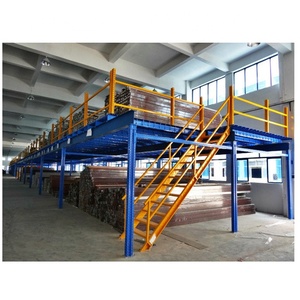
Mezzanine Shelf Storage Heavy Duty Rack System Metal Racks Warehouse Mezzanine Platform
Multipliers floor capacity without a new building. Ideal for wholesale distributors that need picking, stock and light pallet storage on two or more levels.
- Best forMulti-tier storage
- Export formatKnock-down steel
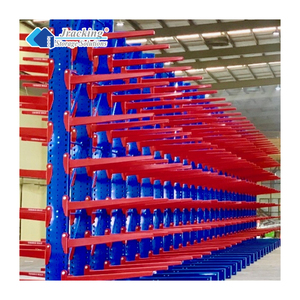
CE-Certified Industrial Warehouse Storage Shelves Heavy-Duty Cantilever Racking System for Cold Storage Pipe Storage
Long-load storage for pipes, profiles and timber. The open front allows forklifts or cranes to load from above in cold-store and industrial yards.
- Best forLong profiles
- ComplianceCE option
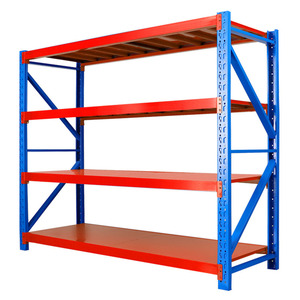
Medium/Heavy Duty Storage Equipment Warehouse Industrial Powder Coating Cargo Steel Iron Tool Supermarket Stacking Storage Racks
Flexible racking for cartons, tools, spare parts and supermarket back-of-house storage. Powder coating supports clean retail and industrial presentation.
- Best forMixed cargo
- FinishPowder coated
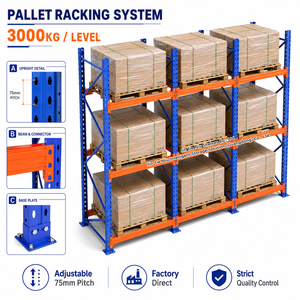
3 Pallet Levels Heavy Duty Steel Warehouse Rack Selective Pallet Racking System 3000KG
Direct access to every pallet with three beam levels and 3,000 kg class loading. A practical base system for a selective-plus-push-back hybrid layout.
- Load class3,000 kg
- AccessDirect
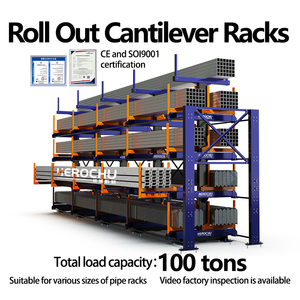
Telescopic Adjustable Double-Sided Heavy Duty Cantilever Racks 8T/Layer Capacity CE Certified Carbon Steel Square Tube Tubular
Double-sided cantilever storage for heavy tube, pipe and steel stock. Telescopic arms adapt to changing load lengths without rebuilding the frame.
- Capacity8 t / layer
- StructureSquare tube
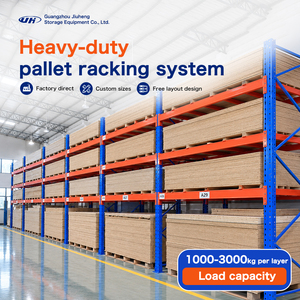
Heavy Duty Pallet Racking System Steel Warehouse Storage Rack Industrial Pallet Rack Adjustable Beam Storage Solution
A growth-ready pallet racking platform with adjustable beams. Suitable for distributors that need to re-slot inventory as SKU profiles change.
- FlexibilityAdjustable beams
- Best forMixed SKUs
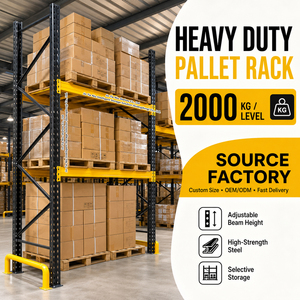
Adjustable Pallet Rack 1000KG to 3000KG for Auto Parts Storage Heavy Duty Selective Pallet Storage System
Selective pallet storage for automotive spare parts, service centres and line-side buffers. Load classes can be tuned by beam and upright selection.
- Load range1,000–3,000 kg
- Best forAuto parts
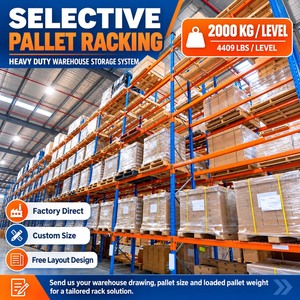
Industrial Warehouse Pallet Racking System Heavy Duty Adjustable Storage Rack Customized Pallet Racks for Factory Storage
Custom pallet racking for factory warehouses, raw-material buffers and finished-goods zones. OEM dimensions, colors and accessories are available.
- CustomizationOEM / ODM
- ScopeFactory storage
Why Push Back Racking Is a High-Gain Storage Format
Push back racking stores pallets on nested carts running on inclined rails. It is a LIFO system: the last pallet loaded is the first one retrieved. For the right SKU profile, it removes aisles without the selectivity loss of drive-in racking.
In an OEM/ODM export program, push back racking is not a commodity “price per pallet position.” The real cost drivers are lane depth, cart quantity, rail pitch, beam deflection, forklift type, building height, fire-sprinkler clearance, seismic demand and container loading efficiency. A supplier that quotes only tonnage can appear cheaper at tender stage and become more expensive after installation, when missing carts, unclear load signs or non-compliant anchors interrupt commissioning.
The strongest information gain for buyers is to compare systems on total cost per usable pallet position, not purchase price per tonne. A push back lane can increase storage density in an existing footprint, but the decision must also consider SKU homogeneity, batch rotation rules and the cost of a retrieval error. That is why our engineering team begins with the operating profile before recommending the structural package.
Density Without a New Building
Push back lanes reduce working aisles while keeping pallets accessible by forklift. For distributors facing rent increases, it can release capacity faster than relocation.
LIFO Fit Matters
Push back is strongest for batch-controlled inventory, manufacturing buffers and fast-moving SKUs where LIFO is acceptable. Date-coded or strict FIFO stock may need pallet flow or shuttle systems instead.
Safety Is Designed, Not Added
Cart stops, rail end guards, load signs, anchor verification and frame protection should be specified in the export package. These details protect people, stock and uptime across markets.
OEM/ODM Push Back Racking Procurement Trends Buyers Should Plan For
Global buyers are changing how they source dense storage. The winning tender is no longer the one with the lowest steel price; it is the one with predictable engineering, documentation and lifecycle support.
Regional Distribution Hubs
Nearshoring and regional fulfillment are pushing buyers toward mid-size, high-density warehouses. Push back racking offers a practical step between selective racking and fully automated storage.
Total Cost of Ownership
Procurement teams now request TCO comparison: installation hours, freight volume, spare carts, inspection intervals and downtime risk. A slightly higher component price can be cheaper over ten years.
Data-Backed Tender Packs
Buyers increasingly require structural calculations, load signs, welding documentation, anchor specifications and seismic assumptions. OEM suppliers must deliver engineering evidence, not just a catalogue.
Cold-Chain Densification
Freezer and cold-store operators are prioritizing pallet positions per cooled cubic metre. Dense lanes reduce cooling load and improve energy performance when fire, safety and aisle requirements are solved early.
Automation-Ready Interfaces
Even a manual push back installation may need future AGV, AMR or shuttle compatibility. Buyers are asking suppliers to protect interfaces, tolerances and clear heights from the first layout.
Supplier Consolidation
Distributors prefer fewer qualified exporters that can support multiple product families. A supplier able to provide push back, selective, cantilever and mezzanine systems reduces technical risk and paperwork.
ESG and Carbon Documentation
Large buyers are adding material efficiency, coating systems, recyclable packing and verified carbon reporting to supplier scorecards. Exporters need clean data and traceability to stay on approved lists.
Wholesale and Distributor Programs
Private-label racking, localized documentation, spare-part kits and container-optimized loading are becoming standard requirements for wholesale channels and project-based distributors.
Density, Selectivity and Rotation: A Buyer’s Comparison
Push back racking should be selected against alternative dense systems, not in isolation. The following comparison is an early-stage guide; final performance depends on pallet size, load, building height, forklift type, fire strategy and local structural codes.
Indicative Storage Density Index
Selective racking = 100. Higher values indicate more pallet positions in a comparable footprint, but not necessarily better selectivity.
Push back racking sits in a useful middle ground: denser than selective racking and double-deep racking, but more selective than a deep drive-in lane. It is often the best compromise for manufacturers that need dense buffers without losing forklift access to every lane.
For cold stores, the density advantage can be material because every unused aisle consumes cooled air. For 3PL warehouses, however, a hybrid layout may be safer: selective racking for high-touch SKUs and push back lanes for stable, high-volume inventory.
Before approving a layout, ask for a lane-by-lane cart count, retrieval cycle assumption and a written LIFO policy. These three documents prevent the most common operational mismatch after commissioning.
| System | Density | Selectivity | Stock Rotation | Best Export Scenario |
|---|---|---|---|---|
| Push back racking | High | Lane-level access | LIFO | Manufacturing buffers, fast-moving SKUs, cold-store density |
| Selective pallet racking | Moderate | 100% direct access | Any | Mixed SKUs, retail DCs, 3PL multi-client warehouses |
| Double-deep racking | Moderate to high | 50% direct access | LIFO per lane | Distributors with two or more pallets per SKU |
| Drive-in racking | Very high | Low | LIFO or FIFO by drive-through | Homogeneous goods, freezer storage, seasonal stock |
| Pallet shuttle | Very high | Lane-level access | FIFO or LIFO | High-throughput DCs, deep lanes, semi-automation |
| VNA racking | High | 100% direct access | Any | Tall buildings, expensive land, cold stores |
Density and selectivity are indicative and must be verified against a real layout. Seismic zones, fire-sprinkler requirements, aisle widths and forklift attachments can change the final number of usable positions.
How Push Back Racking Is Evolving for Global Buyers
Product development is moving toward stronger, safer and more data-rich storage systems. The most successful exporters will be those that make engineering visible to buyers before the container leaves the factory.
High-Strength Profiles With Lower Weight
Optimized roll-formed profiles can reduce steel weight while preserving load capacity. For wholesale programs, this improves container utilization and installation speed without lowering safety margins.
Seismic and Fire Engineering Earlier
Seismic detailing and fire-sprinkler coordination are moving into the concept layout. Base plates, bracing, row spacers and flue gaps are now part of the commercial proposal, not an afterthought.
Cold-Store Optimization
Freezer projects require attention to steel grade, coating, anchor performance, cart lubrication and temperature-related clearances. Dense push back lanes can reduce refrigerated volume and operating cost.
Automation-Compatible Geometry
Even manual warehouses are being prepared for AMRs, shuttles or future AS/RS. Tighter frame tolerances, clean interfaces and documented clear heights protect future automation investment.
Sensor-Ready Safety Management
Rack damage monitoring, digital inspection records and QR-coded components are becoming practical. Buyers can connect physical racking to maintenance workflows instead of relying on paper checks.
Modular and Circular Design
Replaceable carts, bolted connections and reusable frames support expansion and relocation. This is increasingly important for exporters serving customers with 3–5 year lease cycles.
Choose the Right Configuration for Your Load Profile
Use these three common buying scenarios as a starting point for an RFQ. Our engineers will validate the structural design against your pallet, building and destination code.
Manufacturing Buffer
Use push back lanes for homogeneous work-in-process and finished goods. Specify 3–5 pallets deep, forklift type, cart count and retrieval cycle. LIFO is usually acceptable when batch control is already in place.
3PL Multi-Client Warehouse
Use a hybrid: selective racking for high-touch SKUs and push back for stable, high-volume inventory. Require client-specific lane identification, load signs and a written re-slotting procedure.
Cold-Chain Export Hub
Evaluate push back for freezer density, but coordinate fire strategy, temperature-rated components, cart maintenance and aisle access. The lower cooled volume per pallet can offset a higher initial equipment cost.
A Manufacturer-Level Partner, Not a Trading Intermediary
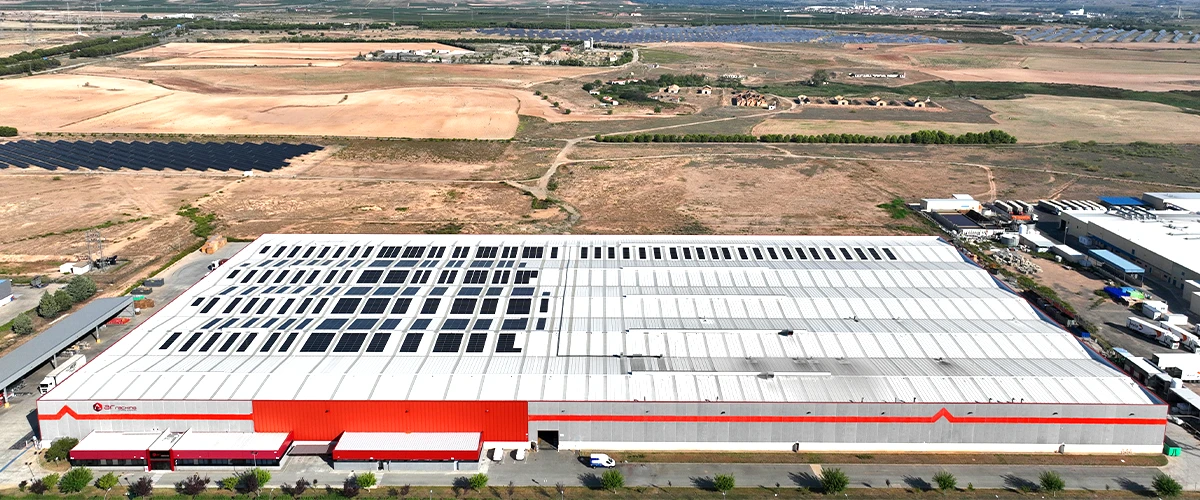
Alohatop Shelf LLC designs, calculates, manufactures and installs metal racking for warehouses and industrial loads. That vertical control matters for OEM/ODM buyers: one accountable team can align structural calculations, production tolerances, export packing and installation documentation.
Our production centre covers 35,000 m² with highly automated lines and more than 100,000 t of annual capacity. More than 90% of output is exported, and our teams support distributors and projects across 60+ countries, including seismic regions, cold-chain markets and fast-growing logistics hubs.
- 5-year warranty with component traceability from production batch to installation.
- R&D collaboration with Mondragon University and the University of the Basque Country.
- Engineering support for seismic, cold-store and automation-ready layouts.
- Export documentation, packing optimization and spare-parts planning.
Highly automated production centre with controlled manufacturing processes.
Annual steel capacity supports large OEM programs and distributor stock plans.
Export experience across different codes, climates, ports and installation models.
Practical project learning transferred into safer layouts and better export packing.
Laboratory testing and simulation support frame, beam and connection development.
Component traceability supports inspection, maintenance and warranty administration.
Backed by ISO management systems and structured quality controls.
Engineering, inspection, installation and maintenance support for long-term safety.
OEM/ODM Push Back Racking Buyer FAQ
These are the questions our export engineers answer most often from distributors, 3PLs, manufacturers and procurement teams comparing dense storage systems.
What is the difference between push back racking and drive-in racking?
Push back racking uses nested carts on rails, so each lane stores multiple pallets with LIFO retrieval. Drive-in racking stores pallets directly on rails and usually requires the forklift to enter the lane. Push back generally offers better lane-level access; drive-in usually provides higher density for homogeneous stock.
Can you supply OEM/ODM push back racking under our brand?
Yes. We support private-label and OEM/ODM programs with custom dimensions, RAL colors, brand plates, load signs, installation manuals, spare-parts lists and packing marks. Drawings and structural calculations can be prepared for the destination market and project requirements.
Which pallet sizes and load capacities can you handle?
We design for common export formats such as 1200 × 1000 mm, 1200 × 800 mm Euro pallets, 1100 × 1100 mm ISO pallets and project-specific sizes. Load capacity is calculated from pallet weight, beam span, frame depth, cart configuration and seismic demand rather than quoted as a single number.
How do you design for seismic zones and cold storage?
Our engineering team calculates base plates, anchors, bracing, row spacers, beam deflection and frame capacity against the project location and applicable code. For cold stores, we review steel grade, coating, anchor performance, cart maintenance and temperature-related clearances down to the required operating temperature.
What is your MOQ, lead time and export packaging approach?
MOQ depends on the configuration, project quantity and whether the order is a distributor stock program or a project-specific shipment. Export packaging is optimized for container fill, forklift handling and site sequencing, with marked bundles, component lists and installation drawings to reduce receiving errors.
What documentation is provided with an export order?
Typical documentation includes layout drawings, structural calculation notes where required, component lists, packing lists, load signs, installation instructions, warranty terms and traceability records. Certification packages and project-specific inspection documents can be quoted with the tender.
Send Your Pallet, Layout and Load Data
Share your building height, pallet size, maximum load, SKU profile, daily throughput, temperature range and destination city. Our engineers will use this information to recommend a safe, export-ready push back racking or hybrid storage solution.
Technical review available for distributor and project inquiries.