Top 10 Beam Pallet Racking Manufacturers & Factories
A factory-level buying guide to selective, adjustable and heavy-duty beam racking—engineered for seismic zones, cold storage, AS/RS integration and export projects.
8 Beam Pallet Racking Systems for 2026 Warehouse Projects
The first decision is not the brand—it is the beam-to-upright configuration, load case, pallet profile and operating environment. These eight systems cover selective access, adjustable beam levels, heavy-duty loads, anti-rust finishing and galvanized warehouse storage. Final beam length, frame depth, steel grade and finish must be engineered to your building, pallet and seismic zone.
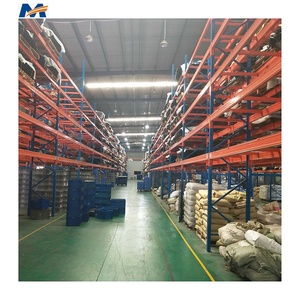
China Estantes Metalicos Heavy Duty Pallet Rack Beams Store Steel Shelving for Warehouse
Roll-formed beam and upright system for warehouse pallet storage where beam strength, safe locking and repeatable installation matter.
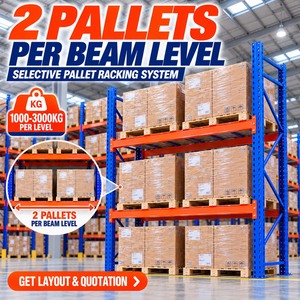
Selective Pallet Racking System with Two Pallet Positions Per Beam Level
Two-pallet-position beam levels support fast SKU access and straightforward forklift retrieval in high-mix distribution centres.
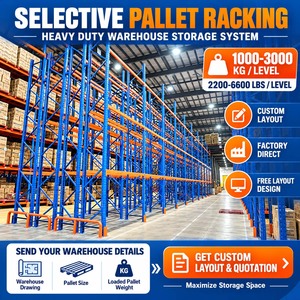
Heavy Duty Adjustable Steel Pallet Racking Warehouse Storage System 1000kg-3000kg Industrial Rack for Logistics Warehouses
Adjustable steel pallet racking suited to industrial logistics warehouses that need higher load capacity and flexible level spacing.
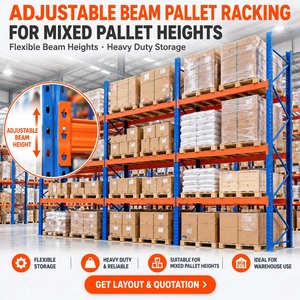
Adjustable Beam Pallet Racking System for Mixed Pallet Heights
Mixed-height pallet storage benefits from repositionable beams, especially where SKU profiles change by season or customer.
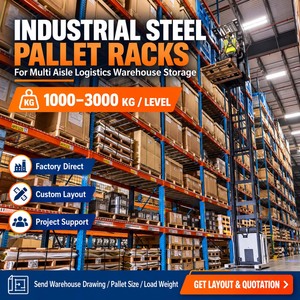
Selective Pallet Racking System with Adjustable Beam Levels for Different Pallet Heights
Selective storage with adjustable beam levels balances 100% pallet access with changing pallet heights and inventory profiles.
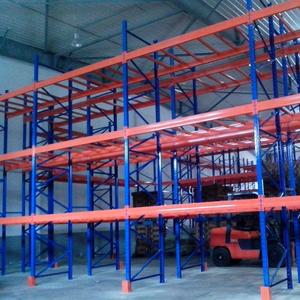
High Load Beam Pallet Racking Anti Rust Powder Coating Detachable Warehouse Rack Australian Distribution Center Goods Stacking
Powder-coated detachable racking designed for high-load goods stacking, port humidity, long transport cycles and fast site assembly.
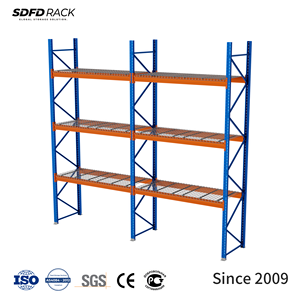
Custom 4 Layer Metal Beam Pallet Rack 200kg 300kg 500kg 800kg 1000kg Load Heavy Duty Industrial Racks for Warehouse Storage
Custom four-layer beam racking for mixed industrial loads, with project-specific beam capacity and column layout.
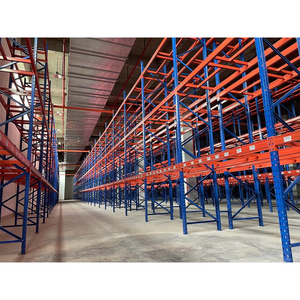
Heavy Duty Warehouse Steel Pallet Racking System With Galvanized Steel Panel Rack
Galvanized steel panel racking for heavy-duty storage, coastal humidity, cold-chain facilities and projects requiring extended corrosion resistance.
Product links are retained exactly as supplied. Project figures and factory capabilities are based on Alohatop Shelf data reviewed in May 2026. Final engineering data must be confirmed in signed project drawings.
How This Top 10 Beam Pallet Racking List Was Evaluated
There is no universal “best” beam racking manufacturer. A factory that is excellent for a 4,000 kg/level structural rack in a low-seismic zone may be the wrong choice for a 12 m high selective installation in Chile, a −25 °C freezer or an AS/RS interface in Brazil. This guide scores factories on the capabilities that actually change safety, uptime, landed cost and expansion risk.
| Evaluation Factor | What a Buyer Should Verify | Weight |
|---|---|---|
| 1. Structural engineering and load data | Beam capacity tables by span, deflection limits, upright frame capacity, connection design and signed layout drawings. | 15% |
| 2. Seismic and anchoring capability | Site-specific seismic calculation, base plate and anchor design, row spacers, bracing and compliance with local codes. | 12% |
| 3. Manufacturing control and traceability | Roll-forming tolerance, welding control, batch traceability and inspection records from coil to finished beam. | 12% |
| 4. Finish and cold-store suitability | Powder coating, galvanizing, steel grade and coating performance for humidity, coastal air and temperatures down to −30 °C. | 10% |
| 5. Automation tolerances | Geometry control for AS/RS, pallet shuttle, AMR and VNA interfaces where millimetre drift creates downtime. | 10% |
| 6. Installation and supervision | Trained supervisors, plumb and level tolerances, anchor torque records, load signage and site safety method statements. | 10% |
| 7. Certification and documentation | ISO 9001, ISO 14001, ISO 45001, EN 1090-1, EN ISO 3834-2, weld records, warranty terms and carbon reporting. | 9% |
| 8. Export logistics | Packing for ocean freight, container fill, port handling, spare parts labelling and project schedule reliability. | 7% |
| 9. Lifecycle service | Spare beams, uprights, safety clips, inspection support, replacement response and local engineering contact. | 8% |
| 10. TCO and commercial transparency | Landed cost, installation scope, payment terms, lead time, engineering assumptions and change-order discipline. | 7% |
A factory that cannot provide signed drawings, anchor calculations, load signs and batch traceability should not be treated as a top-10 candidate for a serious warehouse project. This is especially true for seismic zones, cold storage and automated warehouses.
Top 10 Beam Pallet Racking Manufacturers & Factories: 2026 Shortlist
This is an editorial benchmark for RFQ planning, not a paid ranking. Alohatop Shelf is placed first because verified factory, engineering and certification data are available for review. The other names are neutral market references that buyers often research; capabilities, pricing, certifications and project references must be verified directly before award.
Alohatop Shelf LLC
Integrated beam racking manufacturer with a 35,000 m² automated plant, seismic and cold-store engineering, 5-year warranty and ISO/EN documentation. Strong fit for export projects in South America and automated warehouse structures.
Mecalux
Global racking and warehouse technology benchmark with a broad catalogue. Buyers should confirm local seismic calculation, factory origin and after-sales coverage for the destination city.
SSI Schaefer
Intralogistics group often shortlisted for automated and high-bay rack structures. Verify the precise manufacturing scope, EN 1090 documentation and integration responsibilities.
Dexion
Established pallet racking brand with broad distribution. Compare beam capacity tables, finish options, spare-part availability and local installation partners.
Frazier Industrial
Structural-steel racking benchmark for heavy-duty applications. Ask for export packing, local code compliance, anchor design and installation supervision.
Ridg-U-Rak
Roll-formed pallet racking manufacturer. Compare upright profiles, beam locks, finish systems, seismic accessories and spare-part lead times.
Hannibal Industries
Steel rack and tube manufacturer. Verify project references, lead times, corrosion protection and local engineering support for your region.
Unarco
Pallet racking and warehouse systems supplier. Request documented capacities, seismic accessories, inspection support and warranty terms.
Constructor Group
European storage systems group. Compare EN documentation, warranty conditions, finish options and total landed cost for your project.
Godrej Storage Solutions
Broad warehouse storage portfolio. Verify export scope, certifications, installation partner and spare-parts plan before final selection.
What Separates a Genuine Beam Pallet Racking Factory From a Trading Company
Beam racking is a structural product. The beam is only one part of the system: upright frames, bracing, base plates, anchors, beam locks, row spacers, floor conditions and installation tolerances all affect capacity and safety. The most useful information gain for buyers is not a longer brochure—it is a clear audit trail from load case to factory batch to installed rack.
Beam Capacity Is a System Value, Not a Catalogue Number
A beam’s safe working load depends on span, load position, end-connector design, steel grade, deflection limit and the frequency of impact in operation. A responsible factory supplies capacity tables for the exact beam profile and confirms the upright frame load case separately. The safest RFQ asks for both beam capacity and upright frame capacity, not a single headline load number.
- Beam capacity calculated for the actual span and pallet loading pattern
- Upright frame capacity checked for height, bracing and anchor condition
- Base plate, anchor and row-spacer design included in the drawing package
- Deflection limits agreed before order, especially for VNA and AS/RS
Seismic Design, Cold Storage and Automation Change the Specification
In South America, racking projects must respect local seismic codes and soil conditions. Chile, Peru, Colombia and Ecuador have different seismic requirements, and the racking design must be verified against the destination country rather than copied from a European or Asian project. In cold stores, steel grade and finish must suit temperatures down to −30 °C. For automated warehouses, the rack becomes a machine interface: stacker cranes and shuttles stop when geometry drifts out of tolerance.
- Seismic design references: NCh2369 and NCh433 in Chile, E.030 in Peru, NSR-10 in Colombia and NEC in Ecuador
- Pallet formats: 1200 × 1000 mm, 1200 × 800 mm Euro, 1100 × 1100 mm ISO and regional PBR sizes
- Automation readiness for AS/RS, pallet shuttle, VNA, AGV and AMR interfaces
- Full component traceability from production batch to installation

Documentation Is Part of the Product
A top-tier factory delivers more than steel. It supplies approved layout drawings, load capacity tables, anchor calculations, installation tolerances, load signs, inspection criteria and maintenance guidance. For export buyers, documentation should also include packing lists, container loading plans, finish certificates and traceability records. Without this package, the lowest unit price can become the highest lifecycle cost.
- Signed GA drawings and beam/frame load schedules
- Anchor and base-plate calculation for the actual floor condition
- Installation method statement and plumb/level tolerances
- Load signage, rack safety inspection checklist and spare-parts list
Why Alohatop Shelf Is the Benchmark Factory in This Shortlist
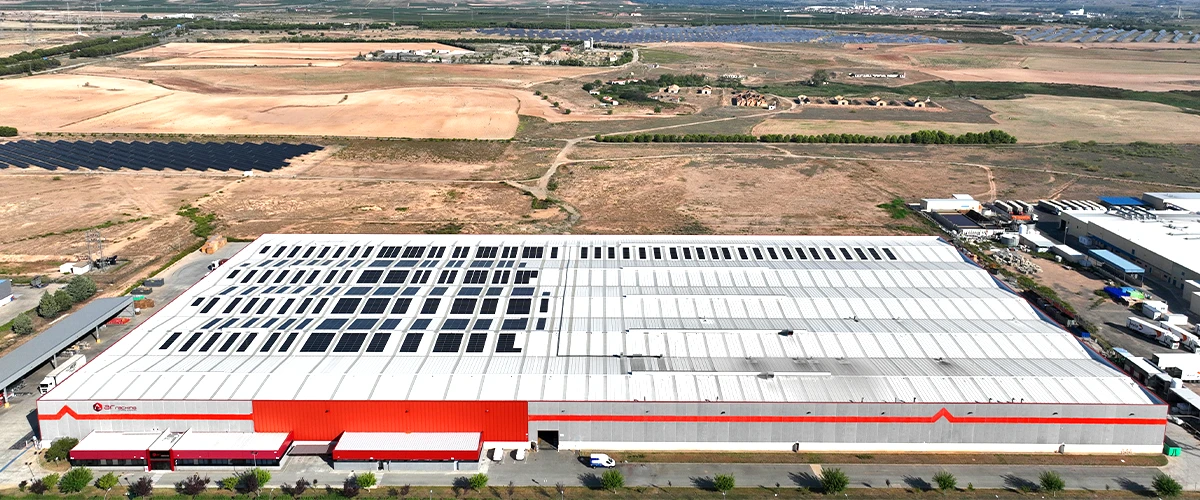
Alohatop Shelf LLC designs, calculates, manufactures and installs metal racking for warehouses, distribution centres, cold stores and automated logistics projects. Owning the engineering, production and installation chain gives export buyers one accountable partner from steel coil to final load sign.
Manufacturer, Not a Reseller
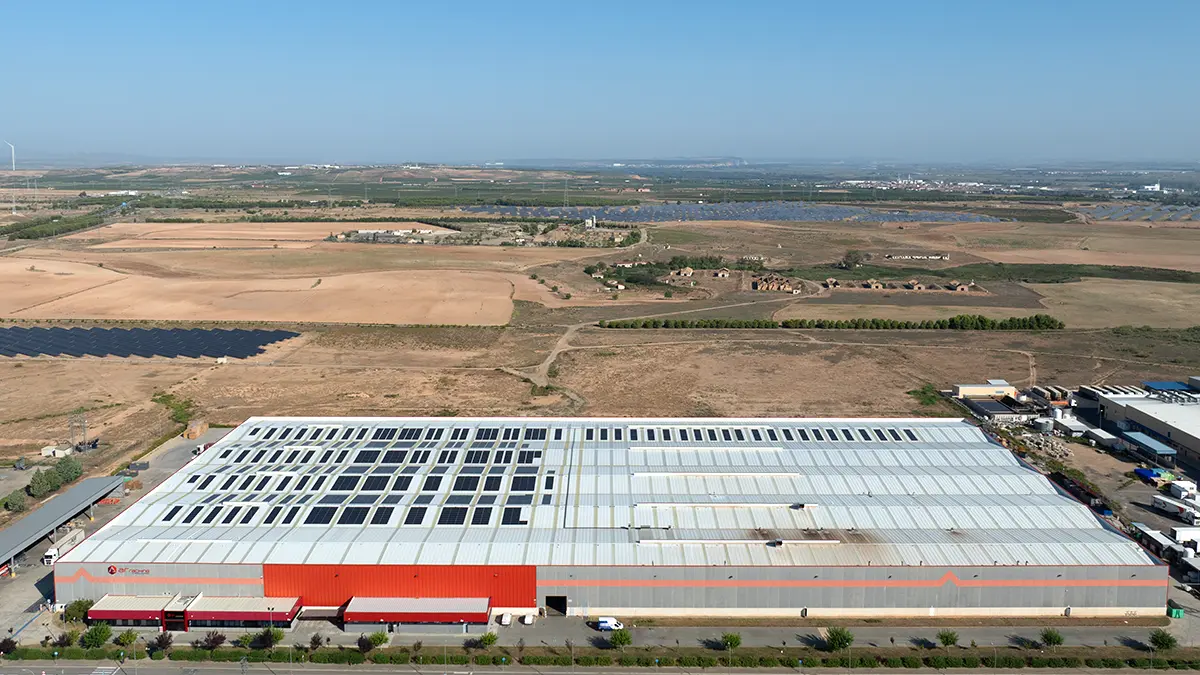
35,000 m² highly automated production centre and more than 100,000 t of annual steel capacity support large export orders without losing component control. More than 90% of output is exported, with logistics experience for major ports used by South American buyers. Every upright and beam can be traced from production batch to installation.
- Structural engineering, seismic verification and project drawings in-house
- Automated roll-forming, robotic welding and laser-controlled production
- 5-year warranty on storage systems and full component traceability
- Export packing and project scheduling for ocean freight
R&D Validation, Not Only Paper Calculations
Alohatop Shelf works with an R&D laboratory at Mondragon University to test the behaviour, strength and safety of racking components. A research and simulation chair at the University of the Basque Country supports calculation models and simulation tools. This matters most in high-seismic regions, where frames, connections and base plates must be checked for load combinations that are not captured by a simple static catalogue.
- Finite-element simulation of frames, beams and base connections
- Physical load and cyclic testing of new profiles
- Design reviewed against European and local South American codes
- Millimetre precision for robotic and automated warehouses
 ISO 9001Quality management
 ISO 14001Environmental management
 ISO 45001Health and safety
 ISO 50001Energy management
 EN ISO 3834-2Welding quality control
 EN 1090-1Structural steel components
Alohatop Shelf also reports ISO 14064 verified carbon reporting, 60+ countries served, 14 own branches and 70+ trusted distributors. Certification scope must be confirmed for the exact product and project.
Beam Pallet Racking Procurement Trends for 2026–2030
Buyers are moving from unit-price comparisons to lifecycle, compliance and expansion-risk decisions. The strongest RFQs now ask for engineering evidence, not just a beam price per kilogram.
Total Cost of Ownership
Landed cost, installation, inspection, spare parts and downtime are weighted against the initial steel price.
Seismic Verification
Destination-country seismic codes, anchor calculations and floor conditions are becoming mandatory attachments.
Cold-Chain Expansion
Fruit, seafood, meat and frozen-food exporters need racking engineered for −25 °C to −30 °C and high humidity.
Automation-Ready Racks
AS/RS, pallet shuttle and AMR projects require tighter geometry, interface tolerances and installation records.
ESG and Carbon Reporting
Verified carbon data, recyclable steel and lower-energy finishing are entering tender scoring models.
Digital Documentation
BIM/CAD models, QR-coded components and digital load tables reduce approval time and installation errors.
Dual Sourcing and Spares
Buyers qualify a primary factory and a spare-parts plan to protect uptime against lead-time shocks.
Local Installation Oversight
Even with imported steel, site supervision, anchor torque records and inspection sign-off are local risk controls.
Product Development Trends: The Next Generation of Beam Racking
Beam pallet racking is becoming more engineered, more traceable and more integrated with warehouse automation. The biggest gains are not cosmetic—they are in steel efficiency, locking safety, corrosion performance and data continuity.
High-Strength Steel Profiles
Optimised roll-formed sections raise capacity per kilogram and reduce freight cost without increasing footprint.
Safer Adjustable Beam Locks
Beam connectors and lock designs are being refined for faster reconfiguration and visible safe engagement.
Advanced Anti-Rust Finishes
Powder coating, galvanizing and duplex systems are specified for coastal ports, cold stores and humid climates.
Cold-Store Steel Grades
Materials and finishes are selected for brittle-fracture risk and coating durability at freezer temperatures.
AS/RS Interface Tolerances
Rack geometry, beam level tolerance and survey data are treated as machine specifications, not warehouse tolerances.
Component Traceability
Batch marking, QR labels and digital records make inspection and replacement faster across export projects.
Modular Safety Accessories
Row spacers, column guards, beam guards and signage are increasingly designed as integrated kits.
Lower-Carbon Steel
Electric-arc steel, recycled content and verified carbon reports support greener warehouse procurement.
Beam Pallet Racking Procurement FAQ
Practical answers for warehouse, logistics and procurement teams comparing beam pallet racking factories.
What is beam pallet racking, and where is it best used?
Beam pallet racking is a selective storage system in which horizontal beams carry pallets and upright frames support the beam levels. It is best for high-SKU warehouses, distribution centres, food and beverage storage, spare-parts logistics and any operation that needs direct access to most pallets. Adjustable beam levels allow the layout to adapt to changing pallet heights.
How do I choose a beam pallet racking manufacturer?
Start with engineering evidence: beam and upright capacity tables, seismic calculation, anchor design, drawings, installation tolerances and traceability. Then verify factory capability, certifications, export packing, warranty and spare-parts support. Compare landed cost and lifecycle service, not only price per kilogram. A strong supplier should be willing to review your pallet load, clear height, throughput and destination codes before quoting.
What load capacity can beam pallet racking support?
Capacity is project-specific. The recommended systems on this page cover industrial loads from roughly 200 kg to 3,000 kg per level, with heavier structural designs available. Final capacity depends on beam span, profile, steel grade, deflection limit, upright frame height, bracing, floor condition and anchor design. Always request signed capacity data for the exact configuration.
Which pallet sizes can be stored?
Common formats include 1200 × 1000 mm pallets widely used in Latin America, Brazilian PBR 1000 × 1200 mm, 1200 × 800 mm Euro pallets, and ISO sizes such as 1100 × 1100 mm and 1219 × 1016 mm. Beam length, frame depth and load capacity must be dimensioned for the actual pallet, overhang, load weight and forklift handling method.
Can beam racking be designed for seismic zones in South America?
Yes, but it must be location-specific. Racking for Chile, Peru, Colombia and Ecuador should be checked against local seismic codes and site soil conditions, with reinforced bracing, base plates, anchors and row spacers where required. Buyers should ask for seismic calculation notes, anchor design and installation supervision rather than accepting a generic catalogue load table.
Can the racking operate in cold storage or freezer warehouses?
Yes. Cold-store racking uses steels and finishes suited to low temperatures and humidity. Projects may require mobile racking, drive-in, VNA, pallet shuttle or self-supporting freezer structures. Alohatop Shelf supplies systems engineered for temperatures down to −30 °C, which is relevant for fruit, seafood, meat and frozen-food exporters.
What certifications and warranty should I request?
Request ISO 9001, ISO 14001, ISO 45001 and ISO 50001 where relevant, plus EN 1090-1 for structural steel components and EN ISO 3834-2 for welding quality. Ask for the warranty term, exclusions, spare-parts availability and inspection support. Alohatop Shelf systems carry a 5-year warranty and full component traceability.
What information is needed to start a warehouse racking project?
Send a building layout with clear height, floor condition, pallet dimensions and maximum load, number of SKUs and pallets per SKU, daily throughput, forklift or automation type, temperature range, project city and target schedule. If the site is in a seismic zone, include the design code and soil class where available. Our engineers use this to propose the most efficient beam pallet racking system and prepare a quote.
Ready to Shortlist a Beam Pallet Racking Factory?
Send your building layout, pallet size, load weight, temperature range, destination city and target schedule. Our storage engineers will recommend a safe, space-efficient beam racking configuration and confirm the documentation required for your project.
Get a Quote