Eight Racking & Shelving Systems Buyers Compare Most Often
The product families below address the eight storage questions our engineers see most often when shortlisting industrial racking and shelving manufacturers and suppliers: gravity flow, cantilever, pipe and tube storage, heavy-duty pallet racking, boltless shelving, mezzanine and irregular-load racking. Every product link below is preserved exactly as supplied.
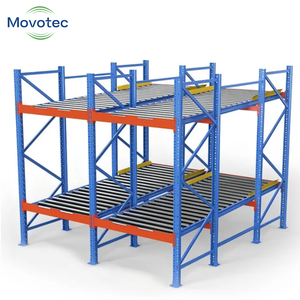
Warehouse Storage Racks Shelving Systems Pallet Rack Gravity Roller Flow Racking Movotec MTG100 1 Year Warranty
Best for: FIFO pallet flow, fast-moving inventory and high-throughput picking lanes.
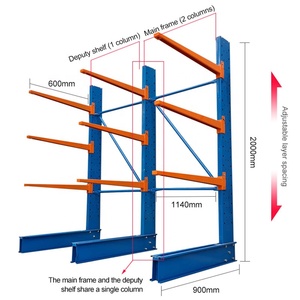
Topeasy Customized Powder Coated Indoor Storage Heavy Duty Rack Cantilever Shelving Cantilever Racking
Best for: Long, bulky and irregular loads that do not fit conventional pallet racking.
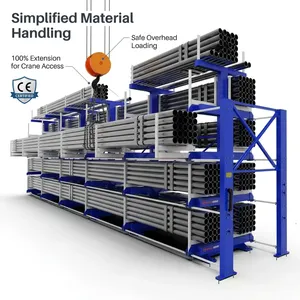
Double Sided Telescopic Cantilever Rack Manual Crank 100% Extension Steel Tube Pipe Storage Crane Access CE Certified
Best for: Pipe, tube and bar stock requiring crane access and full-extension handling.
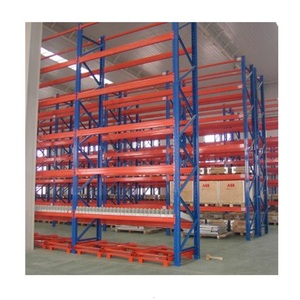
Industrial Heavy Duty Rack Factory Price Steel Pallet Racking Storage Systems From Warehouse Pallet Rack Manufacturer
Best for: High-bay pallet storage where strength, price and delivery speed must align.
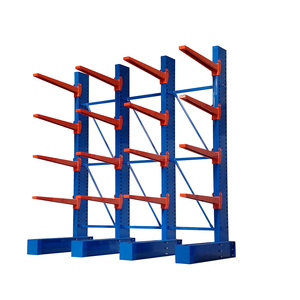
Industry Warehouse Steel Structural Pipe Rack Cantilever Rack for Pipe / Lumber Storage
Best for: Lumber, pipe and structural steel yards with mixed load lengths.
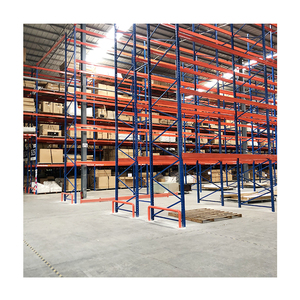
Heavy Duty Warehouse Pallet Rack Industrial Storage Shelf Metal Racking Systems Boltless Steel Shelving
Best for: Flexible industrial shelving, pallet storage and fast reconfiguration.
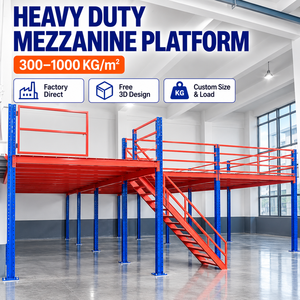
Heavy Duty Steel Mezzanine Floor Rack System for Warehouse Storage
Best for: Vertical expansion when floor area cannot grow but cubic capacity can.
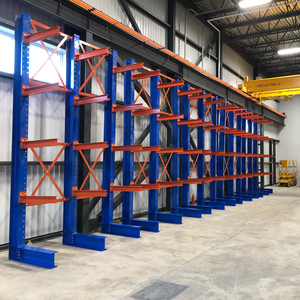
Heavy Duty Adjustable Corrosion Protected Industrial Warehouse Storage Steel Cantilever Rack for Irregular Goods Indoor/Outdoor
Best for: Outdoor or humid environments needing adjustable arms and corrosion protection.
Supplier Capacity at a Glance
Industrial racking is a safety-critical structure, not a commodity shelf. These company-level indicators matter when a buyer is narrowing a long list of suppliers to a short list of manufacturers.
Countries with installed storage systems
Warehouse projects delivered
Annual steel production capacity
Of production exported worldwide
Why the “Top 10” Query Is Really a Qualification Problem
Most procurement teams searching for the Top 10 Industrial Racking And Shelving Manufacturer & Suppliers are not looking for a popularity contest. They are trying to reduce three risks: structural failure, project delay and hidden lifecycle cost.
Results for this query usually mix three very different business models. A manufacturer controls profiles, welding, inspection, tolerances and component traceability. A distributor or stockist may offer fast delivery of standard bays but has less control over structural assumptions. A turnkey integrator may coordinate automation, permitting and installation but source the steel structure from another party. None of these models is automatically better; the mistake is comparing them as if they were the same.
For a warehouse owner, the strongest shortlist usually combines engineering responsibility, manufacturing control and installation supervision in one accountable chain. That is why the most useful “top 10” is not a fixed list of company names. It is a scorecard that forces every candidate to answer the same questions about seismic calculation, steel traceability, automation tolerances, cold-store performance and post-installation inspection.
Alohatop Shelf fits the manufacturer profile: its team designs, calculates, manufactures and installs metal racking for warehouses and loads, with a 35,000 m² highly automated production centre, more than 100,000 t of annual capacity and full component traceability. For buyers sourcing across South America, that vertical integration is directly relevant to freight planning, spare-part availability and long-term rack safety.
The 10-Point Framework We Use to Evaluate Racking Manufacturers
Use these ten checks to compare suppliers on evidence rather than brochure language. Each point maps to a real failure mode in warehouse projects.
1. Design responsibility
Ask who signs the structural calculation. A serious manufacturer models frames, beams, anchors and bracing against the destination seismic code.
2. Own manufacturing
Automated roll-forming, robotic welding and batch-level traceability reduce tolerance drift and make component replacement predictable years later.
3. Product breadth
The shortlist should cover selective pallet racking, cantilever, flow, mezzanine and picking systems without hiding subcontracting.
4. Automation-ready tolerances
AS/RS, miniload and AMR interfaces demand millimetre control. Verify how the supplier holds plumb, beam level and frame tolerances.
5. Cold-storage proof
For fruit, seafood, meat and frozen food, check steels, finishes and installation methods proven to −30 °C.
6. Safety evidence
ISO 9001, ISO 45001, EN 1090-1, EN ISO 3834-2 welding quality, load signage and a clear warranty are minimum filters.
7. R&D and testing
Laboratory validation and university partnerships reveal whether a profile is engineered or simply value-engineered.
8. Installation supervision
Export racking is only as good as its anchoring. Confirm who supervises torque checks, plumb tolerances and final load sign-off.
9. Lifecycle inspection
Rack damage is cumulative. A supplier offering inspection, component replacement and reconfiguration protects uptime and safety.
10. TCO and ESG data
Compare freight, installation, inspection, energy use and verified carbon reporting, not just price per bay.
Why Alohatop Shelf Merits a Place on the Shortlist
Industrial racking manufacturers differ in how much of the value chain they actually control. Alohatop Shelf controls design, structural calculation, manufacturing, testing and installation support — the points where project risk is either removed or transferred to the buyer.
Vertically integrated production
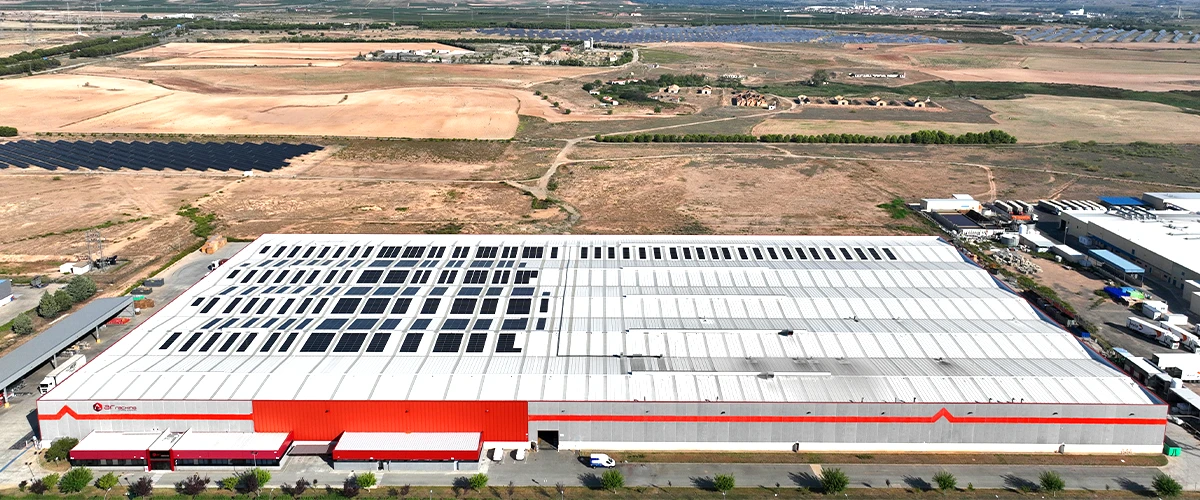
35,000 m² highly automated production centre with more than 100,000 t of annual steel capacity.
R&D-led engineering
Testing and simulation with Mondragon University and a research chair at the University of the Basque Country.
Export and installation network
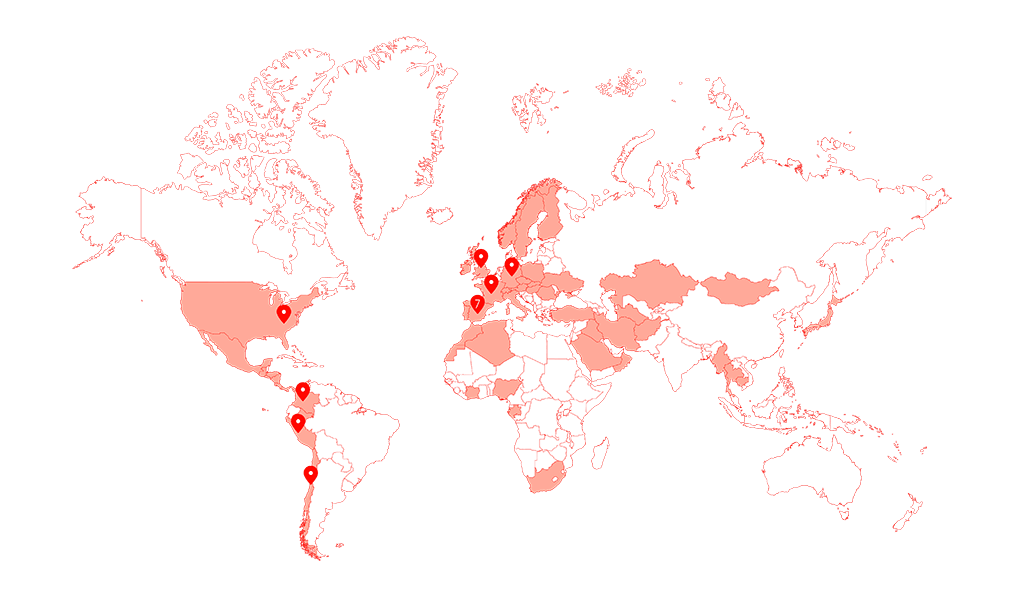
60+ countries served, 14 own branches and 70+ trained distributors supporting installation and service.
Certified quality and warranty
5-year warranty, full component traceability and production under recognised management and welding standards.
One Accountable Partner From Steel Coil to Commissioning
Alohatop Shelf LLC designs, calculates, manufactures and installs metal racking for all types of warehouses and loads. Owning every step — from steel coil to final load sign — means one accountable partner for export buyers, 3PLs, cold-chain operators and manufacturers.
- Full traceability of every upright and beam, from production batch to installation.
- Export logistics experience to major ports including Santos, Callao, San Antonio, Cartagena and Buenos Aires.
- Robotic production and laser-controlled processes that keep frames and beams within AS/RS integrator tolerances.
Engineering Validated in Laboratory, Not Just on Paper
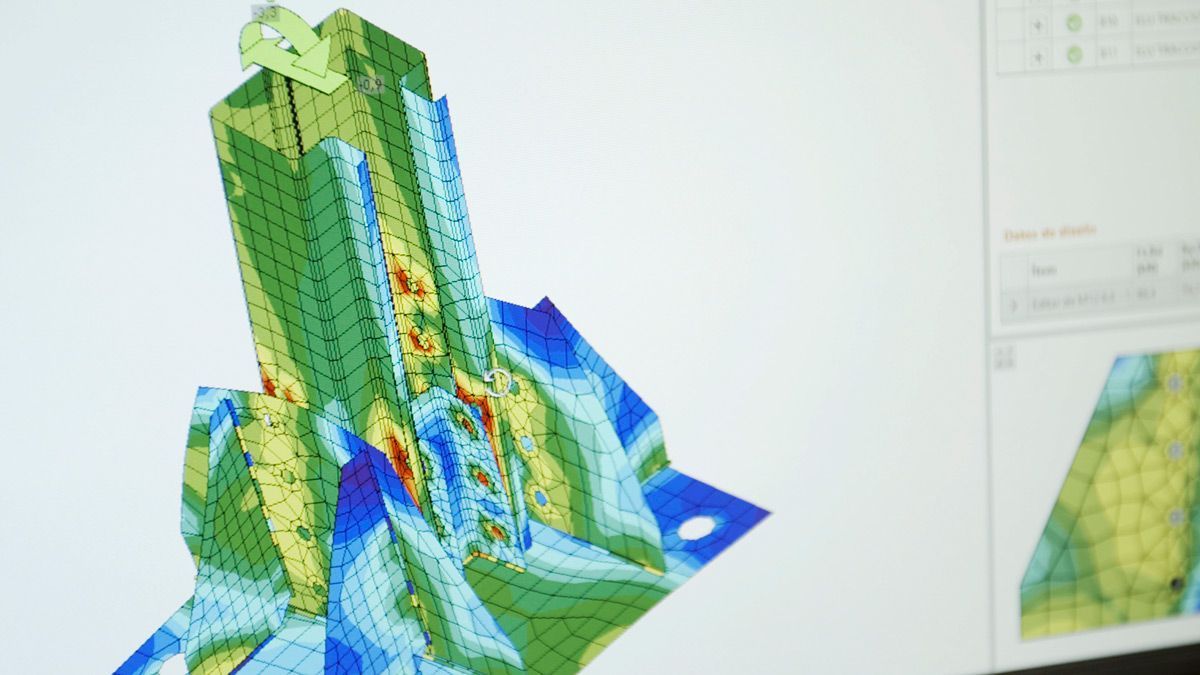
The in-house technology centre works with an R&D laboratory at Mondragon University to test the behaviour, strength and safety of racking components under real load cases. A research and simulation chair at the University of the Basque Country develops calculation models and simulation tools — knowledge transferred directly into frames, beams and connections designed for high seismic demand.
- Finite-element simulation of frames, beams and base connections.
- Physical load and cyclic testing of new profiles.
- Design reviewed against European and local South American codes.
Export-Ready Support for South American Warehouses
Seismic zones along the Andes, tropical humidity, agro-export cold chains and fast-growing e-commerce are not generic design conditions. They change bracing, anchoring, finishes, aisle strategy and installation sequencing. Alohatop Shelf coordinates export projects through its own supervisors and a network of trained distributors across Brazil, Chile, Peru, Colombia, Argentina, Ecuador, Uruguay and Paraguay.
 ISO 9001Quality management
 ISO 14001Environmental management
 ISO 45001Health & safety
 ISO 50001Energy management
 EN 1090-1Structural steel
 ISO 14064Verified carbon data
How Industrial Racking Is Evolving Through 2030
The next generation of warehouse structures will be judged less on static capacity and more on resilience, energy intensity, automation compatibility and measurable sustainability.
Seismic resilience as a design input
Chile, Peru, Colombia and Ecuador are pushing buyers toward code-specific frame bracing, heavier base plates, row spacers and reduced beam deflection limits.
Cold-chain density and energy cost
Mobile, VNA, drive-in, shuttle and self-supporting freezer warehouses reduce cooled cubic metres per pallet, a critical metric for food exporters.
Rack as automation infrastructure
AS/RS, miniload, pallet shuttle and AMR-ready layouts turn the rack structure into part of the automation system, not a separate purchase.
Low-carbon steel and circular design
Verified carbon reporting, reusable components and design for reconfiguration are becoming part of the technical submission, not a marketing extra.
How Warehouse Teams Will Buy Racking in the Next Cycle
Procurement is shifting from unit-price comparison to total cost of ownership, digital data exchange and lifecycle risk allocation.
TCO replaces price per bay
Freight, installation, inspection, downtime and reconfiguration costs will be compared alongside the steel price.
Data-first RFQs
Buyers will send layout files, pallet data, throughput profiles and destination-port constraints instead of generic product enquiries.
Integrator-ready procurement
Racking suppliers will be expected to coordinate tolerances with stacker crane, shuttle and AMR vendors before the steel is rolled.
Lifecycle and ESG contracts
Inspection schedules, spare-part availability and verified carbon data will be written into supplier agreements, not requested separately.
Matching Racking Systems to Operational Requirements
A quick engineering comparison used in early layout studies. Final selection depends on SKU profile, throughput, building height, fire strategy and seismic zone.
| System | Best for | Density | Direct access | Rotation |
|---|---|---|---|---|
| Selective pallet racking | High SKU mix, food and beverage, retail DCs | Medium | 100% of pallets | Any |
| Very narrow aisle (VNA) | Expensive land, cold stores, tall buildings | High | 100% of pallets | Any |
| Double-deep racking | 3PL with two or more pallets per SKU | Medium–high | 50% | LIFO per lane |
| Drive-in racking | Homogeneous products, frozen goods | High | Low | LIFO / FIFO if drive-through |
| Mobile pallet racking | Cold storage, high value per cooled m³ | High | 100% with one open aisle | Any |
| Pallet flow | Perishables, fast-moving inventory | High | Per lane | FIFO |
| Push-back racking | Manufacturing buffers, mid-volume SKUs | Medium–high | Per lane | LIFO |
| Pallet shuttle / AS/RS | High-throughput DCs, deep cold lanes, 24/7 sites | Very high | Per lane or automated | FIFO, LIFO or WMS-controlled |
Racking Manufacturer & Supplier Questions Buyers Ask Most Often
Direct answers for warehouse, logistics and procurement managers comparing industrial racking suppliers.
Does a “Top 10” list identify the best racking manufacturer for my project?
No single ranking fits every warehouse. A top 10 list is useful for discovery, but the final shortlist should be built from project-specific criteria: seismic zone, pallet size, load weight, throughput, cold-store temperature, automation interface and local installation support. Use a scorecard, not a popularity order.
How do I compare a racking manufacturer with a trading supplier?
Ask who controls the design calculation, owns the manufacturing line, performs welding inspection, issues traceability records and supervises installation. A manufacturer can usually answer these directly. A trading supplier may source from third parties, so the responsibility chain needs to be written into the contract.
What information should I prepare before requesting a racking quotation?
Send the building layout with clear height, pallet dimensions and maximum load weight, number of SKUs and pallets per SKU, daily throughput, forklift or automation type, temperature range and project city. For export projects, include the destination port and required delivery sequence.
How is industrial racking designed for seismic zones in South America?
Racking is calculated against the local seismic code and site soil class: NCh2369 and NCh433 in Chile, E.030 in Peru, NSR-10 in Colombia, NEC in Ecuador and INPRES-CIRSOC 103 in Argentina. Typical measures include reinforced uprights and bracing, heavier base plates and anchors, row spacers and reduced beam deflection limits.
Can one supplier deliver cold storage, cantilever and heavy-duty pallet racking?
Yes, provided the supplier has the product breadth and manufacturing control to avoid forcing every project into one system. Alohatop Shelf supplies selective, VNA, drive-in, mobile, pallet shuttle, cantilever, mezzanine and self-supporting freezer structures, using steels and finishes suited to temperatures down to −30 °C.
What warranty and certifications should I expect from a racking manufacturer?
Look for a clear 5-year warranty, full component traceability, ISO 9001, ISO 14001, ISO 45001, ISO 50001, EN 1090-1 and EN ISO 3834-2 welding quality. Verified carbon reporting such as ISO 14064 is increasingly requested by ESG-focused buyers and their logistics customers.
Request a Project-Specific Racking Catalogue
Share your building height, pallet size, load, throughput and destination port. Our engineers will map the right system, seismic requirements and delivered cost for your warehouse.
Get CatalogOr email [email protected] with your layout and load data.