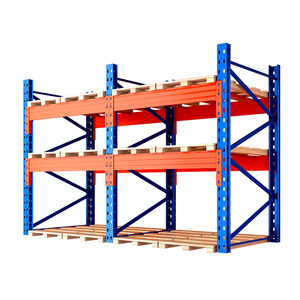
Pallet Racking
Industrial Heavy Duty Warehouse Pallet Racking System
Stacking units and selective frames dimensioned for multi-tonne loads, shipped knocked-down to keep 40HQ container utilisation high.
Eight export-ready systems form the backbone of our longspan and pallet-racking catalogue. Every frame, beam and deck is roll-formed, robot-welded and load-tested in the same 35,000 m² automated plant — so a single purchase order can cover a full warehouse, from manual longspan picking levels to dense drive-in pallet lanes.
Stacking units and selective frames dimensioned for multi-tonne loads, shipped knocked-down to keep 40HQ container utilisation high.
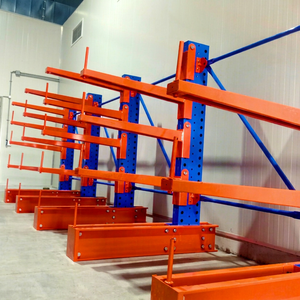
Column-free front access for pipes, profiles, panels and timber — the classic answer to oversized long-load storage.
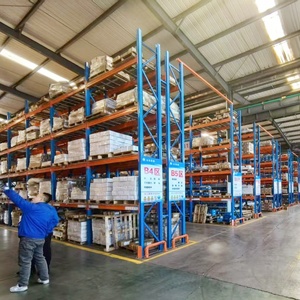
800–3000 kg per level, adjustable on a 50 mm pitch, giving 100% immediate access to every pallet in the aisle.
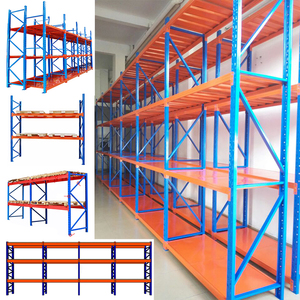
Cold-rolled sections engineered for 1600–1900 kg duty cycles, built for 24/7 distribution centres and high-turnover depots.
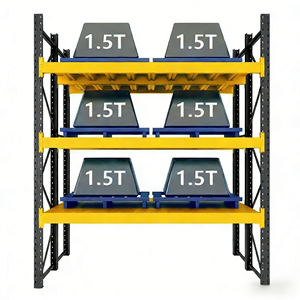
Private-label colours, branded load plates and bespoke bay widths for distributors running their own shelving programmes.
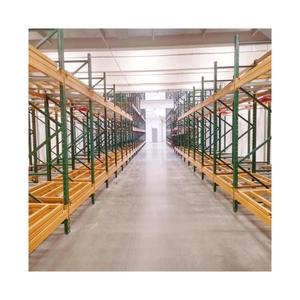
Gravity-rail carts store pallets two to five deep with LIFO rotation, raising density without widening the working aisle.
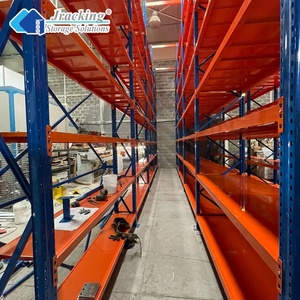
Beam lengths and frame depths set precisely to the 1200 × 800 mm Euro pallet used by European and export-driven 3PLs.
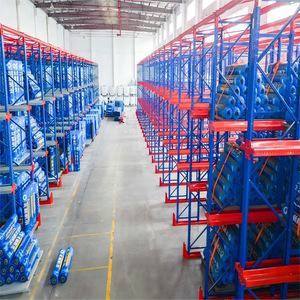
Dense drive-in lanes for paper rolls, film reels and homogeneous pallet batches, frequently specified for cold-store interiors.
Longspan shelving looks simple from the outside: two frames, a long beam, a steel or timber deck. In reality, the load capacity printed on a bay is the end result of a long chain of decisions — steel grade, profile thickness, weld penetration, the geometry of the beam-to-frame connector, frame plumbness, base-plate thickness, anchor specification and powder-coat adhesion. Weakening any single link quietly removes safety margin that nobody notices until the rack is loaded to its declared limit.
A large share of the shelving we are asked to inspect in export markets was never designed in a laboratory. It was reverse-engineered from a catalogue drawing, produced without load testing, and shipped without a calculation report. When a landlord, an insurer, a fire officer or a seismic authority asks for evidence, that supply chain simply cannot answer.
That distinction is the whole basis of E-E-A-T in industrial sourcing: experience of real installations, genuine engineering expertise, the authority of certified production, and the trustworthiness of full component traceability. Everything in this guide is written from that position — a factory that ships shelving, not a broker that resells it.
Use this checklist as a scoring sheet the next time you shortlist longspan shelving suppliers. Each factor is verifiable during a factory audit or a document review.
Owning the forming lines keeps profile tolerance tight and repeatable across a full 40HQ container, instead of drifting between subcontractors.
Every beam and upright should be backed by a structural calculation and, where required, physical test data rather than a copied illustration.
Racking in Chile, Peru, Colombia and Ecuador is calculated against NCh2369, E.030, NSR-10 and NEC — with reinforced bracing and heavier anchors specified at design stage.
Phosphating plus a powder coat of 60 µm or more, verified by salt-spray testing, is what survives tropical humidity and a six-week sea voyage.
Most delivered damage happens during packing and unstuffing, not on the production line — corner protection, banding and bundle design matter as much as the steel.
Nested uprights and correctly sequenced bundles can lift payload per 40HQ by a meaningful margin, directly reducing landed cost per bay.
Batch numbers on uprights and beams link every component back to a production date, a steel heat number and an installation drawing.
ISO 9001, 14001, 45001 and 50001, together with EN 1090-1 and ISO 3834-2, define who is qualified to weld which joint — they are not wall decoration.
Drawings, anchor torque specifications, supervisor sign-off and a spare-parts pipeline protect the asset for the fifteen years that follow delivery.
Freight, duty, currency exposure and lead-time risk decide real cost — not the FOB figure on page one of the offer.
Buying behaviour has shifted faster than product design. These six movements are already visible in the enquiries reaching our engineering desk.
Buyers increasingly tender a complete warehouse layout — heights, pallet profiles, throughput — instead of ordering standard bays from a price list, which favours factories that can engineer.
Sourcing is spreading across Vietnam, Mexico, Türkiye and Brazil. Wholesalers now qualify two or three manufacturing bases to de-risk tariffs and freight disruption.
Aisle clearances, floor tolerance and pick-face geometry are now specified for AGVs and AMRs from day one, even where automation is two or three years away.
Fruit, seafood, meat and frozen-food exporters keep pushing freezer capacity, driving demand for galvanised finishes and steels qualified below −30 °C.
Steel is close to 100% recyclable and racking is routinely relocated — buyers now price a fifteen-year asset, not a one-off purchase order.
Load plates, inspection records and spare-part references are moving to QR labels on the frame, linking the physical asset to a permanent digital file.
Longspan shelving is a mature category, yet four engineering shifts are redefining how a modern bay is built, specified and priced.
Higher yield grades let manufacturers achieve the same capacity with lighter profiles — reducing freight weight per container without softening the safety factor. Buyers should demand the grade and thickness in writing, not just the load figure.
Interlocking beam-to-frame connectors cut installation labour dramatically. On export projects where a local crew installs the system, assembly speed is often worth more than the smallest achievable unit price.
Ground-level pallet positions combined with longspan pick levels above are increasingly common in 3PL warehouses, squeezing manual picking and reserve stock into one footprint.
Stacker cranes and shuttles stop when rack geometry drifts out of tolerance. Laser-controlled production holds frames within the millimetre band that automated interfaces require — and makes manual installations faster and safer at the same time.
Alohatop Shelf LLC designs, calculates, manufactures and installs metal racking for warehouses of every size and load profile. Because we control the entire chain — from steel coil to the final load sign — a South American distributor or end user deals with one accountable partner instead of five intermediaries.
The questions our engineers answer most often for warehouse, logistics and procurement managers before a purchase order is raised.
Both. We manufacture and export directly to end users and project contractors, and we also supply wholesale volumes to distributors and racking integrators who resell under their own brand. Wholesale partners receive neutral packaging, OEM load plates and dedicated account engineering support.
Because production is continuous rather than batch-based, a mixed 40HQ container of longspan shelving is a practical minimum. Standard lead time is around 20 to 30 working days after drawing approval, plus sea transit time. Larger projects with seismic calculations require engineering sign-off before production release.
Yes. Racking in Andean and Pacific-coast markets is calculated against the local seismic standard and site soil class — NCh2369 and NCh433 in Chile, E.030 in Peru, NSR-10 in Colombia and NEC in Ecuador. Typical measures include reinforced uprights and bracing, heavier base plates and anchors, row spacers and reduced beam deflection limits.
All common formats: the 1200 × 1000 mm pallet widely used in Latin America (including the Brazilian PBR 1000 × 1200 mm), the 1200 × 800 mm Euro pallet favoured by European exporters, and ISO formats such as 1100 × 1100 mm and 1219 × 1016 mm. Beam lengths and frame depths are dimensioned for your actual pallet and load.
Yes. We supply drive-in, very narrow aisle, pallet shuttle and mobile configurations using steels and finishes suited to temperatures down to −30 °C. This is a critical requirement for fruit, seafood, meat and frozen-food exporters who need capacity inside an expensive cooled envelope.
Systems carry a 5-year warranty and are produced under ISO 9001, ISO 14001, ISO 45001, ISO 50001, UNE EN ISO 3834-2 welding quality, EN 1090-1 and ISO 14064 verified carbon reporting, with full component traceability from steel heat number to installation record.
Uprights are bundled with timber and cardboard edge protection, beams are strapped in nested packs, and accessories are crated separately. Loading plans are issued with the packing list so the receiving team can unload in the reverse sequence. Damaged-in-transit rates on our export lanes stay in the low single digits.
Send a building layout with clear height, pallet dimensions and maximum load weight, the number of SKUs and pallets per SKU, daily throughput, forklift or automation type, temperature range and the project city. Our engineers use this data to propose the most space-efficient and structurally sound system — usually within a few working days.
Share your layout and load data. Our storage engineers will return a dimensioned, code-compliant recommendation for your site — longspan pick levels, pallet lanes or a hybrid of both — with a transparent landed-cost breakdown.
Contact Us