Top 10 Pallet Racking Industrial Factories & Supplier
A 2026 buyer’s whitepaper for warehouse managers, 3PL operators, EPC contractors and procurement teams comparing industrial pallet racking factories, suppliers and factory-direct storage systems. This guide converts a high-intent supplier search into a 10-point audit framework, 8 engineered product recommendations, procurement trends, product development insights and practical FAQs.
Warehouse projects delivered
Countries with installed storage systems
Annual steel production capacity
Of production exported worldwide
What Makes a Top 10 Pallet Racking Industrial Factory & Supplier?
The phrase Top 10 Pallet Racking Industrial Factories & Supplier is a high-intent commercial query, but a simple ranked list is not enough for a serious CAPEX decision. A factory can quote a low price per beam and still create downstream cost through weak seismic calculations, inconsistent upright tolerances, delayed container loading, missing load signs or unclear warranty responsibility. This framework evaluates a supplier as a complete project system: engineering, steel production, surface treatment, export logistics, installation supervision, inspection and lifecycle support.
Engineering Authority
Ask for structural calculations, load combinations, anchor design and drawing approvals. A factory that only sells beams without project engineering is a trading layer, not a technical partner.
Automated Production
Robotic roll-forming, laser cutting and controlled welding reduce upright pitch errors that can stop AS/RS cranes, delay installation or compromise beam engagement.
Seismic & Local Code Capability
For Chile, Peru, Colombia and Ecuador, confirm experience with NCh2369, E.030, NSR-10 and NEC. The design must reference site soil class, anchors, bracing and row spacers.
Surface Treatment
Powder coating, galvanization and cold-store-compatible finishes affect service life. Ask for coating thickness, adhesion tests and examples in humid or freezer environments.
Component Traceability
Every upright, beam and safety accessory should carry a batch reference. Traceability simplifies warranty claims, periodic inspections and future reconfiguration.
Safety Integration
Back stoppers, column protectors, load signs, beam locks and pallet stops are not optional extras. They should be included in the quoted bill of materials, not added later.
Export Capability
Check export packing, container loading plans, port experience and documentation for Santos, Callao, San Antonio, Cartagena or Buenos Aires. Export experience protects lead times.
Installation Support
Approved drawings, plumb tolerances and load signage matter. Confirm whether supervisors, method statements, torque checks and inspection checklists are included.
Lifecycle Services
A top supplier provides inspection, maintenance and spare parts after handover. Rack safety is a lifecycle obligation, not a one-off delivery event.
Verified ESG Evidence
ISO 14064 carbon reporting, ISO 14001 environmental management and ISO 45001 safety management are increasingly requested in corporate procurement and tender scoring.
8 Factory-Direct Pallet Racking Products Recommended for 2026–2030 Procurement
The product set below covers the core configurations requested in warehouse RFQs: conventional selective racking, heavy-duty storage, adjustable multi-layer systems, back-stopped racks, Euro-standard racking, mezzanine structures and galvanized systems for humid or cold environments. Each link preserves the original product URL so buyers can move from this semantic guide to a detailed specification, drawing request or commercial comparison. Use the cards as a starting point for value engineering; final beam lengths, frame depths, upright capacities and anchor details should always be confirmed by a structural calculation for the actual pallet, building and seismic zone.
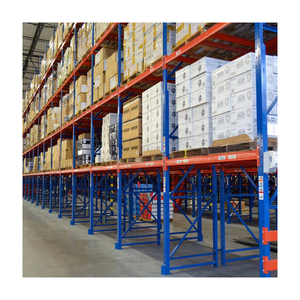
Wholesale Price Heavy Duty Storage Racks Warehouse Stacking Racks Selective Steel Pallet Rack Heavy-Duty Racking for Sale
A cost-effective heavy-duty selective system for high-mix warehouses. It supports direct access to every pallet and suits 3PL, food and retail distribution when beam lengths are calculated for the actual pallet and load.
- Load range1,000–4,000 kg/level*
- Access100% selective
- Pallet1200×1000 / 1200×800
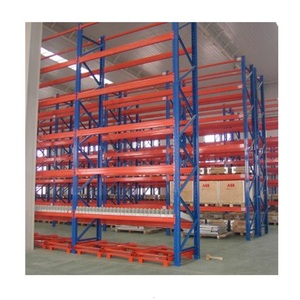
Industrial Heavy Duty Rack Factory Price Steel Pallet Racking Storage Systems From Warehouse Pallet Rack Manufacturer
A factory-priced industrial racking system designed for warehouse storage projects that need robust uprights and repeatable production quality. Ideal for RFP comparison and multi-bay installations.
- Best forHeavy-duty storage
- FormatSelective racking
- FinishPowder coated
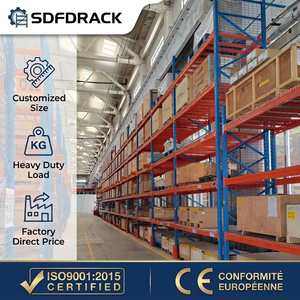
5 Layer Adjustable High Quality Heavy Duty Pallet Racks Industrial Steel Pallet Racking System High Load Warehouse Storage Rack
A five-layer adjustable pallet racking solution for high-load warehouse storage. Adjustable beam levels support changing SKU profiles and future reconfiguration without replacing the full structure.
- LevelsUp to 5 layers
- AdjustabilityPitch-adjustable beams
- UseHigh-load storage
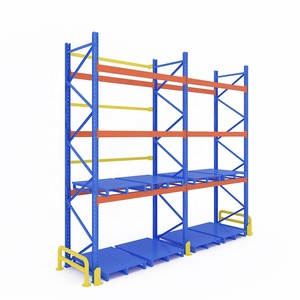
Warehouse Storage Industrial Pallet Rack with Back Stopper
A selective pallet rack with back stopper for warehouses where pallet push-through risk must be controlled. The back stopper protects aisle safety and supports disciplined pallet placement.
- SafetyBack stopper
- AisleSelective access
- UseIndustrial storage
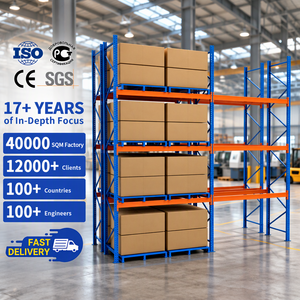
Heavy Duty Industrial Pallet Rack High Loading Multi-Level Metal Shelves Units Warehouse Steel Selective Pallet Racking System
A multi-level selective racking system for warehouses that need high loading and fast access. Suitable for distribution centres where SKU variety is high and forklift access is essential.
- StructureMulti-level
- AccessSelective
- OperationForklift access
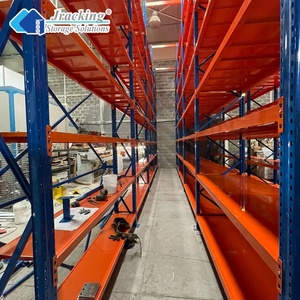
Jracking EURO Standard Warehouse Storage Racks Heavy Duty Steel Pallet Racking System for Distribution
A Euro-standard heavy-duty racking system for distribution warehouses. It suits buyers comparing European-style dimensions with export project requirements and long-term expansion plans.
- StandardEURO
- DutyHeavy-duty
- UseDistribution
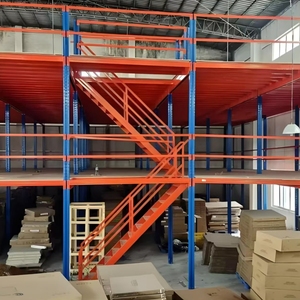
Heavy Duty Mezzanine Floor Racking Warehouse Storage Racks Shelf Units Pallet Rack System Equipment Platform Shelves Attic Rack
A mezzanine racking concept that combines pallet storage with elevated platform shelving. It is useful when vertical space is available but floor area is constrained.
- StructureMezzanine
- FunctionPlatform + rack
- UseSpace expansion
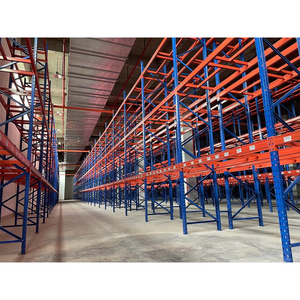
Heavy Duty Warehouse Steel Pallet Racking System With Galvanized Steel Panel Rack
A galvanized steel pallet racking system for humid, coastal or cold-store environments. The galvanized panel and finish support corrosion resistance and long service life.
- FinishGalvanized
- EnvironmentHumid / cold
- UseHeavy-duty storage
*Indicative engineering range. Every project must be verified against pallet weight, beam span, upright capacity, building height, floor condition, local code and seismic demand. Request engineered drawings before ordering.
Future Procurement Trends: What Buyers Will Demand From Pallet Racking Suppliers
Procurement teams are moving from lowest-cost purchasing toward total lifecycle value. The following six trends are already visible in RFQs from 3PLs, food exporters, cold-chain operators and industrial manufacturers. They should be written into the technical specification, not discussed only after the purchase order is issued.
Seismic Resilience as a Procurement KPI
In Chile, Peru, Colombia and Ecuador, buyers increasingly require site-specific seismic verification before awarding a contract. A supplier should provide calculation notes, anchor schedules, bracing details and examples of projects in comparable seismic zones. This shifts procurement from price-per-bay comparison to risk-based evaluation.
Cold-Chain and Energy-Cost Optimisation
Freezer warehouses are expensive to build and expensive to cool. Racking that increases pallet positions per cubic metre, reduces aisle volume and supports fast dock-to-freezer movement has a direct energy benefit. Buyers will ask for cold-store-compatible steels, finishes and installation methods.
Automation-Ready Structure Requirements
AS/RS, pallet shuttles and AMR fleets require tighter tolerances than conventional warehouses. Procurement teams now ask whether a rack design can be upgraded for automation without replacing the entire structure. Early geometry decisions become a financial issue, not only an engineering detail.
Modular and Relocatable Storage Systems
Lease terms, product cycles and e-commerce volatility make fixed layouts less attractive. Modular selective racking, demountable mezzanine structures and relocatable safety accessories allow warehouses to adapt capacity without writing off the whole investment.
Verified Carbon and Material Traceability
Corporate buyers increasingly request ISO 14064 verified carbon reporting, material certificates and component traceability. Racking is part of the warehouse’s embodied carbon and safety file, so suppliers must provide documentation that procurement and ESG teams can audit.
Lifecycle Inspection and Documented Safety
Rack safety is not complete at installation. Leading buyers will require periodic inspection schedules, damage classification, load signage, spare-part availability and maintenance records. These services protect uptime and demonstrate duty of care to insurers and auditors.
Product Development Trends in Industrial Pallet Racking
The physical product is also changing. Racking is no longer a commodity made from generic profiles; it is becoming a precision-engineered structure that must interface with forklifts, shuttles, stacker cranes, AMRs, fire systems and building envelopes. These developments directly affect specification, lead time and whole-life cost.
High-Strength Profiles and Refined Connections
New upright profiles, beam-to-upright connectors and base-plate designs deliver higher load capacity with less steel. The benefit is not only material savings; better connections can improve installation speed and reduce damage risk during daily forklift operations.
Galvanized and Hybrid Corrosion Protection
Coastal humidity, cold-store condensation and food-plant washdowns create corrosion risk. Galvanized systems and hybrid coating strategies are becoming more common, especially for freezer warehouses, export terminals and humid Latin American markets.
Laser-Verified Tolerances and Digital Quality Records
Automated production lines and laser measurement generate digital quality records for frames and beams. For AS/RS warehouses, this data reduces commissioning risk because stacker cranes and shuttles require predictable rack geometry.
Integrated Safety by Design
Back stoppers, column guards, beam locks, pallet stops and signage are increasingly designed into the system rather than added by the installer. This improves consistency across multi-site rollouts and makes inspection easier for warehouse operators.
Hybrid Racking and Mezzanine Systems
Warehouses increasingly combine pallet racking, picking shelving and mezzanine platforms in one structure. Hybrid layouts increase usable space and support mixed operations such as pallet reserve storage plus manual order picking.
AS/RS and Self-Supporting Structures
For large distribution centres, the racking may also support the building envelope. Self-supporting warehouses and AS/RS rack structures require close coordination between steel design, fire engineering, cladding and automation. This is a factory engineering capability, not a catalogue purchase.
Why Alohatop Shelf Is a Credible Pallet Racking Partner for Complex Projects
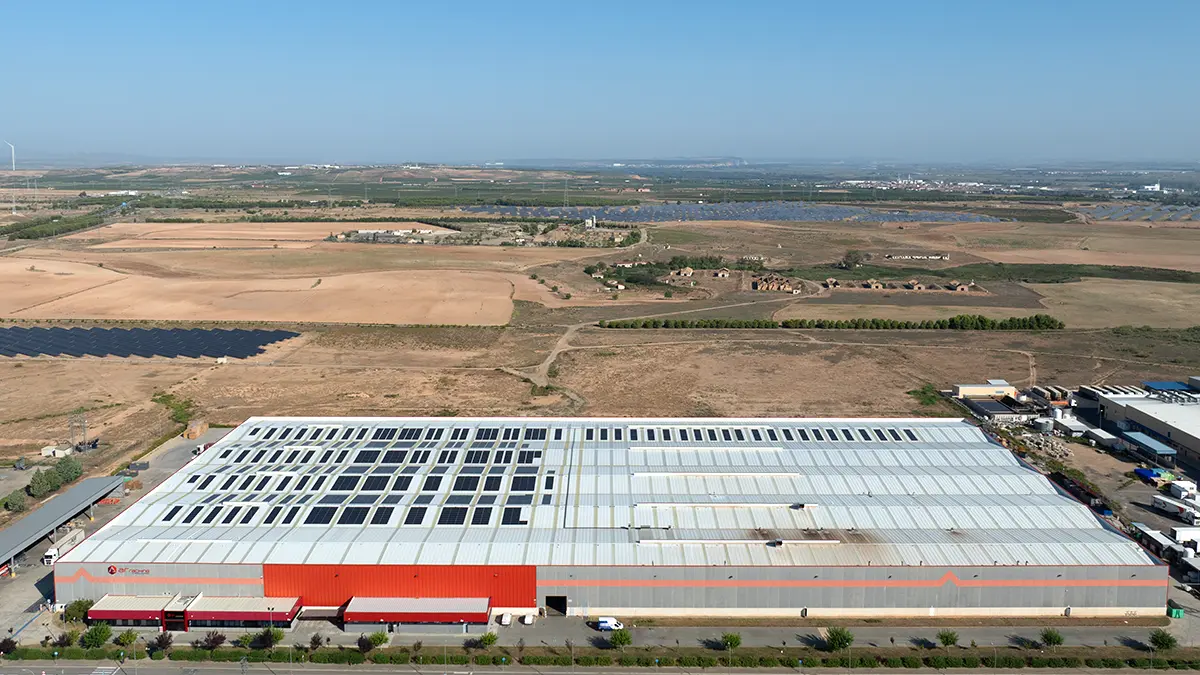
Alohatop Shelf LLC is a designer, manufacturer and installer of industrial pallet racking, picking shelving and automated warehouse structures. The company’s relevance to a top 10 supplier shortlist is not based on a slogan; it is based on assets, certifications and project controls that a procurement team can audit.
- 35,000 m² highly automated production centre with more than 100,000 t of annual steel production capacity.
- 42,000+ warehouse projects delivered across 60+ countries, supported by 14 own branches and 70+ trusted distributors.
- More than 90% of production exported, with export experience for major ports and South American distribution centres.
- Engineering validation through R&D collaboration with Mondragon University and the University of the Basque Country, including finite-element simulation and physical load testing.
- Certified manufacturing under ISO 9001, ISO 14001, ISO 45001, ISO 50001, UNE EN ISO 3834-2, EN 1090-1 and ISO 14064, with full component traceability.
- 5-year warranty and lifecycle services covering project engineering, technical inspection, installation, maintenance and reconfiguration.
Certifications and Warranty Evidence Buyers Can Verify
For a supplier to be credible in a top 10 shortlist, certificates should be verifiable and linked to the actual manufacturing process. The following evidence supports quality, safety, environmental management, welding control and carbon reporting.
 ISO 9001Quality management
 ISO 14001Environmental management
 ISO 45001Health & safety at work
 ISO 50001Energy management
 EN ISO 3834-2Welding quality control
 EN 1090-1Structural steel components
 ISO 14064Verified carbon footprint
Pallet Racking Procurement FAQ
These are the questions our engineers and export team receive most often from warehouse, logistics and procurement managers comparing pallet racking factories and suppliers.
What information is needed for a fast and accurate quotation?
Send the building layout with clear height, pallet dimensions, maximum load per pallet, load per level, number of SKUs, pallets per SKU, daily throughput, forklift type, temperature range, project city and any seismic or local code requirements. Complete input data reduces quotation variance and shortens the engineering cycle.
How can I verify seismic design claims from a factory?
Request calculation notes, local code references, base-plate and anchor details, bracing layouts, row-spacer requirements and examples of projects in comparable seismic zones. For Chile, Peru, Colombia and Ecuador, the design should explicitly reference NCh2369, E.030, NSR-10 or NEC as applicable. Independent third-party review is recommended for high-bay or automated warehouses.
Can racking be upgraded for automation later?
It can be, but automation tolerance requirements should be considered early. AS/RS cranes, pallet shuttles and AMRs require predictable geometry, strict upright pitch and verified installation tolerances. A conventional rack may not be suitable for later automation if the frame tolerance, floor condition or bracing design was not planned correctly.
What is a typical lead time for an export pallet racking project?
Lead time depends on volume, finish, drawing approval, steel availability, factory loading and shipping schedule. A realistic export schedule includes engineering approval, production, surface treatment, factory inspection, container loading, sea freight and installation. Ask for a milestone schedule with approval dates, not only a generic number of weeks.
How should I compare quotations from top 10 pallet racking suppliers?
Compare like for like: steel profiles, upright capacity, beam deflection limits, surface treatment, safety accessories, anchors, engineering scope, installation supervision, warranty, certification and logistics. The lowest price may exclude engineering, load signs, back stoppers or inspection documents. A total-cost comparison should include installation time, damage risk and future reconfiguration.
What warranty and inspection documents should be included?
Ask for the warranty terms, component traceability, load signs, installation checklist, inspection report, maintenance schedule, spare-parts list and relevant certificates. Confirm response times for warranty claims and whether periodic inspection can be provided after handover. These documents protect both safety and asset value.
Request a Factory-Direct Pallet Racking Catalog and Engineering Review
Send your building layout, pallet dimensions, loads, temperature range and target country. Our storage engineers will review the project and recommend the safest, most space-efficient pallet racking configuration for your warehouse. For buyers comparing the Top 10 Pallet Racking Industrial Factories & Supplier options, this is the fastest way to obtain technical data, certification evidence and a project-specific quotation.
Get Catalog