Eight Product Families That Meet Top-Tier Procurement Criteria
These are not arbitrary catalogue entries. Each system below answers a specific search intent: long-goods storage, medium-duty hand-loaded shelving, corrosion protection, selective access, 4000 kg heavy loads, parts bins, CE/AU export compliance or high-density pallet shuttle automation. For a top 10 shortlist, compare product families against the same engineering and lifecycle questions.
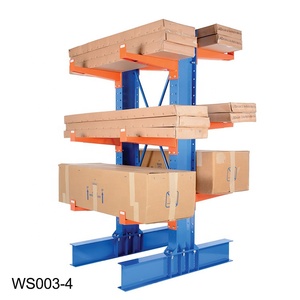 Long Goods · Cantilever
Wholesale Heavy Duty Cantilever Racking Customize Cantilever Pipe Rack
Best for pipes, tubes, timber and long profiles where front access and custom arm spacing reduce handling time.
- Load focusHeavy duty
- Access typeOpen front
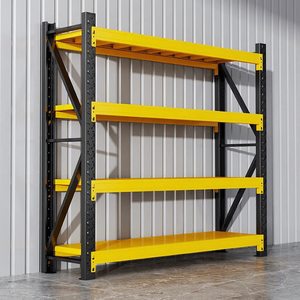 Medium Duty · Boltless
Adjustable Medium Duty Steel Shelf Rack with Four Boltless Tiers for Garage/Warehouse Storage Supporting 200/500 kg
Best for fast-moving spare parts, cartons and hand-loaded warehouse storage where installation speed matters.
- Configuration4 boltless tiers
- Use caseGarage / warehouse
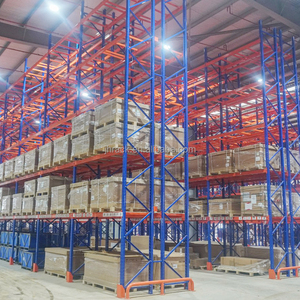 Corrosion Protection
Heavy-Duty Corrosion Protected Pallet Racking Systems for Warehouse and Factory Storage
Best for coastal, humid or temperature-swing environments where coating quality directly influences service life.
- FinishCorrosion protected
- ScopeWarehouse / factory
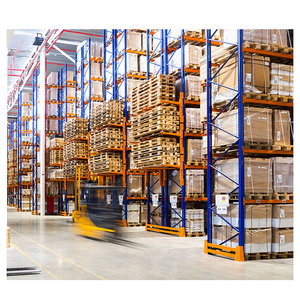 Selective · High SKU
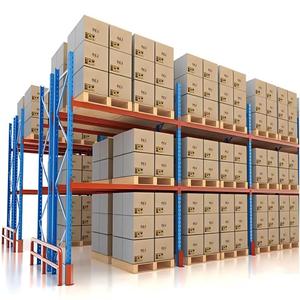
Adjustable Heavy Duty Pallet Rack System Selective Steel Beam Racking for Industrial Warehouse Storage Management
Best for mixed-SKU warehouses that need 100% direct access to every pallet and simple beam-level adjustment.
- SystemSelective beam
- ProfileAdjustable heavy duty
 Export Grade · Powder Coating
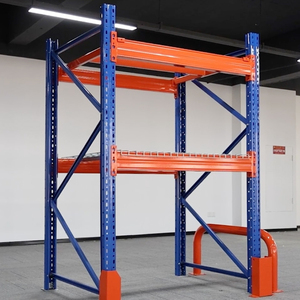
Adjustable Durable Storage Rack Powder Coating Finish Long Service Life CE Heavy Duty Metal Warehouse AU Standard Pallet Racking
Best for buyers comparing CE-oriented heavy-duty racking with AU-standard finish expectations and long service life.
- FinishPowder coating
- ComplianceCE / AU standard
 High Capacity · Multi-Level
Warehouse Storage Rack 4000kg High Capacity Multi-Level Pallet Racking for Auto Parts Logistics Park Industrial Standard
Best for automotive parts logistics and industrial warehouses where high capacity must be combined with multi-level access.
- Capacity focus4000 kg class
- ApplicationAuto parts logistics
 Parts Storage · 5 Levels
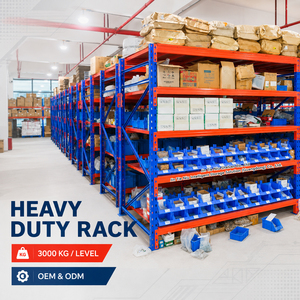
3000KG Per 5 Levels Warehouse Rack System with Steel Shelves for Parts Boxes and Bins Chinese Metal Shelves Storage Racks
Best for parts boxes, bins and small components where steel shelves support organised picking and inventory control.
- Levels5 levels
- StorageParts boxes / bins
 High Density · Shuttle
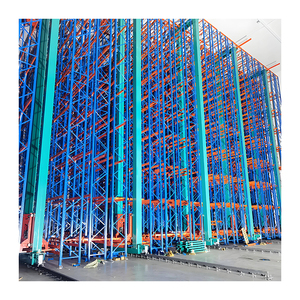
High-Density Pallet Shuttle Racking System Automatic Steel Storage Frame 3000kg Load Capacity Heavy Duty Warehouse
Best for high-throughput distribution centres that need deep-lane density, 3000 kg load capacity and semi-automated pallet movement.
- Load capacity3000 kg class
- DensityHigh-density shuttle
Countries with installed storage systems
Warehouse projects delivered
Annual steel production capacity
Warranty on storage systems
What Separates a Top 10 Pallet Shelving Manufacturer From a Low-Cost Supplier
A buyer searching for the top 10 pallet shelving manufacturers & supplier is usually combining several intentions: commercial investigation, engineering due diligence, certification checks, lead-time comparison and long-term service planning. The strongest supplier pages answer those intentions with evidence rather than slogans.
This technical guide is published by the Alohatop Shelf storage engineering team. Because we operate in the category, we separate general selection criteria from our own product recommendations and state the operating evidence behind each claim. That transparency improves reliability for procurement managers, warehouse consultants and EPC teams comparing international pallet racking suppliers.
Calculated Safety, Not Catalogue Capacity
A top-tier manufacturer calculates frames, beams, base plates and anchors against the destination code, site soil class and seismic demand—not just the maximum load printed in a brochure.
Traceable Manufacturing Depth
Steel batch, roll-forming, welding, powder coating and packing should be traceable. Buyers need to know whether the supplier owns production or simply assembles a quotation from third-party components.
Certification With Scope
ISO 9001, ISO 14001, ISO 45001, ISO 50001, welding quality and structural steel certification must be relevant to the product, factory and export process being quoted.
Product Breadth Without Blind Spots
A reliable supplier can move from selective racking to cantilever, medium-duty shelving, cold-store racking and pallet shuttle systems without forcing every requirement into one product.
Installation Competence
Racking performance depends on plumb tolerance, anchor installation, beam locks, row spacers and load signage. Installation supervisors are part of product quality, not an afterthought.
Lifecycle Service and Spares
Inspection, maintenance, reconfiguration and component replacement protect uptime years after the initial delivery. A low unit price can become expensive if spares and engineering support disappear.
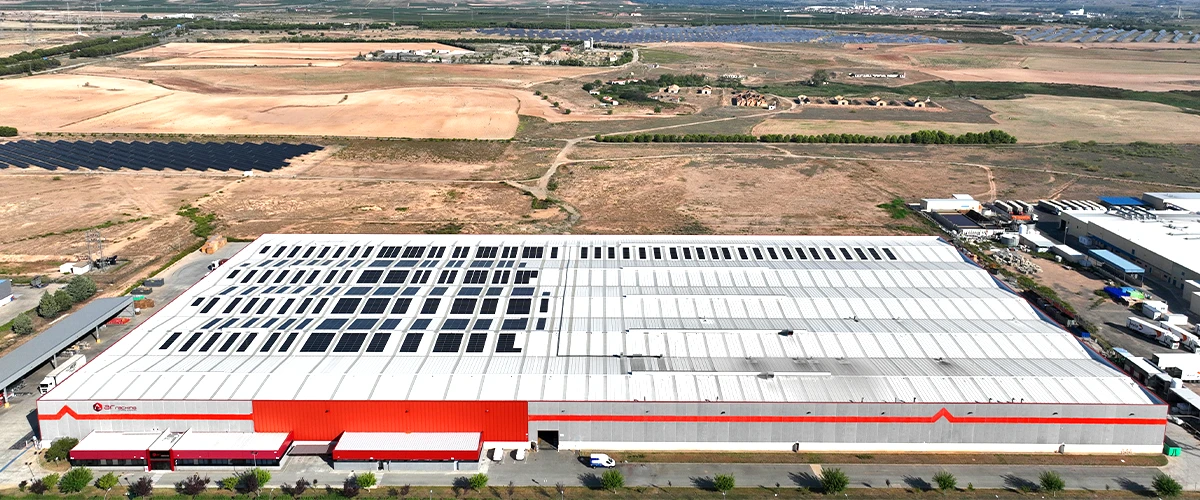
Full Project Control From Steel Coil to Final Load Sign
Alohatop Shelf designs, calculates, manufactures and installs metal racking for warehouses, factories, cold stores and automated distribution centres. Owning the critical steps—engineering, roll-forming, welding, coating, packing and installation supervision—creates one accountable partner for international buyers.
The company operates a 35,000 m² highly automated production centre with more than 100,000 t of annual capacity. More than 90% of output is exported, and project experience covers 60+ countries, 42,000+ warehouse projects, 14 own branches and 70+ trained distributors. For South American buyers, this export experience is relevant at ports such as Santos, Callao, San Antonio, Cartagena and Buenos Aires.
- Full traceability of uprights, beams and accessories from production batch to installation.
- Five-year warranty supported by documented spare-part and inspection processes.
- English and Spanish project communication for distributors, EPC teams and end users.
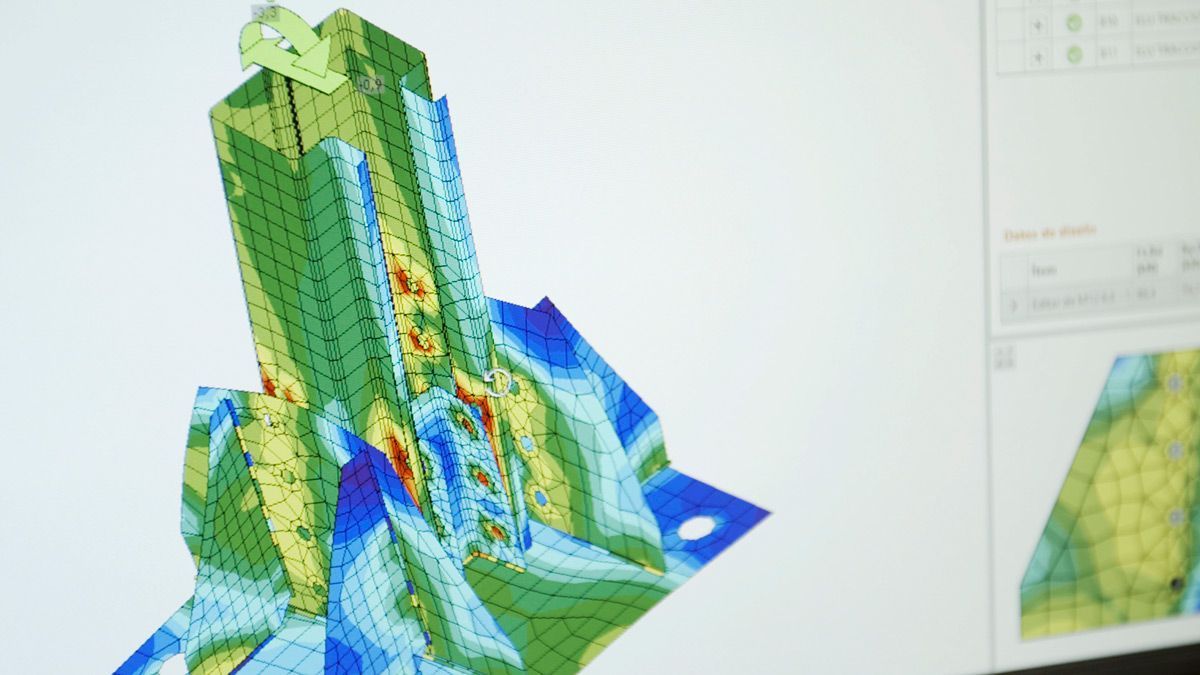
Engineering Evidence for High-Seismic and Automated Warehouses
Seismic zones along the Andes and Pacific coast change how racking must be designed. A supplier that only quotes catalogue frames can leave the buyer exposed when local engineers request calculations, anchor verification and deflection limits.
Our technology centre works with an R&D laboratory at Mondragon University to test the behaviour, strength and safety of racking components under real load cases. A research and simulation chair at the University of the Basque Country supports finite-element modelling, connection behaviour and design optimisation. This knowledge is applied to frames, beams and base connections for demanding projects.
- Design review against codes such as NCh2369 and NCh433 in Chile, E.030 in Peru, NSR-10 in Colombia, NEC in Ecuador, ABNT NBR 15524 in Brazil and INPRES-CIRSOC 103 in Argentina.
- Physical load and cyclic testing for new profiles when project conditions exceed standard assumptions.
- Finite-element simulation of frames, beams, connections and bracing under seismic and operational loads.
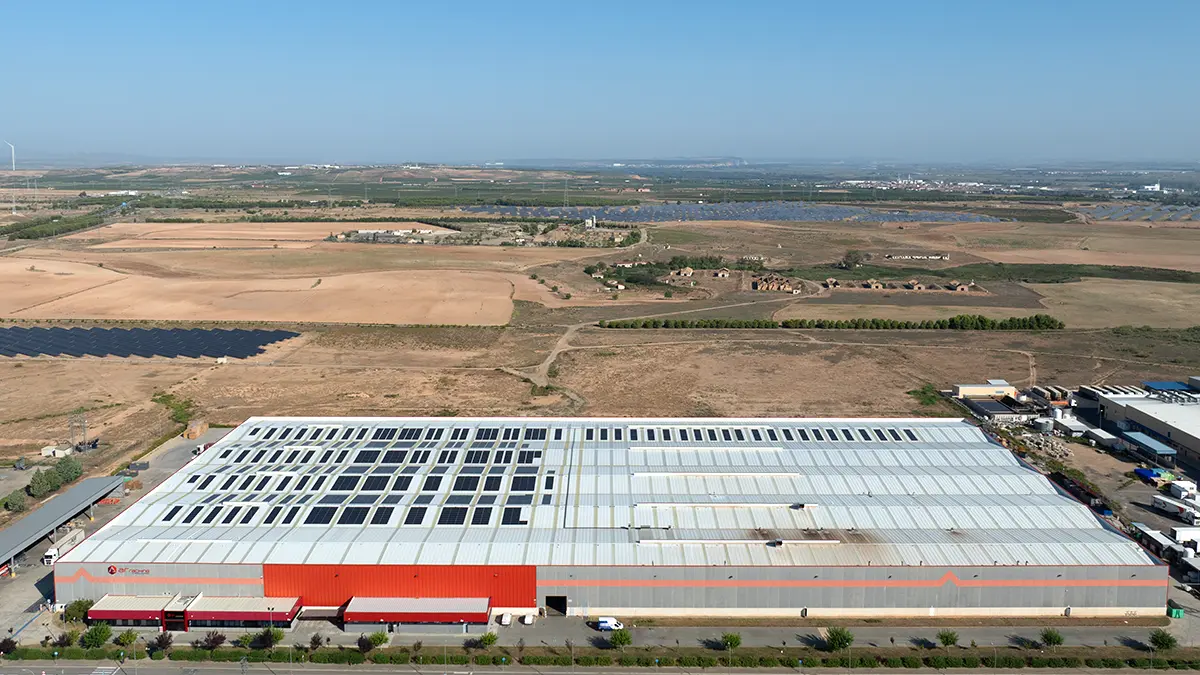
Millimetre Control for Shuttle, AS/RS and Manual Warehouses
Automated stacker cranes and pallet shuttles stop when rack geometry drifts outside tolerance. Robotic production, laser-controlled processes and repeatable quality checks keep frames and beams within the tolerances expected by AS/RS integrators—and make manual installations faster and safer.
The result is not simply a stronger product. It is a more predictable project: fewer site modifications, cleaner interfaces with forklifts and automation, and documentation that supports long-term inspection and maintenance.
- Consistent quality across large-volume export orders.
- Stable lead times for multi-container pallet racking projects.
- Component documentation for future inspection, repair and expansion.
Pallet Shelving Systems, Storage Density and Search Intent
Product recommendation should follow operational reality. The matrix below helps translate a generic pallet shelving query into a shortlist of storage systems, then into the right engineering questions.
| System | Best for | Relative density | Direct access | Stock rotation |
|---|---|---|---|---|
| Selective pallet racking | Mixed SKU, retail, food and beverage, 3PL | 45% | 100% of pallets | Any |
| Very narrow aisle racking | Cold stores, high land cost, tall buildings | 60% | 100% of pallets | Any |
| Double-deep racking | Two or more pallets per SKU, 3PL flexibility | 65% | 50% | LIFO per lane |
| Drive-in racking | Homogeneous products, frozen goods | 80% | Low | LIFO or drive-through FIFO |
| Mobile pallet racking | Cold storage, high value per cooled cubic metre | 80% | 100% via moving aisle | Any |
| Pallet flow racking | Perishables and fast-moving inventory | 75% | Per lane | FIFO |
| Push-back racking | Manufacturing buffers and medium-volume SKUs | 65% | Per lane | LIFO |
| Pallet shuttle racking | High-throughput distribution centres and deep cold lanes | 90% | Per lane | FIFO or LIFO |
| AS/RS and self-supporting rack | Large DCs, deep freeze, 24/7 automation | 95% | Automated | WMS controlled |
Density is relative to conventional selective racking in the same footprint. In seismic zones, very tall or very dense configurations require specific structural verification and installation controls.
Four Questions That Narrow the Pallet Shelving Shortlist
Before comparing manufacturers, qualify the system. This prevents a low-cost quotation for the wrong racking configuration.
Start With Pallet and Load
Confirm pallet dimensions, maximum weight, overhang, load stability and whether the load is uniform. Latin American pallets, Euro pallets and ISO formats all change beam length and frame depth.
Quantify SKU and Flow
Count SKUs, pallets per SKU, daily throughput and shift pattern. Fast-moving, low-SKU inventory may justify shuttle or drive-in storage; high-SKU operations usually need selective access.
Model Building and Environment
Check clear height, floor condition, fire strategy, temperature, humidity, corrosion risk and seismic zone. Cold stores down to −30 °C require specific steel and finish decisions.
Verify Lifecycle and Installation
Ask for drawings, load signs, anchor calculations, inspection guidance, spare parts and installation supervision. A racking supplier should reduce site risk, not transfer it.
What Pallet Shelving Buyers Are Changing Now
Procurement teams are moving away from unit-price comparison toward total cost of ownership, documented safety and faster integration with automation.
01Total Cost of Ownership
Buyers compare installation time, spare-part availability, inspection requirements and future reconfiguration alongside the steel price. Cheap racking that cannot be expanded is no longer treated as a bargain.
02Seismic and Safety Documentation
In Chile, Peru, Colombia, Ecuador and western Argentina, procurement teams request code-based calculations, anchor details and installation tolerance records before approving a supplier.
03Cold-Chain Energy Intensity
Agro-export cold stores, seafood processors and frozen-food distributors are selecting higher-density systems to reduce cooled cubic metres per pallet and improve energy efficiency.
04Automation-Ready Racking
Even manual warehouses now ask whether the structure can later support AGVs, AMRs, shuttles or stacker cranes. Tolerance and interface data are becoming part of the purchase decision.
05Verified Sustainability Data
ISO 14001 and ISO 14064 verified carbon reporting help exporters, retailers and EPC contractors satisfy internal ESG reviews without slowing the technical evaluation.
06Local Installation and Lifecycle Service
A supplier’s ability to provide supervisors, spare parts, inspection and maintenance through local partners is now a core procurement criterion, especially for multi-site rollouts.
The Next Generation of Pallet Shelving Will Be Measured by Data and Adaptability
Steel geometry remains fundamental, but the future product is also a data-rich, inspectable and reconfigurable asset.
01Higher-Strength Optimised Profiles
Profile optimisation improves load capacity and steel efficiency while maintaining stiffness and connection performance. Buyers should ask for calculation evidence, not only a section drawing.
02Shuttle and AS/RS Compatibility
Pallet shuttle, stacker crane and self-supporting warehouse projects require tighter tolerances, clearer interfaces and stronger production documentation than conventional installations.
03Digital Twin and BIM Data
Warehouse owners increasingly expect racking models that can support layout planning, maintenance records and future automation studies. Product data becomes part of the asset lifecycle.
04Modular Reconfigurability
E-commerce volatility and 3PL multi-client operations reward racking that can be adjusted, extended or relocated without replacing the entire structure.
05Cold-Store and Corrosion-Protected Finishes
Freezer rooms, coastal warehouses and humid climates require coating and steel decisions that protect long-term performance and maintain inspection confidence.
06Sensor-Based Safety and Inspection
Impact detection, digital inspection logs and component traceability are moving from premium projects into mainstream procurement as warehouse operators seek fewer unplanned stoppages.
Information to Send Before You Request a Pallet Racking Quote
Complete input reduces quotation cycles and improves the quality of the engineering proposal.
Provide CAD or PDF plans, clear height, columns, floor condition and available footprint.
Share pallet size, maximum load, load uniformity, overhang and any damaged-pallet risk.
Confirm number of SKUs, pallets per SKU, seasonality and whether FIFO or LIFO is required.
State pallet movements per hour, shifts, peak periods and truck-loading constraints.
Identify forklift type, VNA truck, AGV, AMR, shuttle or future automation plans.
Temperature, humidity, washdown, coastal exposure and freezer operation down to −30 °C.
Provide project city and applicable local code so the supplier can calculate anchors, bracing and deflection.
Share port of discharge, required certifications, installation support, timeline and inspection needs.
Frequently Asked Questions About Pallet Shelving Manufacturers & Suppliers
Answers procurement teams ask most often when comparing international racking suppliers.
What is the difference between pallet shelving and pallet racking?
Pallet shelving is often used as a broad commercial term, while pallet racking usually refers to structural steel systems that store palletised loads with forklift access. In practice, buyers may use both phrases when searching for selective racking, boltless steel shelving, cantilever racks or high-density pallet storage. The correct choice depends on load weight, handling equipment, SKU profile and throughput—not the keyword used in the search box.
How do I verify a manufacturer’s seismic design capability?
Ask for project-specific calculations, not a generic certificate. The supplier should identify the applicable local code, site soil class, anchor design, bracing arrangement, beam deflection limits and connection assumptions. For Chile, Peru, Colombia and Ecuador, design references may include NCh2369, NCh433, E.030, NSR-10 and NEC. A credible manufacturer should explain how those requirements change the steel structure and installation method.
Which information is needed for a fast quotation?
Send a building layout with clear height, pallet dimensions, maximum load, number of SKUs, pallets per SKU, daily throughput, forklift or automation type, temperature range, project city and required delivery port. If the project is in a seismic zone, include the local design code. This information allows the supplier to propose a system and capacity instead of a generic price per kilogram.
Can a supplier combine racking and medium-duty shelving in one warehouse?
Yes. Many distribution centres combine selective pallet racking for palletised inventory with medium-duty boltless shelving, carton flow or multi-tier picking for small parts. The important step is separating fast-moving, heavy and hand-picked inventory before layout design. A good supplier will show the operational trade-offs, not simply sell more steel.
What certifications should an export pallet racking supplier provide?
Look for certification scope that matches the factory and product being purchased. Relevant evidence can include ISO 9001 quality management, ISO 14001 environmental management, ISO 45001 occupational health and safety, ISO 50001 energy management, UNE EN ISO 3834-2 welding quality, EN 1090-1 for structural steel components and ISO 14064 verified carbon reporting. Also request component traceability and a clear warranty statement.
How should buyers compare total cost of ownership?
Compare engineering included in the proposal, installation supervision, anchor and accessory scope, lead time, packing quality, spare-parts availability, inspection guidance and future reconfiguration potential. A low initial price can create higher costs if drawings are incomplete or replacement parts are unavailable. For cold stores and automated warehouses, tolerance and energy density should also be evaluated.
Why Alohatop Shelf Belongs on Your Pallet Shelving Supplier Shortlist
The strongest shortlist is built on verifiable capability. These are the operating advantages buyers can review during a technical evaluation.
Layout optimisation, structural calculation, seismic verification and integration with forklifts, AGVs or AS/RS are handled by the project engineering team.
35,000 m² automated production, 100,000 t annual capacity and 90%+ export share support multi-container projects and port coordination.
ISO management systems, welding quality, structural steel certification and component traceability support procurement audits and end-user approvals.
Five-year warranty, inspection, maintenance, reconfiguration and spare-part planning protect the investment after go-live.
For South America, Alohatop Shelf combines cold-chain experience, seismic design knowledge and export logistics from steel coil to installation support. That combination is why the company should be evaluated against the same evidence scorecard used for any top 10 pallet shelving manufacturers & supplier shortlist.

Planning a New Warehouse or Pallet Racking Expansion?
Share your building layout, pallet dimensions, load data and project city. Our storage engineers will help you compare selective, cantilever, medium-duty, shuttle or automated pallet racking options with the right safety and lifecycle assumptions.