Why the Best Push-Back Rack Suppliers Are Selected Before Price Is Negotiated
Push-back racking is a high-density pallet storage system that uses nested carts on inclined rails. A forklift places a pallet in the aisle, pushes it back along the lane, and the next pallet rolls forward into the first position. The result is LIFO inventory flow, reduced aisle count and strong space utilisation for manufacturers, food distributors, 3PLs and cold-store operators with multiple pallets per SKU.
The purchasing risk is not merely the steel price. A push-back lane depends on cart quality, rail alignment, braking control, pallet condition, forklift access, seismic bracing and installation tolerance. A factory that can form and weld standard selective racking may still be unable to deliver a push-back system that performs safely at height, in a freezer, or under regional seismic loads. That is why experienced buyers audit a factory’s engineering evidence, component traceability and project governance before they compare quotations.
This white paper uses the “Top 10” title as an auditable scorecard, not as an unverifiable popularity list. The ten factors below are the capabilities that separate a genuine rack push back factory from a trading intermediary. The eight product examples that follow demonstrate the practical engineering scope a serious supplier should be able to cover: heavy-duty frames, adjustable beam levels, shuttle-ready high-density systems, cantilever storage, teardrop pallet racking and selective racking for mixed operations.
Eight Rack Systems That Reveal a Factory’s Real Engineering Range
Push-back racking is not a standalone catalogue item. It sits inside a factory’s broader capability to engineer heavy loads, calculate structures, control tolerances and support high-density warehouse layouts. These eight storage systems are representative of the product platforms a push-back supplier should be able to integrate, adapt or benchmark against.
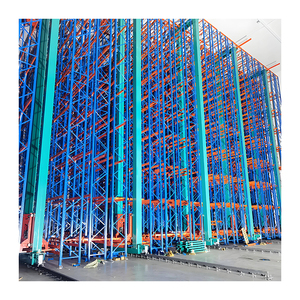
High-Density Pallet Shuttle Racking System Automatic Steel Storage Frame 3000kg Load Capacity Heavy Duty Warehouse
A 3000kg heavy-duty platform for high-throughput storage. For push-back buyers, this product demonstrates rail precision, pallet movement control and heavy frame manufacturing discipline.
View product specification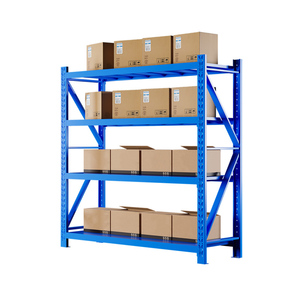
Industrial Warehouse Storage 5-Layer Pallet Racking System with Tire Rack Slotted Angle Rack Stacking Racks & Shelves
A five-layer pallet and stacking solution for mixed storage profiles. It illustrates the adjustable level planning and accessory integration common in warehouses expanding from selective to high-density layouts.
View product specification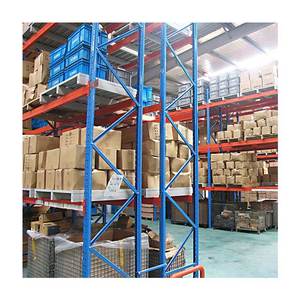
Industrial Heavy Duty Rack Manufacturing Pallet Rack Logistics Equipment Factory Warehouse Storage Racks Heavy Duty Racking
A factory-oriented heavy-duty rack platform for logistics equipment and warehouse storage. It reflects the structural steel production capacity required for large push-back projects.
View product specification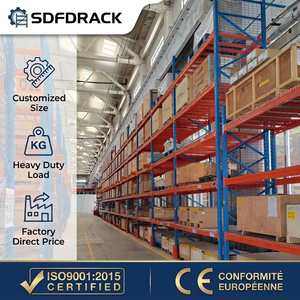
5 Layer Adjustable High Quality Heavy Duty Pallet Racks Industrial Steel Pallet Racking System High Load Warehouse Storage Rack
Adjustable beam levels and high load capacity are essential when pallet heights, SKU profiles or lane configurations change. This platform supports layout flexibility without sacrificing structural control.
View product specification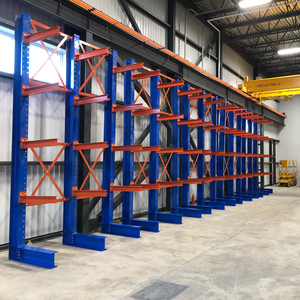
Heavy Duty Adjustable Corrosion Protected Industrial Warehouse Storage Steel Cantilever Rack for Irregular Goods Indoor/Outdoor
For long, irregular or non-palletised loads, cantilever racking proves a supplier’s ability to move beyond standard frames. Corrosion protection is especially relevant in humid or coastal markets.
View product specification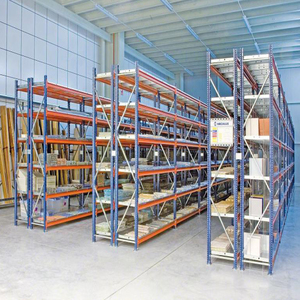
Pallet Racking Heavy Duty Teardrop Racking System 2000KG 2200KG 2200KG 2300KG 2400KG 2500KG Pounds Tons
A heavy-duty teardrop racking system with multiple load ratings. Standardised beam-to-upright connections help buyers compare component quality, coating and installation speed.
View product specification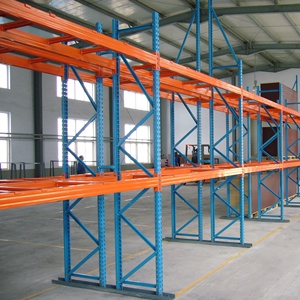
Adjustable Heavy Duty Pallet Rack Shelf Two Levels Custom High Load Capacity Industrial Warehouse Storage Pallet Racking System
A custom two-level pallet racking configuration for high-load industrial storage. It highlights how push-back projects often require hybrid layouts rather than one standard rack type across the whole building.
View product specification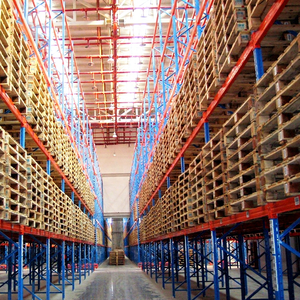
Manufacturer Heavy Duty Warehouse Shelving/storage Pallet Rack /selective Heavy Duty Racking System
The baseline high-access pallet rack platform. Many push-back projects retain selective racking for fast-moving SKUs and use denser LIFO lanes only where SKU depth and throughput justify them.
View product specificationThe Top 10 Factory & Supplier Scorecard
Score each factory from 1 to 5. A supplier that cannot provide evidence for factors 1–5 should not be shortlisted for a safety-critical push-back project, regardless of quotation price.
Structural calculation and local seismic compliance
Check calculation reports for NCh2369/NCh433, E.030, NSR-10, NEC, ABNT NBR 15524 or the project’s governing code. Push-back lanes concentrate loads and need verified bracing, anchors and cart retention.
Proven push-back cart and rail design
Ask for cart wheels, bearings, anti-tip devices, brakes, pallet stops, rail slope and lane-depth calculations. LIFO lane performance depends on component quality, not just frame strength.
Steel, welding and coating quality
Verify EN 1090-1, EN ISO 3834-2 welding control, steel certificates, robotic weld consistency, powder coating or galvanising and component traceability from batch to installation.
Factory capacity and export lead time
Confirm production floor space, roll-forming and welding lines, annual tonnage, export packing standards and realistic delivery windows for multi-container projects.
Engineer-led layout optimisation
Push-back must be evaluated against SKU depth, pallet count per SKU, daily throughput, clear height, forklift type and building geometry. Demand CAD layouts and throughput logic.
Cold storage and corrosion protection
Freezer warehouses down to −30°C require suitable steel, finish and condensation control. If the project is coastal or humid, demand a coating specification and reference projects.
Installation supervision and load signage
Check how plumb tolerances, anchor torque, row spacers, beam locks and safe working load signs are controlled. Installation quality determines whether a good design performs safely.
Inspection, spare parts and maintenance
A serious factory supports periodic rack inspection, impact-damage assessment, replacement carts, beam and upright availability, and documented repair procedures after handover.
Export documentation and local support
Look for experience shipping to Santos, Callao, San Antonio, Cartagena, Buenos Aires and other regional ports, plus English/Spanish technical support and distributor coordination.
Total cost of ownership and carbon evidence
Compare freight efficiency, installation time, maintenance access, expected service life and verified carbon reporting such as ISO 14064. Lowest purchase price is rarely lowest lifecycle cost.
Procurement note: standard design references may include EN 15512, FEM 10.2.02, RMI/ANSI MH16.1 and local building or seismic codes. The correct standard set must be confirmed for the destination country and project specification.
Why Alohatop Shelf Is Shortlisted for Push-Back and High-Density Projects
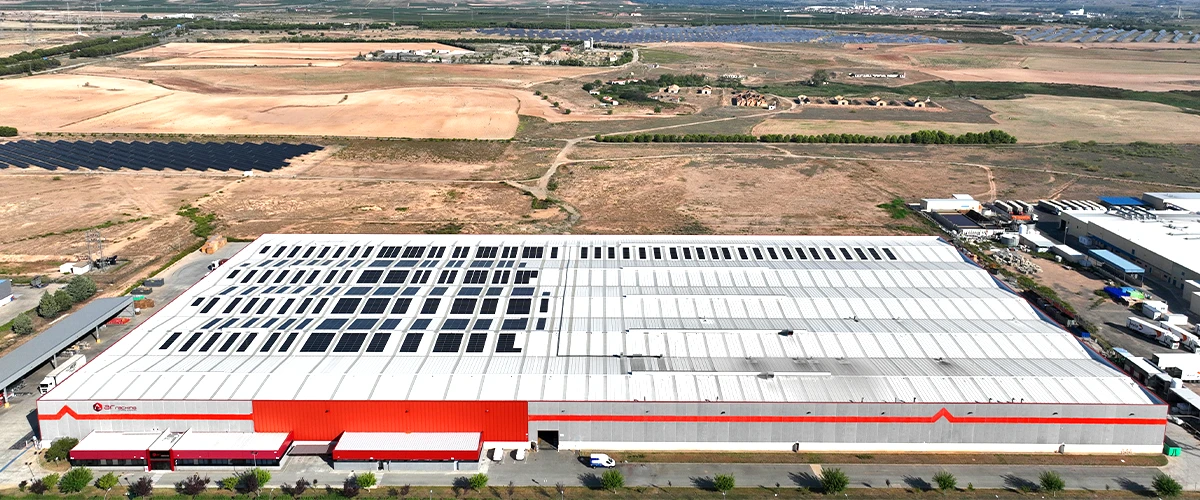
Alohatop Shelf LLC is a designer, manufacturer and installer of industrial racking and automated warehouse structures — not a reseller passing drawings to an unknown mill. For buyers comparing rack push back factories and suppliers, this matters because the same organisation controls structural calculation, profile forming, welding, coating, packing, installation supervision and after-sales support.
- 35,000 m² highly automated production centre with more than 100,000 t of annual steel capacity.
- 42,000+ warehouse projects delivered across more than 60 countries, with 14 own branches and 70+ trusted distributors.
- 90%+ of production exported, supported by export packing and project logistics experience for major South American ports.
- 5-year warranty and full component traceability from production batch to installation.
- ISO 9001, ISO 14001, ISO 45001, ISO 50001, UNE EN ISO 3834-2, EN 1090-1 and ISO 14064 systems and certifications.
Laboratory-Tested Components and Project-Specific Calculations
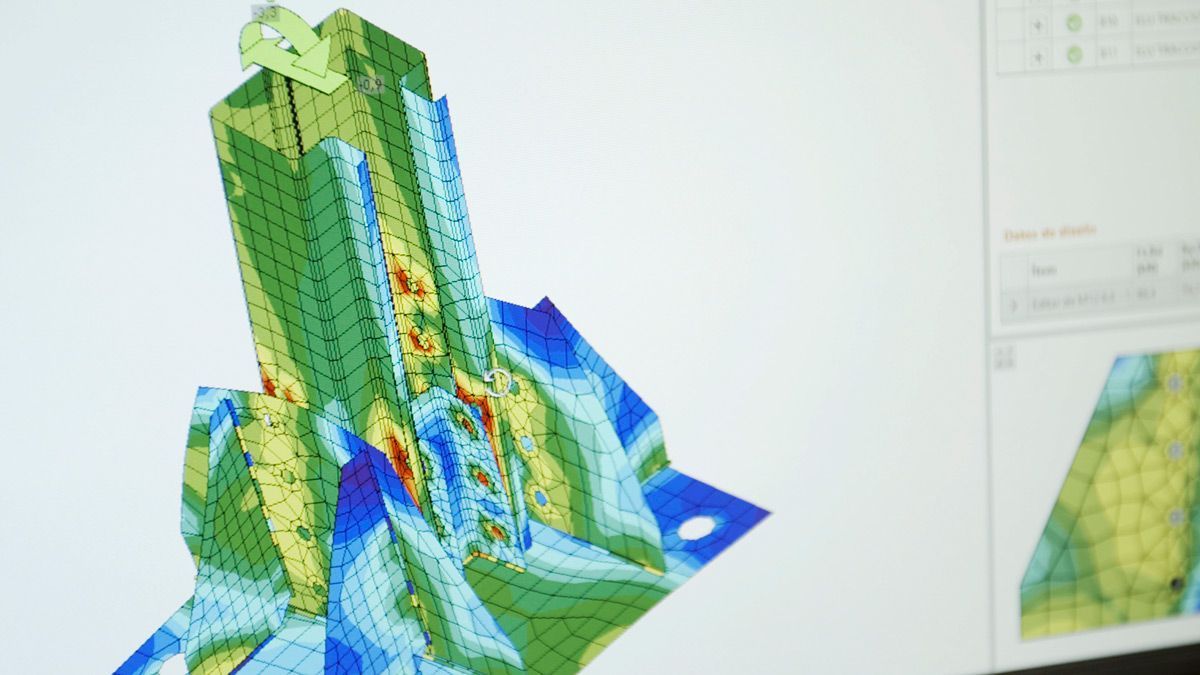
Push-back racking is exposed to dynamic pallet impact, repeated cart movement, brake wear and, in some regions, high seismic demand. Alohatop Shelf’s technology centre works with an R&D laboratory at Mondragon University, while a research and simulation chair at the University of the Basque Country supports calculation models and simulation tools. This gives procurement teams more than a catalogue claim: new profiles and connections can be evaluated through finite-element simulation and physical load testing before they enter a project specification.
For South American warehouses, the key question is not whether a rack looks heavy. It is whether the frame, beam, cart rail, anchor and row spacer have been checked for the actual pallet load, lane depth, building height, forklift interface and local seismic condition. That is the level of evidence a high-quality push-back factory should be able to put in front of a buyer.
- Finite-element modelling of frames, beams and base connections.
- Physical load and cyclic testing of new profiles and components.
- Design review against European standards and destination-country codes.
- Cold-store layouts engineered for temperatures down to −30°C.
2026–2030 Procurement Trends for Push-Back Racking
Push-back procurement is shifting from a commodity purchase toward a verified capacity investment. Buyers are asking for engineering evidence earlier, and they are comparing lifecycle cost rather than steel price alone.
Seismic and safety evidence becomes a board-level requirement
Warehouse developers and insurers increasingly expect project-specific structural calculations, local code compliance and documented installation control. A generic load table is no longer enough for tall or dense pallet storage.
Total cost of ownership replaces lowest quotation
Procurement teams are adding freight efficiency, installation time, spare-part availability, inspection intervals and downtime risk to the purchase decision. A lower-priced rack that slows commissioning can be the more expensive choice.
Factory traceability and remote audits accelerate supplier selection
Serialised components, batch records, weld documentation and video factory audits allow buyers to qualify a rack push back factory before the first shipment. This is especially valuable for buyers who cannot visit every production line.
How Push-Back Rack Design Is Evolving
The next generation of high-density racking will be judged by how well it integrates with automation, cold-chain efficiency and data-driven maintenance while remaining practical for forklift operations.
Smarter carts and condition-monitoring concepts
Designers are exploring lower-friction wheels, improved brakes, impact-resistant cart frames and maintenance-friendly rail systems. The objective is longer service life, smoother pallet movement and fewer manual interventions in high-cycle lanes.
Hybrid high-density layouts
Push-back racking is increasingly combined with selective racking, pallet shuttle systems and AS/RS zones inside one building. Each SKU family gets the storage system that best matches its access frequency, SKU depth and throughput profile.
Lower-carbon steel and modular export design
Verified carbon reporting, steel optimisation and modular frame packaging are becoming differentiators. Better nesting and container loading reduce freight emissions, while modular components shorten installation time on site.
Push-Back Racking vs Alternative High-Density Systems
Push-back is strongest when multiple pallets per SKU can be stored in LIFO sequence and when aisle space is more expensive than direct access. Use this comparison as an early-stage screening tool.
| System | Pallet access | Rotation | Best-fit warehouse profile | Procurement caution |
|---|---|---|---|---|
| Selective pallet racking | 100% direct access | Any | High SKU mix, fast-moving inventory, retail and 3PL operations | Lowest density per m²; usually the benchmark layout |
| Push-back racking | Lane-level access | LIFO | Multiple pallets per SKU, medium-to-high density, manufacturing buffers | Cart quality and lane depth directly affect performance |
| Drive-in racking | Low access; forklift enters structure | LIFO or FIFO if drive-through | Homogeneous loads, freezer storage, low-throughput bulk inventory | Forklift damage risk and slower cycle times |
| Pallet flow racking | Lane-level, gravity-fed | FIFO | Perishables, fast-moving SKUs, date-sensitive stock | Higher component cost and stricter pallet quality requirements |
| Double-deep racking | 50% direct access | LIFO per lane | 3PLs with two or more pallets per SKU and reach trucks | Needs suitable forklift reach and pallet handling discipline |
| Pallet shuttle racking | Lane-level, semi-automated | FIFO or LIFO | High-throughput distribution centres and deep cold-store lanes | Higher capital cost; maintenance and battery management needed |
| AS/RS and self-supporting warehouses | Automated | WMS-controlled | Large DCs, deep-freeze, 24/7 operations, long-term capacity expansion | Integrator coordination, tolerances and software interface are critical |
For push-back quotations, provide pallet dimensions, maximum load, pallets per SKU, number of SKUs, required lane depth, forklift type, clear height, temperature range and project location. These variables change cart quantity, rail length and structural design.
Rack Push Back Factories and Suppliers: Common Buying Questions
These are the questions our engineers and export team most often receive from warehouse owners, procurement managers and EPC contractors comparing high-density racking suppliers.
What is push-back racking, and when is it the right choice?
Push-back racking is a LIFO high-density pallet storage system using nested carts on inclined rails. The forklift lifts a pallet to the aisle-level cart, pushes it back, and the following pallet rolls forward. It is a good fit when you have multiple pallets per SKU, limited aisle space and can accept last-in, first-out retrieval. It is less suitable when every pallet must be accessible immediately or when inventory rotation must be strictly FIFO.
How deep can a push-back lane be, and how many pallets should be stored per SKU?
Lane depth is normally determined by forklift reach, pallet quality, load weight, rail design and the number of carts specified. Many projects use lanes two to five pallets deep, with deeper lanes reviewed against throughput and the risk of hidden inventory. A practical rule is to reserve push-back for SKUs with enough pallet quantity to justify a dedicated lane and enough rotation to prevent aged stock at the back.
What load capacity and pallet sizes can be engineered?
Push-back systems can be engineered around common 1200 × 1000 mm pallets, Brazilian PBR 1000 × 1200 mm pallets, 1200 × 800 mm Euro pallets and ISO formats. Load capacity depends on the frame, beam, cart and rail design, and should be confirmed by a project-specific calculation rather than a generic brochure figure. Heavy-duty projects often require loads of 1,000–3,000 kg per pallet or more, but the final specification must match the actual load, impact conditions and seismic demand.
Can push-back racking be designed for seismic zones and cold storage?
Yes, but both conditions require engineering evidence. In seismic zones, the design should be checked against the governing local code and site soil class, with reinforced bracing, heavier anchors, row spacers and suitable cart retention. In cold storage, steel specification, coating, condensation control and installation tolerances must suit temperatures down to −30°C. Buyers should ask for comparable reference projects and design calculations, not just confirmation that the product exists.
How do I verify that I am buying from a factory rather than a trading company?
Request production-location evidence, manufacturing certifications, roll-forming and welding capability, component traceability, export packing photographs and a live or recorded factory audit. Also ask who controls the structural calculation and installation method statement. A genuine rack push back factory should be able to explain how uprights, beams, carts and safety accessories are produced or supplied, and how warranty claims are handled.
What information is needed to get an accurate quotation?
Send a building layout with clear height, floor condition, pallet dimensions, maximum load per pallet, number of SKUs, pallets per SKU, daily throughput, forklift or automation type, temperature range, seismic zone and project city. Photographs of the building and any existing racking are useful. With these inputs, an engineer can recommend selective, push-back, drive-in, shuttle or hybrid configurations rather than quoting a catalogue price without context.
What warranty, spare parts and inspection support should a supplier provide?
Look for a written warranty, component traceability, beam and upright replacement availability, cart spare parts and documented inspection guidance. Pallet racking is exposed to forklift impact and load changes, so periodic inspection is part of safe operation. A supplier with a 5-year warranty, international project experience and local distributor support provides a stronger lifecycle proposition than a one-off exporter.
How does push-back compare with pallet shuttle racking?
Push-back is mechanical and uses nested carts; pallet shuttle uses a powered shuttle to move pallets deep into a lane. Pallet shuttle can deliver faster cycles, greater lane depth and flexibility for FIFO or LIFO in high-throughput cold stores, but it has higher capital and maintenance requirements. Push-back is often the more economical choice for medium-throughput operations that need density without a semi-automated shuttle fleet. The right answer depends on throughput, labour cost, temperature and SKU depth.
Send Your Pallet, Throughput and Building Data
If you are comparing rack push back factories and suppliers, ask for a layout, load calculation and component specification — not just a price per tonne. Share your clear height, pallet size, maximum load, SKU depth, temperature range, forklift type and project location. Our storage engineers will recommend the safest, most space-efficient high-density configuration for your site.
Get a Quote