Top China Industrial Shelving And Storage Supplier & Exporters
Export-ready engineering, heavy-duty pallet racking, cold-storage systems and AS/RS-compatible structures for distributors, 3PL operators, manufacturers and project buyers who need verified quality, full traceability and a five-year warranty.
8 Industrial Shelving and Storage Systems for Export Procurement
These eight systems cover the most common buyer requirements: adjustable heavy-duty pallet racking, high-load warehouse storage, selective beam racking, factory-price export projects and customized layouts for manufacturing and distribution facilities. Each card links directly to the product page for specification review.
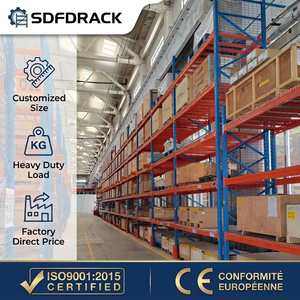
5 Layer Adjustable High Quality Heavy Duty Pallet Racks Industrial Steel Pallet Racking System High Load Warehouse Storage Rack
A five-layer adjustable pallet racking system for high-load warehouses, offering level-by-level beam adjustment and straightforward forklift access for mixed pallet profiles.
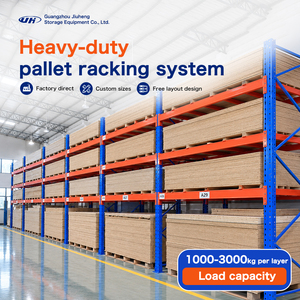
Heavy Duty Pallet Racking System Steel Warehouse Storage Rack Industrial Pallet Rack Adjustable Beam Storage Solution
An adjustable-beam steel pallet racking solution for distribution centres, mixed-SKU warehouses and industrial storage rooms that require flexible bay widths.
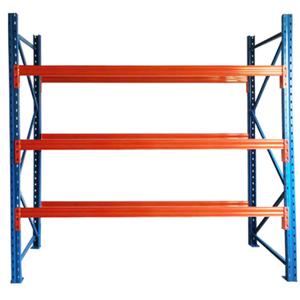
Mracking Industrial Warehouse Pallet Racking Shelving System
A structured industrial shelving and pallet racking system for warehouses that need a repeatable, expandable storage layout rather than a one-off installation.
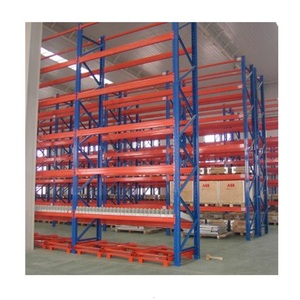
Industrial Heavy Duty Rack Factory Price Steel Pallet Racking Storage Systems From Warehouse Pallet Rack Manufacturer
A factory-price heavy-duty storage system for bulk projects where steel quality, export packing and repeatable component supply matter as much as unit cost.
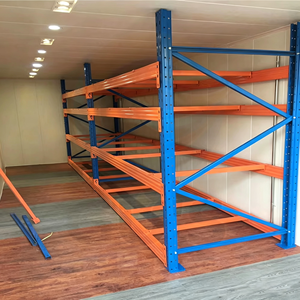
Heavy Duty Industrial Pallet Storage Racking 1000kg/2000kg/3000kg Capacity Per Layer Adjustable Steel Warehouse Rack
High-capacity adjustable racking for heavy palletized goods, dense storage planning and industrial warehouses that need clearly defined layer load limits.
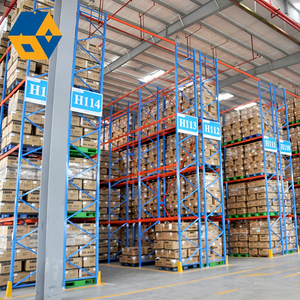
NOVA Steel Industrial Raw Material Storage Pallet Shelf Racking System Adjustable Selective Heavy Duty Beam Pallet Rack
Selective heavy-duty beam racking for raw materials, production buffers and warehouse storage where direct access to every pallet position is required.
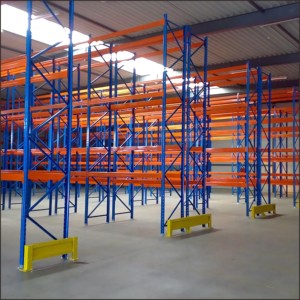
HONGYUN Heavy Duty 6 Meters High Metal Pallet Rack 5 Layer Anti-Rust Iron Shelving for Warehouse Storage for Garages
Tall anti-rust metal shelving for warehouses and garages where vertical cube must be used efficiently without sacrificing beam adjustability.
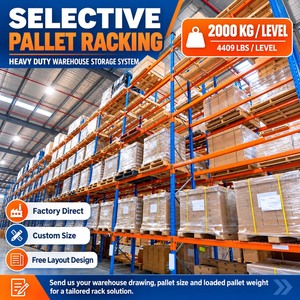
Industrial Warehouse Pallet Racking System Heavy Duty Adjustable Storage Rack Customized Pallet Racks for Factory Storage
A customized heavy-duty pallet racking configuration for factory storage, export layouts and warehouses that require site-specific frame depths and beam lengths.
Industrial Shelving as Strategic Infrastructure, Not a Commodity Purchase
Buyers searching for a top China industrial shelving and storage supplier & exporters are usually not buying a single shelf. They are configuring a warehouse system that must survive forklift impact, absorb seismic movement, support automated cranes, satisfy safety auditors and remain expandable for years. That is why serious procurement teams compare engineering evidence, not just price per beam.
Across e-commerce fulfilment, third-party logistics, food and beverage, cold chain, automotive supply and manufacturing, storage density and pick productivity have become board-level metrics. A racking layout that saves 8% on steel but loses 15% of usable cube, or requires rework after installation, is not a saving. The better question is: which supplier can deliver a defensible design, repeatable manufacturing quality, export documentation and installation support under one accountable workflow?
From Price per Position to Total Cost of Ownership
Total cost of ownership includes steel, freight, customs handling, installation, inspection, energy use in cold stores, downtime during expansion and the risk of damaged stock. In a freezer warehouse, every unnecessary aisle is cooled air that must be paid for every day. In a fast-moving distribution centre, every avoidable beam deflection limit or poor aisle width becomes a productivity loss. A professional supplier should help buyers evaluate the whole system instead of pushing a generic catalogue item.
The Information Gain a Serious Buyer Should Demand
A credible racking partner should provide information gain beyond photographs and dimensions: load calculations, material and coating specifications, manufacturing tolerances, container loading plans, installation manuals, inspection checklists, spare-parts strategy and a clear warranty position. This white-paper-style guide applies that standard to product selection, procurement trends, development trends and supplier verification so that purchasing teams can make a more defensible decision.
Enterprise Advantages That Reduce Procurement Risk
Alohatop Shelf operates as a designer, manufacturer and installer of industrial racking and warehouse structures. More than 90% of production is exported, systems are installed in more than 60 countries, and the company reports more than 42,000 warehouse projects delivered.
Countries with installed storage systems and export project experience.
Warehouse projects delivered across distribution, cold chain and manufacturing.
Annual steel production capacity from a 35,000 m² automated production centre.
Of production exported worldwide through branches, distributors and project channels.
Single-Point Engineering and Manufacturing Control
Design, structural calculation, steel production, quality control and installation guidance stay under one accountable project workflow. That reduces specification drift between the buyer, factory and installer.
Automated Production With Full Traceability
Robotic production and laser-controlled processes help keep frames and beams within the tolerances expected by AS/RS integrators, while every component can be traced from batch to installation.
Export Project Discipline
With 14 own branches and more than 70 distributors, the export model supports container planning, packed accessories, multilingual documentation and installation coordination across regions.
R&D Validation, Not Just Catalogue Claims
The technology centre works with a university R&D laboratory and a research chair on simulation models. Finite-element analysis and physical load testing support safer frames, beams and connections.
Certified Quality and Safety
ISO 9001, ISO 14001, ISO 45001, ISO 50001, EN ISO 3834-2, EN 1090-1 and ISO 14064 verification support a structured quality, safety and sustainability position, backed by a five-year warranty.
Lifecycle Support Beyond Delivery
Project engineering, installation supervision, technical inspection, maintenance and reconfiguration support protect the racking investment after go-live, when damage and layout changes usually appear.
R&D, Automated Manufacturing and Traceability
For export buyers, factory capability is not background information. It is the evidence that the racking will arrive as designed, fit the building, pass inspection and remain safe under load.
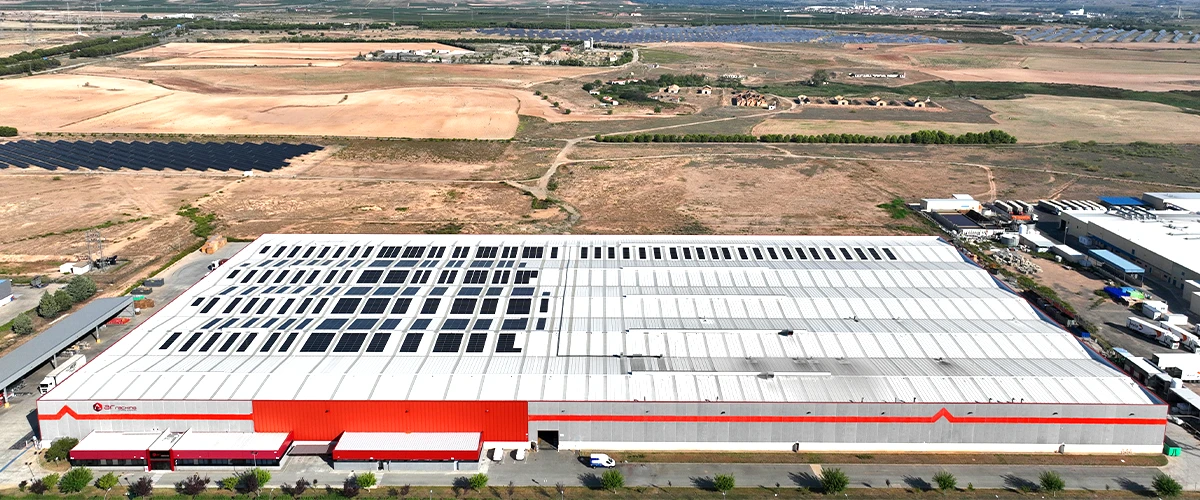
35,000 m² Automated Production Centre
High-volume production capacity is supported by automated roll forming and controlled fabrication. Millimetre-level consistency matters because automated stacker cranes and shuttles stop when rack geometry drifts out of tolerance.
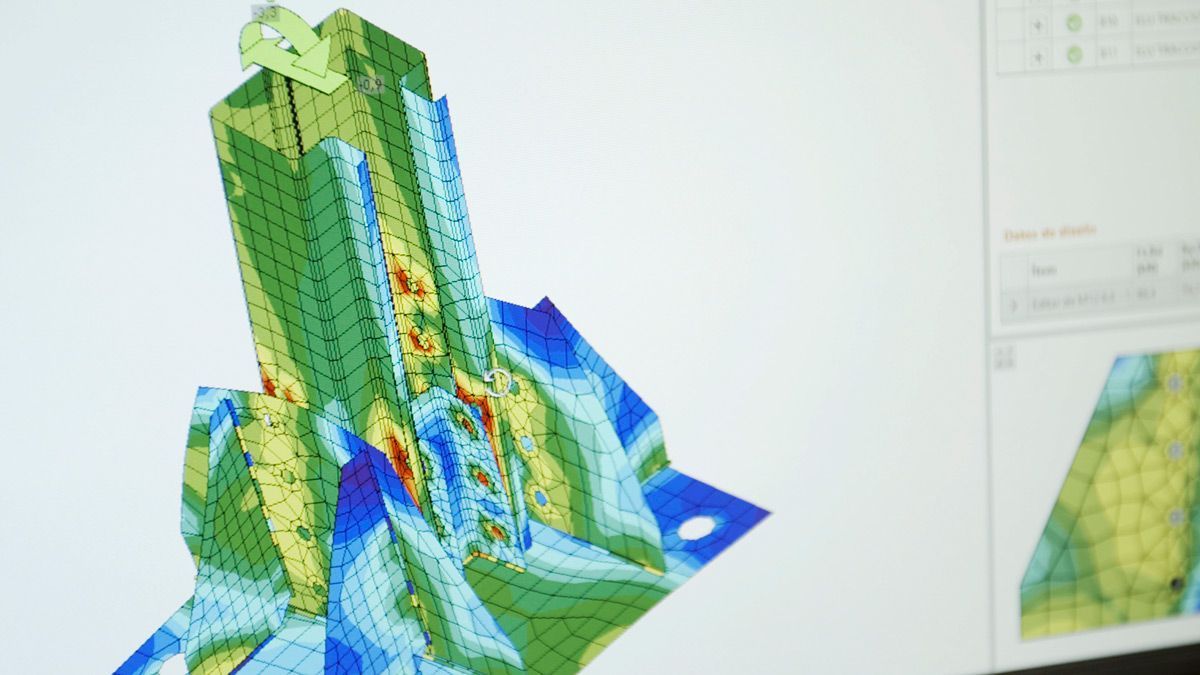
Laboratory-Validated Component Behaviour
R&D collaboration with Mondragon University and a research chair at the University of the Basque Country supports finite-element simulation, physical load testing and cyclic testing for frames, beams and base connections.
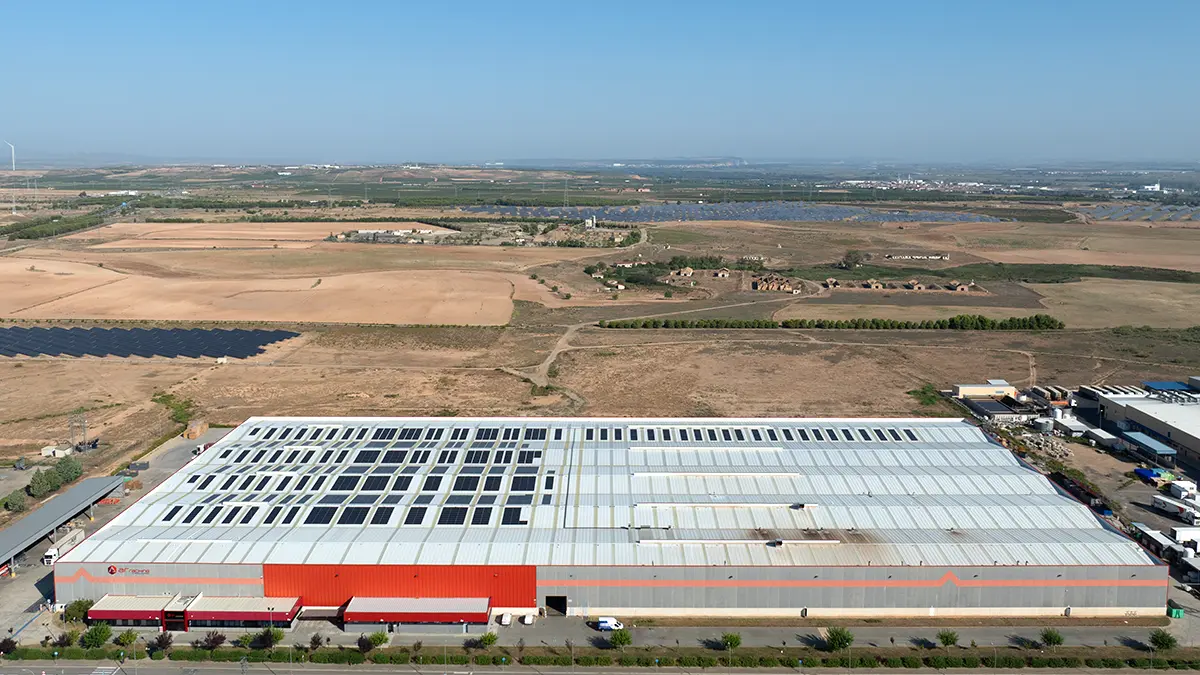
Export-Grade Quality Control
Production records, material checks, welding quality controls and pre-shipment inspections help reduce site surprises. The system is designed for both manual warehouses and automated projects, with a five-year warranty position.
Which Racking Architecture Fits Your Warehouse?
Selection should follow the pallet profile, SKU count, throughput, building height, temperature range and seismic zone. The table below is a practical starting point for early procurement discussions.
| System | Best-Fit Buyer | Density | Direct Access | Rotation | Selection Note |
|---|---|---|---|---|---|
| Selective Pallet Racking | High SKU mix, retail distribution, FMCG, 3PL with changing clients | 2/5 | 100% of pallets | Any | The most flexible starting point for direct access and future expansion. |
| Very Narrow Aisle Racking | Costly land, tall buildings, cold stores, high-density warehouses | 3/5 | 100% of pallets | Any | Requires suitable forklift or VNA equipment and tighter operational discipline. |
| Double-Deep Racking | 3PL and manufacturers with two or more pallets per SKU | 3/5 | 50% of pallets | LIFO per lane | Reduces aisle count, but duplicated handling must be accepted. |
| Drive-In Racking | Beverages, frozen goods, homogeneous pallet loads | 4/5 | Low selective access | LIFO or FIFO drive-through | High-density block storage requires careful forklift and rail planning. |
| Mobile Pallet Racking | Cold storage and high-value storage where every cooled cubic metre matters | 4/5 | 100% when an aisle is opened | Any | Higher mechanical capex can be offset by lower refrigeration volume. |
| Pallet Flow and Push-Back | Perishables and fast-moving inventory, or manufacturing buffers | 4/5 flow, 3/5 push-back | Per lane | FIFO or LIFO | Flow racking supports rotation; push-back supports dense LIFO buffers. |
| Pallet Shuttle Racking | High-throughput distribution centres and deep cold lanes | 5/5 | Per lane | FIFO or LIFO | Semi-automated density with reduced forklift travel inside lanes. |
| AS/RS and Self-Supporting Structures | Large distribution centres, 24/7 operations, deep-freeze and high-tolerance projects | 5/5 | Automated | WMS controlled | Highest capital intensity, but strong control of labour, energy and inventory. |
Density is relative to selective racking in the same footprint. In seismic regions, very tall or very dense configurations require specific structural verification against the destination country's code and the actual site soil class.
Procurement Trends Reshaping Industrial Storage Purchases
Procurement teams are shifting from a single product price comparison to a system-level decision that includes automation readiness, seismic safety, energy intensity, carbon reporting and delivery certainty.
1. Automation-Ready Specifications
Buyers increasingly request rack structures that can accept AS/RS cranes, pallet shuttles, AMRs or picking robots later. Tolerance, deflection and interface data must be defined before purchase, not after installation.
2. Cold-Chain Capacity With Lower Energy Intensity
Cold store operators compare pallet positions per cooled cubic metre. Mobile, drive-in and shuttle solutions are being specified with finishes and steels suitable for temperatures down to −30 °C.
3. Seismic and Safety Compliance
Projects in Chile, Peru, Colombia, Ecuador and western Argentina require seismic calculation and anchoring evidence. Reinforced uprights, bracing, base plates, anchors and row spacers are becoming standard RFQ requirements.
4. ESG and Carbon Reporting
Large buyers ask for verified environmental data, recycling plans and lower-carbon steel options. ISO 14064 verification and documented material traceability strengthen the supplier's ability to answer ESG questionnaires.
5. Flexible 3PL and E-Commerce Layouts
Multi-client logistics operations need adjustable beam levels, modular components and layouts that can be reconfigured without replacing the whole system. E-commerce projects add multi-tier picking and carton flow.
6. Lead-Time Certainty and Export Documentation
Steel price volatility and freight uncertainty have made schedule certainty a procurement criterion. Factory capacity, container loading plans, packing standards and project milestones increasingly influence supplier selection.
Example Buyer Priority Index
This decision-weight model illustrates how industrial storage buyers commonly balance technical, commercial and compliance factors during supplier shortlisting. Project-specific weights should always be agreed by the procurement and engineering teams.
What the Next Generation of Warehouse Racking Must Deliver
Product development is moving toward higher bay heights, closer integration with warehouse software, more robust corrosion protection and stronger environmental accountability.
High-Bay and Self-Supporting Buildings
Self-supporting rack structures allow the racking to carry the building envelope, maximising height and density. They require precise engineering coordination and factory tolerances beyond conventional pallet racking.
Modular, Adjustable and Boltless Shelving
Warehouses need to reconfigure layouts as SKU profiles change. Adjustable beams, modular frames and boltless shelving reduce downtime during expansion and make spare-part management easier.
Corrosion Protection for Humid and Cold Environments
Coastal humidity, tropical climates and freezer condensation demand appropriate surface treatment. Anti-rust finishes and compatible coatings help protect safety and service life in cold chain and export markets.
WMS, AMR and AS/RS Integration
Racking is increasingly specified with interface data for stacker cranes, shuttles and AMRs. Accurate pick-face geometry, load signage and tolerance control support automation without costly site modification.
Smart Inspection and Safety Data
QR-coded components, digital inspection records and damage classification help maintenance teams act before a minor impact becomes a safety incident. The physical rack becomes part of a managed asset system.
Lower-Carbon Steel and Circular Design
Buyers are asking for recycling plans, bolted rather than welded site connections where practical, and transparent material data. Durable components that can be dismantled and reused improve the long-term environmental case.
Quality, Compliance and Project Governance
Quality is not a certificate wall. It is the repeatability of steel, welding, coating, packing and documentation across every shipment. Alohatop Shelf systems are produced under internationally recognised management and welding standards, with full component traceability and a five-year warranty.
ISO 9001
Quality management system supporting consistent production, inspection and corrective action.
ISO 14001
Environmental management system for production and process control.
ISO 45001
Occupational health and safety management across manufacturing operations.
ISO 50001
Energy management framework for automated production and factory efficiency.
EN ISO 3834-2
Welding quality requirements for comprehensive quality control of load-bearing steel structures.
EN 1090-1
Structural steel component conformity supporting dependable fabrication and documentation.
ISO 14064
Verified greenhouse gas reporting supports ESG, tendering and carbon documentation requests.
Traceability and Warranty
Full component traceability from production batch to installation, backed by a five-year warranty.
For seismic projects, racking calculations are adapted to local standards such as NCh2369 and NCh433 in Chile, E.030 in Peru, NSR-10 in Colombia, NEC in Ecuador and INPRES-CIRSOC 103 in Argentina, together with the actual site soil class and building interface conditions.
From RFQ to Installation: A Controlled Export Workflow
A storage project succeeds when engineering, manufacturing and logistics follow one sequence. This workflow helps buyers compare suppliers on process maturity rather than promises alone.
1. Technical Discovery
Building layout, clear height, pallet dimensions, maximum load, SKU count, throughput, forklift type, temperature range and site location are collected and checked for completeness.
2. Layout and Simulation
CAD layouts, pallet maps, aisle studies and storage-density comparisons are prepared. Early layout work reveals whether selective, VNA, shuttle or AS/RS racking is the most efficient direction.
3. Structural Calculation
Frames, beams and connections are calculated for the actual load cases, building interface and seismic zone. Safety factors, deflection limits and anchoring requirements are documented.
4. Manufacturing and Quality Control
Automated production, welding controls, coating checks and pre-shipment inspection are completed against approved drawings and project specifications and recorded for traceability.
5. Export Packing and Logistics
Components are labelled, packed and loaded according to a container plan. Accessories, installation drawings and packing lists are coordinated so the site team can receive and identify parts efficiently.
6. Installation Support and Handover
Supervision, approved drawings, plumb tolerance checks, load signage and final inspection records help the operator start safely and maintain the system over its service life.
Frequently Asked Questions From Industrial Racking Buyers
These are the questions that most often determine whether a supplier is technically suitable, commercially competitive and ready for an international project.
What makes a China industrial shelving supplier suitable for export projects?
A suitable export supplier must demonstrate more than a product list. Buyers should review design capability, structural calculation, steel and coating specifications, weld quality, factory traceability, packing standards, installation documentation, warranty terms and previous projects in comparable environments. A supplier that can control design, production and installation support under one workflow is easier to audit and less likely to cause specification gaps between factory and site.
How do I specify the correct load capacity for pallet racking?
Start with the maximum loaded pallet weight, pallet dimensions, load position, number of pallets per bay, beam length and required clear height. Racking capacity is not a single universal number: it depends on upright capacity, beam capacity, deflection limits, dynamic handling and load distribution. Buyers should provide actual pallet weights and load diagrams, not only an estimated warehouse tonnage, so the engineer can calculate the frame and beam combination safely.
Can industrial racking be designed for seismic zones?
Yes. Racking in seismic regions must be calculated against the destination country's code and site conditions. Relevant standards include NCh2369 and NCh433 in Chile, E.030 in Peru, NSR-10 in Colombia, NEC in Ecuador and INPRES-CIRSOC 103 in Argentina. Design measures can include reinforced uprights and bracing, heavier base plates and anchors, row spacers and stricter beam deflection limits. The actual building interface and soil class also matter.
Which pallet sizes and temperatures can your storage systems support?
Common formats include 1200 × 1000 mm pallets widely used in Latin America, the Brazilian PBR 1000 × 1200 mm, 1200 × 800 mm Euro pallets and ISO formats such as 1100 × 1100 mm and 1219 × 1016 mm. Cold store and freezer systems can use steels and finishes suitable for temperatures down to −30 °C, which is relevant for fruit, seafood, meat and frozen food operations.
What is the typical lead time for an export racking project?
Lead time depends on project size, drawing approval, structural calculation, coating requirements and shipping schedule. A typical sequence includes technical review, layout and calculation, approval drawings, production, pre-shipment inspection and sea freight. For accurate scheduling, buyers should share the complete load data and target delivery window early so production capacity and container planning can be reserved.
What documentation should accompany a racking shipment?
A professional export package should include approved layout drawings, beam and frame load signs, material and coating specifications, quality inspection records, packing lists, container loading plans, installation instructions and warranty documents. For seismic or regulated projects, structural calculation reports and anchoring information may also be required by the local engineer or authority.
Can the racking be customized for my building and pallet profile?
Yes. Frame depth, beam length, level spacing, load capacity, colour, accessories and bracing can be adapted to the actual building, pallet and handling equipment. Customization should always be supported by calculation and drawings. A supplier that simply changes dimensions without reviewing structural implications creates avoidable safety and performance risk.
What information should I include in my inquiry?
Send the building layout and clear height, pallet dimensions and maximum load weight, number of SKUs and pallets per SKU, daily throughput, forklift or automation type, temperature range and project city. If available, include a drawing, racking layout preference and target delivery date. This information allows the engineering team to recommend the most efficient system and prepare a more accurate quotation direction.

Request a Layout Review and Industrial Racking Quotation
Planning a new warehouse, an expansion or a supplier switch? Share your building layout, pallet dimensions, load weight, throughput, temperature range and project city. The engineering team can evaluate selective racking, VNA, drive-in, shuttle, cold-storage and AS/RS-ready options, then recommend a safer and more space-efficient storage direction.
For faster technical review, include your target delivery date, container destination and any local seismic or safety requirements. A clear input brief reduces quotation cycles and helps protect the project schedule.
Inquire Now