8 Wholesale-Ready Industrial Shelving & Pallet Rack Products
Product selection should start with pallet format, load weight, selectivity, throughput and the destination market's safety requirements. The eight systems below represent common high-intent buying scenarios for importers, distributors, 3PLs and warehouse developers.
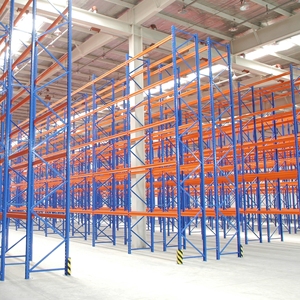
Low Price Custom 2–6 Level Heavy Duty Pallet Racking System
Flexible 2–6 level layout for mixed warehouse loads, with beam and frame dimensions tailored to pallet size and forklift access.
View product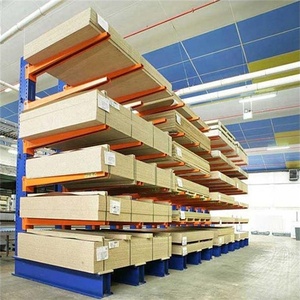
Heavy Duty Industrial Warehouse Cantilever Arm Racking System
Ideal for long profiles, pipes, timber and oversized materials that cannot be stored efficiently on standard pallet beams.
View product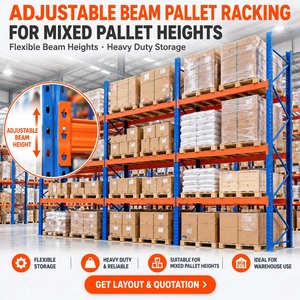
Adjustable Beam Pallet Racking System for Mixed Pallet Heights
A practical choice for warehouses with fast-changing SKU heights, supporting reconfiguration without replacing the main structure.
View product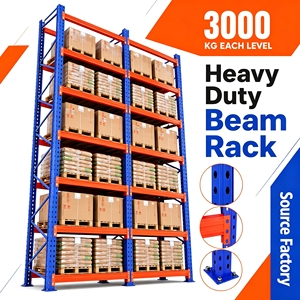
Factory Direct 3000kg High Load Steel Pallet Rack System
Heavy-load selective racking for dense goods, industrial stock and high-throughput distribution centres requiring stable direct access.
View product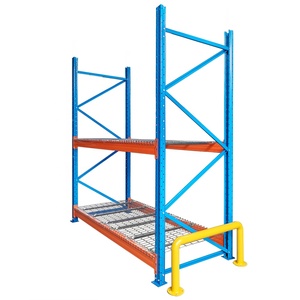
2500kg Layer Load Warehouse Pallet Shelving Rack with Wire Mesh Decking
Wire mesh improves surface support for smaller cartons and irregular loads while keeping sprinkler and inspection access practical.
View product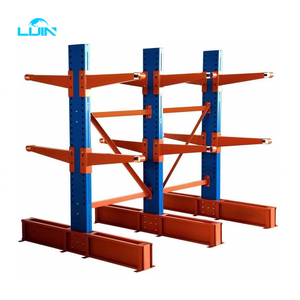
Heavy Duty Cantilever Racking System for Factory and Warehouse
Open-front cantilever storage for manufacturing yards, building materials and long stock that needs fast crane or forklift handling.
View product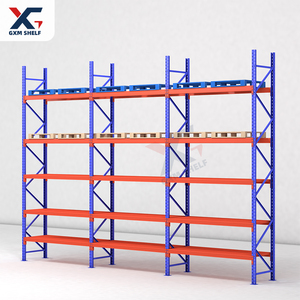
Heavy Duty Pallet Racking Warehouse Pallet Storage System
A proven selective pallet racking configuration for importers and distributors seeking strong load performance and simple expansion.
View product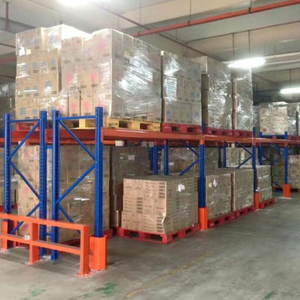
1300KG New Industrial Warehouse Racking Shelving Storage System
A medium-duty racking option for faster installation, cleaner warehouse planning and cost-controlled storage expansion.
View productCountries with installed storage systems
Warehouse projects delivered
Annual steel production capacity
Of production exported worldwide
What Buyers Should Really Compare Beyond Unit Price
Search results for top China industrial shelving pallet rack suppliers and wholesaler are crowded with similar catalogues, price lists and product photos. For procurement teams, that creates a different problem: the apparent choice is wide, but the real risk is hidden in engineering, documentation, packing, installation and after-sales support. A pallet racking system is not a commodity shelf. It is a structural product that must match pallet dimensions, load weights, aisle equipment, building height, sprinkler design, local seismic requirements and the way inventory actually moves.
China-based manufacturing can offer strong value in steel profiles, powder coating, automated welding and export packing. However, the lowest quotation often excludes calculation reports, load plaques, anchor specifications, spare parts, installation supervision or compliance documentation. Those missing items become expensive after the container arrives. The best suppliers make them visible before purchase.
The most reliable wholesale comparison is not “price per beam” but total landed cost per usable pallet position, including freight volume, installation time, damage rate, warranty response and future reconfiguration cost. This white paper is written from an export project engineering perspective. It explains how serious buyers can compare suppliers, what product trends will shape 2026–2030 procurement, and where Alohatop Shelf's enterprise advantages fit into a rigorous tender process.
What Defines a Top China Industrial Shelving Pallet Rack Supplier?
The strongest suppliers are not simply factories with low prices. They are engineering-led exporters that can translate warehouse data into a safe, buildable and supportable storage system.
Engineering Before Quotation
A credible supplier asks for pallet size, load weight, clear height, forklift type, SKU profile and project location before recommending a layout. It provides beam deflection limits and frame capacity data, not just a picture catalogue.
Production Control and Traceability
Top-tier suppliers control uprights, beams, bracing, base plates and accessories through defined production batches. Traceability matters when projects require inspection, warranty claims or future expansion with matching components.
Safety and Compliance Evidence
Buyers should request welding control, coating standards, structural steel declarations, load test summaries and calculation assumptions. For seismic regions, local code checks and anchoring details must be included in the technical package.
Export Packing Built for Steel
Beams and frames travel long distances by sea and road. Good suppliers standardise bundles, protect powder-coated surfaces, label installation zones and optimise container loading without sacrificing site handling efficiency.
Wholesale Clarity
A real wholesale programme gives distributors and project buyers clear component lists, optional accessories, spare-part recommendations and repeat-order consistency. Hidden exclusions create problems during installation and handover.
Warranty and Lifecycle Support
Warranty is only meaningful when the supplier can identify components, replace damaged parts and support periodic inspections. Strong suppliers treat rack safety as a lifecycle issue, not a one-time shipment.
Procurement Trends Reshaping the China Pallet Rack Wholesale Market
Buying behaviour is moving from catalogue purchasing to data-led supplier evaluation. The following trends are especially relevant for importers, distributors and warehouse owners planning projects from 2026 onward.
Landed Cost and Total Cost of Ownership
Procurement teams increasingly compare container utilisation, installation labour, damage risk, spare parts and future reconfiguration against the initial quotation. A racking supplier with clean packing and accurate drawings can reduce total project cost even when its unit price is not the lowest.
Compliance-Led Purchasing
Safety documentation is becoming part of the purchase condition. Buyers ask for calculation assumptions, anchor specifications, welding quality evidence and load signage. In seismic zones, racking must be checked against local requirements rather than treated as generic equipment.
Cold Chain and High-Bay Growth
Cold storage, freezer warehouses and high-bay distribution centres continue to expand in food, agriculture and pharmaceutical supply chains. Low-temperature steel performance, coating durability, aisle discipline and fire engineering become central procurement criteria.
Automation-Ready Racking
Even manually operated warehouses now ask whether racking can later support shuttles, AMRs, stacker cranes or miniload systems. Suppliers with tight manufacturing tolerances and experience in automated warehouse structures have a clear advantage.
Sustainability and Carbon Reporting
Environmental data is moving into tender documents. Verified carbon reporting, energy management, coating processes and steel optimisation can influence supplier selection, particularly for international distributors serving ESG-conscious end customers.
Digital Tender Packages
RFQs now include CAD layouts, SKU data, throughput assumptions and WMS integration notes. Suppliers that can return marked drawings, load calculations, component lists and installation sequences quickly are easier to compare and less risky to appoint.
How Industrial Shelving and Pallet Racking Are Evolving
The next generation of racking is being shaped by automation compatibility, seismic safety, energy-efficient cold storage and lifecycle traceability. Buyers who understand these trends can avoid systems that become obsolete before they are fully utilised.
High-Strength Steel and Optimised Profiles
Modern racking designs use optimised upright and beam profiles to deliver load capacity with less unnecessary steel. The buyer benefit is not only material savings, but also lower freight volume and faster installation when the engineering is properly validated.
Bolted Modularity and Faster Installation
Bolt-together frames and interchangeable beams are becoming more precise and easier to expand. For wholesalers, modularity reduces stock complexity and supports repeat orders across different end-user projects with predictable components.
Automation-Grade Tolerances
Automated stacker cranes and shuttles require rack geometry that stays within strict tolerances. Robotic welding, laser-controlled production and dimensional inspection are becoming key supplier selection criteria for AS/RS-ready projects.
Cold-Store Material and Finish Development
Freezer warehouses require steels, coatings and connection details suited to low temperatures and moisture cycles. Suppliers with experience down to −30 °C can help buyers avoid brittle finishes, condensation issues and maintenance surprises.
Integrated Safety and Protection
Beam locks, upright protectors, row spacers, guide rails and clear load plaques are increasingly designed as part of the system. Good safety accessories should be quoted from the beginning rather than added after the first forklift impact.
Digital Traceability and Smart Documentation
QR labels, component registers, digital drawings and inspection records make racking easier to manage over its service life. This is a quiet but important trend: the supplier who can document the system becomes easier to audit and maintain.
Storage Density Comparison: A Visual Procurement Snapshot
Indicative density comparison within the same footprint. Actual capacity depends on handling equipment, aisle width, clear height, load profile and local structural requirements.
Which Pallet Racking System Fits Your Wholesale Project?
Use this engineering comparison as an early filter. A final recommendation should always be based on pallet data, SKU profile, throughput, building geometry and safety codes.
| System | Best for | Direct access | Stock rotation | Procurement note |
|---|---|---|---|---|
| Selective racking | High SKU mix, importers, general distribution | 100% pallets | Any | Best first choice when flexibility and fast access matter. |
| Very narrow aisle | Tall buildings, cold stores, expensive floor space | 100% pallets | Any | Requires guided forklifts and disciplined aisle operation. |
| Double-deep | 3PL warehouses with multiple pallets per SKU | Around 50% | LIFO per lane | Increases density without full automation. |
| Drive-in racking | Homogeneous goods and freezer storage | Low selectivity | LIFO or FIFO drive-through | High density but slower access; good for stable SKUs. |
| Pallet shuttle | High-throughput DCs and deep cold lanes | Per lane | FIFO or LIFO | Higher capex, strong labour savings in suitable profiles. |
| AS/RS and self-supporting | Large DCs, 24/7 operations, deep freeze | Automated | WMS controlled | Requires tight tolerances, integration planning and lifecycle support. |
Density and access trade-offs should be calculated together with installation cost, insurance risk and future expansion plans.
Alohatop Shelf: Export-Grade Manufacturing for Wholesale Buyers
For buyers benchmarking China industrial shelving pallet rack suppliers and wholesalers, Alohatop Shelf provides a useful reference model: an export-oriented racking manufacturer with factory-controlled production, engineering validation and international project support.
Manufacturer, Not a Reseller
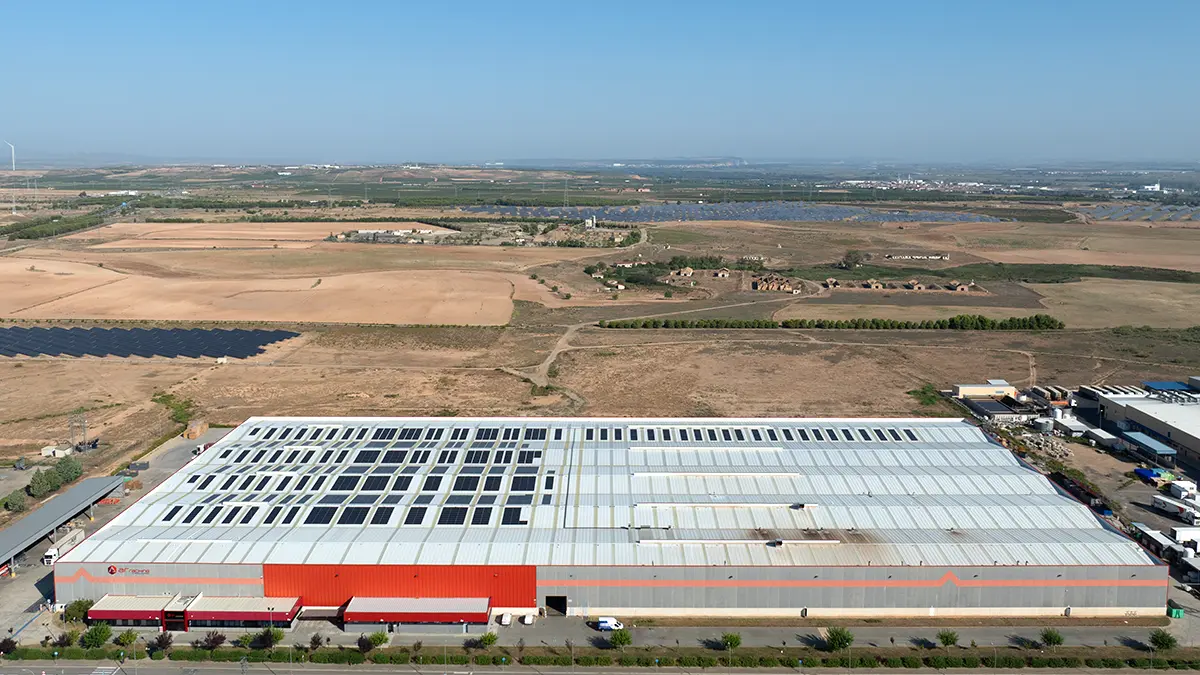
Alohatop Shelf designs, calculates, manufactures and supports metal racking systems with a 35,000 m² highly automated production centre and more than 100,000 t of annual capacity. More than 90% of output is exported, giving the company practical experience in port logistics, export packing and international project coordination.

R&D Validated in Laboratory Conditions
Engineering is not limited to drawings. The company's technology centre works with an R&D laboratory at Mondragon University to test strength, behaviour and safety of racking components. A research and simulation chair at the University of the Basque Country supports calculation models and simulation tools that feed directly into seismic-ready frame, beam and connection design.
Millimetre Precision and Full Traceability
Robotic production and laser-controlled processes help keep frames and beams within the tolerances required by automated warehouses and conventional projects alike. Every upright and beam can be traced from production batch to installation, backed by a 5-year warranty and a global support network of 14 own branches and 70+ trusted distributors.
A Four-Step Checklist for International Procurement Teams
Before appointing any China industrial shelving pallet rack supplier or wholesaler, use a repeatable validation sequence. This reduces technical ambiguity and protects project timelines.
Define Load and Site Data
Prepare pallet dimensions, maximum load per pallet, clear height, aisle equipment, SKU count, throughput, temperature range and project city. Incomplete data is the most common cause of quotation rework.
Audit Engineering Capability
Ask for calculation assumptions, drawings, load plaques, anchor details and seismic verification where required. A supplier that cannot explain its structural basis should not be treated as the lowest-risk option.
Review Factory and Quality Evidence
Request production photos, welding control documents, coating specifications and component traceability samples. Factory-controlled manufacturing matters most when orders mix different beam lengths and frame depths.
Verify Packing, Delivery and Support
Confirm bundle labels, container loading plan, installation sequence, spare-part list and warranty response. Good pre-shipment planning reduces site delays, surface damage and missing-component disputes.
China Industrial Shelving Pallet Racks Suppliers & Wholesaler FAQ
Answers to the questions procurement teams ask most often when comparing suppliers, wholesalers and industrial racking systems.
How do I identify top China industrial shelving pallet rack suppliers?
Look beyond product photos and unit prices. A strong supplier should ask structured load and site questions, provide engineering drawings and capacity assumptions, explain its quality controls and offer spare-part support. Request references, certification evidence and a sample technical package. The best supplier is the one that reduces project uncertainty, not simply the one with the lowest catalogue price.
What is the difference between a China racking supplier and a wholesaler?
A supplier usually sells a defined product or system to an end user, while a wholesaler supports distributors, importers and project buyers with repeatable component supply, volume pricing and export packing. In practice, the strongest industrial racking manufacturers combine both roles: factory production, engineering support and wholesale-friendly documentation.
What load capacities can industrial pallet racking systems support?
Capacity depends on frame design, beam section, span, pallet support, load distribution and safety factors. Many warehouse projects require 1,000–3,000 kg per level, while heavier or specialised systems can be engineered for greater loads. Buyers should never rely on a generic capacity claim; they should provide actual pallet weight, dimensions and impact conditions for calculation.
Can pallet racking be designed for seismic zones and cold storage?
Yes, but it must be engineered for the destination market. Seismic design may require reinforced uprights, heavier base plates, specific anchoring, row spacers and reduced beam deflection limits. Cold-store systems need materials and finishes suitable for low temperatures and moisture cycles. Suppliers should confirm the local code, site conditions and operating temperature before quoting.
Which certifications and warranty should buyers request?
Useful evidence includes ISO 9001 for quality management, ISO 14001 and ISO 50001 for environmental and energy management, ISO 45001 for safety, EN ISO 3834-2 for welding quality, EN 1090-1 for structural steel components and ISO 14064 for verified carbon reporting where available. A meaningful warranty should be linked to component traceability, spare-part availability and technical support.
What information is needed for a fast wholesale quotation?
Send a building layout with clear height, pallet dimensions, maximum load per pallet, number of SKUs and pallets per SKU, daily throughput, forklift or automation type, temperature range and project location. If drawings are available, include them. This allows the supplier to recommend selective, VNA, drive-in, shuttle, cantilever or automated racking and return a more accurate quotation.
Request a Racking Layout, Budget and Wholesale Quotation
Share your pallet data, building height and project location. Our engineering team can recommend a safer, more space-efficient industrial shelving or pallet racking system and prepare a wholesale quotation for your market.
Get a Quote