8 Pallet Warehouse Racking Products for Wholesale Procurement
Compare selective, heavy-duty, multi-layer, stacking, intelligent and light-duty systems. Every product link below preserves the original specification page so buyers can request drawings, load tables and container-loading plans.
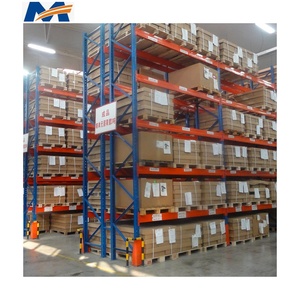
Heavy-Duty Pallet Racking & Warehouse Picking Shelves
An export-ready selective racking system for pallets, cartons and mixed picking. Direct access to every pallet, adjustable beam levels and straightforward forklift operation suit distributors and 3PL warehouses with high SKU selectivity.
View product details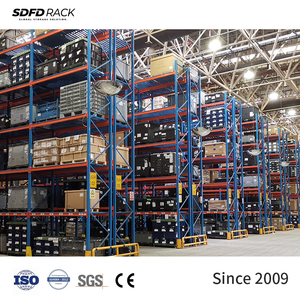
Customized Multi-Layer Selective Pallet Racking
Designed for tall warehouses and multi-level storage, this system combines selective access with custom layer heights, higher rigidity and flexible steel configurations for project-based wholesale orders.
View product details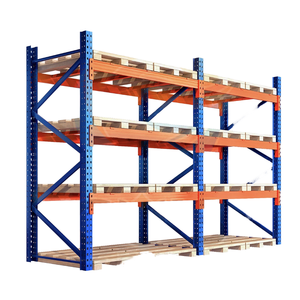
1–5 Layer Detachable Steel Stacking Rack
A space-saving, stackable pallet rack for bulk storage, seasonal inventory and overflow capacity. Detachable frames allow mixed-height storage and rapid deployment without fixed aisle infrastructure.
View product details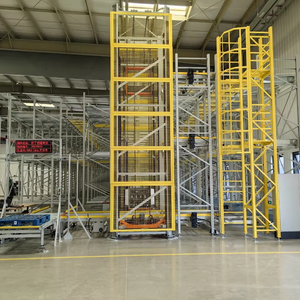
Intelligent Library Pallet Rack with Conveying System
An intelligent rack-and-conveyor concept for high-efficiency warehouse and library storage. It suits projects where automated pallet transfer, traceability and reduced manual handling are part of the procurement brief.
View product details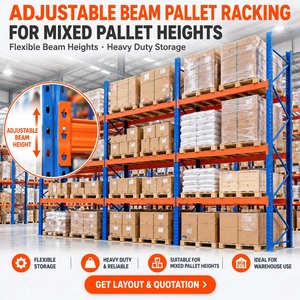
Adjustable Beam Pallet Racking for Mixed Heights
Beam levels can be repositioned to accommodate changing pallet heights and product profiles. A practical choice for wholesalers serving mixed-carton and pallet operations with unpredictable inventory.
View product details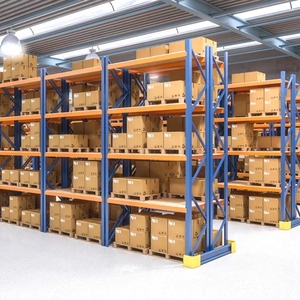
Heavy-Duty Steel Warehouse Pallet Racking System
A robust steel storage shelf and pallet racking solution for industrial factories. Engineered for heavier loads, repetitive forklift cycles and long service life in demanding warehouse environments.
View product details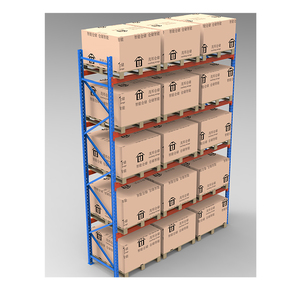
Standard Adjustable Heavy-Duty Pallet Racking
A standard yet customizable pallet racking system for warehouses that require certified steel, predictable lead times and scalable bay widths. Suitable for export projects and repeat wholesale purchasing.
View product details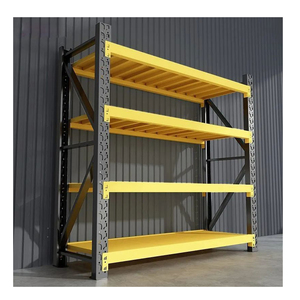
Light-Duty 4-Tier Steel Storage Rack
A corrosion-protected, four-tier steel shelving rack for home, garage, spare-parts and light warehouse use. Provides an economical add-on product for wholesalers serving SME and retail customers.
View product detailsCountries with installed storage systems
Warehouse projects delivered
Annual steel production capacity
Production exported worldwide
Top China Pallet Warehouse Racking Suppliers & Wholesaler: Separate Capacity from Claims
China is one of the world’s most concentrated sources of steel storage systems, with deep supply chains for roll-formed uprights, box beams, powder coating, safety accessories and automated storage interfaces. That depth is valuable to importers, distributors and project buyers, but it also creates a search problem: many websites present the same catalogue language, the same square-metre claims and the same “factory direct” promise. For a serious warehouse racking procurement team, the decision is not simply who offers the lowest price per kilogram. It is who can prove a safe system, document the engineering assumptions and deliver a repeatable wholesale supply programme.
Pallet racking is a structural product. It carries people, forklifts, inventory and building interfaces. A top China pallet warehouse racking supplier should provide beam load tables, upright capacities, steel specifications, coating data, anchor requirements, seismic assumptions, installation tolerances and third-party certification evidence. The information gain that matters to buyers is not another generic slogan; it is the ability to compare systems on safety, total cost of ownership, lead time, container loading and after-sales support.
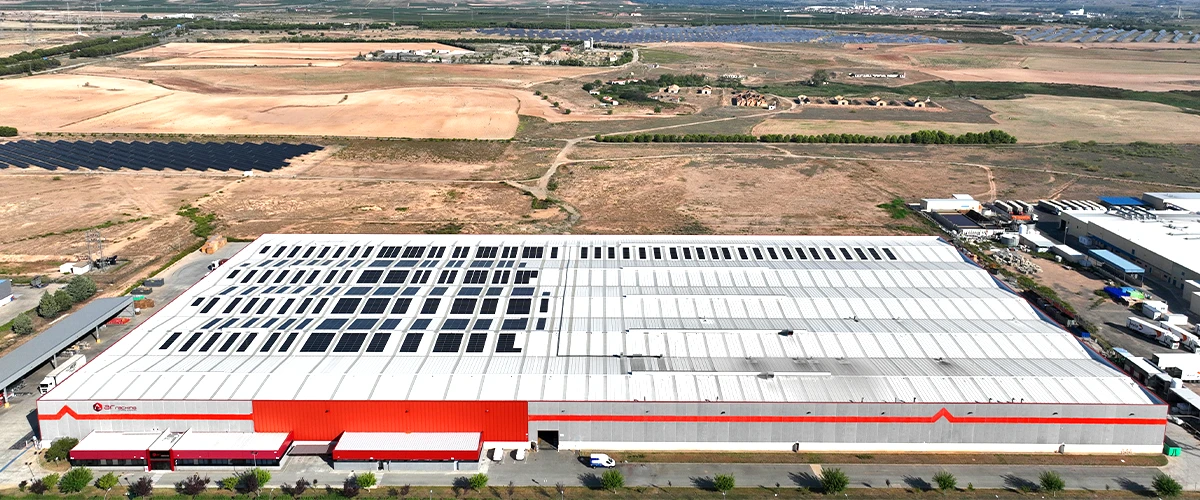
Alohatop Shelf approaches wholesale supply with manufacturer-level control. Our background includes a 35,000 m² highly automated production centre with more than 100,000 tonnes of annual steel capacity, more than 42,000 warehouse projects delivered, systems installed in over 60 countries and more than 90% of production exported. That scale is supported by a 5-year warranty, component traceability and a project engineering team that reviews layouts, loads and local conditions before a quotation is finalised.
- Ask for load tables and material evidence: a safe racking quotation should identify upright and beam capacities, steel grades and coating requirements.
- Confirm the project location: seismic zone, soil class, humidity, temperature and building clear height can change the design substantially.
- Compare delivered value: freight, packing, installation drawings, spare parts and inspection support often matter more than the ex-works price.
- Check the production model: a factory-controlled wholesaler should explain welding, powder coating, traceability and pre-shipment inspection clearly.
Why Alohatop Shelf Is Positioned Among Capable China Racking Wholesalers
Wholesale buyers need more than a product list. They need a supplier whose engineering, manufacturing, certification and export processes reduce project risk across repeated orders.
Factory-controlled production
A 35,000 m² highly automated production centre and 100,000+ t annual capacity support consistent uprights, beams and accessories. Wholesale buyers avoid mixed-source components and receive repeatable batches across follow-up orders.
Seismic and cold-chain engineering
Projects are reviewed against local design conditions, including seismic requirements used in Andean and Pacific markets, plus cold-store steels and finishes for temperatures down to −30 °C. Reinforced bracing, base plates, anchors and row spacers can be specified where required.
R&D validated in laboratory
Our technology centre works with an R&D laboratory at Mondragon University and a research and simulation chair at the University of the Basque Country. Finite-element simulation and physical load testing feed frame, beam and base-connection improvements.
Automated precision for AS/RS
Robotic welding and laser-controlled processes help keep rack geometry within the tolerances expected by stacker cranes, miniload systems and pallet shuttles. That precision matters when automated equipment cannot tolerate millimetre drift in the rack structure.
Export logistics and regional support
More than 90% of output is exported. With 14 own branches and 70+ distributors, we coordinate container loading, port documentation and installation support for gateways such as Santos, Callao, San Antonio, Cartagena and Buenos Aires.
Certified quality and traceability
ISO 9001, ISO 14001, ISO 45001, ISO 50001, UNE EN ISO 3834-2 welding quality, EN 1090-1 and ISO 14064 carbon reporting support procurement due diligence. A 5-year warranty and component traceability protect long-term safety.
Match the Racking System to the Load, Not the Catalogue
For wholesale buyers, the best product is the one that fits the end user’s pallet profile, throughput, building height and operating environment. Use this recommendation logic when preparing a mixed-container or project quotation.
Selective pallet racking
Best for distributors, food and beverage warehouses, retail DCs and 3PL operations that need direct access to every pallet and high SKU flexibility. Recommended products include standard adjustable and heavy-duty selective systems.
High-density stacking and bulk storage
Suitable for seasonal inventory, overflow pallets and homogeneous goods. Detachable stacking racks and multi-layer systems can increase storage density where fixed aisle infrastructure is limited.
Intelligent and automated storage
Appropriate for projects where pallet transfer, traceability and reduced manual handling are in the tender. Intelligent racking with conveying systems can support library, spare-parts and high-efficiency warehouse applications.
Light-duty and hybrid shelving
Useful for SMEs, retail wholesalers, garage storage and spare-parts rooms. Combining light-duty shelving with pallet racking in one wholesale order improves container utilisation and gives distributors a broader product offer.
Future Procurement Trends for Pallet Racking Wholesale
Procurement teams are moving from catalogue buying to data-backed supplier qualification. The next buying cycle will reward suppliers who can prove engineering assumptions, delivery capability and lifecycle support.
Automation-ready tenders
Buyers increasingly require racking to be modelled for AMRs, AGVs, stacker cranes or shuttles before final pricing. Tolerances, interface heights and digital drawings become part of the commercial comparison.
Cold-chain expansion
Fruit, seafood, meat, dairy and pharmaceutical cold chains continue to grow. Freezer racking must account for low-temperature steel behaviour, corrosion protection, condensation and service access.
Seismic and safety compliance
Importers are asking for site-specific seismic verification, anchor calculations and documented installation checks. Suppliers that treat racking as a structural system will win projects that value safety and permit approval.
Total cost of ownership
Freight, installation, spare parts, inspection and downtime are moving into the quotation model. A lower ex-works price can be more expensive if packaging is weak, drawings are incomplete or installation support is missing.
Modular mixed-container sourcing
Wholesale buyers combine uprights, beams, accessories and light-duty shelving in one shipment. Modular dimensions, clear packing lists and efficient container loading are becoming competitive advantages.
ESG and verified carbon data
ISO 14064 verified carbon reporting, recyclable steel and reduced packaging waste are increasingly requested in supplier questionnaires. Projects with green-building or corporate ESG targets need data, not only claims.
What the Next Generation of Pallet Racking Will Include
The racking product itself is changing: stronger profiles, sensor-ready safety features, freezer-grade finishes and tighter digital integration are becoming part of mainstream wholesale specifications.
High-strength profiles and hybrid connections
New steel profiles and connection details aim to reduce material weight while maintaining load capacity. For wholesalers, that can improve freight efficiency and create differentiated product tiers.
Sensor-ready safety and traceability
QR-coded components, impact indicators and digital inspection records make it easier to monitor rack condition. These features support maintenance programmes and help distributors add service value after installation.
Cold-store material engineering
Freezer environments demand attention to steel toughness, coating adhesion and condensation. Racking for temperatures down to −30 °C is increasingly specified with material certificates and corrosion protection data.
AS/RS-compatible geometry
Automated storage projects require rack structures that align with crane, shuttle and miniload tolerances. BIM models, interface drawings and inspection reports are becoming standard deliverables.
Quick-ship modular systems
Standard bay widths, pre-punched frames and simplified accessories support faster quotation and dispatch. Wholesalers can hold modular stock for repeat customers while still offering bespoke project engineering.
Green steel and lower-carbon supply
Lower-carbon steel, recyclable coatings and optimised packaging are entering buyer specifications. Verified environmental data can support tenders where the end user reports warehouse carbon performance.
Laboratory Testing and Automated Production Reduce Wholesale Risk

Engineering Validated in the Laboratory, Not Only in a Price List
Wholesale buyers often inherit technical risk from end users. A frame that looks acceptable in a catalogue may behave differently under cyclic forklift impact, seismic loading, cold-store conditions or high-bay wind exposure during installation. Our technology centre works with an R&D laboratory at Mondragon University to test the behaviour, strength and safety of racking components under real load cases.
A research and simulation chair at the University of the Basque Country develops calculation models and simulation tools. That knowledge is transferred into frames, beams and connections designed for demanding seismic zones and automated warehouses. Physical testing and finite-element simulation are then combined with automated production controls to keep large-volume wholesale orders consistent.
- Finite-element simulation of frames, beams and base connections
- Physical load and cyclic testing of new profiles
- Design review against European principles and local South American code requirements
- Robotic welding and laser-controlled production for AS/RS and shuttle projects
Warehouse Racking Applications for Distributors and Project Buyers
Different sectors create different pallet sizes, rotation rules, temperatures and safety requirements. A wholesale offer becomes more competitive when it is aligned with the end user’s operating reality.
Food, beverage and cold chain
Selective, mobile, drive-in, VNA and pallet shuttle systems for fruit, seafood, meat, dairy and packaged food operations, including freezer environments down to −30 °C.
3PL, e-commerce and retail
Flexible selective and double-deep concepts for multi-client operations, plus picking shelving and light-duty racks for fast-moving e-commerce and spare-parts fulfilment.
Manufacturing and automotive
Heavy-duty pallet racking, line-side storage and stacking racks for raw materials, work-in-progress buffers and finished goods in factories and assembly plants.
Agriculture and seasonal storage
Bulk bins, fertiliser, seed and seasonal overflow storage benefit from detachable stacking racks and modular systems that can be reconfigured between harvest cycles.
How to Evaluate China Pallet Racking Suppliers Before You Place a Wholesale Order
Use this matrix to compare factories, exporters and wholesalers on evidence rather than sales language. The same questions can be applied to selective racking, heavy-duty systems and automated storage projects.
| Due-diligence question | Evidence to request | Commercial impact |
|---|---|---|
| Are you a factory, exporter or trading company? | Factory audit, production video, business licence, export record and product traceability process. | Reduces the risk of undisclosed mixed sourcing, inconsistent components and unclear responsibility. |
| Can you provide load tables and material specifications? | Upright and beam capacity tables, steel grade, section drawings, coating specification and material certificates. | Supports safe system design, permit review and accurate comparison between quotations. |
| How do you handle seismic and soil conditions? | Site soil class, local code reference, anchor plan, base-plate design and structural engineer review. | Avoids under-design in seismic zones and unnecessary over-design that raises project cost. |
| What is the coating system for humidity or cold storage? | Pretreatment process, powder coating thickness, salt-spray report and low-temperature finish suitability. | Extends service life in ports, tropical warehouses and freezer environments while reducing maintenance. |
| How will the order be packed and shipped? | Container loading plan, packing list, accessory identification, spare parts list and installation drawings. | Lowers freight damage, site delays and missing-part issues during installation. |
| What warranty and lifecycle support is included? | Written warranty terms, component traceability, inspection guidance and maintenance support options. | Improves total cost of ownership and protects the end user’s safety management programme. |
Certifications That Support Wholesale Procurement
International management and welding certifications help buyers verify production discipline, safety culture and component traceability. Alohatop Shelf systems carry a 5-year warranty with documented quality controls.
 ISO 9001
Quality management
 ISO 14001
Environmental management
 ISO 45001
Occupational health and safety
 ISO 50001
Energy management
 EN ISO 3834-2
Welding quality control
 EN 1090-1
Structural steel components
Real Warehouse Installations in Demanding Environments
Project experience provides useful information gain for buyers: it shows how racking designs perform when cold temperatures, high density, seismic requirements and automated equipment are part of the same brief.
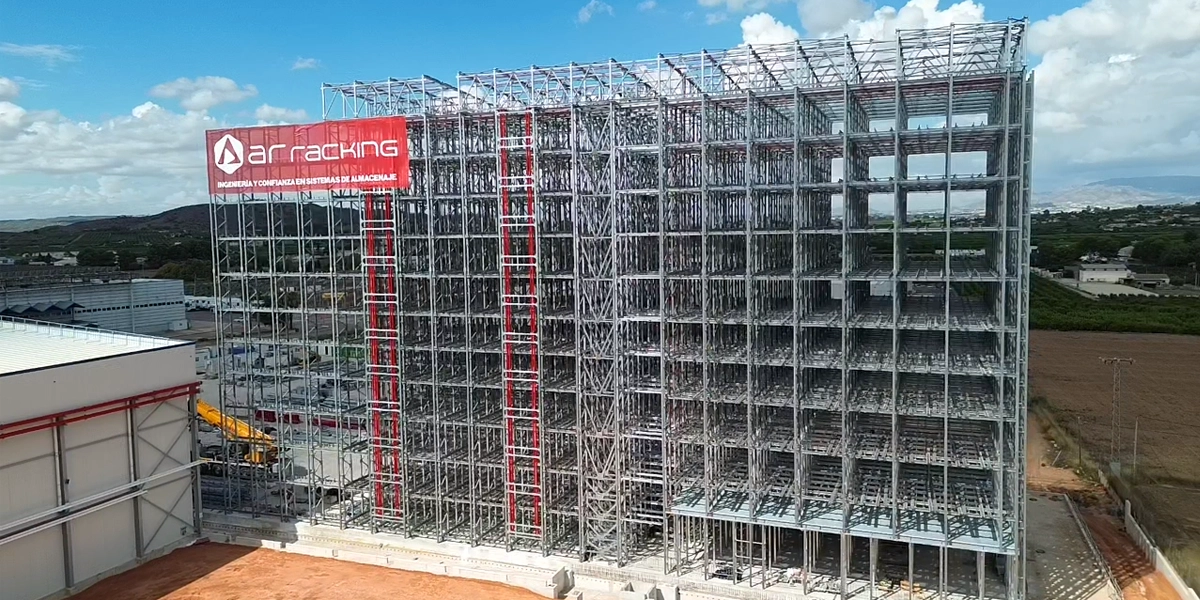
23,000 pallet positions at −24 °C
A self-supporting deep-freeze warehouse for a frozen fruit and vegetable processor, where the racking structure also supports the building envelope and automated storage requirements.
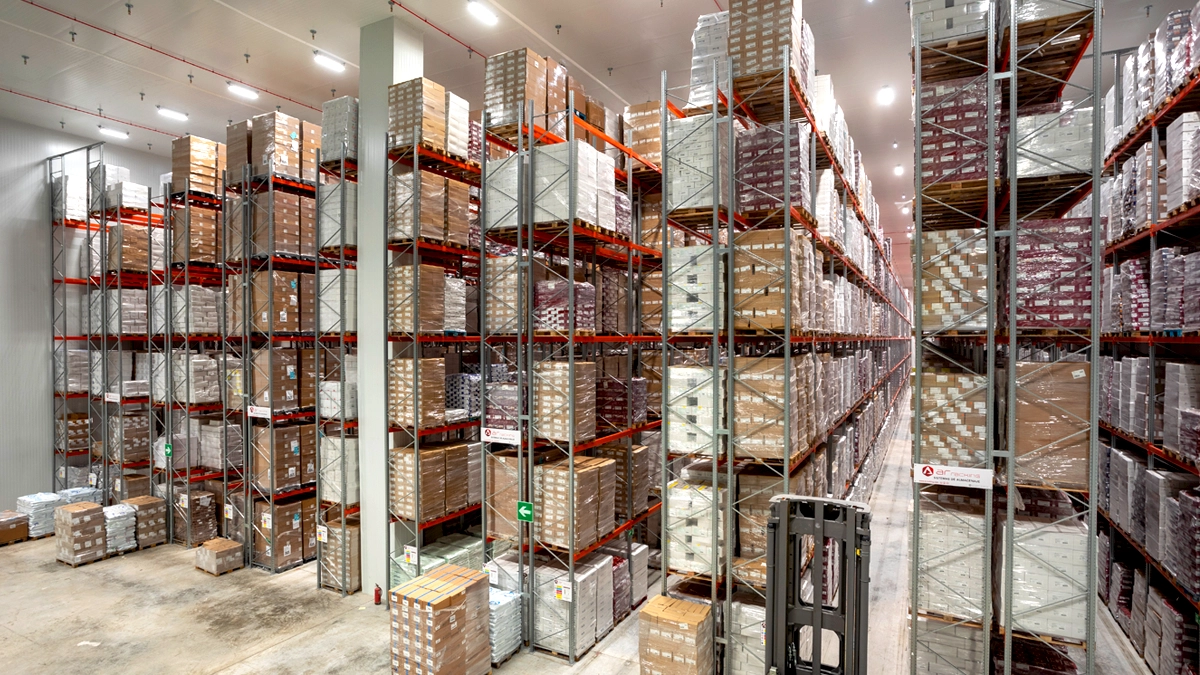
Frozen food cold store with VNA racking
Very narrow aisle racking increased pallet positions per cooled cubic metre for a frozen products distributor, balancing energy efficiency, selectivity and forklift access.
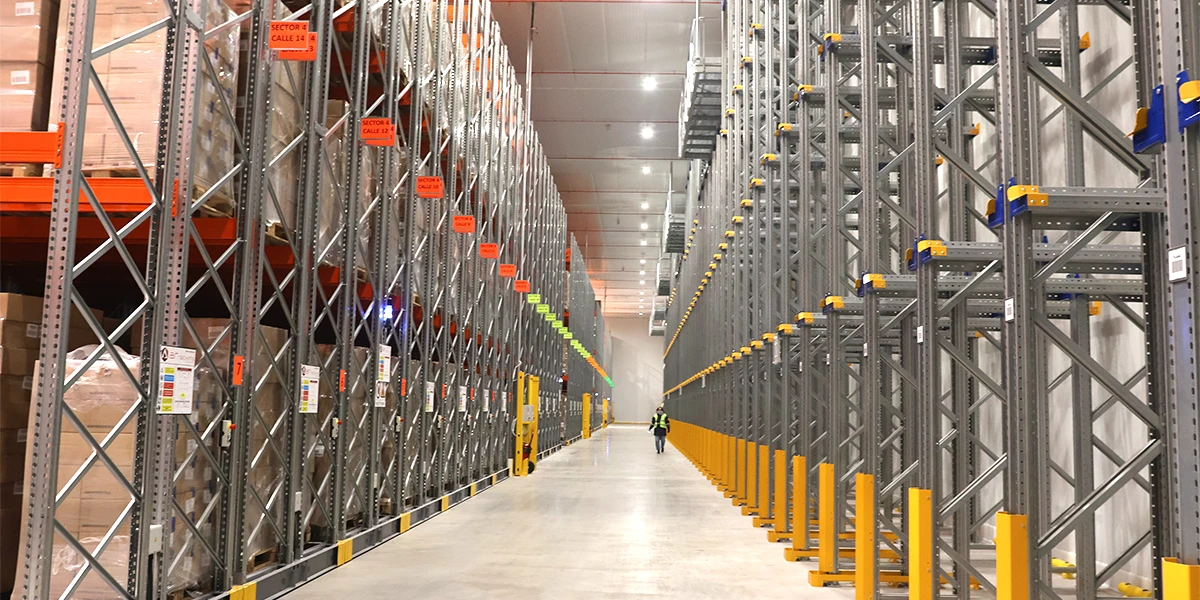
Refrigerated warehouse optimised with mobile racking
Mobile bases removed fixed aisles and increased capacity while keeping direct access to every pallet, a valuable solution where cooled volume is expensive to build and operate.
Pallet Warehouse Racking Wholesale: Frequently Asked Questions
These are the questions our engineering and export teams answer most often from importers, distributors and project buyers comparing China pallet racking suppliers.
Are you a factory or a trading company?
Alohatop Shelf operates with factory-controlled production and project engineering support. Our background includes a 35,000 m² automated production centre, more than 100,000 tonnes of annual steel capacity and a quality system that covers roll forming, welding, powder coating and component traceability. Wholesale buyers can request production evidence, material specifications and inspection documentation during supplier qualification.
What is the minimum order quantity for wholesale pallet racking?
MOQ depends on the system and configuration. Standard selective racking, stacking racks and light-duty shelving can often be quoted as part of a mixed container, while automated and self-supporting systems are project-based. For efficient freight, buyers frequently combine uprights, beams, accessories, safety components and light-duty racks in one order.
How is pallet racking designed for seismic zones?
Seismic design should be based on the project location, soil class and local code requirements. Typical measures include reinforced uprights and bracing, heavier base plates and anchors, row spacers, reduced beam deflection limits and verified connection details. For Andean and Pacific markets, design reviews may reference standards such as NCh2369 and NCh433 in Chile, E.030 in Peru, NSR-10 in Colombia and NEC in Ecuador.
Can your racking operate in cold storage and freezer warehouses?
Yes. We supply selective, drive-in, very narrow aisle, mobile, pallet shuttle and self-supporting freezer warehouse systems using steels and finishes suited to temperatures down to −30 °C. Cold-store design also considers condensation, coating adhesion, safety access, forklift performance and future inspection requirements.
Which pallet sizes do your racking systems support?
We support common formats including the 1200 × 1000 mm pallet widely used in Latin America, the Brazilian PBR 1000 × 1200 mm, the 1200 × 800 mm Euro pallet and ISO sizes such as 1100 × 1100 mm and 1219 × 1016 mm. Beam lengths and frame depths are dimensioned for the actual pallet, load and forklift or automated handling equipment.
What information is needed to start a warehouse racking project?
Send a building layout with clear height, pallet dimensions and maximum load weight, number of SKUs and pallets per SKU, daily throughput, forklift or automation type, temperature range and project city. For seismic zones, soil class and local code requirements help our engineers propose the most efficient and compliant storage system.
What warranty and certifications back your storage systems?
Systems carry a 5-year warranty and are produced under ISO 9001, ISO 14001, ISO 45001, ISO 50001, UNE EN ISO 3834-2 welding quality, EN 1090-1 and ISO 14064 verified carbon reporting, with full component traceability. Certification evidence can be included in the supplier qualification package.
How do you control quality and lead times for repeat wholesale orders?
Quality control covers incoming steel, roll-forming, welding, powder coating, packing and pre-shipment inspection. Automated production and laser-controlled processes improve repeatability, while container loading plans and accessory labelling reduce site delays. For distributors, repeat orders can be standardised around approved bay dimensions and component lists.
Request a China Wholesale Quote with Engineering Review
Share your pallet dimensions, loads, building height, project location and target throughput. Our team will recommend a suitable selective, heavy-duty, stacking, intelligent or light-duty racking configuration and prepare a wholesale quotation with drawings, loading data and delivery planning.