Top China Warehouse Racking System Exporter & Exporters
Industrial pallet racking, cold storage racking and automated warehouse structures designed, manufactured and supplied for distributors, 3PLs, manufacturers and project contractors.
8 Warehouse Racking Systems Buyers Ask For Most
These eight product families cover the core requirements of export buyers: heavy-duty pallet storage, selective access, industrial shelving, high-density layouts and specialised cantilever handling. Every product link below preserves the original product URL for direct enquiry and specification review.
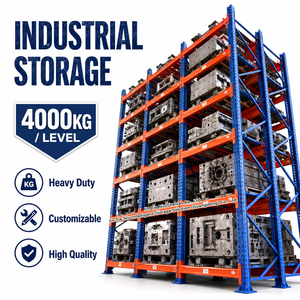
4000KG Heavy Duty Warehouse Rack Pallet Storage System Adjustable Beam Racking
A robust selective racking option for dense pallet loads, adjustable beams and recurring export warehouse layouts.
View product details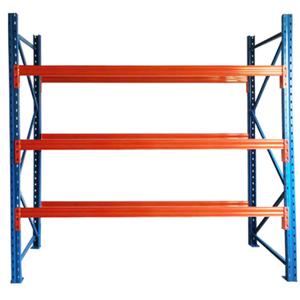
Mracking Industrial Warehouse Pallet Racking Shelving System
A versatile industrial racking system for distribution centres that need a balance of storage density and SKU access.
View product details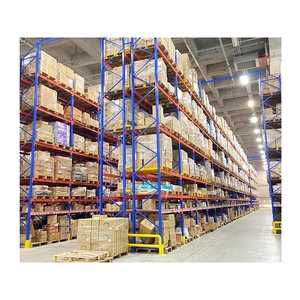
Warehouse Racking System Heavy Duty Industrial Steel Shelving Warehouse Pallet Racks for Sale
Designed for buyers who need strong load capacity, simple expansion and reliable export packing and delivery.
View product details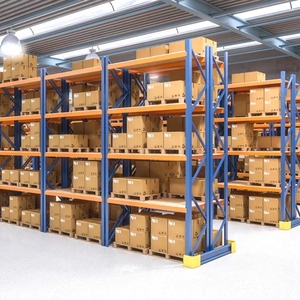
Racks Steel Storage Shelf Industrial Factory Stacking Rack Shelving Heavy Duty Warehouse Pallet Racking System
A practical solution for factories, warehouses and industrial stores that require strong steel shelving and racking.
View product details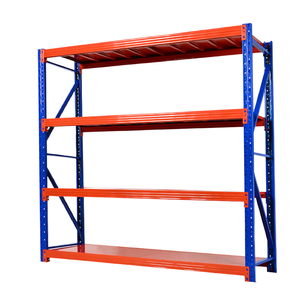
Adjustable Customizable Selective Pallet Racks Steel Metal Shelving for Garage Warehouse & Industrial Storage
Flexible selective racking for multi-SKU storage, fast picking access and future layout changes.
View product details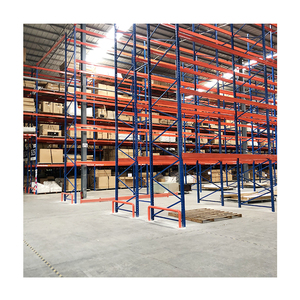
Heavy Duty Warehouse Pallet Rack Industrial Storage Shelf Metal Racking Systems Boltless Steel Shelving
Boltless steel shelving and pallet racking for fast installation and efficient industrial storage.
View product details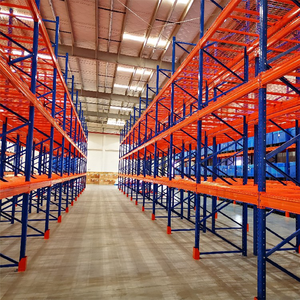
High Strength Metal Load Frame Industrial Large Goods Organizing Metal Warehouse Rack
For heavy and oversized goods that need stable load frames and organised industrial storage zones.
View product details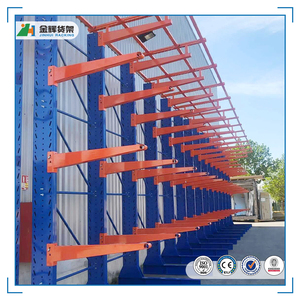
Heavy Duty Industrial Metal Cold Rolled Steel Aluminum Profile Storage Cantilever Pipe Rack Heavy Duty Cantilever Racking
A specialist racking solution for pipes, aluminium profiles, timber and long goods in industrial yards.
View product detailsNeed the full product catalogue? Compare beam capacities, upright heights, surface finishes and export packing options.
Get CatalogCountries with installed storage systems
Warehouse projects delivered
Annual steel production capacity
Of production exported worldwide
Why a Top China Warehouse Racking System Exporter Is More Than a Price List
For procurement teams comparing China warehouse racking system exporters, the real difference is rarely the headline price per beam or upright. It is whether the exporter can deliver a complete, code-aware and installable storage system with transparent engineering assumptions, traceable components and after-sales support.
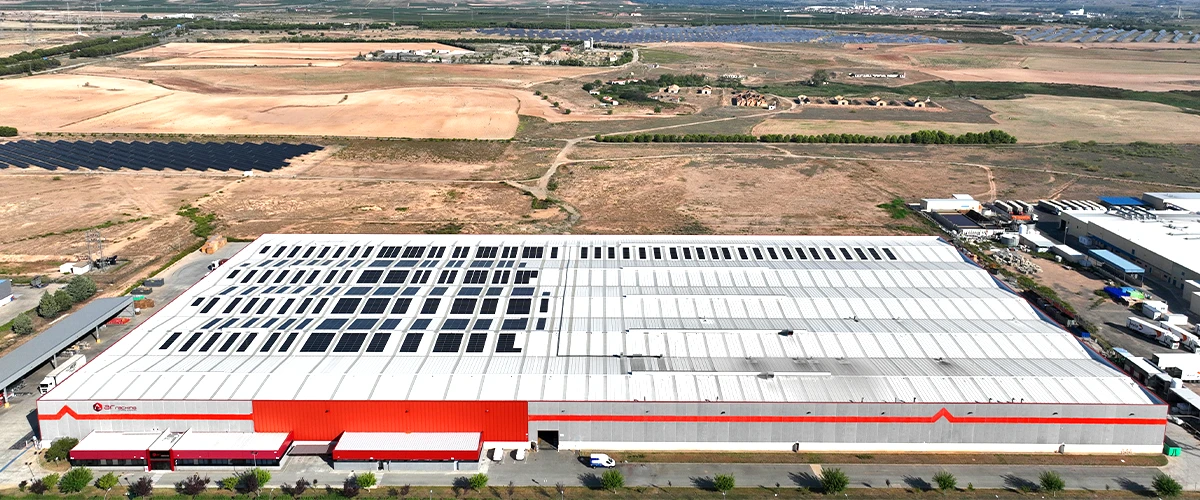
Engineering, manufacturing and export documentation must work together
A credible warehouse racking exporter should turn your building data, pallet dimensions, load weights, throughput targets and temperature profile into a layout that can be reviewed by local engineers. The output should include frame and beam specifications, load signs, anchor details, seismic assumptions where relevant, installation tolerances and bill-of-material traceability.
Alohatop Shelf’s export programme is built around this principle: engineering before quotation, manufacturing under controlled tolerances, and export packing that protects painted steelwork, beams and accessories during long sea freight.
- Application-specific design: selective, VNA, double-deep, drive-in, mobile, pallet flow, push-back, shuttle and cantilever systems.
- Code-aware engineering: projects reviewed against local requirements such as NCh2369 and NCh433 in Chile, E.030 in Peru, NSR-10 in Colombia, NEC in Ecuador and Brazilian / Argentine project requirements.
- Export-grade manufacturing: automated production, weld quality control, ISO management systems and component traceability from production batch to installation.
- Commercial clarity: bills of material, loading plans, spare parts and installation guidance so that buyers know what is included before ordering.
How to Match Racking Systems to Load, Throughput and Building Height
The best product recommendation is not the densest system available; it is the system that supports your SKU profile, forklift strategy, safety process, temperature range and future expansion. Use this comparison as an early specification guide before requesting a layout.
| System | Best for | Density | Direct access | Stock rotation |
|---|---|---|---|---|
| Selective pallet racking | High SKU mix, spare parts, food and beverage, retail DCs | 100% of pallets | Any | |
| Very narrow aisle racking | Expensive land, cold stores, tall buildings and high-density picking | 100% of pallets | Any | |
| Double-deep racking | 3PL and distributors with two or more pallets per SKU | About 50% | LIFO per lane | |
| Drive-in racking | Homogeneous products, frozen goods and seasonal stock | Low | LIFO, or FIFO with drive-through | |
| Mobile pallet racking | Cold storage and high-value inventory where every cooled cubic metre matters | 100% with one open aisle | Any | |
| Pallet flow racking | Fast-moving, perishable and FIFO-controlled inventory | Per lane | FIFO | |
| Pallet shuttle racking | High-throughput distribution centres and deep cold lanes | Per lane | FIFO or LIFO | |
| AS/RS and self-supporting warehouse | Large DCs, 24/7 operations, deep-freeze and automated storage | Automated | WMS-controlled |
Density ratings are relative to selective racking in the same footprint. Tall, dense or automated configurations in seismic zones require specific structural verification and local engineering review.
Future Procurement and Product Development Trends in Warehouse Racking
Export buyers are shifting from one-off purchase decisions to lifecycle procurement. The most competitive racking exporters will win by proving safety, speed of deployment, automation readiness and transparent total landed cost, not by offering the lowest initial quotation.
Total landed cost replaces unit price
Buyers now compare freight volume, packing efficiency, installation time, spare-part availability and lifecycle inspection costs. A racking exporter that optimises container loading and documentation reduces hidden project cost.
Seismic and local-code evidence
Projects in Chile, Peru, Colombia and Ecuador increasingly require traceable structural assumptions, anchor details and installation tolerances. Exporters must provide engineering documentation, not just a catalogue.
Cold-chain densification
Fruit, seafood, meat and frozen-food exporters are investing in mobile racking, drive-in, VNA and shuttle systems that reduce cooled cubic metres and energy consumption per pallet position.
Automation-ready racking
AS/RS, AMR and shuttle interfaces depend on tight rack geometry. Export-grade racking must maintain millimetre-level tolerances and integration data for stacker cranes, conveyors and warehouse software.
Modular, relocatable systems
Warehouse leases change. Buyers prefer bolted, modular racking that can be extended, reconfigured or relocated with minimal waste and clear load ratings for every future configuration.
ESG and component traceability
Steel traceability, welding control, carbon reporting and repairable components are becoming part of supplier evaluation. Buyers want a racking system that supports safety audits and sustainability reporting.
What Makes Alohatop Shelf a Reliable Warehouse Racking Export Partner
For export buyers, supplier credibility is built on verifiable engineering, manufacturing control, certifications and installed-project experience. Our advantage is the combination of industrial-scale production and project-specific engineering support.
Own manufacturing control
A 35,000 m² highly automated production centre, annual capacity above 100,000 t and full control from steel coil to finished racking components. More than 90% of output is exported.
R&D and laboratory validation
Our technology centre collaborates with the R&D laboratory at Mondragon University and a simulation chair at the University of the Basque Country to test profiles, frames, beams and connections.
Certified quality systems
ISO 9001, ISO 14001, ISO 45001, ISO 50001, UNE EN ISO 3834-2 welding quality, EN 1090-1 structural steel components and ISO 14064 verified carbon reporting support buyer compliance reviews.
Export experience in 60+ countries
Logistics experience handling export projects to ports such as Santos, Callao, San Antonio, Cartagena and Buenos Aires, with packaging designed for long-distance sea freight.
Full traceability and warranty
Every upright and beam can be traced from production batch to installation. Storage systems carry a 5-year warranty and are supported by inspection, maintenance and spare-part programmes.
Turnkey project support
Layout optimisation, structural calculation, export packing, installation supervision and post-installation technical inspection are coordinated by one accountable project team.
From Laboratory Testing to Real Warehouse Installations
Storage systems are safety-critical structures. We combine simulation, physical testing and controlled manufacturing so that the racking delivered to an export project performs as designed under real load, handling and environmental conditions.
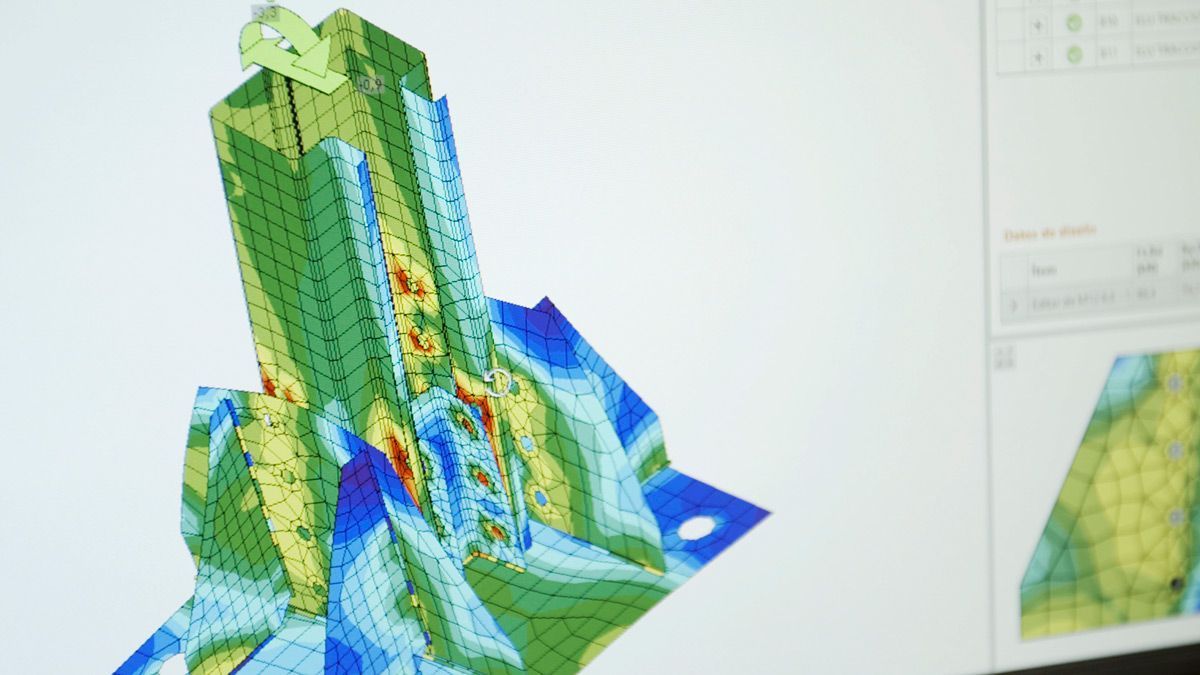
Validated in laboratory, not only on paper
Racking performance depends on the behaviour of frames, beams, connectors and base plates as a complete system. Finite-element simulation and physical load testing help our engineers verify new profiles and connection details before they enter an export project.
This work is especially relevant for buyers in seismic regions, cold storage facilities and automated warehouses, where conservative design assumptions and accurate component behaviour are essential. The same discipline supports manual selective racking projects where safe installation and clear load signage matter every day.
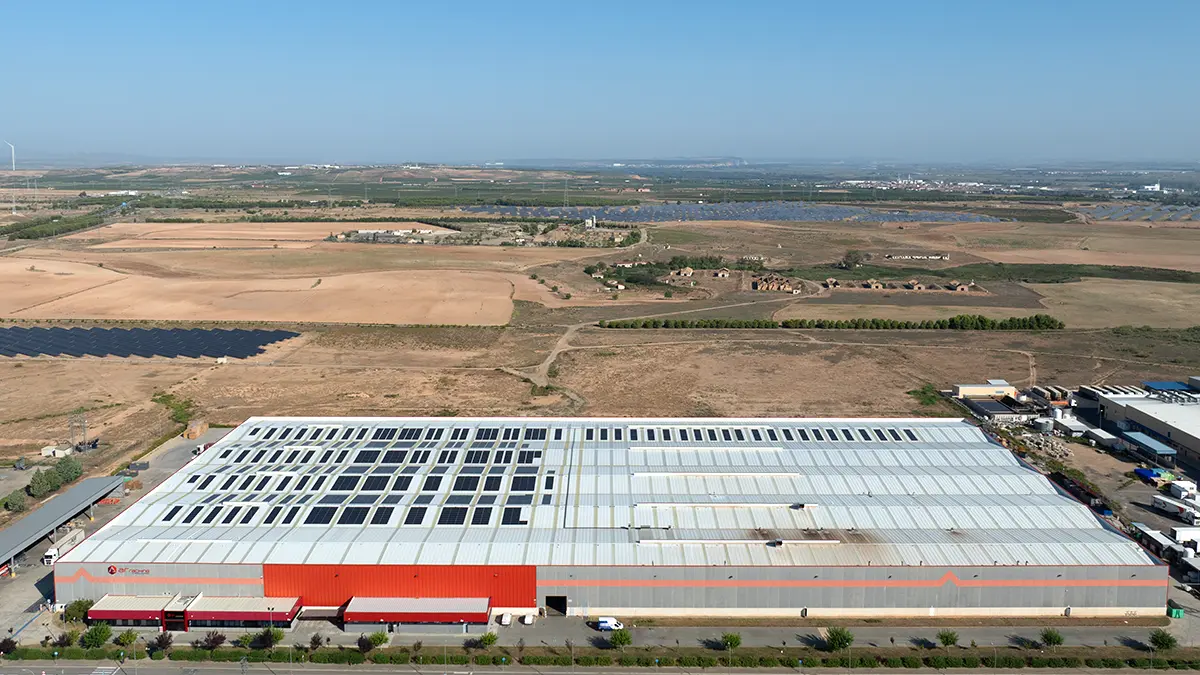
Millimetre precision for automated and manual warehouses
Automated stacker cranes and shuttles stop when rack geometry drifts out of tolerance. Robotic production and laser-controlled manufacturing processes keep frames, beams and accessories within the tolerances required by AS/RS integrators. For manual warehouses, the same precision reduces installation time, improves plumb accuracy and supports safer forklift operation.
- Consistent quality across large-volume export orders
- Reliable lead times for multi-container projects
- 5-year warranty on storage systems
Certifications That Support Export Procurement
Certifications do not replace project-specific engineering, but they provide evidence of management discipline, welding control and manufacturing consistency.
 ISO 9001Quality management
 ISO 14001Environmental management
 ISO 45001Health and safety at work
 ISO 50001Energy management
 EN ISO 3834-2Welding quality control
 EN 1090-1Structural steel components
Additional reporting includes ISO 14064 verified carbon footprint and full component traceability.
Real Warehouses, Measurable Storage Outcomes
Cold stores, self-supporting buildings and shuttle systems demonstrate how engineering decisions translate into pallet capacity, energy savings and faster throughput.
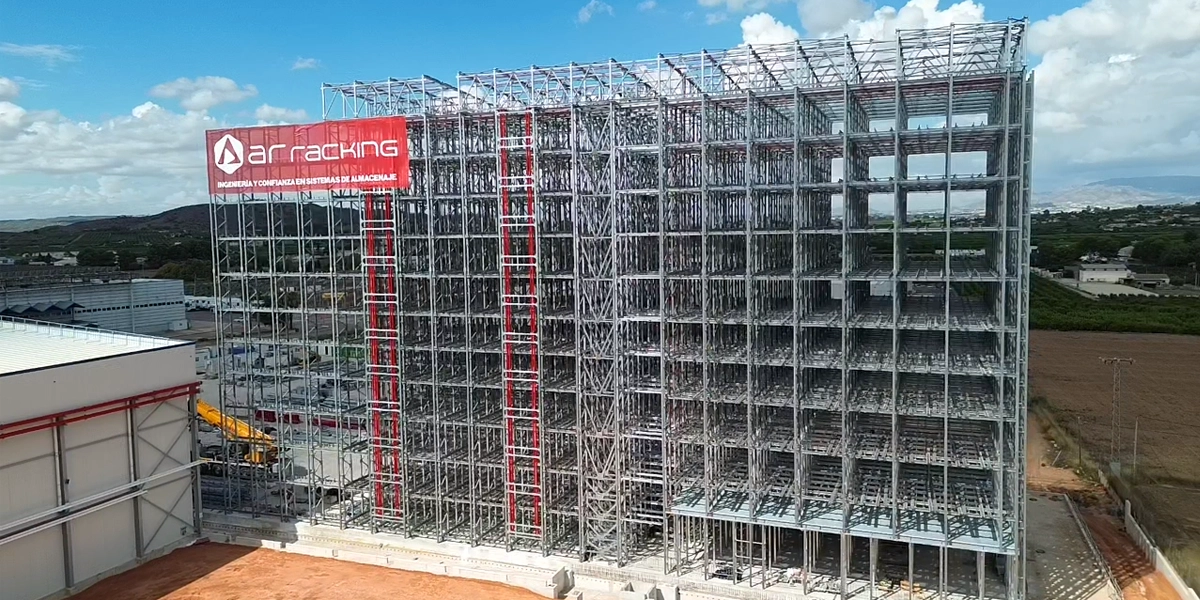
23,000 pallet positions at −24 °C
A self-supporting deep-freeze warehouse where the racking structure also carries the building envelope, reducing footprint and cooled volume.
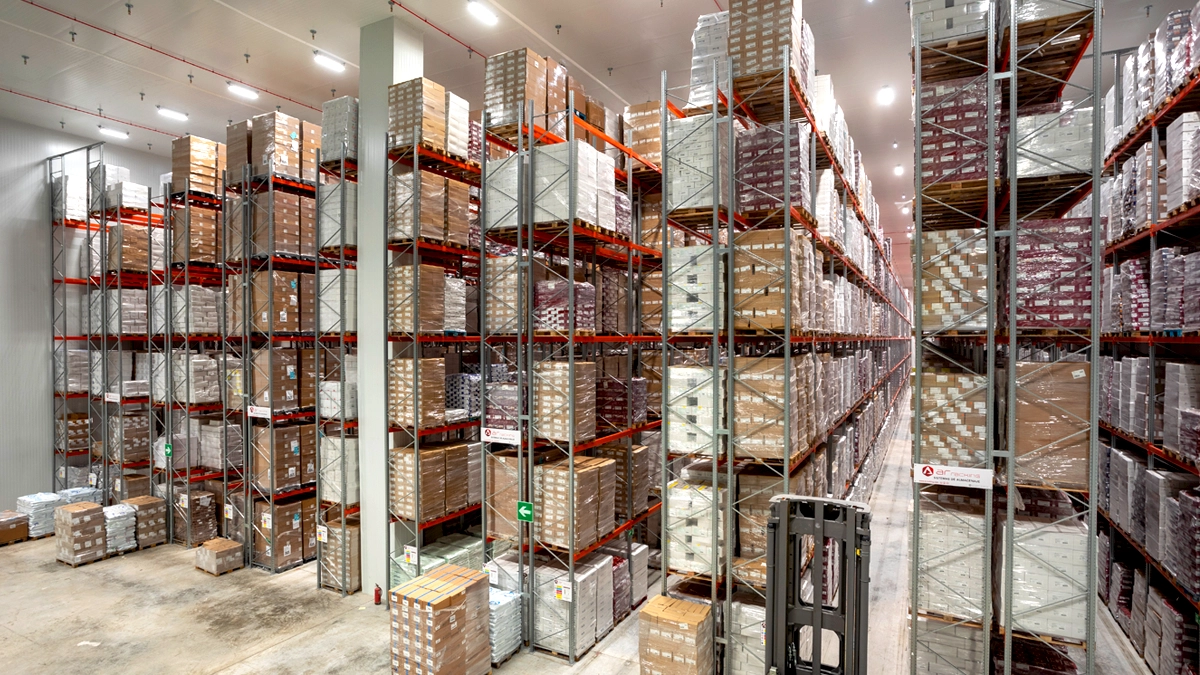
Frozen food cold store with VNA racking
Very narrow aisle racking maximised pallet positions per cooled cubic metre for a frozen products distributor.
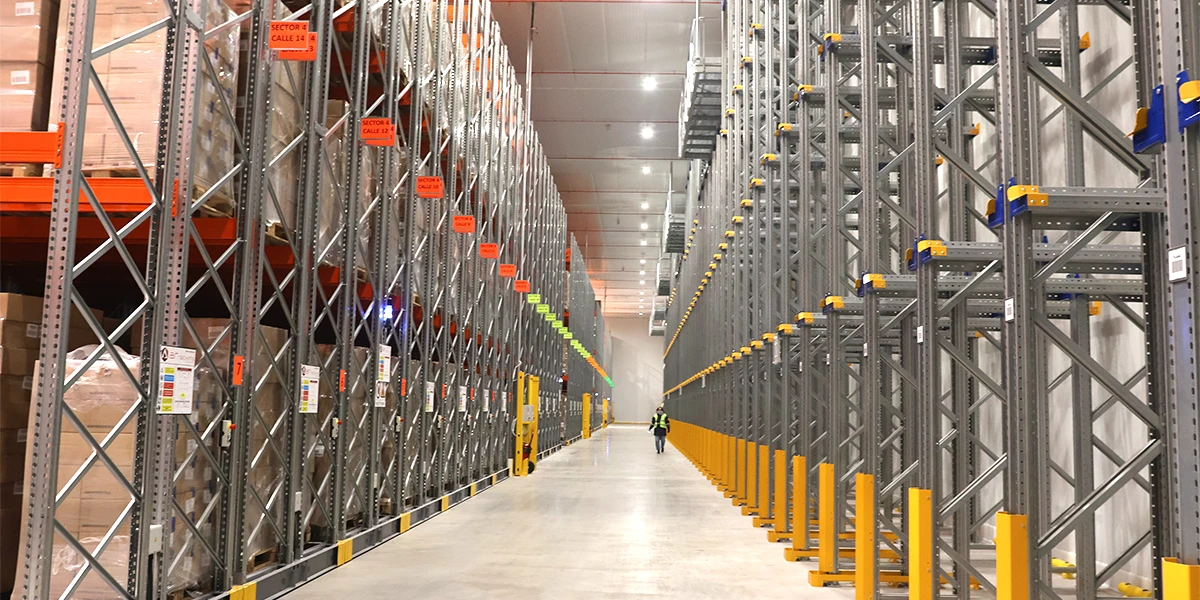
Refrigerated warehouse optimised with mobile racking
Mobile bases removed fixed aisles, increasing capacity while keeping direct access to every pallet when an aisle is opened.
Warehouse Racking for the Industries That Drive Export Demand
Different sectors change the pallet, temperature, rotation and safety requirements. The right export partner should ask about these operating details before proposing a layout.
Food & Beverage
FIFO flow racking and high-density storage for beverages, dairy and packaged food.
Cold Storage
Mobile, drive-in and shuttle racking for fruit, meat and seafood exporters down to −30 °C.
Logistics & 3PL
Flexible selective and double-deep layouts for multi-client operations and changing SKU profiles.
E-commerce
Multi-tier picking, carton flow and AMR-ready structures for order fulfilment centres.
Automotive
Line-side supply, tyre racking and heavy component storage for assembly and aftermarket operations.
Pharma & Cosmetics
Traceable, clean and controlled storage for regulated products and high-value inventory.
Agriculture
Bulk bins, fertiliser and seed storage for agribusiness operations and seasonal peaks.
Manufacturing
Raw material, WIP buffers and finished-goods racking with push-back and cantilever systems.
Warehouse Racking Export Projects: Common Questions
These are the questions procurement, logistics and engineering teams ask most often when evaluating a China warehouse racking system exporter for an international project.
What makes a top China warehouse racking system exporter different from a trading company?
A true exporter should control or deeply understand engineering, manufacturing tolerances, surface treatment, export packing and installation requirements. The key difference is whether the supplier can provide load calculations, component traceability, certification evidence and project-specific documentation, not simply quote a price per unit.
Can you design, supply and install racking projects in South America?
Yes. Our engineering team designs each project for the destination country, manufactures the steel structure in our automated plant and coordinates installation through our own supervisors and a network of trained distributors across Brazil, Chile, Peru, Colombia, Argentina, Ecuador and Uruguay.
How is pallet racking designed for seismic zones in Chile, Peru, Colombia and Ecuador?
Racking in Andean and Pacific-coast countries is calculated against the local seismic code and site soil class, for example NCh2369 and NCh433 in Chile, E.030 in Peru, NSR-10 in Colombia and NEC in Ecuador. Typical measures include reinforced uprights and bracing, heavier base plates and anchors, row spacers and reduced beam deflection limits.
Which pallet sizes do your racking systems support?
All common formats: the 1200 × 1000 mm pallet widely used in Latin America, including the Brazilian PBR 1000 × 1200 mm; the 1200 × 800 mm Euro pallet used by European exporters; and ISO sizes such as 1100 × 1100 mm and 1219 × 1016 mm. Beam lengths and frame depths are dimensioned for the actual pallet and load.
Can your racking operate in cold storage and freezer warehouses?
Yes. We supply mobile racking, drive-in, VNA, pallet shuttle and self-supporting freezer warehouses using steels and finishes suited to temperatures down to −30 °C, a key requirement for fruit, seafood, meat and frozen food exporters.
What information is needed to start a warehouse racking project?
Send a building layout with clear height, pallet dimensions and maximum load weight, number of SKUs and pallets per SKU, daily throughput, forklift or automation type, temperature range and project city. Our engineers use this information to recommend the safest and most space-efficient storage system.
Planning a New Warehouse, Expansion or Racking Replacement?
Share your building layout, pallet dimensions, load weights, SKU profile, throughput target, forklift or automation plan, temperature range and project location. Our engineers will use those inputs to recommend the most suitable racking system and prepare a clear export quotation.
Useful details for a fast quotation
- Building clear height and available footprint
- Pallet size, weight and load per level
- Number of SKUs and pallets per SKU
- Forklift, VNA, shuttle or AS/RS operation
- Ambient, chilled or freezer temperature range
- Destination city, port and required delivery schedule