8 Industrial Style Shelving Products Recommended for Demanding Warehouses
The products below cover a practical range of industrial style shelving and racking architectures. Every system is engineered to project-specific load, geometry, seismic and operational requirements—not sold as a one-size-fits-all catalogue item.
 Heavy duty
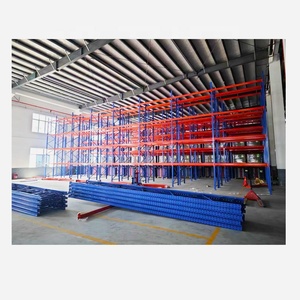
Heavy Duty Industrial Warehouse Pallet Racking System
A selective pallet racking system for warehouses that need direct access to every pallet. Uprights, beams, anchors and beam deflection limits are sized around your pallet footprint, load, lift height and seismic category.
View product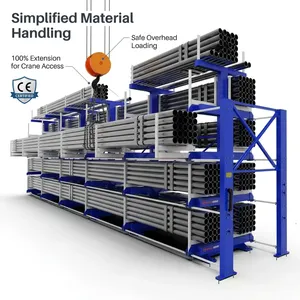 Long goods
Double Sided Telescopic Cantilever Pipe Storage Rack
Double-sided cantilever rack with manual crank extension for pipe, tube, timber and profiles. The 100% extension improves crane or forklift access while keeping long loads stable in covered yards and production sites.
View product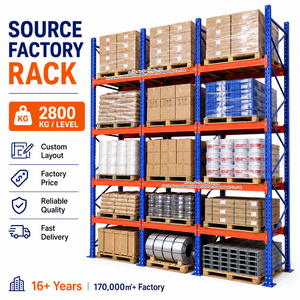 High bay
2800KG 5 Levels High Bay Industrial Pallet Racking
A five-level high-bay heavy-duty rack for dense pallet storage. Designed for 2,800 kg line loads where required, with bracing, base plates and column protection selected for high-lift handling and long service life.
View product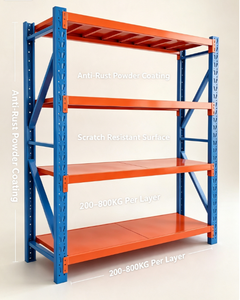 Boltless
Adjustable Multi-Tier Boltless Steel Warehouse Shelving
A boltless steel shelving platform that combines adjustable level spacing with commercial-grade capacity. Suited to spare parts, e-commerce cartons and hybrid warehouses that need rapid reconfiguration without special tools.
View product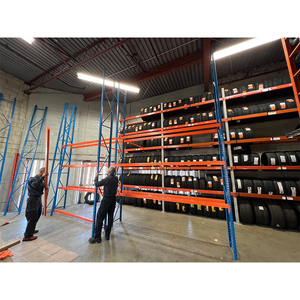 Structural
Industrial Heavy Duty Structural Pallet Rack System
Structural pallet rack built for aggressive forklift environments and repeatable heavy loads. Structural steel columns and beams offer impact resilience and clear load ratings for factories, mills and industrial warehouses.
View product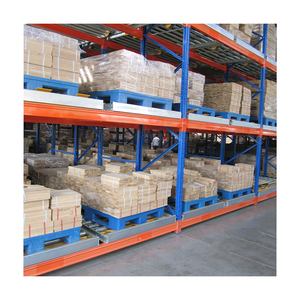 Wholesale
Steel Pallet Rack Heavy Duty Warehouse Shelving
A wholesale-oriented steel pallet rack system that balances beam capacity, aisle design and cost per pallet position. Ideal for distributors and 3PLs standardizing racking across multiple sites and expansion phases.
View product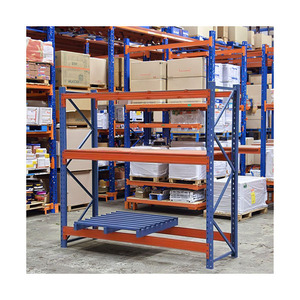 Selective
 Pallet Racking Heavy Duty Warehouse Storage System
A modular selective racking system for distribution centers that need 100% SKU access and stable 2,000 kg-class performance. The design can incorporate VNA guidance, row spacers, column protection and cold-store finishes.
View product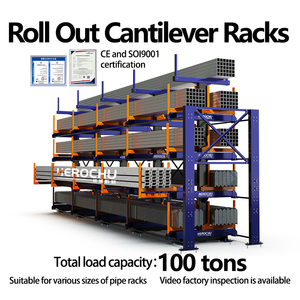 8T / layer
Telescopic Double-Sided Heavy Duty Cantilever Rack 8T/Layer
Double-sided cantilever rack with telescopic arms and 8 t per layer capacity for structural tubes, steel sections and long stock. CE-certified carbon steel square tube construction supports demanding yard and mill-service operations.
View productNot sure which shelving architecture fits your pallet and throughput profile?
Send your building clear height, pallet dimensions, load per level, SKU count and project city. Our factory engineers will return a preliminary layout and load-check direction—not a generic brochure.
Why Industrial Style Shelving Is Now a Procurement Risk Decision
Industrial style shelving is often used to describe exposed-steel shelving with visible uprights, beams, boltless connections or powder-coated finishes. In factories and distribution centres, however, the aesthetic is secondary. The real product is a structural system that determines pallet access, forklift safety, building utilisation, automation compatibility and total cost per pallet position.
In 2026, experienced buyers do not compare factories only on price per bay. They compare engineering evidence: load calculations, weld quality, coating systems, anchor design, component traceability, installation supervision and after-sales inspection. A low quoted price can become expensive if the system fails to meet local seismic codes, if replacement parts arrive months later, or if rack tolerances block a future AS/RS or AMR upgrade. This is why industrial style shelving should be procured as engineered infrastructure, not as furniture.
Alohatop Shelf manufactures racking and shelving for warehouses, distribution centres and production plants, with export experience across South America and more than 60 countries. The company controls design, structural calculation, manufacturing, installation supervision and lifecycle services—giving buyers one accountable technical partner from steel coil to final load sign.
Technical review & experience. This guide is reviewed by the Alohatop Shelf project engineering team, including structural racking designers, rack inspectors and installation supervisors working on export projects across South America. Last reviewed: 2026.
Automation compatibility starts at the rack drawing
AS/RS, pallet shuttles and AMRs need rack geometry that stays within tolerance after installation. Factory-controlled production is now a procurement filter.
Code evidence is a factory capability
Seismic zones in Chile, Peru, Colombia and Ecuador require calculations and detailing that many catalogue resellers cannot provide with full traceability.
Installation quality is product performance
Anchors, plumb tolerance, beam locks and load signage determine real-world safety. Engineering support should continue beyond the factory gate.
Factory Advantages That Support E-E-A-T, Not Just Marketing Claims
For industrial style shelving buyers, authority means traceable engineering, not a website claim. The following capabilities are the practical reasons international buyers shortlist a factory-direct partner for high-risk racking projects.
Factory-owned production
A 35,000 m² highly automated production centre with over 100,000 t of annual capacity gives buyers direct control over quality, lead time and component availability.
Export scale and port experience
More than 90% of production is exported, with shipping experience to major ports and project regions across Latin America, Europe and other markets.
5-year warranty and traceability
Every upright and beam can be traced from production batch to installation. The warranty is supported by documentation, not only a sales promise.
R&D validation
The engineering team works with university R&D laboratories on component strength, finite-element simulation and load cases that reflect real warehouse behaviour.
AS/RS tolerance control
Robotic production and laser-controlled processes keep frames and beams within the tight tolerances required by stacker cranes, shuttles and AMR interfaces.
Seismic design for South America
Projects can be checked against local seismic codes and soil classes, with reinforced bracing, base plates, anchors and row spacers where the site demands them.
Installation and inspection discipline
Certified installation teams and supervisors work from approved drawings, plumb tolerances and load signage—critical for safety and long-term rack condition.
Lifecycle services
Layout engineering, structural calculation, technical inspection, maintenance and reconfiguration support one investment instead of a one-off equipment sale.
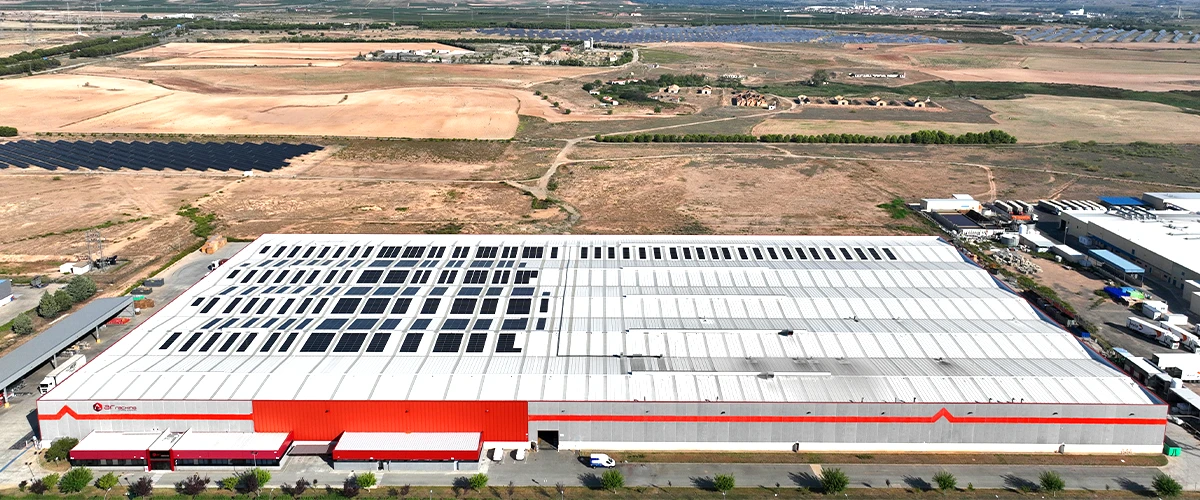
From Steel Coil to Load Sign: Why the Factory Matters
Industrial style shelving is only as reliable as the production system behind it. Our automated production centre combines roll-forming, robotic welding, laser-controlled processes and batch traceability to keep large export orders consistent. That consistency matters in manual warehouses, but it becomes non-negotiable in automated systems where a stacker crane or pallet shuttle expects rack geometry to remain within tolerance.
Engineering is validated in the laboratory and on site. Research work with the R&D laboratory at Mondragon University and a simulation chair at the University of the Basque Country supports finite-element modelling, physical load testing and cyclic testing of new profiles. The result is not a catalogue claim—it is evidence that frames, beams and connections can perform under the load cases specified for the project.
- Full component traceability: every upright and beam can be linked to production batch and delivery documentation.
- High-volume quality control: automated production reduces variation across multi-container orders and phased installations.
- Compliance-ready documentation: ISO 9001, ISO 14001, ISO 45001, ISO 50001, EN ISO 3834-2, EN 1090-1 and ISO 14064 verified carbon reporting.
Industrial Style Shelving Trends Reshaping Product Design, 2026–2030
Product development in industrial shelving is moving away from “strong steel” as a single selling point. The next generation of factory systems must be automation-ready, code-specific, cold-chain capable and easier to inspect over a long service life.
Automation-ready rack geometry
Racking is increasingly designed as the physical interface for AS/RS, pallet shuttles, AMRs and robotic picking. Tolerances, load signage and installation checks are moving earlier into the RFQ stage.
High-strength steel and lower embodied carbon
Buyers are asking for high-strength sections, optimized profiles and verified carbon reporting. Thinner, stronger steel can reduce material use without compromising load capacity when the design is correctly engineered.
Cold-chain and deep-freeze systems
Fruit, seafood, meat and frozen-food exporters need mobile, drive-in, VNA, shuttle and self-supporting freezer warehouses. Steels and finishes must remain reliable down to −30 °C.
Local seismic codes become standard
In Chile, Peru, Colombia and Ecuador, buyers now expect seismic calculations and code-specific detailing. Reinforced uprights, heavier anchors and reduced beam deflection are becoming normal requirements.
Hybrid multi-tier shelving
One warehouse increasingly combines pallet racking, boltless steel shelving, carton flow and raised walkways. Modular systems help buyers add picking capacity without rebuilding the entire storage layout.
Digital traceability and inspection data
Batch IDs, load signs, inspection records and replacement-part histories make rack safety measurable. Digital documentation is becoming part of the delivered product, not an afterthought.
How Buyers Will Procure Industrial Style Shelving Through 2030
The purchasing logic for warehouse shelving is shifting from unit price to lifecycle performance. For international projects, the strongest suppliers will be those that can combine local code knowledge, factory evidence, shipping experience and installation supervision.
Total cost of ownership replaces lowest price
Procurement teams are comparing cost per pallet position over 10–15 years, including inspection, component replacement, downtime risk and future automation compatibility.
Evidence-led RFQs
Buyers increasingly request load calculations, weld quality documents, coating specifications, anchor plans, traceability samples and warranty terms before releasing a deposit.
Local code and port logistics planning
South American projects need design assumptions aligned with destination codes, plus container planning, port arrival sequencing and installation scheduling that match site readiness.
Installation included in the scope
Buyers are moving away from “supply only” packages. Installation supervision, anchor inspection, plumb checks and load signage are now viewed as part of product performance.
Factory audits and sample testing
For large projects, buyers want factory audits, material certificates and sample load tests. This is especially important when racking will support cold-chain or automated operations.
Phased expansion and retrofitability
Warehouses are planned in phases. Modular frames, compatible beam profiles and documented load ratings allow buyers to expand without replacing existing racking.
5 factory questions worth asking before deposit
These questions reveal whether a supplier is an engineering-led manufacturer or a catalogue trader.
- Can you show load combinations calculated to the destination seismic code and site soil class?
- Can you provide heat-number and batch traceability from steel coil to upright production?
- What tolerances can you hold for AS/RS, pallet shuttle or AMR interfaces?
- Who supervises installation, and how are anchors, plumb and beam locks inspected?
- What warranty response and spare-part plan apply in our region after handover?
Match the Industrial Shelving System to the Load Profile
Use this comparison as an early RFQ tool. Final selection depends on SKU profile, throughput, building height, fire strategy, temperature range and seismic zone.
| System | Best-fit operation | Density | Pallet access | Typical design note |
|---|---|---|---|---|
| Selective pallet racking | High SKU mix, food and beverage, retail distribution | Medium | 100% direct access | Best all-round choice when selectivity and fast access matter. |
| Very narrow aisle racking | Tall buildings, expensive land, cold stores | High | 100% with guided equipment | Needs warehouse floor tolerance and VNA truck discipline. |
| Double-deep racking | 3PL or manufacturer with multiple pallets per SKU | High | 50% at first level | LIFO per lane; strong fit when SKU depth is stable. |
| Drive-in racking | Homogeneous products, freezer warehouses | High | Low selectivity | LIFO unless drive-through layout is used for FIFO. |
| Cantilever racking | Pipe, tube, timber, steel sections and long goods | Medium | Open front, crane or forklift | Arm capacity and extension stroke must match handling method. |
| Boltless multi-tier shelving | Cartons, spare parts, e-commerce picking | Medium | Manual picking | Adjustable levels and quick reconfiguration are the main value. |
| Pallet shuttle or AS/RS | High-throughput DCs, deep freeze, large distribution hubs | Very high | Automated or lane-based | Requires WMS integration and tight rack installation tolerances. |
Factory-Direct Services That Protect the Investment
Storage systems perform over many years. The supplier’s ability to support engineering changes, inspection and replacement parts is part of the product’s real value.
Project engineering
Layout optimization, structural calculation, seismic verification and integration with forklifts, AGVs, AMRs or AS/RS.
Technical inspection
Periodic rack inspections that identify impact damage, overloads and anchoring issues before they become incidents.
Installation supervision
Certified teams and supervisors following approved drawings, plumb tolerances, anchor checks and load signage.
Maintenance and upgrades
Component replacement, reconfiguration and expansion programmes that protect people, stock and uptime.
Industrial Style Shelving Manufacturers and Factory FAQ
Answers to the questions procurement teams ask most often when comparing industrial style shelving manufacturers, factories and racking suppliers.
What separates a trusted industrial style shelving manufacturer from a trading company?
A manufacturer controls structural design, production tolerances, material traceability and quality documentation. A trading company may offer a lower headline price, but buyers should verify who calculates the rack, who owns the warranty and who can supply replacement components years later.
How should I calculate load capacity for industrial steel shelving?
Start with pallet weight, load per level, number of levels, beam span, upright load and dynamic forklift impact. For high-bay or automated systems, deflection limits and tolerance requirements must also be considered. A factory should calculate the complete load path, not just quote a beam capacity.
Can industrial style shelving be customized for seismic zones in South America?
Yes. Projects in Chile, Peru, Colombia and Ecuador can be designed against local seismic codes and site soil classes. Common measures include reinforced bracing, heavier base plates and anchors, row spacers, increased frame stiffness and reduced beam deflection limits.
Is boltless shelving suitable for heavy-duty warehouse storage?
Boltless steel shelving is highly effective for cartons, spare parts, e-commerce picking and medium-duty multi-tier storage. For heavy pallet loads, high-bay racking or AS/RS, a properly engineered pallet racking system with calculated frames, beams and connections is usually the correct choice.
How should I compare lead times, installation and total cost of ownership?
Compare the full scope: engineering, steel supply, shipping, installation supervision, inspection, spare parts and future expansion. A factory-direct supplier with high production capacity, export documentation and installation experience can reduce the risk of site delays and unplanned rework.
What information should I send with a request for quotation?
Send the building layout, clear height, pallet dimensions, maximum load per pallet and per level, SKU count, pallets per SKU, daily throughput, forklift or automation type, temperature range and project city. This allows engineers to recommend a safe, space-efficient industrial shelving system and quote the correct scope.
Get a Factory-Backed Shelf-Fit Review Before You Commit Capex
Share your layout and load data. Our storage engineers will review the safest, most space-efficient industrial style shelving direction for your site, including seismic, cold-store and automation considerations.
What to send: building layout, clear height, pallet size, load per pallet and level, SKU count, throughput, forklift or automation type, temperature range and project city.