8 Industrial Warehouse Racking Products for Wholesale and Project Supply
A racking catalogue becomes useful only when it is filtered through load, selectivity, building height, seismic demand, and automation readiness. The eight products below cover the most common buying intents: multi-layer pallet storage, VNA high-density storage, selective pallet racking, medium-duty shelving, custom multi-tier racking, and cantilever storage for long materials.
For wholesale buyers, each system can be supplied as a project-specific package with frames, beams, bracing, anchors, row spacers, load signage, installation drawings, and export documentation. Use this shortlist as a starting point for comparing industrial warehouse racking manufacturers and wholesalers.
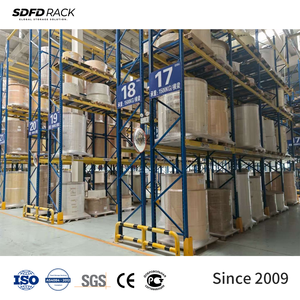
Heavy Duty Conventional Pallet Racking High Load Steel Industrial Storage Shelf Custom Multi-Layer Warehouse Pallet Rack System
A multi-level selective pallet rack engineered for high pallet counts, direct access to every SKU, and heavy industrial loads. Ideal for distributors and 3PLs that need dense storage without giving up selectivity.
- Load profileHeavy-duty
- Best fitMulti-SKU warehouse
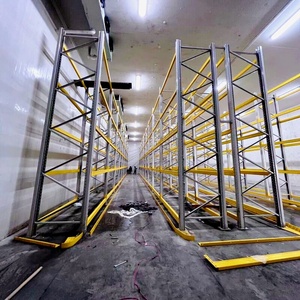
Low Price Racking Heavy Duty VNA Rack Adjustable Metal Boltless Shelf and Racks Warehouse Warehouse Storage Racks Metal Shelf
Very narrow aisle racking raises storage density by reducing aisle width. Suited to tall warehouses, cold stores, and operations using VNA turret trucks. Aisle geometry, guide rails, and seismic bracing are verified together.
- StrengthSpace utilization
- Best fitTall / cold store
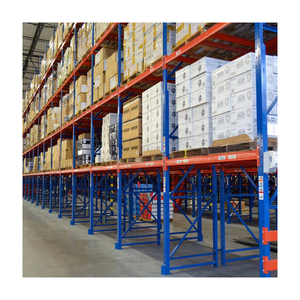
Wholesale Price Heavy Duty Storage Racks Warehouse Stacking Racks Selective Steel Pallet Rack Heavy-Duty Racking for Sale
A factory-direct selective pallet rack for buyers who need predictable lead times, mixed container loading, and project-specific beam and frame capacities. Suitable for warehouse storage, distribution centers, and export projects.
- Supply modeWholesale
- Best fitDistribution center
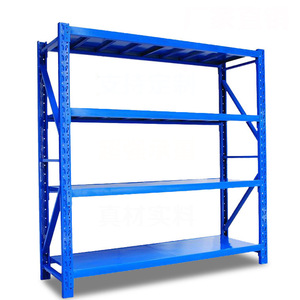
LIANGZO 5-Layer Steel Corrosion Protection Chrome Plated Storage Shelf for Warehouse Household Use Light/Medium Duty Display
A light/medium-duty shelf for showrooms, spare-parts rooms, and warehouse household storage. Chrome plating supports corrosion resistance and clean presentation. A useful add-on for wholesalers serving smaller warehouses and retail channels.
- UseDisplay / storage
- FinishChrome plated
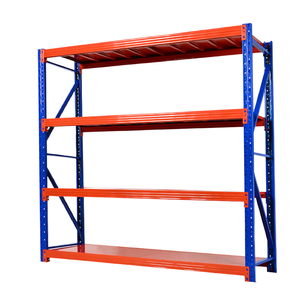
Adjustable Customizable Selective Pallet Racks Steel Metal Shelving for Garage Warehouse & Industrial Storage
A customizable selective rack for garage, warehouse, and industrial storage. Adjustable beam levels support changing SKU profiles. Frame depth, beam length, and accessories are matched to actual pallet and forklift clearances.
- ConfigurationAdjustable
- Best fitFlexible SKU mix
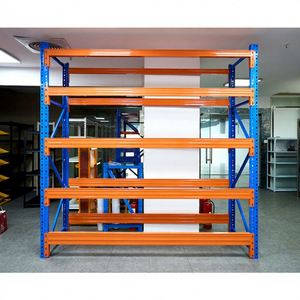
Custom Heavy Duty Shelving 1000Kg High Load 3/4/5/6 Tier Warehouse Storage Pallet Racks Metal Stacking Shelf Rack for Warehouse
A custom high-load shelving system for tiered storage, spare parts, and structured warehouse zones. The correct tier count, shelf capacity, access method, and fire strategy are defined before fabrication.
- Load guide1000 kg class
- Levels3 / 4 / 5 / 6 tier
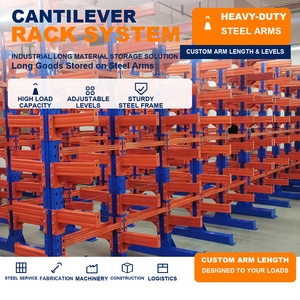
Cantilever Rack Heavy Duty Multi Level Storage Racking System Adjustable Arm Shelving Unit for Long Material Warehouse Use
Designed for pipes, timber, profiles, panels, and other long materials. Multi-level arms can be configured for forklift or crane handling, with arm spacing and load limits calculated per material family.
- HandlingForklift / crane
- Best fitLong loads
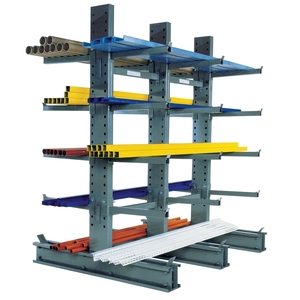
CE / ISO Certified Customized Cantilever Rack Heavy Duty for Industrial Racking From Nanjing Victory
A certified customized cantilever rack for long-material warehouses where documentation, welding quality, and export compliance matter. The CE/ISO package supports procurement teams that must verify structural steel and welding control.
- DocumentationCE / ISO
- Best fitExport projects
Scale, Traceability, and Engineering Depth Behind Every Racking Order
Manufacturing capacity and export experience shorten the distance between a drawing and a working warehouse. These figures reflect the operating platform behind Alohatop Shelf's racking projects.
Countries with installed storage systems
Warehouse projects delivered
Annual steel production capacity
Production exported worldwide
Why Alohatop Shelf Is Shortlisted by Warehouse Buyers
A trusted industrial warehouse racking manufacturer must be more than an assembler. Alohatop Shelf designs, calculates, manufactures, and installs metal racking for warehouses and loads across the world, keeping responsibility for steel quality, geometry, documentation, and installation within one accountable team.
Factory-Direct, Not Trading-Led
A 35,000 m² highly automated production centre and more than 100,000 t of annual steel capacity support stable wholesale supply, shorter lead times, and full component traceability from production batch to installation.
Engineering for Load and Seismic Reality
Structural calculations consider pallet load, beam deflection, upright capacity, floor condition, anchoring, and local seismic codes. R&D work with Mondragon University and the University of the Basque Country supports frame, beam, and connection validation.
Export and Wholesale Project Support
With more than 90% of output exported and experience shipping to major ports such as Santos, Callao, San Antonio, Cartagena, and Buenos Aires, projects receive container planning, packing lists, drawings, and installation supervision.
5-Year Warranty and Lifecycle Service
Systems carry a 5-year warranty and are supported by installation teams, periodic technical inspection, maintenance programmes, replacement components, and reconfiguration support as storage demand changes.
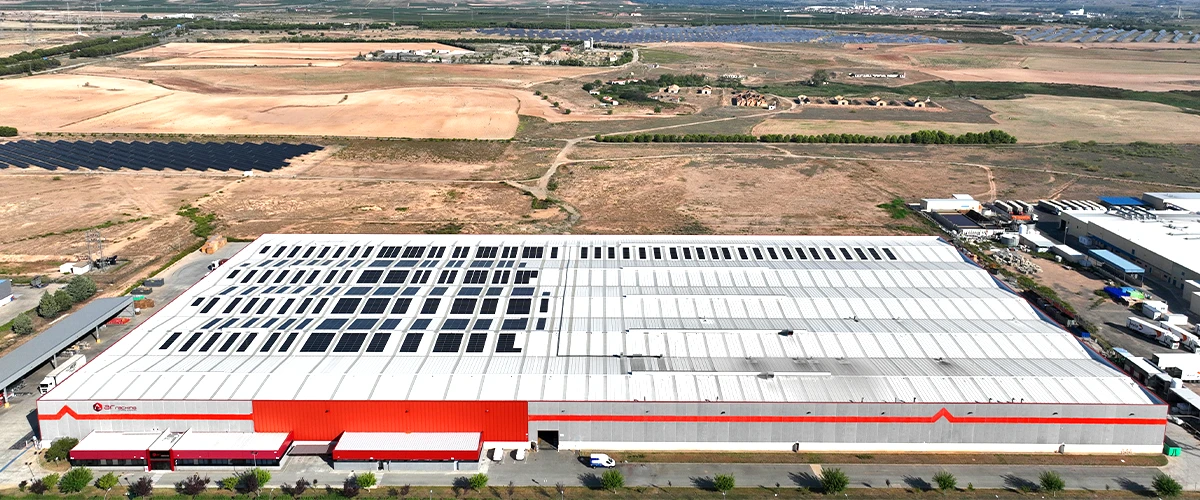
From Steel Coil to Load Sign: One Accountable Partner
Owning production changes the quality conversation. Instead of relying on an unknown subcontractor, buyers receive a documented component set: uprights, beams, bracing, base plates, anchors, safety locks, row spacers, and load plaques. Every upright and beam can be traced back to production records, which matters when an inspector, insurer, or automation integrator asks for evidence.
Robotic production and laser-controlled processes keep frames and beams within the tolerances demanded by stacker cranes, shuttles, and AMR systems. That same precision makes manual warehouses faster and safer to install, because components fit as intended on site.
- 35,000 m² automated production centre with scalable capacity for wholesale orders.
- Full component traceability from steel batch to shipment and installation.
- Export documentation package for import, customs, and project handover.
 Laboratory validation of racking behaviour and strength
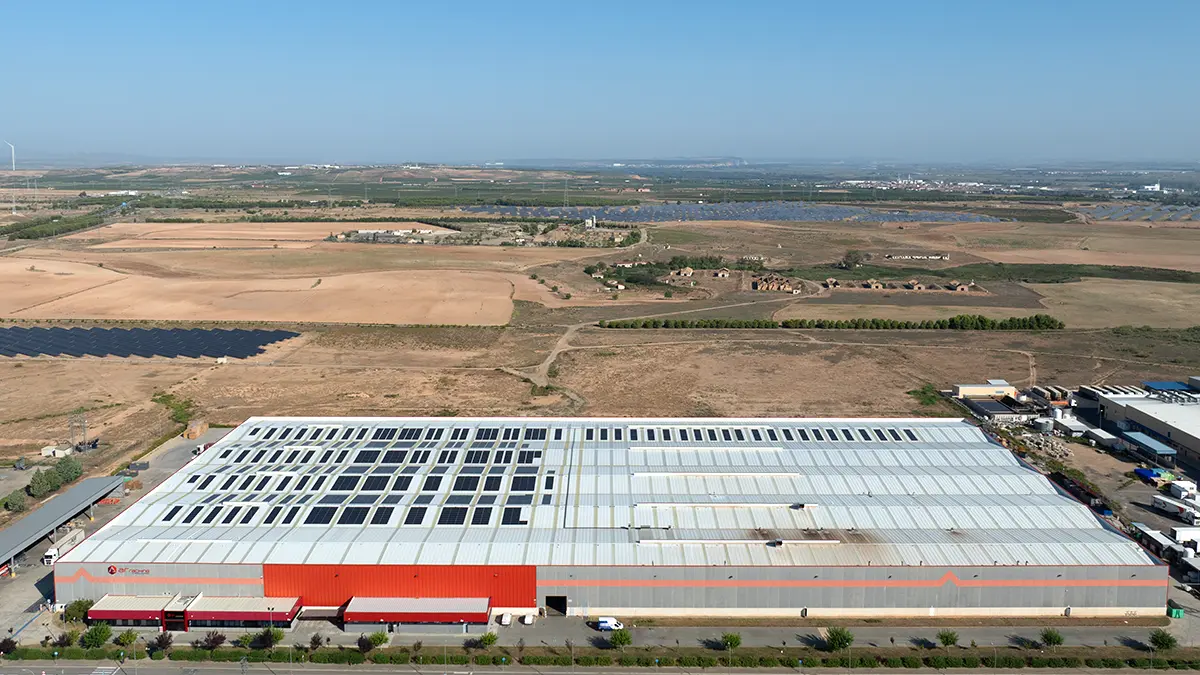 Automated production for consistent export quality
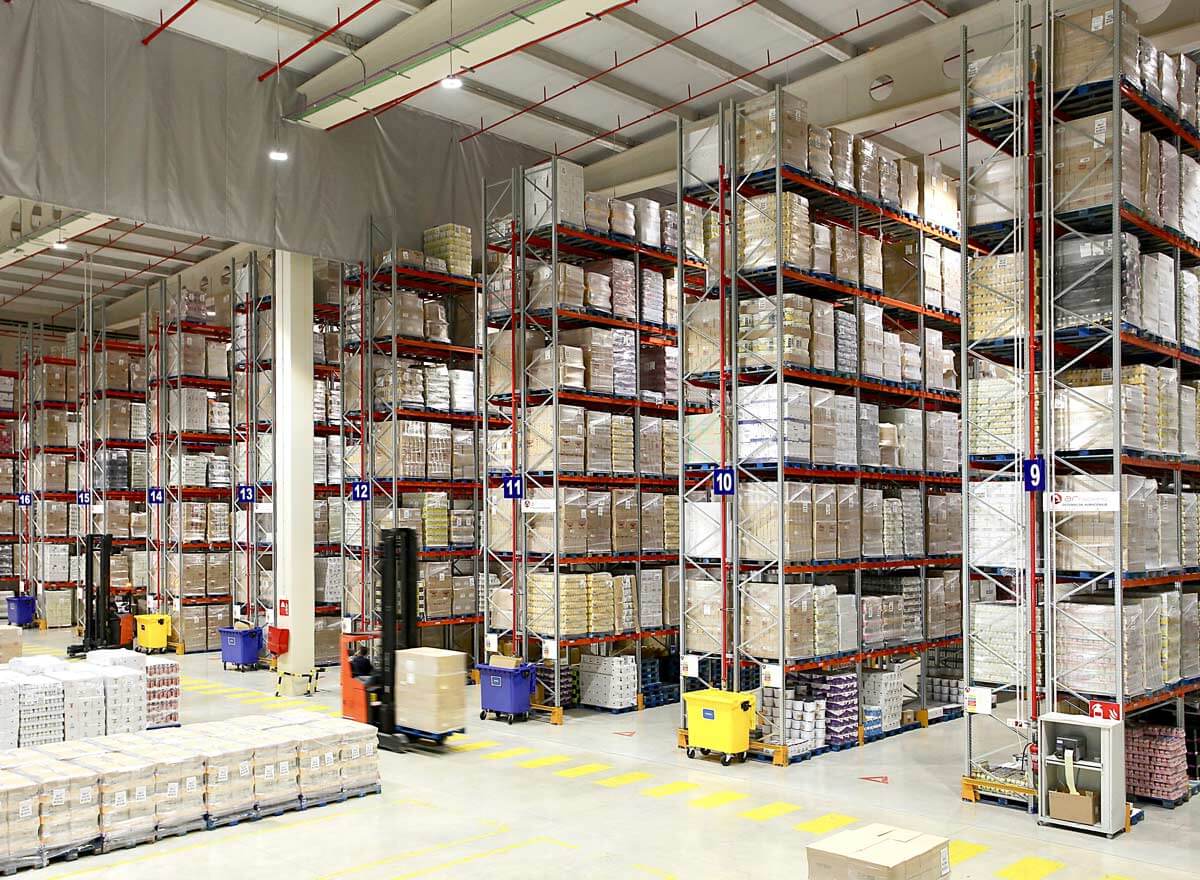 Selective pallet racking for direct access and dense storage
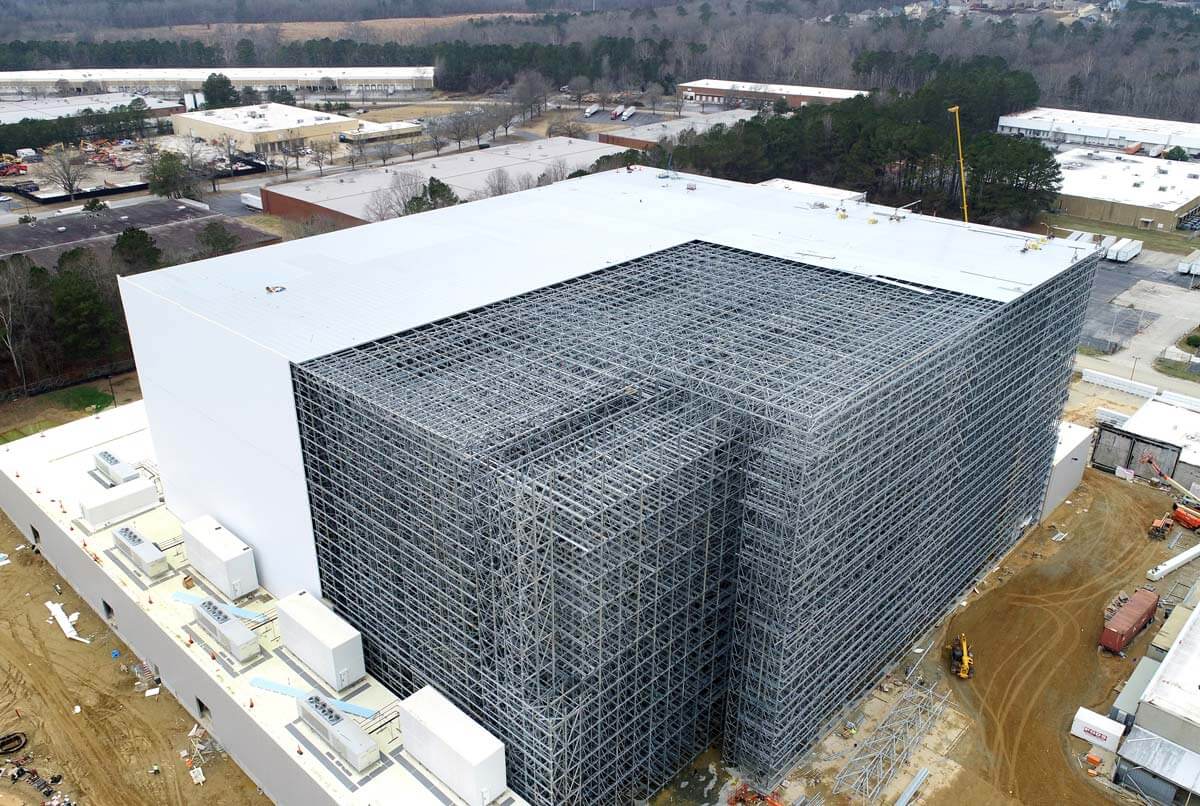 Automation-ready structures engineered to integrator tolerances
Warehouse Racking Procurement Trends Buyers Should Plan For
Procurement teams are moving away from a simple price-per-bay comparison. The next buying cycle will reward suppliers that can prove engineering assumptions, document compliance, and support expansion without replacing the whole installation.
Total Cost of Ownership Beats Lowest Unit Price
Buyers increasingly compare installation time, inspection cost, spare-part availability, downtime risk, and future reconfiguration. A low-cost rack that cannot be expanded or inspected efficiently becomes expensive over a 10–20 year life.
Automation-Ready Racking Before Automation
Even manual warehouses now ask for tighter upright tolerances, controlled beam deflection, floor-flatness checks, and future shuttle or AMR compatibility. Designing for a later automation step avoids a premature rebuild.
Seismic and Cold-Chain Proof by Destination
Generic certificates are no longer enough. Projects in Chile, Peru, Colombia, Ecuador, and other seismic regions require calculations against local codes, while cold stores require steel and finish choices validated for sub-zero operation.
ESG Data and Verified Carbon Reporting
Wholesale buyers and multinational retailers increasingly request material traceability, recyclability information, and carbon reporting. Suppliers with ISO 14064 verified reporting and documented steel sourcing have a clear advantage.
How Industrial Warehouse Racking Products Are Evolving
Racking is becoming an engineered interface between steel, software, robotics, and building envelope. The most important product developments are not cosmetic; they change how warehouses are planned, financed, and expanded.
High-Bay and Self-Supporting Structures
In land-constrained markets, the rack itself can carry the building envelope. Self-supporting and high-bay systems require tighter survey control, structural verification, and coordination with cladding, fire protection, and cranes.
Hybrid Storage: Racking + Shuttle + AMR + AS/RS
Warehouses increasingly mix selective racking, pallet shuttles, mobile bases, and automated storage. Product development is focused on clean interfaces, tolerance control, and documentation that automation integrators can trust.
Cold Storage Innovation Down to −30 °C
Fruit, seafood, meat, and frozen-food supply chains demand racking that performs in deep-freeze conditions. Steel grades, surface protection, aisle strategy, and frost management are designed together to protect uptime.
Digital Safety and Inspection Readiness
Component IDs, digital layout records, damage classification, and load signage are becoming part of the product package. These features help warehouse teams document inspections and act before damage becomes an incident.
How to Compare Pallet Racking Systems Before You Request a Quote
The right system depends on SKU profile, throughput, building height, pallet type, temperature, and seismic zone. Use this comparison as an early-stage filter, then validate the final layout with load calculations.
| System | Best for | Density | Direct access | Stock rotation |
|---|---|---|---|---|
| Selective pallet racking | High SKU mix, food and beverage, retail distribution | 100% of pallets | Any | |
| Very narrow aisle racking | Expensive land, cold stores, tall buildings | 100% of pallets | Any | |
| Double-deep or shuttle racking | 3PL operations with multiple pallets per SKU | Lane-based | LIFO or FIFO | |
| Cantilever racking | Pipes, timber, profiles, panels, long materials | High for long loads | Any | |
| Multi-tier shelving and picking | Cartons, spare parts, e-commerce, light/medium loads | Manual picking | Any | |
| AS/RS and self-supporting | Large distribution centers, 24/7 operations, deep freeze | Automated | WMS controlled |
Density is relative to selective racking in the same footprint. In seismic zones, very tall or very dense configurations require specific structural verification and anchoring design.
Building and Load Data
Provide clear height, floor condition, building layout, pallet dimensions, maximum load weight, and load overhang. These define frame depth, beam length, and upright capacity.
SKU and Throughput Profile
Share the number of SKUs, pallets per SKU, daily inbound and outbound movements, and order-picking profile. This determines whether selective, VNA, shuttle, or flow racking is more appropriate.
Compliance and Environment
State the project city, seismic code, temperature range, fire strategy, forklift type, and any automation plans. These details affect steel specification, bracing, finishes, and documentation.
Common Questions About Industrial Warehouse Racking Procurement
Clear answers reduce quotation cycles. These are the questions our engineers receive most often from warehouse, logistics, and procurement managers comparing manufacturers and wholesalers.
What makes a racking manufacturer trustworthy?
Look for documented engineering, not just product photographs. A trustworthy manufacturer can provide load calculations, drawings, welding and coating specifications, component traceability, certification, installation supervision, and a clear warranty. It should also explain the limits of its scope, especially for seismic design, floor conditions, and automation interfaces.
Can you supply mixed systems and wholesale volumes?
Yes. Projects can combine selective racking, VNA racking, cantilever racks, picking shelving, and automation-ready structures in one delivery plan. Wholesale buyers benefit from factory-direct production, container planning, mixed-component packing, and engineering support that keeps every system compatible with the same building and handling strategy.
How do I choose between selective, VNA, and cantilever racking?
Selective racking is best when every pallet must be directly accessible and SKU variety is high. VNA racking is better when warehouse height and land cost justify narrow aisles and specialised trucks. Cantilever racking is the correct choice for pipes, timber, profiles, and panels that cannot be supported on conventional pallet beams.
How is racking designed for seismic zones?
Seismic design starts with the project location, soil class, building interaction, and local code. Depending on the country, calculations may reference NCh2369 or NCh433 in Chile, E.030 in Peru, NSR-10 in Colombia, NEC in Ecuador, or other national requirements. Reinforced bracing, heavier base plates, anchors, row spacers, and reduced beam deflection limits may be required.
What information is needed for a fast quotation?
Send a building layout with clear height, pallet dimensions, maximum load weight, number of SKUs, pallets per SKU, daily throughput, forklift or automation type, temperature range, and project city. If available, include floor flatness data and any fire-protection constraints. These inputs allow engineers to propose a safe and efficient layout rather than a generic price list.
What warranty and certification support is provided?
Storage systems carry a 5-year warranty and are produced under ISO 9001, ISO 14001, ISO 45001, ISO 50001, UNE EN ISO 3834-2 welding quality, EN 1090-1, and ISO 14064 verified carbon reporting, with full component traceability. Certification scope and project-specific documentation should be confirmed in the quotation package.
Planning a New Warehouse or Racking Expansion?
Share your building layout, pallet data, load weight, temperature range, and project location. Our engineers will help you compare selective racking, VNA racking, cantilever storage, and automation-ready systems with a factory-direct quotation and practical layout guidance.