Top Trusted Warehouse Racking Beams Manufacturers & Factory
Heavy-duty pallet racking beams, step beams, box beams and complete storage systems engineered for safe loads, seismic zones, cold storage and automated warehouses. Compare factory advantages, procurement trends and verified product options from Alohatop Shelf.
8 Factory-Built Warehouse Racking Systems Using High-Performance Beams
These product recommendations help procurement teams compare heavy-duty beams, pallet racking frames and complete factory-built storage systems. Product URLs are preserved for direct specification, and every image is shown in full without cropping or distortion.
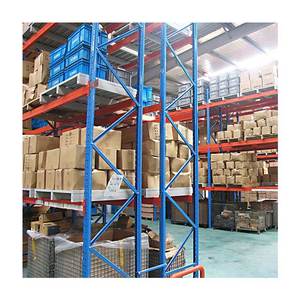
Industrial Heavy Duty Rack Manufacturing Pallet Rack Logistics Equipment Factory Warehouse Storage Racks Heavy Duty Racking
Recommended for logistics hubs and factories that need robust beam-to-upright connections and predictable pallet access.
View product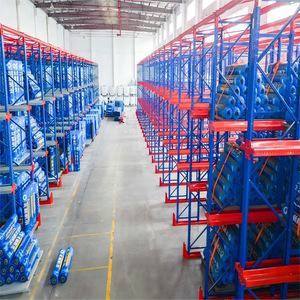
Reliable Heavy Duty Steel Warehouse Storage System for Bulk Roll Goods and Pallet Cargo Storage Drive in Pallet Rack Raf
Suited to bulk roll goods, dense pallet cargo and drive-in layouts where beam alignment and forklift guidance are critical.
View product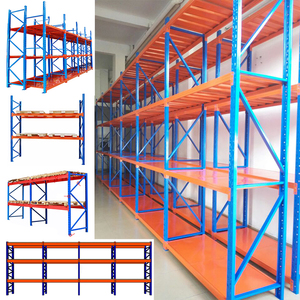
Heavy Duty Warehouse Rack Industrial Cold-Rolled Steel Rack Storage Shelf Rack 1600KG 1700KG 1800KG 1900KG Pounds Tons
A useful specification reference for buyers comparing 1,600 kg to 1,900 kg-class shelf and beam capacity ranges.
View product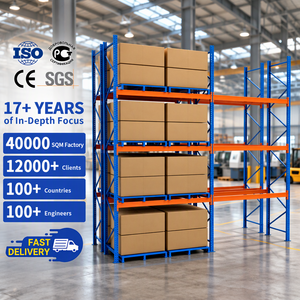
Heavy Duty Industrial Pallet Rack High Loading Multi-Level Metal Shelves Units Warehouse Steel Selective Pallet Racking System
Recommended for high-SKU warehouses that need 100% selective access and simple beam-level reconfiguration.
View product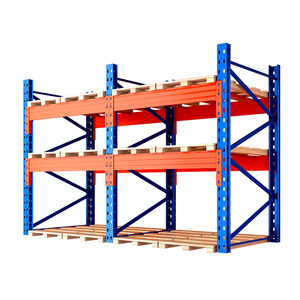
Industrial Heavy Duty Storage Shelves System Metal Rack Stacking Units Warehouse Pallet Racking
A practical building-block solution for distribution centres standardising beam profiles across multiple storage zones.
View product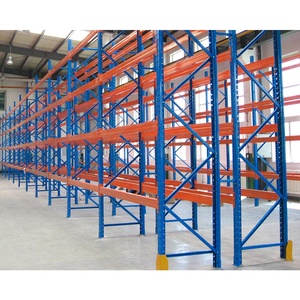
Customized Pallet Rack for Warehouse with Rack Safety
For projects requiring custom beam lengths, safety signage, protective accessories and site-specific load verification.
View product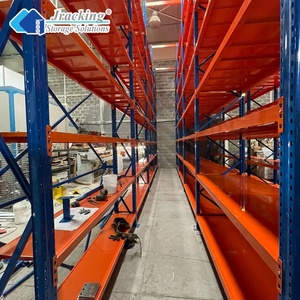
Jracking EURO Standard Warehouse Storage Racks Heavy Duty Steel Pallet Racking System for Distribution
Recommended for European pallet formats and distribution projects standardising frames, beams and accessories.
View product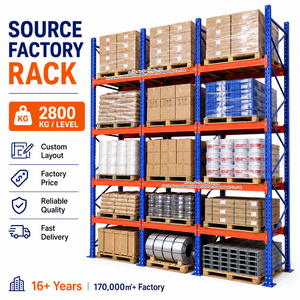
2800KG 5 Levels High Bay Industrial Pallet Racking Heavy Duty Warehouse Rack System
A high-bay recommendation for tall buildings where beam deflection, seismic bracing and lift height must be coordinated early.
View productCountries with installed storage systems
Warehouse projects delivered
Annual steel production capacity
Of production exported worldwide
What Procurement Teams Should Know About Warehouse Racking Beams
Racking beams are horizontal load-bearing members that connect upright frames and support pallet loads, decking and safety accessories. A beam is not a commodity item: its profile, steel grade, connector, deflection limit and interaction with the upright frame determine the safe capacity of the whole storage system.
For buyers searching for warehouse racking beams manufacturers, the most useful question is not simply “what is the price per kilogram?” It is “which beam profile, steel thickness and connector have been verified for my pallet, load, clear height and seismic zone?” Selective pallet racking typically uses step beams, box beams or structural channel beams. Step beams suit pallet support bars and decking, box beams improve torsional stiffness and clean appearance, and structural beams are chosen for heavier impact or wider spans. The right choice depends on load charts, beam lock design, upright capacity and the floor conditions at the project site.
A factory-direct racking beam manufacturer should provide traceability from steel coil to finished component, plus calculations that reflect the actual pallet footprint. Load capacity is not a single number: it is a relationship between beam length, beam profile, steel grade, load position, deflection limit, upright frame capacity and local design codes. In seismic regions such as Chile, Peru, Colombia and Ecuador, engineers also check bracing, anchors, row spacers and reduced deflection limits. In cold stores down to −30 °C, steel selection and surface protection must be reviewed for brittle fracture and long-term durability.
Step Beams
The common choice for selective pallet racking. The step supports wire decking, pallet support bars and accessories, while the beam profile carries vertical load between upright frames.
Box Beams
Closed or semi-closed profiles with high torsional stiffness. They are useful where beam appearance, cleanliness and resistance to accidental impact are important.
Structural Beams
Selected for wide spans, heavy pallet loads or demanding industrial environments. Engineering review must confirm connectors, upright loading and deflection limits.
Beam Locks & Accessories
Safety locks, end guards, load signs, row spacers and protectors are not cosmetic. They influence installation speed, inspection compliance and long-term damage risk.
| Beam / rack type | Best-fit warehouse profile | Procurement advantage | Information to verify |
|---|---|---|---|
| Selective step beam racking | High SKU mix, retail distribution, food and beverage warehouses | Direct access to every pallet and simple beam-level changes | Beam load chart, lock type, upright capacity and pallet overhang |
| Heavy-duty box beam racking | Premium distribution centres and visible storage areas | Clean profile, torsional stiffness and good impact resistance | Steel grade, weld quality, surface finish and connector testing |
| Drive-in / roll goods racking | Bulk rolls, homogeneous pallets and frozen storage | High density per aisle and efficient use of cold-store volume | Inside bay clearances, guide rails, LIFO/FIFO logic and forklift envelope |
| High-bay racking | Tall buildings, VNA trucks, automated lift equipment | More pallet positions without expanding the building footprint | Plumb tolerance, beam deflection limits, seismic bracing and sprinkler coordination |
| Automation-ready rack structure | AS/RS, pallet shuttle, AMR and self-supporting warehouses | Millimetre precision for stacker cranes and automated interfaces | Tolerance schedule, interface points, load signs and factory inspection reports |
Inside the Factory Behind Alohatop Shelf Racking Beams
A reliable beam manufacturer should control engineering, roll forming, welding, surface treatment, packing and installation support. Alohatop Shelf LLC is a designer, manufacturer and installer of industrial pallet racking, picking shelving and automated warehouse structures for distribution centres, 3PLs, cold chains and manufacturers.
Full Project Control
From layout study and structural calculation to beam manufacturing, installation supervision and final load signage, one accountable team reduces interface risk for overseas buyers.
35,000 m² Automated Plant
A highly automated production centre with more than 100,000 t of annual capacity supports consistent roll-forming, welding and export packing at scale.
R&D and Testing
Our technology centre cooperates with the R&D laboratory at Mondragon University, and a research and simulation chair at the University of the Basque Country supports calculation models and simulation tools.
Seismic & Cold-Chain Experience
Projects are engineered for local seismic codes such as NCh2369 and NCh433 in Chile, E.030 in Peru, NSR-10 in Colombia and NEC in Ecuador, with cold-store solutions down to −30 °C.
Certified Quality System
ISO 9001, ISO 14001, ISO 45001, ISO 50001, UNE EN ISO 3834-2 welding quality, EN 1090-1 and ISO 14064 verified carbon reporting support audit-ready procurement.
Global Delivery Footprint
60+ countries, 14 own branches, 70+ trusted distributors and 42,000+ delivered projects. More than 90% of production is exported, with a 5-year warranty behind each system.
Future Procurement Trends for Warehouse Racking Beams
Procurement is moving from lowest initial price toward verified lifecycle value. Buyers are asking for traceable steel, documented load capacity, code-specific seismic design and evidence that a racking beam will remain safe after years of forklift activity.
Total Cost of Ownership
More procurement teams are comparing beam systems by installation time, inspection frequency, damage repair cost and reconfiguration flexibility, not only price per tonne. A slightly stronger beam profile can reduce downtime, protect inventory and lower maintenance spend over a 10–15 year asset life.
Seismic, Fire and Cold-Store Evidence
Projects in seismic zones, freezer stores and multi-level warehouses increasingly require calculation reports, anchor verification and clear interface documents. Buyers want a factory that can respond to local codes and provide consistent component traceability, not a catalogue-only supplier.
Automation-Ready Tolerances
Automated storage systems demand tight rack geometry and predictable interfaces. Procurement teams are adding tolerance schedules, factory inspection records and digital component lists to purchase orders to avoid integration delays on AS/RS, pallet shuttle and AMR projects.
What Buyers Will Audit More Often Across 2026–2030
How Warehouse Racking Beams Are Evolving
Beam technology is advancing through better steel utilisation, digital identification and closer integration with automated material handling. The goal is not simply a lighter beam; it is a safer, more predictable and more serviceable storage asset.
High-Strength Steel and Optimised Profiles
Advanced roll-forming and finite-element simulation allow engineers to optimise beam depth, flange shape and steel grade for a specific load chart. The benefit is fewer over-designed components, lower shipping volume and better use of building height without sacrificing safety.
Digital Traceability and QR Inspection
Component identification is moving from paper labels to QR-coded traceability that connects beams and uprights to production batches, load limits, installation records and periodic inspection history. This supports safer maintenance and faster replacement ordering.
Modular, Automation-Ready Design
Beam systems are increasingly designed for future reconfiguration, AMR interfaces, stacker-crane integration and cold-store retrofit. Modular accessories and standardised connector logic help warehouse operators expand capacity without replacing the full structure.
How to Evaluate Warehouse Racking Beams Manufacturers
Before issuing a purchase order, compare factories against the six checks below. They reduce technical risk and help internal teams defend procurement decisions to operations, safety and finance.
Confirm beam length, steel grade, profile, deflection limit and compatible upright frames. A chart without project-specific pallet and load data is not enough.
Check safety lock design, installation method, tolerances and whether the connection has been tested together with the frame system.
Ask how finished beams can be traced to production batches. Full component traceability simplifies inspections and replacement orders.
For Chile, Peru, Colombia or Ecuador, confirm seismic design experience. For cold stores, confirm steel and finish performance at the target temperature.
Factory drawings, packing lists, anchor plans, load signs and supervisor availability are part of the product. Weak documentation becomes site delay.
Compare initial cost, expected damage risk, reconfiguration cost, warranty and spare-part availability over the full service life of the racking.
Warehouse Racking Beams: Common Procurement Questions
These are the questions our engineers most often receive from warehouse, logistics and procurement managers comparing beam manufacturers and factory-direct racking systems.
What is the difference between step beams, box beams and structural racking beams?
Step beams are widely used in selective pallet racking because the step supports decking and pallet support bars. Box beams offer a closed or semi-closed profile with good torsional stiffness and a clean appearance. Structural channel beams are chosen for wide spans, heavier loads or specific industrial requirements. The right choice depends on the load chart, pallet type, upright capacity, deflection limits and local code requirements.
How can I verify the load capacity of warehouse racking beams?
Request a beam load chart that states beam length, profile, steel grade, maximum deflection and compatible upright frame. Then compare it with your actual pallet weight, load position, decking type and seismic design case. A responsible manufacturer will not quote a beam capacity without the complete storage system context.
Can racking beams be customised for seismic zones such as Chile, Peru, Colombia and Ecuador?
Yes. Seismic projects may require reinforced uprights and bracing, heavier base plates and anchors, row spacers, reduced beam deflection limits and specific connection details. Designs should be checked against the destination code and site soil class, such as NCh2369 and NCh433 in Chile, E.030 in Peru, NSR-10 in Colombia and NEC in Ecuador.
Are your racking beams suitable for cold storage and freezer warehouses?
Yes. We supply systems for cold storage and freezer warehouses using steels and finishes suited to temperatures down to −30 °C. Cold-store designs should also consider condensation, frost, forklift traction, aisle geometry and the effect of temperature on steel performance.
Can Alohatop Shelf supply beams for an existing racking installation?
In many cases, yes, but compatibility must be verified. Send photos of the existing uprights, beam connectors, load signs and nameplates, plus measurements and pallet data. Engineering review is essential because mixing components from different systems can reduce capacity or create unsafe connections.
What information is needed to receive a beam and racking quotation?
Share the building layout with clear height, pallet dimensions, maximum load weight, number of SKUs and pallets per SKU, daily throughput, forklift or automation type, temperature range and project city. For seismic or cold-store projects, include the applicable code and operating temperature so engineering can prepare the correct calculation basis.
What warranty and certifications support Alohatop Shelf storage systems?
Storage systems carry a 5-year warranty and are produced under ISO 9001, ISO 14001, ISO 45001, ISO 50001, UNE EN ISO 3834-2 welding quality, EN 1090-1 and ISO 14064 verified carbon reporting. Full component traceability helps buyers audit quality and manage future maintenance.
Planning a New Warehouse or Racking Beam Upgrade?
Send your pallet dimensions, load data, building height and project location. Our storage engineers will help compare beam profiles, racking systems and factory-direct supply options for a safer, more efficient warehouse.