Top Trusted Warehouse Storage Shelving Exporter & Wholesalers
A practical buyer’s white paper on heavy-duty pallet racking, cantilever shelving, selective storage systems and high-density warehouse solutions for importers, distributors, 3PLs, manufacturers and cold-chain operators.
Eight Warehouse Storage Shelving Products for Export and Wholesale Buyers
Warehouse storage shelving is not a commodity purchase. The eight systems below answer the most common buying intents: high load capacity, long-span flexibility, pipe and tube storage, selective access, cold-store performance, adjustable beams, light/medium-duty display and corrosion protection. Each product page is a technical starting point; final design must always be verified against pallet dimensions, building height, seismic zone, temperature and throughput.
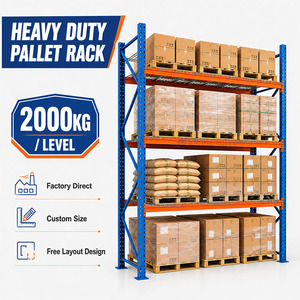 High load capacity
Heavy Duty Steel Beam Pallet Racking System with High Load Capacity for Industrial Warehouse Storage
View product →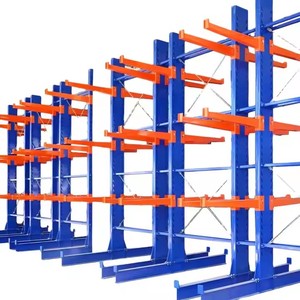 Long material storage
Industrial Heavy Duty OEM ODM Storage Racks Wall Mounting Tube Racking Gavenized Cantilever Rack for Warehouse
View product →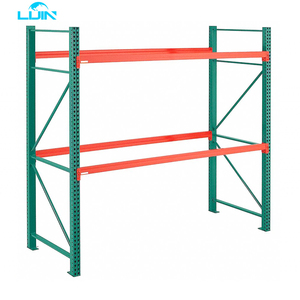 Adjustable beams
Long Span Adjustable Heavy Weight Warehouse Storage Pallet Shelves System Tear Drop Rack for Industrial
View product →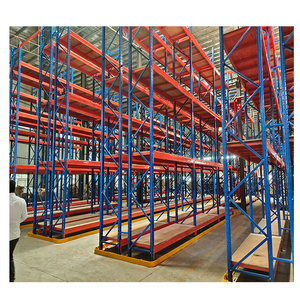 Selective access
Warehouse Racking System Heavy Duty Industrial Pallet Racks System Storage Pallet Selective Racking
View product →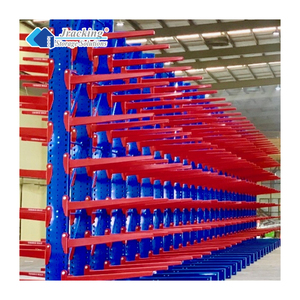 Cold storage / CE
CE-Certified Industrial Warehouse Storage Shelves Heavy-Duty Cantilever Racking System for Cold Storage Pipe Storage
View product →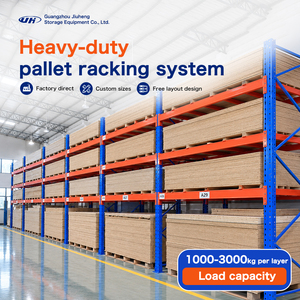 Wholesale best seller
Heavy Duty Pallet Racking System Steel Warehouse Storage Rack Industrial Pallet Rack Adjustable Beam Storage Solution
View product →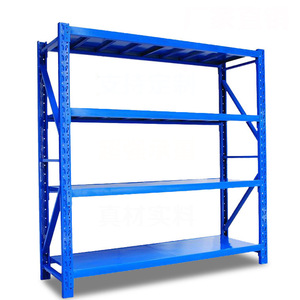 Light / medium duty
LIANGZO 5-Layer Steel Corrosion Protection Chrome Plated Storage Shelf for Warehouse Household Use Light/Medium Duty Display
View product →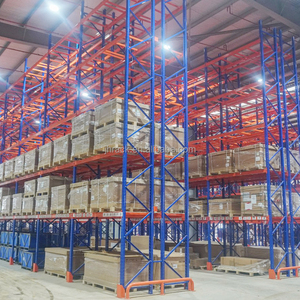 Corrosion protection
Heavy-Duty Corrosion Protected Pallet Racking Systems for Warehouse and Factory Storage by Jinhui Warehousing Suppliers
View product →Countries with installed storage systems
Warehouse projects delivered
Annual steel production capacity
Warranty on qualified storage systems
A Manufacturer, Engineering Partner and Wholesale Shelving Supplier
Alohatop Shelf LLC is structured for buyers who need more than a catalogue. The company designs, calculates, manufactures and supports industrial racking and warehouse storage shelving for distribution centres, 3PLs, cold chains, factories and automated warehouses.
Manufacturing Control
A 35,000 m² highly automated production centre with more than 100,000 t of annual capacity, robotic and laser-controlled processes, and more than 90% of output exported to global markets.
Engineering and R&D
In-house technology work, R&D with Mondragon University and a simulation chair at the University of the Basque Country support finite-element analysis, physical load testing and seismic verification.
Certified Quality
ISO 9001, ISO 14001, ISO 45001, ISO 50001, EN 1090-1, ISO 3834-2 welding quality and ISO 14064 carbon verification, with component traceability from steel batch to installed upright and beam.
Global Delivery Support
Storage systems installed in more than 60 countries, supported by 14 own branches, 70+ trusted distributors and installation supervision for projects in South America and other export regions.
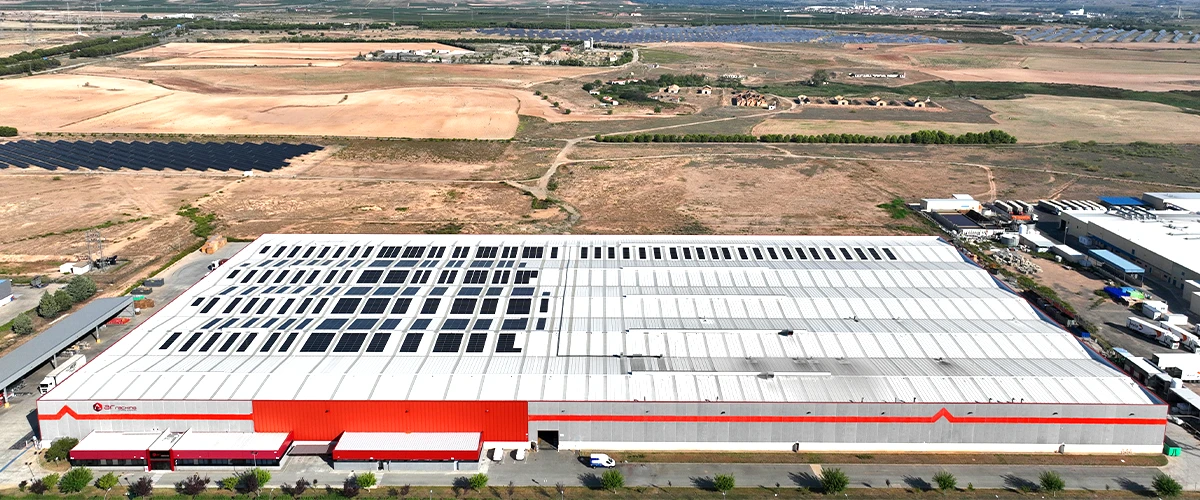
From steel coil to container: production control matters
For importers, the real risk is not the price of one upright; it is whether the next container arrives with the same profile, finish and load capacity. In-house manufacturing gives buyers one accountable partner for drawings, production, inspection, packing and shipment scheduling.
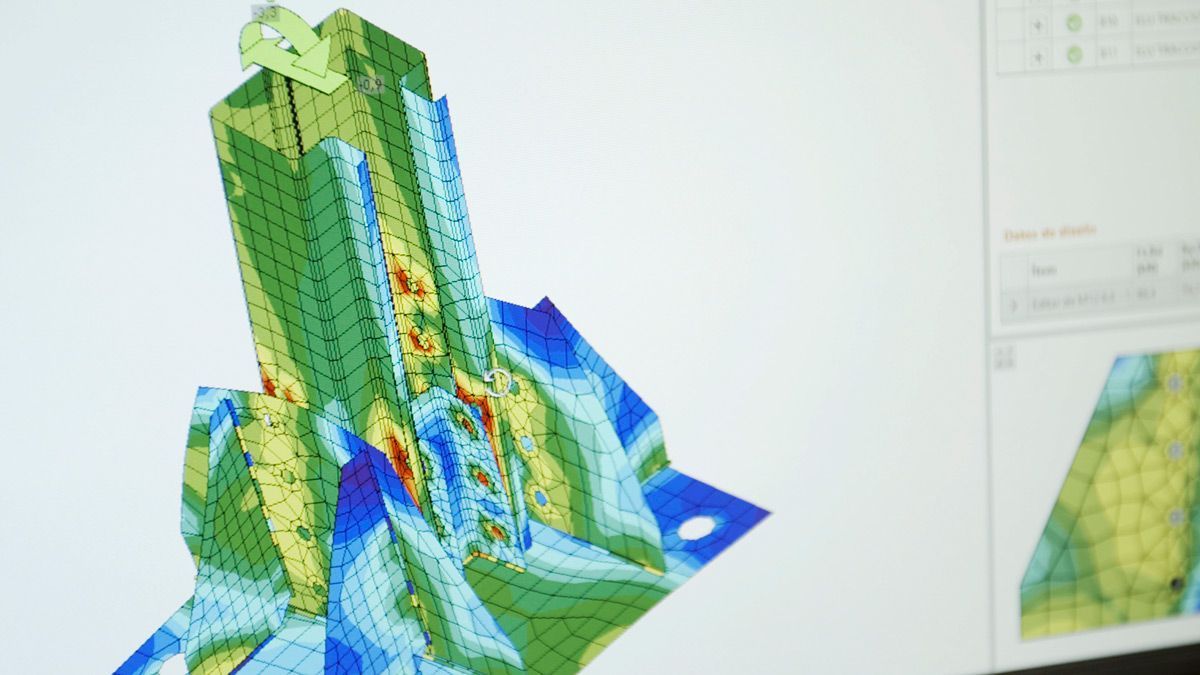
Laboratory validation before the first pallet is loaded
High seismic demand, cold-store embrittlement and automated crane tolerances cannot be managed with catalogue assumptions. Testing and calculation models help verify frames, beams, connections and base plates before production is released.
2025–2030 Procurement Outlook for Warehouse Storage Shelving
Buyers are moving from “price per bay” to “cost per safe, usable pallet position over the asset life.” That shift changes how exporters, wholesalers and project engineers should be evaluated.
What smart importers are changing in their buying strategy
The strongest purchasing teams now compare warehouse storage shelving on total cost per usable pallet position, not the invoice value of steel. They ask for local seismic calculation, cold-store material specification, replaceable parts, installation method statements and future automation readiness before they release a purchase order.
Nearshoring, e-commerce volatility and cold-chain investment are increasing demand for modular systems that can be expanded in phases. A racking layout that cannot accept a new bay, a different pallet depth or a future shuttle aisle often becomes an expensive bottleneck within two or three years.
Wholesalers also face more informed end customers. They need product documentation, consistent packaging, installation guidance and a supplier who can answer structural questions — not only provide a container price. This is where an exporter with real engineering depth creates measurable information gain for its channel partners.
Recommended buyer scorecard
Use these weights as a decision framework; adjust them to the risk profile of the project.
Where Warehouse Storage Shelving Is Heading Next
Product development is being driven by automation tolerance, resilience engineering, cold-chain growth, ESG documentation and lifecycle safety.
Automation-first geometry
AS/RS stacker cranes, pallet shuttles and AMR fleets depend on exact rack geometry. Future racking specifications are increasingly written around system tolerances, interface points and WMS-controlled storage lanes.
Seismic resilience by calculation
Chile, Peru, Colombia, Ecuador and other markets require local seismic verification. Reinforced uprights, bracing, base plates, anchors and row spacers are becoming standard engineering decisions, not optional upgrades.
Cold-chain material strategy
Freezer warehouses demand steels and finishes suited to temperatures down to −30 °C. Mobile, drive-in, VNA, shuttle and self-supporting systems are being specified to protect food, seafood, meat and pharmaceutical cold chains.
High density without dead aisles
Land costs, cooled cubic metres and labour availability are pushing buyers from conventional selective racking toward VNA, double-deep, drive-in, pallet flow, push-back and shuttle systems where the SKU profile supports it.
ESG evidence as procurement data
ISO 14064 carbon reporting, material traceability, coating specifications and full component documentation are becoming part of supplier qualification. Buyers want verifiable facts, not only sustainability claims.
Lifecycle safety as a service
Rack inspection, load signage, repair methods, spare-parts planning and reconfiguration support are moving into the original supply agreement. The lowest purchase price has little value if damaged components stop the warehouse.
Which Pallet Racking System Should You Specify?
Use this early-stage comparison to align storage density, access and stock rotation with the real operating profile. Final selection depends on SKU mix, throughput, building height and seismic zone.
| System | Best for | Density | Direct access | Stock rotation |
|---|---|---|---|---|
| Selective racking | High SKU mix, food and beverage, retail DCs, 3PL operations | 100% of pallets | Any | |
| Very narrow aisle | Expensive land, cold stores, tall buildings, high bay warehouses | 100% of pallets | Any | |
| Double-deep racking | 3PL operations with two or more pallets per SKU | 50% | LIFO per lane | |
| Drive-in racking | Homogeneous products, frozen goods, low SKU counts | Low | LIFO; FIFO if drive-through | |
| Mobile pallet racking | Cold storage, high value per cooled cubic metre | 100% with one open aisle | Any | |
| Pallet flow | Perishables, fast-moving inventory, FIFO-critical products | Per lane | FIFO | |
| Push-back | Manufacturing buffers, mid-volume SKUs, LIFO-friendly storage | Per lane | LIFO | |
| Pallet shuttle | High-throughput DCs, deep cold lanes, semi-automation | Per lane | FIFO or LIFO | |
| AS/RS and self-supporting | Large DCs, 24/7 operations, deep-freeze warehouses, automated buildings | Automated | Any, WMS-controlled |
Density is relative to selective racking in the same footprint. In seismic zones, very tall or very dense configurations require specific structural verification, anchorage design and installation supervision.
How to Evaluate a Warehouse Storage Shelving Exporter or Wholesaler
Use these evidence-based checks before placing a container order. They help separate a genuine engineering-led exporter from a catalogue-only intermediary.
Ask for engineering evidence
- Load and deflection calculations for the actual pallet and beam length
- Seismic design against the destination country code
- Anchor and base-plate design for the site’s soil and slab
- Approved general arrangement and installation drawings
Verify manufacturing quality
- Steel certificates and component traceability records
- Welding quality under ISO 3834-2 and EN 1090-1 where applicable
- Coating specification, thickness and corrosion protection
- Packing method, container loading plan and spare-parts list
Confirm lifecycle support
- 5-year warranty terms and exclusions in writing
- Availability of uprights, beams, safety clips and anchors
- Rack inspection and damage-repair methodology
- Load signage, training material and reconfiguration support
Test export readiness
- Experience shipping to your port, including documentation
- Installation supervision or trained distributor support
- Clear communication across English, Spanish or local languages
- Project references with similar height, load and temperature
Warehouse Storage Shelving FAQ for Importers and Wholesalers
These are the questions engineers and export teams answer most often during early-stage racking projects.
Are you an exporter, manufacturer or trading company?
Alohatop Shelf LLC is a designer, manufacturer and project partner for industrial racking and warehouse storage shelving. The company controls engineering, steel production, quality documentation and project support, with more than 90% of output exported and a production centre of 35,000 m².
Do you support OEM, ODM and wholesale distribution programmes?
For qualified distributors and importers, OEM/ODM discussions can cover product configuration, documentation, packaging, container-load planning and repeat-order consistency. The objective is to protect the distributor’s specification across multiple shipments, not to sell a one-off mix of components.
Do you design, supply and install racking projects in South America?
Yes. Projects can be designed for the destination country, manufactured in the automated plant and coordinated through own supervisors and trained distributors across markets such as Brazil, Chile, Peru, Colombia, Argentina, Ecuador and Uruguay.
How is pallet racking designed for seismic zones?
Racking in Andean and Pacific-coast countries is calculated against the local seismic code and site soil class — for example NCh2369 and NCh433 in Chile, E.030 in Peru, NSR-10 in Colombia and NEC in Ecuador. Typical measures include reinforced uprights and bracing, heavier base plates and anchors, row spacers and reduced beam deflection limits.
Which pallet sizes and loads can you support?
Common formats include the 1200 × 1000 mm pallet widely used in Latin America, the Brazilian PBR 1000 × 1200 mm, the 1200 × 800 mm Euro pallet and ISO sizes such as 1100 × 1100 mm and 1219 × 1016 mm. Beam lengths, frame depths and load ratings are dimensioned for the actual pallet and maximum load.
Can warehouse storage shelving operate in cold storage and freezer warehouses?
Yes. Mobile racking, drive-in, VNA, pallet shuttle and self-supporting freezer warehouses can use steels and finishes suited to temperatures down to −30 °C. This is critical for fruit, seafood, meat, frozen food and pharmaceutical cold chains where condensation, frost and equipment access affect long-term safety.
What certifications and warranty back the storage systems?
Qualified systems carry a 5-year warranty and are produced under ISO 9001, ISO 14001, ISO 45001, ISO 50001, UNE EN ISO 3834-2 welding quality, EN 1090-1 and ISO 14064 verified carbon reporting. Component traceability supports inspection, maintenance and future expansion.
What information is needed to start a quotation?
Send a building layout with clear height, pallet dimensions and maximum load weight, number of SKUs and pallets per SKU, daily throughput, forklift or automation type, temperature range, destination city and any local code requirements. With this information, the engineering team can propose the most efficient storage system and prepare a quotation basis.
Planning a Warehouse Storage Shelving Project?
Share your building layout, pallet data, load requirements and destination market. Our export engineering team will help you compare selective racking, cantilever storage, cold-store systems and high-density solutions — with the documentation needed for a confident purchase decision.