Racking Systems Frequently Specified for Bolivian Warehouses
These eight product families support VNA, selective, push-back, outdoor, auto-parts and heavy-duty storage layouts. Product links are preserved exactly as supplied by the source catalogue.
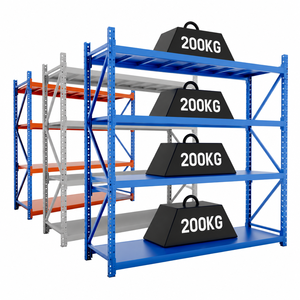
Factory Direct 4-Layer Heavy-Duty Pallet Racking System
Medium to heavy-duty adjustable steel storage for multi-level warehouse pallet handling.
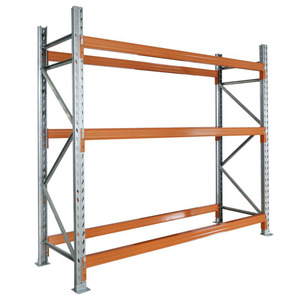
NOVA Heavy-Duty Industrial Pallet Racking System
Boltless Q235 steel storage racks for industrial pallets and high-load warehouse operations.
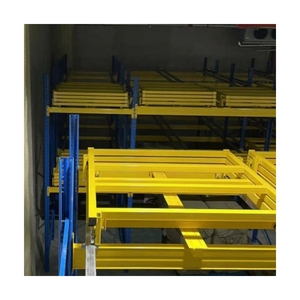
Heavy-Duty Push-Back Pallet Racking System
LIFO high-density pallet storage for manufacturing buffers and medium-volume SKUs.
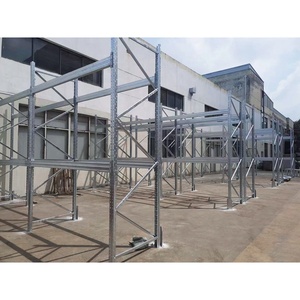
Hot-Dip Galvanized Outdoor Pallet Storage Rack
Corrosion-resistant outdoor racking for yards, ports, mining stores and humid sites.
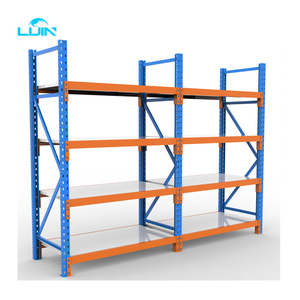
Boltless Adjustable Industrial Pallet Racking System
Fast-install adjustable steel racks for warehouses needing flexible beam levels.
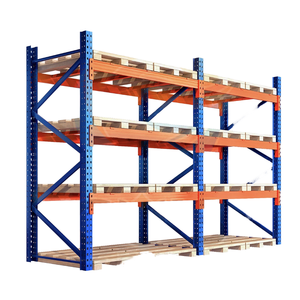
Detachable Steel Pallet Stacking Rack, 1–5 Layers
US-type detachable stacking racks for bulk storage yards and large warehouse plants.
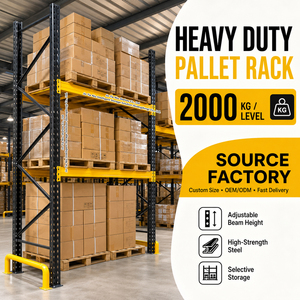
1,000–3,000 kg Adjustable Pallet Rack for Auto Parts
Selective heavy-duty pallet storage for automotive parts, tyres and spare-parts depots.
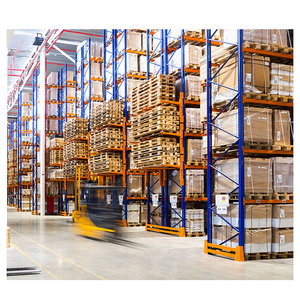
Adjustable Heavy-Duty Selective Pallet Rack System
Direct-access selective racking for industrial warehouse storage management.
Countries with installed storage systems
Warehouse racking and storage projects delivered
Annual steel production capacity
Of production exported to international projects
A VNA Racking Manufacturer Built for Bolivia’s Hardest Warehouses
Very narrow aisle racking is not simply a conventional pallet rack with tighter aisles. It is a high-density storage architecture in which turret trucks, guided or wire-assisted forklifts operate in aisles commonly around 1.6–2.0 m wide, compared with 3.5–4.0 m in a conventional selective layout. The result can be a major increase in pallet positions per square metre, but only when frames, beams, floor tolerances, truck guidance, sprinkler clearance and operator training are engineered as one system.
For Bolivian buyers, the purchasing decision is equally affected by geography. A warehouse in El Alto faces high-altitude operating conditions, a project in Santa Cruz may need cold-store performance, and a mining supply store in Oruro or Potosí may demand galvanized outdoor storage and heavy-duty impact protection. Alohatop Shelf LLC designs, calculates, manufactures and installs metal racking for these realities, with a factory-direct wholesale model that gives distributors, contractors and end users a single accountable technical partner.
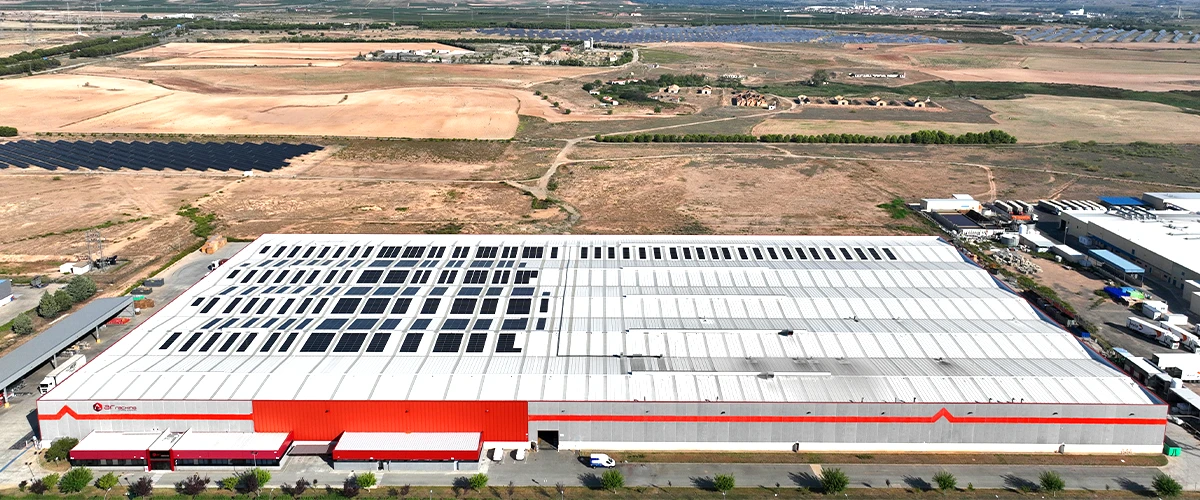
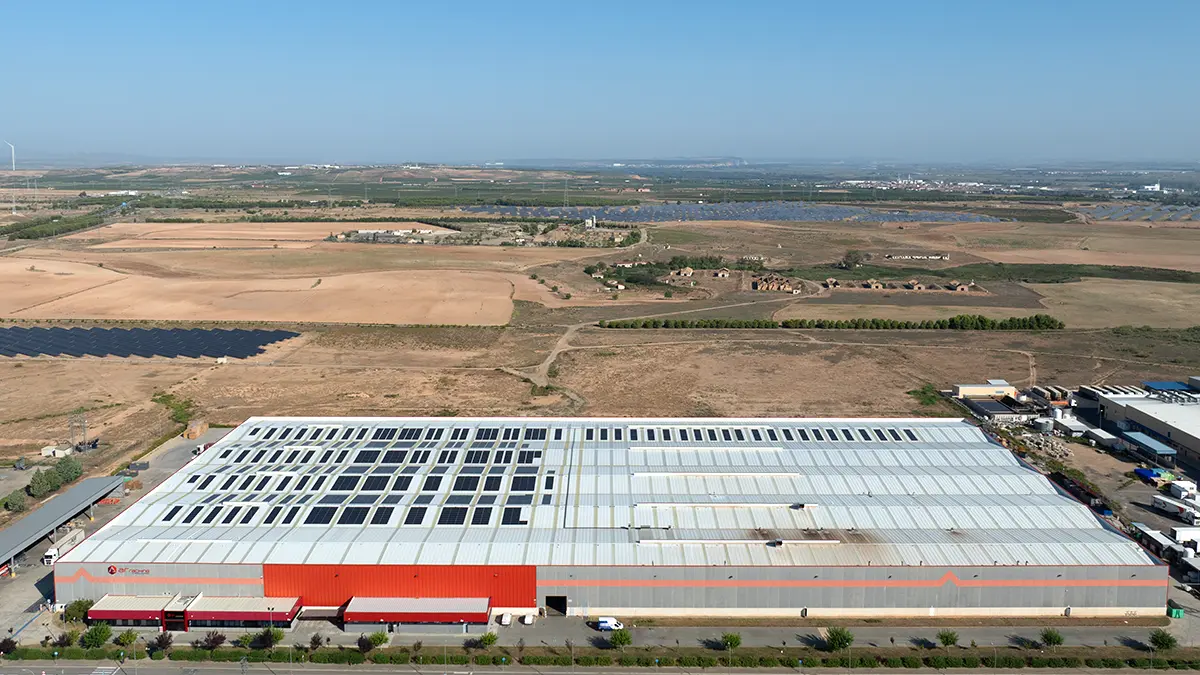
- 35,000 m² highly automated production centre with more than 100,000 t of annual steel capacity.
- More than 90% of output exported, with experience shipping racking components to major ports serving South America.
- Full component traceability, from steel batch and profile to installation handover.
Where Very Narrow Aisle Racking Delivers the Strongest ROI
A VNA layout is usually most attractive when land is expensive, the building is tall, SKU diversity is high and every pallet must remain directly accessible.
Land-Constrained Distribution Centres
When a Santa Cruz, Cochabamba or El Alto site cannot expand sideways, VNA converts aisle space into pallet positions. The engineering focus shifts to truck guidance, floor flatness, beam deflection limits and safe operator sightlines.
Cold Storage and Freezer Warehouses
Every cubic metre of cooled space carries an energy cost. VNA racking can increase storage density while keeping 100% selective access — an important benefit for fruit, meat, poultry, dairy and frozen food operations serving Bolivian and export markets.
High SKU Mix With Direct Access
Selective VNA racking is suitable for importers, retailers and 3PLs that carry many SKUs and cannot accept LIFO lane restrictions. It supports FIFO discipline and fast order picking while preserving dense pallet storage.
Tall Buildings and High-Bay Projects
As clear height rises, the cost of every unnecessary aisle is magnified. Our engineers verify upright capacity, bracing, base plates and seismic connections for the intended height, load and site soil class rather than relying on catalogue assumptions.
Multi-Client 3PL Warehouses
Third-party logistics providers need flexibility. VNA racking can be combined with picking levels, double-deep bays, push-back sections and temporary bulk areas so that one building serves multiple clients without losing access to any pallet.
Mining, Spare Parts and Industrial Stores
Bolivia’s mining and industrial supply chains often store mixed pallet weights, long items and critical spares. Heavy-duty selective racking, reinforced impact protection and galvanized finishes can be combined with VNA aisles for dense, organised access.
How VNA Racking Is Applied Across Bolivia
Bolivia is not a single warehouse market. Altitude, climate, logistics corridors and industry mix change the engineering brief from city to city.
El Alto and La Paz: High-Altitude Distribution
At more than 3,500 m above sea level, LPG forklifts and some battery systems lose performance, while temperature swings and dust affect maintenance intervals. VNA projects in El Alto and La Paz should specify truck derating, battery charging strategy, ventilation and conservative load assumptions. Racking layouts should also allow safe battery-changing and service access near the aisle head.
Santa Cruz de la Sierra: Cold Chain and Agro-Processing
Santa Cruz is a key hub for food processing, agricultural inputs and export-oriented cold chains. VNA racking in a refrigerated or freezer building must account for low-temperature steel performance, condensation control, freezer-door interlocks and minimum aisle clearance for turret trucks wearing cold-weather PPE.
Cochabamba: FMCG, Retail and Imported Goods
Cochabamba’s central location supports national distribution. Importers and wholesalers often need a high-SKU selective system with direct access to every pallet. A VNA layout with beam-level adjustment and integrated carton-picking areas can reduce travel time while leaving room for seasonal stock peaks.
Oruro and Potosí: Mining Supply and Outdoor Storage
Mining operations require dense spare-parts stores, lubricant pallets, tyres and heavy components. Hot-dip galvanized outdoor racks, heavy-duty upright protectors, floor-anchored base plates and sealed labels are practical specifications. Where indoor height is limited, a hybrid selective plus outdoor yard layout often beats a single high-bay solution.
Sucre, Tarija and Chuquisaca: Food and Beverage
Food and beverage warehouses need FIFO rotation, hygienic housekeeping and reliable truck access. VNA selective racking can support batch control while keeping pallets visible. For fast-moving lines, a combined layout with pallet flow or push-back racking may reduce replenishment travel and improve order flow.
Landlocked Import Logistics: Arica, Iquique and Ilo Corridors
Bolivia is landlocked, so racking usually arrives through Pacific ports and border crossings before reaching La Paz, Cochabamba, Santa Cruz or the mining belt. Early-stage planning should optimise container loading, label components by zone and sequence deliveries to avoid double handling. Factory-direct packing can reduce freight cost and site rework.
Warehouse Trends Shaping VNA Demand in Bolivia
Storage investment in Bolivia is being driven by cold-chain growth, urban distribution pressure, import substitution and a stronger focus on safety and traceability.
Cold-Chain Expansion
Meat, poultry, dairy, fruit and processed food operators are investing in refrigerated warehousing. VNA racking helps reduce cooled volume per pallet position while maintaining direct access to sensitive stock.
Urban Logistics Pressure
In La Paz, El Alto and Santa Cruz, suitable warehouse land is not always cheap or easy to expand. Taller, denser layouts with VNA aisles are becoming more attractive than horizontal expansion.
Safety and Compliance
Warehouse managers are increasingly asking for load signs, technical documentation, impact protection, inspection routines and traceable components. CE conformity documentation and EN-based design checks support that trend.
Automation Readiness
Even when a project starts manual or semi-automated, buyers want racking that can later connect to WMS, AGVs, AMRs or shuttle systems. Accurate tolerances and modular beams make future upgrades less disruptive.
VNA Racking Compared With Other Pallet Storage Systems
Use this early-stage comparison to narrow the layout direction. Final selection depends on SKU profile, throughput, building height, forklift type, seismic zone and fire strategy.
| System | Best Fit in Bolivia | Pallet Selectivity | Space Density | Rotation |
|---|---|---|---|---|
| Selective pallet racking | Retail, FMCG, spare parts, multi-SKU distribution | 100% direct access | Any | |
| Very narrow aisle racking | Land-constrained DCs, cold stores, tall buildings, importers | 100% direct access | Any | |
| Double-deep racking | 3PL and distributors with multiple pallets per SKU | 50% direct access | LIFO per lane | |
| Push-back racking | Manufacturing buffers, seasonal stock, medium-volume SKUs | Per lane | LIFO | |
| Drive-in or pallet shuttle | Frozen goods, homogeneous stock, high-density cold chains | Limited or lane-based | LIFO, FIFO or shuttle-controlled | |
| AS/RS or self-supporting warehouse | Large DCs, 24/7 operations, long-term automation strategy | Automated | WMS-controlled |
Density depends on pallet size, aisle width, building height, fire protection and truck type. In Bolivian high-altitude and seismic areas, capacity and clearances must be verified by project-specific calculations.
Engineering Validated in Laboratory and Factory
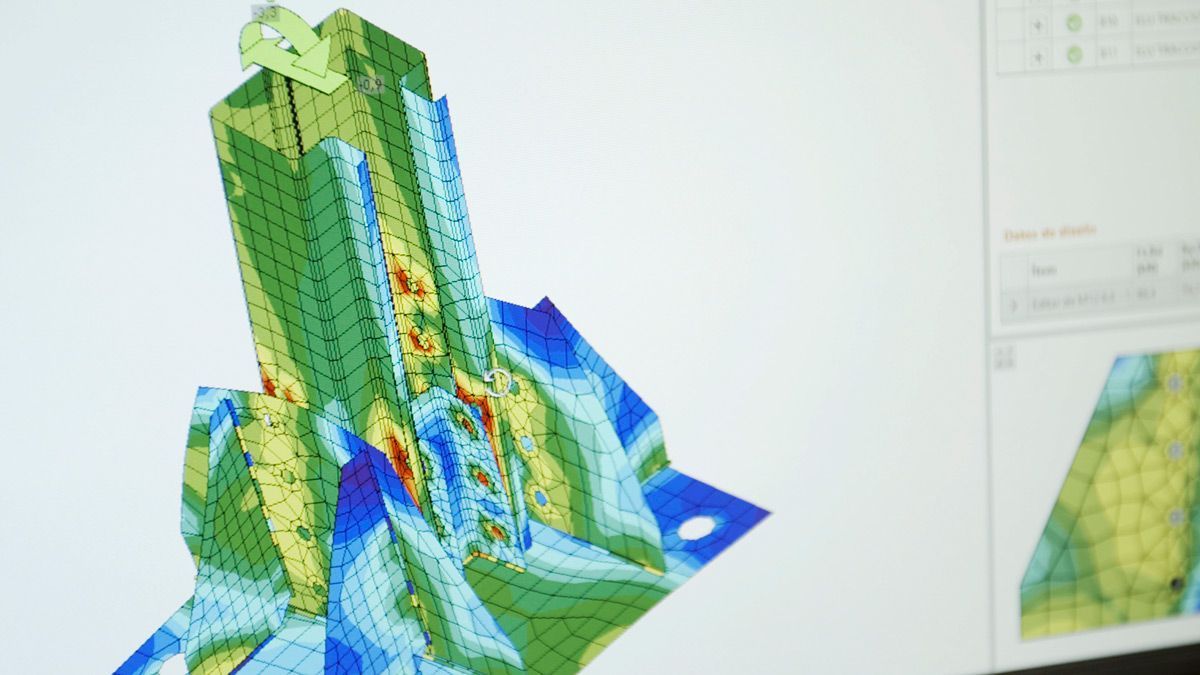
For a buyer in Bolivia, a low-cost racking quotation is only useful if the system can be safely anchored, loaded, inspected and maintained. Our technical approach combines physical testing, finite-element simulation and production control. Work with an R&D laboratory at Mondragon University and a research and simulation chair at the University of the Basque Country supports the calculation models and test programmes behind frames, beams and connections.
Systems are produced under management and welding standards including ISO 9001, ISO 14001, ISO 45001, ISO 50001, UNE EN ISO 3834-2, EN 1090-1 and ISO 14064. For international projects, we prepare CE conformity documentation packages and design verification aligned with EN 15512, EN 15620 and EN 15635 principles where applicable, then adapt the final structural review to the destination site’s seismic, soil and building conditions.
- Finite-element simulation of frames, beams and base connections.
- Physical load and cyclic testing of profiles and connectors.
- Millimetre-level production control for VNA and automated interfaces.
- Full traceability of uprights, beams and accessories.
Factory Precision for VNA and Automated Warehouse Interfaces
Very narrow aisle and automated storage systems are less forgiving than conventional warehouses. If rack geometry drifts, turret trucks lose confidence, stacker cranes stop, and installation teams spend extra time correcting on site. Robotic production, laser-controlled processes and pre-assembly checks help keep frames, beams and guide interfaces within tolerance.
For Bolivian projects, this precision also reduces installation risk. Components arrive labelled, sequenced and documented, so local installation crews and our supervisors can follow approved drawings, plumb tolerances and load signage. The same production control supports a 5-year warranty and a lifecycle service plan covering inspection, maintenance and future reconfiguration.
Discuss Your LayoutWhy Buyers Choose Our VNA Racking Supply Model
One partner for engineering, manufacturing, export packing, installation support and lifecycle service reduces technical risk and procurement friction.
Direct Manufacturer Control
We control design, calculation, manufacturing and installation guidance. That means one accountable technical contact rather than a chain of traders and unverified component suppliers.
Export Experience and Lead-Time Discipline
More than 90% of production is exported. We understand container loading, labelling, documentation and phased delivery requirements for landlocked Bolivian projects.
5-Year Warranty
Storage systems are backed by a 5-year warranty, with full component traceability and technical documentation to support inspections and future expansion.
Project Engineering Support
Layout optimisation, structural calculation, seismic review, truck guidance assumptions and integration with forklifts, AGVs or AS/RS can be reviewed before the order is released.
Global Network, Local Focus
More than 60 countries served, 14 own branches and 70+ trusted distributors support projects while engineering remains directly controlled by the manufacturer.
Lifecycle Services
Technical inspection, maintenance, component replacement and reconfiguration programmes help protect people, stock and uptime after the warehouse goes live.
Common Questions From Bolivian Racking Buyers
These are the questions our engineers and export team most often answer from warehouse, logistics and procurement managers in Bolivia.
Do you supply and support VNA racking projects in Bolivia?
Yes. We support projects for distributors, contractors, 3PLs and end users in Bolivia with layout engineering, factory manufacturing, export packing and installation guidance. For projects in La Paz, El Alto, Santa Cruz, Cochabamba, Oruro, Potosí, Sucre or Tarija, our team can review building drawings, pallet data, forklift type and site conditions before proposing a VNA or hybrid racking layout.
What does “CE certified” mean for a racking system imported into Bolivia?
For international buyers, CE-related documentation is a sign that the manufacturer can provide evidence of conformity, welding control and factory production discipline. We prepare CE conformity documentation packages, supported by EN 1090-1 factory production control, EN ISO 3834-2 welding quality and design checks aligned with relevant EN racking standards where applicable. Final anchoring and seismic assumptions must still be verified for the Bolivian site.
How do you design VNA racking for high-altitude sites such as El Alto or La Paz?
We ask for the project altitude, truck type, battery or fuel system, floor condition and temperature range. At high altitude, forklift performance and cooling can change, so the aisle design should not be based only on sea-level catalogue capacities. We also review beam deflection, upright protection, battery-changing space and operator visibility so the VNA system works safely with the actual equipment.
Which pallet sizes are common in Bolivian warehouses?
Common formats include 1200 × 1000 mm pallets, 1200 × 800 mm Euro pallets and ISO sizes such as 1100 × 1100 mm or 1219 × 1016 mm. Some importers also use non-standard pallets. Beam lengths, frame depths and load beams are dimensioned for the actual pallet, load and overhang rather than a generic size.
Can the racking be used in cold storage and freezer warehouses in Santa Cruz?
Yes. We supply cold-store and freezer racking using steels and finishes suited to temperatures down to −30 °C, subject to project verification. For a Santa Cruz cold-chain building, we review condensation, floor flatness, freezer-door protection, sprinkler layout and truck guidance. VNA racking is often selected when the cost of cooled volume is high and direct access to every pallet is required.
How is seismic risk addressed for Bolivian Andean projects?
Seismic demand varies by site. We request the project location, soil class and any available local structural requirements, then review bracing, base plates, anchors, row spacers and beam deflection limits. For high-risk Andean areas, the final calculation should be confirmed by a local structural engineer or authority using the applicable Bolivian requirements and site-specific data.
Which logistics routes are used for racking shipments to Bolivia?
Bolivia is landlocked, so ocean freight commonly moves through Pacific ports such as Arica, Iquique or Ilo before crossing into Bolivia by road. The exact route depends on the destination city, cargo volume and customs requirements. We can optimise container loading, label components by zone and sequence deliveries to reduce handling and site congestion.
What information is needed to receive a VNA racking quotation?
Please send a building layout with clear height, pallet dimensions, maximum load per pallet, number of SKUs and pallets per SKU, daily throughput, forklift or automation type, temperature range, project city and any seismic or soil information. Photos of the site, floor condition and loading area are also useful. Our engineers use this data to propose the safest and most space-efficient storage system.
Can you supply installation support and technical documentation for Bolivia?
Yes. We provide approved layout drawings, load signs, component labels, installation instructions and technical documentation. For larger projects, our supervisors can coordinate with local installation teams. A lifecycle plan can also include periodic rack inspection, maintenance guidance and replacement-part identification.
Planning a VNA Warehouse in Bolivia?
Send your building layout, pallet dimensions, load data and project city. Our engineers will recommend a CE-conformity-supported VNA racking configuration for your site, throughput and temperature profile.