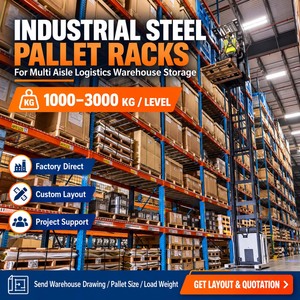
Product Portfolio
8 Blue Warehouse Racking Systems for Antofagasta Buyers
Every structure below is fabricated from Q235B / Q355B structural steel, shot-blasted, phosphated and finished with a blue polyester powder coating that holds its colour under the Atacama sun. Beam lengths, frame depths, upright thickness and anchor systems are re-engineered for each project's seismic zone, pallet profile and salt-exposure class.
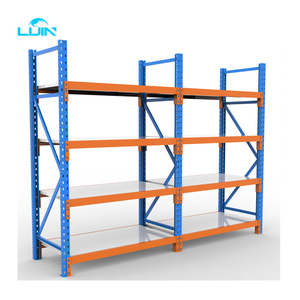
Boltless Adjustable Industrial Heavy Duty Pallet Racking System Warehouse Steel Metal Storage Racks Shelving Units
View product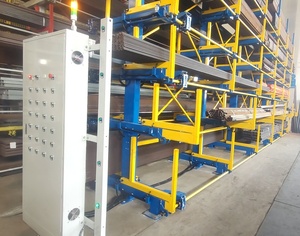
Crank Out Cantilever Roll Out Cantilever Rack — Innovative Cantilever Rack System for Efficient Storage
View product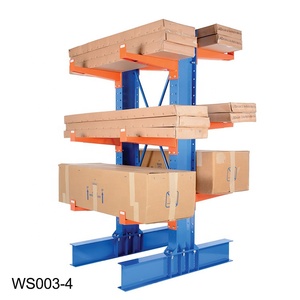
Wholesale Heavy Duty Cantilever Racking Customize Cantilever Pipe Rack
View product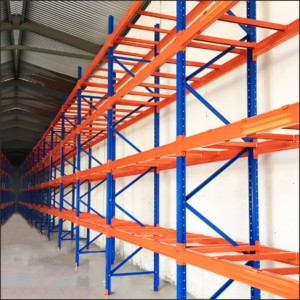
Heavy Duty Store Shop Display Shelving Tiers Garage Racking Shelves Steel Warehouse Shelf Metal Storage Rack Shelves Storage
View product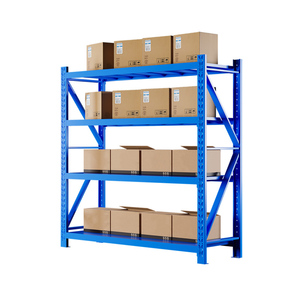
Industrial Warehouse Storage 5-Layer Pallet Racking System with Tire Rack Slotted Angle Rack Stacking Racks & Shelves
View product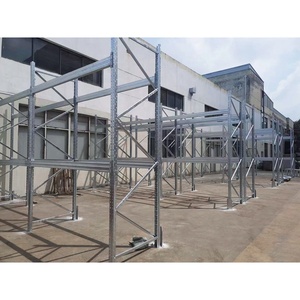
Warehouse Storage Strong Corrosion Resistance Capability Hot Dip Galvanize Pallet Rack Outdoor Storage Rack
View product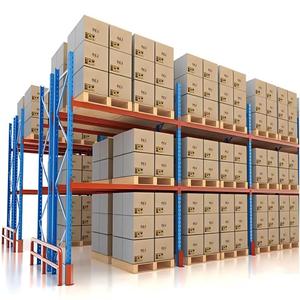
Adjustable Durable Storage Rack Powder Coating Finish Long Service Life CE Heavy Duty Metal Warehouse AU Standard Pallet Racking
View product60+Countries with installed storage systems
42,000+Warehouse projects delivered
100,000 tAnnual steel production capacity
90%+Of production exported worldwide
Local Market Context
Why Blue Powder-Coated Racking Dominates the Antofagasta Market
Antofagasta is not a market where a generic racking quotation survives contact with reality. Warehouses across the Antofagasta Region operate in one of the harshest industrial environments on earth: coastal salt spray along the Pacific shoreline, ultraviolet radiation that degrades cheap paint within two seasons, day-night temperature swings across the Atacama Desert, and a structural design basis governed by Chilean seismic standards NCh2369 and NCh433.
That combination explains why blue powder-coated racking has become the default specification for mining MRO stores, port de-consolidation centres and cold-chain importers in the region. Blue is not simply a brand colour — a RAL 5010 or RAL 5015 polyester coating applied over a properly phosphated substrate gives warehouse supervisors a high-contrast visual reference for beam elevations, aisle marking and damage inspection, while the coating system itself resists chalking, fading and chloride attack far better than standard alkyd paint.
For buyers in Antofagasta, the practical question is never "which colour is cheapest" but "which manufacturer can supply a structural calculation package that a Chilean reviewer will accept, and still hit the vessel schedule". That is precisely the gap our engineering and export teams were built to close.
- Seismic compliance: frames and connections calculated against NCh2369 for industrial structures and NCh433 for seismic-resistant design, with site soil class taken into account.
- Corrosion strategy: powder-coated blue systems for indoor stores, hot-dip galvanised or duplex-coated systems for outdoor yard storage near the coast.
- UV stability: polyester powder chemistry selected for high-altitude desert exposure rather than temperate European conditions.
- Port logistics: export packing engineered for the ocean leg into Antofagasta, Coloso and Mejillones, with itemised packing lists matching the installation drawings.
Applications
Four Antofagasta Application Scenarios Where Racking Design Decides Uptime
The same blue racking family is reconfigured differently depending on whether it serves a mine site, a port terminal, a cold store or an energy project.
Mining Spare Parts & MRO Stores
Copper operations around Antofagasta hold enormous MRO inventories — crusher liners, hoses, tyres, drill rods and structural steel. Cantilever and heavy-duty selective racking with reinforced uprights handles long-profile stock, while wide-beam selective bays keep fast-moving consumables in 100% accessible locations. Load signage is supplied in Spanish for Chilean safety inspectors.
Port & Container De-Consolidation
Antofagasta, Coloso and Mejillones handle imports for the entire northern mining corridor. De-consolidation centres need high-turnover selective racking, block stacking or double-deep layouts that absorb container surges without blocking access. Hot-dip galvanised outdoor racks extend capacity into the yard where building height runs out.
Cold Chain & Food Import Storage
Northern Chile depends heavily on imported and redistributed food. Freezer and chiller warehouses benefit from drive-in, pallet shuttle or mobile racking that minimises cooled cubic volume per pallet position. Cold-store steels and finishes are specified for continuous operation down to −30 °C, with reduced beam deflection limits to protect automated handling.
Solar, Desalination & Outdoor Yards
Antofagasta is the centre of Chile's solar and green-hydrogen pipeline, and desalination plants supply the region's industrial water. These projects store cable drums, PV modules, membrane racks and pipe spools outdoors. Hot-dip galvanised pallet and cantilever racks — optionally duplex-coated — deliver the corrosion resistance that powder coating alone cannot guarantee on the coast.
Local Trends
Six Trends Reshaping Industrial Racking Procurement in Antofagasta
Buyer behaviour in northern Chile has shifted noticeably over the last procurement cycles. These are the patterns our project engineers see most often when quoting into the region.
Seismic-First Engineering
Chilean buyers increasingly request the structural calculation report as part of the tender, not after the purchase order. Deliverables now typically include frame capacity tables, anchor pull-out verification and beam deflection limits expressed against NCh2369.
Corrosion Lifecycle Costing
Coastal and yard installations now compare five-year repainting costs against the one-off premium for hot-dip galvanising. Duplex systems — galvanised plus powder topcoat — are increasingly specified where both appearance and chloride resistance matter.
Density Over Footprint
Industrial land near the port and along the mining corridor commands a premium, so buyers push toward double-deep, drive-in and very narrow aisle configurations that raise pallet positions per square metre without expanding the building envelope.
Semi-Automation for MRO
Pallet shuttle and carton-flow systems are moving beyond pure distribution centres into mining MRO warehousing, where shift-based replenishment and long storage lanes favour semi-automated high-density layouts over pure manual pick.
Modular, Expandable Layouts
Rather than committing to a single build-out, Antofagasta buyers prefer a racking master plan delivered in phases — frames engineered today for the beam levels that will be added in two or three budget cycles, avoiding a second capital round.
Turnkey Import, Not Just Steel
Procurement teams now evaluate a supplier on whether it can handle loading diagrams, export packing, shipping documents, spare-parts kits and installation supervision — not merely on the ex-works price per tonne of steel.
Selection Guide
Choosing the Right Blue Racking System for an Antofagasta Warehouse
This is the comparison table our engineers use during the first layout study. Final selection depends on SKU profile, throughput, clear height, temperature and seismic zone.
| Racking System | Best Suited To | Pallets per m² | Direct Access | Rotation |
|---|---|---|---|---|
| Selective pallet racking | High SKU mix, MRO spares, port de-consolidation | Baseline | 100% of pallets | Any |
| Boltless heavy-duty racking | Fast-build stores, containers, maintenance workshops | Low | 100% of pallets | Any |
| Cantilever / pipe racking | Drill rods, pipe spools, timber, cable drums | Layout dependent | 100% | Any |
| Very narrow aisle (VNA) | Expensive land, tall cold stores, high-density sites | +30–40% | 100% of pallets | Any |
| Double-deep racking | 3PL and importers holding 2+ pallets per SKU | +30–40% | 50% | LIFO per lane |
| Drive-in / drive-through | Homogeneous imports, frozen goods, seasonal stock | +55–70% | Low | LIFO (FIFO if drive-through) |
| Pallet shuttle | High-throughput distribution, deep frozen lanes | +60–80% | Per lane | FIFO or LIFO |
| Outdoor galvanised racking | Yards near the coastline, oversized or slow-moving pallets | Building-independent | 100% of pallets | Any |
Density figures are indicative and relative to a selective layout within the same footprint. Very tall or very dense configurations in seismic zones require specific structural verification before ordering.
Why Us
A Manufacturer With Full Project Control, Not a Trading Intermediary
Buying racking for Antofagasta from a trading company introduces design risk, delay risk and responsibility gaps. We own the entire chain — from steel coil to the final load rating plate.
35,000 m² Automated Plant
Roll-forming, robotic welding, laser cutting and an in-house powder coating line produce over 100,000 tonnes of steel structure annually. Owning the plant means consistent tolerances across large orders and reliable export lead times.
Export Experience in 60+ Countries
More than 90% of production is exported, with logistics know-how covering Santos, Callao, San Antonio, Cartagena, Buenos Aires and Antofagasta. Export packing, material certificates and installation drawings are standard deliverables.
Laboratory-Verified Engineering
Our technology centre works with the R&D laboratory at Mondragon University on physical load and cyclic testing of frames and connections, and with a research chair at the University of the Basque Country on finite-element simulation models. Seismic-demand designs are validated in the lab, not just on paper.
5-Year Warranty & Full Traceability
Every upright and beam carries batch traceability from steel coil to installation, backed by a five-year system warranty. Replacement components remain available years after handover — important for mine sites that cannot afford to re-engineer a bay at short notice.
Quality & Compliance
Certifications Behind Every Antofagasta Shipment
Storage systems are designed and manufactured under international management standards, with a five-year warranty and documented component traceability on every order.
ISO 9001
Quality management system covering design, production and installation support for every exported racking project.
ISO 45001
Occupational health and safety management — the framework behind our installation method statements and site supervision.
EN 1090-1
Factory production control for structural steel components, supporting the calculation packages submitted to Chilean reviewers.
UNE EN ISO 3834-2
Comprehensive welding quality requirements applied to frame and beam fabrication, including robotic welding cells.
ISO 14001
Environmental management across steel processing, surface treatment and powder coating operations.
ISO 14064
Verified greenhouse gas reporting, increasingly requested by mining majors and energy project owners in northern Chile.
FAQ
Antofagasta Racking Projects: Frequently Asked Questions
The questions our engineering and export teams answer most often for warehouse, logistics and procurement managers in northern Chile.
Can you ship blue warehouse racking directly to the Port of Antofagasta?
Yes. Our export team consolidates each project from our own plant, packs it for ocean transport and coordinates shipment to Antofagasta, Coloso or Mejillones. Standard trade terms include FOB and CIF, and we supply a packing list that matches the installation drawings item by item so that the receiving team in Chile can reconcile the container before customs clearance. Ocean transit from Chinese hub ports to northern Chile typically runs in the region of one month, and we confirm exact sailing windows at order confirmation.
How is the racking designed for Chilean seismic requirements?
Frames, bracing, base plates and anchors are calculated against the local seismic code and the site soil class — principally NCh2369 for industrial structures and NCh433 for seismic-resistant design. Typical measures for high-demand zones include reinforced upright sections, heavier bracing patterns, thicker base plates, larger anchor diameters, row spacers between back-to-back frames and reduced beam deflection limits. We provide the calculation basis and component capacity tables so that your Chilean engineering reviewer can verify the design independently.
Will a blue powder coating survive Antofagasta's salt spray and UV exposure?
For indoor mining MRO stores and inland warehouses, a properly specified polyester powder coating over a shot-blasted and phosphated substrate performs well and keeps its colour under strong ultraviolet load. For anything near the coastline or installed outdoors, we recommend hot-dip galvanising, or a duplex system of galvanising plus powder topcoat. During quotation we ask for the distance to the shoreline and whether the rack stands inside a building, because that single answer changes the finish specification substantially.
Which pallet sizes do you dimension for in Chile?
All common formats: the 1200 × 1000 mm pallet widely used across Latin America, the 1200 × 800 mm Euro pallet used by European exporters, the Brazilian PBR 1000 × 1200 mm, and ISO sizes such as 1100 × 1100 mm and 1219 × 1016 mm. Beam lengths, frame depths and beam-to-frame clearances are dimensioned for the actual pallet and maximum load, including overhang and damage allowance, rather than taken from a standard catalogue.
Do you supply outdoor galvanised racks for yard storage?
Yes. Hot-dip galvanised pallet and cantilever racking is designed for open yards where building height or construction budget limits indoor capacity — a common situation at port-adjacent sites and project yards serving solar, desalination and pipeline works in the Antofagasta Region. These structures are engineered for wind loading as free-standing frames and are anchored according to the site's foundation conditions.
What information do you need to prepare an accurate Antofagasta quotation?
Send us a building layout or yard plan with clear height, pallet dimensions and maximum load weight, the number of SKUs and pallets per SKU, daily throughput, forklift or automation type, temperature range, distance to the coastline, and the project city. From those inputs our engineers produce a layout proposal, a structural calculation basis and an itemised bill of materials suitable for budget approval. You can start the conversation using the quote button on this page.
Planning a Racking Project in Antofagasta or the Antofagasta Region?
Share your layout, pallet data and site conditions. Our storage engineers will return a seismic-checked, corrosion-appropriate blue racking proposal with layout drawings, capacity tables and an export delivery schedule to northern Chile.
Get a Quote