China Best Pallet Shuttle Racking System Manufacturers & Wholesaler in Rosario
Factory-direct pallet shuttle racking, selective pallet systems and warehouse storage engineering for Rosario’s agro-export, cold-chain, automotive and 3PL operations.
Pallet Shuttle Racking and Storage Products for Rosario Buyers
These eight engineered products are practical building blocks for a Rosario warehouse project: from medium-duty picking shelving and mezzanine platforms to heavy-duty pallet racking, adjustable selective systems and pallet-shuttle-compatible high-density storage. Every product URL below is preserved so procurement teams can review exact specifications before requesting a layout comparison.
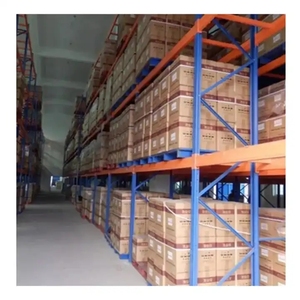
Industrial Shelving Medium Shelf Duty Steel Rack Storage Equipment Certificated Warehouse Metal Racks
A practical shelving solution for cartons, spare parts and mixed SKUs. For Rosario distributors, workshops and 3PL warehouses, it organises manual picking without the cost of full pallet automation.
- ApplicationCartons & parts
- FinishPowder coated
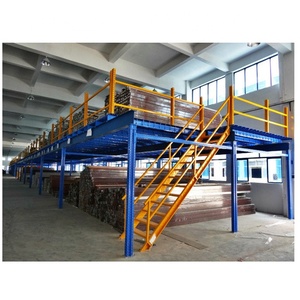
Mezzanine Shelf Storage Heavy Duty Rack System Metal Racks Warehouse Mezzanine Platform
A structural mezzanine platform that adds a second operational level without expanding the building footprint. It suits automotive parts, retail buffers and e-commerce picking where land or roof area in Greater Rosario is costly to duplicate.
- Best forVertical capacity
- Use casePicking & buffer
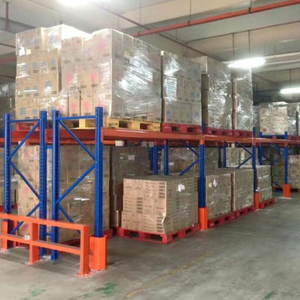
1300KG New Design Racks Industrial Warehouse Racking System Shelf Shelves Rack Shelving Storage 1400KG
A flexible industrial warehouse rack with a 1,300–1,400 kg class capacity profile. It supports mixed pallet and carton storage, fast installation and phased expansion for growing Santa Fe distribution operations.
- Profile1,300–1,400 kg
- LayoutModular
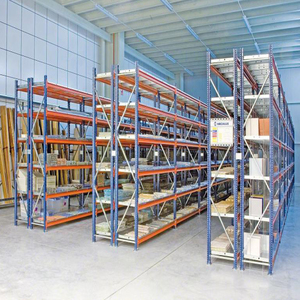
Pallet Racking Heavy Duty Teardrop Racking System 2000KG 2200KG 2200KG 2300KG 2400KG 2500KG Pounds Tons
A teardrop pallet racking system for 2,000–2,500 kg class loads. The beam connection speeds installation and provides dependable 100% pallet access for distributors that cannot compromise on selectivity.
- Load class2,000–2,500 kg
- AccessSelective
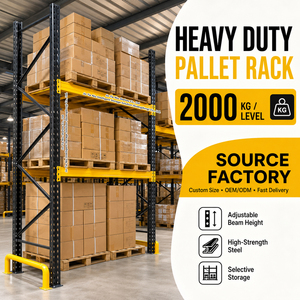
Adjustable Pallet Rack 1000KG to 3000KG for Auto Parts Storage Heavy Duty Selective Pallet Storage System
Adjustable selective racking engineered for auto parts and heavy component storage. It aligns with the Rosario–Santa Fe automotive and metalworking corridor, where fast access to each pallet is more valuable than maximum density.
- Capacity1,000–3,000 kg
- Best forAuto parts
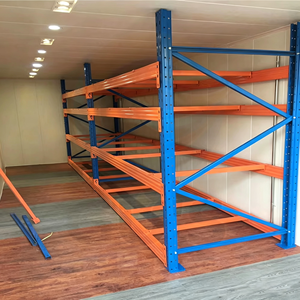
Heavy Duty Industrial Pallet Storage Racking 1000kg/2000kg/3000kg Capacity Per Layer Adjustable Steel Warehouse Rack
A heavy-duty adjustable rack with 1,000 kg, 2,000 kg or 3,000 kg per-layer options. It can be dimensioned for the 1,200 × 1,000 mm PBR pallet used in Argentina, as well as ISO and Euro formats.
- Per layer1,000–3,000 kg
- Pallet fitPBR & ISO
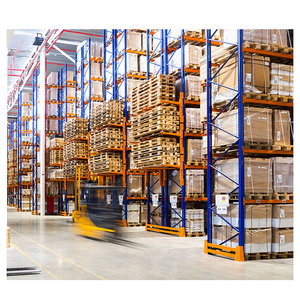
Adjustable Heavy Duty Pallet Rack System Selective Steel Beam Racking for Industrial Warehouse Storage Management
Selective steel-beam racking for multi-SKU warehouse management. When Rosario 3PLs and retail DCs need fast picking, easy reconfiguration and clear inventory control, selective racking remains the operational baseline.
- AccessEvery pallet
- OperationHigh SKU count
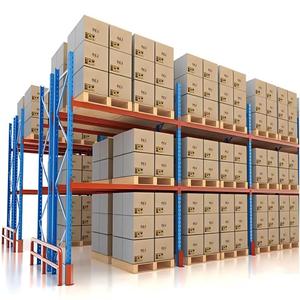
Adjustable Durable Storage Rack Powder Coating Finish Long Service Life CE Heavy Duty Metal Warehouse AU Standard Pallet Racking
A durable, powder-coated heavy-duty pallet racking system with long service life. Its finish supports humid, dusty and high-use Argentine warehouses while keeping maintenance and replacement costs under control.
- FinishPowder coated
- Design lifeHeavy duty
Need a three-layout comparison? Send your pallet sizes, clear height and daily throughput. Our engineers will compare selective racking, pallet shuttle and a hybrid design for your Rosario site.
Why Rosario Buyers Need a High-Performance Pallet Shuttle Racking Partner
Rosario is one of Argentina’s most important logistics platforms, connected to the Paraná waterway and the Rosario–Santa Fe industrial corridor. For warehouse operators, the challenge is not simply buying racking; it is selecting a system that absorbs export cycles, cold-chain requirements and unpredictable inventory profiles without creating safety or throughput bottlenecks.
Density near the Paraná logistics corridor
Rosario is not a generic warehouse market. Agro-industrial exporters, food processors, 3PLs and auto-parts suppliers often operate close to port and transport corridors where usable building height matters more than cheap floor area. Pallet shuttle racking reduces working aisles and converts them into deep pallet lanes, giving more positions per cubic metre of the building.
Pallet standards and load discipline
Argentine operations commonly handle the 1,200 × 1,000 mm PBR pallet, while importers and exporters also use 1,200 × 800 mm Euro pallets and ISO formats. Beam length, frame depth, shuttle rail spacing and deflector protection must be dimensioned for the actual pallet and load, not chosen from a generic catalogue.
Hybrid automation beats blind automation
Pallet shuttle racking is a powerful bridge between conventional racking and full AS/RS. In Rosario, the strongest business case usually combines shuttle lanes for stable high-volume SKUs with selective racking for fast movers and medium-duty shelving for small parts. This phases capital expenditure while protecting daily order fulfilment.
Alohatop Shelf: A China Pallet Shuttle Racking Manufacturer and Wholesaler for Rosario Projects
Rosario buyers comparing China manufacturers and wholesalers need more than a price list. They need engineering accountability, verified steel quality, export documentation, installation logic and long-term component traceability. Alohatop Shelf combines factory-direct production with project engineering for high-density warehouse storage.
Factory-direct control, not intermediary quoting
Our 35,000 m² highly automated production centre supports annual steel capacity of more than 100,000 t, with over 90% of output exported. Every upright, beam and accessory remains traceable from production batch to installation, giving Rosario wholesalers and end users a single accountable source.
Engineering validated in laboratory conditions
Our technology centre works with an R&D laboratory at Mondragon University and a research and simulation chair at the University of the Basque Country. Finite-element simulation, physical load testing and cyclic testing inform the frames, beams and connections we propose for high-density and high-seismic applications.
Code-aware design for the destination market
We do not apply one racking calculation to every country. Projects are reviewed against destination requirements, site conditions, pallet loading and the client’s fire strategy. For Argentina, our engineering documentation is prepared so local professionals can verify structural, fire and occupational-safety requirements for the Rosario project.
High-density system portfolio
We engineer selective, double-deep, drive-in, push-back, pallet flow, VNA, mobile and pallet shuttle racking, plus automated warehouse structures. That breadth matters in Rosario, because the right answer may be a hybrid layout rather than a single product category.
Export logistics for Argentine projects
With installations in more than 60 countries, 14 own branches and a network of 70+ distributors, we understand export packing, loading plans, component marking and shipment documentation. Rosario projects can be staged by zone, by bay or by installation phase to match site readiness.
Lifecycle support and 5-year warranty
Our services cover layout engineering, structural calculation, installation supervision, technical inspection and maintenance. Systems are produced under ISO 9001, ISO 14001, ISO 45001, ISO 50001, EN ISO 3834-2 and EN 1090-1 disciplines, with a 5-year warranty and full component traceability.
Pallet Shuttle and Warehouse Racking Use Cases in Rosario and Santa Fe
Rosario’s economic base is diverse: agricultural processing, food and beverage production, cold chain, automotive suppliers, metalworking, retail distribution and third-party logistics. Each sector creates a different storage profile, and the racking layout should reflect that reality.
Frozen food, meat and dairy storage
Cold rooms are expensive to cool and expensive to build. Pallet shuttle racking packs more pallets into the refrigerated envelope and reduces forklift travel time inside the freezer. For Rosario food processors and cold-chain operators, this can lower energy cost per pallet and protect product temperature stability.
Food processing and export consolidation
Packaged food, dairy, meat, agricultural inputs and export consignments often require FIFO control and dense buffer storage before dispatch. Pallet shuttle lanes support FIFO or LIFO operation, while selective racking handles fast-moving SKUs and smaller batches.
Auto parts and machinery storage
Rosario and nearby Santa Fe support automotive and metalworking supply chains where parts must remain accessible, identifiable and protected. Adjustable selective racking, mezzanine platforms and medium-duty shelving are often more valuable than maximum-density storage for these operations.
Multi-client logistics and e-commerce
3PLs and retail distributors need flexibility between clients and seasons. A hybrid design with pallet shuttle, selective racking and pick shelving gives Rosario operators room to change slotting and order profiles without rebuilding the entire warehouse.
Rosario Warehouse Trends Reshaping Pallet Shuttle Demand
Warehouse investment in Argentina is increasingly driven by measurable return: pallets per square metre, energy cost per stored pallet, labour productivity, safety and integration with WMS. These trends directly affect the choice between conventional racking, pallet shuttle and automated storage.
Densify before building
When land, permits or construction time are constraints, operators compare the cost of a new building with the cost of densifying the existing one. Pallet shuttle racking often unlocks capacity in the same footprint by converting fixed aisles into high-density lanes.
Semi-automation with disciplined ROI
Full AS/RS can be transformative, but not every Rosario operation can justify the investment or the integration effort on day one. Pallet shuttle racking offers a lower-complexity step toward automation while delivering density and reduced forklift travel.
WMS-ready and telemetry-enabled
Modern shuttle systems depend on clear inventory rules: lane assignment, SKU depth, FIFO/LIFO logic, pallet quality checks and exception handling. Rosario operations are increasingly planning racking and WMS slotting together rather than treating the warehouse layout as a standalone purchase.
Safety, energy and ESG per pallet
Cold storage energy, forklift movement, steel recyclability and safety inspection are becoming board-level metrics. High-density racking reduces cooled aisle volume in freezer projects, while ISO 14064 verified carbon reporting and documented component traceability support stronger sustainability reporting.
Which Pallet Shuttle Racking System Fits Your Rosario Operation?
The right system depends on SKU concentration, daily throughput, building height, temperature, pallet quality and how much selectivity the operation truly needs. Use this comparison as an early engineering screen, then validate the layout with a site-specific structural and operational study.
| Storage System | Density | Selectivity | Best-Fit Rosario Use |
|---|---|---|---|
| Selective pallet racking | High-SKU distributors, auto parts, retail DCs and operations that need direct access to every pallet. | ||
| Double-deep racking | 3PLs and distributors with two or more pallets per SKU and moderate selectivity requirements. | ||
| Drive-in racking | Cold rooms and homogeneous products where very high density is more important than immediate access. | ||
| Push-back racking | Manufacturing buffers, seasonal inventory and mid-volume SKUs where LIFO is acceptable. | ||
| Pallet shuttle racking | High-throughput DCs, cold stores and exporters with stable high-volume SKUs and deep lane storage. | ||
| AS/RS and self-supporting | Large, long-term projects with high capital availability, WMS integration and automated pallet handling. |
Density and selectivity are relative to conventional selective racking in the same building envelope. In freezer rooms, very tall buildings or high-cycle operations, the business case must include shuttle count, battery strategy, maintenance access and safety systems.
Recommended approach for most first-stage Rosario projects
Start with a three-layout comparison: conventional selective racking, pure pallet shuttle racking and a hybrid layout. For many facilities, the best return comes from shuttle lanes for stable SKUs, selective racking for fast movers and medium-duty shelving for cartons or spare parts. This protects throughput today and leaves room for future AS/RS integration.
From Drawing to Commissioning: A Controlled Rosario Project Path
A pallet shuttle project succeeds when engineering, manufacturing and site installation follow one coordinated plan. Our process is designed to reduce rework, protect installation schedules and make the final handover predictable.
Collect the real operating data
We review building layout, clear height, pallet dimensions, maximum load, SKU count, pallets per SKU, daily throughput, temperature range, forklift or automation interface and fire strategy.
Engineer the layout and quotation
Our engineers prepare CAD layouts, structural verification, shuttle lane logic, battery and charging strategy, safety clearances and a phased bill of materials.
Manufacture with traceability
Profiles, frames, beams and accessories are produced under controlled welding, powder-coating and quality processes, with batch traceability for critical components.
Ship, install and inspect
We support export packing, loading plans, shipping documentation, installation supervision and post-installation inspection so the Rosario project starts safely.
Certified Manufacturing, Safety and Environmental Discipline
Storage systems are safety-critical structures. Our management systems, welding controls and structural steel certification support consistent production quality, while ISO 14064 verified carbon reporting helps customers respond to ESG procurement requirements.
Quality management across design, production and project delivery.
Environmental management for manufacturing and export operations.
Occupational health and safety discipline for people and sites.
Energy management supporting efficient production and lower waste.
Welding quality requirements for safety-critical steel components.
Structural steel component certification and factory production control.
Pallet Shuttle Racking in Rosario: Common Buyer Questions
These are the questions our project engineers most often receive from warehouse managers, contractors and wholesalers evaluating a China manufacturer for a Rosario storage project.
What is pallet shuttle racking, and why is it relevant to Rosario warehouses?
Pallet shuttle racking is a semi-automated high-density system in which a radio-controlled shuttle moves pallets inside deep storage lanes. It reduces working aisles, increases pallet positions per cubic metre and lowers forklift travel inside the storage area. It is relevant to Rosario cold stores, food processors, exporters and 3PLs when the operation has enough repeatable SKUs and throughput to justify high-density lanes.
Can I buy in wholesale or project quantities directly from a China manufacturer?
Yes. We support wholesale buyers, distributors, contractors and end users with factory-direct project pricing. For a Rosario project, the quotation can be structured by bay, by zone or by installation phase, allowing the buyer to coordinate with civil works, permitting and shipping schedules.
Which pallet sizes and loads can your systems handle?
We dimension racking for the actual pallet, not for an average catalogue size. Common formats include the 1,200 × 1,000 mm PBR pallet used in Argentina, 1,200 × 800 mm Euro pallets, and ISO sizes such as 1,100 × 1,100 mm and 1,219 × 1,016 mm. Pallet loads in the 1,000–3,000 kg range are common, but each lane, beam and frame must be verified against the real load case, pallet condition and operating method.
How do you approach safety and local compliance for Rosario projects?
We prepare engineering documentation that can be reviewed against the project’s structural, fire and occupational-safety requirements. In Argentina, local professionals should verify the final installation against applicable codes and site conditions. We also provide load signage, traceability and inspection guidance, and our systems carry a 5-year warranty.
What information do you need for an accurate layout and quotation?
Send the building plan or sketch with clear height, pallet dimensions and maximum load, number of SKUs and pallets per SKU, daily inbound and outbound throughput, forklift or automation type, temperature range, fire strategy and project location in Rosario or Santa Fe. With this data, our engineers can compare selective racking, pallet shuttle and hybrid options.
What about lead time, shipping and after-sales support?
Lead time depends on drawing approval, project scope and production scheduling. Export packing, component marking, loading plans and shipping documentation are coordinated for the destination port. After delivery, we support installation supervision, technical inspection and maintenance planning through our project team and trained distributor network.
Request a Rosario-Specific Pallet Shuttle Racking Proposal
Share your building layout, pallet sizes, load weights, SKU profile and daily throughput. Our engineers will recommend a safe, high-density storage concept for your Rosario site and compare pallet shuttle racking with selective or hybrid layouts.
Prefer email? Send your project data to [email protected]