OEM Pallet Racking & Storage Products for the Cochabamba Market
The eight product families below cover the most common warehouse storage requirements in Cochabamba: heavy-duty pallet storage, selective distribution racking, cantilever long-goods storage, picking shelves, light-duty shelving and scalable warehouse racking systems. Every product page is preserved for direct technical review.
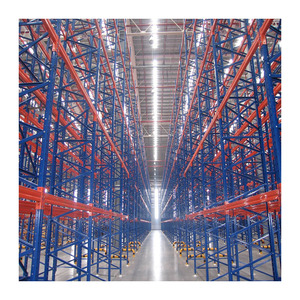
Mracking Heavy Duty Industrial Palletized Racking with a Capacity of 1000-4000kg Industrial Storage Racking
For mixed-SKU distribution, food and beverage pallets, and heavy imported goods; a capacity range suited to demanding Cochabamba warehouse operations.
View product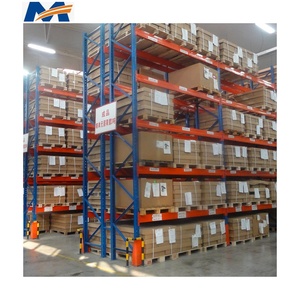
Pallet Racking System Warehouse Shelves Heavy Duty, Warehouse Picking Shelves Rack
A combination concept for order assembly, spare parts and warehouses that need both reserve pallet storage and manual access to fast-moving items.
View product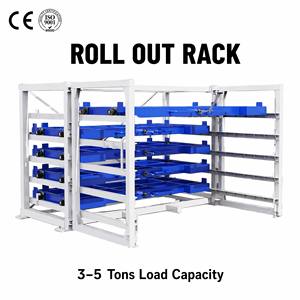
Industrial Heavy Duty Customizable Foldable Corrosion Resistant 8-Layer Powder Coated Carbon Steel Warehouse Rack Cantilever
For pipes, profiles, timber, PVC and other non-palletized loads where clear front access and corrosion-resistant finishing matter.
View product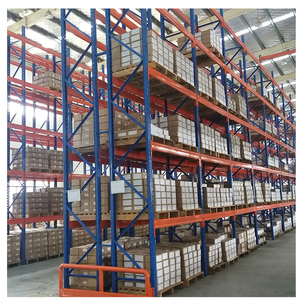
Heavy Duty Rack Storage Industrial Selective Assembly Pallet Use Rack Warehouse Storage Pallet Rack
Selective pallet racking for high-SKU warehouses needing direct access to every pallet, with project-specific beam and upright design.
View product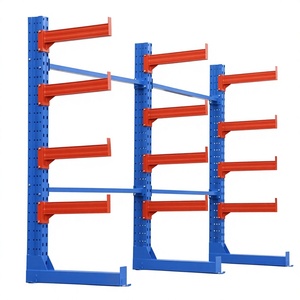
Industrial Heavy Duty Steel Cantilever warehouse Shelf Rack Equipment for High-Capacity Warehouse Pallet Storage
Heavy-duty cantilever storage for long loads and high-capacity warehouse pallet storage where forklift access must remain unobstructed.
View product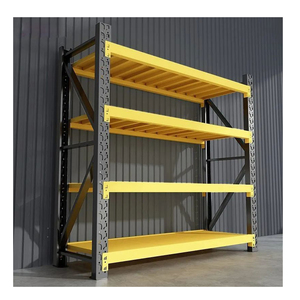
Light Duty 4-Tier Steel Metal Storage Rack Shelves Corrosion Protected Home and Garage Racking for Warehouse Use
Light-duty four-tier shelving for garage, retail backroom, workshop and small-parts storage; easy to combine in mixed import containers.
View product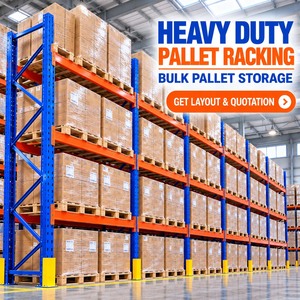
Heavy Duty Pallet Rack Supplier for Bulk Warehouse Storage
Scalable bulk warehouse pallet racking for distributors and 3PLs that need repeatable components, future expansion and export-ready supply.
View product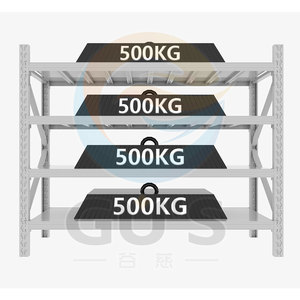
Heavy Duty Industrial Pallet Storage Shelf Steel Warehouse Rack Metal Racking System New Heavy Duty Shelving System
A complete heavy-duty steel pallet storage system for new warehouse builds and expansion projects, engineered as an integrated racking system.
View productNeed a mixed-container OEM quotation for Cochabamba? Include pallet dimensions, maximum load, clear height and target port so our export engineers can prepare a technical catalog and loading plan.
Why the Cochabamba Market Rewards a Technical OEM Supplier
Cochabamba is a central Bolivian commercial and distribution hub, not a generic export destination. Warehouse decisions here often combine food distribution, agricultural processing, imported consumer goods, construction materials, spare parts and cold-chain products in one operating footprint.
Search intent is procurement intent: exporters must prove engineering, documentation and delivery control
Buyers searching for custom OEM pallet racking manufacturers and exporters for the Cochabamba market are usually comparing more than price per bay. They are evaluating frame depth, beam deflection, upright protection, bolted connections, installation tolerances, Spanish documentation, packing lists, spare parts, warranty terms and the supplier's ability to coordinate delivery into landlocked Bolivia.
A warehouse in Sacaba, Quillacollo or the metropolitan ring may receive domestically produced food, imported retail SKUs, agrochemicals, construction materials and cold-chain products in the same week. That mixed profile makes selective racking with room for future densification a safer starting point than a highly specialized system that cannot adapt when the product mix changes.
- Load reality first: pallet size, overhang, load eccentricity, beam deflection and forklift clearance must be checked before a price is fixed.
- Building reality second: clear height, floor slab, column grid, fire strategy, anchorage and seismic exposure determine the structural package.
- Import reality third: packaging, container loading, customs documents, installation sequence and after-sales parts influence total project cost.
Countries with installed storage systems
Warehouse projects delivered across export markets
Annual steel production capacity
Of production exported worldwide
Custom OEM Racking, Engineered Around Cochabamba Pallets, Clear Heights and Import Route
OEM does not mean merely changing a color or adding a logo. For racking, OEM customization must begin with load data and end with a complete technical file that a Bolivian buyer, installer and safety inspector can use.
Pallet & load calibration
We dimension beams and frames for the actual pallet: 1200 × 1000 mm, the Brazilian PBR format, 1200 × 800 mm Euro pallets, 1100 × 1100 mm ISO sizes and non-standard formats used by Bolivian importers. Overhang and load eccentricity are reviewed before quotation.
Building, seismic & anchorage review
Cochabamba's valley location does not remove the need for project-specific structural review. Rack height, row spacing, slab condition, base plates, anchors, bracing and wind or seismic exposure are checked for each site. We do not use generic seismic claims.
OEM brand & documentation
RAL powder-coat colors, laser-cut load plates, Spanish safety labels, component marking, packing lists, installation sequence, spare-parts recommendations and OEM manual templates support local handover and inspection.
Export packing & mixed loads
Bolivia is landlocked, so freight efficiency matters. We support mixed container loading, protected bundles, labeled bolt bags and installation-friendly packing sequences to reduce site confusion after arrival through Pacific ports.
Where Pallet Racking Earns Its Payback in Cochabamba
Cochabamba warehouses often operate with mixed pallet quality, seasonal inventory and limited expansion space. The right system balances direct access, density, safety and future reconfiguration.
Food, dairy & beverage distribution
Food distributors need clean access, FIFO discipline and fast replenishment. Selective pallet racking combined with pick faces is often the most flexible base.
- Heavy-duty selective racking for reserve stock
- Picking shelves for fast-moving cartons
- Compatible with batch and lot control
Cold chain & perishables
Fruit, poultry, meat, dairy and frozen products demand corrosion protection, condensation control and layouts that reduce door-open time. Dense storage can reduce cooled volume per pallet.
- Drive-in, VNA or mobile concepts
- Steels and finishes for low temperature
- Safety signage for freezer operations
Construction, hardware & industrial supply
Cement, tools, PVC pipes, profiles, steel, agrochemicals and spare parts rarely fit one storage type. Cantilever and heavy-duty pallet racking are often combined in the same building.
- Cantilever rack for pipes and long goods
- Heavy-duty pallet rack for bagged goods
- Protected uprights for forklift zones
Retail, pharmacy & e-commerce
SKU proliferation and manual picking increase the value of organized pick faces, carton shelving and multi-tier access. Light-duty shelving can support small-parts and backroom storage.
- Picking shelves and carton racking
- 4-tier steel shelving for small parts
- Layouts ready for future automation
Cochabamba Market Trends Reshaping Warehouse Storage Decisions
Procurement teams in Cochabamba are becoming more technical. They ask for load calculations, anchor details, installation method statements and spare-parts lists — not just a catalog page and a price.
Distribution consolidation
Cochabamba's central-valley position supports replenishment to La Paz, Santa Cruz, Sucre, Oruro and nearby agricultural zones. Mixed selective and picking layouts are replacing single-purpose storage rooms.
Cold-chain upgrades
Food safety, traceability and reduced spoilage are pushing investment in better cold-store layouts, protected racking and denser storage where cooled volume is expensive.
Densification before expansion
As urban land tightens and clear heights increase, buyers compare high-bay selective, VNA, drive-in and mobile systems by pallet positions per cubic metre, not only price per bay.
Whole-life safety
Load signs, inspection routines, repair parts and installer training are becoming part of the purchasing decision. A racking system is a long-term safety asset, not a one-off commodity.
Qualitative fit for a mixed Cochabamba warehouse
Planning view for early buyer discussions. Final selection depends on SKU profile, throughput, building height, slab capacity and project-specific structural calculation.
Use this as a discussion tool, not as a structural ranking. “Fit” changes when pallet counts, temperature, throughput or seismic requirements change.
Which Pallet Racking System Fits Your Cochabamba Operation?
A practical comparison for importers, 3PLs and plant engineers preparing an RFQ. Ask each supplier to justify the selected system with load calculations and a clear layout drawing.
Selective pallet racking
Best starting point for high SKU variety, direct access and future flexibility. Ideal for food, retail, spare parts and mixed imported goods.
- Direct access to every pallet
- Easy to reconfigure
- Works with manual and forklift flows
VNA / high-bay racking
Appropriate when clear height is available and the cost of floor area or cooled volume justifies specialized forklifts and tighter tolerances.
- Higher pallet density
- Needs disciplined operations
- Engineering tolerances matter
Drive-in & shuttle
Useful for homogeneous goods, seasonal stock and deep lanes where direct access to every pallet is less important than density and fast put-away.
- High-density storage
- LIFO or FIFO configurations
- Good for cold-chain planning
Cantilever & long goods
Designed for pipes, timber, profiles, PVC and steel. Clear front access protects long loads and avoids awkward palletization.
- No front column obstruction
- Adjustable arm levels
- Corrosion-resistant finish options
A Manufacturer-Controlled Supply Chain From Steel Coil to Load Sign
For Bolivian buyers, supplier credibility is not an abstract marketing claim. It is the ability to trace components, repeat production quality, provide technical documents and support installation after a long export route.
Designed, calculated, manufactured and packed under one quality system
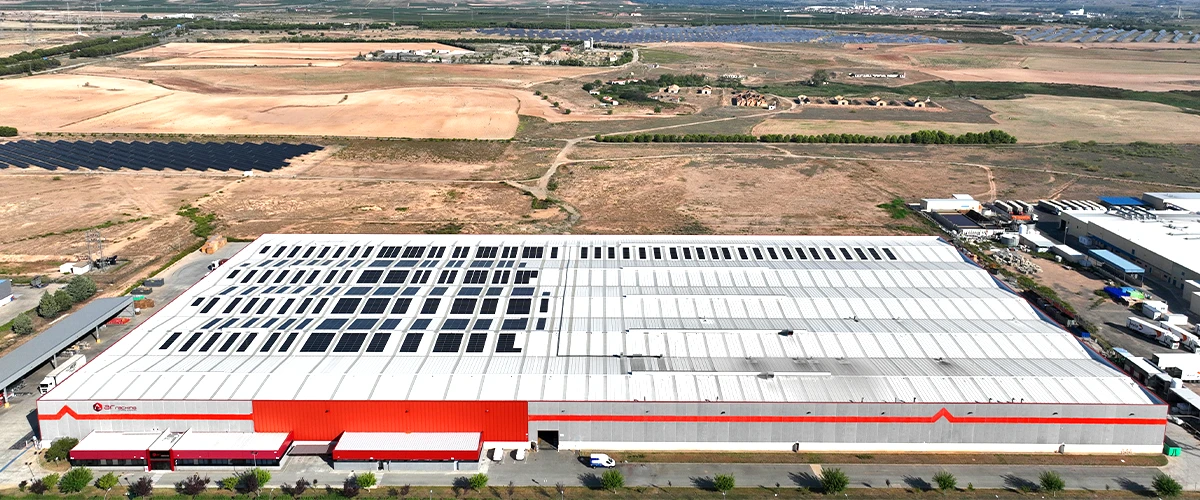
Alohatop Shelf operates a highly automated production centre with annual steel capacity exceeding 100,000 tonnes. More than 90% of output is exported, which means export packing, labeling, loading plans and documentation are part of normal production — not an afterthought.
- Automated production and traceability: every upright and beam can be traced from production batch to project delivery.
- R&D validation: our technology centre works with the R&D laboratory at Mondragon University and a research and simulation chair at the University of the Basque Country.
- International management standards: ISO 9001, ISO 14001, ISO 45001, ISO 50001, UNE EN ISO 3834-2 welding quality, EN 1090-1 and ISO 14064 verified carbon reporting.
- 5-year warranty: backed by component traceability, replacement-part availability and installation guidance.
 ISO 9001Quality management
 ISO 14001Environmental management
 ISO 45001Health & safety
 EN 1090-1Structural steel components
From Factory to Cochabamba: A Transparent Export Workflow
Bolivia's landlocked geography means that racking projects must be planned around more than steel production. The quotation should show shipping terms, packing logic, documentation, customs responsibilities and installation support.
Technical intake
Share layout, clear height, pallet size, load weight, throughput, temperature, truck or forklift type and project city. We convert this into an RFQ basis and preliminary rack layout.
Calculation & approval
Structural calculation, load checks, anchorage review, approval drawing and OEM documentation are prepared before production release.
Production & QC
Roll forming, welding, powder coating, labeling and packing follow the approved bill of materials. Components are marked for installation sequence and traceability.
Shipping & installation support
Typical routes use Pacific ports such as Arica, Iquique or Ilo, followed by customs clearance and trucking to Cochabamba. We provide packing lists, installation drawings and remote or supervisory support.
Lead times vary with drawing approval, finish requirements, steel profiles, order volume and shipping schedule. A realistic project plan should separate factory lead time, transit time, customs clearance and site installation.
Common Questions From Cochabamba Buyers
These are the questions our export engineers answer most often from importers, distributors, 3PLs and project developers evaluating OEM pallet racking for Bolivia.
Can you manufacture pallet racking under our OEM brand for the Cochabamba market?
Yes, within an agreed production scope. OEM customization can include RAL powder-coat colors, load plates with your brand, Spanish safety labels, manual templates, component marking, packing marks and spare-parts lists. We recommend approving drawings and label artwork before production to avoid shipment delays.
How do you ship racking to landlocked Cochabamba?
Most Bolivian imports move through Pacific ports such as Arica, Iquique or Ilo, then clear customs and travel by truck to Cochabamba. We prepare export packing lists, marks, component labels and loading plans so the consignee, customs broker and installation team can identify bundles quickly. The exact Incoterm and port should be agreed in the quotation.
What lead time should we plan for a custom OEM pallet racking project?
Lead time depends on drawing approval, order volume, steel profiles, finish, packing and vessel schedule. A practical plan separates quotation and layout, structural approval, production, quality inspection, inland transport to port, ocean freight, customs clearance and trucking to Cochabamba. Asking for a single “delivery date” without separating these stages often creates unrealistic expectations.
How do you handle seismic, wind and anchorage requirements in Cochabamba?
Each project requires site-specific review. We consider rack height, row layout, slab condition, base plates, anchor specification, bracing and the building's structural context. Cochabamba should not be treated as one uniform design condition. Final calculations should be reviewed against the applicable Bolivian requirements and recognized racking standards such as EN 15512, FEM 10.2.02 and RMI where relevant.
Can you support installation, inspection and spare parts in Bolivia?
We can provide installation drawings, method statements, component marking, spare-parts recommendations and remote or supervisory support. For local projects, we coordinate with the buyer's installation contractor or trained partners. Periodic rack inspection is strongly recommended after go-live, especially in busy forklift zones where upright impact damage can accumulate.
What information is needed for a fast quotation and what warranty applies?
Send a building layout with clear height, pallet dimensions, maximum load weight, number of SKUs, pallets per SKU, daily throughput, forklift or automation type, temperature range, finish preference and project city. Systems carry a 5-year warranty under the agreed terms, supported by component traceability and export documentation.
Request a Custom OEM Racking Proposal for Cochabamba
Send your building layout, pallet dimensions, load data, target capacity and preferred import route. Our export engineering team will help you compare selective, VNA, drive-in, cantilever, picking and light-duty systems with a clear technical and commercial basis.
Useful details to include: clear height, slab condition, pallet size, maximum load per pallet, number of pallet positions, SKU profile, daily throughput, forklift type, temperature range, project city in Cochabamba and required OEM branding.
Technical contact: [email protected] · export documentation, drawings and catalog review available for qualified projects.