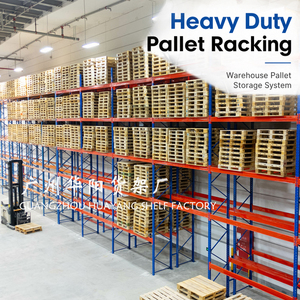
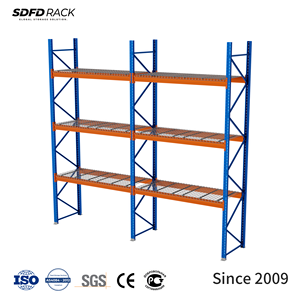
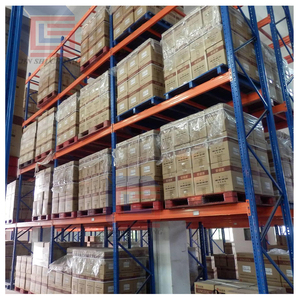
Industrial Warehouse Storage 5-Layer Pallet Racking System with Tire Rack Slotted Angle Rack Stacking Racks & Shelves
A flexible five-layer solution for distributors that combine palletized stock, tire storage and hand-loaded slotted angle bays.
These eight configurations cover the most common searches from Argentine importers, distributors, 3PLs, food exporters and manufacturers: selective pallet racking, cantilever storage, galvanized systems, high-density shuttle racking and heavy-duty industrial shelving. Each platform can be engineered around local pallet formats, clear height, temperature, forklift type and project location.

A flexible five-layer solution for distributors that combine palletized stock, tire storage and hand-loaded slotted angle bays.

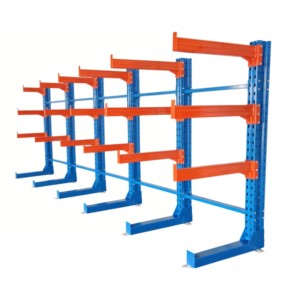
Open-front cantilever arms support pipes, profiles, timber and long industrial loads where standard pallet uprights would obstruct handling.

A corrosion-conscious racking option for humid, cold-chain and wash-down-adjacent environments where finish selection matters.

Custom two-level racking for heavy components, low-turnover goods and direct-access storage where simple levels outperform dense lanes.

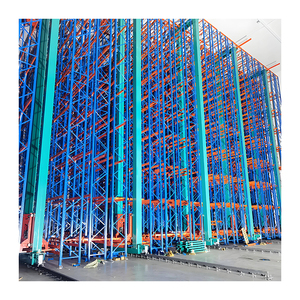
Semi-automated deep-lane storage for high-throughput distribution centres and freezer rooms that need more pallets per cubic metre.

A robust selective system for beverages, building materials, manufacturing buffers and mixed-SKU warehouses requiring 100% access.

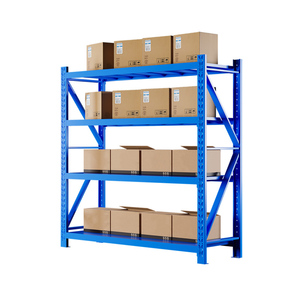
Scalable four-layer beam racking for spare parts, cartons and e-commerce backrooms where load per level varies by SKU family.

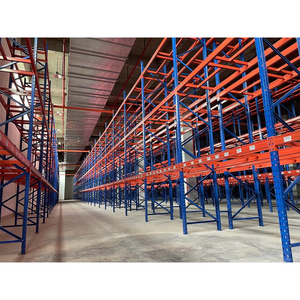
A general-purpose heavy-duty pallet rack platform for distribution centres and factories, configured to actual frame height and beam length.
Upright frames are the vertical load path of a racking system. They receive beam loads, resist impact and, where required, participate in the seismic stability of the installation. Argentine buyers should treat upright specification as an engineering decision, not a commodity purchase.
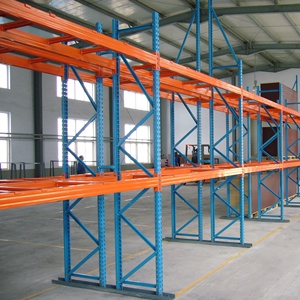
Industrial shelving uprights—also called pallet rack frames—usually consist of two cold-formed steel columns connected by horizontal and diagonal bracing, with base plates and anchor holes for fixing to the warehouse slab. The frame must match the beam connector, pallet depth, load per level and handling equipment. A frame that performs well in a low-clearance retail backroom may be unsuitable for a tall very narrow aisle installation, a freezer warehouse, or a western Argentine site with higher seismic demand.
For the Argentina market, the most reliable enquiries specify the pallet dimensions, maximum load per level, frame height, beam length, number of levels, slab condition and project city. The city matters because seismic inputs, wind exposure for self-supporting buildings, permitting expectations and logistics routes vary across the country. Our export engineering team uses those inputs to propose upright frames, beam sections, bracing, base plates and anchors as one coordinated system.
Argentina commonly handles 1200 × 1000 mm pallets, 1200 × 800 mm pallets and ISO formats, but real operations often include overhangs, unstable loads, tire racks, long profiles or mixed carton picking. The upright frame should therefore be verified against the actual load case—not only a catalogue load table. This is also why replacement uprights should be matched to the original frame profile, bracing pattern and beam connector before shipment.
Where seismic design applies, calculations should be coordinated with a local structural engineer familiar with CIRSOC 103 and any provincial requirements. The review should consider site seismicity, soil class, slab capacity, anchorage, row spacers, upright bracing and beam deflection limits. For cold stores, finish selection and steel toughness at low temperature should be reviewed together with the refrigeration environment. The result is a safer, more predictable installation and a cleaner import approval process.
Storage demand in Argentina is not uniform. A racking layout for a Buenos Aires e-commerce fulfilment centre is not the same as a cold store in Mendoza, an automotive buffer in Córdoba or a long-load yard in Salta.
Multi-client 3PLs and e-commerce fulfilment centres need fast access, mixed-SKU picking and expansion-ready layouts. Selective pallet racking, double-deep frames and multi-tier picking shelving help balance direct access with dense use of expensive metropolitan space.
Seed, fertilizer, crop-protection products and bagged inputs often require heavy-duty selective racking with reinforced uprights, protected base plates and clear load signage. Cantilever systems support long tools, irrigation components and maintenance materials.
Line-side supply, tire storage, spare parts and heavy components demand robust frames, custom beam levels and strong impact protection. Push-back, cantilever and two-level heavy-duty racks can simplify sequencing in factories and Tier 1/Tier 2 operations.
Wine, fruit, packaged food and beverage operations benefit from FIFO pallet flow, VNA and mobile racking. In western seismic zones, upright bracing, anchor design and engineering review should be aligned with CIRSOC 103 and local project requirements.
Mining and energy supply chains store long pipes, hoses, structural profiles and heavy spare parts. Cantilever racks, heavy-duty selective racking and galvanized or protective finishes help cope with dusty, remote and high-uptime operating conditions.
Freezer warehouses need layouts that reduce cooled volume per pallet while preserving safe access. Pallet shuttle, drive-in, VNA and mobile racking can be engineered for temperatures down to −30 °C, with steel and finish selection reviewed for the cold environment.
Argentina’s warehouse investment is being shaped by e-commerce fulfilment, agro-export cold chains, import planning and a stronger focus on safety documentation and automation readiness.
Buyers often prefer racking that can be imported and installed in phases, with upright frames and beam levels designed for future expansion instead of a complete rebuild.
Fruit, meat, seafood, wine and frozen-food exporters continue to seek higher pallet density per cooled cubic metre. Mobile, drive-in, VNA and shuttle systems are replacing low-density layouts.
AS/RS, AMR and pallet shuttle projects require tight tolerances, batch traceability and documented frame geometry. Upright quality becomes an automation compatibility issue, not only a storage issue.
Warehouse operators are replacing damaged uprights, adding column protectors, updating load signs and requesting inspection reports to support safety and insurance requirements.
Use this comparison as an early-stage procurement guide. Final selection depends on SKU profile, pallet quality, throughput, building height, slab capacity, temperature and seismic zone.
| System family | Typical Argentina use | Upright / frame focus | Density and access |
|---|---|---|---|
| Selective pallet racking | 3PL, retail, food and beverage, mixed-SKU distribution | Standard or reinforced upright frames; adjustable beams; protectors | 100% direct access; medium density |
| Very narrow aisle racking | Cold stores, high land cost, tall buildings, export warehouses | Stiff frames, tight installation tolerances, VNA guidance integration | High density; 100% access by aisle |
| Double-deep racking | 3PL and manufacturers with two or more pallets per SKU | Heavy-duty uprights and deep beam pairs; LIFO per lane | Medium-high density; 50% direct access |
| Drive-in / pallet shuttle | Freezers, homogeneous SKU, high-volume storage | Reinforced frames, lane rails, impact protection, freezer-compatible finish | Very high density; lane-level access |
| Cantilever racking | Pipes, profiles, timber, long equipment and spare parts | Independent upright columns; adjustable arms; long-load stability | Specialized access; ideal for long loads |
| Picking shelving / multi-tier | E-commerce, spare parts, retail distribution, carton picking | Medium-duty upright frames; walkway and carton-flow integration | Manual access; space-efficient for small items |
Alohatop Shelf LLC designs, calculates, manufactures and installs metal racking for warehouses, distribution centres, cold stores and automated facilities. For Argentine buyers, the value is a single accountable partner from steel production to installation methodology and long-term spare-part support.
A 35,000 m² highly automated production centre and more than 100,000 t of annual steel capacity support export projects. More than 90% of output is exported, giving our team practical experience in packing, documentation and port coordination.
Our technology centre works with an R&D laboratory at Mondragon University to test strength, behaviour and safety of racking components. A research and simulation chair at the University of the Basque Country supports calculation models for demanding load and seismic cases.
Systems carry a 5-year warranty and are produced under ISO 9001, ISO 14001, ISO 45001, ISO 50001, UNE EN ISO 3834-2 welding quality, EN 1090-1 and ISO 14064 verified carbon reporting, with full component traceability.
Robotic production and laser-controlled processes keep frames and beams within the tolerances demanded by stacker cranes, shuttles and VNA equipment. That precision also speeds up manual installation and reduces site adjustment.
More than 60 countries, 14 own branches, 70+ trusted distributors and 42,000+ warehouse projects support export execution. Argentina projects can be coordinated through our export engineering team and trained distribution and installation partners.
From layout studies and structural calculation to installation supervision, technical inspection and spare uprights, our team supports the racking after delivery—important for warehouses that cannot afford long downtime.
Use this checklist to compare quotations on technical substance, not only price per kilogram. A complete offer should make the design assumptions visible before the purchase order is issued.
Provide pallet length, depth and height, maximum load per level, overhang, load condition and number of pallets per SKU. Do not rely on a single average load.
Share clear height, slab thickness, anchor condition, floor flatness and aisle requirements. Upright base plates and anchors must suit the actual slab.
State the project city and province, provide available seismic information and arrange review by a local structural engineer where CIRSOC 103 or provincial rules apply.
For cold stores, wash-down areas or humid environments, confirm operating temperature, humidity exposure and the required galvanized or painted finish.
Ask for upright frame capacity, beam load tables, anchor details, bill of materials, installation tolerances and load signage before shipment.
Agree Incoterms, destination port, customs broker, unloading method, delivery sequence and whether installation supervision or inspection is required.
These are the questions our engineering and export teams answer most often from Argentine warehouse, logistics and procurement managers.
We are a designer, manufacturer and installer of storage systems. Our production centre, engineering team and project services cover upright frames, beams, bracing, accessories and complete racking systems—not only catalogue resale.
Yes. We support export projects to Argentina with engineering drawings, packing lists, component traceability and shipping documentation. Deliveries can be coordinated for ports and logistics routes serving Buenos Aires, Rosario, Córdoba, Mendoza and other destinations through the buyer’s customs broker and freight forwarder.
Racking design should be coordinated with the project location and a local structural engineer. CIRSOC 103 and provincial requirements may apply, especially in western Argentina. Typical measures can include reinforced upright frames, heavier base plates, anchor verification, row spacers and reduced beam deflection limits, depending on the final layout.
We design around common Argentine and international pallet formats, including 1200 × 1000 mm, 1200 × 800 mm, 1000 × 1200 mm and ISO sizes. Load capacity depends on the frame profile, beam level, frame height and seismic case. Our team verifies the actual pallet load rather than quoting a single generic capacity.
Yes. We supply mobile racking, drive-in, VNA, pallet shuttle and self-supporting freezer structures using steels and finishes suited to low-temperature environments down to −30 °C, a key requirement for fruit, meat, seafood, wine and frozen-food exporters.
Systems carry a 5-year warranty and are produced under ISO 9001, ISO 14001, ISO 45001, ISO 50001, UNE EN ISO 3834-2 welding quality, EN 1090-1 and ISO 14064 verified carbon reporting, with full component traceability.
Send a building layout with clear height, pallet dimensions, maximum load per pallet and level, number of SKUs, pallets per SKU, daily throughput, forklift or automation type, temperature range, project city and required delivery date. If you need replacement uprights, include photos and the original frame profile or markings.
Compare the complete landed cost, engineering scope, design assumptions, seismic review, anchor details, finish specification, spare-part availability, installation supervision and documentation. A low frame price can be misleading if beams, anchors, protectors, drawings or inspections are excluded.
Share your pallet dimensions, load data, clear height, project city and temperature range. Our storage engineers will recommend the safest, most space-efficient upright and racking configuration for your warehouse in Argentina.
Get Catalog Industrial shelving uprights · pallet racking · cold storage · export engineering