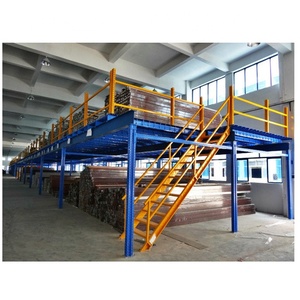
Mezzanine Shelf Storage Heavy Duty Rack System Metal Racks Warehouse Mezzanine Platform
Turns vertical cube into a second operating level without new construction — a practical answer to São Paulo warehouse rents.
Every frame, beam and cart is produced in our own plants, so a push back project in São Paulo, Curitiba or Recife is quoted, calculated and shipped by the same engineering team that stands behind the load signs.
Turns vertical cube into a second operating level without new construction — a practical answer to São Paulo warehouse rents.
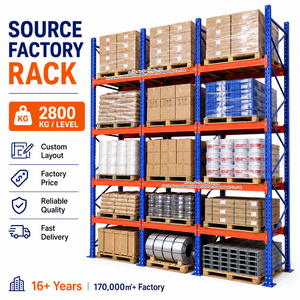
Five load levels at 2,800 kg each — the classic configuration for 12 m clear-height logistics parks.
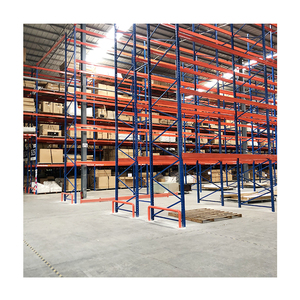
Boltless assembly cuts installation days on rented sites where every hour of downtime is billable.
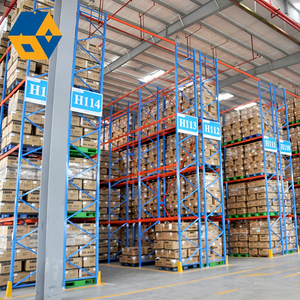
Adjustable beam pitch lets one bay hold raw-material pallets today and finished goods next quarter.
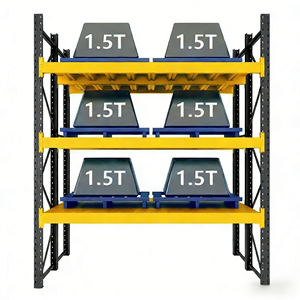
Custom heights and depths for buildings that were never designed around a standard rack module.
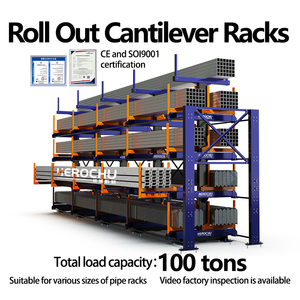
For tube, profile and long stock held by steel distributors and metal-working plants.
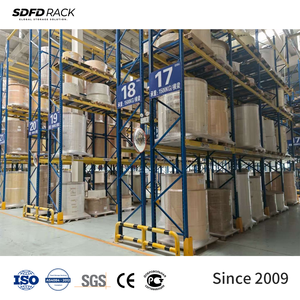
Multi-layer conventional layout — the right base structure when push back lanes only cover part of the building.
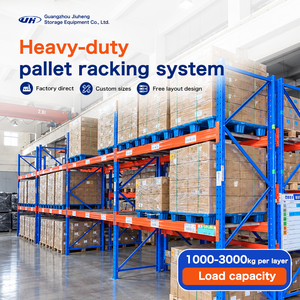
Reconfigurable beams keep a multi-client 3PL layout flexible as contracts change.
Brazilian buyers rarely purchase a single bay. They buy a production slot, a load calculation, a container plan and a warranty that survives a customs inspection — which is why production capacity matters as much as the drawing.
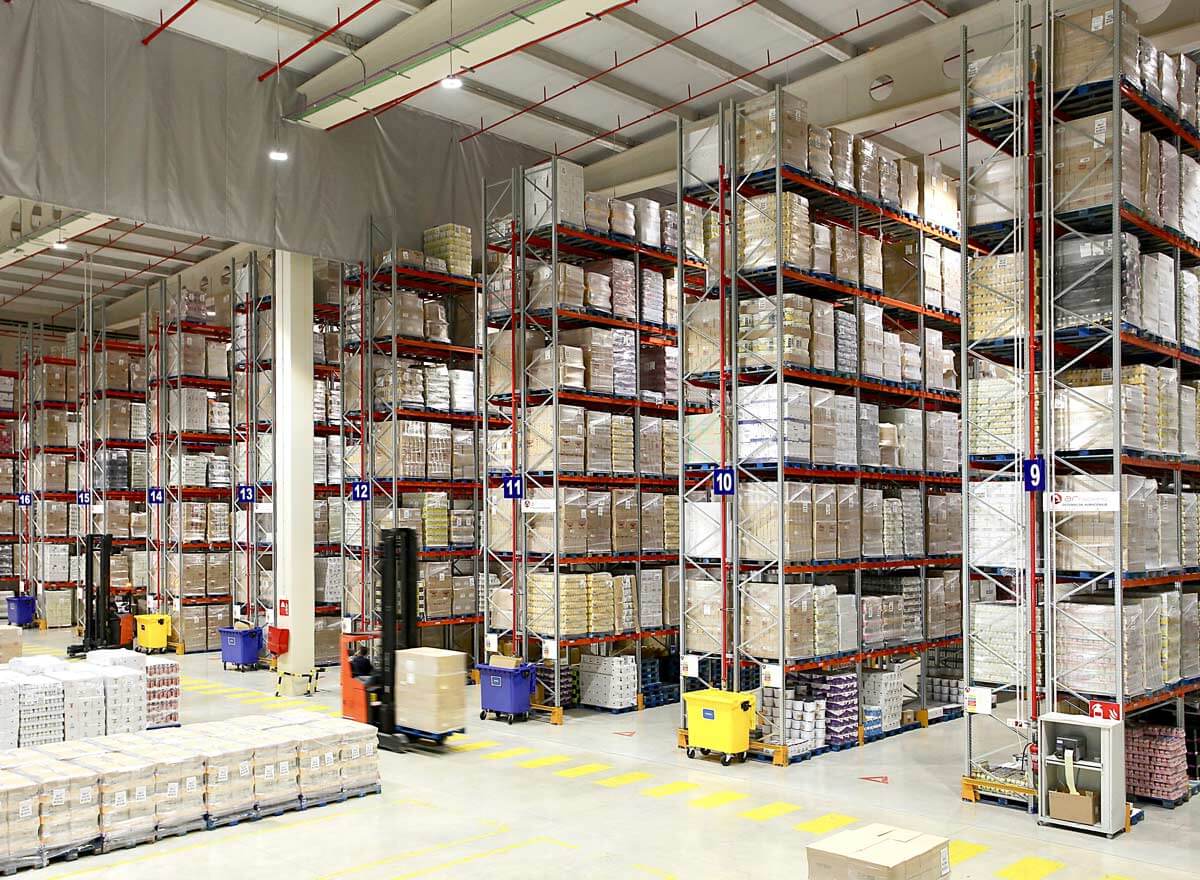
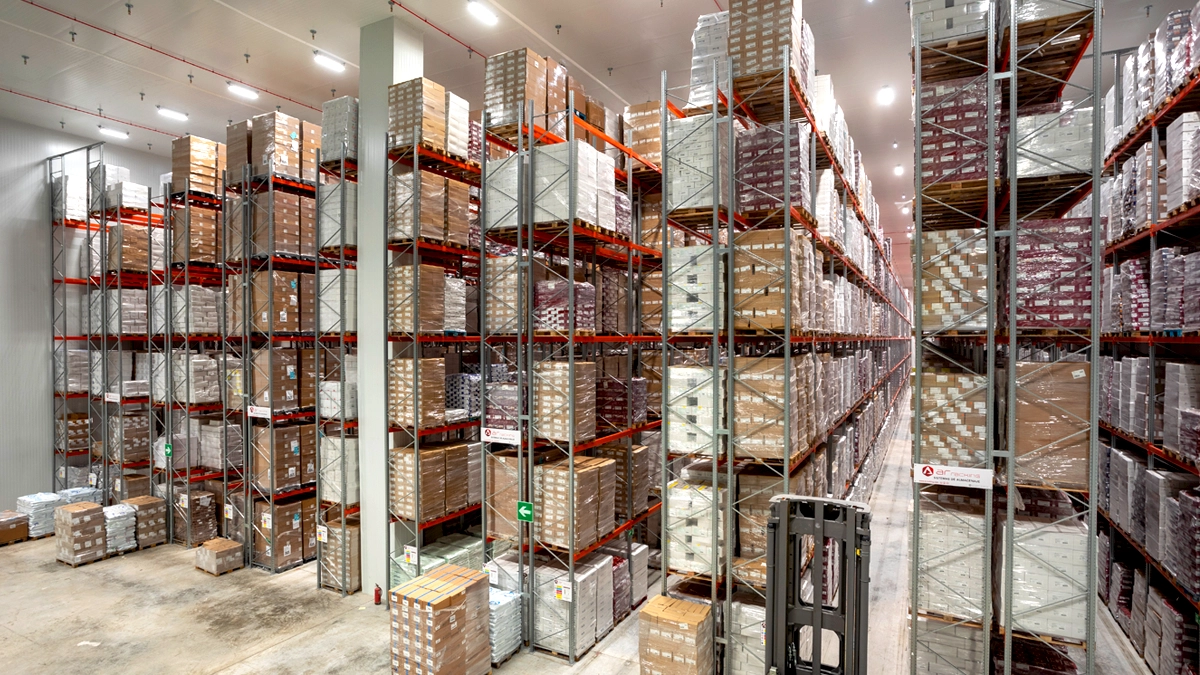
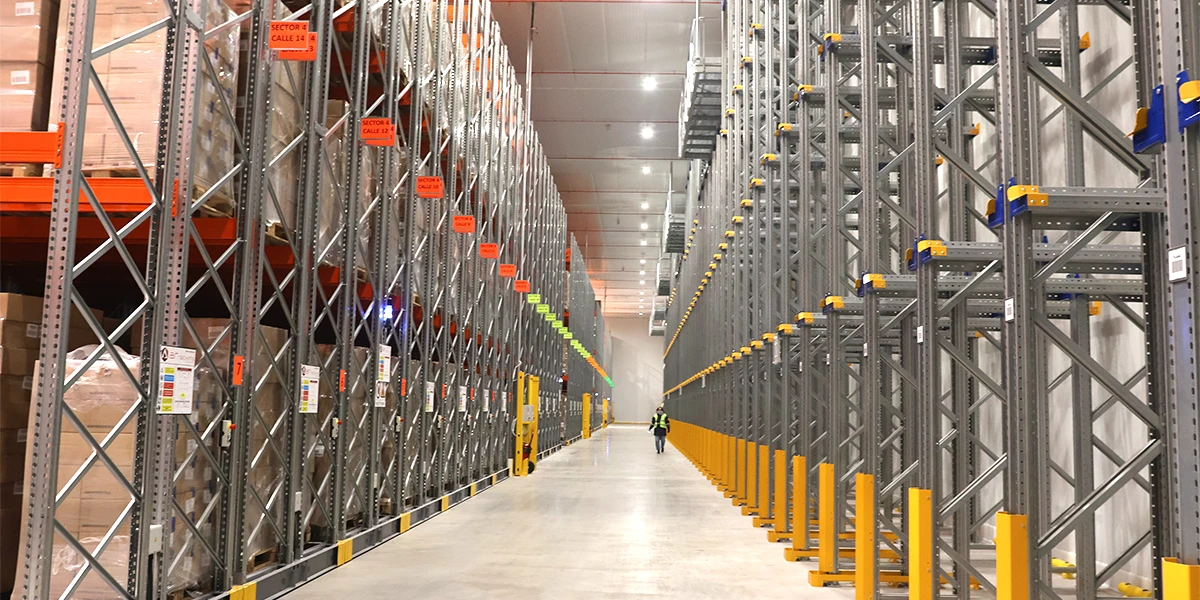
Push back racking stores pallets on wheeled carriers that telescope into each other along slightly inclined rails inside a single lane. A forklift lifts the first pallet onto the front cart and pushes the line backwards; retrieving a pallet brings the last one loaded back to the face. That is why the system is LIFO by construction — last in, first out — and why it is specified for inventory profiles that tolerate reverse rotation.
Typical Brazilian configurations run 2 to 6 pallets deep and 4 to 6 levels high, with lane pitch set by the PBR 1000 × 1200 mm pallet that dominates the domestic market, or the 1200 × 800 mm Euro pallet used by European exporters and importers who ship on standard EU packaging. Density against conventional selective racking in the same footprint usually lands in the range of 40 % to 60 % more pallet positions, because the working aisle serves every level of every lane rather than a single pallet face.
The engineering detail that decides whether the project succeeds is not the steel — it is the cart nesting tolerance, rail inclination and beam deflection limit. Under-dimension any of the three and the lane starts to bind when the pallets are at maximum weight, which is exactly when operators force the forklift and damage the carts. Our frames, beams and carriers are calculated by structural engineers against EN 15512 and checked against the Brazilian standard ABNT NBR 15524-1 before a single upright leaves the plant.
Brazil is not one warehouse market. A racking design that fits a frozen protein exporter in Santa Catarina will fail in an automotive buffer in the ABC region — the pallet, the temperature, the rotation rule and the labour model all change.
Beverage, dairy and packaged-food distributors around São Paulo, Minas Gerais and Rio Grande do Sul hold multiple pallets per reference and rotate by batch, not by strict FIFO. Push back channels recover the aisle space that selective racking consumes while keeping every reference addressable at the lane face.
In cooled and frozen buildings, every cubic metre carries a refrigeration cost that never stops. Compressing aisles with push back lanes reduces the volume that has to be held at −18 °C or below — a decisive advantage for poultry, pork, seafood and frozen fruit exporters in Paraná, Santa Catarina and Ceará.
Component and tier-two suppliers in the ABC industrial belt and interior São Paulo run high pallet counts on a limited number of part numbers. LIFO lanes match the build-sequence replenishment pattern, and reinforced carriers handle the heavier steel and casting pallets typical of the sector.
3PL operators in São Paulo, Rio de Janeiro and Pernambuco need density that can be reconfigured when a client contract ends. Push back lanes for stable stock combined with conventional selective bays for high-rotation references is the configuration we return to most often for multi-client sites.
Seed, fertiliser, crop-protection packaging and export packaging operations in Mato Grosso, Goiás and Rio Grande do Sul receive in large homogeneous blocks and ship out in irregular pulls. That is a textbook LIFO profile, and it is where push back replaces drive-in without losing as much selectivity.
Pure picking faces cannot absorb the reserve inventory that Brazilian fulfilment operations must hold ahead of promotional peaks. Push back lanes behind the picking zone hold replenishment stock at high density, while pick faces stay conventional and fast.
Storage decisions in Brazil are currently driven less by steel prices than by the cost of the building envelope, the cost of energy in cooled warehouses and the cost of non-compliance.
Prime logistics rents in Greater São Paulo, Cajamar, Extrema and Curitiba have risen faster than many operators forecast. When the building costs more per square metre, the cheapest pallet position is the one you create inside the volume you already lease.
Protein, fruit and dairy exports continue to pull capital into refrigerated and frozen capacity. Every metre of aisle that a push back lane removes is refrigeration load that is never installed, never maintained and never paid for on the energy bill.
Brazilian operations are tightening up on NR-11 material-handling practice, on structural verification against ABNT NBR 15524-1 and on periodic rack inspection. Load plates, upright protectors, documented calculations and inspection reports are now part of the buying decision, not an afterthought.
Even where a site is manual today, buyers ask whether the frames and tolerances will accept AGVs, AMRs or a shuttle upgrade later. Designing the steel for a future equipment interface costs little now and avoids a rebuild in three years.
A push back installation fails for reasons that have nothing to do with the drawing: a frame out of tolerance, a cart that binds, an anchor specified for the wrong slab. Controlling production and installation removes those handover gaps.
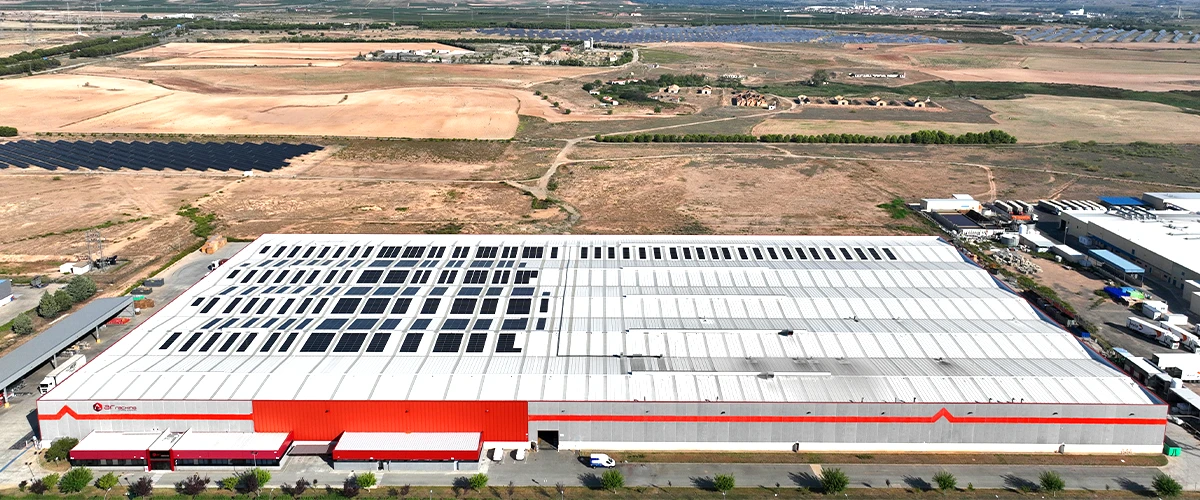
We design, calculate, manufacture and install metal racking for all types of warehouses and loads. Owning every stage — from steel coil to the final load sign — means one accountable partner for Brazilian importers, integrators and end users rather than a chain of resellers.
More than 90 % of our output is exported, which means export packing, container loading plans, marking and documentation are routine operations rather than exceptions. Frames ship nested and protected for the Santos, Paranaguá, Itapoá, Suape and Rio Grande routes, and every upright and beam keeps a traceable batch reference from production through to commissioning.
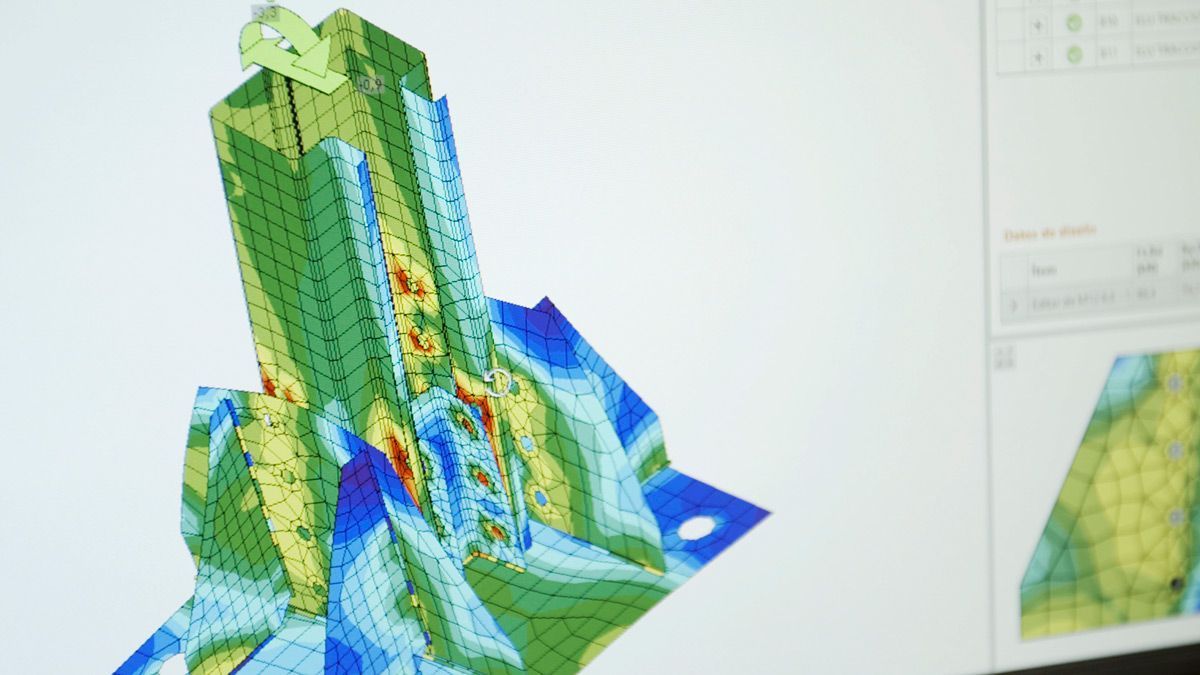
Our technology centre works with an R&D laboratory at Mondragon University to test the behaviour, strength and safety of racking components under realistic load cases, while a research and simulation chair at the University of the Basque Country develops the calculation models behind our frames, beams and connections.
For push back systems that matters in a very specific way: the carrier and rail interface is the component that decides whether a lane stays usable after two years of forklift cycles. Cyclic testing, finite-element simulation and physical load trials let us set cart nesting tolerances and rail inclination with evidence rather than habit.
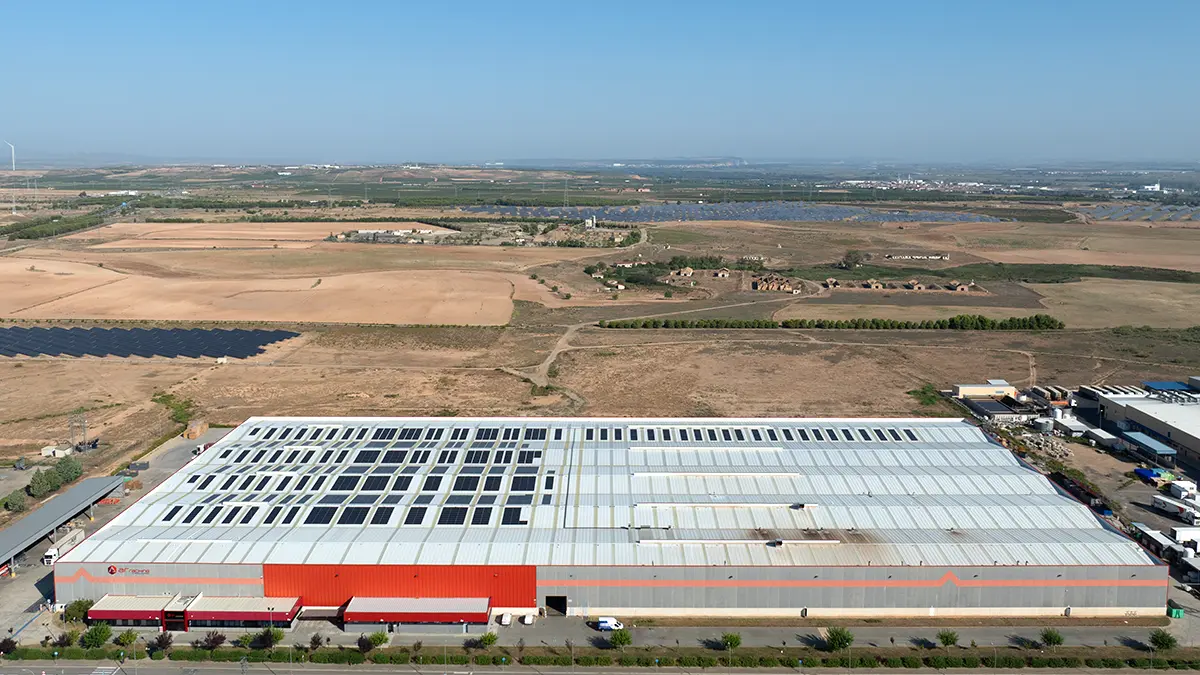
Automated cranes, shuttles and AMRs stop when rack geometry drifts out of tolerance — and manual operations feel the same problem through binding carts and difficult pallet entry. Robotic production and laser-controlled processes hold every frame and beam inside the tolerances that automated integrators demand.
Designs are reviewed against European standards and against the local requirements of the destination market, including ABNT NBR 15524-1 for Brazil. Hot-dip galvanised and powder-coated finishes are selected according to the humidity, coastal exposure and washdown regime of the site — a real consideration on the Brazilian coast from Santos to Recife.
The comparison our project engineers use in early layout studies. Final selection depends on SKU profile, throughput, building height and whether the operation can live with LIFO.
| System | Relative density | Access | Rotation | Best fit in Brazil |
|---|---|---|---|---|
| Push back racking2–6 pallets deep | 1.4× – 1.7× | Lane face, cart extraction | LIFO | Medium SKU counts with 3–8 pallets per reference; cooled and high-rent buildings |
| Selective rackingBaseline | 1.0× | 100 % of pallets | Any | High SKU variety, strict FIFO, mixed pallets, retail and 3PL front-line storage |
| Drive-in racking | 1.8× – 2.2× | Forklift enters the lane | LIFO (FIFO if drive-through) | Single-reference blocks, frozen goods, homogeneous inbound lots |
| Pallet shuttle | 2.0× – 2.6× | Semi-automated shuttle | FIFO or LIFO | High-throughput DCs, deep cold lanes, large pallet volumes per SKU |
| Pallet flow (gravity) | 1.6× – 2.0× | Face picking, automatic advance | FIFO | Perishables, fast-moving references, date-controlled inventory |
Density is relative to selective racking in the same footprint. Very tall or very deep configurations require specific structural verification against ABNT NBR 15524-1 and the site's floor capacity.
The engineering logic behind a push back lane in Brazil is the same logic we apply in deep-freeze, narrow-aisle and high-bay projects elsewhere — density gained without losing operational control.
Send these eight data points and the first layout study can usually be returned without a second round of questions — which shortens the distance between enquiry and container loading plan.
Pallet footprint and height, maximum load per pallet and per level, overhang allowance and whether loads are stable enough for cart handling.
Usable clear height, column grid, slab thickness and flatness, floor load capacity, fire sprinkler clearance and available aisle widths.
Number of SKUs, pallets per SKU, inbound and outbound pallets per day, peak season factor and whether LIFO rotation is commercially acceptable.
Project city and state, port of discharge, required Incoterm, target installation window and whether unloading equipment is available on site.
Straight answers from the engineers who calculate, manufacture and ship these systems — including the questions that local resellers usually avoid.
Yes. Each project is designed for the destination state, manufactured in our automated plants and shipped to the port nominated by the buyer — Santos, Paranaguá, Itapoá, Suape and Rio Grande are the routes we handle most often. Installation is coordinated through our own supervisors working with trained local partners, so the load calculation, the erected steel and the final load signage come from one responsible party.
Structural verification is performed against EN 15512 and cross-checked against the requirements of ABNT NBR 15524-1 for the Brazilian market. Frame capacity, beam deflection limits, base plate design and anchoring are all documented, and the calculation dossier is issued with the project so a local engineer or insurer can review it without re-deriving the structure.
All common formats: the PBR 1000 × 1200 mm pallet that dominates Brazilian domestic logistics, the 1200 × 1000 mm pallet widely used across Latin America, the 1200 × 800 mm Euro pallet used by European exporters, and ISO formats such as 1100 × 1100 mm and 1219 × 1016 mm. Lane depth, cart width and beam length are set from your actual pallet and load — never from a catalogue default.
Most Brazilian installations run between two and five pallets deep per lane and between four and six levels high. Beyond five pallets, cart travel time and the risk of lane binding rise faster than the density benefit, and a pallet shuttle usually becomes the better engineering answer. Above 12 m of usable height we re-evaluate the whole scheme rather than simply adding a level.
Yes. Steels, finishes and cart components are selected for low-temperature service down to −30 °C, and rail inclination is adjusted because the friction behaviour of the carrier wheels changes in a cold environment. Cold-room push back is one of the strongest business cases in Brazil: the aisle you remove is refrigeration capacity you never have to install or power.
Production typically occupies four to eight weeks depending on order volume and finish specification, followed by ocean transit from the loading port to the Brazilian discharge port and inland delivery. Projects that require galvanised finishes or special colours should add buffer time. Share your target installation window at enquiry stage and the schedule is built backwards from it.
Commercial invoice, packing list with per-item weights and volumes, container loading plan, material and finish certificates, structural calculation report, assembly drawings, load plates and the warranty document. NCM classification and Siscomex registration are aligned with your customs broker before shipment so the process does not stall on arrival at the terminal.
Every system carries a five-year warranty and full component traceability. Spare uprights, beams, carts and rail sections can be supplied for future expansion, and periodic technical inspection can be scheduled to identify impact damage, overload conditions or anchoring issues before they become incidents — a practice that aligns with tightening NR-11 expectations in Brazilian warehouses.
Send your pallet dimensions, clear height, SKU profile and project city. Our storage engineers will return a density comparison against selective racking, an indicative layout and a delivered cost structure — before you commit to a supplier.
Typical response time for a first layout study: two working days · [email protected]