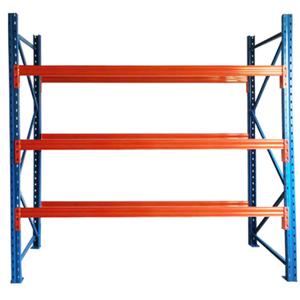
Mracking Industrial Warehouse Pallet Racking Shelving System
Selective pallet racking with 1,000–3,600 mm beams and up to 4,000 kg per beam pair — the structural base we convert into radio shuttle lanes for Chilean cold stores.
Product Range
Every shuttle lane, drive-in bay and cantilever arm starts from one of these eight proven product platforms. Steel grade, beam length and frame depth are recalculated for your pallet, your load and your NCh2369 seismic case before anything leaves for San Antonio, Valparaíso, Iquique or Antofagasta.
Selective pallet racking with 1,000–3,600 mm beams and up to 4,000 kg per beam pair — the structural base we convert into radio shuttle lanes for Chilean cold stores.
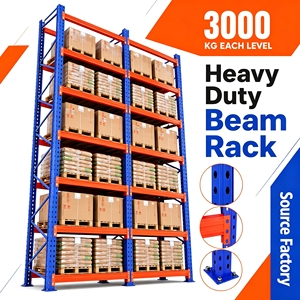
3,000 kg per level upright frames dimensioned around the Chilean 1,000 × 1,200 mm wooden pallet, with batch traceability stamped on every upright.
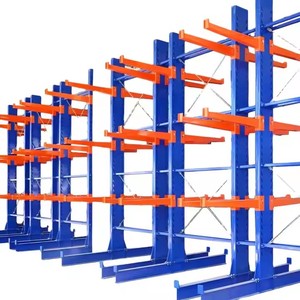
Galvanised cantilever rack for 6–12 m pipe, copper tube and profiles — the standard specification behind mining supply warehouses in Antofagasta and Calama.
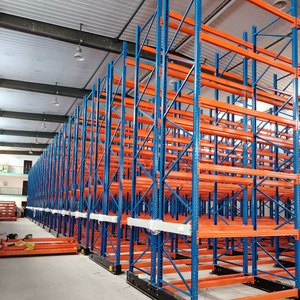
100% selective access for 3PL operators and multi-client distribution centres where every SKU must remain reachable on demand.
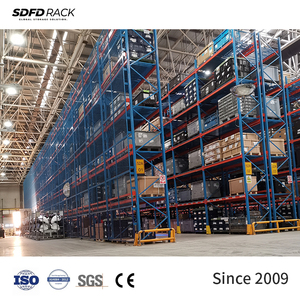
Beam levelling in 50 mm increments and 3,000 kg capacity — ideal for Santiago retail and e-commerce fulfilment where slotting changes every quarter.
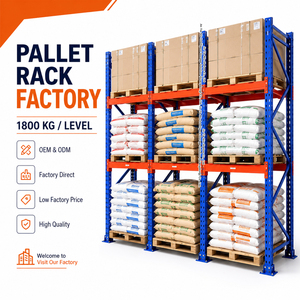
Three-level 1,800 kg shelving for carton, spare-parts and order-picking zones bolted to the same footprint as your pallet lanes.
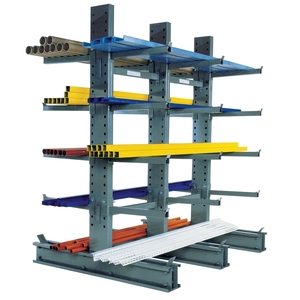
Custom arm spacing and arm load, supplied with the anchoring and seismic calculations Chilean project reviewers ask to see.
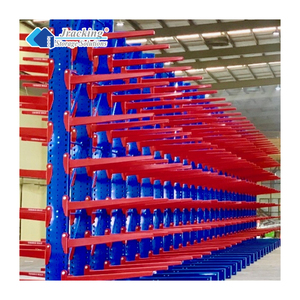
Cold-store cantilever racking with finishes and steel grades suitable for continuous operation down to −30 °C.
42,000+
Warehouse racking projects engineered and delivered
60+
Countries served, with 14 own branches and 70+ trained distributors
100,000t
Annual steel production capacity in a 35,000 m² automated plant
90%
Of output exported to international project sites
How Radio Shuttle Works
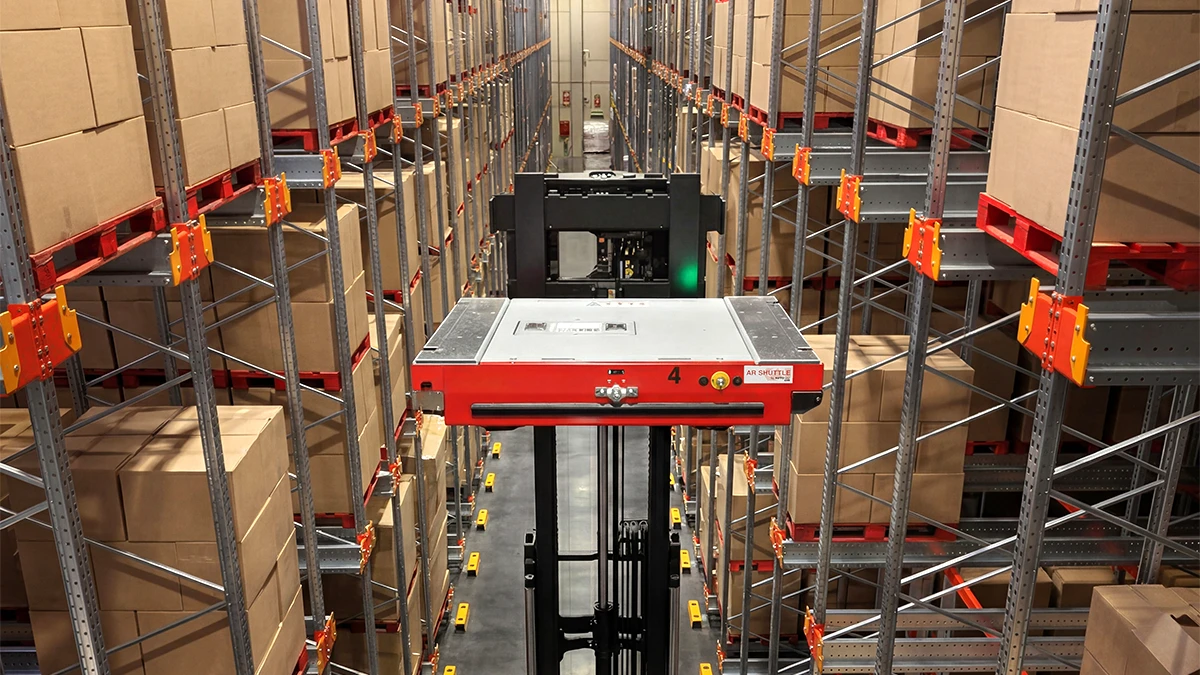
A radio shuttle system keeps the familiar selective-racking frame and adds a motorised pallet carrier inside every lane. The forklift sets the pallet down on the carrier at the mouth of the channel; the carrier drives it to the deepest free position, lifts, deposits and returns. The truck never enters the rack and never waits for a second aisle.
In a Chilean fruit cold store that difference shows up in two numbers only: dock cycle time and the cost of every cubic metre held at −25 °C. Fewer forklift hours inside the freezer means less door opening, less defrost load and less energy billed at industrial Chilean tariffs.
Local Application Scenarios
Chile is not one warehouse market. A cherry packhouse in Curicó, a spare-parts hub in Antofagasta and a 3PL in San Antonio have almost nothing in common apart from the fact that floor space is expensive and mistakes are visible within one season.
Export windows between November and February leave no room for a slow dock. Deep shuttle lanes in O'Higgins, Maule and Valparaíso keep pre-cooling rooms clear and let consignments rotate strictly by lot.
Around Puerto Montt and Los Lagos, racking operates continuously at −25 °C to −30 °C. Steels, galvanising and tolerances are specified for that regime, not for an ambient warehouse.
Antofagasta, Calama and Copiapó warehouses hold long pipe, tyres, mill liners and heavy components. Galvanised cantilever arms carry profiles that no pallet system can store safely.
Santiago, Rancagua and Concepción distribution centres need mixed layouts: pallet lanes for bulk, three-level shelving for split-case picking and aisle widths that match local forklift fleets.
San Antonio, Valparaíso and ZOFRI Iquique operations run bonded stock for many owners. Selective racks with clear signage and per-lane rotation keep customs segregation defensible.
Curicó, Talca and Casablanca producers rotate by vintage and batch. Pallet flow or FIFO shuttle lanes remove the double handling that damages labels before shipment.
Chilean Market Trends 2025–2027
These are the drivers our project engineers hear repeated in every technical meeting with Chilean developers, exporters and logistics operators.
Industrial projects are checked against NCh2369 and NCh433. Anchoring detail, bracing patterns and base-plate design are now reviewed before the steel is ordered, not after installation.
Cherry and grape seasons are short and unforgiving. Throughput per dock door matters more than total theoretical capacity, which pushes operators toward semi-automated lane handling.
Every unused air volume in a freezer is electricity paid for nothing. Density-driven systems such as shuttle and mobile racking compete directly against building a bigger cold shell.
Skilled freezer operators are hard to retain. Radio shuttle removes most in-aisle driving, which shortens training time and reduces impact damage to uprights.
San Antonio's outer-port works, Valparaíso upgrades and ZOFRI activity are pulling bonded and cross-dock warehousing away from the capital toward the coast.
European and North American buyers now ask suppliers for carbon data. Verified ISO 14064 reporting and per-component traceability are becoming procurement requirements, not marketing extras.
System Selection Data
The comparison our project team uses in first-round layout studies. Space efficiency is shown relative to a conventional selective layout on the same floor plate.
| System | Space efficiency | Direct access | Rotation | Best fit in Chile |
|---|---|---|---|---|
| Selective pallet racking | 100% of pallets | Any | Multi-SKU 3PL and retail DCs | |
| Double-deep racking | 50% of pallets | LIFO per lane | Fruit cold stores with 2+ pallets per SKU | |
| Very narrow aisle (VNA) | 100% of pallets | Any | High land value zones around Santiago | |
| Drive-in racking | Low | LIFO | Homogeneous frozen stock | |
| Radio shuttle racking | Per lane | FIFO or LIFO | Harvest-season cold chain and port DCs | |
| AS/RS and self-supporting | Automated | WMS controlled | Large 24/7 automated freezer warehouses |
Space efficiency is indicative only. Final density depends on pallet footprint, clear height, aisle strategy and the seismic verification required for your site.
Manufacturer, Not Reseller
Design, structural calculation, steel forming, welding, surface treatment, packing and installation supervision all happen inside one organisation. That single chain of custody is what makes an export project to Chile predictable.
Robotic welding cells, laser-controlled roll forming and an annual capacity above 100,000 t. More than 90% of that output is exported, so export packing and container loading are routine processes, not exceptions.
Our technology centre works with the R&D laboratory at Mondragon University and a simulation research chair at the University of the Basque Country, testing frame behaviour and connection strength under real load cases.
Frames, bracing, base plates and anchors are calculated for the local seismic code and the site soil class — NCh2369 and NCh433 in Chile, E.030 in Peru, NSR-10 in Colombia and NEC in Ecuador.
Every upright and beam carries a production batch reference from coil to installation. Storage systems ship with a 5-year warranty and full component documentation for handover files.
Lifecycle Services
One team follows your project from the first CAD drawing to the inspection visit years after commissioning.
Layout optimisation, seismic verification, load signage and coordination with forklift, AGV or AS/RS suppliers.
Certified supervisors, approved drawings, plumb tolerances and anchor torque verification before handover.
Periodic rack inspections that flag impact damage, overload and anchor problems before they become incidents.
Replacement beams, uprights, protectors and shuttle carriers held for existing projects, plus lane extensions as volumes grow.
Procurement FAQ
The nine questions that come up most often in technical and commercial meetings with warehouse, logistics and procurement managers in Chile.
Yes. We design each project for the destination city in Chile, manufacture the steel structure in our automated plant and coordinate installation through our own supervisors together with trained partners. Typical delivery points are San Antonio, Valparaíso, Iquique, Antofagasta and the Santiago metropolitan area.
Frames, bracing, base plates and anchors are verified against the local seismic code and site soil class — mainly NCh2369 for industrial structures and NCh433 for buildings. Practical measures include reinforced upright sections, heavier anchor design, row spacers between back-to-back frames and reduced beam deflection limits.
The 1,000 × 1,200 mm wooden pallet is the local standard for domestic distribution, while 1,200 × 800 mm Euro pallets arrive with European imports and 1,100 × 1,100 mm and 1,219 × 1,016 mm ISO formats appear in specific trades. Beam length and frame depth are dimensioned for your actual pallet, overhang and load — never for a nominal size.
Drive-in is cheaper per position but forces LIFO and slows the truck inside the lane. Radio shuttle costs more upfront yet recovers the difference through faster cycles, lower forklift hours in the freezer and per-lane FIFO or LIFO control. For a cherry or salmon operation with a short season, shuttle usually wins on total cost of ownership.
Standard production runs are quoted per project after drawing approval, with export packing and container loading handled in-house. We quote FOB, CIF or CFR to Chilean ports and provide loading plans, packing lists and the documentation your customs broker needs before the vessel departs.
Systems are produced under ISO 9001, ISO 14001, ISO 45001, ISO 50001, EN ISO 3834-2 welding quality, EN 1090-1 and ISO 14064 verified carbon reporting. Shipments include material certificates, batch traceability records, assembly drawings and installation manuals, with Spanish-language documentation available for site teams.
Frequently. Mining and industrial supply warehouses in northern Chile often place cantilever arms along the perimeter for pipe and profiles, with selective or shuttle pallet lanes in the central volume. Both product families come from the same plant, so colour, finish and load signage remain consistent.
Yes. Mobile, drive-in, VNA, shuttle and self-supporting freezer systems are supplied with steel grades and surface finishes suited to continuous operation down to −30 °C, which is the range required by fruit, seafood, meat and frozen food exporters in Chile.
Send a building layout with clear height, pallet dimensions and maximum load weight, number of SKUs and pallets per SKU, daily throughput, forklift or automation type, temperature range and project city. Our engineers convert that into a layout proposal, a density comparison and an indicative budget.
Start Your Chile Project
Share your layout, pallet data and project city. Our storage engineers will return a density comparison, a seismic-ready structural concept and a delivered cost estimate for your site in Chile.
Contact Us