Eight Pallet Racking Products for Cali Warehouses
The product family below covers selective, heavy-duty, medium-duty, adjustable, cantilever and push-back storage. Each URL is preserved from the original catalogue so procurement teams can trace the exact option; for a Cali-specific layout, our engineers can combine these modules with NSR-10-aware bracing, pallet patterns and building clear height.
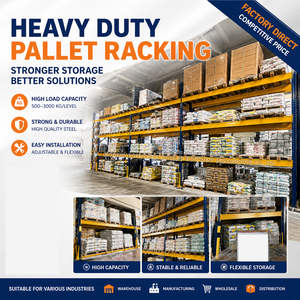
Factory Factory Mold Metal Warehouse Storage Rackingstorage System Shelf for Factory
A robust factory and mold storage racking system for heavy metalware, tools and industrial components. Suits maintenance workshops and manufacturing stores where direct access to mixed loads is critical.
View product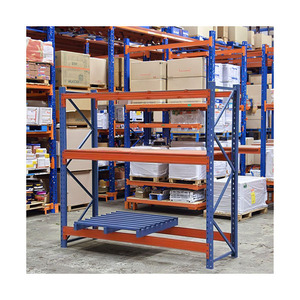
Selective Pallet Racking System Stable Modular Steel Distribution Center Warehouse Storage Rack 2000kg Heavy Duty
Selective pallet racking for 2,000 kg heavy-duty distribution centre storage. Ideal for Cali 3PLs and food distributors needing direct access, simple inspection and mixed-SKU flexibility.
View product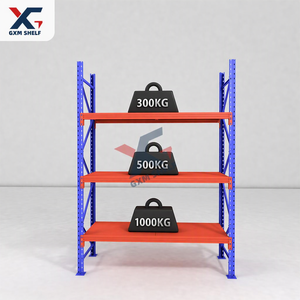
Heavy Duty Rack System Warehouse Storage Stacking Warehouse Shelf Racking Warehouse Racks Heavy Duty
A stacking rack and warehouse shelving system for dense industrial storage. A practical option for building materials, spare parts and larger cartons when forklift access and stability matter.
View product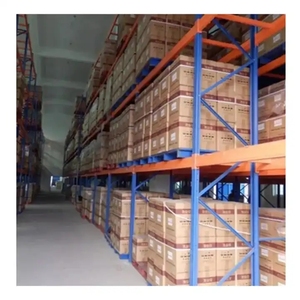
Industrial Shelving Medium Shelf Duty Steel Rack Storage Equipment Certificated Warehouse Metal Racks
Certified industrial medium-duty steel shelving for cartons, spare parts and small components. Supports manual picking zones without requiring forklift access in every aisle.
View product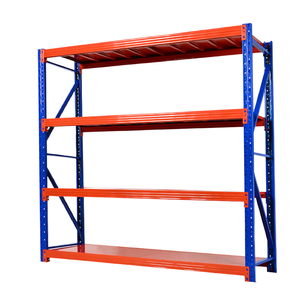
Adjustable Customizable Selective Pallet Racks Steel Metal Shelving for Garage Warehouse & Industrial Storage
Adjustable, customisable selective pallet racks for warehouse, garage and industrial storage. Useful for growing Cali businesses that need reconfigurable beam levels and straightforward expansion.
View product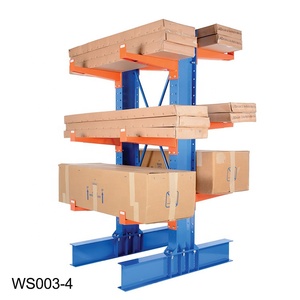
Wholesale Heavy Duty Cantilever Racking Customize Cantilever Pipe Rack
Heavy-duty custom cantilever pipe rack for long goods such as pipes, profiles and timber. Keeps long loads off the floor and allows safe forklift handling in a compact footprint.
View product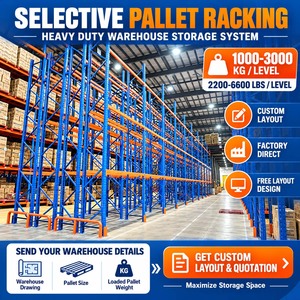
Heavy Duty Adjustable Steel Pallet Racking Warehouse Storage System 1000kg-3000kg Industrial Rack for Logistics Warehouses
Adjustable steel pallet racking for 1,000–3,000 kg industrial rack applications. Built for logistics warehouses that need a balance of direct access, load capacity and long-term flexibility.
View product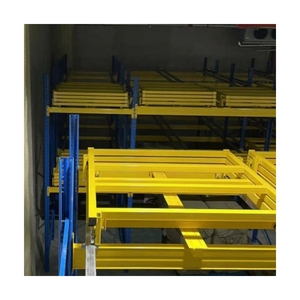
Chinese Manufacturing Supplies Heavy Duty Warehouse Racking System Storage Shelf Stacking Racks Shelves Push Back Pallet Racks
Heavy-duty push-back pallet racking for higher-density storage with LIFO access. A strong fit for manufacturing buffers and distribution centres where SKU depth justifies a denser layout.
View productWhat “Selective Pallet Racking Supplier in Cali” Should Really Mean
Cali sits at the centre of one of Colombia’s most important logistics corridors. The city serves as a distribution platform for Valle del Cauca, links Pacific imports arriving through Buenaventura with Andean population centres, and supports agro-industrial, food and beverage, pharmaceutical, retail and 3PL operations. For warehouse operators, selective pallet racking remains the workhorse because it offers direct access to every pallet, handles mixed SKUs, and can be reconfigured as product lines change.
Yet a selective racking project in Cali has local constraints that a generic catalogue quote often misses. Projects must be checked against Colombia’s NSR-10 seismic requirements, account for humid tropical conditions and building clear height, and fit the actual pallet patterns used by importers and manufacturers. A supplier that simply matches beam length and upright height may leave money on the table—or expose the warehouse to avoidable risk.
Alohatop Shelf approaches Cali projects as an engineering and manufacturing partner. We calculate the racking for the site and load case, manufacture the steel structure in our automated plant, supply complete traceability for every component, and support installation through experienced supervisors and trained distributors. The result is a selective pallet racking system that is easier to operate, safer to inspect and more efficient per cubic metre of warehouse space.
- Engineering: NSR-10-aware layouts, beam deflection checks, upright protection and seismic bracing.
- Manufacturing: 35,000 m² highly automated production centre with 100,000 t annual capacity.
- Export logistics: export packing, component marking and documentation for projects arriving via Buenaventura.
- Lifecycle support: inspection, maintenance, replacement parts and reconfiguration planning.
Where Selective Pallet Racking Earns Its Place in Cali
Cali’s warehouse demand is not a single market. The city combines consumer distribution, agro-industrial supply chains, cold-chain investment and growing e-commerce fulfilment. The right selective layout changes with the product, the building and the labour process.
Multi-client 3PL and distribution
Cali’s position as a regional distribution platform creates multi-client operations that need clear product segregation, direct pallet access and easy reconfiguration. Selective racking with protective uprights and clear aisle marking lets 3PLs switch clients without rebuilding the whole warehouse.
Agro-industrial supply chains
Sugar, coffee, rice, poultry, processed foods and inputs for Valle del Cauca agriculture move through mixed pallet profiles. Selective racking supports rapid put-away and picking while accommodating seasonal peaks and supplier-specific pallets.
Cold-chain and perishables
Fruit, meat, seafood and frozen products require layouts that reduce door-opening time and preserve aisle clearances at low temperatures. Heavy-duty selective racking can be combined with VNA, mobile or drive-in systems when capacity per cubic metre becomes the priority.
Pharmaceutical and controlled storage
Pharma, cosmetics and personal care need traceable components, clean layouts and reliable inspection access. Batch control, damage reporting and periodic rack inspection are easier in selective systems where each pallet position is visible.
Retail, e-commerce and spare parts
Cali consumers and regional retailers need fast replenishment and mixed-order fulfilment. Selective pallet racking can be paired with medium-duty shelving, carton flow or raised walkways to separate bulk reserve stock from faster-moving picking lines.
Automotive and industrial maintenance
Tyre, spare part, mold and metalware storage calls for heavy-duty components, strong beam-to-upright connections and forklift-friendly access. Cantilever and factory racking options complement selective layouts for long or awkward loads.
Localized Trends Shaping Warehouse Racking in Cali
Procurement decisions in Cali are increasingly shaped by port connectivity, land efficiency, cold-chain quality and safety assurance. These trends affect the racking specification from the first layout study.
Nearshoring and Buenaventura flows
Importers and exporters are rethinking inventory positions around Colombia’s Pacific gateway. Racking projects now need to support faster receiving, container unloading and high-turnover distribution, not only static storage.
Denser plans on constrained industrial land
As industrial land and building height become more valuable, Cali buyers compare selective racking with VNA, double-deep and push-back layouts. The right answer depends on SKU depth, access rules and forklift strategy.
Quality and export readiness
Fruit, meat, seafood and processed food supply chains require corrosion-conscious finishes, safe low-temperature operation and layouts that reduce refrigeration loss. Cold-store racking must be specified for the temperature, not adjusted later.
Inspection, traceability and accountability
Warehouse operators increasingly ask for component traceability, documented load signs and periodic inspection. A racking supplier that supports this lifecycle is better placed than a seller focused only on the lowest steel price.
Quick Selection Guide for Cali Procurement Teams
Density is relative to conventional selective racking in the same footprint. Final selection must be confirmed by a structural engineer using the building, pallet, load and seismic data for the project site.
| System | Best for in Cali | Density | Direct access | Practical note |
|---|---|---|---|---|
| Selective pallet racking | Mixed SKUs, 3PL, retail and food distribution | 100% of pallets | Best flexibility; protect uprights in busy aisles. | |
| Heavy-duty adjustable racking | 1,000–3,000 kg pallets, industrial goods and logistics | 100% of pallets | Confirm beam capacity and forklift access. | |
| Push-back racking | Manufacturing buffers and medium-volume SKUs | Per lane | LIFO access; ideal when SKU depth justifies density. | |
| Cantilever pipe rack | Pipes, profiles, timber and long industrial loads | Direct to long goods | Keeps long loads off the floor and organised. | |
| Medium-duty industrial shelving | Cartons, spare parts and manual picking | Manual access | Useful where forklifts should not enter picking aisles. | |
| VNA or pallet shuttle configuration | Cold stores, high-throughput DCs and tall buildings | Per aisle or lane | Higher density needs tighter tolerances and disciplined operation. |
For a Cali warehouse, compare total cost per usable pallet position, not steel price per tonne. Installation, aisle width, forklift type, insurance and future reconfiguration all change the value of a layout.
What to Send for a Cali-Accurate Racking Quotation
A useful racking quotation starts with the warehouse, not the catalogue. Our engineers can size beam lengths, frame depths, bracing, aisle widths and protection systems faster when the project brief reflects the real operating conditions in Cali.
- Building layout, clear height, column grid and available floor area.
- Pallet dimensions, maximum load weight, overhang and pallet condition.
- Number of SKUs, pallets per SKU and required stock rotation rules.
- Daily inbound and outbound throughput, peak shifts and order profile.
- Forklift type, aisle constraints, VNA plans and automation roadmap.
- Ambient or cold-store temperature range, fire strategy and floor finish.
- Project city, seismic site information and any NSR-10 review requirements.
Share your layout and load data
Send the building plan, pallet loads and operating profile. Our team will use the information to recommend a selective racking configuration, estimate pallet positions and highlight the seismic and cold-storage factors that affect the design.
[email protected]Why Cali Buyers Work With Alohatop Shelf
When you buy from Alohatop Shelf, you are not handing your project to an anonymous reseller. We design, calculate, manufacture and support installation through one accountable organisation, with the engineering depth required for selective racking, cold storage and seismic-aware projects.
35,000 m² automated production
Our highly automated production centre combines roll-forming, robotic welding and controlled manufacturing. That supports consistent quality across large orders and tighter tolerances for automated or high-bay racking.
42,000+ projects across 60+ countries
More than 90% of output is exported, and our teams have supported warehouse projects in over 60 countries. That experience helps with export packing, documentation and the practical realities of Colombian site coordination.
Engineering validated in laboratory
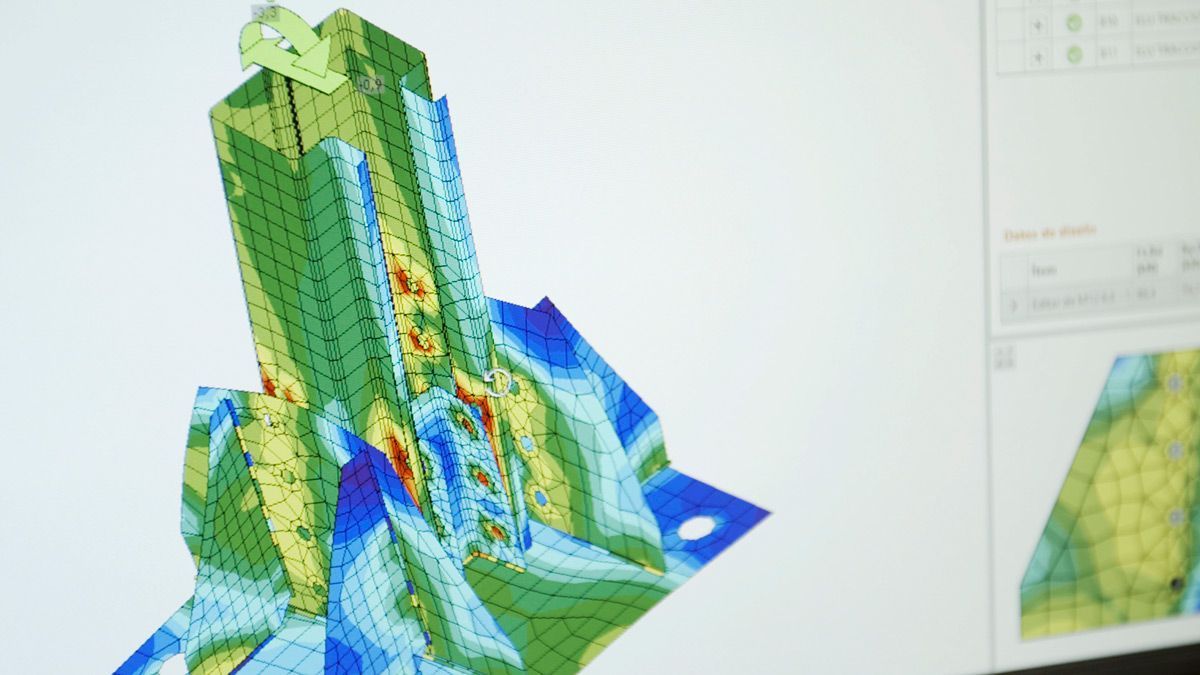
We work with an R&D laboratory at Mondragon University and a research and simulation chair at the University of the Basque Country. Component testing and finite-element simulation feed directly into stronger, safer racking design.
Seismic and cold-storage expertise
We design for high seismic demand and cold environments, with experience relevant to NSR-10 in Colombia, NCh2369 and NCh433 in Chile, E.030 in Peru and NEC in Ecuador. Freezer installations can use steels and finishes suited to temperatures down to −30 °C.
Certified quality and full traceability
Production is supported by ISO 9001, ISO 14001, ISO 45001, ISO 50001, UNE EN ISO 3834-2 welding quality, EN 1090-1 and ISO 14064 verified carbon reporting. Every upright and beam can be traced from production batch to installation.
5-year warranty and lifecycle support
Storage systems carry a 5-year warranty, with support for rack inspection, maintenance, replacement components and future reconfiguration. This protects uptime and helps Cali operators manage safety as layouts evolve.
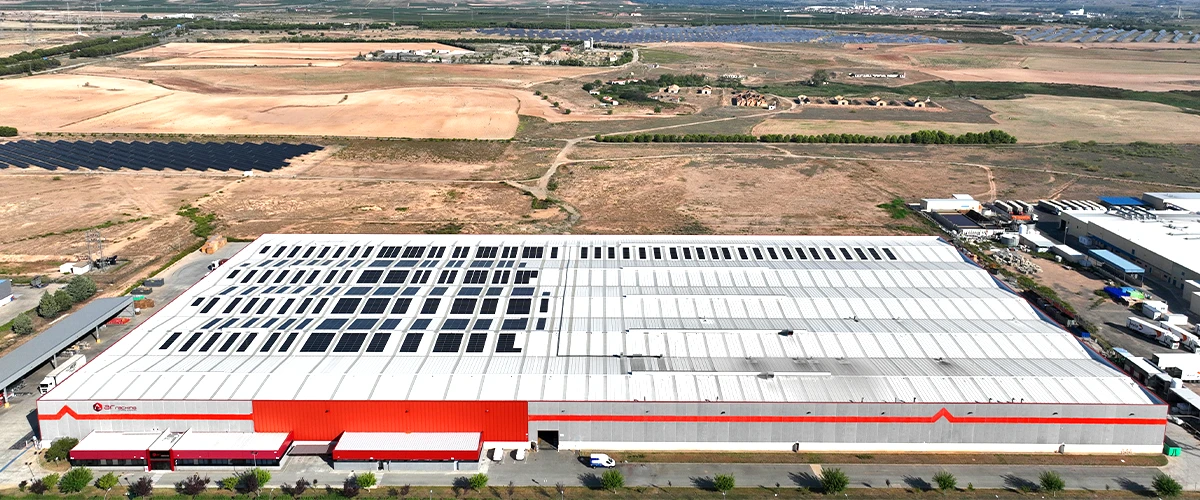
From steel coil to load sign under one roof
Owning every step gives Cali projects a clearer chain of responsibility. We control profile forming, welding, surface treatment, packing and component marking, which reduces the interface risk that appears when steelwork is bought from multiple traders. For a warehouse in Cali, that matters when installation windows are tight and spare parts may be needed months or years later.
The same discipline supports export projects through Buenaventura: parts are marked, packed for ocean transit and documented for installation. Our project team can align delivery sequencing with warehouse closures, civil works and forklift availability.
Engineering for seismic demand, not just catalogue load tables
In western Colombia, seismic design is not a theoretical extra. Frames, bracing, base plates, anchors and row spacers may need specific review depending on the building, soil and local code interpretation. Our engineering culture is built around simulation and physical testing, so the racking proposal can be challenged, checked and improved before steel is manufactured.
For Cali buyers, the practical benefit is a design conversation based on real pallet loads, operating aisles and building data. We can support the project team with technical documentation, component traceability and installation guidance while keeping the final design aligned with the site’s structural engineer and NSR-10 requirements.
Cali Selective Pallet Racking FAQ for Local Buyers
These are the questions our engineering team most often receives from warehouse, logistics and procurement managers sourcing selective pallet racking for Cali and Valle del Cauca.
Do you supply selective pallet racking directly to Cali and Valle del Cauca?
Yes. Our team can support projects in Cali and across Colombia with selective pallet racking, heavy-duty racking, cantilever systems, medium-duty shelving and push-back solutions. We design the system for the project, manufacture the steel structure and coordinate delivery and installation support through our supervisors and trained distributor network. The quotation should include the destination city, building data and pallet loads so the proposal reflects local freight and site conditions.
How does NSR-10 influence pallet racking design in Cali?
NSR-10 is Colombia’s seismic design framework, and racking in Cali should be reviewed with the same seriousness as other structural equipment. Depending on the building, soil class and rack height, the design may require reinforced bracing, heavier base plates or anchors, row spacers, reduced beam deflection limits and specific upright protection. A racking supplier should provide structural calculations and coordinate with the project’s structural engineer; this is not a decision to make from a generic catalogue table.
Which pallet sizes and load capacities are common in Cali?
Common formats include the 1200 × 1000 mm pallet widely used in Latin America, the Brazilian PBR 1000 × 1200 mm, the Euro 1200 × 800 mm pallet and ISO sizes such as 1100 × 1100 mm and 1219 × 1016 mm. Load capacity depends on beam span, upright capacity and the actual load. For Cali projects, send the pallet drawing, maximum weight, overhang and whether loads are stable. Our heavy-duty product range can cover 1,000–3,000 kg and above depending on configuration.
Can your systems support cold storage and freezer warehouses?
Yes. We supply selective, VNA, drive-in, mobile, pallet shuttle and self-supporting freezer solutions with steels and finishes suited to temperatures down to −30 °C. For Cali and Colombian agro-export cold chains, the key is to specify the racking for the operating temperature, moisture and cleaning regime from the beginning. Cold-store layouts should also consider aisle discipline, door-opening time and refrigeration loss, not only pallet positions.
What is the difference between selective, push-back, cantilever and medium-duty shelving?
Selective racking gives direct access to every pallet and is the most flexible choice for mixed SKUs. Push-back racking stores pallets several deep on nested carts and improves density with LIFO access. Cantilever racking is designed for long goods such as pipes, profiles and timber, while medium-duty industrial shelving is intended for cartons, spare parts and manual picking. A Cali warehouse may use several systems in the same building, with selective racking handling reserve pallets and shelving supporting order-picking zones.
What information should a Cali buyer send for a racking quotation?
Send the building layout, clear height, column grid, pallet dimensions, maximum load, number of SKUs, pallets per SKU, daily throughput, forklift type, aisle constraints, temperature range, project city and any seismic or fire requirements. Photos of the existing warehouse and racking are also useful. If the project is new, a CAD plan and the intended storage plan will help our engineers estimate pallet positions and propose the right selective configuration.
How do you coordinate shipping through Buenaventura and installation in Colombia?
Export projects are packed and marked for shipping, with documentation prepared for the destination. For Colombia, Buenaventura is a common Pacific gateway, but the final route depends on the project location, volume and delivery schedule. We support installation through experienced supervisors and trained distributors, and we can provide layout drawings, component lists, load signs and inspection guidance so the local team installs the system consistently with the approved design.
What warranty, testing and certifications are included?
Our storage systems carry a 5-year warranty and are produced under ISO 9001, ISO 14001, ISO 45001, ISO 50001, UNE EN ISO 3834-2 welding quality, EN 1090-1 structural steel and ISO 14064 verified carbon reporting. We also maintain full component traceability. Certification and testing are not substitutes for site-specific seismic verification, but they demonstrate that the manufacturing process, welding control and quality management are documented and repeatable.
Can you inspect and upgrade existing racking before a Cali warehouse expansion?
Yes. Existing racking should be inspected before adding height, extending a run or changing forklift routes. Visual inspection can identify impact damage, missing safety pins, overloaded beams, damaged uprights and anchoring issues. Where the original profile is compatible, we can supply replacement components; where it is not, we can help plan a phased upgrade. Any structural change should be reviewed against the current load case and NSR-10 requirements.
Need a Selective Pallet Racking Supplier Who Understands Cali?
Send your warehouse layout, pallet dimensions, load weight, temperature range and project city. Our engineering team will review the data and recommend a selective pallet racking configuration for your Cali warehouse, including the seismic, cold-storage and layout factors that affect cost and performance.
[email protected]