8 Racking & Storage Systems for Lima Cold Storage Projects
Heavy-duty, adjustable and high-density systems from Alohatop Shelf’s export range. Each module can be engineered for freezer temperatures, Peruvian pallet formats, seismic loads and AS/RS integration.
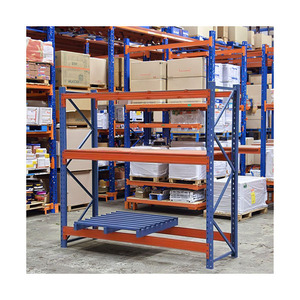
Selective Pallet Racking System Stable Modular Steel Distribution Center Warehouse Storage Rack 2000kg Heavy Duty
View product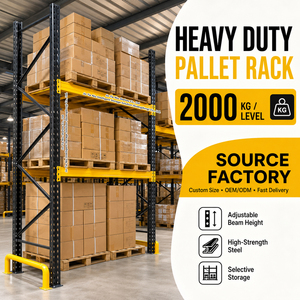
Adjustable Pallet Rack 1000KG to 3000KG for Auto Parts Storage Heavy Duty Selective Pallet Storage System
View product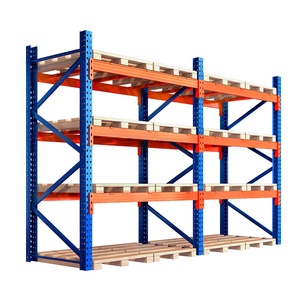
Industrial Heavy Duty Storage Shelves system Stacking Units Metal Rack Warehouse Steel Pallet Racking
View product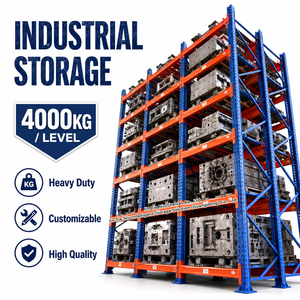
4000KG Heavy Duty Warehouse Rack Pallet Storage System Adjustable Beam Racking
View product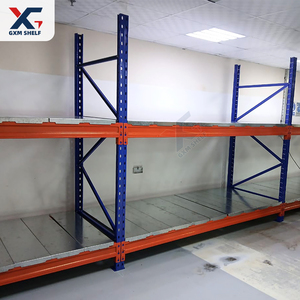
GXM Adjustable Stainless Steel Pallet Rack System Boltless Rack Storage Warehouse Heavy Duty Shelving
View product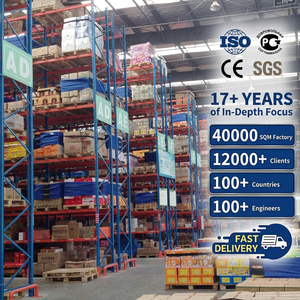
SDFD Heavy Duty Pallet Racking System Steel Durable Adjustable Box Beam Multi-layer Selective Pallet Rack for Warehouse Storage
View product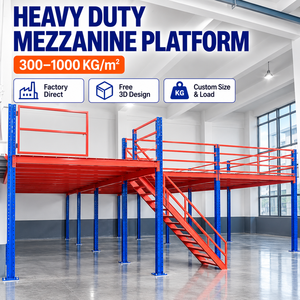
Heavy Duty Steel Mezzanine Floor Rack System for Warehouse Storage
View product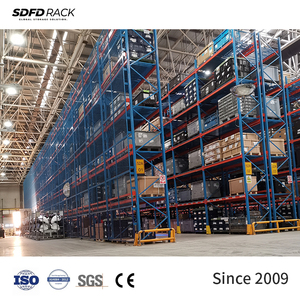
Adjustable High Quality Heavy Duty Selective Pallet Racking 3000KG Load Industrial Warehouse Heavy Duty Storage Pallet Racks
View productHighly automated production base for racking, beams and structural steel
Annual steel production capacity with full component traceability
Warehouse projects delivered across industrial and cold-chain sectors
Countries with installed Alohatop Shelf storage systems
Why Self-Supporting Automated Warehouse Racking Fits Lima’s Export Economy
Lima is no longer only a consumer market; it is the control tower for a national cold chain that links highland production, coastal processing and global reefer shipping. The expansion of Callao and the new Chancay port complex is changing how Peruvian factories and exporters plan pallet flow, container loading and temperature-controlled buffer stock. For blueberries, grapes, avocados, asparagus, mangoes, citrus, seafood, poultry and value-added foods, the warehouse is now a competitive asset rather than a cost centre.
A self-supporting automated warehouse racking system for cold storage uses the rack structure itself to carry the roof and wall envelope. Instead of a conventional building with columns and a separate rack inside, the rack becomes the building. This increases usable height, reduces the cooled envelope per pallet, and allows automated stacker cranes or shuttles to operate in aisles that are too cold, too narrow or too dangerous for repeated manual forklift work.
In Lima, the economic case is strong: industrial land near ports and urban distribution zones is scarce, electricity and refrigeration maintenance are expensive, and buyers increasingly demand traceability from harvest or processing through to export loading. A high-bay self-supporting freezer can consolidate more pallet positions in a smaller footprint, protect product quality during peak season, and provide the stable geometry that AS/RS equipment requires.
However, the advantage only appears when the structure is engineered as a system. Peru’s seismic code E.030, local soil conditions, anchorage, bracing, beam deflection, fire strategy and refrigeration airflow must be coordinated before a single upright is manufactured. That is where an experienced racking manufacturer — not a catalogue reseller — becomes essential.
- Site-specific seismic calculation and connection design for Lima and coastal Peru
- Freezer-rated steel, surface protection and low-temperature welding quality
- AS/RS interface tolerances, stacker-crane levelness and future expansion planning
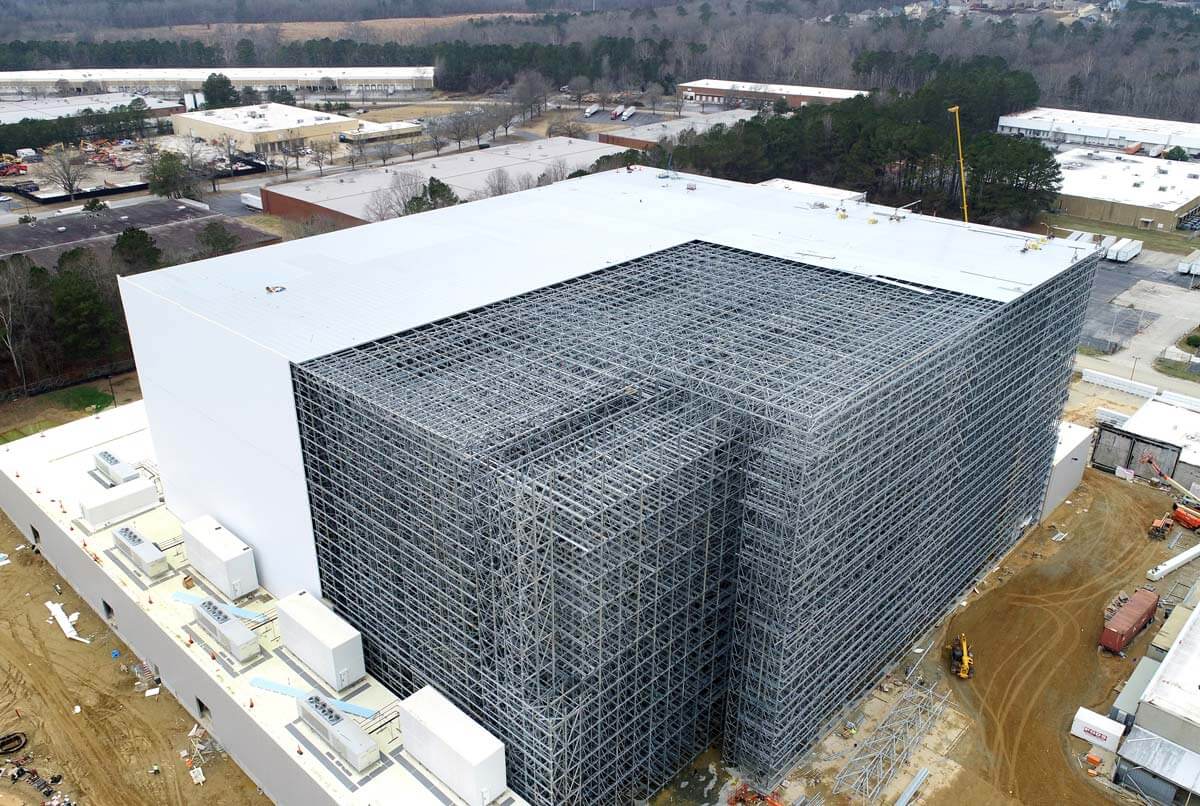
Automated high-bay rack structures reduce cooled volume per pallet and support reliable crane operation in deep-freeze conditions.
Where Lima Factories & Exporters Use Cold Storage Racking
Different products, temperatures and order profiles require different rack architectures. These are the most common cold-chain applications we engineer for Peruvian operations.
Fruit & Vegetable Export Pre-Cooling
Blueberries, grapes, avocados, asparagus, citrus and mangoes move through pre-cooling rooms and palletizing lines before container loading. Racking must support batch traceability, FIFO and rapid truck-to-freezer transfer near Callao or Chancay.
Frozen Seafood & Fishmeal Cold Stores
Peru’s fishing and aquaculture chains need −18 °C to −30 °C storage in humid, salt-laden air. Hot-dip galvanized or high-protection finishes, sealed base plates and corrosion-resistant fasteners protect the rack structure.
Retail & Foodservice Distribution
Supermarket and restaurant chains distribute high-SKU assortments across Lima Metropolitana. Selective pallet racking and VNA aisles keep 100% SKU access while fitting into urban buildings with limited land and tight delivery windows.
Poultry, Meat & Dairy
Cold-chain meat and dairy operations need hygienic, inspectable storage and strict temperature separation. Easily cleaned racking and mezzanine platforms help separate packaging, technical areas and product storage without footprint expansion.
Pharma & Cosmetics Cold Chain
Pharmaceutical importers and contract manufacturers in Lima need validated temperature mapping, audit trails and batch status control. Racking integrates with WMS/ERP and supports segregated quarantine, release and rejected areas.
3PL Multi-Client Freezer
Third-party logistics operators need flexible capacity and fast reconfiguration for clients with different pallet profiles and order cycles. Double-deep, pallet shuttle and mobile racking create density without locking the operation into one product type.
Imported Food & Beverage
Beverage, dairy and packaged-food importers handle 1200 × 1000 mm and 1200 × 800 mm pallets from multiple origins. Adjustable beams accommodate changing load heights, while pallet flow supports FIFO-sensitive lines.
MRO, Packaging & Spare Parts
Cold facilities still need space for spare parts, packaging, refrigerant components and maintenance tools. A heavy-duty steel mezzanine rack system creates a safe technical floor without expanding the building footprint.
What Is Changing in Lima Cold Storage Investment
Four forces are reshaping the specifications that factories, exporters and 3PLs bring to racking suppliers in Peru.
Port-Driven Scale & Velocity
Chancay and Callao are increasing reefer throughput and container turnaround expectations. Exporters need faster pallet staging, better lot visibility and racking that can feed loading bays without creating bottlenecks during peak campaigns.
Energy & Carbon Intensity
Cooling cost per pallet is under scrutiny. Self-supporting high-bay racking reduces the refrigerated envelope and improves volumetric efficiency. Verified carbon reporting such as ISO 14064 is increasingly requested by international buyers.
Seismic Safety & Inspection
Peru’s E.030 requirements and rising insurance scrutiny make rack calculation, anchorage and periodic inspection part of procurement. Buyers now ask for calculation reports, component traceability and load signage — not only price per position.
Digital & Automation Readiness
WMS, ERP, AS/RS and AMR projects all depend on accurate rack geometry. Millimetre-level tolerances, levelness and interface data reduce commissioning risk and support poka-yoke layouts that prevent picking errors.
How to Specify Racking for a Lima Freezer
A practical matrix for factories and exporters comparing selective, VNA, shuttle, mobile and self-supporting AS/RS racking.
| Requirement | Design Response | Why It Matters in Lima |
|---|---|---|
| Seismic category & soil class | Site-specific E.030 calculation, reinforced uprights, heavy base plates, anchors, row spacers and reduced beam deflection | Lima sites vary from stiff gravel to softer coastal soils; standard catalogue frames alone are not enough. |
| Operating temperature | Steel grades and finishes for −30 °C, low-temperature welding quality and corrosion protection | Freezer air is not the only risk; condensation during defrost and door openings accelerates corrosion. |
| Pallet format | 1200 × 1000 mm, 1200 × 800 mm, 1100 × 1100 mm and ISO sizes with beam lengths based on real load | Peruvian and imported pallets coexist in many distribution centres and export staging areas. |
| SKU & throughput | Selective for high SKU mix, VNA for height, shuttle or drive-in for homogeneous lots, AS/RS for 24/7 throughput | Over-automating low-throughput sites can weaken ROI; dense storage can slow high-SKU picking. |
| Building height & land cost | High-bay self-supporting AS/RS reduces footprint per pallet and uses vertical space | Land near ports and consumption centres is scarce and expensive, so cubic efficiency matters. |
| Automation interface | Tolerances, levelness, interface steel, fire and refrigeration coordination | Stacker cranes stop when rack geometry drifts; integrated design protects uptime and commissioning. |
| Hygiene & maintenance | Inspection-friendly layout, impact protection, spare parts and annual inspection access | Cold rooms are difficult to access; maintenance must be designed in, not added later. |
Selection must be validated by load calculations and a site-specific layout study. For Lima projects, we recommend sharing building height, pallet load, temperature range, throughput and target automation level at the first enquiry.
A Lower-Risk Partner for Lima Cold Storage Procurement
Alohatop Shelf LLC designs, calculates, manufactures and installs industrial racking and automated warehouse structures. For Peruvian factories and exporters, the difference is control: one accountable manufacturer from steel coil to final load sign, rather than a chain of traders and subcontractors.
- Factory control: a 35,000 m² highly automated production centre with more than 100,000 t of annual steel capacity and over 90% of output exported.
- Engineering validation: R&D collaboration with Mondragon University and the University of the Basque Country for structural testing, simulation and seismic design models.
- AS/RS precision: robotic production and laser-controlled processes keep frames and beams within the tight tolerances required by stacker cranes, shuttles and AMR systems.
- Lifecycle support: project engineering, technical inspection, installation supervision and maintenance programmes, backed by a 5-year warranty and full component traceability.
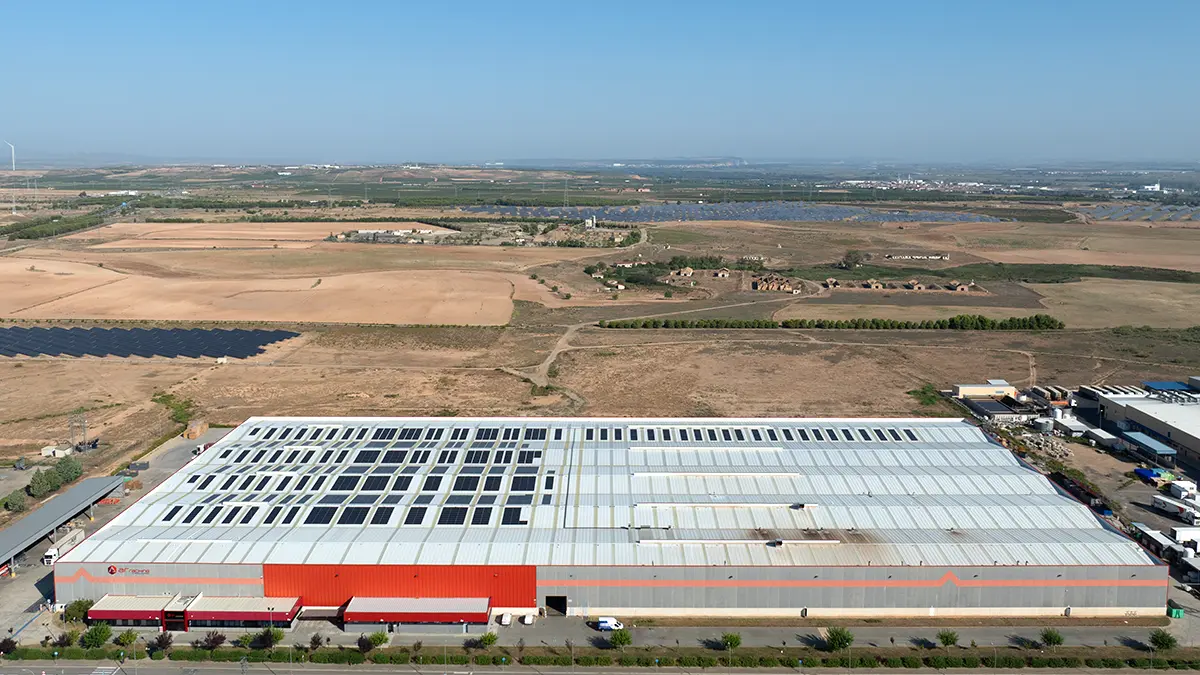
Automated production lines and full traceability help keep large export orders consistent, installable and auditable.
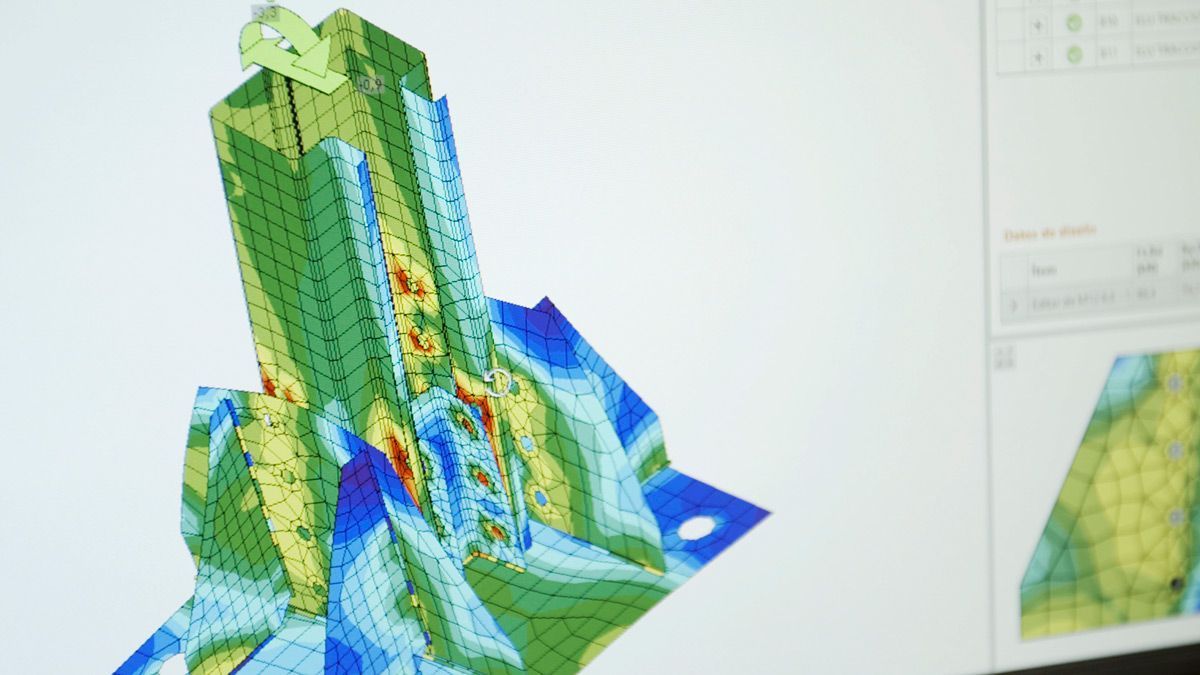
Laboratory testing and finite-element simulation support safer frames, beams and connections for high-seismic and cold-store applications.
Engineering Validated in Laboratory, Not Only on Paper
Cold-store racking is a structural product. It carries pallet loads, resists forklift impacts, anchors seismic forces into the floor slab and, in self-supporting buildings, supports the roof and cladding. Our technology centre works with university R&D laboratories to test component behaviour, strength and safety under real load cases, while simulation models help predict how frames and connections perform under cyclic seismic demand.
That knowledge is transferred directly into the profiles, bracing and base connections we specify for Peru. It also supports the documentation buyers increasingly request: calculation assumptions, welding quality under EN ISO 3834-2, structural steel components under EN 1090-1 and management systems including ISO 9001, ISO 14001, ISO 45001, ISO 50001 and ISO 14064.
Cold Storage, AS/RS and High-Density Racking References
Recent projects show how rack structure, refrigeration and automation are coordinated in real cold-chain operations.
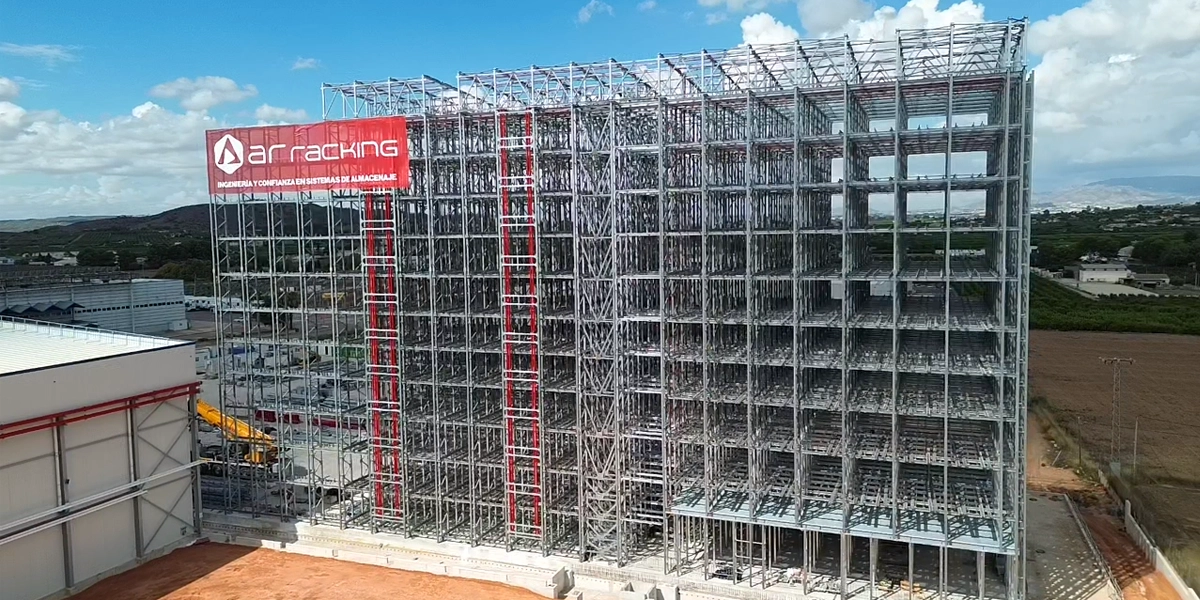
23,000 Pallet Positions at −24 °C
A self-supporting deep-freeze warehouse for a frozen fruit and vegetable processor, where the racking also carries the building envelope. This is the model most relevant to large Lima exporters planning high-bay freezer capacity.
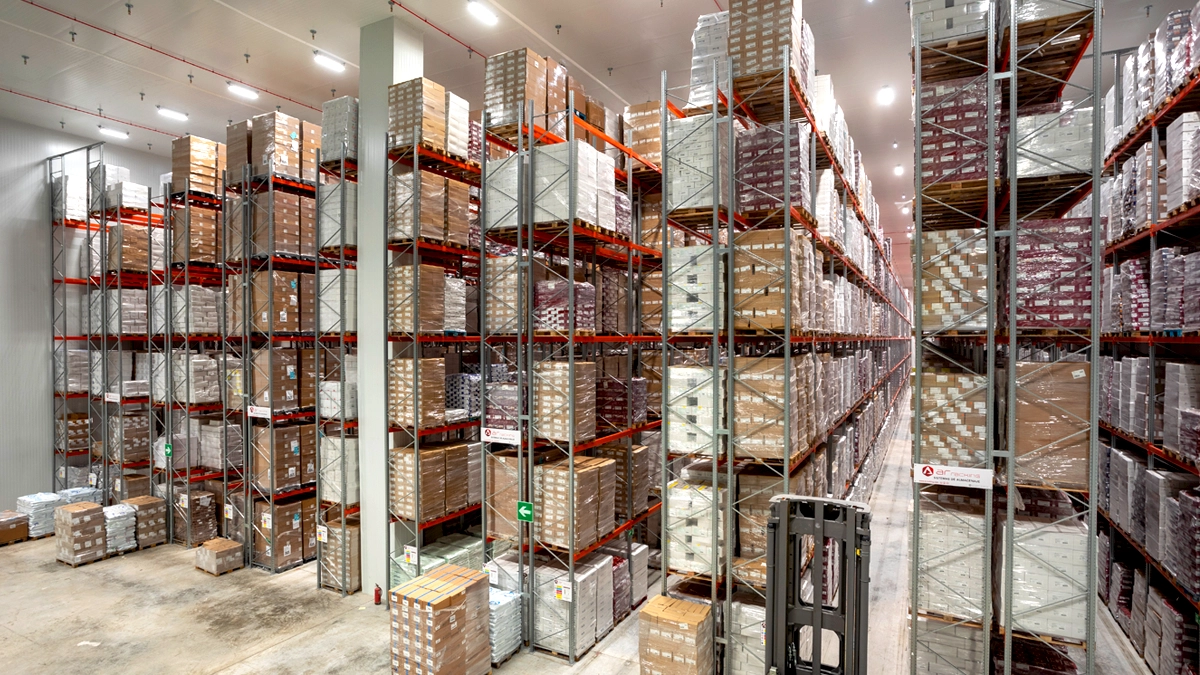
Frozen Food Cold Store with VNA Racking
Very narrow aisle racking maximised pallet positions per cooled cubic metre for a frozen products distributor, balancing density with direct access to every pallet.
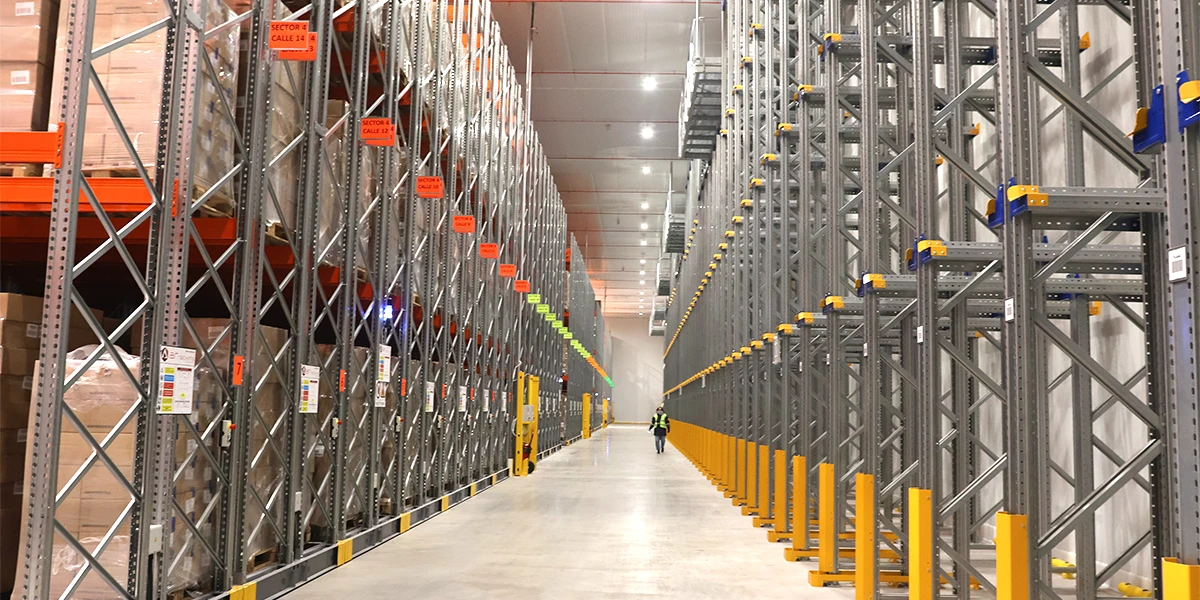
Refrigerated Warehouse with Mobile Racking
Mobile bases removed fixed aisles, increasing capacity while keeping direct access to every pallet — a useful strategy for Lima 3PLs and food distributors facing limited land.
Documentation That Supports Procurement and Audits
Storage systems are produced under international management standards, backed by a 5-year warranty and component traceability.
ISO 9001
Quality management
ISO 14001
Environmental management
ISO 45001
Health & safety
ISO 50001
Energy management
EN ISO 3834-2
Welding quality
EN 1090-1
Structural steel
ISO 14064
Carbon reporting
5-Year Warranty
System assurance
What Lima Factories & Exporters Ask Before Buying
Practical answers for warehouse, logistics and procurement teams evaluating cold storage racking in Peru.
Can your team design racking to Peru’s E.030 seismic code?
Yes. We design each project against the destination country’s requirements, using site soil class, seismic zone, load cases and anchorage data. For Lima, our engineering package can include reinforced uprights, heavy base plates, row spacers, bracing and reduced beam deflection limits. Final structural sign-off should always be coordinated with a licensed Peruvian engineer and the project’s building authority.
What temperature range can the racking support?
We supply racking for chilled rooms, freezers and deep-freeze warehouses down to −30 °C, using steels, welding procedures and finishes suited to low-temperature service. In coastal Lima, corrosion protection also matters because of humidity, salt air and condensation during defrost cycles. The specification is matched to your actual operating profile.
Which system is best for a Lima cold store: selective, VNA, shuttle or self-supporting AS/RS?
It depends on SKU profile, throughput, land cost, building height and automation target. Selective racking is flexible for high SKU counts; VNA increases height and density; pallet shuttle or drive-in suits homogeneous export lots; self-supporting AS/RS is strongest for large, high-throughput freezers where every cooled cubic metre must work hard. We usually compare at least three layouts before recommending one.
How do you handle shipping, customs and installation in Lima or Callao?
We manufacture for export, prepare container-loading plans, and coordinate delivery to Callao or Lima with the buyer’s freight forwarder. Installation can be supervised by our own engineers and supported by trained distributors. Export documentation, packing lists, component marking and installation drawings are prepared to keep customs clearance and site works predictable.
What warranty, spare parts and inspection support are available?
Our storage systems carry a 5-year warranty and full component traceability. We can support periodic rack inspections, impact-damage assessment, replacement components and reconfiguration as your SKU profile changes. For cold stores, inspection access and spare-part planning should be agreed before commissioning because maintenance in freezer clothing is slower and more costly.
What information do you need for a fast quotation?
Send a building layout with clear height, pallet dimensions and maximum load, number of SKUs and pallets per SKU, daily throughput, forklift or automation type, temperature range and project city. Also tell us whether you are targeting selective, VNA, shuttle, mobile or self-supporting AS/RS storage. With that data, our engineers can propose the most efficient cold storage racking layout for Lima.
Send Your Layout, Load & Temperature Data
Share your building height, pallet profile, throughput and automation target. Our storage engineers will recommend the safest, most space-efficient self-supporting automated warehouse racking solution for your Lima factory or export operation.