Recommended Storage Products for Salto Flow Rack Projects
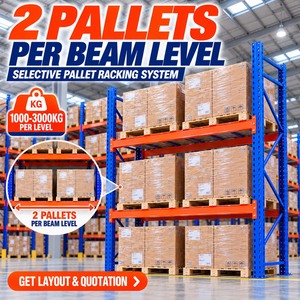
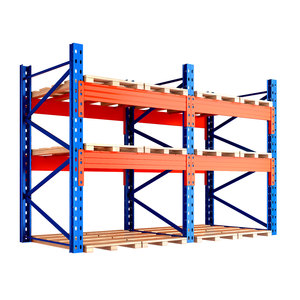
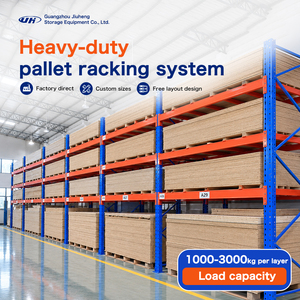
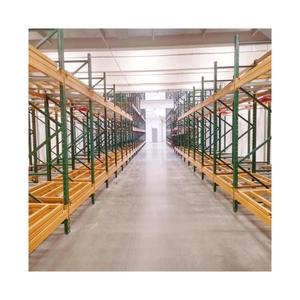
Begin with the storage format that matches your pallet, carton, rotation and building profile. Every system below can be configured for Uruguayan pallet sizes, humid river-climate conditions, cold-store temperatures, local fire strategy and export logistics.
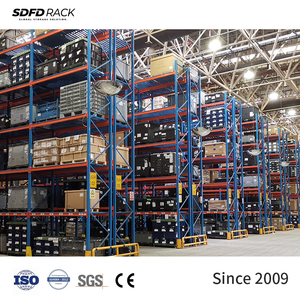
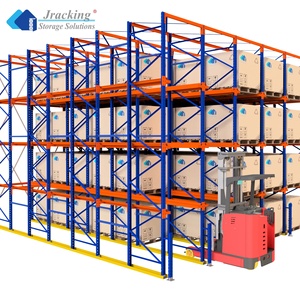
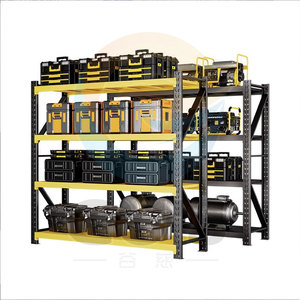
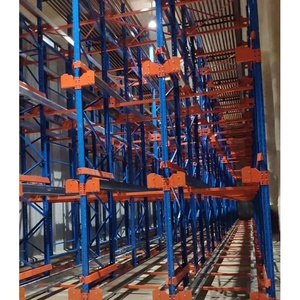
Why the Salto Market Rewards a Better Flow Rack Decision
Salto is more than a local city in northwestern Uruguay. It sits within a productive corridor where citrus, blueberries, rice, dairy, livestock, food processing and regional distribution meet river logistics, border trade with Argentina and transport routes toward Montevideo and the wider Southern Cone. For warehouse operators, this creates a demanding storage profile: seasonal peaks, strict FIFO requirements for perishables, expensive cold-chain cubic metres, rising labour costs and increasing pressure for inventory traceability.
That is why buyers searching for a Span Track Flow Rack exporter or exporters in the Salto market are usually not buying rollers alone. They are buying an inventory policy expressed in steel: how stock rotates, how often a forklift touches a pallet, how much cooled air is wasted in an aisle, how quickly an order picker reaches the next carton and how safely the structure behaves after years of loading, humidity and operational impact. The right flow rack improves all of these variables at once; the wrong one simply moves congestion from the floor to the lane.
Our approach is to connect the commercial brief with engineering data. Pallet dimensions, maximum load, load stability, carton weight, SKU velocity, batch rules, temperature range, building clear height, forklift type, sprinkler layout and fire strategy are reviewed before a lane is proposed. In Salto, where cold-chain investment and agro-export quality standards are high, this front-end discipline often matters more than the headline price of the racking.
What Is a Span Track Flow Rack and Why Does It Matter in Salto?
A Span Track Flow Rack is a gravity-driven dynamic racking system that uses inclined roller tracks, wheel beds or specially profiled lane surfaces spanning between structural beams. In pallet flow applications, pallets are loaded at the rear and move to the picking face; in carton flow applications, cartons travel on wheel or roller lanes for faster order picking.
The engineering principle is simple, but the execution is not. Lane pitch must be calculated for the actual load, pallet quality, roller friction, temperature and warehouse environment. Brake rollers or speed controllers manage acceleration. End stops, lane dividers, anti-tip devices and pick-face restraints protect people and stock. In cold stores, condensation, ice and low-temperature steel behaviour change the maintenance profile. In 3PL warehouses, the lane layout must tolerate frequent SKU changes without turning every reconfiguration into a shutdown.
For Salto, the strongest use cases are usually FIFO-driven cold chains, high-SKU carton picking and dense distribution operations where floor space is expensive and labour time is better spent picking than searching. Pallet flow works well when there are multiple pallets per SKU and rotation discipline is important. Carton flow works well when operators need fast access to small parts, retail products, spare parts, pharmaceuticals or e-commerce items. Push-back and shuttle systems remain useful when density is more important than 100% direct access.
FIFO without pallet chasing
First-in, first-out rotation is built into the lane, reducing search time and improving batch control for perishable and regulated inventory.
High-density order picking
Flow lanes convert aisle space into productive storage and reduce walking distance, especially where many SKUs share a compact pick zone.
Controlled lane speed
Brake rollers, lane pitch and end stops are selected for the load, helping prevent impact damage to pallets, product and structure.
Built for cold and humidity
Surface finishes, roller materials and maintenance access can be specified for humid river climates and freezer temperatures down to −30 °C.
| System | Rotation logic | Best-fit Salto application | Relative density |
|---|---|---|---|
| Selective pallet racking | Any rotation; 100% direct access | Mixed SKUs, retail distribution, spare parts and fast-changing inventory | |
| Span Track pallet flow | FIFO by lane | Cold chain, food, beverage and perishable stock with multiple pallets per SKU | |
| Span Track carton flow | FIFO by carton lane | E-commerce, pharmacy, spare parts, retail replenishment and fast order picking | |
| Push-back racking | LIFO by lane | Manufacturing buffers, medium-volume SKUs and space-constrained stores | |
| Pallet shuttle | FIFO or LIFO, semi-automated | High-throughput DCs, deep lanes and temperature-controlled block storage |
Density is directional and relative to selective racking in the same footprint. Final selection depends on pallet condition, load stability, throughput, fire strategy, building height and local operating constraints.
Salto Application Scenarios: Where Flow Rack Creates Measurable Value
Salto’s economy is connected to agriculture, food processing, border logistics and regional distribution. The storage system should reflect that reality rather than a generic warehouse template.
Citrus, blueberry and cold-chain export
FIFO pallet flow supports batch rotation, reduces double handling and protects quality in fruit packing houses, cold stores and freezer warehouses where every cooled cubic metre carries a cost.
3PL and cross-border distribution
Multi-client warehouses need reconfigurable lanes, clear ownership of stock and reliable FIFO for client audits. Flow rack helps standardise picking while keeping dense storage within a compact footprint.
Retail, pharmacy and e-commerce picking
Carton flow brings the next item to the pick face, reducing walk time and search time. It is especially effective for fast movers, small parts and multi-order fulfilment with high accuracy targets.
Manufacturing and agro-industrial MRO
Line-side components, spare parts, packaging and maintenance stores benefit from controlled access and dense buffers. Push-back and selective racking can complement flow lanes for mixed stock profiles.
Alohatop Shelf: An Export-Grade Flow Rack Manufacturer, Not a Reseller
Alohatop Shelf LLC designs, calculates, manufactures and installs industrial racking and automated warehouse structures. Owning the process from steel coil to final load sign gives Salto buyers a single accountable partner for engineering, production, export documentation and installation support.
Manufacturer-level control
A 35,000 m² highly automated production centre and more than 100,000 t of annual steel capacity support consistent quality for large-volume export projects.
R&D and laboratory validation
Our technology centre works with the R&D laboratory at Mondragon University and a research chair at the University of the Basque Country on load behaviour, simulation and structural safety.
Automated production precision
Robotic production and laser-controlled processes keep frames and beams within the tolerances required by AS/RS integrators and support faster, safer installation in manual warehouses.
Export experience and support
More than 90% of output is exported, supported by 14 own branches and 70+ trusted distributors. Our team routinely coordinates projects for South American ports and inland destinations.
Engineering, Production and Project Proof Behind the Export Offer
Salto buyers can verify the manufacturing and engineering basis of our storage systems through project references, production evidence and certification documentation.
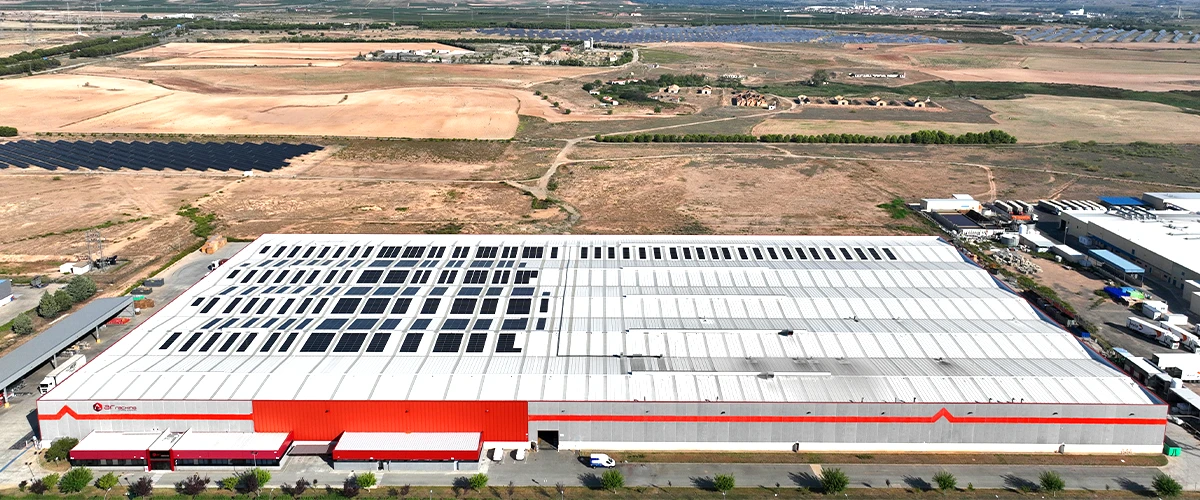
35,000 m² production centre
Highly automated lines and controlled production flow support repeatable quality across export orders.

Laboratory-backed R&D
Physical testing and finite-element simulation inform frames, beams, connections and seismic-ready designs.
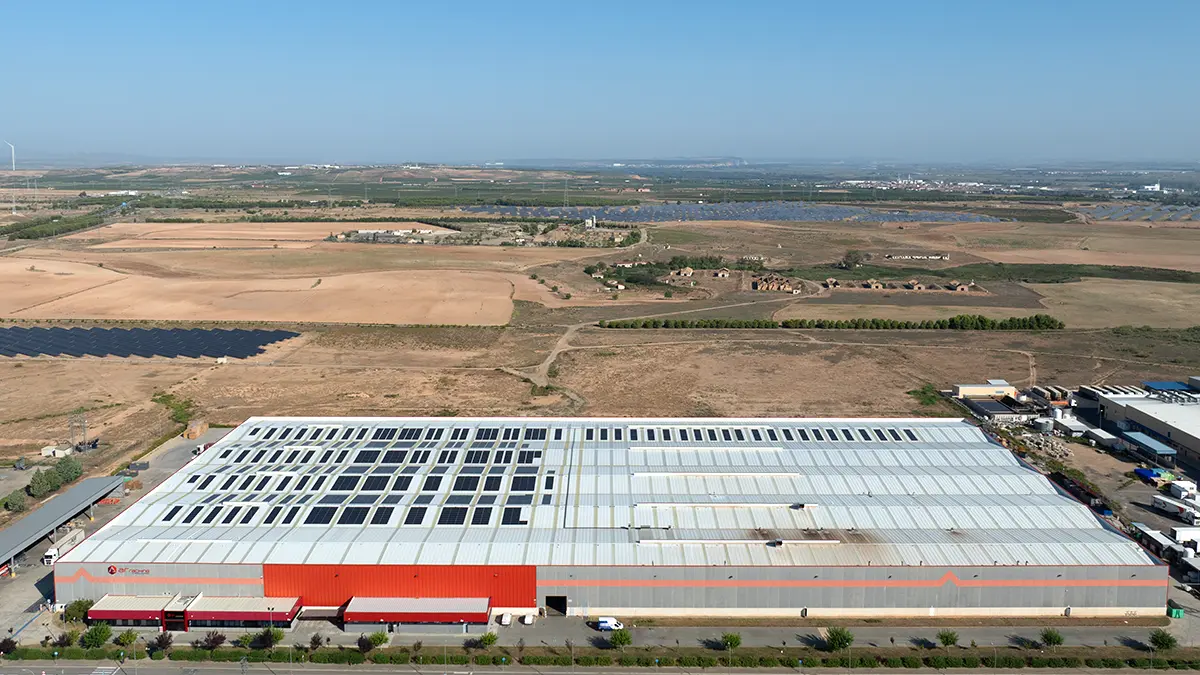
Robotic production precision
Millimetre-level control matters for automated warehouses, shuttle lanes and safe manual installations.
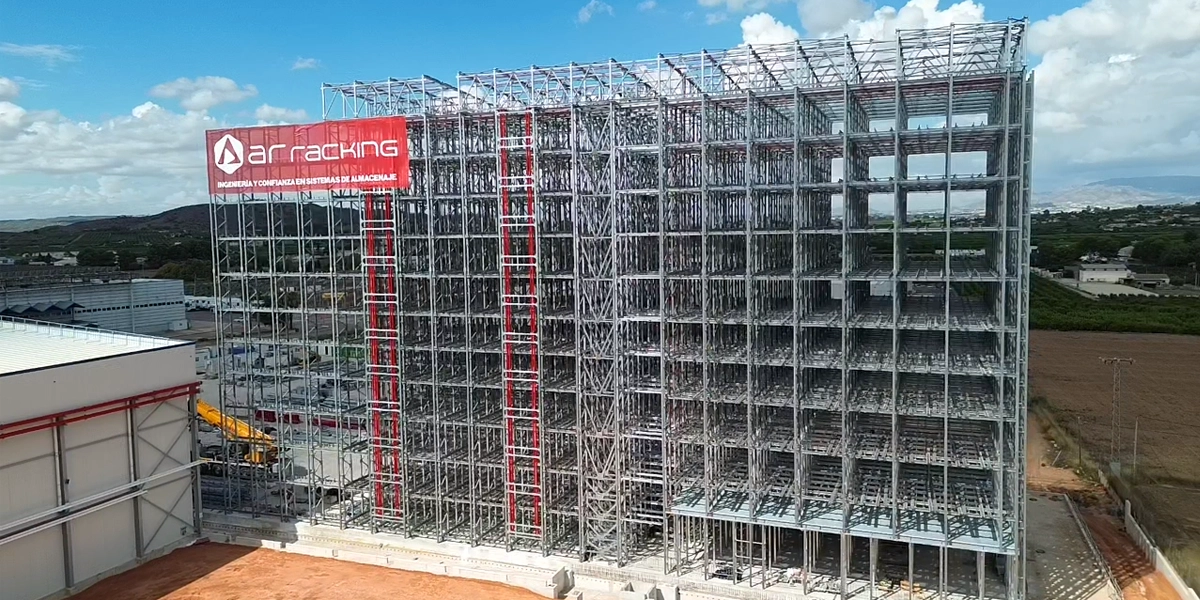
Cold-store project experience
Systems are designed for low temperatures, condensation control and dense FIFO or LIFO operations.
Certifications Salto Procurement Teams Can Review
Storage systems are produced under international management and welding standards, with documentation available for technical and procurement review. Systems carry a 5-year warranty and full component traceability.
 ISO 9001Quality management
 ISO 14001Environmental management
 ISO 45001Health and safety at work
 EN 1090-1Structural steel components
Local Development Trends Shaping Flow Rack Demand in Salto
Warehouse investment in and around Salto is being shaped by cold-chain economics, regional trade, labour productivity and traceability. These trends favour well-engineered dynamic storage.
Cold-chain densification
Energy and refrigeration costs make every unused cooled cubic metre expensive. Flow rack and high-density pallet storage help increase positions without expanding the building envelope.
Nearshoring and border logistics
Salto’s position near the Argentine border and Uruguay River corridor supports regional distribution. Flexible racking allows operators to respond to changing client mixes and cross-border flows.
Labour productivity and traceability
FIFO lanes reduce search time, double handling and picking errors. This supports WMS discipline, lot control and audit readiness for food, pharma and export customers.
Sustainability and lifecycle value
Steel racking is durable and recyclable. Verified carbon reporting, energy-management practices and long warranty coverage help procurement teams compare lifecycle value, not only initial cost.
How to Prepare a Span Track Flow Rack Project for Salto
A complete data pack shortens the engineering cycle, reduces quote revisions and improves the final layout. Use these four steps to structure the project before contacting an exporter.
Data collection
Provide building layout, clear height, pallet dimensions, maximum load, carton sizes, number of SKUs, pallets per SKU, daily throughput, temperature range and project city.
Layout and structural design
Review lane pitch, beam levels, frame depth, forklift clearances, fire strategy, wind or seismic requirements where applicable, and integration with WMS or automation.
Commercial and compliance
Confirm Incoterms, delivery point, packing strategy, cargo insurance, documentation, certifications, warranty terms and unloading responsibilities before shipment.
Installation and aftercare
Agree supervisor responsibilities, torque and anchor checks, load signage, handover documentation and periodic inspection to protect people and uptime.
Span Track Flow Rack Export and Procurement in Salto: Common Questions
These are the questions our engineers most often answer from warehouse owners, 3PL operators, food exporters and procurement teams in Uruguay and the wider region.
Are you a Span Track Flow Rack exporter serving Salto, Uruguay?
Yes. Alohatop Shelf LLC serves Salto and the wider Uruguayan market through export project engineering, manufacture and installation support. We design racking for the destination building, climate and operating profile, then coordinate shipping and unloading with your freight forwarder or customs broker. Our team can support delivery to Montevideo, Nueva Palmira, Salto port where routing is available, or your project site depending on the agreed Incoterms.
What is the difference between pallet flow and carton flow for a Salto warehouse?
Pallet flow uses inclined roller lanes to move full pallets from the loading end to the pick face, making it suitable for FIFO cold-chain, food and beverage stock. Carton flow uses wheel or roller beds for cartons and small containers, making it suitable for order picking, retail replenishment, spare parts and e-commerce. The correct choice depends on load weight, pallet condition, SKU velocity, pick rate and the amount of direct access you need.
Can your flow racking handle pallet sizes used in Uruguay and South America?
Yes. We design for the 1200 × 1000 mm pallet widely used in Latin America, the Brazilian PBR 1000 × 1200 mm format, the 1200 × 800 mm Euro pallet used by European exporters, and ISO sizes such as 1100 × 1100 mm and 1219 × 1016 mm. Beam lengths, lane width and frame depth are dimensioned for your actual pallet and maximum load, not a generic catalogue size.
How do you protect racking from Salto’s humid river climate and cold-store condensation?
For humid environments and cold stores, we specify finishes, roller materials and maintenance access according to the operating temperature and moisture profile. In freezer applications, condensation and ice can affect movement and inspection, so lane design, drainage, cleaning access and component selection are reviewed early. The aim is to preserve smooth flow, reduce corrosion risk and keep inspection practical for the local maintenance team.
What information is needed to quote a Span Track Flow Rack project in Salto?
Send a building layout with clear height, pallet dimensions and maximum load weight, number of SKUs and pallets per SKU, carton dimensions if relevant, daily throughput, forklift or automation type, temperature range, fire strategy and project city. Photos of the site and existing racking are also useful. Our engineers use this information to propose the most efficient storage system and to reduce quote revisions.
What shipping terms and delivery points can you support for Salto?
We can quote common export terms such as FOB or CIF according to the project. Typical routing for Uruguay may involve Montevideo or Nueva Palmira, with inland delivery to Salto depending on the freight plan and Incoterms. Because customs, port handling and unloading responsibilities affect total cost, we recommend confirming the commercial terms with your customs broker before finalising the purchase order.
What warranty, certifications and traceability back your storage systems?
Systems carry a 5-year warranty and are produced under ISO 9001, ISO 14001, ISO 45001, ISO 50001, UNE EN ISO 3834-2 welding quality, EN 1090-1 and ISO 14064 verified carbon reporting, with full component traceability. Certification documents and technical information can be provided for procurement review. Final project documentation is confirmed in the commercial offer.
Can you support installation, inspection and maintenance in Uruguay?
Yes. We coordinate installation through our own supervisors and a network of trained distributors, following approved drawings, plumb tolerances and load signage. For long-term safety, we also support periodic technical inspection, component replacement, reconfiguration and maintenance planning. For Salto projects, the exact installation model is confirmed after reviewing site access, local labour arrangements and the agreed scope of supply.
Request Your Span Track Flow Rack Catalogue
Share your building layout, pallet data, carton profile and throughput targets. Our engineers will help you compare flow rack, selective, push-back and shuttle options for the Salto market, with export documentation and installation planning in mind.
Get Catalog