Top 10 Pallet Shuttle Racking Suppliers & Wholesaler Serving the Paraguay Market
A technical buying guide for warehouse owners, 3PLs, cold-chain operators and wholesale importers comparing high-density racking for Asunción, Ciudad del Este, Encarnación and the Paraguayan Chaco.
8 Racking Products That Support Pallet Shuttle & High-Density Projects
The strongest pallet shuttle projects rarely depend on one product alone. A complete Paraguay warehouse package usually combines shuttle lanes with selective racking, safety accessories, decking, cantilever storage and adjustable shelving for order preparation.
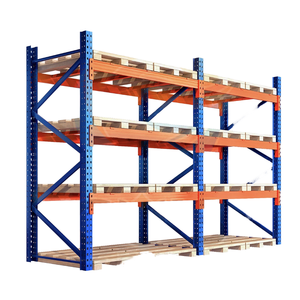
1-5 Layer Heavy Duty US Type Detachable Pallet Rack Storage Steel Stacking Rack Supplier for Bulk Storage Plant Large Warehouse
Flexible 1–5 layer stacking rack for seasonal overflow, spare parts and heavy palletized stock where floor space must be reused quickly.
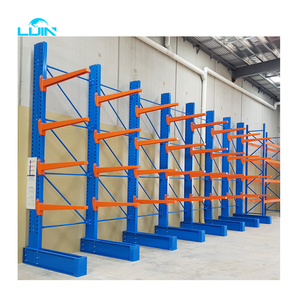
Factory Price Cantilever Rack Heavy Duty Industrial Cantilever Racking Steel Storage
Useful for Paraguayan construction wholesalers, steel distributors and timber yards that store long profiles beside palletized inventory.
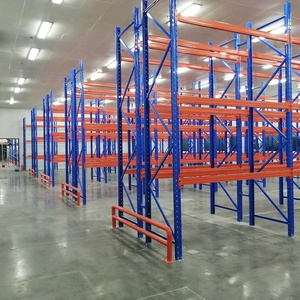
High-quality Heavy-duty Adjustable Steel Shelving with 5 Tiers for Industrial Warehouse Storage Solutions
Five-tier adjustable shelving for spare parts, cartons and fast-moving SKUs that support shuttle-fed distribution centres.
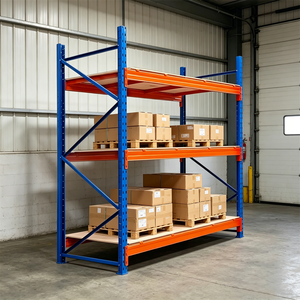
Powder Coated Heavy Duty Rack Industrial Warehouse Storage Pallet Racking Adjustable Industrial Shelves
Conventional selective racking for mixed-SKU operations, retail distribution and 3PL warehouses requiring direct access to most pallets.
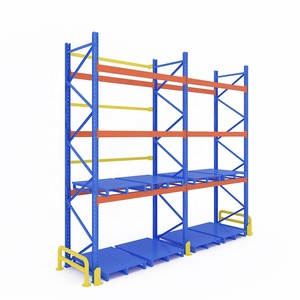
Warehouse Storage Industrial Pallet Rack with Back Stopper
Back stoppers help prevent pallets from being pushed through the rear of selective or shuttle-feed aisles, an important detail for high-turnover sites.
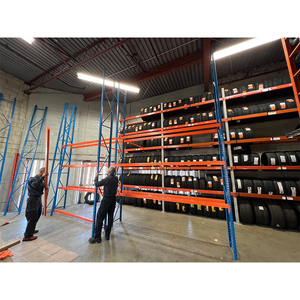
China Supplier Industrial Stacking Racks Heavy Duty Type Structural Pallet Rack System
Heavy-duty structural pallet rack system for manufacturing plants, high-load pallets and demanding industrial storage environments.
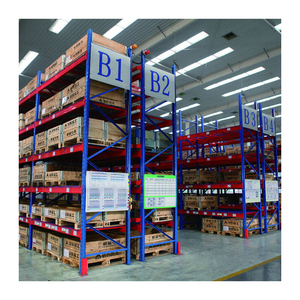
Industrial Pallet Racking System Spliced Steel Drop-Over Deck Panel Warehouse Storage Rack 2000kg Heavy Duty
Drop-over deck panels create stable shelf surfaces for small pallets, cartons and non-palletized goods while keeping rack levels accessible.
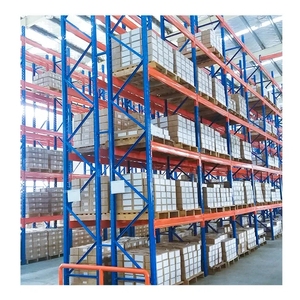
Heavy Duty Industrial Double Deep Stacking Selective Shelving Pallet Racking Warehouse Storage Racks for Sale
Double-deep selective racking improves density for 3PLs and beverage distributors that hold two or more pallets per SKU.
Why Pallet Shuttle Racking Is a Strategic Investment in Paraguay
Paraguay is not a small footnote in Mercosur logistics. It is a landlocked but highly connected market where soy, beef, grains, retail imports and regional distribution move through Asunción, Villeta, Ciudad del Este, Encarnación and the Paraguay-Paraná waterway. For warehouse owners, the pressure is familiar: land and construction are expensive, labour must be used carefully, cold-chain demand is rising and clients expect faster replenishment with fewer errors. That combination is exactly where pallet shuttle racking becomes relevant.
Buyers searching for the top 10 pallet shuttle racking suppliers serving Paraguay usually discover that the market is not short of catalogues. The real difference lies in engineering depth, component traceability, export packing, customs documentation, installation supervision and access to spare parts after commissioning. A rack that looks competitive on a price list can become expensive if it cannot be anchored correctly, if beams deflect beyond safe limits, or if a shuttle lane cannot be integrated with the warehouse management system.
This guide is written from a practical procurement perspective. It explains where pallet shuttle racking fits in Paraguay, how local operating conditions change the design brief, what wholesale buyers should request from suppliers, and how to compare quotes without sacrificing safety. It also uses the product portfolio and manufacturing credentials of Alohatop Shelf LLC as a reference point for the type of evidence a serious supplier should be able to provide.
Pallet shuttle systems are most competitive when a site handles repeated pallets per SKU, needs deep lanes, wants to reduce forklift travel, or operates a freezer where every cubic metre of cooled space matters. In Paraguay, that profile appears in cold stores for beef and frozen foods, beverage distribution, supermarket replenishment, agricultural inputs, 3PL multi-client warehouses and import wholesalers serving the Tri-Border Area. The system is not a universal answer: high-SKU operations with frequent direct access may still need selective, double-deep or VNA racking. The value of a top-tier supplier is knowing which configuration is genuinely justified.
Where Pallet Shuttle Racking Fits Across Paraguay
Paraguay is not one logistics market. The design brief for a warehouse in Asunción is different from a cold store near an agro-industrial plant, or a wholesale operation serving Ciudad del Este.
Asunción Metropolitan Distribution
High-throughput DCs serving the capital need fast replenishment, clear safety signage and a mix of shuttle lanes for fast movers plus selective racking for slow SKUs. Limited land pushes projects toward taller, denser layouts.
Ciudad del Este Import & Wholesale
Wholesalers and importers need dense buffer storage for container arrivals, secure back stoppers, and clear segregation between batch codes. Double-deep and shuttle racking can reduce aisle waste while retaining control.
Encarnación & Itapúa Agro-Processing
Agricultural processing, grain inputs and regional retail benefit from seasonal high-density storage. Pallet shuttle lanes handle repeated SKUs and relieve congestion during harvest and export peaks.
Chaco Beef, Grain & Inputs
Heat, dust and long transport distances require robust profiles, corrosion-conscious finishes and simple maintenance. Suppliers should provide spare parts lists and installation checks that local teams can follow.
Cold Chain & Freezer Warehouses
Every cubic metre of cooled space carries an energy cost. Pallet shuttle racking can increase stored pallets per freezer footprint, but steel specification, condensation control and shuttle reliability must be reviewed for temperatures down to −30 °C.
3PL & E-commerce Fulfilment
Multi-client 3PLs need flexible zoning, WMS integration and picking areas fed by shuttle storage. The design should allow future reconfiguration rather than locking the operation into one client profile.
Paraguay Trends Shaping Pallet Shuttle Demand
The strongest projects are being planned around densification, cold-chain growth, labour productivity and automation readiness rather than lowest initial cost alone.
Densification of Urban Warehouses
As land and construction costs rise around Asunción and access corridors, companies are reviewing high-bay layouts, narrower aisles and shuttle lanes to store more pallets in the same building envelope.
Cold-Chain Expansion
Beef, dairy, frozen food and imported perishables are pushing investment into insulated warehouses and freezers. In cold storage, density gains have a direct impact on energy use and operating cost.
3PL Professionalisation
Multi-client logistics operators increasingly require traceability, WMS integration, load signage and documented inspections. Racking is no longer a background purchase; it is part of the service promise.
Labour Productivity & Safety
Reducing forklift travel inside deep storage areas improves throughput and lowers the risk of impact damage. Shuttle systems can support this, but only with training, aisle discipline and proper maintenance.
Import Lead-Time Planning
Steel structures, shuttles and spare parts are imported into Paraguay. Top suppliers provide export packing, clear component lists, customs documents and phased delivery plans to align with construction schedules.
Automation-Ready Warehousing
Even when a project starts semi-automated, buyers want future compatibility with WMS, AGV/AMR handling and automated storage. This requires tighter tolerances and better engineering documentation from day one.
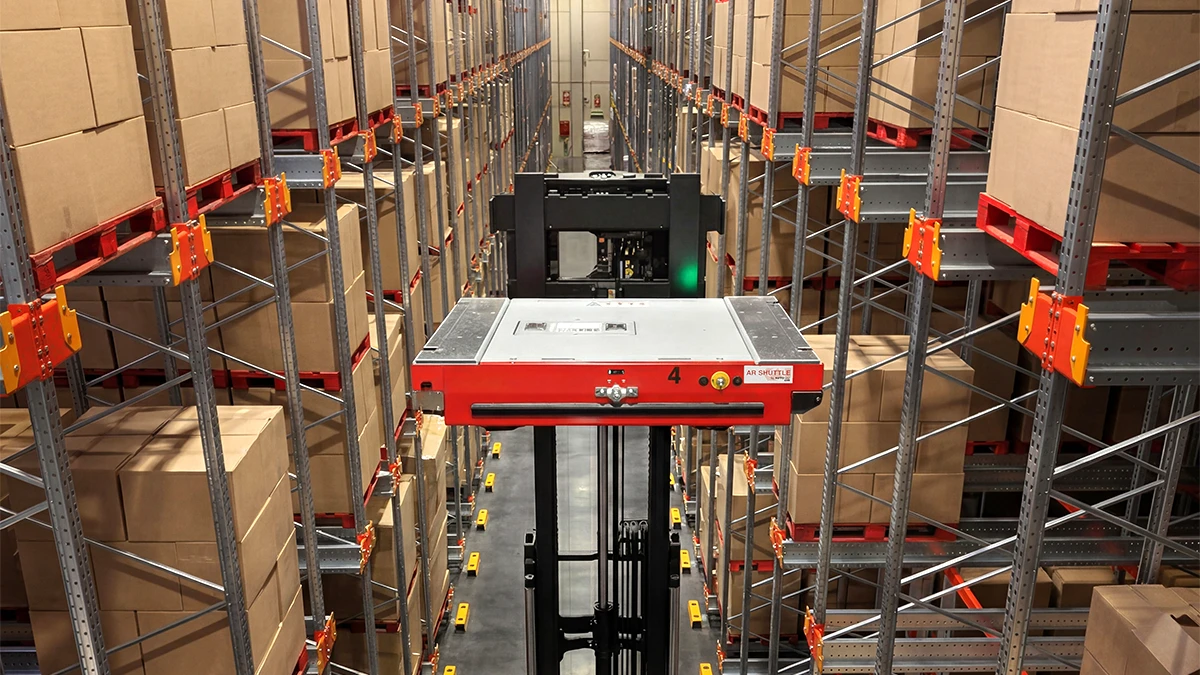
High Density Is Not Automatically High Performance
Pallet shuttle racking can increase the number of pallet positions in a given volume, but the gain must be balanced against lane depth, replenishment cycles, shuttle count, battery strategy and maintenance access. A layout that stores more pallets but slows retrieval can be a poor investment.
The chart below is an illustrative planning index, not a guarantee. It shows why selective racking remains important for mixed inventory while shuttle systems suit repetitive, high-volume pallet flows.
- Use shuttle racking when each SKU occupies at least several pallets and throughput is repeatable.
- Confirm whether the operation requires FIFO, LIFO or batch-level control before fixing lane depth.
- For freezer projects, calculate the cost of cooled volume, not just the cost per pallet position.
- Plan spare shuttles, charging or battery exchange, and local maintenance access from the start.
Top 10 Evaluation Criteria for Pallet Shuttle Racking Suppliers in Paraguay
Use this ten-point scorecard when comparing wholesalers, manufacturers and regional distributors. It is designed to surface the technical and commercial risks that a simple quotation may hide.
Structural Engineering
Ask for load calculations, deflection limits and component schedules signed by a qualified engineer.
Local Design Review
Paraguay is a low-seismic market compared with Chile or Peru, but wind, floor strength, humidity, thermal movement and anchoring still need project-specific review.
Shuttle Integration
Check control philosophy, WMS interface, lane logic, charging strategy and emergency recovery procedures.
Steel Traceability
Confirm steel grade, coating, welding control and batch traceability from coil to upright and beam.
Cold-Store Experience
For freezer projects, request references at −18 °C to −30 °C and review material behaviour under condensation and frost.
Spare Parts & Spanish Support
A local wholesaler may supply documentation and spare parts, but the manufacturer must support troubleshooting and component traceability.
Installation Supervision
Approved drawings, plumb tolerances, anchor torque and load signage should be checked by trained supervisors.
Warranty & Inspections
A five-year warranty is valuable only when periodic inspections and replacement components are available.
Reference Projects
Ask for comparable pallet sizes, building heights, temperatures and throughput figures, preferably with site photos or client contacts.
Total Landed Cost
Compare FOB, CIF and delivered costs including export packing, freight, insurance, customs clearance, installation and commissioning.
What to Look for Behind the Quotation
The most reliable pallet shuttle racking suppliers combine engineering, automated production, international logistics and post-installation support. Alohatop Shelf LLC is structured around that full chain rather than resale alone.
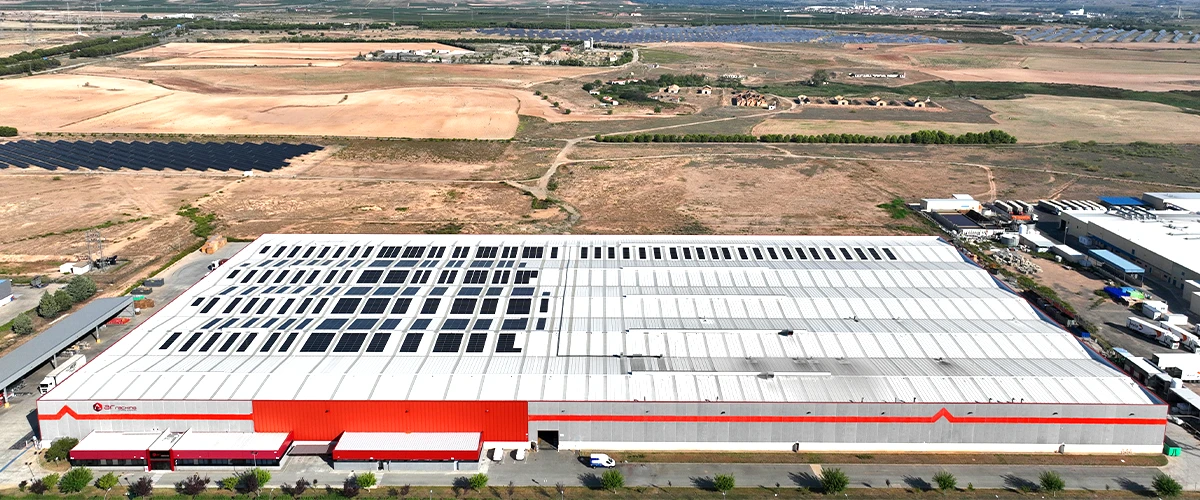
Alohatop Shelf LLC designs, calculates, manufactures and installs industrial racking and automated warehouse structures. Owning the main steps from steel processing to final load signage gives buyers a single accountable partner for engineering, production and export documentation.
- 35,000 m² highly automated production centre with more than 100,000 t of annual steel capacity.
- Over 90% of production exported, supported by experience with major ports and international project logistics.
- Full component traceability for uprights and beams, from production batch to installation.
- 5-year warranty and documented quality controls across the storage system.
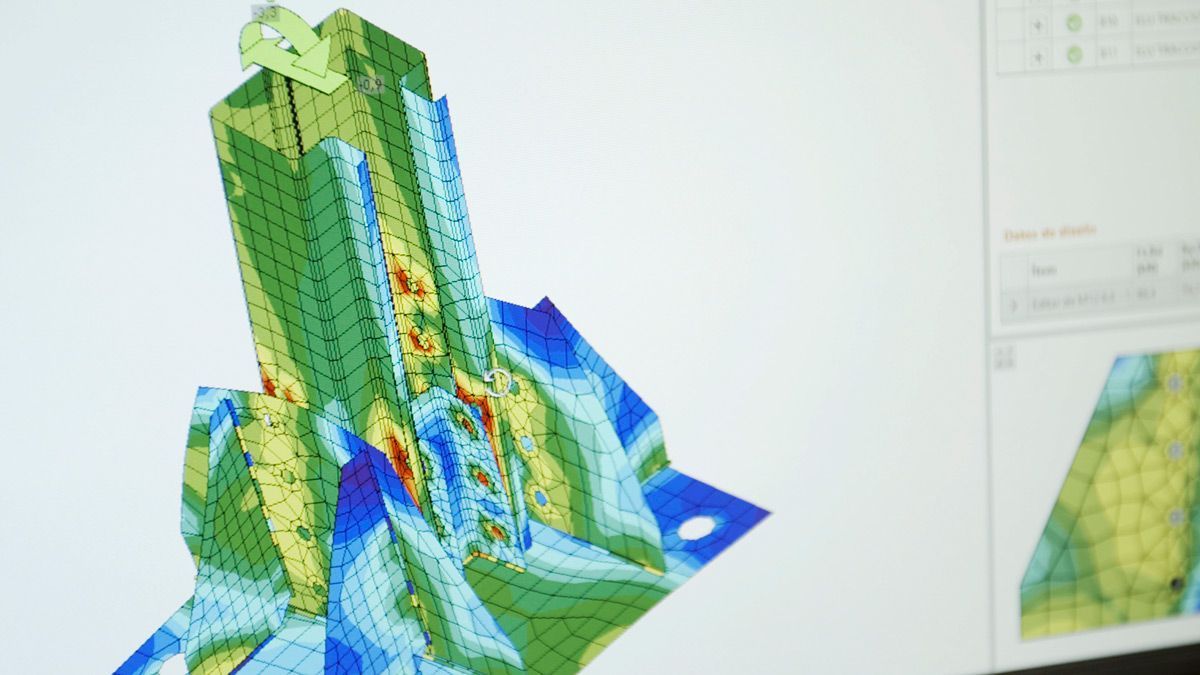
Engineering Validated in the Laboratory
Our technology centre works with an R&D laboratory at Mondragon University to test strength, behaviour and safety of racking components under real load cases. A research and simulation chair at the University of the Basque Country supports calculation models and simulation tools.
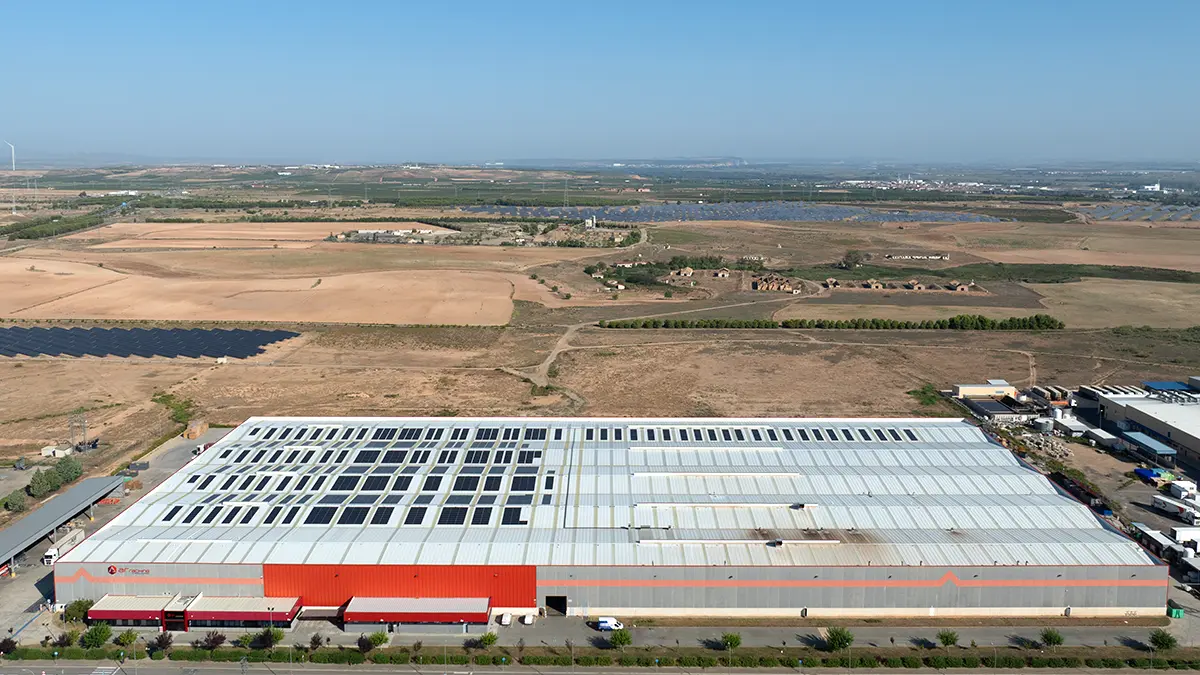
Millimetre Precision for Manual and Robotic Warehouses
Robotic production and laser-controlled processes keep frames and beams within the tolerances demanded by AS/RS integrators. That same discipline shortens installation time and improves safety in manual warehouses.
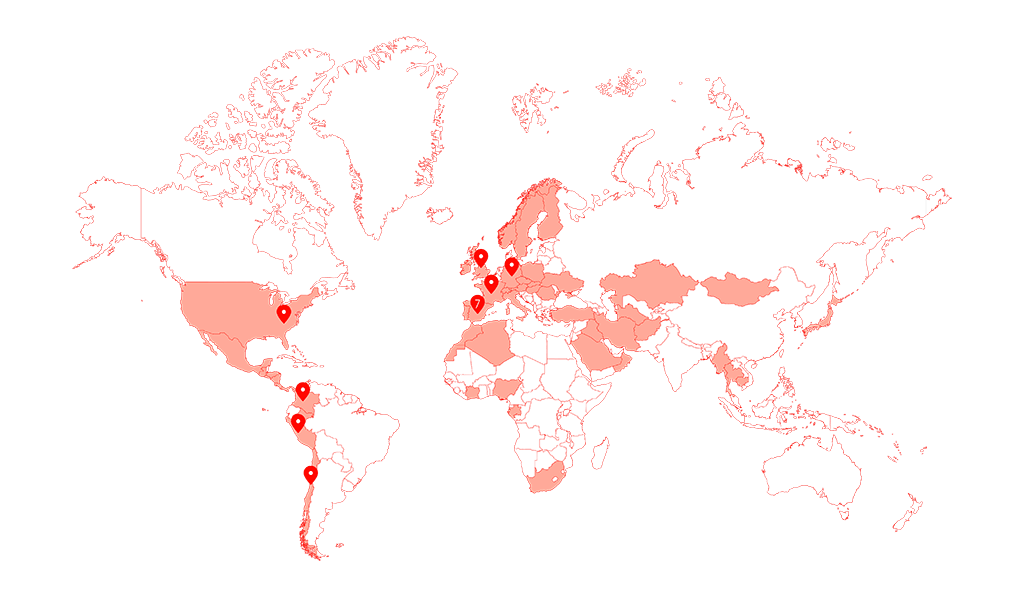
60+ Countries, 14 Branches and 70+ Distributors
Export experience matters when a Paraguay project needs phased shipments, Spanish documentation, installation supervision and replacement parts after commissioning.
 ISO 9001Quality management
 ISO 14001Environmental management
 ISO 45001Health & safety
 ISO 50001Energy management
 EN ISO 3834-2Welding quality
 EN 1090-1Structural steel components
Quality systems also include UNE EN ISO 3834-2 welding control, EN 1090-1 structural steel components and ISO 14064 verified carbon reporting, with full component traceability.



Reference Projects Relevant to Paraguayan Buyers
Cold storage, VNA and shuttle projects show how density, temperature and throughput requirements are resolved in real warehouses.
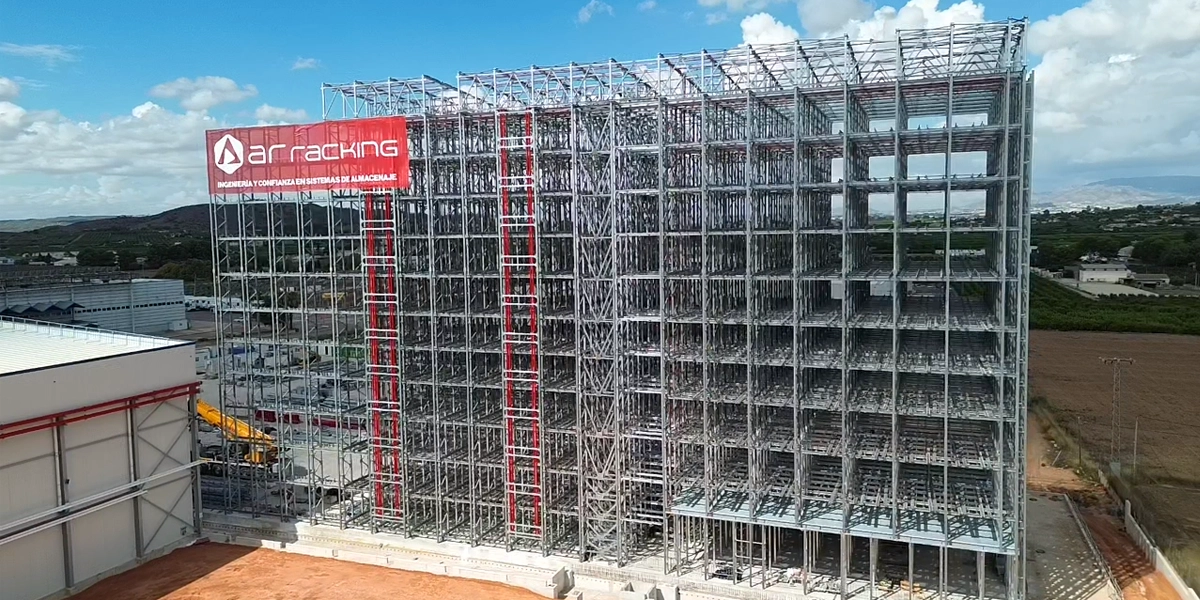
23,000 Pallet Positions at −24 °C
A self-supporting deep-freeze warehouse for a frozen fruit and vegetable processor, where the racking also carries the building envelope. This is relevant to Paraguay's growing cold-chain and export processing sectors.
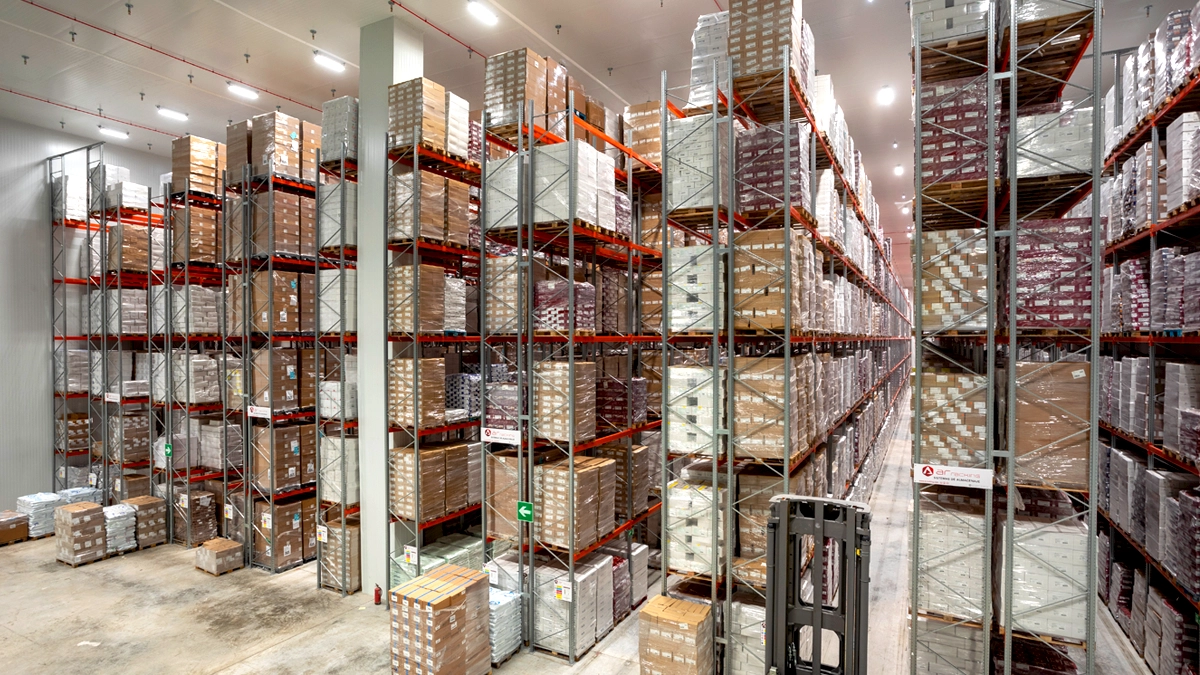
Frozen Food Cold Store with VNA Racking
Very narrow aisle racking maximised pallet positions per cooled cubic metre for a frozen products distributor, using disciplined forklift operation and precise installation tolerances.
Semi-Automated Shuttle System for a 3PL
A pallet shuttle installation for a third-party logistics operator, combining deep lanes with fast cycles. The project highlights the importance of lane design, shuttle count and WMS coordination.
Pallet Shuttle vs. Alternative Racking Systems in Paraguay
Use this comparison in early planning, then confirm the final configuration with a structural engineer and an operational throughput study.
| System | Best fit in Paraguay | Density | Access & rotation | Watch-out |
|---|---|---|---|---|
| Selective racking | Mixed SKUs, retail DCs, spare parts, supermarket distribution | Low | 100% direct access; any rotation | Requires more aisle space |
| VNA racking | High land cost, tall buildings, cold stores with disciplined forklift fleets | Medium–high | 100% direct access; any rotation | Needs VNA trucks, training and flat floors |
| Double-deep racking | 3PLs and beverage distributors with two or more pallets per SKU | Medium | Approximately 50%; LIFO per lane | Less flexible for fast SKU changes |
| Drive-in racking | Homogeneous frozen goods, seasonal bulk stock | High | Low direct access; LIFO or drive-through FIFO | Higher risk of rack impact if discipline is weak |
| Pallet shuttle racking | Cold chain, 3PL, beverage, import wholesale and high-throughput DCs | Very high | Lane-based FIFO or LIFO; semi-automated | Needs shuttle maintenance, power strategy and spare parts |
| AS/RS high-bay | Large long-term DCs with stable throughput and automation strategy | Very high | Automated, WMS-controlled | High capex and integration complexity |
Common Questions from Paraguayan Buyers
These are the questions our engineering and export teams answer most often when a buyer requests a pallet shuttle racking catalogue or wholesale quotation for Paraguay.
Are you a manufacturer or a trading company?
Alohatop Shelf LLC is a designer, manufacturer and installer of industrial racking and automated warehouse structures. Production takes place in our own automated plant, with engineering, quality control and component traceability handled in-house. This matters when a Paraguay project requires custom beam lengths, cold-store steels, installation drawings and spare parts lists.
What is the minimum order for a pallet shuttle project delivered to Paraguay?
Minimum order depends on the system, lane configuration and shipping method. Small projects can often be supplied as mixed container loads with selective racking, decking and safety accessories. For shuttle systems, the economic case improves with lane count, pallet volume and repeatable throughput. The engineering team should review the full project rather than quote a single rack section.
How do you handle shipping, export packing and customs to Paraguay?
Quotations can be prepared on EXW, FOB, CIF or delivered terms depending on the buyer's freight forwarder. We provide export packing, packing lists, commercial invoices, installation drawings and component schedules. Customs classification and import taxes should be confirmed with the importer's customs broker in Paraguay. For larger projects, phased deliveries can be aligned with civil works and installation sequence.
Can you design for Paraguay's climate even though seismic risk is lower than in Chile or Peru?
Yes. Paraguay is generally treated as a lower-seismic market than Andean countries, but racking still requires project-specific review of floor strength, anchoring, wind exposure for tall or self-supporting structures, humidity, thermal movement and drainage. Buyers should avoid copying a Chilean seismic design without rechecking the Paraguay site conditions, and should not ignore anchoring simply because seismic demand is lower.
Which pallet sizes are common in Paraguay?
Common formats include 1200 × 1000 mm, 1000 × 1200 mm, 1200 × 800 mm Euro pallets and ISO sizes such as 1100 × 1100 mm and 1219 × 1016 mm. Beam lengths and frame depths must be dimensioned for the actual pallet, load overhang and maximum weight. A 1200 × 1000 pallet loaded beyond its nominal footprint can require a different beam length than the catalogue suggests.
Can the system operate in cold storage and freezer warehouses?
Yes. We supply mobile racking, drive-in, VNA, pallet shuttle and self-supporting freezer warehouses using steels and finishes suited to temperatures down to −30 °C. For Paraguay's beef, frozen food and dairy cold chains, the design should consider condensation, frost, shuttle battery performance, maintenance access and safety signage in low temperatures.
Do you install in Asunción, Ciudad del Este and Encarnación?
Installation is coordinated through our own supervisors and a network of trained distributors. Depending on the project location and scope, we can provide installation supervision, commissioning checks, operator training and handover documentation. For projects in Asunción, Ciudad del Este, Encarnación or industrial sites in the Chaco, logistics and site access should be reviewed during the engineering phase.
What information is needed for an accurate quotation?
Send the building layout and clear height, pallet dimensions and maximum load, number of SKUs and pallets per SKU, daily throughput, forklift or automation type, temperature range, project city, target commissioning date and any available WMS or shuttle requirements. Photos of the site and floor information are helpful. With this data, our engineers can recommend selective, double-deep, drive-in, VNA, pallet shuttle or automated storage and provide a meaningful budget.

Request the Pallet Shuttle Racking Catalog
Share your building layout, pallet sizes, load weights, temperature range and target city. Our engineers will use the data to recommend a safe, space-efficient storage concept for your Paraguay warehouse.
Email: [email protected]. Include “Paraguay pallet shuttle” in your subject line so the export engineering team can route your request quickly.