Pallet Shelves and Racking Systems Selected for Paysandú Operations
The eight products below answer different local briefs: high-SKU selective storage, multi-level industrial shelving, double-deep density, logistics-centre expansion and custom selective racking. Original product URLs are retained so buyers can compare exact technical data before requesting a layout.
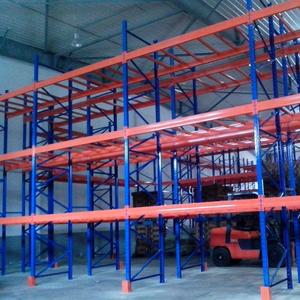
High Load Beam Pallet Racking Anti Rust Powder Coating Detachable Warehouse Rack Australian Distribution Center Goods Stacking
For high-turnover palletised goods that need 100% direct access. Anti-rust powder coating is relevant where river humidity, wash-down or condensation exposure is part of the operating brief.
- Best fitSelective storage
- Project checkBeam load + finish
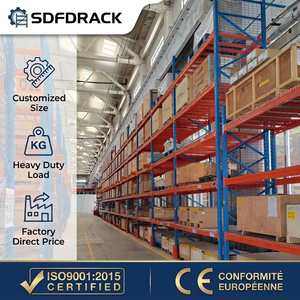
5 Layer Adjustable High Quality Heavy Duty Pallet Racks Industrial Steel Pallet Racking System High Load Warehouse Storage Rack
For multi-level storage where beam levels must change with seasonal SKU profiles. Useful for 3PL and spare-parts warehouses in Paysandú that cannot lock the layout to today's inventory.
- Best fit3PL + spare parts
- Project checkLevel adjustability
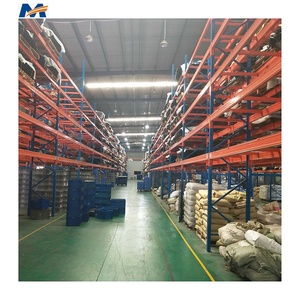
China Estantes Metalicos Heavy Duty Pallet Rack Beams Store Steel Shelving for Warehouse
For buyers expanding an existing selective system or matching beam capacity to specific pallet loads. Beam length, connector type and safety pins must be verified with the upright frame.
- Best fitSystem expansion
- Project checkConnector compatibility
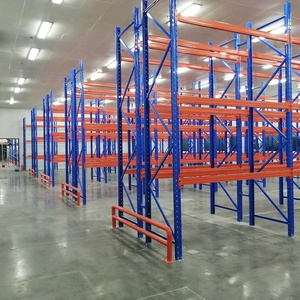
High-quality Heavy-duty Adjustable Steel Shelving with 5 Tiers for Industrial Warehouse Storage Solutions
For hand-loaded cartons, spare parts and packaged agro-inputs where full pallet access is less important than shelf-level organisation and quick SKU picking.
- Best fitCarton + parts picking
- Project checkShelf load per level
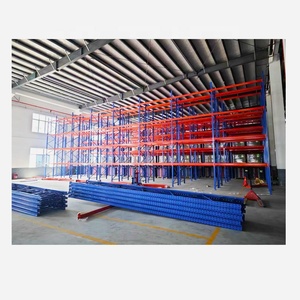
Warehouse Racks Double Deep Adjustable Pallet Storage Rack Beam Shelving Steel Heavy Duty Industrial Shelf Racking
For warehouses holding at least two pallets per SKU and prioritising floor-space density. Double-deep cuts aisle count but introduces LIFO access per lane.
- Best fit3PL + repeat SKUs
- Project checkLane depth + LIFO
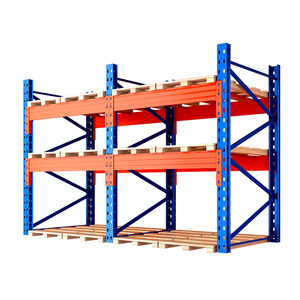
Industrial Heavy Duty Storage Shelves System Metal Rack Stacking Units Warehouse Pallet Racking
For heavy-duty industrial storage and staging around processing, packaging or machinery spares. Final capacity must be checked against the actual pallet weight and beam profile.
- Best fitProcessing + MRO
- Project checkUniform load + point load
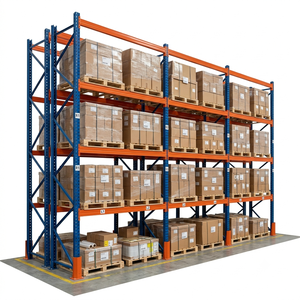
Heavy Duty Pallet Rack Industrial Warehouse Shelving Adjustable Steel Storage Rack System for Logistics Center
For logistics centres serving cross-border staging, port buffers and regional distribution where adjustable beams and a clear expansion path are essential.
- Best fitPort + border staging
- Project checkAisle + expansion plan
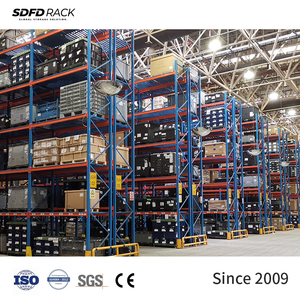
Heavy Duty Pallet Rack System Multi-layer Customized Metal High Load Industrial Warehouse Storage Steel Selective Pallet Racking
For custom layouts with irregular clear height, mixed pallet sizes or future automation. The selective structure can be engineered around actual column grids, slabs and fire services.
- Best fitCustom engineered layouts
- Project checkClear height + column grid
Comparing import quotes for Paysandú? Send pallet sizes, maximum load, clear height and temperature range. The catalog request can start a layout review before a formal quotation.
Get CatalogHighly automated production centre for racking and shelving systems
Annual steel production capacity supporting export-scale projects
Warehouse projects delivered across industrial and logistics sectors
Countries served, with more than 90% of production exported
Paysandú Is a Specification Market, Not a Generic “Pallet Shelves” Market
Paysandú sits on the Uruguay River and connects western Uruguay with Argentina through the General Artigas Bridge. That geography changes warehouse design. A pallet shelving project here may support citrus and berry cold chains, rice and soy inputs, meat and dairy processing, timber and construction materials, port staging, 3PL contracts or cross-border distribution. The common phrase warehouse pallet shelves covers very different systems: selective racking for high SKU access, double-deep for density, drive-in or shuttle for homogeneous stock, and picking shelving for carton-level fulfilment.
For a buyer in Paysandú, the cheapest quote per beam is rarely the lowest total cost per safe pallet position. Imported racking must match the building slab, forklift aisle, pallet quality, sprinkler layout, humidity and condensation profile, installation supervision, spare-parts plan and local documentation. A system that is hard to inspect or impossible to expand will cost more over ten years than a properly engineered selective layout with a clear future.
Information gain: a quote is not comparable until these elements are frozen
- Pallet footprint, load, overhang, stack pattern and damaged-pallet policy.
- Clear height, beam levels, slab flatness, concrete strength and anchor design.
- Forklift type, aisle width, VNA or AGV/AMR interface and traffic flow.
- Temperature range, humidity, wash-down, condensation and finish specification.
- Fire strategy, sprinkler obstruction, smoke ventilation and local permit review.
- Installation scope, supervision, load signage, operator training and spare parts.
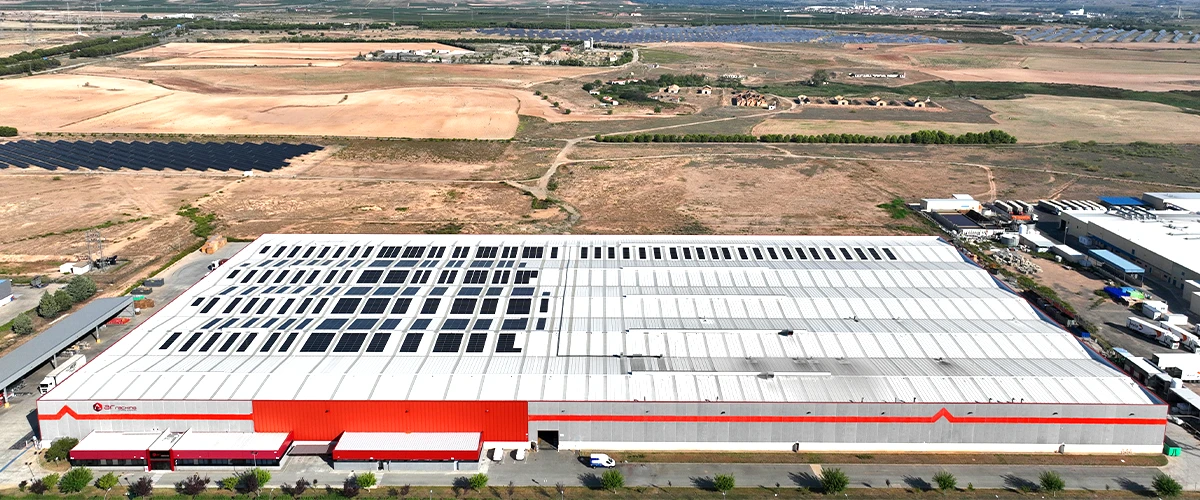
Manufacturer, Exporter and Engineering Partner Behind the Catalog
The advantage is not a longer product list. It is control over engineering, steel production, testing, export packing and installation supervision — the evidence a serious Paysandú buyer should audit before placing a high-value racking order.
Factory Control, Not Reseller Margin
Alohatop Shelf designs, calculates, manufactures and installs metal racking. A 35,000 m² highly automated production centre, more than 100,000 t of annual capacity and over 90% export share provide one accountable partner from steel coil to final load sign.
R&D Validated in Laboratory
Our technology centre works with an R&D laboratory at Mondragon University to test strength, behaviour and safety of racking components. A research and simulation chair at the University of the Basque Country develops calculation models used in frames, beams and connections for demanding projects.
Automated Precision for AS/RS or Manual Warehouses
Robotic production and laser-controlled processes keep every frame and beam within the tolerances that automated stacker cranes, shuttles and AMR-ready layouts require. The same precision helps manual warehouses install faster and inspect more predictably.
Global Project Network and Warranty
Systems are backed by a 5-year warranty, ISO 9001, ISO 14001, ISO 45001, ISO 50001, EN ISO 3834-2 welding quality, EN 1090-1 and ISO 14064 verified carbon reporting. Our network includes 14 own branches and 70+ distributors worldwide.
Where Pallet Shelving Creates Value in and Around Paysandú
Paysandú's economic role is shaped by agro-industry, river logistics and its border position with Argentina. The right storage system depends less on the product label and more on how pallets move through the building.
Citrus, Berry and Horticultural Cold Chains
Cold-store racking must preserve air flow around pallets, allow inspection and keep access for fast orders. Selective, VNA and mobile systems help balance pallet positions against cooled cubic metres.
Meat, Dairy and Refrigerated Processing
Protein and dairy operations need durable finishes, clear load signage and layouts that separate raw, packaged and dispatch flows. Stainless or protected finishes can be specified where wash-down is routine.
Rice, Soy and Bagged Agro-Inputs
Bagged seed, fertiliser and grain inputs create concentrated loads, dust and humidity exposure. Beam capacity, decking choice and forklift handling must be checked against actual bag stacks, not only nominal pallet weight.
Port, Border and Cross-Border Distribution
Paysandú's river port and road connection to Argentina create staging, consolidation and customs-buffer requirements. Adjustable selective racking supports changing SKU mixes better than fixed high-density systems.
3PL, Retail and E-Commerce Fulfilment
Multi-client warehouses need reconfigurable beams, clear labelling and picking shelves that can absorb new contracts. Double-deep is attractive only when each SKU has enough pallet depth to justify LIFO access.
Timber, Construction and Industrial MRO
Long or awkward goods, machinery spares and construction materials often need a mixed layout: heavy-duty pallet racking, industrial shelving and a dedicated cantilever or oversize zone. Plan expansion before the first upright is anchored.
Trends Shaping Paysandú Warehouse Investment in 2026–2027
These trends do not replace a structural calculation. They explain why a warehouse pallet shelving decision in Paysandú increasingly includes cold-chain performance, automation readiness and total cost per pallet position.
Cold-Chain Cost per m³
Energy costs make cooled cubic metres too expensive for wide, fixed aisles. VNA, mobile and high-density systems are evaluated against the cost of refrigeration, not only steel.
River and Road Logistics Integration
As western Uruguay handles more consolidation and border trade, warehouses need staging lanes, clear dispatch buffers and racking that can survive changing throughput without a full rebuild.
Flexibility Against Regional Volatility
Trade flows with Argentina and Brazil can shift quickly. Adjustable selective racking and modular picking shelving reduce the risk of locking a building into one customer profile.
Rack Safety and Inspection Culture
Insurers, safety managers and operators increasingly expect periodic inspection, impact protection, load signs and a spare-parts plan. Damaged uprights are a maintenance issue, not a cosmetic one.
Automation-Ready Manual Warehouses
Even when a Paysandú warehouse starts manual, the layout should anticipate WMS, ERP, AGV/AMR or shuttle upgrades. Straightness, tolerance and aisle discipline matter earlier than the robot.
Land and Building Constraints
Industrial land and clear height are not infinite. Double-deep, VNA and multi-tier picking systems are compared when footprint growth is slower than SKU growth.
How to Compare Warehouse Pallet Shelves for a Paysandú Warehouse
The first decision is direct access versus density. A citrus packing operation with many SKUs and fast orders usually needs selective or VNA racking. A frozen processor with long production runs may benefit from drive-in, mobile or shuttle storage. The second decision is structural: pallet, slab, aisle, fire strategy and installation must be treated as one system.
| System | Best-fit Paysandú scenario | Relative density | Direct access | Rotation rule | Specification caution |
|---|---|---|---|---|---|
| Selective racking | Mixed SKUs, citrus cartons, dairy, retail and 3PL contracts | 100% of pallets | Any | More aisle space; protect uprights in fast-moving zones. | |
| Very narrow aisle | Cold stores and buildings where cooled volume is expensive | 100% of pallets | Any | Requires VNA equipment, floor tolerance and operator discipline. | |
| Double-deep | 3PL or food warehouses with at least two pallets per SKU | Approx. 50% | LIFO per lane | Only pays when SKU depth is stable; re-slotting can be costly. | |
| Drive-in | Homogeneous frozen goods, seasonal stock and bulk pallet runs | Low | LIFO or drive-through | Inside rails and roof clearance need careful forklift planning. | |
| Mobile racking | Refrigerated warehouses where every cooled cubic metre matters | 100% via one open aisle | Any | Floor, drive system and maintenance access must be designed early. | |
| Pallet shuttle / AS/RS | High-throughput DCs, deep cold lanes and future automation | Per lane or automated | FIFO/LIFO or WMS | Interface, tolerances, WMS logic and service plan are project-critical. |
Density is relative to selective racking in the same footprint. In Uruguay, seismic risk is generally lower than in Chile or Peru, but racking remains a structure: slab, anchorage, wind where relevant, fire strategy and local engineer verification still matter.
Certifications, Testing and Warranty Behind the Storage System
For an exporter, certifications are not decorative badges. They support a procurement file that may be reviewed by a warehouse owner, insurer, installer, local engineer or corporate safety team in Uruguay.
ISO 9001
Quality management
ISO 14001
Environmental management
ISO 45001
Health and safety
ISO 50001
Energy management
EN ISO 3834-2
Welding quality
EN 1090-1
Structural steel components
ISO 14064
Verified carbon reporting
5-Year Warranty
Storage system assurance
Global Project Lessons That Transfer to Paysandú
Cold stores, VNA layouts, mobile racking and shuttle systems in other markets show what changes when pallet density, temperature and throughput rise. The engineering logic transfers even when local codes and building geometry differ.
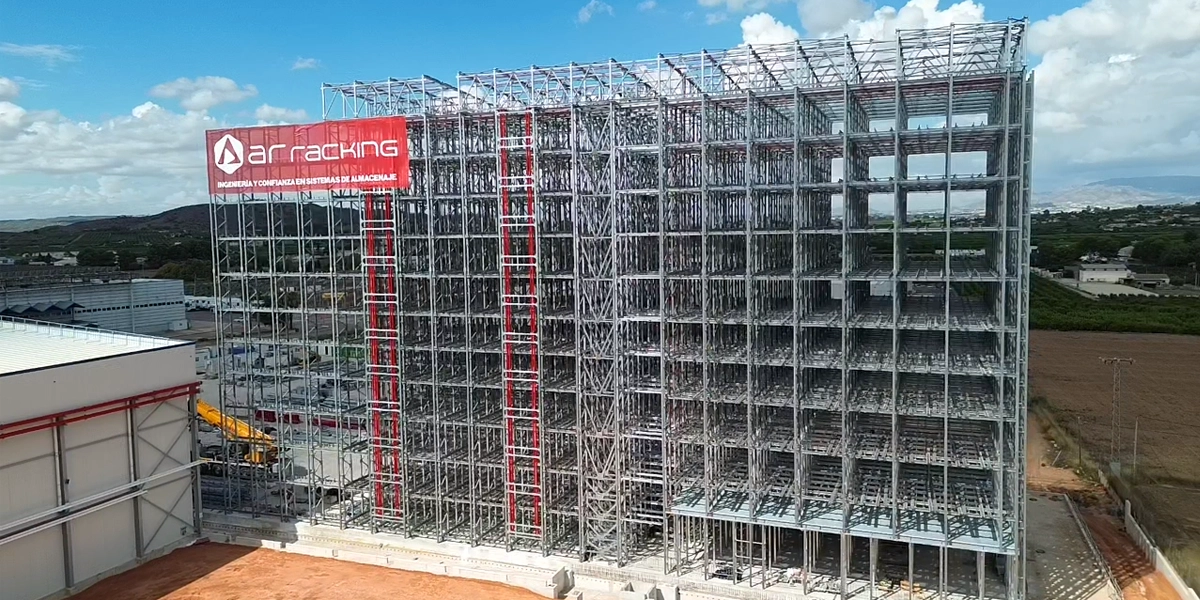
23,000 pallet positions at −24 °C in a self-supporting freezer
A clad-rack automated freezer where the racking also carries the building envelope — a reminder that cold-store racking is a structural system, not a shelf retrofit.
Read engineering insight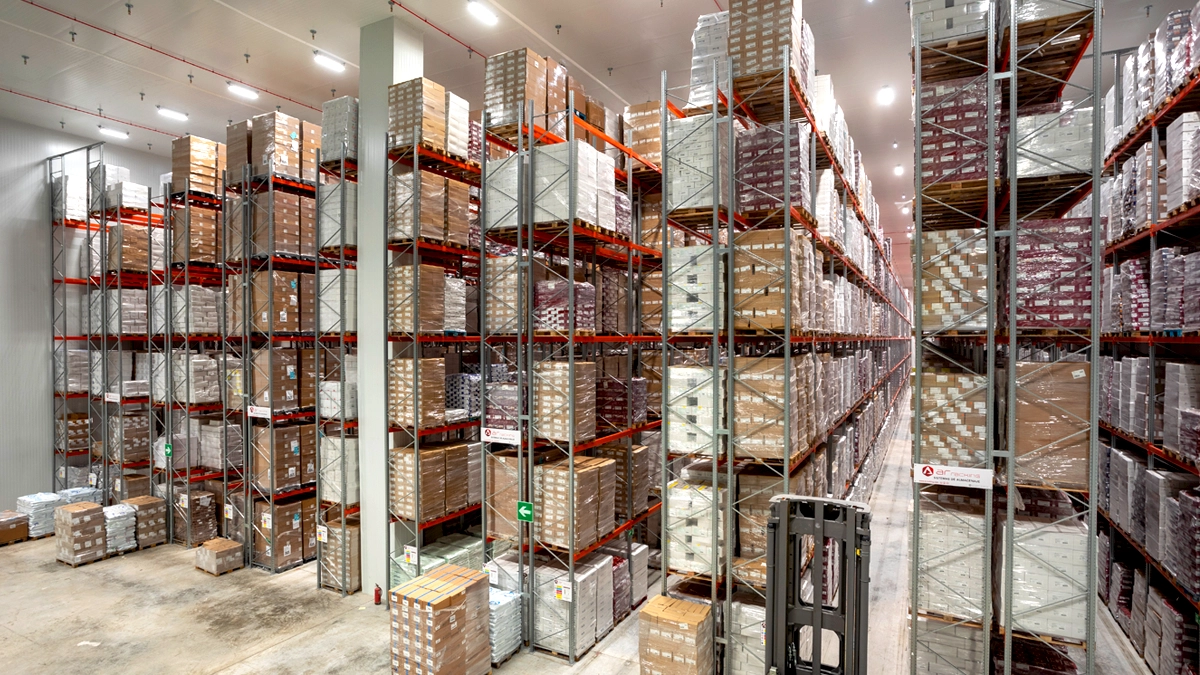
Very narrow aisle racking for a frozen food cold store
VNA increases pallet positions per cooled cubic metre, but it demands floor tolerance, equipment discipline and a layout that cannot be improvised after installation.
Read engineering insight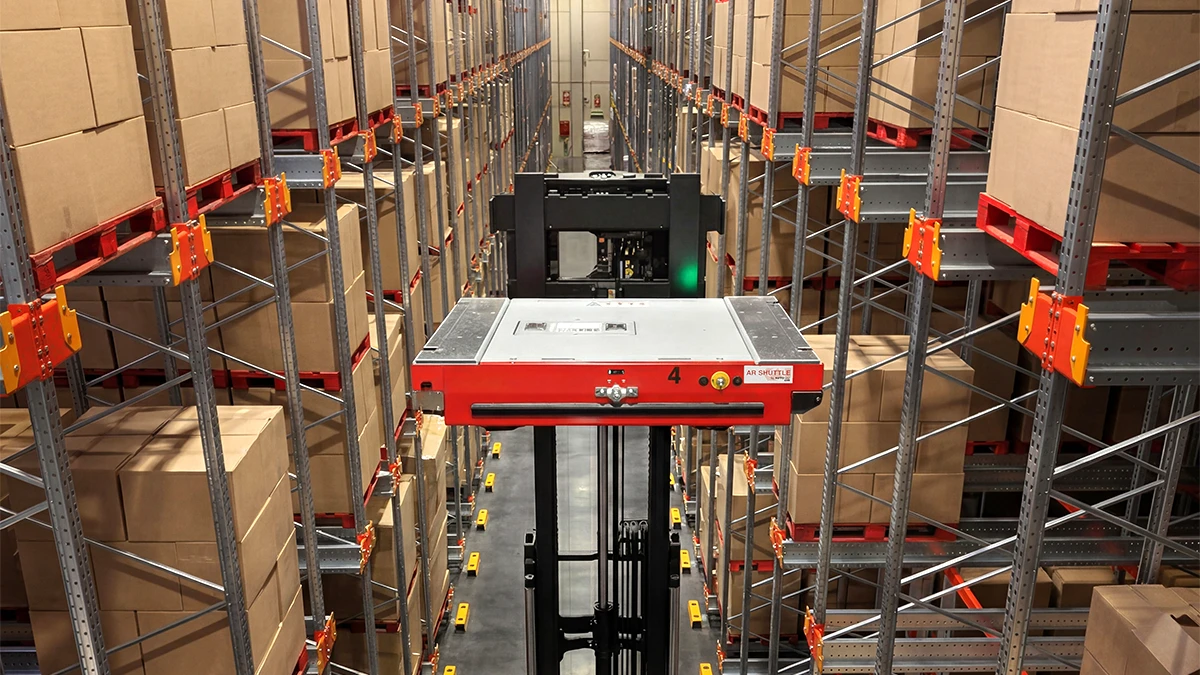
Pallet shuttle system for a third-party logistics operator
Semi-automated deep lanes can deliver density and fast cycles, but only when the SKU profile, WMS logic and maintenance plan support the shuttle model.
Read engineering insight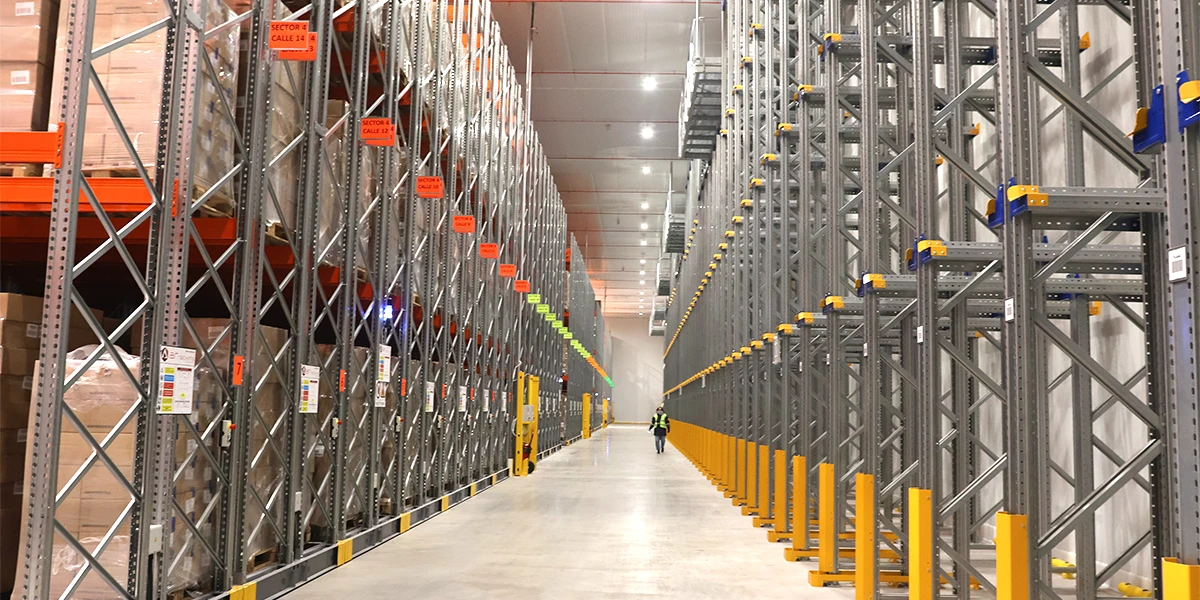
Mobile pallet racking for a refrigerated warehouse
Mobile bases remove fixed aisles and keep direct access through one open aisle — an attractive option where refrigeration cost dominates the business case.
Read engineering insightCommon Local Questions About Warehouse Pallet Shelves and Racking
These are the practical questions warehouse owners, 3PL managers and importers ask when comparing a local supplier, a regional distributor and a direct exporter for a Paysandú project.
Can you supply and export warehouse pallet shelves to Paysandú, Uruguay?
Yes. Alohatop Shelf designs, manufactures and exports racking and shelving systems, with delivery coordinated to Uruguayan ports and onward transport to Paysandú. The quotation should state Incoterms, packing, port of discharge, inland delivery scope and whether installation supervision is included. For a border or river-logistics operation, confirm the unloading equipment and site access before production is released.
What is the difference between “pallet shelves” and pallet racking?
Buyers often use “pallet shelves” as a search term for any industrial storage structure. Technically, pallet racking is usually a forklift-loaded system with upright frames, beams and decks designed for palletised loads. Industrial shelving is more often hand-loaded with cartons, spare parts or packaged goods. Some projects combine both: selective pallet racking for reserve stock and picking shelving for order preparation.
Which pallet sizes should I send for a Paysandú layout?
Send the exact pallet drawing or measured footprint, including the 1200×1000 mm format widely used in Latin America, the 1200×800 mm Euro pallet, the Brazilian PBR 1000×1200 mm format, and ISO sizes such as 1100×1100 mm and 1219×1016 mm where they appear in your supply chain. Include load weight, stack height, overhang limit and whether pallets are inspected or repaired before use.
How many pallet positions can fit in my warehouse?
The answer depends on clear height, slab conditions, upright depth, beam levels, aisle width, forklift type, sprinkler clearance and the required number of SKUs. A 10 m building can hold fewer usable levels than the headline height suggests once lift clearance and fire services are considered. A layout drawing is more reliable than a generic “positions per square metre” estimate.
Is seismic design required for racking in Uruguay?
Uruguay has lower seismic exposure than Chile, Peru or Colombia, but racking is still a structure and must be verified for the actual site, slab, anchorage, wind where relevant and building use. Self-supporting warehouses and high-bay systems need particular attention. The final design should be reviewed against the project brief and by a qualified local engineer where required.
Can the same system work in cold storage and freezer rooms?
Yes, but cold-store racking requires suitable steels, finishes and detailing for temperatures down to −30 °C, condensation, ice build-up and thermal movement. For citrus, meat, dairy, seafood or frozen food operations in Paysandú, the racking layout should also support air flow, defrost cycles, hygiene routines and emergency access.
How do you control quality before shipment to Uruguay?
Production is managed under ISO 9001, with welding quality aligned to UNE EN ISO 3834-2 and structural steel components under EN 1090-1. Every upright and beam can be traced from production batch to installation. The pre-shipment package can include approved drawings, inspection records, packing lists and load signs so the receiving team and local installer work from the same data.
What is the usual project process from inquiry to handover?
A typical sequence is: operational brief, CAD layout and system recommendation, structural verification, commercial quotation, approved production drawings, manufacturing, factory inspection, export packing, shipping, site preparation, installation and handover. The exact schedule depends on drawing approvals, steel finish, quantity, shipping route and installation resources in Uruguay.
Do you provide installation support in Paysandú?
Export projects can include installation drawings, method statements, supervisor support and coordination with trained local teams. The best scope depends on the project size and the availability of experienced racking installers in Uruguay. Installation quality must be checked against plumb tolerance, anchor torque, beam locking, load signs and protection before the warehouse starts operating.
What information is needed to receive a useful catalog and quotation?
Send a building layout with clear height, column grid and slab details; pallet dimensions and maximum load; number of SKUs and pallets per SKU; daily throughput; forklift or automation type; temperature range; project city in Uruguay; and target installation date. With that information, our engineers can recommend a safer and more space-efficient system instead of quoting isolated components.
Request the Catalog and Put Your Pallet Data in Front of an Engineer
Share your building layout, pallet sizes, load weight, clear height, temperature range and throughput target. The right warehouse pallet shelves system for Paysandú is the one that can be installed safely, inspected easily and expanded without rebuilding the warehouse.
Get Catalog Engineering contact: [email protected]