China Top Storage Racking Manufacturer & Suppliers
Engineered pallet racking, industrial warehouse shelving, cold-store systems and automated storage structures—designed, calculated, manufactured and delivered with full project traceability for global buyers.
8 Storage Racking Products for High-Intent Warehouse Buyers
The eight product families below map directly to common sourcing intents: customized safety racking, heavy-duty selective pallet racks, medium-duty warehouse racks, retail shelving, boltless shelving and adjustable multi-tier systems. Every original product link is preserved for fast specification review.
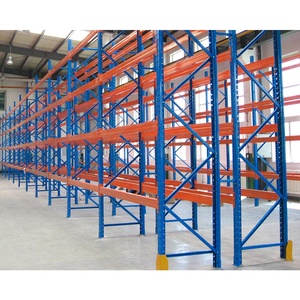
Customized Pallet Rack for Warehouse with Rack Safety
Best for buyers who need project-specific beam, upright and accessory dimensions, plus visible safety features such as protectors, guards and load signage.
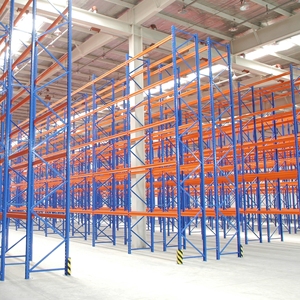
Low Price Custom 2-6 Level High Quality Pallet Racking Warehouse Storage Shelf System Industrial Stack Heavy Duty Pallet Racks
A flexible selective rack option for warehouses that want 2–6 storage levels, heavy-duty pallet support and a cost-controlled structure for standard pallet flows.
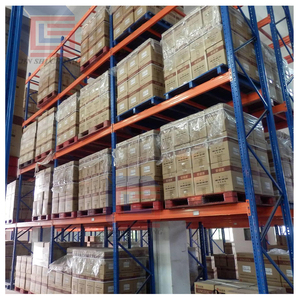
Industrial Heavy Duty Steel Pallet Rack Warehouse Shelving System for Storage, Distribution Center and Factory Use
Engineered for distribution centres, factories and mixed pallet operations where direct access to every pallet and a rigid, repairable frame are important.
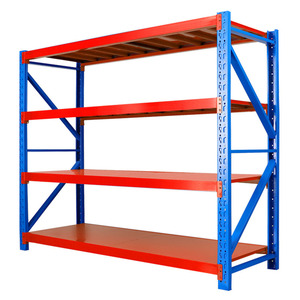
Medium/Heavy Duty Storage Equipment Warehouse Industrial Powder Coating Cargo Steel Iron Tool Supermarket Stacking Storage Racks
Powder-coated steel storage for industrial tools, supermarket backrooms and mixed cargo where medium-to-heavy loads need a durable, clean finish.
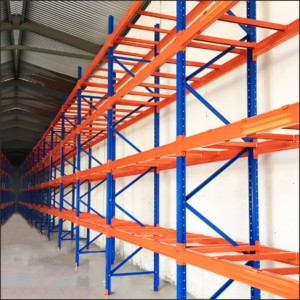
Heavy Duty Store Shop Display Shelving Tiers Garage Racking Shelves Steel Warehouse Shelf Metal Storage Rack Shelves Storage
A practical shelving choice for retail displays, garages, workshops and warehouse stores that need versatile tiers and visible stock.
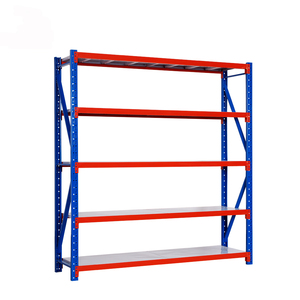
Dongguan Manufacturer Factory 500kg Loading Capacity Medium Duty Warehouse Rack for Sale
Factory-direct 500 kg medium-duty warehouse rack for buyers who want a right-sized, economical solution for cartons, spare parts and lightweight pallet loads.
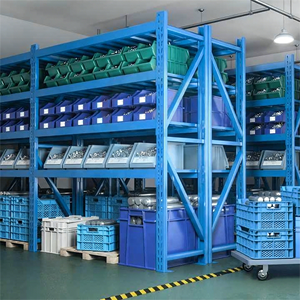
High Quality Durable Corrosion Protected Boltless Adjustable Warehouse Light Duty Industrial Metal Shelving Metal Storage Racks
Boltless light-duty industrial shelving with corrosion protection—ideal for fast assembly, adjustable storage and maintenance-friendly layouts.
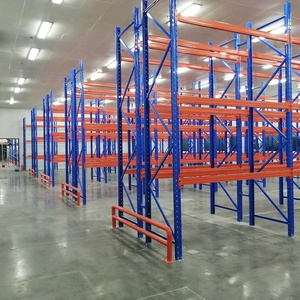
High-quality Heavy-duty Adjustable Steel Shelving with 5 Tiers for Industrial Warehouse Storage Solutions
A 5-tier adjustable steel shelving system for industrial warehouse storage, offering straightforward installation and reconfigurable shelf levels.
What a China Storage Racking Manufacturer Must Prove Before You Buy
Searching for a China top storage racking manufacturer is easy; validating one is not. A warehouse rack is a structural product, not a commodity shelf. It carries pallet loads, interacts with forklifts or stacker cranes, and must satisfy the building, fire, seismic, cold-chain and operating rules of the destination market. For procurement teams, the real question is whether the supplier can convert your pallet data and throughput into a safe, buildable and repairable system.
That is why our sales-engineering process starts with the operating profile, not a product photo: pallet size and weight, load application, SKU mix, throughput, lift equipment, clear height, temperature, floor condition, local code and installation city. The result is a layout that can be reviewed by your warehouse management, civil works and safety teams before steel is ordered.
Information gain for buyers: compare suppliers by cost per usable pallet position, not by catalogue price. A selective rack with direct access, a very narrow aisle layout, a pallet shuttle lane and an AS/RS structure solve different problems. The safest purchase decision starts with the operating profile and ends with a documented calculation.
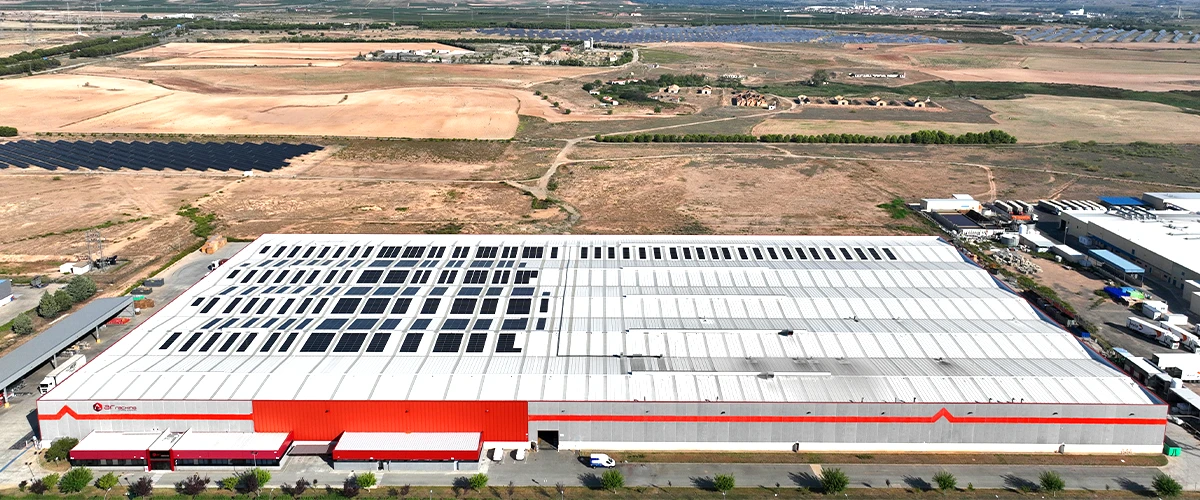
A Full-Process Storage Racking Manufacturer, Not a Trading Intermediary
Alohatop Shelf designs, calculates, manufactures and supports installation for industrial racking, picking shelving, cold-storage and automated warehouse structures. Our operating model is built for buyers who need one accountable partner from engineering to load sign.
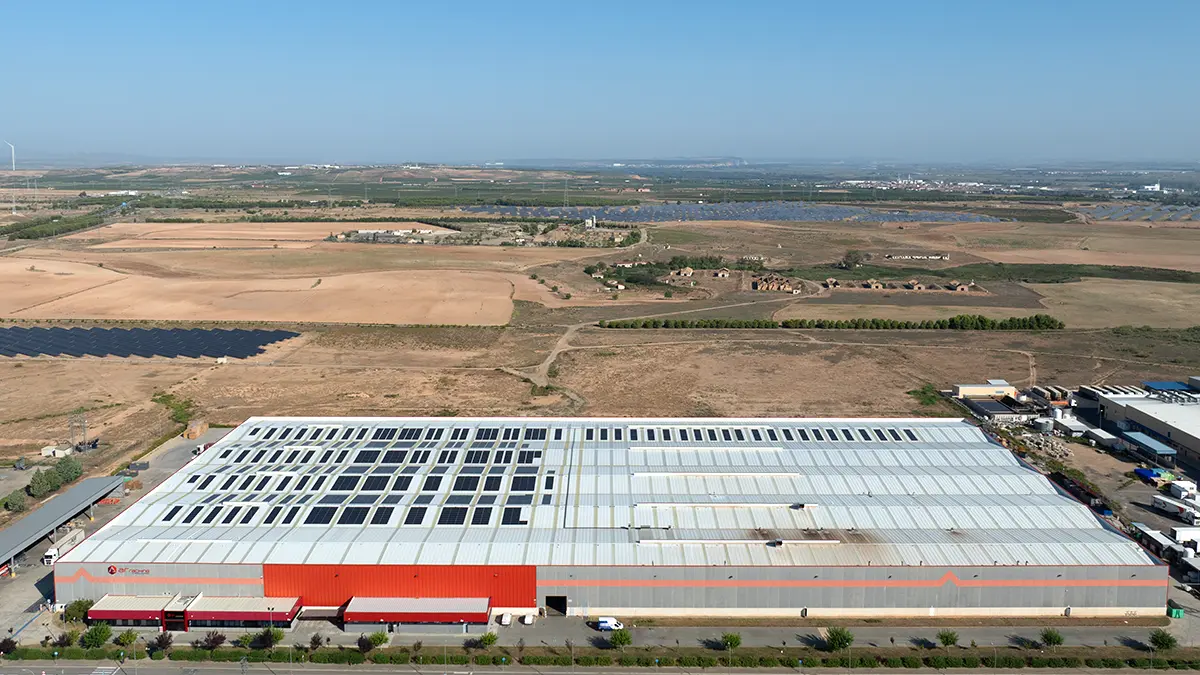
Manufacturing control creates procurement certainty
Our 35,000 m² highly automated production centre supports more than 100,000 t of annual steel production capacity. More than 90% of output is exported, with logistics experience for major ports such as Santos, Callao, San Antonio, Cartagena and Buenos Aires.
Every upright and beam can be traced from production batch to installation. Systems are backed by a 5-year warranty, and our global service network includes 14 own branches and more than 70 trusted distributors.
- Full traceability: component batch records support inspection, maintenance and future expansion.
- Project engineering: layouts and calculations are aligned with pallet patterns, equipment and local code.
- Export packaging: steel components are protected for sea freight and site handling.
Engineering-Led Customization
Every project is calculated around pallet dimensions, load weight, seismic zone, cold-store temperature and forklift or automation interface requirements.
Automated Steel Production
Robotic production and laser-controlled processes keep frames and beams within tight tolerances for manual warehouses, shuttles and AS/RS integrations.
R&D and Laboratory Testing
Our technology centre works with the R&D laboratory at Mondragon University and a research and simulation chair at the University of the Basque Country.
Certified Quality and Safety
Quality management, welding quality, structural steel components and environmental controls are supported by documented systems and batch traceability.
Global Export Delivery
Export project coordination, port logistics, packing lists and installation documentation reduce risk for overseas buyers and regional distributors.
Lifecycle Support
From layout study and installation supervision to technical inspection, maintenance planning and spare components, one team stays accountable after delivery.
Why a Racking Supplier Must Be a Calculation Partner
Rack safety is decided by connections, bracing, base plates, anchors and load distribution—not by the thickness of one visible part. High-value projects need calculations that can survive review by your engineer, insurer, building authority and automation integrator.
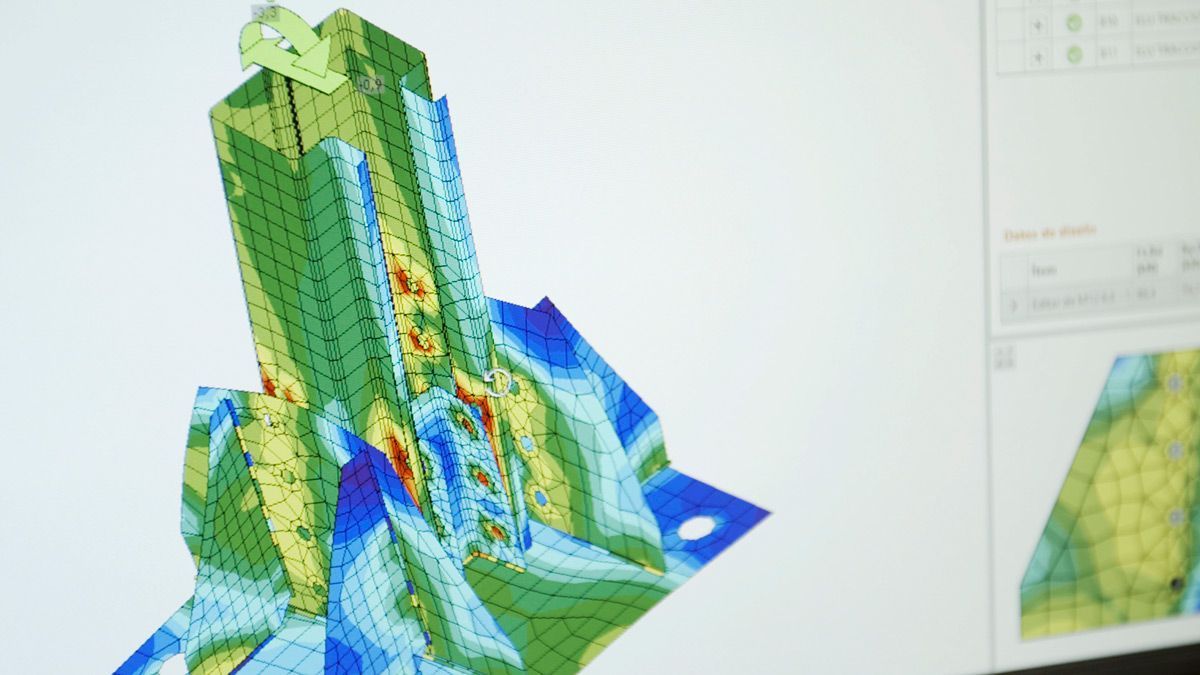
From finite-element simulation to local code review
Our technology centre works with an R&D laboratory at Mondragon University to test the behaviour, strength and safety of racking components under real load cases. A research and simulation chair at the University of the Basque Country supports calculation models and simulation tools. We apply this knowledge to finite-element simulation of frames, beams and base connections, physical load and cyclic testing of new profiles, and design reviews against European and local codes.
For seismic markets, design may be checked against standards such as NCh2369 and NCh433 in Chile, E.030 in Peru, NSR-10 in Colombia, NEC in Ecuador, ABNT NBR 15524 in Brazil and INPRES-CIRSOC 103 in Argentina. Typical measures include reinforced uprights and bracing, heavier base plates and anchors, row spacers and reduced beam deflection limits.
| System | Best for | Density | Direct access | Stock rotation |
|---|---|---|---|---|
| Selective pallet racking | High SKU mix, retail DCs, food and beverage | 100% of pallets | Any | |
| Very narrow aisle racking | Expensive land, cold stores, tall buildings | 100% of pallets | Any | |
| Double-deep racking | 3PL operations with multiple pallets per SKU | 50% | LIFO per lane | |
| Drive-in racking | Homogeneous products and frozen goods | Low | LIFO or FIFO drive-through | |
| Mobile pallet racking | Cold storage and high value per cubic metre | 100% through one open aisle | Any | |
| Pallet flow racking | Perishables and fast-moving inventory | Per lane | FIFO | |
| Push-back racking | Manufacturing buffers and mid-volume SKUs | Per lane | LIFO | |
| Pallet shuttle racking | High-throughput DCs and deep cold lanes | Per lane | FIFO or LIFO | |
| AS/RS and self-supporting | Large DCs, 24/7 operations and deep freeze | Automated | WMS controlled |
Density is relative to selective racking in the same footprint. In seismic zones, very tall or very dense configurations require specific structural verification and anchoring design.
Certifications That Reduce Procurement Risk
Storage systems are designed and manufactured under international management standards, backed by a 5-year warranty and full component traceability. ISO 14064 verified carbon reporting is also available for buyers with sustainability scorecards.
What Warehouse Racking Buyers Will Compare Next
Procurement is moving away from lowest-price comparisons toward total cost, compliance and lifecycle performance. These trends matter for distributors, 3PLs, cold-chain operators and manufacturers planning new capacity.
Total Cost of Ownership
Buyers will compare engineering hours, installation speed, repair access, spare-part availability, inspection plans and cold-store energy use. A low steel price with poor tolerance can become a costly automation or safety problem.
Compliance-First Procurement
Seismic codes, local anchoring rules, fire strategy and cold-store specifications will be requested earlier in the RFQ. Suppliers who can document calculations and traceability will be shortlisted faster.
Automation-Ready Interfaces
Even manual warehouses will request interfaces for future pallet shuttles, AMRs or AS/RS. Beam deflection limits, upright tolerances and floor fixing details will be reviewed against automation needs.
Cold-Chain Density
Fruit, meat, seafood and frozen-food exporters will keep investing in VNA, mobile, drive-in and shuttle systems that reduce cooled cubic metres per pallet and protect product quality.
Verified Sustainability
ISO 14064 carbon reporting, recycled steel content, finish durability and repairability will appear in supplier scorecards, especially for global retailers and multinational 3PLs.
Supplier Consolidation
Buyers will prefer one partner for design, manufacture, installation, inspection and maintenance, reducing coordination risk across countries and multiple warehouse sites.
Where Storage Racking Technology Is Heading
The next generation of racking will be judged by more than static load capacity. It will be evaluated for seismic resilience, automated interface tolerance, installation speed, corrosion protection and long-term repairability.
High-Strength Steel Profiles
Optimized profiles and beam-to-upright connections deliver more load per kilogram, lower freight cost and faster installation without compromising structural safety.
Seismic and Impact Resistance
Reinforced bracing, heavier base plates, anchors, row spacers and forklift protection are becoming standard specifications in seismic and high-traffic sites.
Higher-Density Systems
Pallet shuttle, VNA, mobile and flow racking will grow where land cost, cooling cost and throughput pressure make every cubic metre valuable.
Self-Supporting and AS/RS
Rack-supported buildings and automated structures will be specified with tighter tolerances for stacker cranes, shuttles and robotic handling equipment.
Modular Boltless Shelving
Fast-install, adjustable shelving will remain important for e-commerce, spare parts, garages and retail backrooms where layouts change frequently.
Digital Engineering Proof
BIM, 3D warehouse layouts, load calculations and batch traceability will become buyer-facing project documents, not back-office paperwork.
How to Vet a China Racking Manufacturer: Six Checks That Protect Your Project
Use these checks before you compare final quotations. A supplier that can answer them clearly is easier to integrate into your warehouse, procurement and safety processes.
Ask for Calculations and Drawings
Request load calculations, frame and beam specifications, anchoring details and layout drawings. The quotation should describe the system, not only the price per tonne.
Verify In-House Manufacturing
Confirm whether the supplier controls roll forming, welding, powder coating and quality inspection. A full-process manufacturer provides clearer accountability and lead-time control.
Review Certifications and Traceability
Check ISO 9001, ISO 14001, ISO 45001, welding quality and structural steel certification. Ask how batches are traced from production to shipment.
Check Seismic and Cold-Store Experience
Ask for references in seismic zones and freezer warehouses. Reinforced bracing, steel grades, finishes and anchoring details change with the operating environment.
Confirm Export Packing and Installation Support
Clarify packing standards, loading plans, documents, installation drawings and supervisor availability. Good export execution prevents site delays and missing components.
Compare Warranty, Inspection and Spares
Review the warranty scope, inspection programme, replacement-parts availability and future expansion policy. Lifecycle support protects uptime and safety after handover.
Storage Racking Procurement FAQ
Direct answers to the questions warehouse, logistics and procurement managers ask most often when comparing industrial racking suppliers.
Are you a manufacturer or a trading company?
We are a full-process storage racking manufacturer. Our 35,000 m² highly automated production centre, engineering team and quality system cover design, calculation, manufacturing and installation support. This gives buyers direct accountability instead of multiple layers of reselling.
What information is needed for an accurate quotation?
Send the building layout with clear height, pallet dimensions and maximum load weight, number of SKUs and pallets per SKU, daily throughput, forklift or automation type, temperature range and project city. Our engineers use this data to propose the most efficient storage system.
Can you design racking for seismic zones?
Yes. Racking can be calculated against local seismic codes and site soil conditions, such as NCh2369 and NCh433 in Chile, E.030 in Peru, NSR-10 in Colombia, NEC in Ecuador, ABNT NBR 15524 in Brazil and INPRES-CIRSOC 103 in Argentina. Typical measures include reinforced uprights and bracing, heavier base plates and anchors, row spacers and reduced beam deflection limits.
Can the racking operate in cold storage and freezer warehouses?
Yes. Mobile racking, drive-in, VNA, pallet shuttle and self-supporting freezer warehouses can be supplied with steels and finishes suited to temperatures down to −30 °C. This is important for fruit, seafood, meat and frozen-food exporters.
What certifications and warranty back the systems?
Systems carry a 5-year warranty and are produced under ISO 9001, ISO 14001, ISO 45001, ISO 50001, UNE EN ISO 3834-2 welding quality, EN 1090-1 and ISO 14064 verified carbon reporting, with full component traceability.
Do you support installation and technical inspection?
Yes. Installation can be supported by our own supervisors and a network of trained distributors. Periodic technical inspection identifies impact damage, overloads and anchoring issues before they become safety incidents.
Which pallet sizes can your systems support?
All common formats, including the 1200 × 1000 mm pallet widely used in Latin America and the Brazilian PBR 1000 × 1200 mm, the 1200 × 800 mm Euro pallet, and ISO sizes such as 1100 × 1100 mm and 1219 × 1016 mm. Beam lengths and frame depths are dimensioned for the actual pallet and load.
How is export quality controlled?
Quality control covers incoming steel, profile dimensions, welding, surface finish, component quantity, packing and loading. Batch traceability allows every upright and beam to be connected to production records and project documentation.
Get a Warehouse Layout, Load Calculation and Export Quotation
Share your building drawing, pallet data, throughput and destination city. Our storage engineers will propose the safest, most space-efficient racking system and provide a clear scope for manufacturing, packing and installation support.
Contact Us